Comparing Selling Avenues
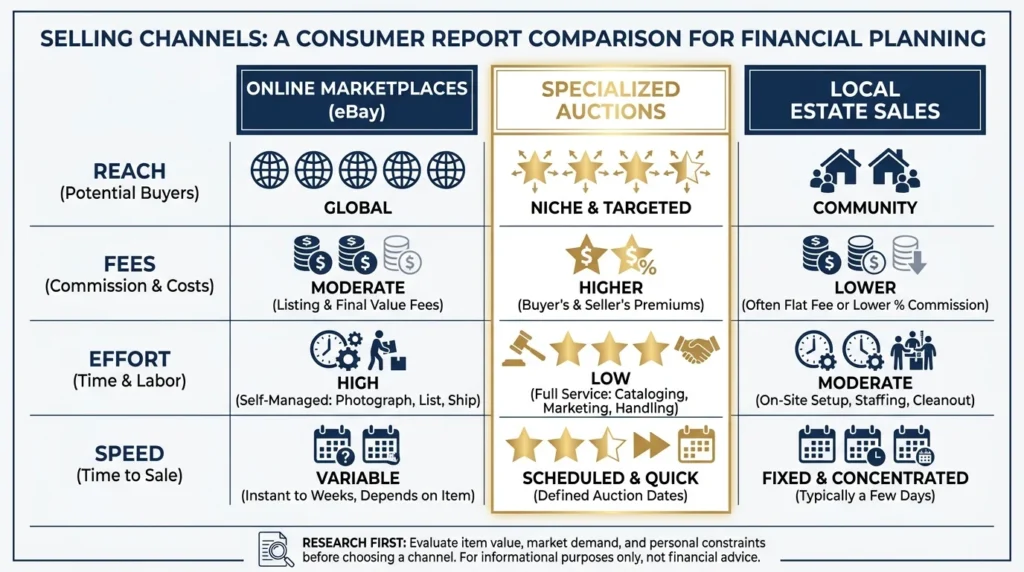
Once you identify valuable items, you must decide how to sell them. Your choice balances the amount of effort you want to exert against the profit you hope to retain.
| Selling Method | Best For | Pros | Cons |
|---|---|---|---|
| Online Marketplaces (eBay) | Niche collectibles, video games, clothing | Access to a massive global audience of specific collectors. | You must handle shipping, deal with potential buyer returns, and pay platform fees (typically 13-15%). |
| Specialized Auction Houses | High-end items, rare tech, graded video games | Professional marketing, authentication, and access to wealthy buyers. | High seller commissions (often 15-25%) and lengthy waiting periods for the auction date. |
| Local Antique Dealers | Furniture, large items, bulk vintage collections | Immediate cash payout, no shipping required. | You receive wholesale pricing, often 40-50% less than true retail value. |
| Estate Sales | Whole-house liquidation during downsizing | Low physical effort for you; handles everyday items alongside valuables. | Estate sale companies take a large percentage (30-50%) and items are priced to move quickly, not maximize value. |
When to Get Expert Help for Appraisals and Estate Planning
If you uncover a massive collection of items, or if you suspect a specific piece is worth thousands of dollars, stop your DIY efforts and hire a professional. You want an appraiser certified by the Appraisers Association of America (AAA) or the International Society of Appraisers (ISA). Never hire an appraiser who offers to buy the item from you; this presents a clear conflict of interest. You pay an appraiser strictly for their evaluation.
Selling high-value items also impacts your tax situation. The Internal Revenue Service (IRS) categorizes these items as collectibles, which are subject to a maximum capital gains tax rate of 28% if held for more than one year. If your newfound hobby begins generating significant income, you must track your sales and initial costs properly. For detailed guidance on how sudden income impacts your broader financial picture, you can review resources provided by IRS Retirement Plans or consult a tax professional.
Furthermore, if you are relying on the sale of personal items just to bridge a gap in your daily living expenses, there may be better structural solutions available to you. Exploring community resources through the National Council on Aging’s BenefitsCheckUp can help identify assistance programs that ease the burden on your fixed income.
Finally, consider how collectibles fit into your overall estate plan. Leaving behind a basement full of undocumented vintage items forces your children to become amateur appraisers during a period of grief. Documenting the value of specific items and providing clear instructions on how to sell them is a vital component of responsible financial planning. You can find excellent planning frameworks through the CFPB Retirement resources and the AARP to help structure your downsizing efforts logically.
Frequently Asked Questions
How do I find out what my vintage item is actually worth?
Do not look at active listing prices on platforms like eBay; anyone can ask for any price. Instead, filter your search to “Sold Items” or “Completed Listings.” This shows you the exact dollar amount buyers have recently paid for the exact same item in comparable condition.
Do I have to pay taxes on the old items I sell from my attic?
Generally, if you sell a personal item for less than you originally paid for it, it is considered a personal loss and is not taxable (nor is it deductible). However, if you sell a collectible for more than its original purchase price, the profit is subject to capital gains tax. Always consult a tax professional regarding your specific reporting requirements.
Should I clean my collectibles before selling them?
For hard plastics or glass (like Pyrex), a gentle wash with mild dish soap and water is usually fine. However, never use abrasive cleaners, never run vintage items through a modern dishwasher, and never polish vintage jewelry, coins, or metal hardware. When in doubt, sell the item exactly as you found it.
What is the best way to ship fragile collectibles?
Always use a new, sturdy corrugated box. Wrap the item in multiple layers of bubble wrap, ensuring it does not touch the sides of the box. Fill all empty space with packing peanuts or crumpled kraft paper so the item cannot shift during transit. For items valued over $100, always purchase shipping insurance and require a signature upon delivery.
Funding Your Next Chapter
Transforming forgotten household items into usable cash provides a fantastic way to fund your retirement goals. Whether you use the money to cover healthcare premiums, spoil your grandchildren, or book a long-awaited vacation, the items gathering dust in your home hold real potential. Take a slow walk through your storage spaces this week. Look past the obvious antiques and keep an eye out for the retro tech, toys, and media that modern collectors eagerly seek.
Retirement rules and benefit amounts vary based on individual work history, income, and circumstances. This article provides general guidance only. Consult a SHIP counselor, financial advisor, or elder law attorney for advice specific to your situation.
Last updated: February 2026. Medicare and Social Security rules change annually—always verify current details at official government sources.