
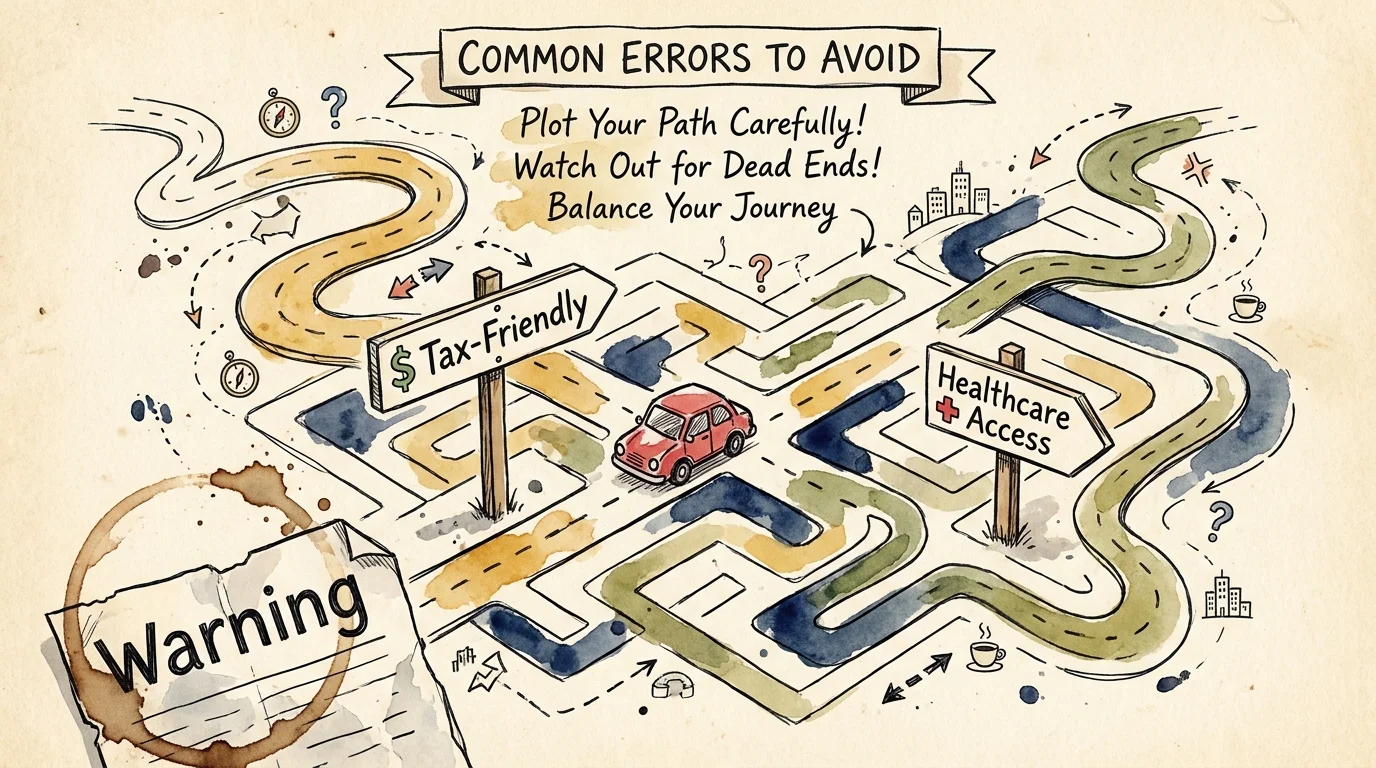
Avoiding Common Errors When Moving for Retirement
Many seniors romanticize small-town living without considering the logistical realities of relocation. Avoid these costly mistakes when planning your move:
- Buying before renting: Never buy a home in a new town based solely on a vacation experience. Rent a short-term property for at least three months. Experience the town during its worst weather season, navigate the grocery stores, and test the drive to the nearest major hospital.
- Ignoring healthcare networks: Small towns rarely possess level-one trauma centers or specialized oncology wards. If you require specialized care, map the exact distance from your potential new home to the necessary medical facilities.
- Forgetting to calculate travel costs: Moving away from your family means you must budget for travel. If the small town lacks a nearby regional airport, your travel expenses—and the expenses of your children coming to visit—will consume a large portion of your retirement budget.
Frequently Asked Questions
Does moving to a cheaper state affect my Social Security payments?
No. Your federal Social Security benefit amount remains exactly the same regardless of where you live in the United States. However, moving can affect your net income if you move from a state that taxes Social Security to one of the majority of states that do not.
Should I wait for interest rates to drop before buying a retirement home?
Trying to time the mortgage market rarely works in your favor. If interest rates drop significantly, buyer demand generally floods the market, driving home prices up and sparking bidding wars. If you find a home that fits your budget today, you can purchase it now and refinance later if rates improve. You can verify current mortgage trends and educational resources through the Consumer Financial Protection Bureau (CFPB).
Will my Medicare Part B or Part D premiums change if I move?
Your standard Medicare Part B premium ($202.90 in 2026) is set at the federal level and does not change based on your zip code. However, if you use a Medicare Advantage (Part C) plan or a standalone Part D prescription drug plan, your premiums and network coverage will almost certainly change when you move to a new county or state. You must notify Medicare of your address change to trigger a Special Enrollment Period.
Your retirement should be a period of relaxation and financial confidence, not constant worry over rising property taxes and unattainable housing costs. By targeting smaller, amenity-rich towns before they hit the mainstream radar, you secure a high quality of life without draining your portfolio. Take the time to visit these locations, run the numbers with a trusted advisor, and make a proactive choice about where your next chapter unfolds.
This is educational content based on general retirement planning principles. Individual results vary based on your situation. Always verify current benefit amounts, tax laws, and eligibility with official sources.
Last updated: February 2026. Retirement benefits, tax laws, and healthcare costs change frequently—verify current details with official sources.