
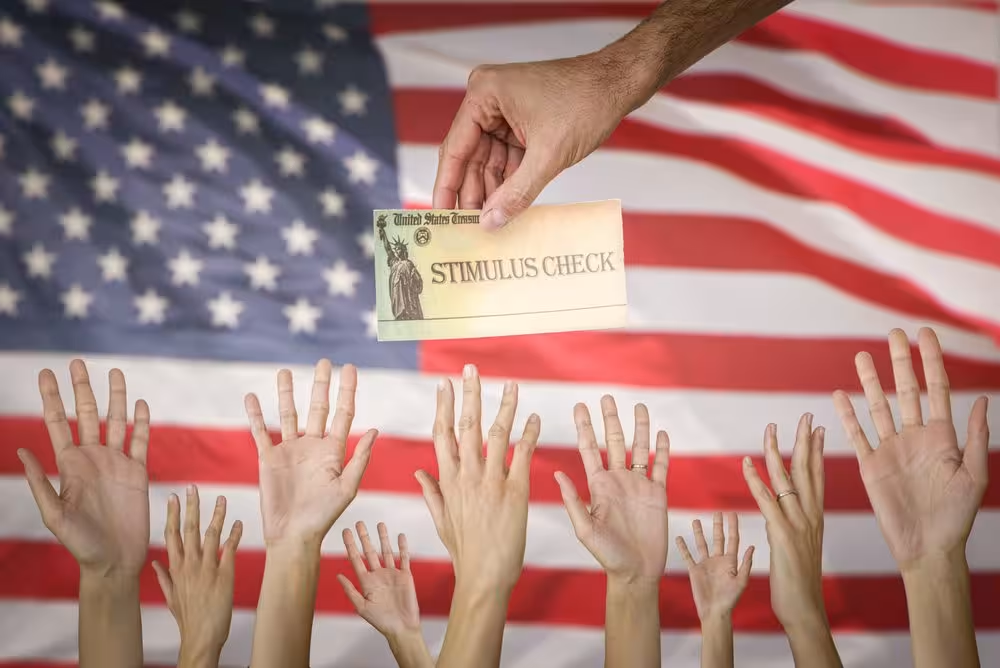
What it would mean for you and others
If implemented:
- Many Americans (depending on eligibility) could receive a one-time (or perhaps recurring) payment around mid-2026 of $2,000.
- The payment may come with income limits (e.g., families earning $100,000 or less) based on public statements.
- The effect for lower/middle-income households could be meaningful—cash in hand to use for expenses, savings, or investing.
- For higher-income households, eligibility may be limited or excluded based on Trump’s “not including high-income people” comment.
- However, because tariff revenue is uncertain and the program is not yet authorized, recipients should treat the proposal as a promise, not a guarantee.
Bottom line
The $2,000 “tariff dividend” is a bold, politically attractive idea: using tariff revenue to give Americans cash. But the proposal faces serious hurdles—legal uncertainties, fiscal constraints, need for Congressional approval, economic side effects, and incomplete details.
Unless those hurdles are overcome, the plan remains a proposal rather than a ready-to-go policy.
Psst! You might want to read: Good Economics for Hard Times





I’m retired, and yes i can use it
I believe congress is partially responsible for the shortfall in the future of Social Security. How about congress earmarking this windfall toward giving Social Security a better future along with a revised plan to repay the national debt. I don’t believe congress is currently working on or concerned about the national debt.
I am unemployed – recently laid off. I could use the money
could use it.
I could use it but I would rather use it to pay down the US debt.
Please
My husband and I could use this .He is 70 and I am78.
i would have to refuse that pmt on the premise of defisit spending use my pmt to pay down the debt
I am an 84 year old widow who relies solely on Social Security and have very little savings. I could certainly use this money to give me a little stability and make things easier.
I hope I qualify for the 2000 ?