Your golden years are your best years! Make them shine!

  • Home
  • Personal Finance
  • Retirement Life
  • Saving & Spending

How to Generate $1,000 a Month in Passive Income During Retirement

August 22, 2025 · Personal Finance

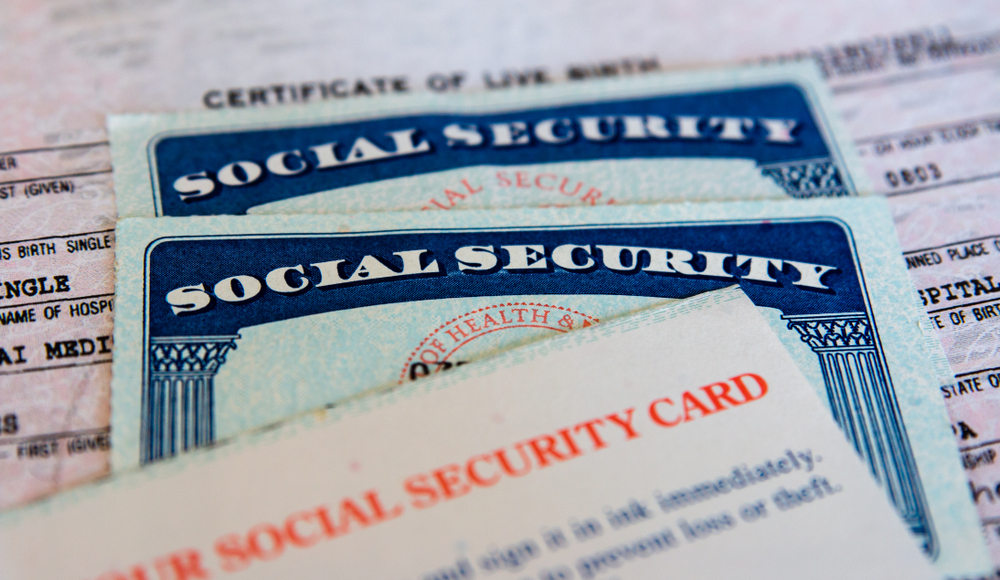
Photo-realistic, senior-friendly scene that visually introduces the section titled 'Path 1: Generating Income from Your Existing Investments'.

Path 1: Generating Income from Your Existing Investments

For most retirees, the most direct path to generating passive income is through the investment portfolio they’ve spent years building. The goal is to shift the focus of this portfolio from growth to a steady, reliable stream of income. Here are a few common ways to do this.

Dividend-Paying Stocks and Funds

When you own a stock, you own a tiny piece of a company. If that company is profitable, it may choose to share a portion of its profits with its shareholders. This payment is called a dividend.

Many large, established companies have a long history of paying and even increasing their dividends year after year. You can buy individual stocks, or you can buy into a mutual fund or an Exchange-Traded Fund (ETF) that holds a basket of many different dividend-paying stocks. This diversification can help reduce the risk that comes from owning just one or two companies.

It’s important to remember that stocks come with risk. A company’s stock price can go up or down, and there is no guarantee that it will continue to pay a dividend. A company facing hard times might reduce or eliminate its dividend entirely.

So, how much would you need to invest? Let’s do some mini-math. The “dividend yield” of a stock or fund is its annual dividend per share divided by its price per share. For example, if a fund has a 4% dividend yield, it means it pays out 4 cents in dividends for every dollar invested, per year. To generate $1,000 per month, which is $12,000 per year, from an investment with a 4% dividend yield, you would need a principal of $300,000. We find this by dividing the desired annual income by the yield: $12,000 / 0.04 = $300,000.

Bonds and Bond Funds

Another common way to create income is through bonds. A bond is essentially a loan you make to a government (like U.S. Treasury bonds) or a corporation. In return for your loan, the issuer promises to pay you periodic interest payments over a set term and then return your original investment, the principal, at the end of that term.

Bonds are generally considered safer than stocks, but they are not without risk. One key risk for retirees is duration risk. This is the risk that if overall interest rates in the economy rise, the value of your existing, lower-rate bonds will fall. If you hold an individual bond to its maturity date, you will get your principal back, but if you need to sell it early in a rising-rate environment, you might have to sell it for a loss.

Like with stocks, you can buy individual bonds or invest in bond funds or ETFs. Bond funds offer diversification by holding hundreds or thousands of different bonds, which reduces the impact if any single issuer defaults on its payments. A popular strategy is to create a “bond ladder,” where you buy several individual bonds with different maturity dates. As each bond matures, you can either spend the principal or reinvest it in a new bond at current interest rates.

High-Yield Savings Accounts and Certificates of Deposit (CDs)

For those who are very risk-averse, the safest options are often the best. High-yield savings accounts and Certificates of Deposit (CDs) offer a predictable return with virtually no risk to your principal, as long as you stay within FDIC insurance limits.

A CD requires you to lock up your money for a specific term, from a few months to several years, in exchange for a fixed interest rate that is typically higher than a standard savings account. A CD ladder strategy, similar to a bond ladder, can provide regular access to your money. For example, you could invest in a 1-year, 2-year, and 3-year CD. When the 1-year CD matures, you can use the cash or reinvest it in a new 3-year CD, keeping the ladder going.

While safe, these options usually provide the lowest returns. It would take a very large sum of money in a CD to generate $1,000 a month in interest. However, they are an excellent place for your emergency fund and for cash you cannot afford to lose.

Pages: 1 2 3 4 5 6 7 8 9

Share this article

Facebook Twitter Pinterest LinkedIn Email

Leave a Reply Cancel reply

Your email address will not be published. Required fields are marked *

2 comments on “How to Generate $1,000 a Month in Passive Income During Retirement”

  1. Curtis Lindsey says:
    February 6, 2026 at 4:06 pm

    This was another waste my time articles.

    Reply
  2. Christopher Lane Pease says:
    November 24, 2025 at 10:56 am

    24663 Minkler Rd., Sedro Woolley, WA 98284

    Reply
Se încarcă comentarii...

Nu mai există comentarii de afișat.

Search

Latest Posts

  • An older couple stands in their suburban driveway, thoughtfully looking at their oversized family SUV. The 12 Cars Retirees May Want to Avoid Before Downsizing
  • A senior couple in casual clothes sits at their kitchen table reviewing legal documents and a tablet in warm afternoon light. 7 Surprising Clauses Couples Are Putting Into Their Prenups
  • A grandfather and granddaughter play with building blocks in a sunny living room, symbolizing family support and tax credits. Families Could Get Bigger Tax Credits in 2026 - Here's What the IRS Says
  • A senior woman in a navy cardigan sits at a sunny kitchen table looking at financial documents on a tablet next to a stack of mail. 7 Most Overlooked Government Benefits for Seniors
  • A sophisticated mixed media collage featuring the number 7 and the year 2026 surrounded by Medicare and financial planning symbols. 7 NEW Government Benefits for Seniors in 2026
  • Close-up of a senior's hands reviewing a grocery receipt at a kitchen table with eggs and lemons in a bowl. 10 Most Expensive US Cities for Groceries in 2026
  • A man in a home office looks at a 2027 calendar, representing retirement planning and future Social Security changes. 8 Reasons Your Social Security Payment May Be Different in 2027
  • A grandfather holds a newborn baby while looking at the Trump Accounts app on his smartphone in a sunlit living room. Could Your Grandchildren Qualify for Trump Accounts?
  • 10 Best Countries to Retire Abroad in 2027
  • A mature freelance electrician in a sunlit workshop, looking thoughtfully toward a window during a work break. Trump IRAs Explained: 7 Things to Know Before They Launch in 2027

Newsletter

Get retirement tips and senior living advice delivered to your inbox.

Related Articles

working in retirement, tax change

The ONLY Unexpected Tax Change Seniors Will Face in 2025

A senior man thoughtfully reviews financial paperwork in his library, preparing for the significant tax…

Read More →
social security numbers

6 Social Security Changes Coming Next Year

#2 Full Retirement Age Reaches 67 For those born in 1960 or later, the Full…

Read More →
A retired couple calmly reviewing financial information on a tablet in a bright, modern kitchen.

6 Products That Will Cost You More in 2026

Prepare your retirement budget for 2026. We detail 6 specific price increases hitting seniors this…

Read More →
retirement income tax state, retirement distributions

7 States That Don’t Tax Your Pension, 401(k), Social Security, and More

There are also three other states with income taxes that give retirees a well-deserved break…

Read More →
social security numbers, downside

When Will Your Social Security Checks Arrive? (What Beneficiaries Should Know)

Supplemental Security Income (SSI) Payment Schedule for Late 2025 SSI recipients typically receive payments on…

Read More →
health

Health Care Costs and the 6 Painful Effects on Retirees

Are you ready to plan your health care costs?

Read More →
veteran

How to Find The Perfect Side Gig as a Veteran

Being a veteran is not always easy, especially when it’s time for retirement and you…

Read More →
IRS Audit

8 IRS Audit Red Flags

You’re worried about an IRS Audit?

Read More →

Yes, You Can Earn Extra Cash in Retirement With These 10 Gigs!

2. Content Writer Believe it or not, there are a lot of retirees that are…

Read More →
Retired in USA

Your golden years are your best years! Make them shine!

Inedit Agency S.R.L.
Bucharest, Romania

contact@ineditagency.com

Trust & Legal

  • Terms and Conditions
  • Privacy Policy
  • Do not sell my personal information
  • Subscribe
  • Unsubscribe
  • Contact
  • CA Privacy Policy
  • Request to Know
  • Request to Delete

Categories

  • Enjoying Retirement
  • Personal Finance
  • Saving & Spending

© 2026 Retired in USA. All rights reserved.