
Holding onto the wrong vehicle during early retirement can drain your savings and turn daily errands into painful chores. Many retirees delay downsizing, assuming their trusty family SUV or high-mileage luxury sedan will serve them perfectly on a fixed income. Unfortunately, keeping a vehicle with poor fuel economy, difficult entry points, and high maintenance costs often sabotages carefully planned budgets. Transitioning to a car that fits your current lifestyle requires prioritizing modern safety features, ease of access, and predictable ownership costs over massive cargo space. Downsizing at the right time frees up cash for travel and dramatically reduces driving anxiety. Evaluate your vehicle today to see if it represents a hidden financial liability.
Why Your Vehicle Needs Change in Retirement
Retirement marks a fundamental shift in your daily routine; your commute disappears, but your need for comfort and accessibility drastically increases. A vehicle that easily accommodated a busy family schedule or long business road trips a decade ago might now feel cumbersome and expensive to operate.
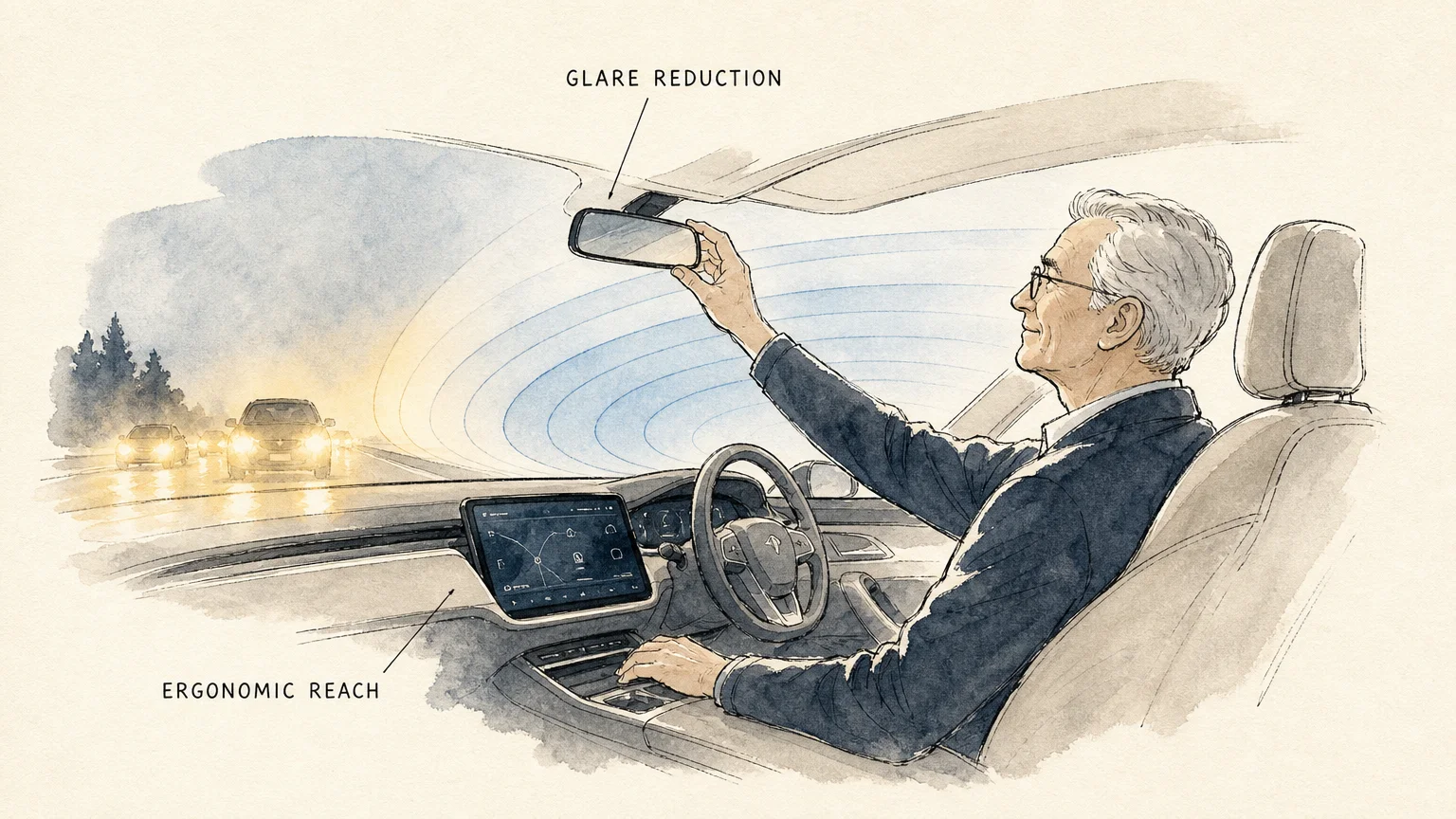
Aging introduces natural physical changes that affect driving. You may experience reduced joint flexibility, slower reaction times, and changes in vision—especially recovery from glare at night. A vehicle with a harsh ride, heavy steering, or massive blind spots directly compromises your safety. According to the National Highway Traffic Safety Administration (NHTSA), drivers aged 65 and older accounted for 19 percent of all traffic fatalities in 2023. Choosing a car designed with excellent ergonomics and advanced driver assistance systems helps mitigate these risks, keeping you confidently on the road for years to come.
The 12 Cars Retirees May Want to Avoid Before Downsizing
1. High-Maintenance European Luxury Sedans
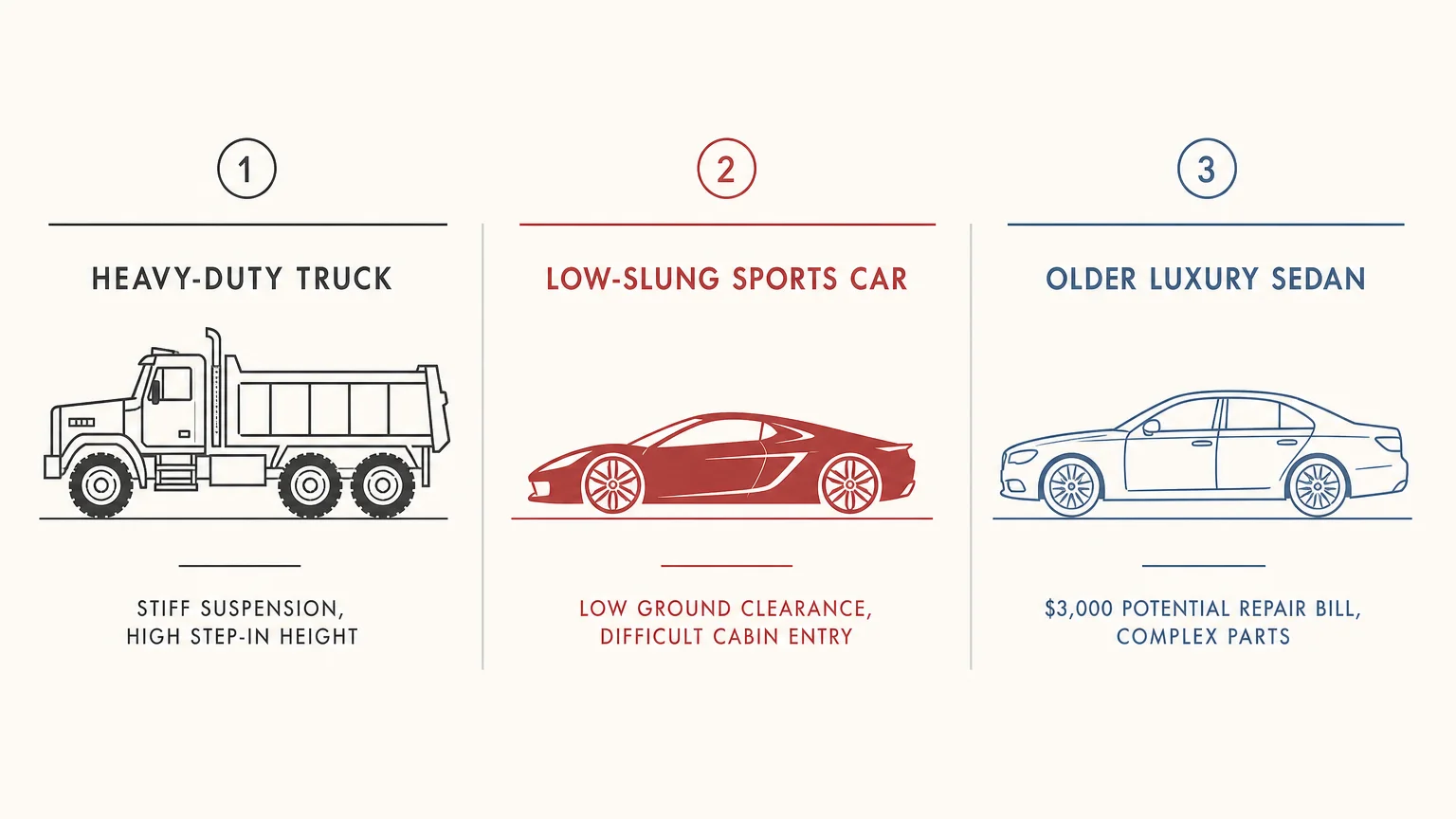
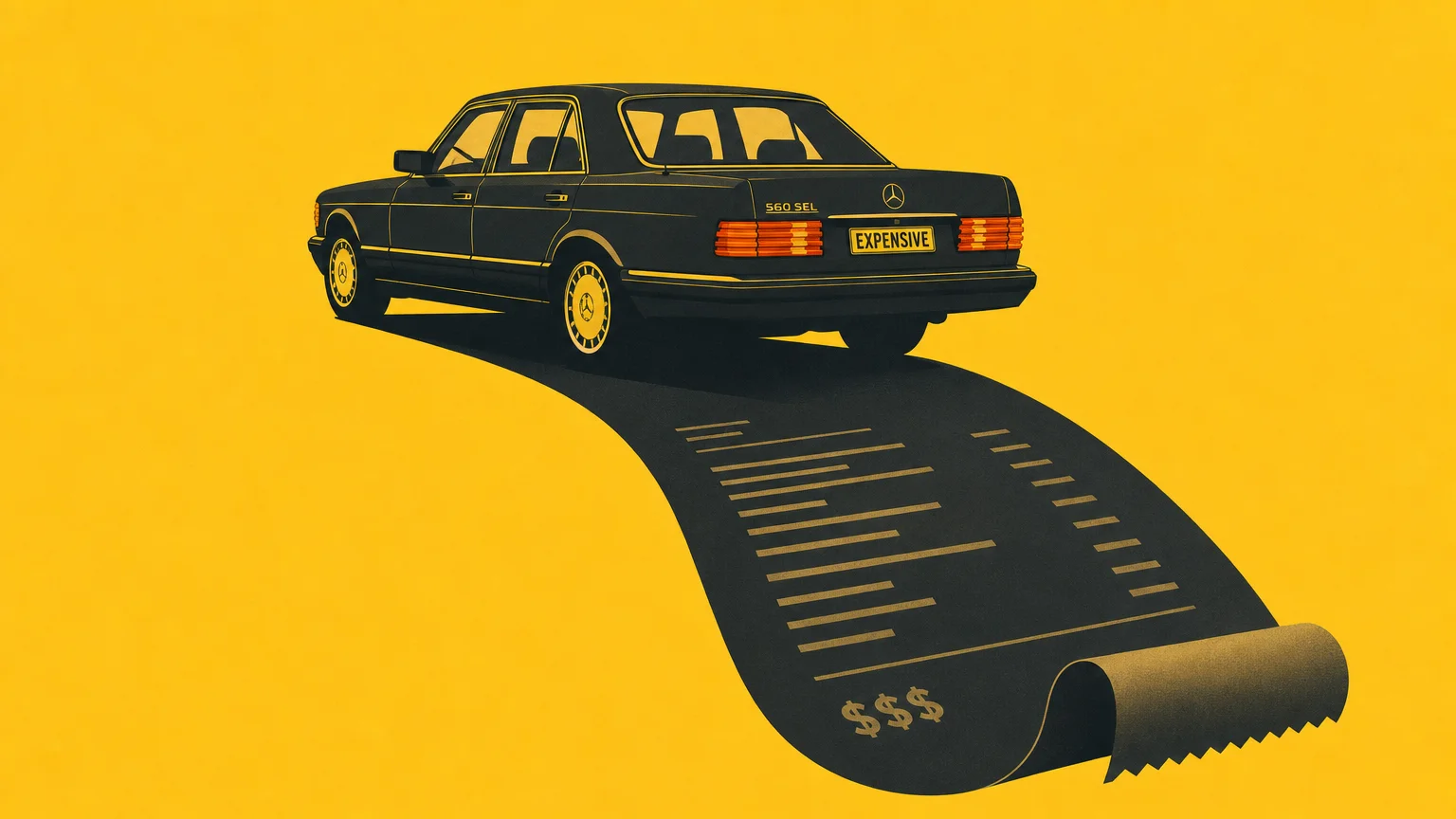
Older European luxury cars deliver incredible ride quality, but they quickly become financial black holes once the manufacturer warranty expires. Repairs for specialized air suspension systems, complex engine sensors, and imported parts often run into the thousands. On a fixed income, an unexpected $3,000 repair bill easily derails a monthly budget. Replace the aging luxury vehicle with a top-tier trim of a reliable, low-maintenance brand that offers similar leather-trimmed comfort without the staggering maintenance premiums.
2. Heavy-Duty Pickup Trucks
Unless you actively tow a heavy travel trailer or boat in retirement, keeping a heavy-duty pickup truck (like a Ford F-250 or Ram 2500) makes little financial or practical sense. These trucks feature stiff suspensions that jar your spine on uneven roads. Furthermore, their massive dimensions make them notoriously difficult to park in standard grocery store lots or hospital parking garages. Transitioning to a compact or midsize truck—or a crossover SUV—provides all the utility you likely need with significantly better fuel economy.
3. Large, Body-on-Frame SUVs
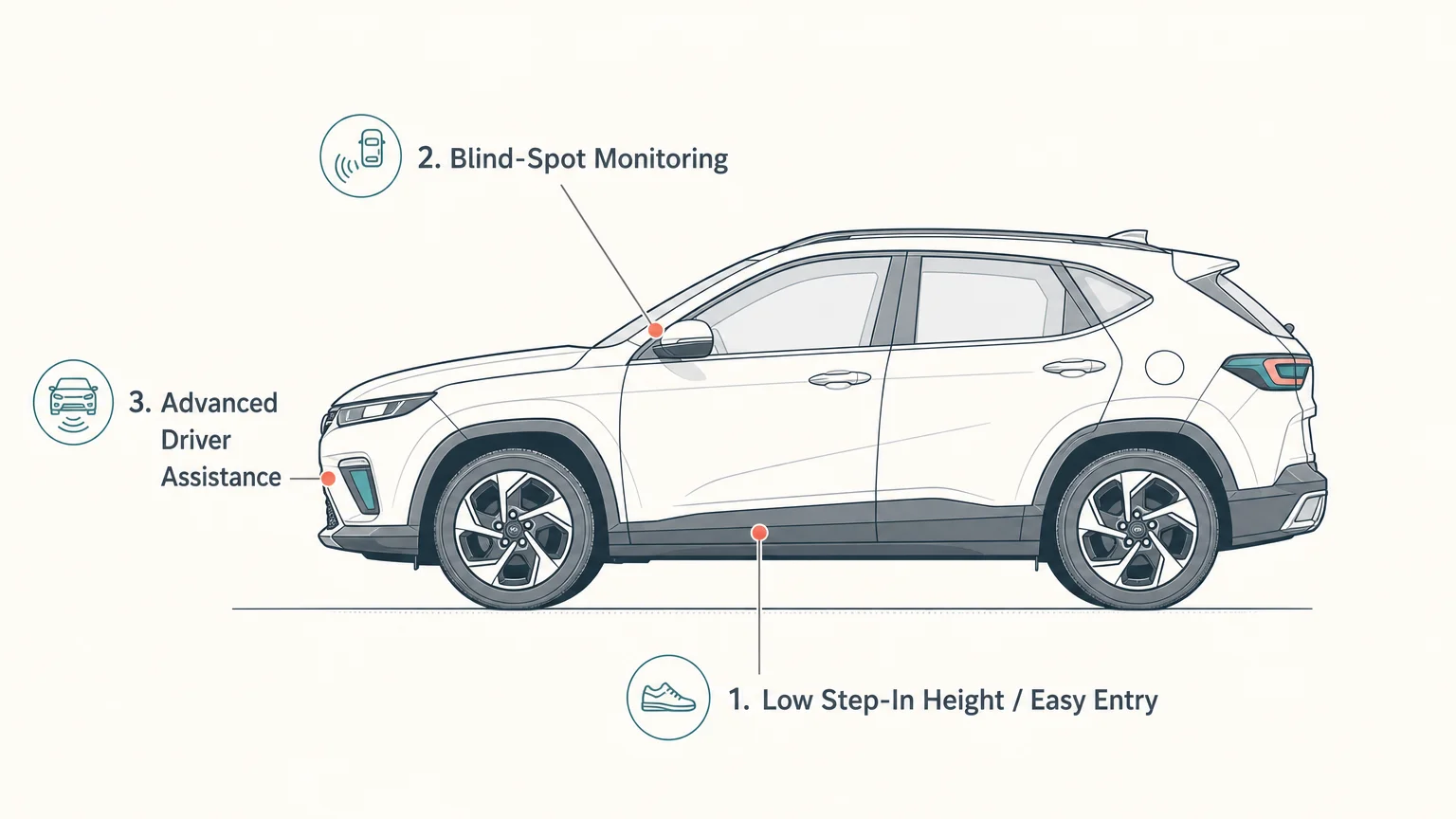
Full-size, traditional SUVs boast incredible cargo capacity, but they also sit very high off the ground. Climbing into the cabin requires significant knee and hip flexion, which becomes increasingly painful if you develop arthritis or joint issues. Additionally, their sheer size creates massive blind spots, increasing the risk of backing into obstacles or side-swiping vehicles. Downsizing to a compact crossover lowers the step-in height to a natural level, allowing you to easily slide sideways into the driver’s seat.
4. Low-Slung Sports Cars
Many retirees purchase their dream sports car to celebrate the end of their working years. While fun on a weekend cruise, sports cars feature incredibly low ground clearance and seats that practically sit on the floorboards. Getting in and out of a low-slung coupe requires core strength and agility that may wane as you age. Furthermore, their stiff, performance-tuned suspensions translate every bump in the road directly into your lower back.
5. Vehicles Controlled Exclusively by Touchscreens
Modern automakers frequently replace physical climate and audio controls with massive digital touchscreens. This design forces you to take your eyes off the road and navigate complex digital menus just to turn on the windshield defroster. Relying heavily on a touchscreen increases cognitive load and slows reaction times. Seek out vehicles that retain physical knobs and tactile buttons for essential functions, ensuring you can safely operate the car entirely by muscle memory while keeping your eyes on the road.
6. The Empty-Nest Minivan
Minivans provide ultimate family utility, but keeping one long after the children have moved out forces you to pay for empty space. You end up burning extra fuel to transport heavy third-row seats you never use, and it takes longer to heat or cool the cavernous interior. Selling the minivan and purchasing a midsize hatchback or crossover improves your fuel efficiency while still leaving enough room for groceries or the occasional grandchild visit.
7. Subcompact Economy Cars
While extremely cheap to buy and fuel, subcompact economy cars (like older Mitsubishi Mirages or Chevy Sparks) often lack the structural integrity and sound deadening found in larger vehicles. The short wheelbase produces a choppy, uncomfortable ride over highway expansion joints. More importantly, older subcompacts often perform poorly in side-impact crash tests. Prioritize your safety and comfort by stepping up slightly to a compact sedan or crossover, which balances affordability with a much smoother ride.
8. Two-Door Coupes with Heavy Doors
Two-door cars feature elongated, exceptionally heavy doors designed to allow access to the back seat. When you park in a tight parking garage, you cannot open these long doors fully, leaving a narrow, awkward gap to squeeze through. The heavy weight of the door combined with the awkward exit angle places immense strain on your shoulders and back. A standard four-door vehicle features shorter, lighter doors that are much easier to maneuver in tight spaces.
9. Off-Road Centric Vehicles
Rugged off-roaders like the Jeep Wrangler or Ford Bronco appeal to the adventurous retiree, but they make terrible daily drivers. They feature high step-in heights, noisy cabins at highway speeds, and steering that wanders on paved roads. If you love the great outdoors, consider a refined all-wheel-drive crossover (like a Subaru Outback) that handles dirt roads and snow with ease, but still delivers a quiet, comfortable ride to the supermarket.
10. Early-Generation Electric Vehicles (EVs)
Used, early-generation electric vehicles from a decade ago suffer from significant battery degradation and limited driving ranges. Range anxiety can cause unnecessary stress when planning retirement road trips or traveling to out-of-town medical specialists. If the battery fails entirely out of warranty, the replacement cost easily exceeds the total value of the vehicle. If you wish to go green, opt for a reliable hybrid or a certified pre-owned modern EV with a long, transferable battery warranty.
11. Stiff Performance Trims of Standard Sedans
Many automakers offer “sport” or “performance” trims of their standard commuter sedans. These packages usually include larger wheels, thinner tires, and sport-tuned suspensions. While they look aggressive, they destroy the vehicle’s ride quality. The thin tires fail to absorb potholes, sending harsh vibrations through the steering wheel. Stick to the luxury or base trims of sedans, which feature thicker tire sidewalls and softer suspensions designed for touring.
12. Outdated Vehicles Lacking Active Safety Technology
Driving a car from the early 2000s might feel financially savvy because it has no car payment, but you are missing out on two decades of life-saving safety advancements. Modern driver assistance systems—such as automatic emergency braking, blind-spot monitoring, and lane-keeping assist—act as a secondary set of eyes. These systems can prevent a devastating crash if your reaction time slows or if a sudden health issue distracts you behind the wheel.
Key Features to Look For When Downsizing
When searching for a retirement-friendly vehicle, AARP and safety experts suggest prioritizing features that enhance visibility and accessibility. Use the following checklist when test-driving your next car.
| Feature Category | What to Look For | Why It Matters for Retirees |
|---|---|---|
| Ergonomics & Access | Optimal step-in height (around mid-thigh), power-adjustable seats with lumbar support, and tilt/telescoping steering wheels. | Prevents you from having to climb up into an SUV or drop down into a sedan; minimizes lower back and joint pain. |
| Active Safety (ADAS) | Forward Automatic Emergency Braking, Blind Spot Warning, and Rear Cross-Traffic Alert. | Compensates for reduced neck mobility when checking blind spots; prevents fender benders in busy parking lots. |
| Visibility | Large greenhouse (windows), high-resolution backup camera, and auto-dimming rearview mirrors. | Combats natural age-related vision changes; reduces harsh glare from the headlights of cars behind you at night. |
| Intuitive Controls | Physical dials for climate and volume, high-contrast digital text displays, and voice command features. | Allows you to adjust the cabin temperature without taking your eyes off the road; highly readable for those with bifocals. |
The Financial Impact of Keeping the Wrong Car
Refusing to downsize your vehicle does more than just cause physical discomfort; it silently drains your wealth. The Social Security Administration approved a 2026 cost-of-living adjustment (COLA) of 2.8 percent. However, fixed healthcare costs continue to climb—for example, the standard Medicare Part B premium increased to $202.90 per month in 2026. With your fixed income stretched thinner, you cannot afford unpredictable transportation costs.
Recent data indicates that the average annual cost of car ownership—factoring in fuel, insurance, repairs, and depreciation—surpasses $12,000. By trading in a gas-guzzling truck or a high-maintenance European sedan for a reliable, compact hybrid, you immediately slash your fuel bills and significantly lower your auto insurance premiums. Downsizing allows you to redirect thousands of dollars annually toward travel, hobbies, or out-of-pocket medical expenses.
“Your car is the largest item you will ever buy that goes down in value. Don’t let a depreciating asset delay your financial peace.” — Dave Ramsey, Personal Finance Expert

When to Consult a Professional
Downsizing a vehicle sometimes requires more than just a trip to the dealership. Consider seeking outside expertise in the following scenarios:
- Consult a Driving Rehabilitation Specialist: If you suffer from severe arthritis, neuropathy, or vision impairments, an occupational therapist or driving specialist can evaluate your skills and recommend specific adaptive equipment—such as steering knobs or modified pedals.
- Consult an Independent Insurance Agent: Before purchasing a new vehicle, have an insurance broker run quotes on your top choices. Some vehicles cost drastically less to insure for senior drivers due to top-tier safety ratings.
- Consult a Certified Financial Planner (CFP): If you plan to pull cash from your IRA or 401(k) to purchase a vehicle outright, a financial advisor can help you navigate the tax implications of that withdrawal to prevent it from bumping you into a higher tax bracket or triggering a Medicare IRMAA surcharge.
Frequently Asked Questions
Does downsizing my car lower my auto insurance?
Yes, in most cases. Smaller, non-luxury vehicles are cheaper to repair and replace, which lowers your comprehensive and collision premiums. Additionally, notifying your insurance company that you are officially retired and driving fewer annual miles will often trigger a low-mileage discount.
What is the absolute safest car for a senior citizen?
There is no single “safest” car, as body types and comfort levels vary. However, midsize crossovers like the Subaru Outback, Honda CR-V, and Toyota RAV4 consistently rank at the top of senior-friendly vehicle lists. They offer the ideal combination of easy step-in height, excellent outward visibility, and standard active safety suites.
Should I lease or buy my retirement vehicle?
Buying a reliable vehicle and holding it for 7 to 10 years is almost always the most cost-effective long-term strategy for a fixed-income retiree. Leasing provides a new car every three years and eliminates maintenance worries, but it ensures you will carry a perpetual monthly payment for the rest of your life. Contact the Consumer Financial Protection Bureau (CFPB) for resources on understanding auto loan and lease terms before signing any contracts.
Downsizing your vehicle is a profound step in rightsizing your entire retirement lifestyle. Letting go of a car that no longer serves your physical needs or financial goals is incredibly liberating. Take the time to test-drive practical, safety-focused models, and reclaim your peace of mind on the road.
This article provides general retirement education and information only. Everyone’s financial situation is unique—what works for others may not work for you. For personalized advice, consider consulting a qualified financial professional such as a CFP or CPA.
Last updated: June 2026. Retirement benefits, tax laws, and healthcare costs change frequently—verify current details with official sources.