
Your attic might be hiding an unexpected source of retirement income, as everyday items from decades past are suddenly commanding premium prices on the resale market. Downsizing your home or organizing a lifetime of memories no longer means simply tossing old boxes into a donation bin.
Today, a new generation of buyers aggressively hunts for nostalgia, transforming ordinary vintage items into highly valuable assets. Turning retirement hobbies into lucrative side income requires knowing exactly what modern collectors actually want to buy.
The decorative plates and traditional figurines of yesterday have plummeted in value, but the retro electronics, mid-century kitchenware, and pop culture memorabilia you tucked away could significantly boost your nest egg and fund your next adventure.
The Shift in the Collectibles Market
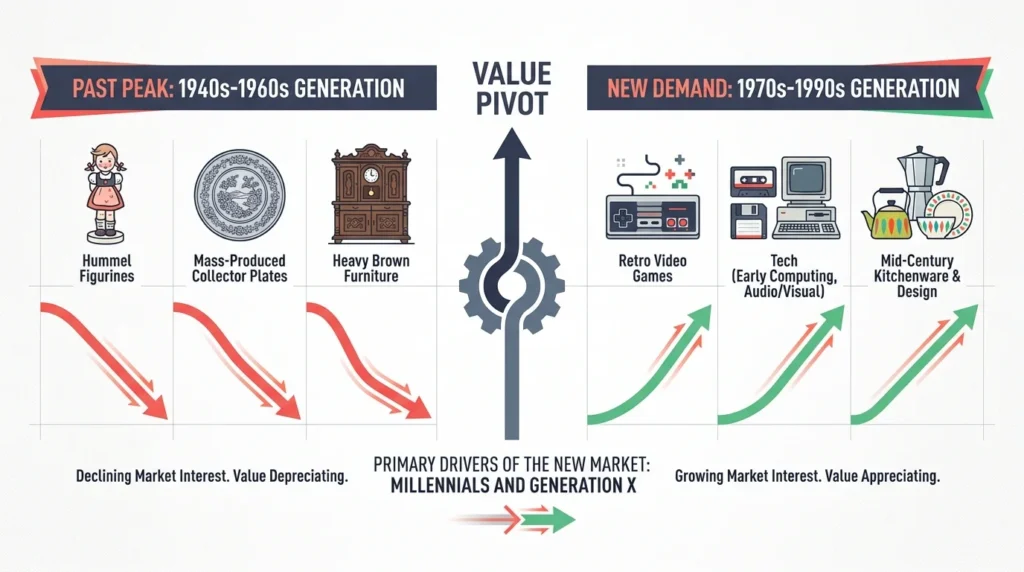
The collectibles market undergoes massive shifts every generation. Items that commanded premium prices twenty years ago—like Hummel figurines, mass-produced collector plates, and heavy brown antique furniture—often struggle to find buyers today. The new demographic with disposable income consists of Millennials and Generation X. They are spending heavily to recapture their childhoods, driving up demand for items from the 1970s, 1980s, and 1990s.
Many retirees find that identifying and selling these high-demand items serves as an incredibly engaging hobby. It gets you out to estate sales, keeps your mind sharp through research, and provides an excellent way to connect with younger generations. Before you clean out another closet or host a neighborhood garage sale, carefully inspect your belongings. You might currently own several items that hold surprising resale value.









I’m in my 80s now, and recently acquired a number of family items of furniture after my (older) sister passed away. I was not responsible for state or federal inheritance taxes on the financial items she willed to me, but — IF I were to sell all or some of the furniture items (a few might be antiques, others not) — would I be liable for “capital gains” taxes on whatever money I receive from their sale?
I’m conflicted. On one hand, some of these are “family items” that my children might want someday, but I personally have no real connection to them in that respect. Further, they have been cluttering my basement for over a year. So being aware of the possible tax ramifications might influence my decision on how to proceed (or whether to proceed) in disposing of the items.