Will a Direct Payment Decrease Your Monthly Social Security Checks?
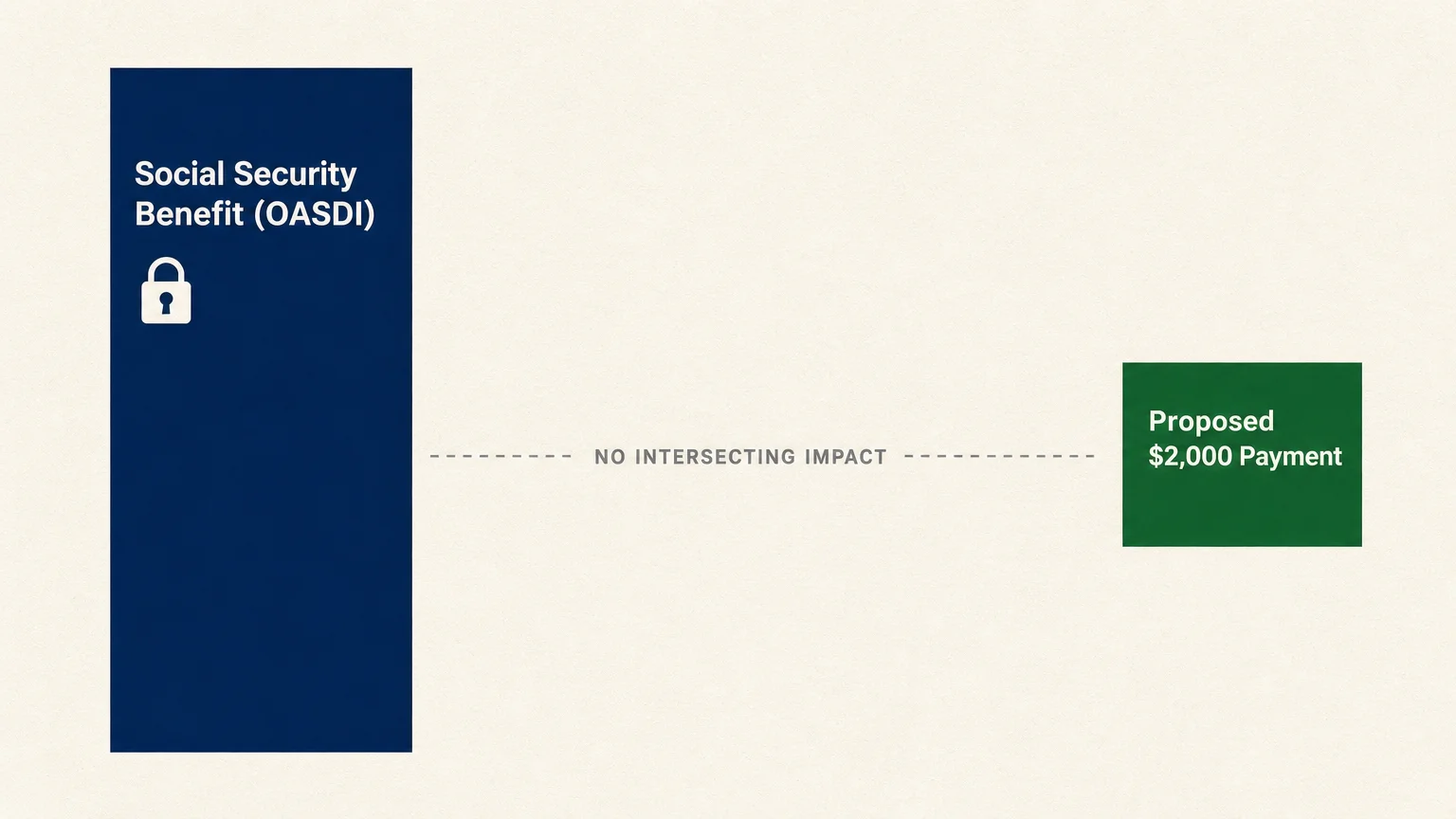
The most immediate fear among retirees is that accepting a direct government payment will trigger a corresponding reduction in their monthly retirement checks. You can set this fear aside. Traditional Social Security benefits—formally known as Old-Age, Survivors, and Disability Insurance (OASDI)—are earned entitlements. You paid into this system through payroll taxes during your working years.
The Social Security Administration calculates your primary insurance amount based on your thirty-five highest-earning years and the exact age you chose to claim your benefits.
Because OASDI is not a means-tested welfare program, your accumulated wealth, your current unearned income, and any sudden government stimulus checks have absolutely zero impact on the gross amount the government sends you each month.
A proposed $2,000 payment will not cause the Social Security Administration to dock your pay. Your ongoing Social Security benefits remain secure and legally protected from offsets related to general economic stimulus measures.
Furthermore, receiving a direct payment does not interfere with your annual Cost-of-Living Adjustment (COLA). The federal government calculates the COLA using the Consumer Price Index for Urban Wage Earners and Clerical Workers (CPI-W). A one-time payment issued to the public does not alter the inflation metrics used to calculate your permanent, long-term benefit increases. Your baseline retirement income remains insulated from these one-off legislative actions.