
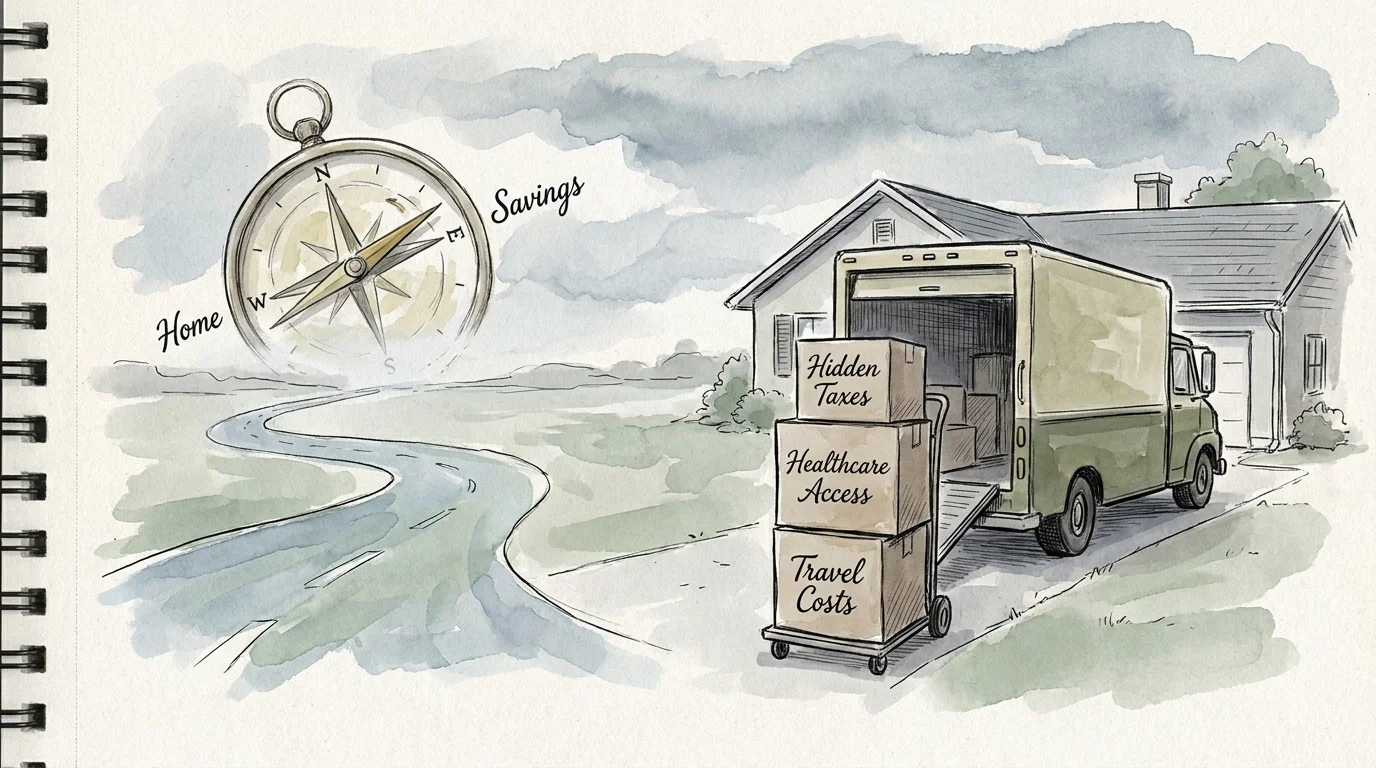
Pitfalls to Watch For Before You Move
Relocating in retirement offers massive financial benefits, but the process requires careful research. You must evaluate the complete picture of your new destination to ensure it aligns with your long-term needs. Avoid these common traps:
- Hidden Tax Burdens: A state with no income tax might compensate by charging exorbitant property or sales taxes. Texas, for example, has no state income tax but carries some of the highest property tax rates in the nation. Always calculate your total estimated tax burden before buying a home.
- Healthcare Availability: Rural, ultra-cheap towns sometimes lack specialized medical care. As you age, proximity to high-quality specialists becomes paramount. Ensure your new location has highly rated hospitals that accept Medicare and are within a reasonable driving distance.
- Social Isolation: Moving thousands of miles away from friends and family saves money on housing, but it can cost you your emotional support network. Factor in the travel costs required to fly back and visit loved ones when building your new budget.
- Climate Mismatches: Do not commit to a location with brutal summers or harsh winters without spending an extended amount of time there during its most extreme season. Rent an Airbnb for a month in August in Texas or February in North Dakota before signing closing papers.
Frequently Asked Questions
What is the average Social Security benefit in 2026?
Following the latest cost-of-living adjustment, the average monthly Social Security retirement benefit is approximately $1,976. However, your exact benefit depends heavily on your 35 highest-earning years and the age at which you claimed benefits.
How much is the Medicare Part B premium for 2026?
The standard Medicare Part B premium for 2026 is $202.90 per month, and the annual deductible is $283. These premiums are typically deducted directly from your Social Security check, meaning you must budget based on your net benefit, not your gross benefit.
Does my state tax Social Security benefits?
The vast majority of states do not tax Social Security benefits. States like Texas, Tennessee, Florida, and Nevada have no state income tax at all. Other states specifically exempt Social Security income even if they tax other forms of retirement withdrawals.
How do I find a community with a low cost of living but good healthcare?
Look for mid-sized cities or college towns. Areas anchored by universities or major regional hospitals often feature excellent medical networks and cultural amenities while maintaining housing costs well below the national average. Organizations like AARP frequently publish livability indexes that cross-reference affordability with healthcare access.
Finding a location that honors your budget without compromising your lifestyle is entirely possible with careful research. Take the time to visit these cities, run the tax calculations based on your specific income streams, and prioritize your access to healthcare. By relocating strategically, you empower yourself to live a vibrant, stress-free retirement on your own terms.
The information in this guide is meant for educational purposes. Your specific circumstances—including income, savings, health coverage, and goals—may require different approaches. When in doubt, consult a licensed professional.
Last updated: May 2026. Retirement benefits, tax laws, and healthcare costs change frequently—verify current details with official sources.