
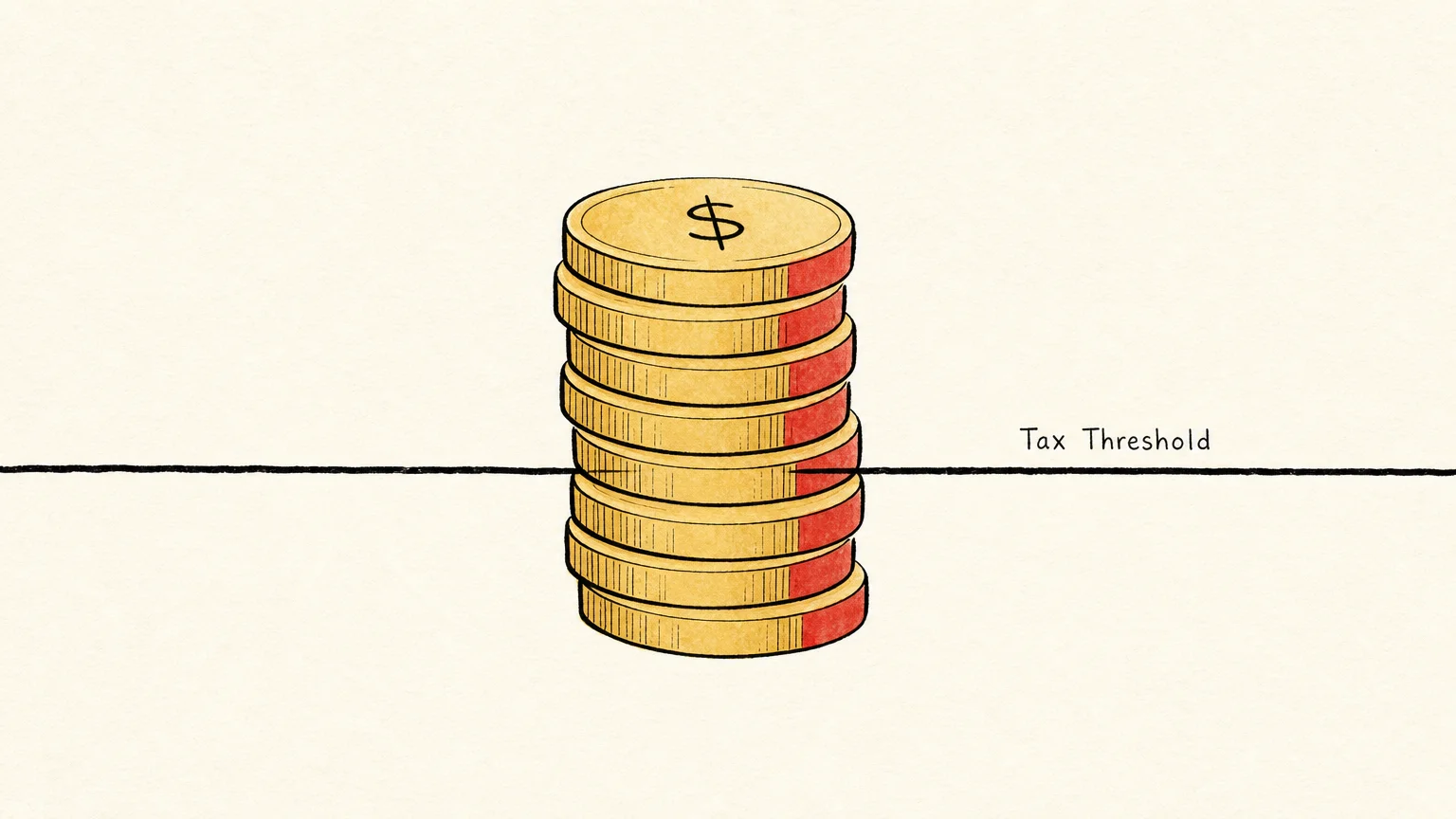
6. Crossing Taxation Thresholds
Your Social Security benefits are not entirely tax-free. Depending on your “combined income” (your adjusted gross income plus nontaxable interest plus half of your Social Security benefits), you could owe federal income tax on up to 85 percent of your payout.
The federal thresholds that trigger these taxes have not been adjusted for inflation since they were introduced decades ago. Familiarize yourself with these fixed guidelines available through the IRS:
- Single Filers: Combined income between $25,000 and $34,000 makes up to 50 percent of benefits taxable. Income over $34,000 makes up to 85 percent taxable.
- Joint Filers: Combined income between $32,000 and $44,000 makes up to 50 percent of benefits taxable. Income over $44,000 makes up to 85 percent taxable.
Because these thresholds do not rise with inflation, the annual COLA organically pushes more retirees into these taxable brackets every single year. A projected 3.9 percent COLA in 2027 might be exactly what pushes your combined income over the $32,000 or $44,000 mark. When this happens, you may need to adjust your Form W-4V to have federal taxes withheld directly from your Social Security check, which lowers your net monthly payment.