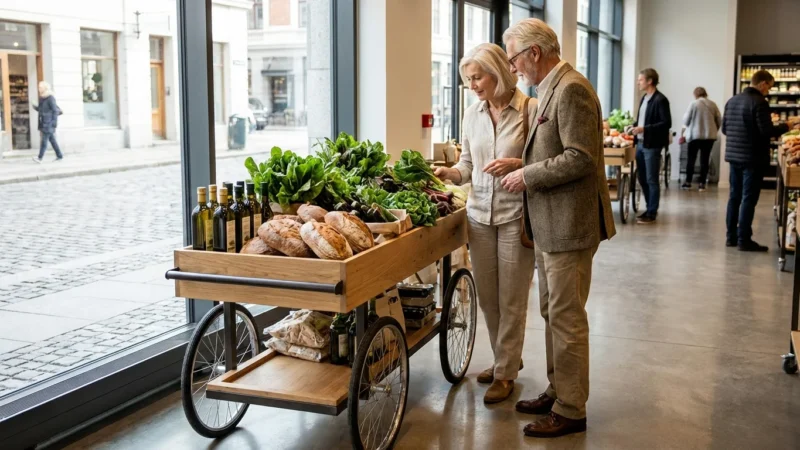
Rising food costs in 2026 require proactive strategies to keep your grocery budget under control without sacrificing nutrition. Right now, missing out on available food assistance and store discounts costs the average retiree hundreds of dollars every month. Supermarket chains, local governments, and federal programs offer specific price reductions and stipends for older adults, but these benefits are rarely advertised and vary significantly depending on where you live. By understanding the exact income limits for programs like SNAP and knowing which grocery chains in your state offer senior discount days, you can drastically reduce your monthly food expenses. Here is exactly how to claim your share of these state-by-state grocery savings and maximize your food benefits today.
The Hidden Reality of Senior Grocery Savings in 2026
Most older adults spend their retirement years believing they have to stretch their fixed incomes entirely on their own. Recent data from the National Council on Aging reveals a starkly different reality—an estimated 9.1 million people age 65 and older are currently missing out on programs that could help them pay for food, health care, and other daily necessities. Across the country, billions of dollars in allocated funds go unclaimed simply because eligible individuals do not realize these programs exist or incorrectly assume they will not qualify.
Grocery pricing strategies have shifted heavily toward digital apps and loyalty programs, leaving many shoppers paying full retail price unnecessarily. Simultaneously, state governments have modernized their food assistance programs, raising income limits and introducing specialized vouchers to help older adults access fresh produce. Securing these retiree benefits requires looking past outdated assumptions and actively claiming the discounts designed specifically for your demographic.
“The simplest way to stretch your retirement income is to take advantage of every benefit you have already paid for through a lifetime of taxes.” — Jean Chatzky, Financial Editor
Retail Grocery Chain Senior Discounts in 2026
Supermarket senior discounts operate on a highly localized basis. While massive corporate chains have standardized many policies, regional managers often retain the authority to implement or remove senior discount days. You will rarely see these discounts advertised on television or featured prominently in weekly circulars; you must know when to shop and explicitly ask the cashier to apply your savings.
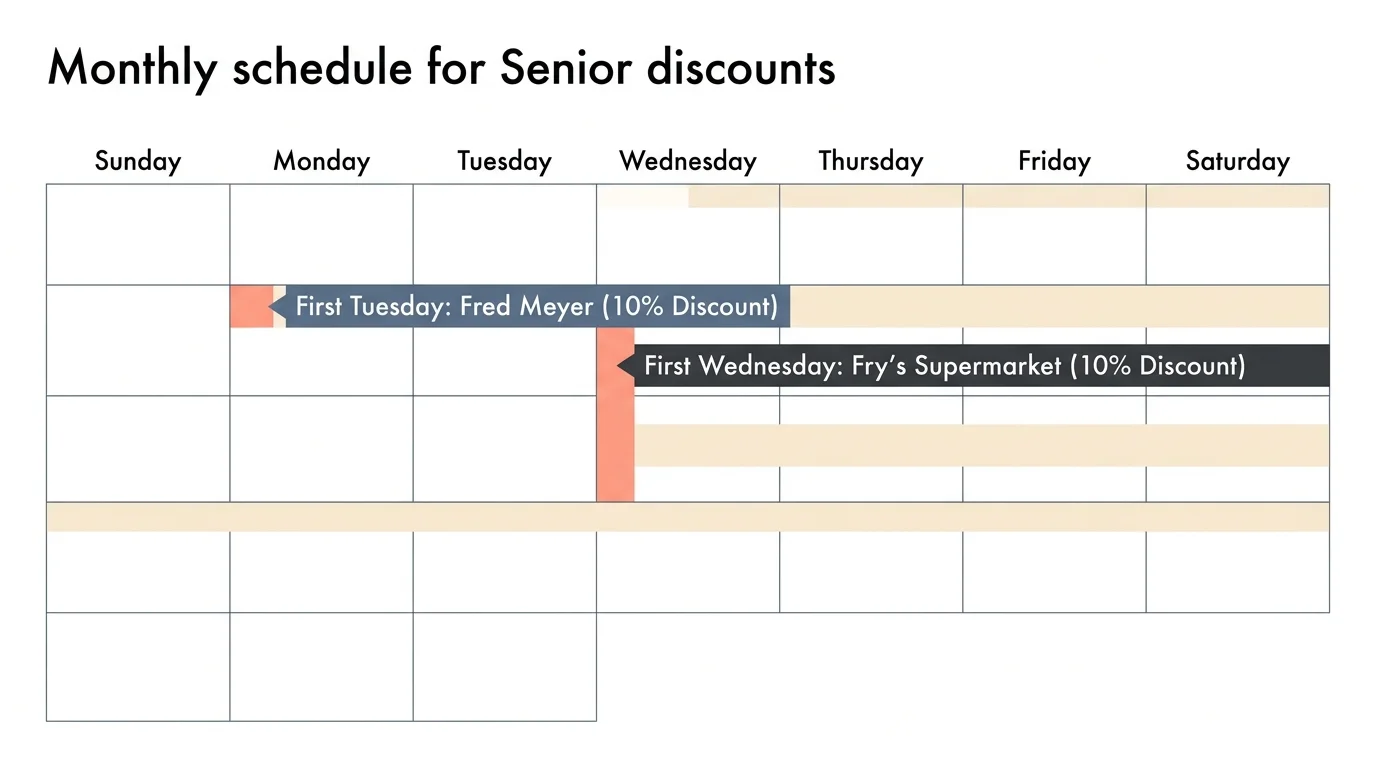
Current retail trends show that several major regional players still reward older shoppers with dedicated discount days. Albertsons, for example, frequently offers a 10 percent discount for shoppers age 55 and older on specific designated days of the month, though participation varies by local market. Shoppers in the Pacific Northwest who frequent Fred Meyer can claim a 10 percent discount on the first Tuesday of every month. Similarly, Fry’s Supermarket locations offer a 10 percent discount on the first Wednesday of each month for those aged 55 and older.
To maximize these retail shopping discounts, follow a clear strategy:
- Verify with the customer service desk: Cashiers frequently change and may not know store policies. Always ask the main customer service desk if they have a dedicated day for older adults.
- Link your age to your loyalty card: Some stores require you to present your driver’s license at the service desk once to permanently code your store loyalty card for automated age-based discounts.
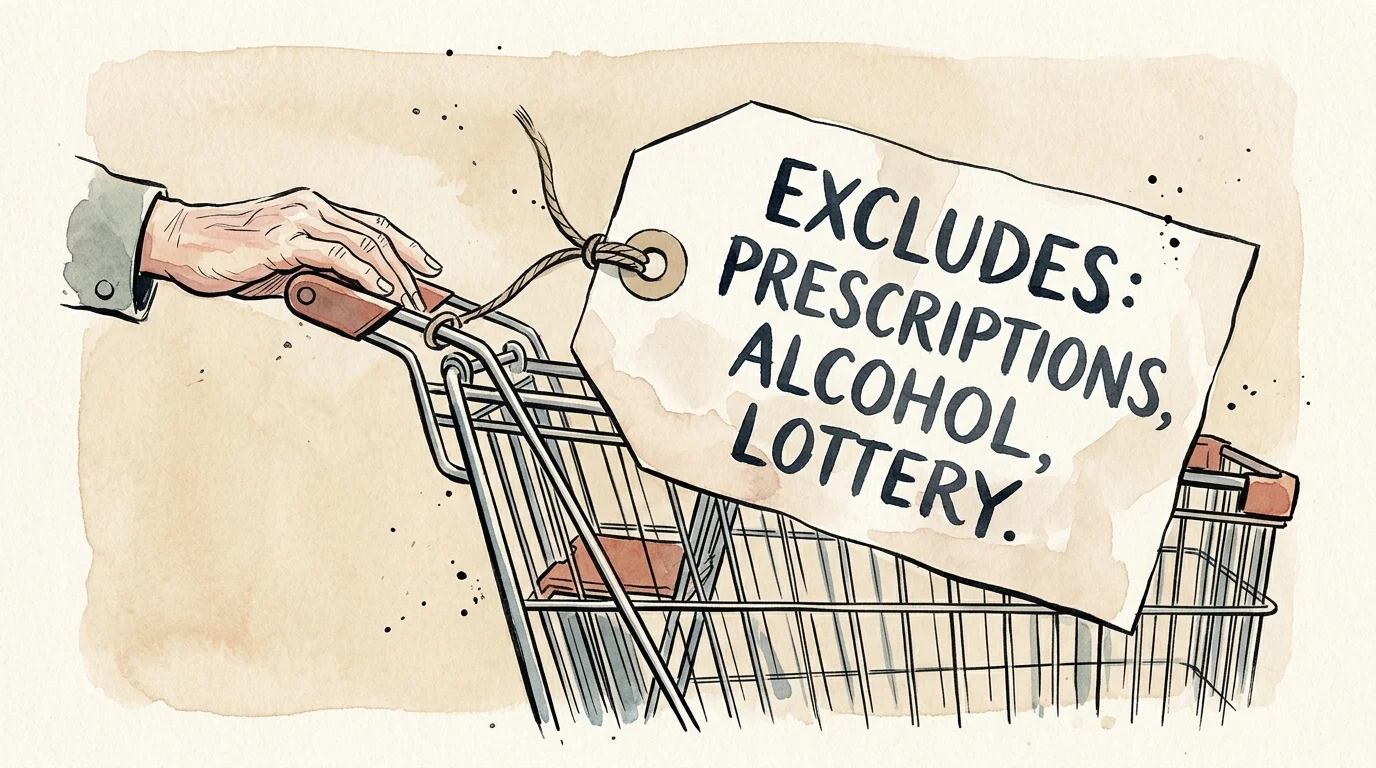
- Watch the exclusions: Retail discounts almost always exclude alcohol, tobacco, pharmacy prescriptions, and lottery tickets. Plan to buy your bulk pantry staples and expensive meat items on your specific discount day.
How SNAP Benefits Work for Seniors in 2026
The Supplemental Nutrition Assistance Program (SNAP) remains the most robust defense against high grocery costs for retirees. Unfortunately, widespread myths keep participation artificially low. Many people believe that collecting Social Security automatically disqualifies them from receiving SNAP, which is entirely false. SNAP rules include special provisions specifically designed to make it easier for people aged 60 and older to qualify.
For the fiscal year spanning October 2025 through September 2026, the maximum monthly SNAP allotment for a single-person household is $298. A two-person household can receive up to $546 per month. Rather than facing the strict gross income tests applied to younger adults, seniors generally only need to pass a net income test. This distinction acts as a massive advantage if you understand how to use deductions.
When calculating your net income for SNAP, caseworkers look at your total income and then subtract specific allowable expenses. If your resulting net income falls below the federal poverty line—which is $1,305 per month for a single individual in 2026—you qualify for assistance.
Maximizing Your SNAP Medical Deductions
The most underutilized tool in the SNAP application process is the medical deduction. If you are 60 or older and spend more than $35 a month on out-of-pocket medical expenses, you can deduct these costs from your income before your SNAP benefits are calculated. Because your grocery allotment increases as your net income decreases, proving your medical expenses directly puts more food money in your pocket.
Eligible medical deductions include:
- Medicare Part B and Part D premiums
- Prescription drug copayments
- Over-the-counter medication prescribed by a doctor
- Dentures, hearing aids, and prescription eyeglasses
- Transportation costs to and from medical appointments (including gas mileage or bus fare)
Gathering receipts for these expenses requires effort, but it often makes the difference between receiving the minimum $23 benefit and receiving well over $150 per month in grocery savings.
The Senior Farmers’ Market Nutrition Program (SFMNP)
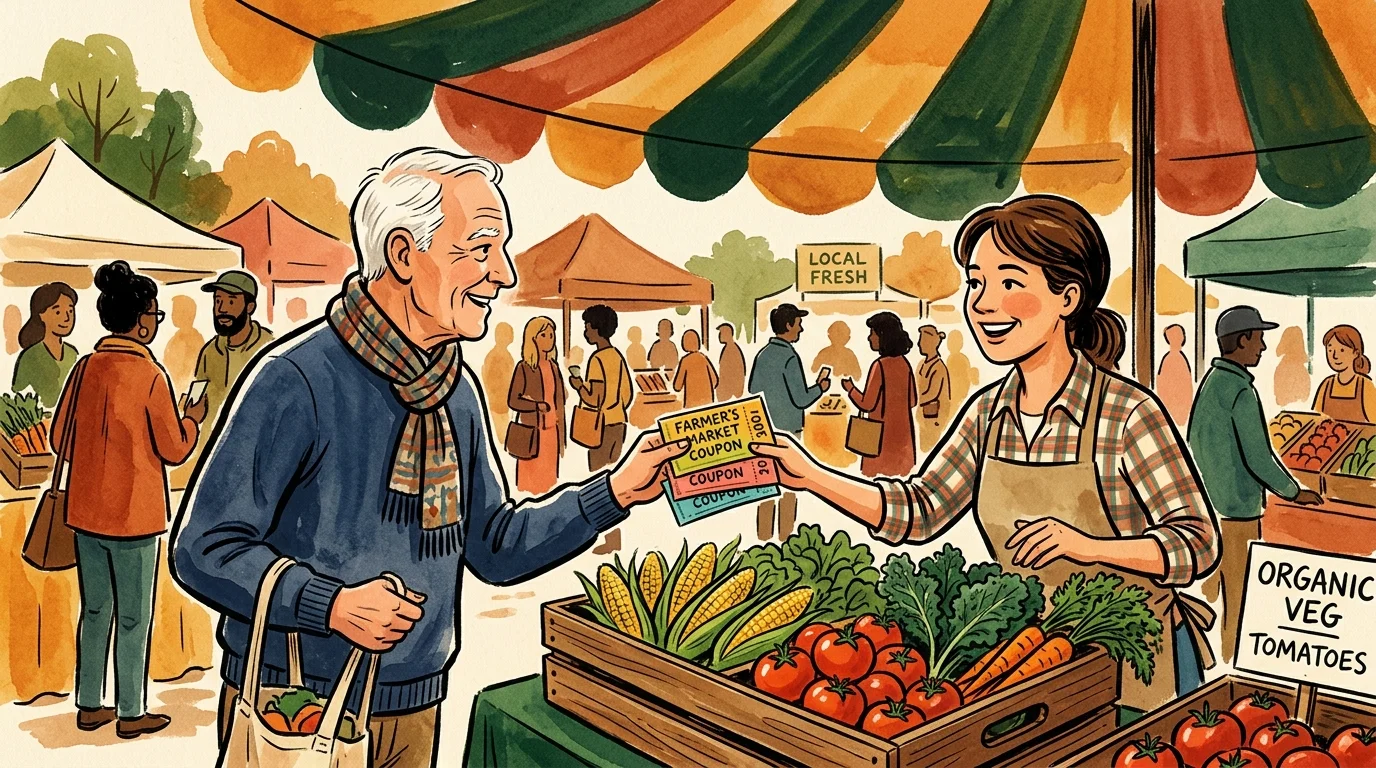
While SNAP helps cover standard supermarket trips, the Senior Farmers’ Market Nutrition Program (SFMNP) provides dedicated funds for purchasing fresh, locally grown fruits, vegetables, honey, and fresh-cut herbs. Administered by state agencies but funded federally, this program distributes physical vouchers, electronic benefit cards, or mobile app credits to eligible older adults every summer.
To qualify for the 2026 SFMNP season, you must be 60 years of age or older and meet strict income guidelines. The federal limits for 2026 cap annual gross income at $29,526 for a single-person household, which breaks down to $2,461 per month. For a two-person household, the limit sits at $40,034 annually, or $3,337 per month.
Because states manage their own SFMNP distributions, the application process and benefit delivery methods look entirely different depending on your location. Ohio, for instance, transitioned to a digital delivery system, issuing $50 in benefits via the Homegrown Benefits application. Connecticut provides electronic benefit cards to eligible residents, while Pennsylvania continues to distribute physical paper vouchers worth $5 each through local Area Agencies on Aging. You must reapply for this program every single year, even if you received the benefit the previous summer.
State-by-State Variations in Grocery Assistance Programs
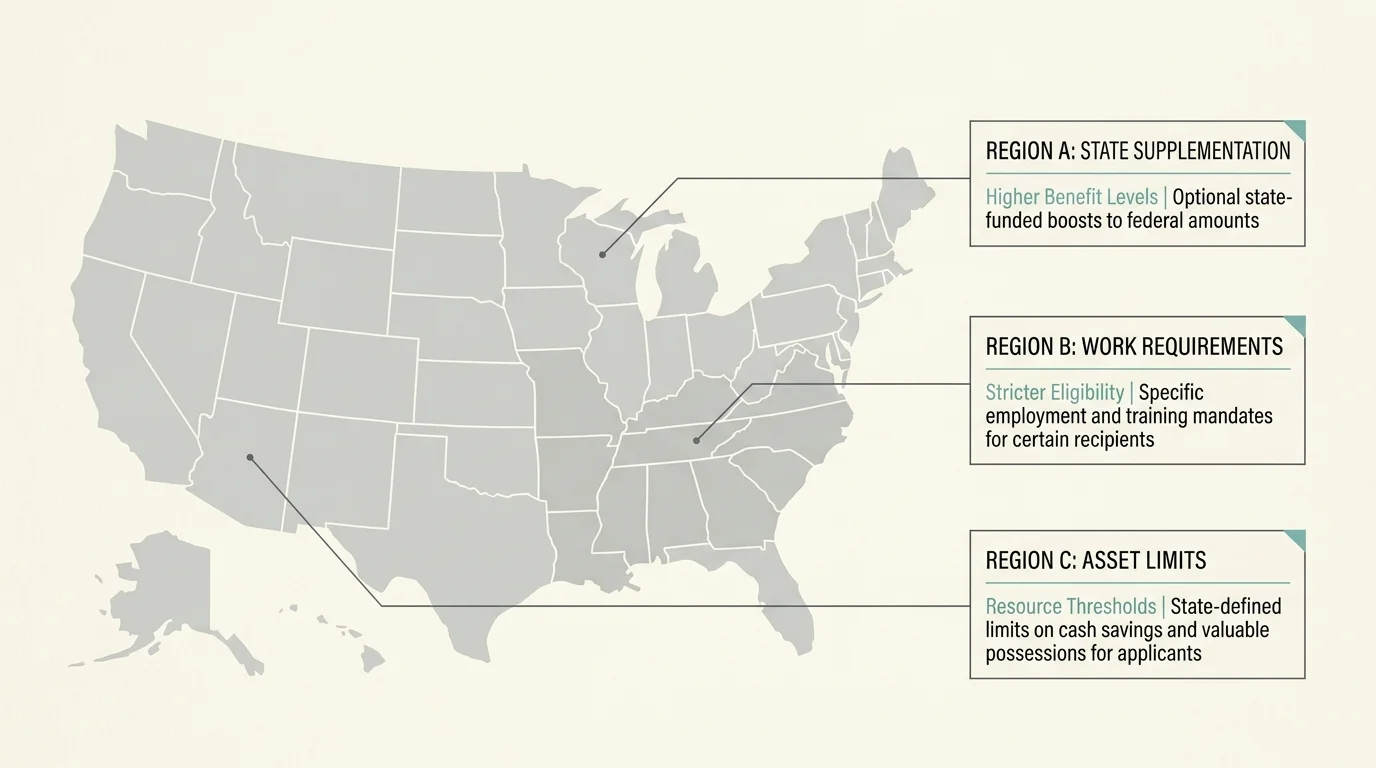
Federal guidelines set the baseline for grocery assistance, but state legislatures frequently add their own enhancements. Some states make it drastically easier to apply, while others provide bonus cash to incentivize healthy eating. Knowing your specific state’s rules allows you to leverage benefits that residents of neighboring states cannot access.
| State | Program Strategy | 2026 Benefit Highlight |
|---|---|---|
| Texas | Texas Simplified Application Project (TSAP) | Allows households composed entirely of older adults or individuals with disabilities to secure SNAP eligibility for three consecutive years without reapplying. |
| Massachusetts | Healthy Incentives Program (HIP) | Automatically adds between $40 and $80 back to a household EBT card each month when SNAP benefits are used to buy local produce. |
| New York | SNAP ABAWD Waiver Protections | Maintains explicit exemptions for older adults from strict work requirements that otherwise limit SNAP benefits for younger able-bodied adults. |
| Mississippi | Early-Cap SFMNP Limits | Operates its farmers’ market program on a strict first-come, first-served basis; applications often close before summer even begins once maximum funding is reached. |
Pitfalls to Watch For
Navigating senior programs requires precision. A single paperwork mistake can delay your benefits for months. Protect your grocery budget by avoiding these common missteps:
- Assuming Medicare covers groceries: Traditional Medicare does not provide grocery allowances. While certain highly specific Medicare Advantage (Part C) plans offer grocery allowance cards for individuals managing chronic conditions like diabetes or heart disease, these are private insurance perks, not a standard government benefit. Do not let aggressive marketing commercials convince you that Medicare will automatically pay for your food.
- Failing to track out-of-pocket medical costs: As detailed earlier, skipping the medical expense deduction on your SNAP application artificially inflates your calculated net income. Take the time to print out your pharmacy records and premium statements before you apply.
- Missing strict local deadlines: Programs like the SFMNP operate with finite annual budgets. If you wait until August to apply for farmers’ market vouchers, your local agency will likely have exhausted its funding for the year. Mark your calendar for April and May to submit your applications.
- Ignoring digital adaptations: Supermarkets increasingly hide their best discounts inside their smartphone applications. If you refuse to use a store’s digital coupon app, you will inevitably pay 10 to 20 percent more for the exact same cart of groceries than a shopper who digitally clipped their weekly savings.
“A budget is telling your money where to go instead of wondering where it went.” — Dave Ramsey, Personal Finance Expert

Getting Expert Help
If gathering documents, calculating net income, and navigating state websites feels overwhelming, do not abandon the process. Free, localized help exists explicitly to assist older adults in securing these benefits.
Your first step should be contacting your local Area Agency on Aging (AAA). These federally mandated agencies employ benefits counselors who understand the exact grocery discount programs available in your specific county. They can walk you through the SNAP application, help you gather your medical deduction documentation, and register you for farmers’ market vouchers.
Additionally, you can utilize the National Council on Aging’s online BenefitsCheckUp tool. By privately entering your zip code, income, and basic expense data, the tool scans thousands of federal, state, and local programs to produce a customized report of every grocery, utility, and healthcare benefit you qualify to receive.
Frequently Asked Questions
At what age do senior grocery discounts typically start?
Eligibility ages vary wildly by corporate policy. While federal programs like SNAP calculate senior status at age 60, many retail supermarket chains begin offering senior discount days at age 55. Always check directly with your local store, as they define the rules for their own retail promotions.
Does my Social Security income disqualify me from SNAP?
No. Social Security is counted as income, but it does not automatically disqualify you. If your Social Security check is your primary source of income, and your shelter and medical expenses reduce your net income below the federal poverty threshold, you can absolutely receive both Social Security and SNAP benefits simultaneously.
Can I use SNAP benefits to buy hot food at the grocery store?
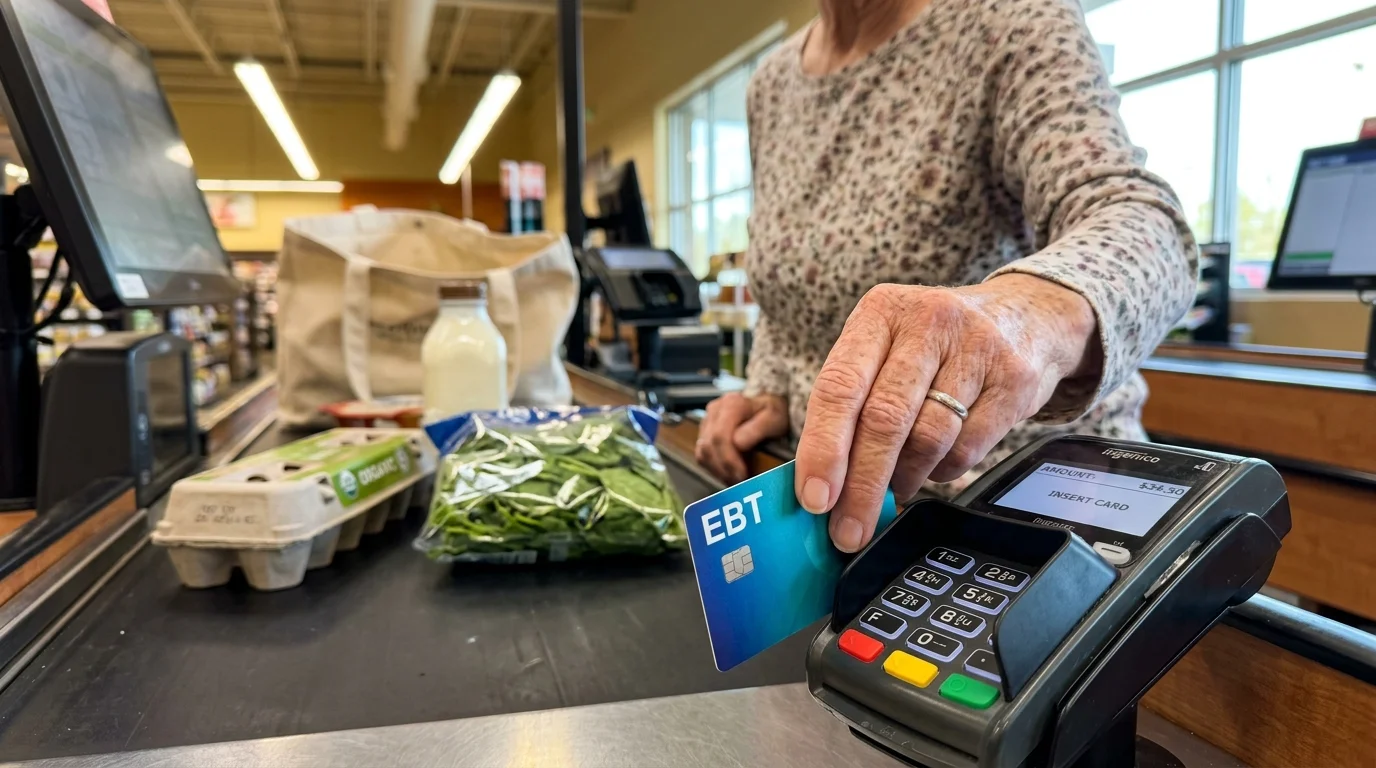
Generally, no. SNAP benefits are designed for groceries you take home to prepare. You cannot use an EBT card to buy hot, ready-to-eat meals at the supermarket deli, nor can you use it to purchase alcohol, tobacco, vitamins, or household paper products.
Do farmers’ market vouchers reduce my SNAP allotment?
No. The Senior Farmers’ Market Nutrition Program acts as a supplemental benefit. Receiving SFMNP vouchers will not decrease your monthly SNAP balance, nor will it impact your Social Security payments. You are highly encouraged to utilize both programs concurrently.
Taking control of your food costs does not mean buying less; it means utilizing the systems built to support you. By combining retail store discounts with state-optimized food benefits, you can protect your retirement savings from the constant pressure of inflation. Review your local supermarket policies this week, gather your medical receipts, and apply for the benefits you have earned.
This article provides general retirement education and information only. Everyone’s financial situation is unique—what works for others may not work for you. For personalized advice, consider consulting a qualified financial professional such as a CFP or CPA.
Last updated: July 2026. Retirement benefits, tax laws, and healthcare costs change frequently—verify current details with official sources such as SSA.gov, Medicare.gov, USDA Food and Nutrition Service, and the National Council on Aging.