
Stretch your monthly benefit by moving to a state where everyday essentials cost significantly less than the national average. When the Social Security Administration issued a 2.8% Cost-of-Living Adjustment (COLA) for 2026—adding an average of $56 per month to retiree checks—many seniors realized that modest raise barely kept pace with inflation in high-cost regions. Moving to a low-cost state acts as a permanent, compounding bump to your fixed income, effectively doubling your real-world purchasing power. By pairing lower state taxes with reduced expenses for housing, healthcare, and groceries, these eight affordable states allow you to unlock thousands of dollars in extra cash flow every single year without sacrificing your quality of life.
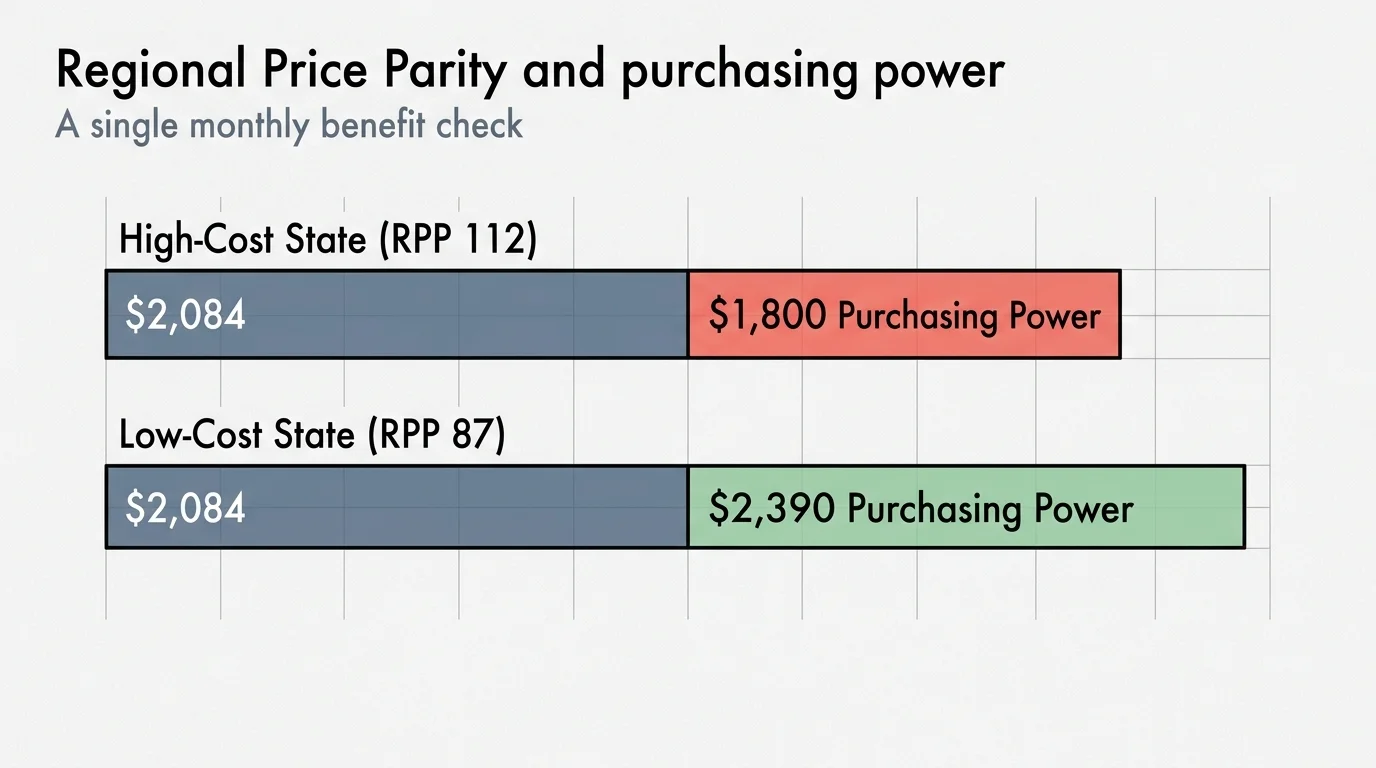
How COLA and Regional Price Parities Impact Your Retirement Budget
Every year, the federal government adjusts Social Security benefits to help seniors keep up with rising consumer prices. According to the Social Security Administration, the 2.8% COLA adjustment for 2026 brings the average monthly benefit for retired workers to roughly $2,064 to $2,084. While a $56 monthly bump helps offset everyday inflation, federal COLA calculations use a single national price index. That flat calculation creates a massive strategic opportunity for smart retirees; it completely ignores where you actually choose to unpack your bags.
The U.S. Bureau of Economic Analysis (BEA) measures this regional variance through Regional Price Parities (RPPs). In an average American city, an RPP score sits at exactly 100. If you live in a state like California or New York, where RPP scores often clear 110 or 112, your $2,084 Social Security check buys only $1,800 worth of actual goods and services. Conversely, when you relocate to a state with an RPP score near 87, that exact same $2,084 monthly benefit delivers over $2,390 in baseline purchasing power. You do not need to work harder or take risky investment gambles to earn that extra cash—you simply need to change your zip code.
Relocating to a region with a low cost of living index dramatically reduces your fundamental overhead. When lower grocery receipts, affordable utility bills, and modest property taxes anchor your budget, your monthly COLA check covers a far greater percentage of your total living expenses. That leaves more of your private retirement savings, IRAs, and 401(k) balances untouched, allowing your nest egg to compound longer while you enjoy a far more comfortable lifestyle.

The Top 8 States Where Your COLA Check Stretches Farther
To identify the absolute best locations for maximizing your retirement income, we evaluated data from the BEA, the Council for Community and Economic Research (C2ER), and state tax departments across the country. These eight states deliver an exceptional mix of low baseline consumer prices, senior-friendly tax policies, and affordable housing markets.
1. Mississippi
Mississippi routinely ranks as the most affordable state in the nation for retirees, boasting a BEA Regional Price Parity score of 87.0. Overall living costs sit roughly 13% below the national average, driven by exceptionally cheap real estate and low service costs. A standard monthly Social Security check buys far more fresh food, local services, and home maintenance here than almost anywhere else in the United States.
Tax benefits make Mississippi even more attractive for fixed-income households. The state completely exempts Social Security benefits from state income tax. Furthermore, Mississippi exempts qualified retirement income, including distributions from pensions, traditional IRAs, and 401(k) plans. Seniors aged 65 and older can also claim a generous homestead exemption on the first $75,000 of their primary home’s assessed value, keeping property tax obligations remarkably light.
2. Arkansas
Arkansas delivers the single highest overall purchasing power in the nation, featuring a BEA Regional Price Parity score of 86.9. Everyday items—from healthcare visits to hardware supplies—cost 13.1% less than the national benchmark. If you want your 2026 COLA bump to translate into genuine discretionary cash for travel, hobbies, or grand-kids, Arkansas offers an ideal landing spot.
From a tax perspective, Arkansas treats retirees with care. The state does not tax Social Security benefits, and it allows individual tax filers to deduct up to $6,000 of income from traditional employer retirement plans or IRAs. Combined with real estate values that remain far below national medians, the Natural State gives you low overhead and plenty of scenic outdoor spaces to enjoy your post-work years.
3. Oklahoma
Oklahoma holds a strong position on the affordability leaderboard with an RPP score of 87.8. Housing costs in the Sooner State drive most of these savings, frequently running 25% to 30% below the national average. Whether you choose to buy a modest single-family home or rent an apartment in a quiet community, your housing overhead will take a much smaller bite out of your monthly check.
Oklahoma exempts all Social Security retirement benefits from state income taxes. Additionally, the state provides a qualifying exemption of up to $10,000 per individual for other retirement and pension distributions. Plentiful energy production across the state also keeps residential utility bills low, helping you comfortably heat and cool your home without draining your checkbook during seasonal weather shifts.
4. West Virginia
Nestled in the Appalachian region, West Virginia offers incredible value for eastern retirees looking to lower their burn rate. With an overall cost of living index floating around 88.3, the state features some of the lowest median home purchase prices in the nation. Your retirement dollar unlocks substantial real estate value here, whether you prefer small mountain towns or vibrant river valleys.
West Virginia completed a phased elimination of its state income tax on Social Security benefits for most retirees, aligning its tax policy with surrounding competitive states. Property tax rates remain exceptionally low compared to nearby northeastern corridors. If you are relocating from New Jersey, New York, or Maryland, moving to West Virginia can cut your monthly living expenses nearly in half overnight.
5. Missouri
Missouri strikes a practical balance between midwestern affordability and access to major metropolitan medical infrastructure. Boasting an overall cost of living index around 88.6, Missouri offers affordable suburban housing, cheap groceries, and reasonable healthcare options in and around major hubs like St. Louis and Kansas City.
Missouri fully exempts Social Security benefits from state income taxes for single filers with an adjusted gross income under $85,000 and married couples filing jointly below $100,000. Public and private pension incomes also qualify for substantial state tax deductions. These balanced tax exemptions make Missouri a secure financial haven for middle-class retirees looking to protect their fixed monthly benefits.
6. Iowa
Iowa has rapidly transformed itself into one of the most tax-friendly states in the Midwest for older Americans. Iowa maintains an RPP score of 87.8, making daily essentials 12.2% cheaper than the national average. Beyond low baseline consumer prices, Iowa boasts stable housing markets and top-tier community healthcare networks.
Iowa passed sweeping tax reform that completely exempts retirement income from state income tax. As of recent tax years, Iowa taxpayers aged 55 and older pay zero state income tax on Social Security benefits, pension payouts, or withdrawals from traditional IRAs and 401(k) accounts. Eliminating state tax drag on your retirement accounts preserves thousands of extra dollars in your budget every year.
7. Kansas
Kansas features a cost of living index hovering around 87.5, providing reliable relief across almost every primary spending category. Transportation, groceries, and housing all fall well below national benchmarks, making it easy to manage a household purely on Social Security and modest personal savings.
Kansas exempts Social Security benefits from state income tax for any resident whose federal adjusted gross income falls at or below $75,000. If you fit within that threshold, your entire Social Security check remains untouched by state tax authorities. Low general consumer prices ensure that every dollar you save on taxes goes directly toward improving your standard of living.
8. Alabama
Alabama combines a mild southern climate with an incredibly low cost of living. Featuring a overall cost index hovering around 88.0, Alabama offers retirees affordable coastal access near the Gulf, peaceful rural countryside, and low cost-of-living metrics across all major municipalities.
Alabama treats retiree tax burdens with great leniency. The state does not tax Social Security retirement benefits, nor does it tax traditional defined-benefit pensions from government or private employers. Even better, Alabama imposes some of the lowest property tax rates per capita in the entire country, protecting homeowners from the escalating property tax spikes common in high-density coastal states.

State-by-State Retirement Affordability Comparison
The table below breaks down the key economic indicators, tax policies, and price index scores across our top eight retirement destinations. Use this summary to evaluate which state best aligns with your financial priorities and income sources.
| State | Price Index (BEA / MERIC) | Social Security Taxed? | Pension & IRA Exemptions | Primary Cost Advantage |
|---|---|---|---|---|
| Mississippi | 87.0 (13% below avg) | No | Full exemption on qualified income | Lowest overall cost of living nation-wide |
| Arkansas | 86.9 (13.1% below avg) | No | Up to $6,000 deduction on IRAs/pensions | Highest general purchasing power |
| Oklahoma | 87.8 (12.2% below avg) | No | Up to $10,000 deduction per person | Extremely low real estate & utility costs |
| West Virginia | 88.3 (11.7% below avg) | No (Phased out) | Partial exemptions based on income | Lowest median single-family home prices |
| Missouri | 88.6 (11.4% below avg) | No (Income limits apply) | Broad pension deductions available | Affordable suburban hubs & healthcare access |
| Iowa | 87.8 (12.2% below avg) | No | 100% exempt for age 55+ | Zero state tax on all retirement withdrawals |
| Kansas | 87.5 (12.5% below avg) | No (If AGI ≤ $75k) | Exemptions for public pensions | Low everyday grocery & transit costs |
| Alabama | 88.0 (12.0% below avg) | No | Full exemption for defined-benefit pensions | Ultra-low property taxes nationwide |
“Controlling your fixed expenses in retirement gives you direct control over your financial freedom. When you move to a state that respects your fixed income, you effectively grant yourself a massive raise without taking on a single dollar of market risk.” — Ed Slott, CPA and IRA Expert
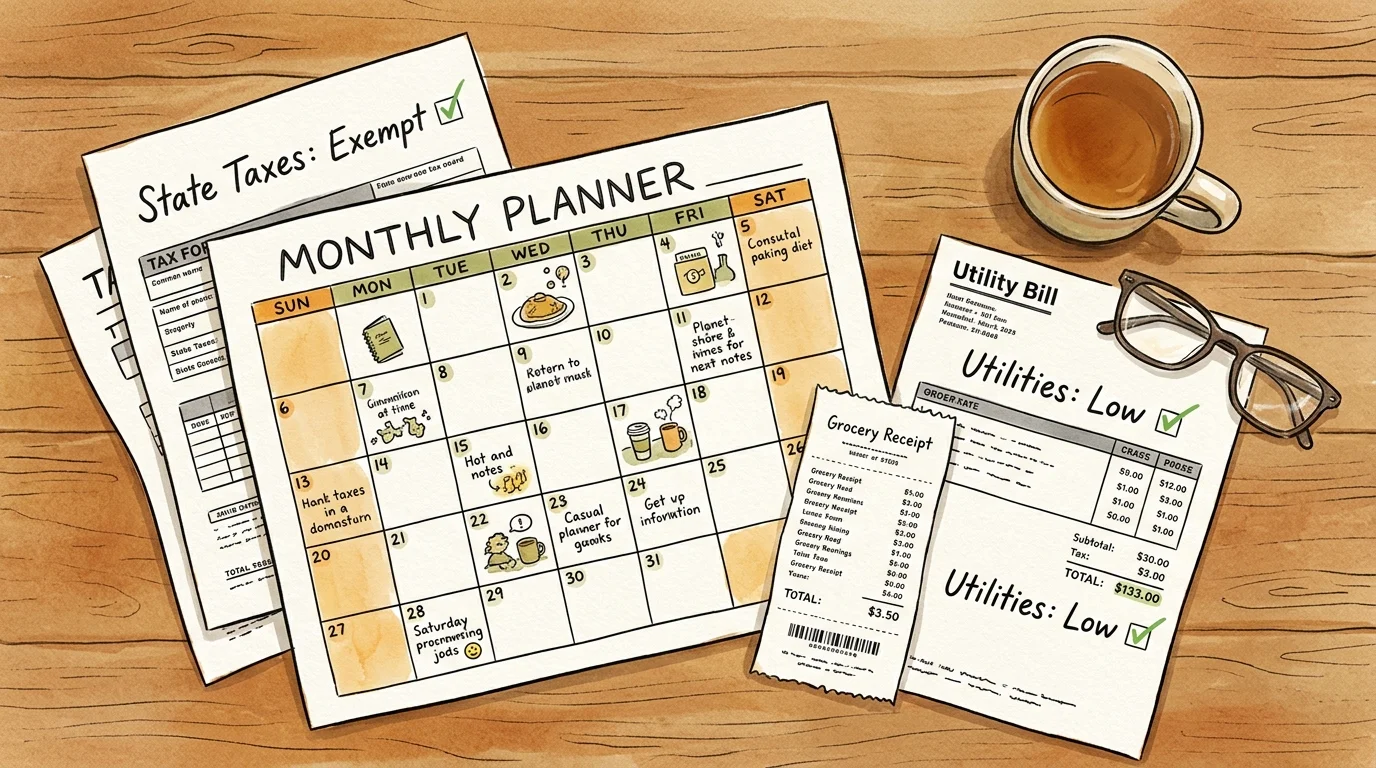
Beyond Housing: Hidden Savings in Taxes, Healthcare, and Utilities
When planning a relocation, many people focus exclusively on home prices. While housing remains your single largest expense, secondary line items can quietly make or break your monthly budget. Evaluating the complete picture ensures your move delivers true, net financial improvement.
State tax policy plays a massive role in preserving your purchasing power. According to the Internal Revenue Service, federal taxes may bite into up to 85% of your Social Security benefits if your combined income exceeds specific limits. Adding a state-level tax on top of that federal burden creates severe tax drag. Fortunately, as of 2026, 42 states plus Washington, D.C., do not tax Social Security retirement benefits. Only 8 states still levy income taxes on Social Security (Colorado, Connecticut, Minnesota, Montana, New Mexico, Rhode Island, Utah, and Vermont), and even those states offer income-based phase-outs. Moving away from high-tax regions keeps your benefits where they belong: in your wallet.
Healthcare costs represent another critical category. According to research from the National Council on Aging, healthcare costs consume a growing share of senior income during retirement years. Moving to a lower-cost state reduces out-of-pocket costs for secondary health services, dental work, and home health assistance. However, you must carefully evaluate local provider networks. Before finalizing a relocation, check Medicare.gov to verify that your preferred Medicare Advantage or Medigap plan offers robust provider access in your target county.
Finally, consider everyday utility and property maintenance costs. States with abundant domestic energy, such as Oklahoma and Kansas, offer cheaper electric and natural gas rates. Lower repair labor rates in these states mean fixing a roof, servicing an air conditioner, or hiring help around the house costs 15% to 30% less than in major metro centers, preserving your monthly COLA check for discretionary enjoyment.
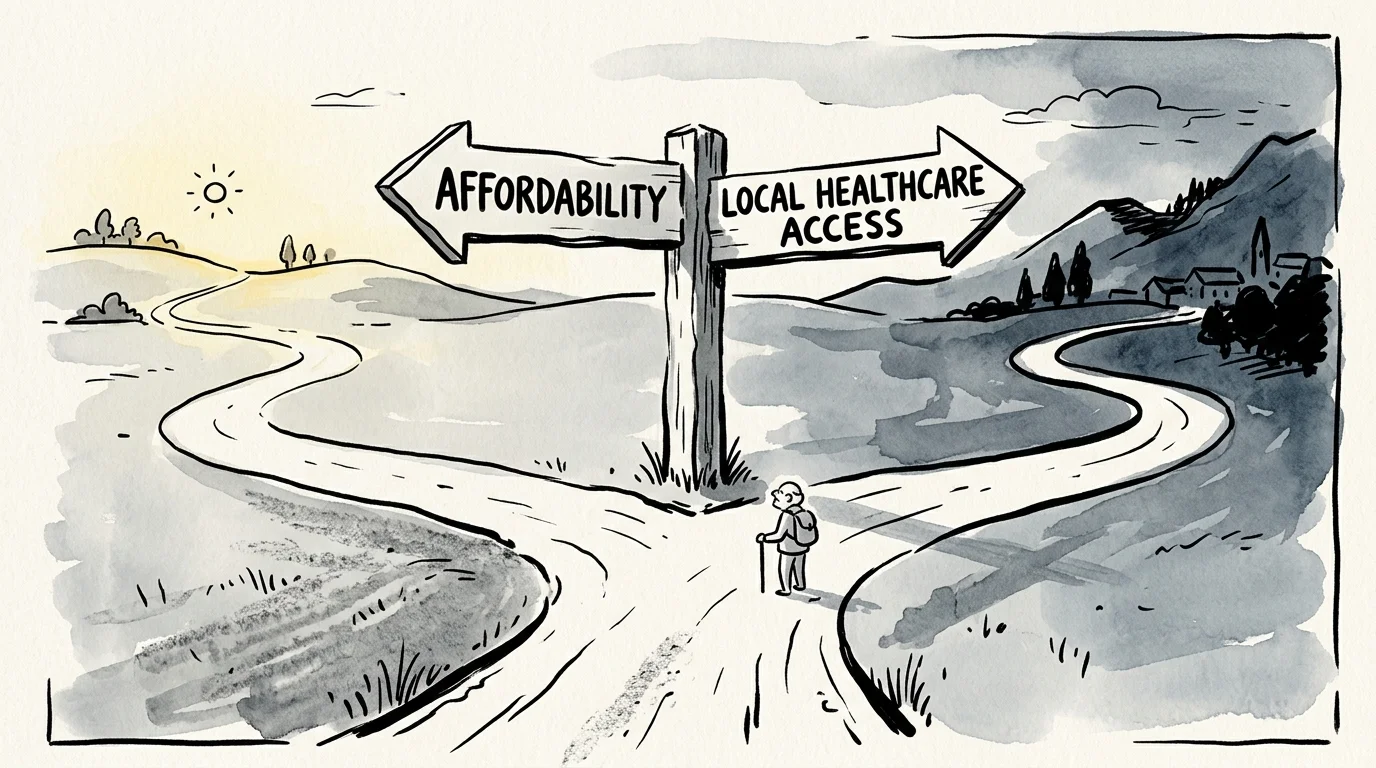
Pitfalls to Watch For Before Relocating
Moving across state lines to stretch your COLA check is a proven, effective strategy, but rushing into a move without thorough research can create unexpected headaches. Protect your retirement savings by watching out for these common relocation traps:
- The Tax-Shift Trap: A state without an income tax might make up for lost revenue by charging higher sales taxes or elevated property tax rates. Always calculate your total tax footprint—income, property, and sales taxes combined—before making a final decision.
- Healthcare Deserts: Ultra-affordable rural towns sometimes lack major regional hospital systems or specialized medical care. Ensure your destination sits within a reasonable 30-to-45-minute drive of a quality emergency room and specialist network.
- Homeowners Insurance Spikes: Certain low-cost regions face elevated risks from severe weather events, such as tornadoes, seasonal flooding, or hail. High insurance premiums can quickly erode the savings you gained on cheap real estate.
- Travel and Family Distance: Moving far away from children and grandchildren can dramatically increase your discretionary travel budget. Ensure that your projected cost-of-living savings outweigh the extra airfare or gas expenses required to visit loved ones.

Getting Expert Help
Relocating your household in retirement represents a major financial decision that touches tax law, real estate transactions, and estate planning. Navigating these transitions smoothly often requires professional guidance tailored to your specific circumstances. Consider consulting an expert in the following scenarios:
Multi-State Tax Optimization: If you draw income from multiple sources—such as pensions, traditional IRAs, Roth accounts, and taxable brokerage accounts—a certified public accountant (CPA) can structure your withdrawals to minimize federal and state tax liabilities during your state transition.
Comprehensive Estate Plan Updates: Estate law, probate rules, and power-of-attorney requirements vary significantly from state to state. Moving your domicile requires a local estate attorney to update your living wills, trusts, and healthcare directives to comply with your new state’s statutes.
Relocation Cost-Benefit Analysis: Working with a fee-only fiduciary advisor through the Certified Financial Planner Board allows you to model real-world scenarios. A CFP can help you calculate exact moving expenses, real estate closing fees, and state tax differences to determine your precise break-even timeline.
Frequently Asked Questions
Which states tax Social Security benefits in 2026?
As of 2026, only eight states levy state income taxes on Social Security retirement benefits: Colorado, Connecticut, Minnesota, Montana, New Mexico, Rhode Island, Utah, and Vermont. Most of these states offer income-based deductions or phaseouts that reduce or eliminate the tax burden for low- to moderate-income retirees.
How much extra income does moving to a low-cost state actually save?
Moving from a high-cost state (with a price index of 115) to a low-cost state (with a price index of 87) effectively increases your purchasing power by roughly 25% to 30%. For a retiree living on an average Social Security check of $2,084 per month, that transition unlocks the equivalent of $500 or more in monthly discretionary purchasing power.
Are states with no income tax automatically the cheapest for retirees?
Not necessarily. While the eight states with no individual income tax (such as Florida, Texas, and Nevada) offer significant income tax advantages, some offset this benefit with higher property tax rates, higher sales taxes, or rapidly escalating home insurance costs. Always evaluate total living expenses rather than focusing solely on state income tax rules.
How does a regional cost of living affect Medicare costs?
Original Medicare (Part A and Part B) premiums and deductibles are set federally and stay uniform nationwide. However, local cost of living heavily influences private Medicare Advantage plans, Medigap supplemental coverage policies, and Part D prescription plan premiums, which vary significantly by state and county.
Take Control of Your Retirement Income
Your annual Social Security COLA increase represents a valuable financial boost, but changing your geographical location empowers you to multiply its real-world impact. By choosing a state with a low baseline cost of living, reasonable real estate values, and senior-friendly tax policies, you give yourself an immediate, lasting financial cushion. Take time to analyze your monthly spend, compare total tax obligations, and research healthcare accessibility in target communities. With careful planning, you can ensure your hard-earned benefits provide maximum comfort, security, and enjoyment throughout your retirement years.
This article provides general retirement education and information only. Everyone’s financial situation is unique—what works for others may not work for you. For personalized advice, consider consulting a qualified financial professional such as a CFP or CPA.
Last updated: February 2026. Retirement benefits, tax laws, and healthcare costs change frequently—verify current details with official sources.