
A monthly retirement budget of $2,500 still delivers a comfortable lifestyle if you choose the right location. According to the Social Security Administration, the average retired worker receives nearly $2,000 per month in benefits.
Adding modest personal savings easily elevates your monthly income to the $2,500 threshold. In expensive coastal cities, that sum vanishes quickly; in affordable markets, it covers your housing, healthcare, groceries, and leisure.
Finding places where everyday prices align with your income protects your nest egg from premature depletion. Here are ten American cities where $2,500 a month still covers everything you need.

How to Allocate a $2,500 Monthly Retirement Budget
Living comfortably on $30,000 a year requires disciplined spending and predictable local prices. Financial planners suggest keeping housing costs below 35 percent of your gross income.
On a $2,500 monthly budget, your rent or home maintenance should remain under $875. This housing ceiling leaves enough money for essential out-of-pocket medical bills, food, and emergency reserves.
Most fixed-income retirees balance their monthly expenses across five primary categories:
- Housing and Rent: $700 to $875
- Healthcare and Insurance: $350 to $500
- Groceries and Household Goods: $300 to $400
- Utilities and Internet: $175 to $250
- Transportation and Leisure: $250 to $350
Healthcare requires particular vigilance because costs rise as you age. The standard Part B premium tracked by Medicare.gov baseline rates consumes roughly $175 to $185 monthly per person.
Factoring in a Medigap policy or Medicare Advantage plan creates an effective healthcare baseline near $400. The remaining funds cover everyday needs, provided your local cost of living remains low.
“A big part of financial freedom is having your heart and mind free from worry about what-ifs.” — Suze Orman, Personal Finance Author

1. Brownsville, Texas: Coastal Living on a Modest Income
Brownsville sits at the southern tip of Texas, offering warm subtropical weather and exceptional affordability. The local cost of living runs roughly 20 to 25 percent below the national average.
Renters find quality one-bedroom apartments for $750 to $800 per month. If you prefer homeownership, median home prices hover around $190,000.
Texas levies no state personal income tax. Your Social Security checks, pension payouts, and retirement distributions arrive entirely free of state tax withholdings.
Warm Gulf breezes and proximity to South Padre Island provide plenty of free outdoor entertainment. You can spend afternoons fishing or birdwatching without draining your bank account.

2. Toledo, Ohio: Great Lakes Culture and Bargain Real Estate
Toledo offers midwestern hospitality alongside some of the lowest property values in the United States. The city sits approximately 20 percent below the national cost-of-living benchmark.
One-bedroom apartments average between $725 and $835 each month. Buyers often secure solid single-family homes for under $145,000 in established neighborhoods.
Ohio completely exempts Social Security benefits from state income taxation. The state also provides targeted senior tax credits for households with qualifying adjusted gross income.
Retirees enjoy rich cultural institutions like the world-renowned Toledo Museum of Art, which offers free admission. The nearby Lake Erie shoreline provides scenic walking trails throughout the warmer months.

3. Akron, Ohio: Outstanding Healthcare and Rolling Hills
Located just south of Cleveland, Akron combines small-city housing costs with world-class medical access. Overall consumer prices run 18 percent below the national average.
You can rent a comfortable one-bedroom apartment for $750 to $850 per month. Modest starter homes and compact bungalows frequently sell for $135,000 to $150,000.
Living in Akron places you near the Cleveland Clinic and Akron General healthcare networks. Having premier specialists nearby keeps your medical travel expenses minimal.
The city borders Cuyahoga Valley National Park, giving you free access to hiking trails and historic canals. Akron allows you to enjoy an active lifestyle on a strict budget.

4. Fort Wayne, Indiana: Stable Living with Midwestern Charm
Fort Wayne frequently ranks among the most livable, low-cost communities in the Midwest. The city boasts an overall cost of living roughly 11 percent below national figures.
Median rents for one-bedroom units range from $800 to $900 per month. Indiana caps owner-occupied residential property taxes, protecting homeowners from sudden annual rate hikes.
The state of Indiana does not tax Social Security income. While other retirement distributions face a modest flat income tax, local goods remain reasonably priced.
A recently revitalized riverfront promenade and active community center network provide year-round activities. You can attend seasonal festivals, garden shows, and community concerts for very little money.

5. Springfield, Missouri: Gateway to the Ozarks
Springfield blends rolling hills, clear streams, and low living expenses in southwestern Missouri. Data from state economic agencies shows local prices running 11 percent below national averages.
Clean one-bedroom apartments generally rent for $850 to $925 monthly. Retirees looking to buy find charming brick homes priced around $220,000.
Missouri completely phased out state income taxes on Social Security benefits for all residents. This policy leaves more of your monthly check available for personal living costs.
Outdoor recreation abounds with Table Rock Lake and the Ozark National Scenic Riverways nearby. Springfield delivers scenic leisure without the steep price tag of coastal resort towns.

6. Huntington, West Virginia: Appalachian Riverfront Value
Huntington sits along the Ohio River and offers some of the most budget-friendly housing in America. The overall cost of living runs 20 percent below the national baseline.
One-bedroom rental apartments frequently lease for $650 to $725 per month. Median home sale prices sit under $140,000, making outright homeownership achievable for many downsizers.
West Virginia completed its legislative phase-out of state income taxes on Social Security benefits. Retirees retain their full federal benefit payments without state-level deductions.
Marshall University anchors the town, contributing active performing arts series and continuing education classes. Beautiful municipal parks like Ritter Park provide walking trails and rose gardens free of charge.
“Budgeting isn’t about limiting yourself; it’s about making the things that excite you possible.” — Jean Chatzky, Financial Journalist and Author

7. Mobile, Alabama: Historic Charm and Low Property Taxes
Mobile delivers authentic coastal living, mild winters, and historic architecture along the Gulf Coast. Consumer prices in Mobile sit roughly 16 percent below national benchmarks.
Renting a one-bedroom apartment typically requires $800 to $880 each month. Home buyers benefit from Alabama’s effective property tax rate, which remains among the lowest nationwide.
Alabama exempts Social Security benefits and defined-benefit public pensions from state income tax. Homeowners aged 65 and older also qualify for generous homestead exemptions on state property taxes.
You can explore historic squares shaded by live oaks and azaleas throughout the year. Fresh Gulf seafood and local farmers markets help you eat well without exceeding your food budget.

8. Scranton, Pennsylvania: Classic Town with Senior Tax Relief
Scranton offers mountain views, historic streetscapes, and easy access to major eastern metropolitan hubs. Everyday expenses run 14 percent lower than the national average.
One-bedroom apartments generally rent for $750 to $850 per month. Established single-family houses and duplexes often list below $160,000.
Pennsylvania stands out as an exceptionally friendly tax haven for seniors. The state exempts Social Security, 401(k) withdrawals, IRA distributions, and pensions from state income taxes for residents 60 and older.
The Lackawanna River Heritage Trail provides miles of paved walking and cycling paths. Scranton gives you classic northeastern charm without the punishing northeastern price tag.

9. Wichita, Kansas: Prairie Convenience and Low Overhead
Wichita features expansive skies, wide thoroughfares, and a solid economy anchored by manufacturing and aviation. Living costs run roughly 12 percent below national numbers.
Apartment hunters can easily find attractive one-bedroom layouts for $750 to $820 per month. Median home prices remain well under $210,000 across multiple quiet neighborhoods.
Kansas eliminated all state income taxes on Social Security benefits, removing previous income thresholds. This reform provides instant tax relief to fixed-income residents across the state.
The city maintains over 140 public parks, several public golf courses, and an extensive riverfront path system. Free art gallery crawls and community markets keep your monthly leisure spending negligible.

10. Hickory, North Carolina: Mountain Foothills Affordability
Nestled in the Catawba Valley, Hickory gives retirees scenic mountain views and a gentle four-season climate. Its cost of living sits approximately 8 percent below national figures.
One-bedroom apartments average between $890 and $975 monthly in safe, walkable settings. Affordable single-story patio homes provide maintenance-free living for downsizers.
North Carolina exempts Social Security payments from state income taxes, preserving your primary safety net. While distributions from private retirement accounts face a flat tax, overall property taxes remain manageable.
The Blue Ridge Parkway is a short drive away, offering endless opportunities for daytime excursions. Hickory proves you can enjoy mountain beauty without paying premium mountain resort rates.
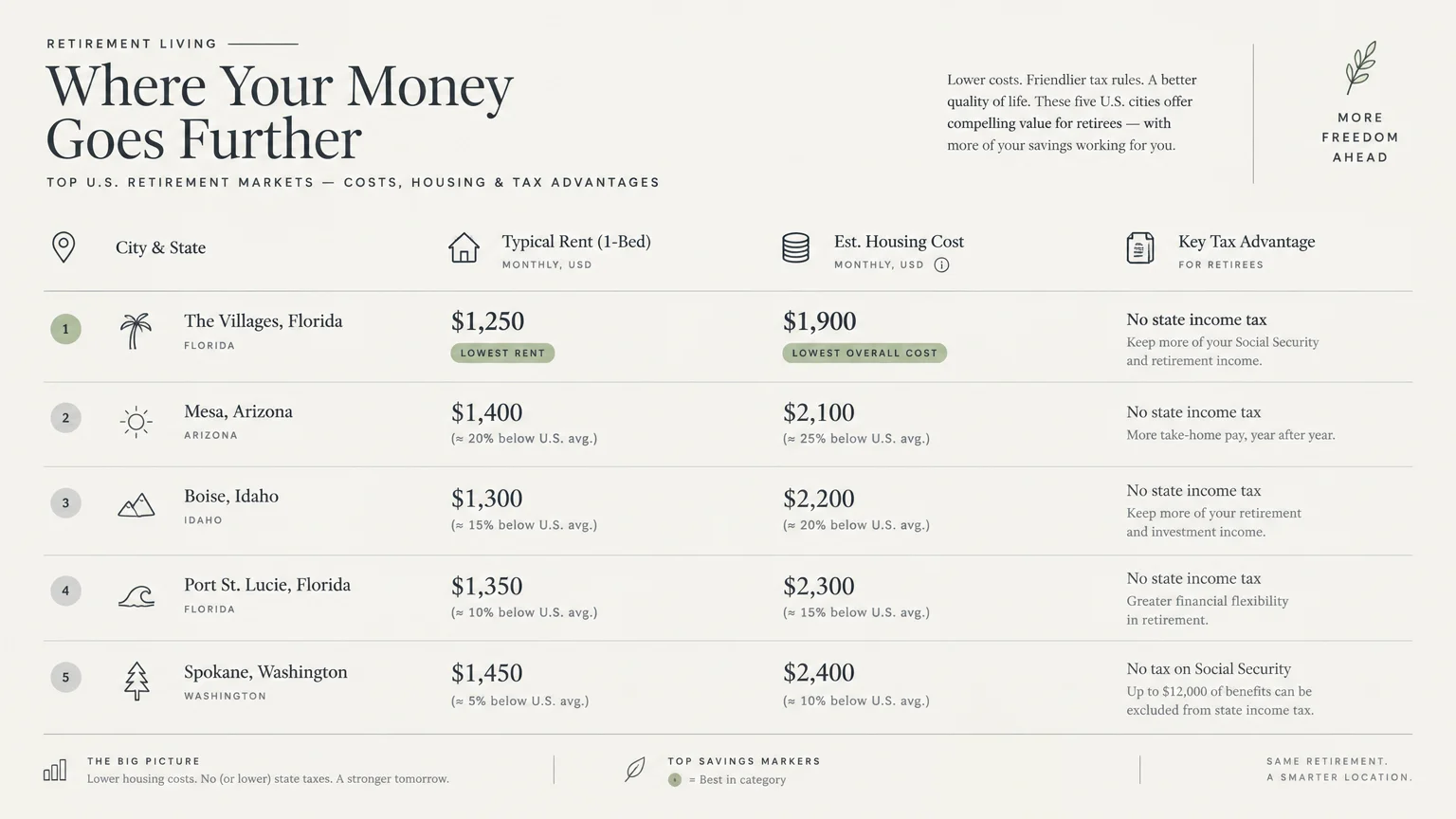
Comparing Top Affordable Retirement Cities
Comparing your options side by side clarifies which community fits your personal financial strategy. The table below outlines typical rents, cost differences, and state tax rules across all ten destinations.
| City and State | Median 1-BR Rent | Cost vs. National Avg. | Social Security Tax Status |
|---|---|---|---|
| Brownsville, TX | $750 – $800 | -22% | 100% Tax-Free (No State Tax) |
| Toledo, OH | $725 – $835 | -20% | 100% Exempt from State Tax |
| Akron, OH | $750 – $850 | -18% | 100% Exempt from State Tax |
| Fort Wayne, IN | $800 – $900 | -11% | 100% Exempt from State Tax |
| Springfield, MO | $850 – $925 | -11% | 100% Exempt from State Tax |
| Huntington, WV | $650 – $725 | -20% | 100% Exempt from State Tax |
| Mobile, AL | $800 – $880 | -16% | 100% Exempt from State Tax |
| Scranton, PA | $750 – $850 | -14% | 100% Exempt (All Retirement Income) |
| Wichita, KS | $750 – $820 | -12% | 100% Exempt from State Tax |
| Hickory, NC | $890 – $975 | -8% | 100% Exempt from State Tax |
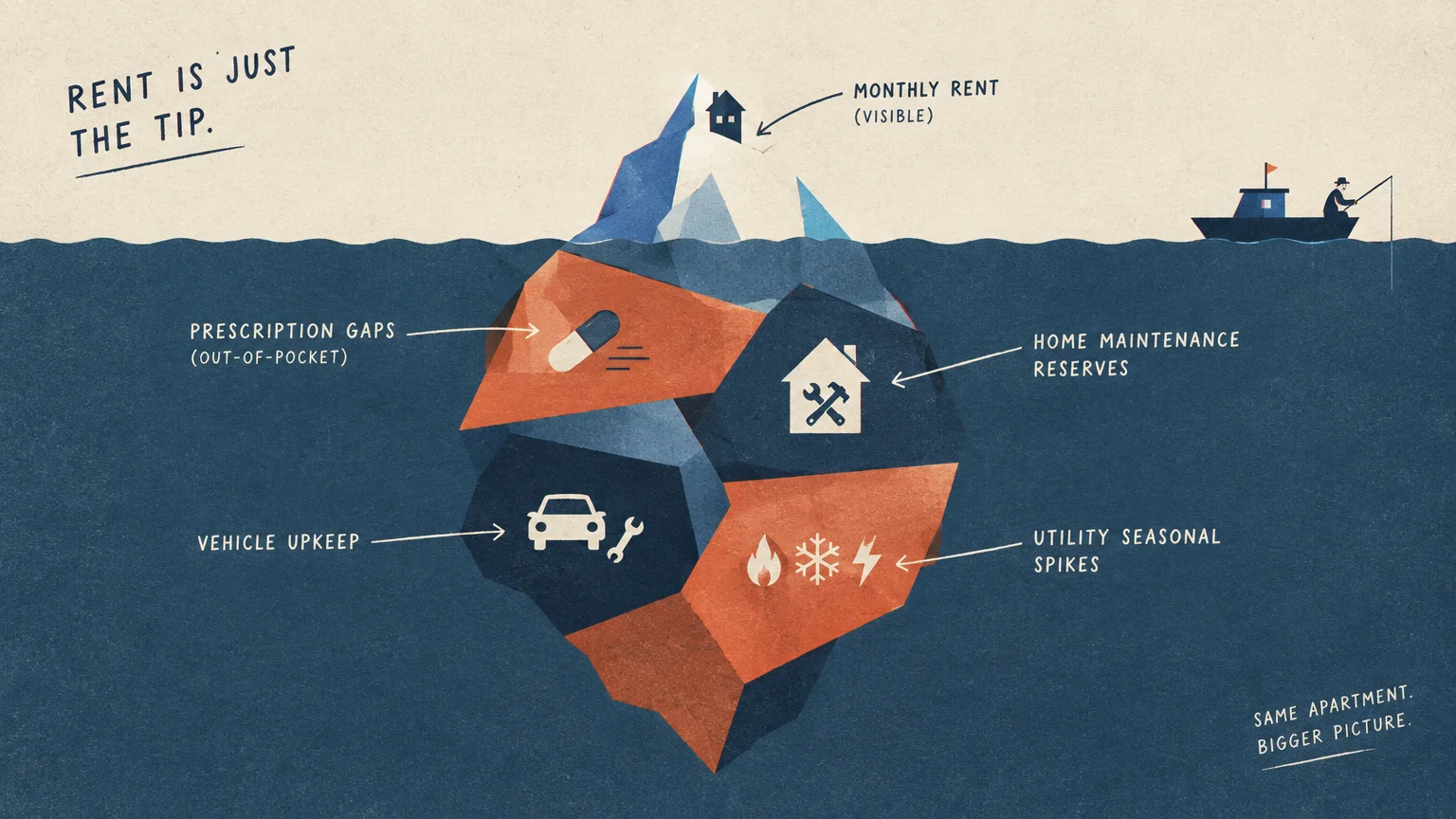
Managing Hidden Retirement Expenses
Moving to an affordable city creates immediate budget margin, but secondary expenses still require careful planning. Heating bills in Ohio and Pennsylvania can jump during freezing winter snaps.
Conversely, summer cooling in Mobile or Brownsville pushes electric bills higher for several months. Budgeting a flat $200 monthly utility average prevents seasonal utility shock.
Transportation expenses also vary depending on local municipal layout and driving distance. Cities with compact downtown footprints let you run errands with minimal fuel consumption.
Explore programs cataloged by the National Council on Aging if your budget tightens unexpectedly. Many states provide utility bill subsidies and transit discounts for eligible older adults.

Pitfalls to Watch For
Relocating primarily for cheap housing can lead to regret if you overlook other essential lifestyle factors. Medical network compatibility should always rank among your top considerations.
Confirm that your preferred doctors participate in your Medicare Advantage or Medigap plan before moving. Access to reliable regional hospitals ensures you receive high-quality ongoing care.
Avoid buying an aging home that requires major structural or plumbing overhauls. Unexpected maintenance bills can quickly overwhelm a fixed $2,500 monthly income.
Consider renting for your first year in a new city before buying real estate. Renting lets you test neighborhood walkability, traffic patterns, and seasonal weather firsthand.

Getting Expert Help
Relocating across state lines impacts your long-term tax liabilities, estate planning, and healthcare benefits. Consulting a professional provides personalized clarity before you pack your bags.
Consider hiring a licensed expert in the following circumstances:
- Multi-State Tax Transitions: Navigating distributions from traditional IRAs and pensions under new state tax codes.
- Medicare Coverage Adjustments: Switching Medicare Advantage plans across county or state service areas.
- Home Sale Capital Gains: Calculating potential tax liabilities using rules detailed by the Internal Revenue Service.
- Holistic Cash Flow Planning: Structuring withdrawal schedules with help from the Certified Financial Planner Board.
A short consultation helps ensure your proposed budget withstands unexpected market downturns or inflation spikes. Expert verification protects your peace of mind.
Frequently Asked Questions
Can you live comfortably on $2,500 a month in retirement?
Yes, $2,500 a month provides a secure lifestyle in many midwestern and southern communities. Success depends on maintaining housing costs below $875 per month.
Which states do not tax retirement income?
States like Texas, Florida, and Nevada levy zero personal income taxes on any earnings. Pennsylvania exempts almost all retirement distributions, including pensions and 401(k) withdrawals, for seniors.
What portion of a $2,500 budget should go toward healthcare?
Retirees should allocate between $350 and $500 monthly for combined healthcare needs. This covers Medicare Part B premiums, supplemental coverage, prescription drugs, and minor dental or vision costs.
Is it better to rent or buy on a fixed retirement budget?
Renting often protects fixed-income retirees from unpredictable expenses like roof replacements or rising property taxes. Buying works well if your mortgage is paid off and property taxes remain low.
Living well on a modest retirement budget remains entirely possible with thoughtful research and proactive location choices. Take time to explore these affordable communities, calculate your local living costs, and secure a comfortable retirement lifestyle.
This article provides general retirement education and information only. Everyone’s financial situation is unique—what works for others may not work for you. For personalized advice, consider consulting a qualified financial professional such as a CFP or CPA.
Last updated: February 2026. Retirement benefits, tax laws, and healthcare costs change frequently—verify current details with official sources.