
Helping your grandchild graduate college debt-free ranks among the greatest gifts you can offer. Strategic financial support provides your family lasting peace of mind and builds generational wealth.
Balancing this generosity requires careful planning so you safeguard your own retirement while maximizing education savings gifts.
Major legislative updates have made saving for grandkids college easier and more tax-efficient than ever before. You have access to flexible strategies that protect financial aid eligibility while optimizing every dollar you invest.
The Reality of Higher Education Costs Today
College expenses continue to outpace broad economic inflation. Higher tuition bills make early planning essential for families across the country.
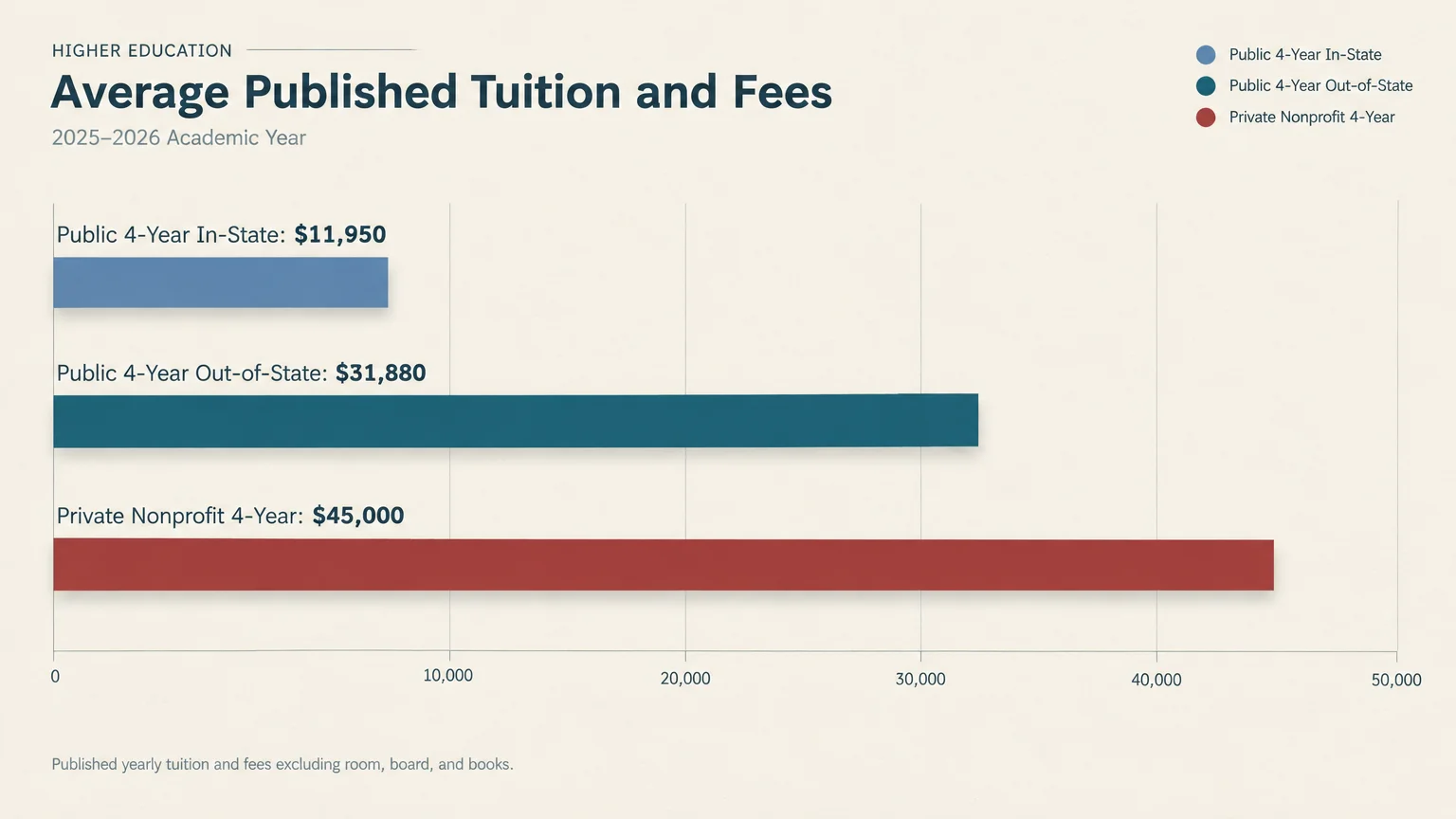
According to the College Board Trends in College Pricing report for the 2025–2026 academic year, average published yearly tuition and fees reached $11,950 for public four-year in-state institutions.
Out-of-state students at public institutions pay an average of $31,880 annually. Private nonprofit four-year universities now charge an average of $45,000 per year, excluding housing, food, and books.
Grandparents play a vital role in closing this tuition gap. Understanding modern contribution vehicles ensures your gifts deliver maximum educational impact without compromising your personal lifestyle.

1. Open and Maintain a Grandparent-Owned 529 Plan
A 529 education savings plan offers unmatched tax advantages for grandparents college savings. Earnings grow entirely free from federal income taxes when spent on qualified education expenses.
Recent federal reforms dramatically improved how these plans interact with student aid. Under the FAFSA Simplification Act, grandparent-owned 529 plans are not reported as assets on the Free Application for Federal Student Aid (FAFSA).
Furthermore, cash distributions from your grandparent-owned 529 account no longer count as untaxed student income. Previously, those withdrawals could reduce a student’s aid package by up to 50%.
Owning the account gives you absolute authority over the funds. You decide the timing of every distribution, and you can change the beneficiary to another grandchild if plans change.
Keep in mind that roughly 200 private colleges using the CSS Profile financial aid form may still inquire about grandparent-owned assets. Always review institutional requirements when your grandchild begins applying.
2. “Superfund” a 529 Account with 5-Year Forward Gifting
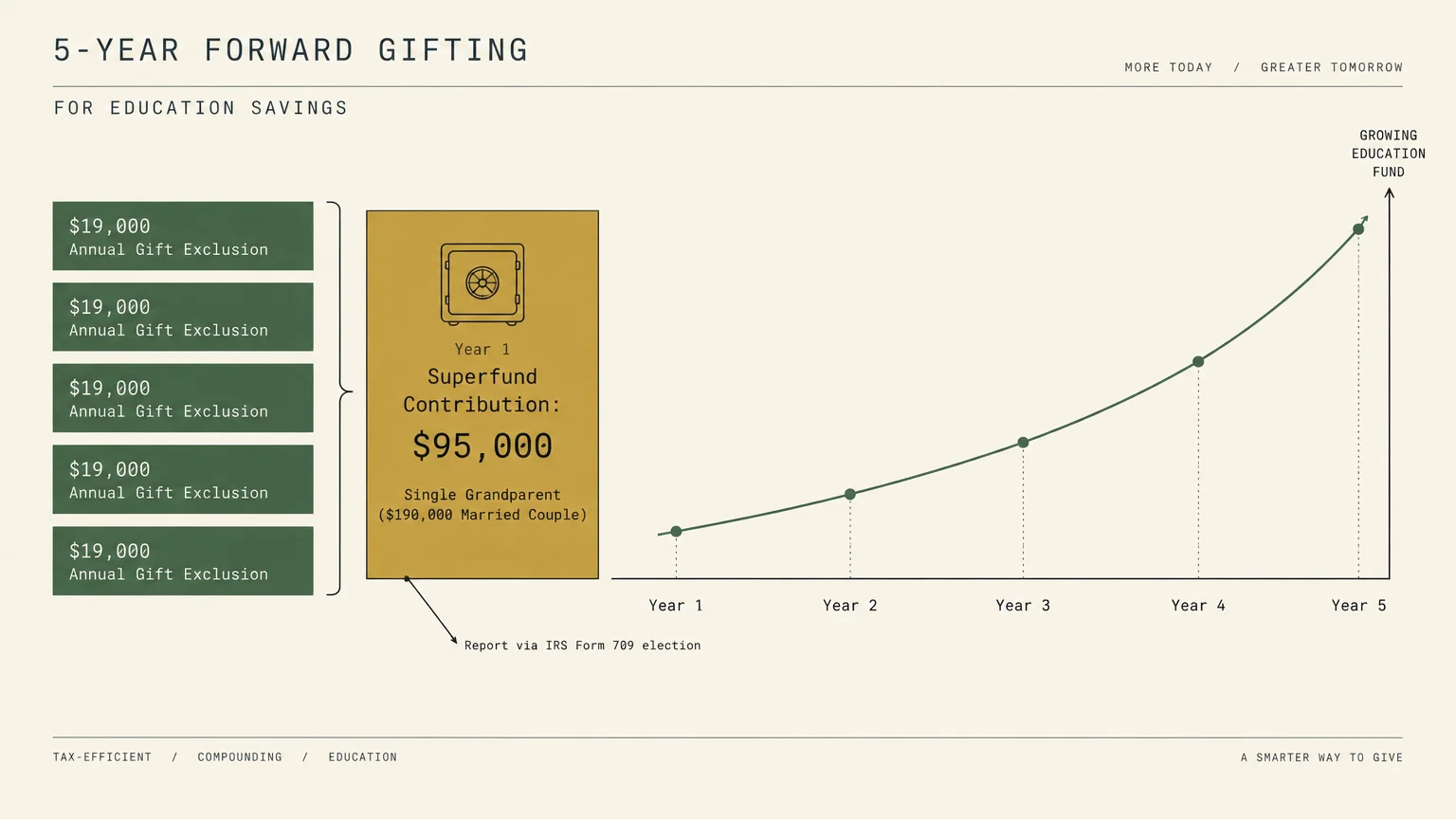
If you possess surplus capital, you can take advantage of a unique tax provision known as superfunding. The federal tax code allows you to front-load five years of annual exclusion gifts into a single calendar year.
For 2026, the annual gift tax exclusion stands at $19,000 per grandchild. This allows an individual grandparent to contribute a lump sum of up to $95,000 immediately without triggering gift taxes.
Married couples giving jointly can double that amount, contributing up to $190,000 per beneficiary in year one. You must file IRS Form 709 across the five-year period to report the election properly.
Front-loading funds jumpstarts compound growth inside the tax-free vehicle. Decades of compounding on a large opening balance can generate significant earnings compared to piecemeal annual contributions.
Check your state’s aggregate 529 balance limits before executing this strategy. State caps currently range from $269,000 in North Dakota to $621,411 in New Hampshire.
3. Pay Tuition Directly to the College or University
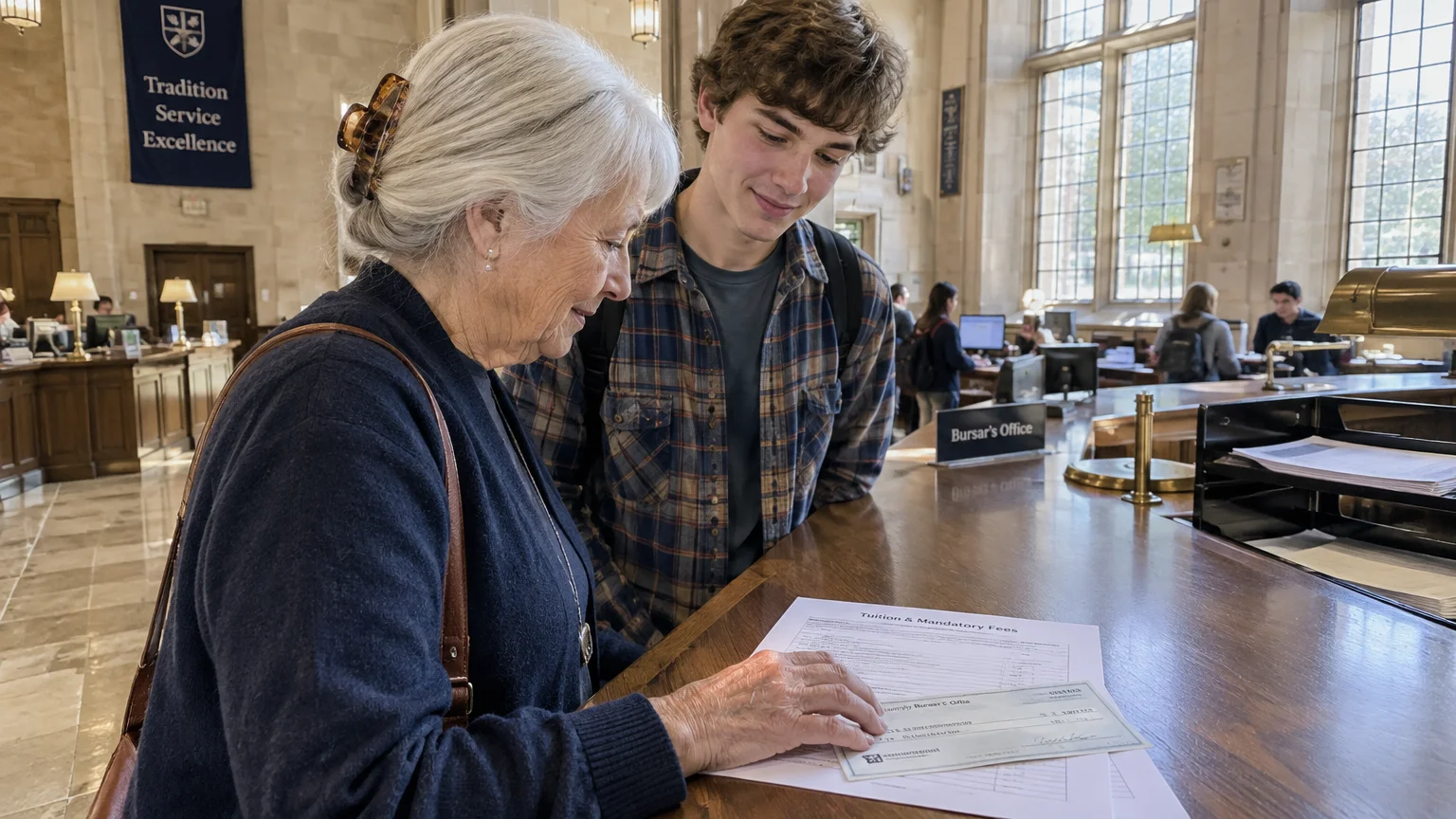
You can pay an unlimited sum toward your grandchild’s tuition without triggering federal gift tax restrictions. Internal Revenue Code Section 2503(e) excludes direct educational payments from all gift calculations.
You can verify these rules directly through the Internal Revenue Service (IRS) guidelines on nontaxable gifts. This strategy bypasses both the $19,000 annual gift exclusion and the lifetime estate exemption.
Under the One Big Beautiful Bill Act (OBBBA), the lifetime estate and gift tax exemption stands at $15 million per individual for 2026. Direct tuition payments let you protect that multi-million-dollar allowance for other estate assets.
You must write the check directly to the academic institution. If you transfer the money to your grandchild or their parents first, the transaction loses its statutory tax exemption.
This exclusion applies strictly to tuition expenses. Payments covering room, board, supplies, transportation, and health fees do not qualify and count toward the standard annual exclusion.

4. Contribute Directly to an Existing Parent-Owned 529 Account
Managing an investment account requires ongoing administrative attention. You can bypass management duties by depositing funds directly into an established 529 plan owned by your grandchild’s parents.
Parent-owned 529 accounts receive favorable treatment on federal financial aid assessments. The FAFSA treats parent-owned accounts as parental assets, assessing them at a modest maximum rate of 5.64%.
Contributing directly to the parent account simplifies family communication. It prevents administrative duplication and helps parents track aggregate balances against anticipated college bills.
Many states offer state income tax deductions or credits for 529 contributions. In several states, any resident contributor can claim the deduction, regardless of who owns the account.

5. Fund a Custodial Roth IRA for Working Grandchildren
Grandchildren who hold summer jobs, babysit, or work campus positions earn taxable compensation. You can open and fund a Custodial Roth IRA on their behalf to create a versatile education fund.
You may gift money to fund the account up to your grandchild’s total earned income. Total contributions cannot exceed the 2026 IRA limit of $7,500 for individuals under age 50.
Roth IRAs provide tremendous flexibility for young savers. The account owner can withdraw their original contributions at any time, for any reason, completely tax- and penalty-free.
Account earnings can also be withdrawn penalty-free to cover qualified higher education expenses. This structure lets your grandchild repurpose leftover funds for retirement if they receive scholarships.
Review account rules with Investor.gov (SEC) before establishing custodial investment accounts. Early exposure to Roth accounts also teaches young adults invaluable lessons in compound investing.

6. Establish a UGMA or UTMA Custodial Account
Custodial accounts created under the Uniform Gifts to Minors Act (UGMA) or Uniform Transfers to Minors Act (UTMA) hold diverse financial assets. Unlike 529s, custodians can invest in individual stocks, bonds, mutual funds, and real estate.
Gifts made to a custodial account become the irrevocable property of the grandchild. The minor gains full legal control of all assets upon reaching the age of majority, typically age 18 or 21 depending on state law.
Custodial accounts face federal “Kiddie Tax” rules on unearned investment income. For 2026, the first $1,350 of unearned income is tax-free, and the next $1,350 is taxed at the child’s lower tax rate.
Unearned investment income exceeding $2,700 faces taxation at the parents’ marginal income tax rate. Keep asset allocations tax-efficient to minimize taxable dividends and capital gain distributions.
Consider the financial aid implications before depositing substantial sums. The FAFSA classifies UGMA and UTMA accounts as student assets, assessing them at a steep 20% rate during aid calculations.
7. Utilize the 529-to-Roth IRA Rollover Provision
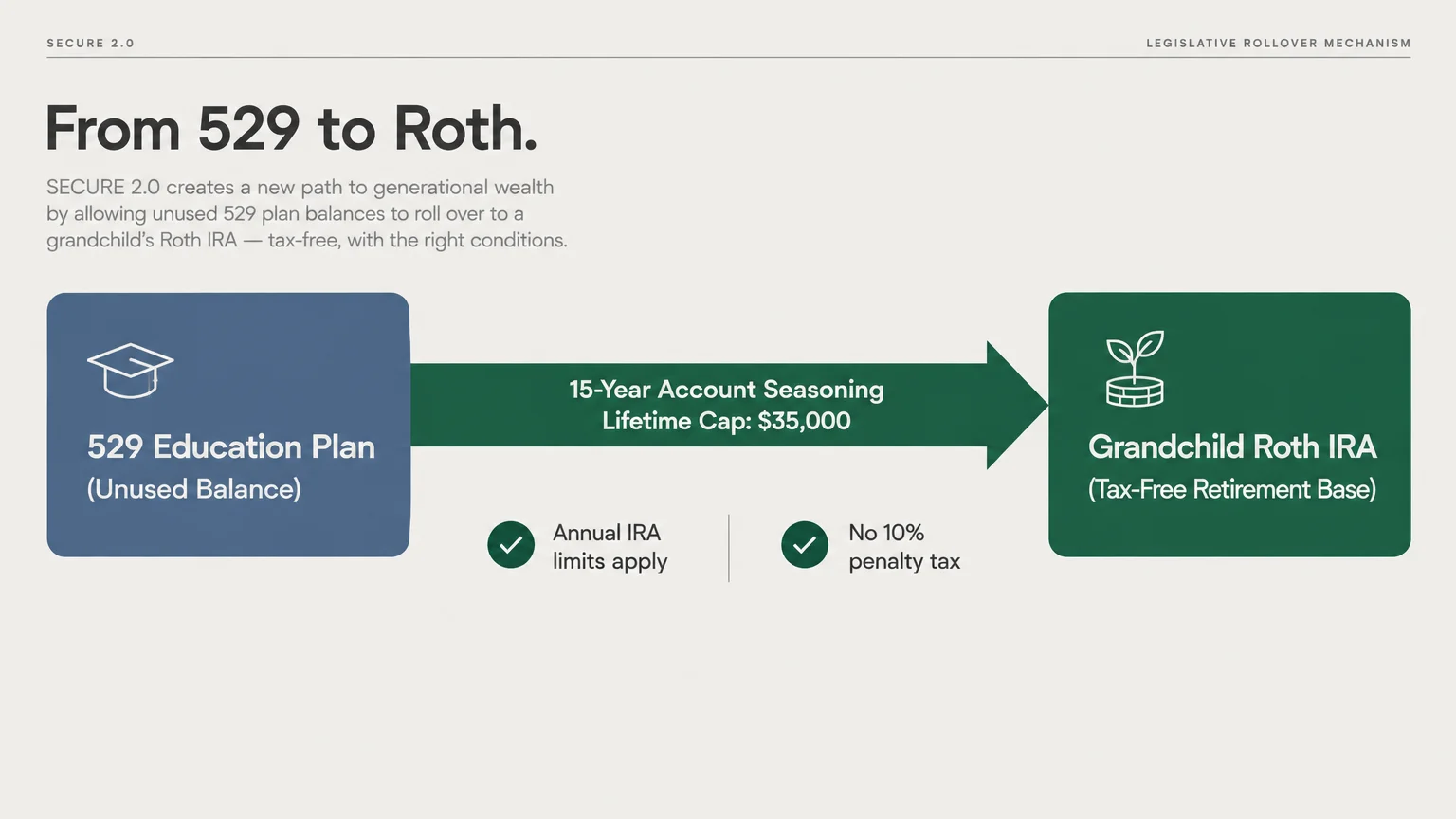
Grandparents often worry about overfunding education accounts if a grandchild skips college. The SECURE 2.0 Act eliminated this anxiety by authorizing tax-free rollovers from 529 plans into Roth IRAs.
A beneficiary can roll over a lifetime maximum of $35,000 from an unused 529 account into their own Roth IRA. The rollover incurs zero income taxes and zero early withdrawal penalties.
To qualify, the 529 account must have been maintained for at least 15 years. Any contributions made within the preceding five years, along with their associated earnings, remain ineligible for transfer.
Annual rollovers are subject to the standard annual Roth IRA contribution limit, which sits at $7,500 in 2026. The beneficiary must also have earned income equal to or exceeding the transferred amount.
“The 529-to-Roth transfer feature created by SECURE 2.0 eliminates the single greatest fear savers had: leaving trapped money on the table.” — Ed Slott, CPA and IRA Specialist

8. Purchase U.S. Series I Savings Bonds
Series I Savings Bonds offer an inflation-protected savings vehicle backed by the full faith and credit of the United States government. They provide dependable principal protection during volatile market environments.
Series I Bonds issued from May 1, 2026, through October 31, 2026, carry a composite interest rate of 4.26%, which includes a 0.90% fixed rate. Individuals can purchase up to $10,000 in electronic bonds per calendar year.
The federal Education Savings Bond Program permits owners to exclude bond interest from gross income when redeeming bonds for qualified college expenses. However, grandparents must navigate strict ownership rules to claim this benefit.
For 2026, the interest exclusion phases out at a Modified Adjusted Gross Income (MAGI) between $101,800 and $116,800 for single filers. For married couples filing jointly, the phaseout spans $152,650 to $182,650.
The IRS requires that the bond owner be at least 24 years old before the bond issuance date. Additionally, you can only claim the exclusion if you claim the grandchild as a dependent, or roll the proceeds into a 529 plan.

9. Establish a Coverdell Education Savings Account (ESA)
Coverdell Education Savings Accounts serve as another tax-exempt vehicle for targeted educational funding. Like 529 plans, investment earnings grow tax-free when spent on eligible tuition and academic supplies.
Coverdell ESAs offer broader self-directed investment choices than most state 529 portfolios. You can purchase individual equities, specialized index funds, and real estate investment trusts.
Contribution limits remain restricted to $2,000 per year per beneficiary across all donors. Contributions are not tax-deductible, and deposits must stop once your grandchild reaches age 18.
Contributor eligibility phases out for single tax filers with a MAGI between $95,000 and $110,000. Married couples filing jointly face phaseout thresholds between $190,000 and $220,000.
The account balance must be completely distributed before the beneficiary reaches age 30. Unused balances distributed after age 30 face ordinary income taxes and a 10% penalty.
10. Invest in a “Trump Account” for Flexible Early Savings
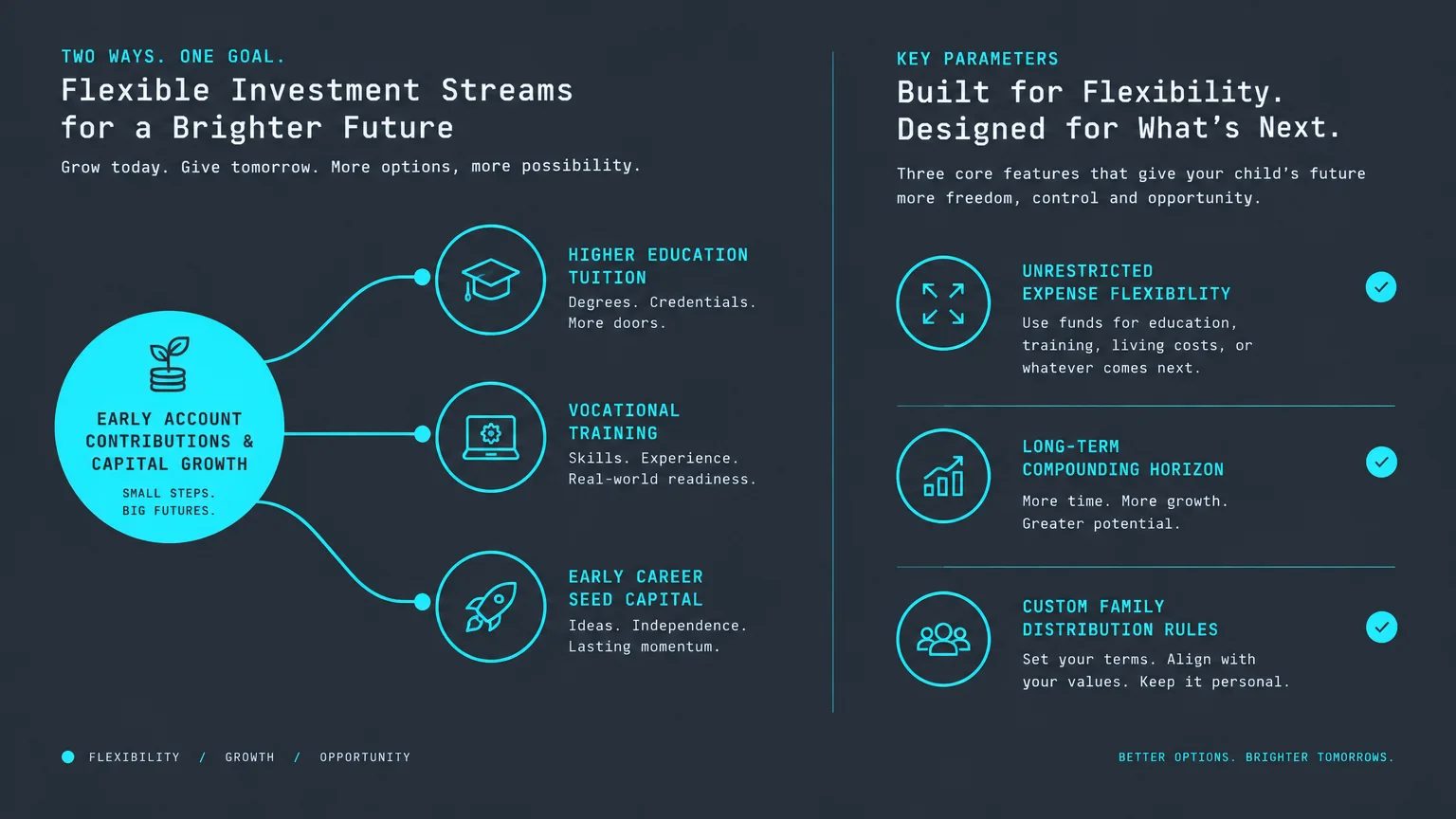
Established under the One Big Beautiful Bill Act (OBBBA), newly created child savings accounts—frequently called “Trump Accounts”—offer alternative savings channels. They provide families a hybrid path between pure education accounts and general wealth building.
Families and grandparents can contribute up to $5,000 per year into these specialized tax-advantaged accounts. Investments compound tax-deferred throughout your grandchild’s youth.
Beneficiaries gain penalty-free access to funds beginning at age 18. Assets can fund postsecondary degrees, vocational credentials, or the down payment on a first home.
This flexibility benefits grandchildren pursuing entrepreneurship or technical trades rather than traditional university degrees. Always consult your accountant as regulatory agencies finalize operational guidance for these accounts.

11. Help Pay Down Existing Student Loan Debt with 529 Funds
If your grandchild has already entered college or recently graduated, you can deploy savings to extinguish their student debt. Federal law authorizes 529 accounts to disburse funds directly toward qualified student loans.
A lifetime maximum of $10,000 from a 529 account can be used to repay a beneficiary’s student debt. You can also disburse an additional $10,000 to pay down loans for each of the beneficiary’s siblings.
Using 529 funds for debt reduction counts as a qualified educational distribution. The withdrawal incurs no federal income taxes or early distribution penalties.
You can discover debt management strategies and repayment rights through the Consumer Financial Protection Bureau (CFPB). Erasing student loans provides your grandchild immediate financial breathing room as they begin their career.

12. Establish an Incentive-Based College Savings Matching Program
Grandparents can foster financial discipline by offering a matching savings arrangement. Under this model, you agree to match every dollar your grandchild deposits into their savings or custodial account.
You might match summer earnings dollar-for-dollar, or offer cash bonuses for completing rigorous high school courses. This turns education funding into an interactive exercise in delayed gratification.
Under 2026 expansions from the OBBBA, 529 plans now cover diverse pre-college and career credentials. The annual K–12 education withdrawal cap doubled to $20,000 per student starting January 1, 2026.
Eligible K–12 expenses include textbooks, specialized tutoring, educational therapy, and standardized test fees. You can reward your grandchild’s academic dedication while leveraging expanded tax-free withdrawals.
Comparing Your Top College Savings Options
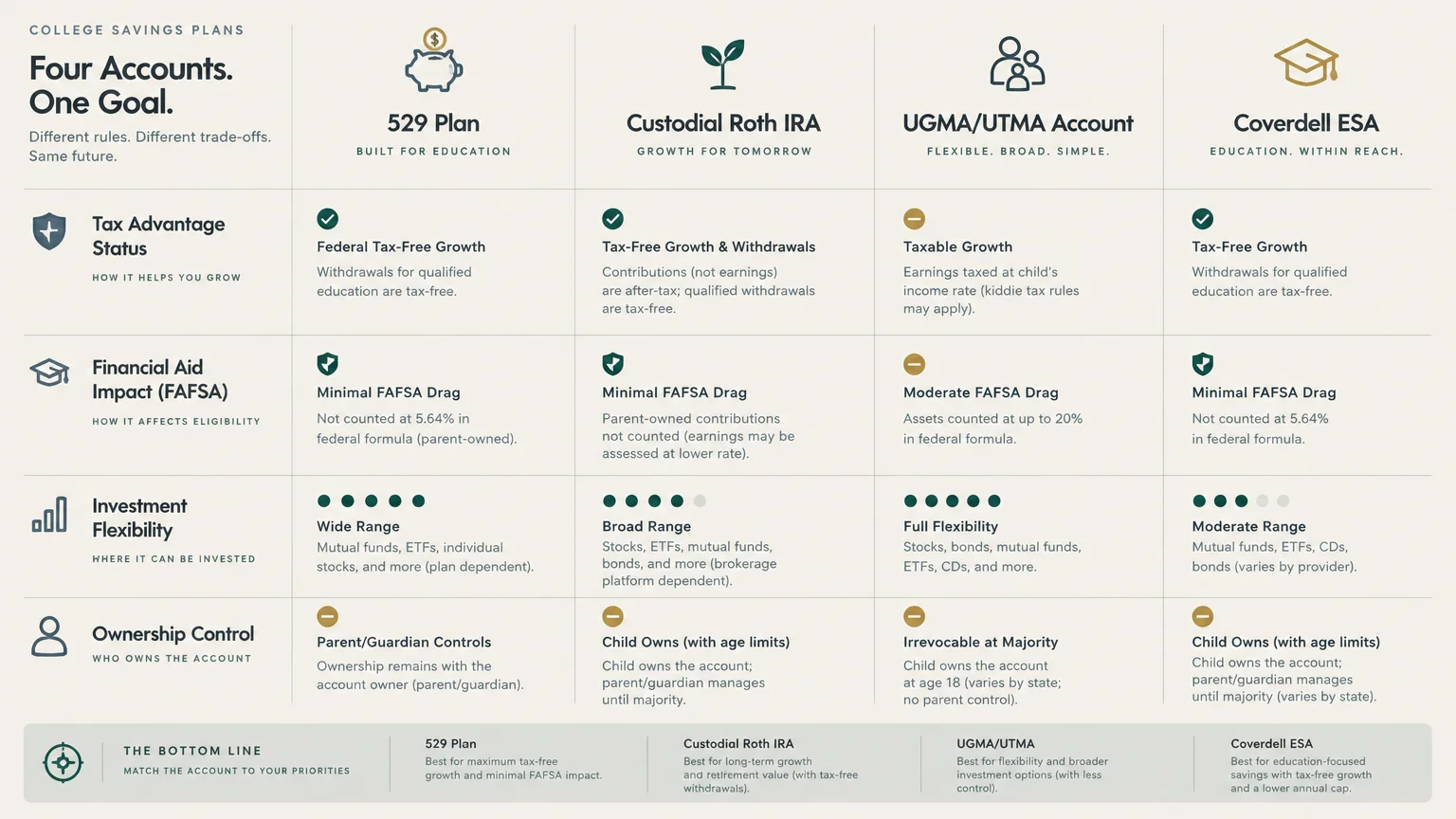
Every family operates with unique financial goals, tax brackets, and timelines. The following comparison illustrates how the primary college savings vehicles stack up in 2026.
| Savings Tool | 2026 Contribution Limit | FAFSA Impact | Tax Advantages | Best Used For |
|---|---|---|---|---|
| Grandparent 529 | $19,000 annual exclusion ($95,000 superfund) | Zero impact on FAFSA | Tax-free growth and withdrawals | Tuition, fees, and K–12 expenses |
| Parent-Owned 529 | State limits ($269,000 to $621,411) | Max 5.64% parental asset assessment | Tax-free growth; potential state tax break | Unified family education planning |
| Custodial Roth IRA | $7,500 (or total earned income) | Zero impact until withdrawn | Tax-free growth; principal always liquid | Working teens needing career flexibility |
| UGMA / UTMA | $19,000 without gift tax return | 20% student asset assessment | Kiddie tax rates apply over $1,350 | Broad investing without education limits |
| Coverdell ESA | $2,000 per beneficiary | Parent asset if parent-owned (5.64%) | Tax-free growth on individual securities | Self-directed portfolios for young kids |
Avoiding Common Errors
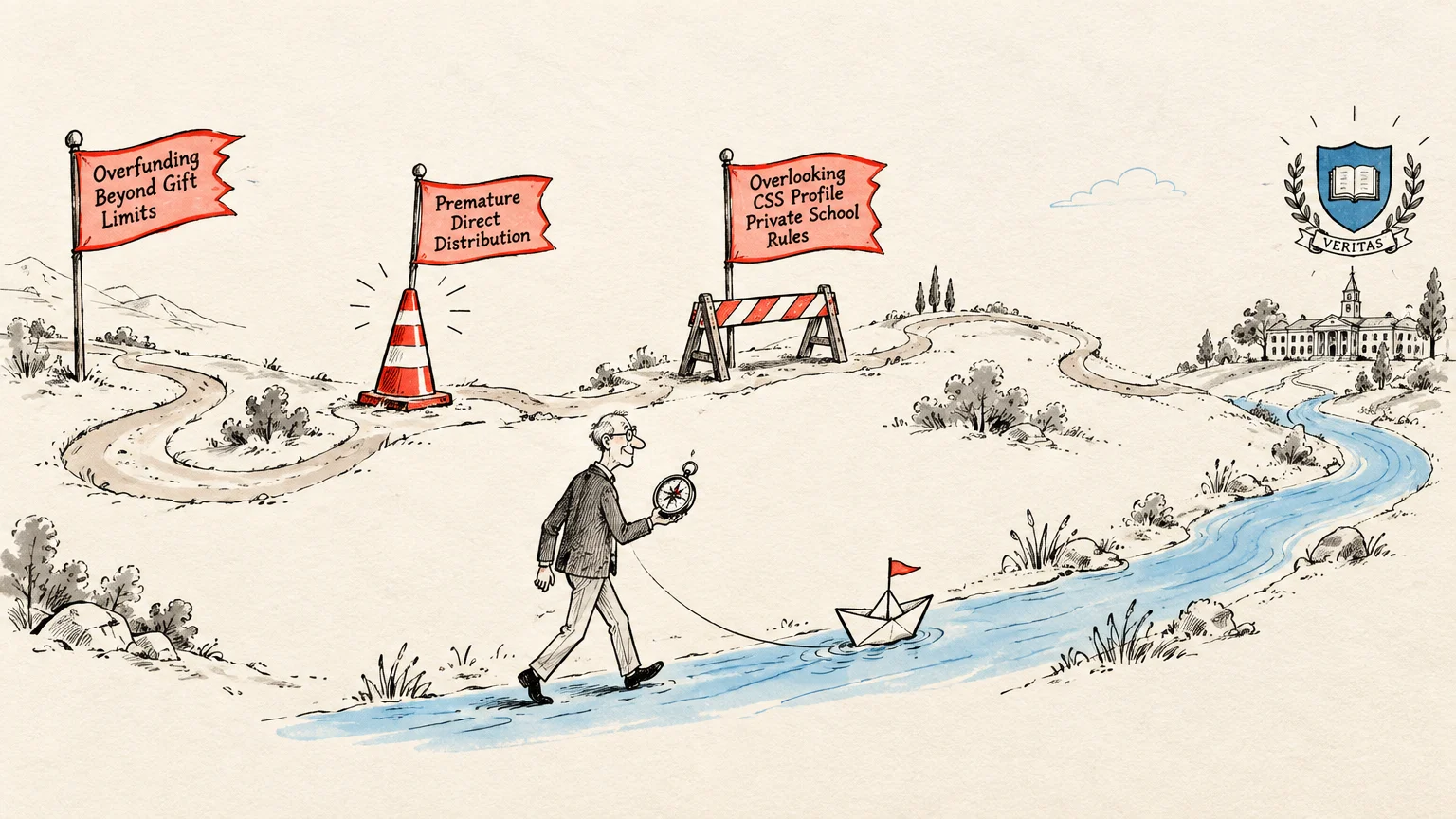
Generous intentions can generate unexpected tax liabilities when families overlook regulatory details. Avoiding common pitfalls ensures your gifts achieve maximum efficiency.
Failing to file IRS Form 709 when superfunding a 529 plan triggers avoidable inquiries. Even though no tax is owed, the IRS mandates Form 709 to spread the five-year gift election across your tax records.
Another error involves ignoring the CSS Profile reporting rules. While the FAFSA ignores grandparent 529 accounts, elite private schools may consider them, potentially reducing institutional scholarship awards.
Purchasing Series I Bonds under your own name without proper planning can cost you the education tax exclusion. If you do not claim your grandchild as a tax dependent, you must roll the proceeds into a 529 account to shield interest from income taxes.
Finally, never compromise your own retirement solvency to finance a grandchild’s degree. Students can access federal loans, work-study roles, and merit grants; retirees cannot borrow money to fund their golden years.

When DIY Isn’t Enough
Basic savings accounts rarely demand professional oversight, but complex wealth transfers require specialized guidance. Engaging an advisor ensures compliance with federal tax statutes.
You can locate qualified fiduciary guidance through the Certified Financial Planner Board. Seek professional support when facing the following circumstances:
- Multi-Generational Estate Planning: If your net worth approaches state or federal estate tax limits, dynasty trusts and 529 ownership structures require advanced legal coordination.
- Blended Families and Asset Protection: Managing contributions across step-grandchildren or navigating competing familial expectations benefits from objective legal structures.
- Special Needs Beneficiaries: Grandchildren receiving government assistance require specialized planning. Traditional 529 plans can jeopardize Medicaid and Supplemental Security Income (SSI), making an ABLE account a safer alternative.
- High Out-of-State Real Estate Holdings: Coordinating college gifts alongside multi-state tax liabilities demands ongoing CPA review to preserve deductions.
Frequently Asked Questions
Does a grandparent-owned 529 plan hurt financial aid on the FAFSA?
No. Under the updated FAFSA rules, grandparent-owned 529 plans are not reported as assets, and distributions do not count as student income on federal aid applications.
Can I retrieve my money if my grandchild decides not to attend college?
Yes. As the 529 account owner, you retain ownership of the funds. You can withdraw the balance at any time, though earnings face ordinary income taxes and a 10% penalty.
Alternatively, you can change the account beneficiary to another eligible family member, or utilize the SECURE 2.0 rollover provision to transfer up to $35,000 into a Roth IRA.
How does the direct tuition payment exemption interact with annual gift limits?
Direct tuition payments made directly to an academic institution under IRC Section 2503(e) are completely exempt from gift tax limits. You can pay full tuition and still gift up to $19,000 separately in 2026.
What happens to 529 savings if my grandchild wins a full scholarship?
If your grandchild earns a scholarship, you can withdraw an amount equal to the scholarship award from the 529 plan without incurring the standard 10% penalty. The earnings portion remains subject to ordinary income taxes.
Closing Thoughts
Supporting your grandchild’s education provides a springboard for their adult life while building meaningful intergenerational bonds. By taking advantage of current tax exemptions, updated FAFSA rules, and flexible investment tools, you can leave an enduring legacy.
Review your personal budget first, establish clear contribution targets, and discuss your goals openly with your family. Careful planning guarantees your generosity enriches your grandchild’s future while protecting your retirement security.
This is educational content based on general retirement planning principles. Individual results vary based on your situation. Always verify current benefit amounts, tax laws, and eligibility with official sources.
Last updated: October 2026. Retirement benefits, tax laws, and healthcare costs change frequently—verify current details with official sources.