
A modest pension does not have to force financial compromise in your golden years. Choosing the right geographic location instantly gives your monthly retirement checks significantly more purchasing power.
According to the Pension Rights Center, the median private pension sits around $11,440 annually, while public pensions average $24,930. When you combine those fixed checks with Social Security, everyday expenses can quickly strain your monthly budget.
Strategic relocation allows you to stretch a pension further without sacrificing your standard of living. These twelve affordable states combine generous tax exemptions with rock-bottom living costs so you can keep more money in your pocket.
Why Geography Dictates Your Purchasing Power
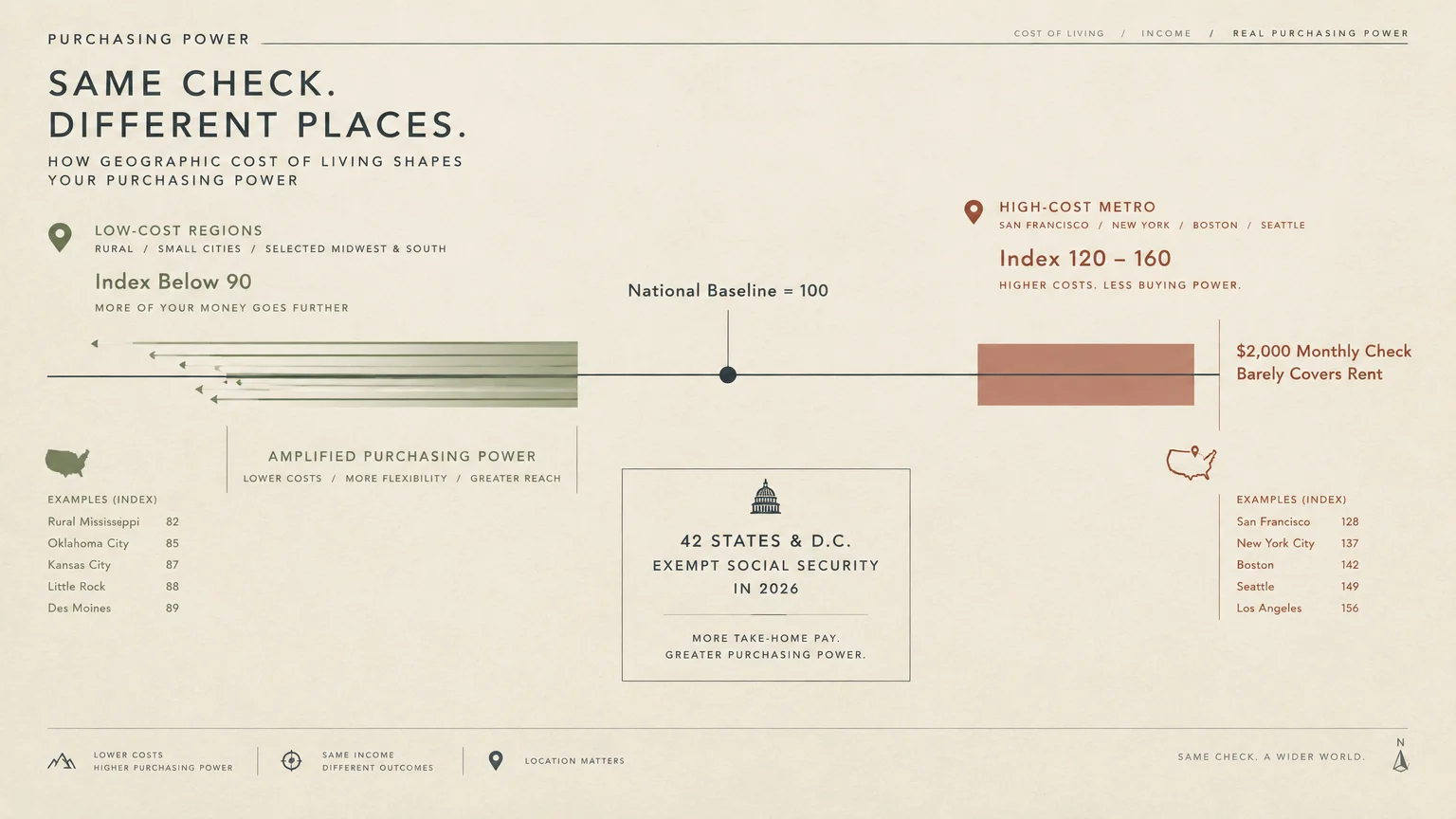
The buying power of a fixed pension varies drastically depending on your zip code. A monthly check of $2,000 barely covers rent in high-cost metro areas, yet it provides comfortable living in more affordable regions.
The Council for Community and Economic Research establishes a baseline score of 100 for national average living costs. Moving to a state scoring below 90 immediately amplifies your regular monthly income.
State tax policies also play a massive role in your net disposable income. Some states aggressively tax retirement distributions, while others leave your defined-benefit pensions entirely untouched.
According to the Social Security Administration, millions of retirees rely on combined benefits to fund daily life. In 2026, 42 states and Washington, D.C. exempt Social Security benefits from state income taxes entirely.
Pairing tax-free Social Security with sheltered pension distributions gives you substantial financial breathing room. Lower baseline housing costs, reasonable grocery prices, and modest utility bills multiply those tax savings every single month.
“A fixed income demands dynamic planning, and where you live is often the single biggest lever you can pull to gain financial security.” — Jean Chatzky, Financial Journalist and Author

12 States Where Pensions Go Furthest
1. Mississippi
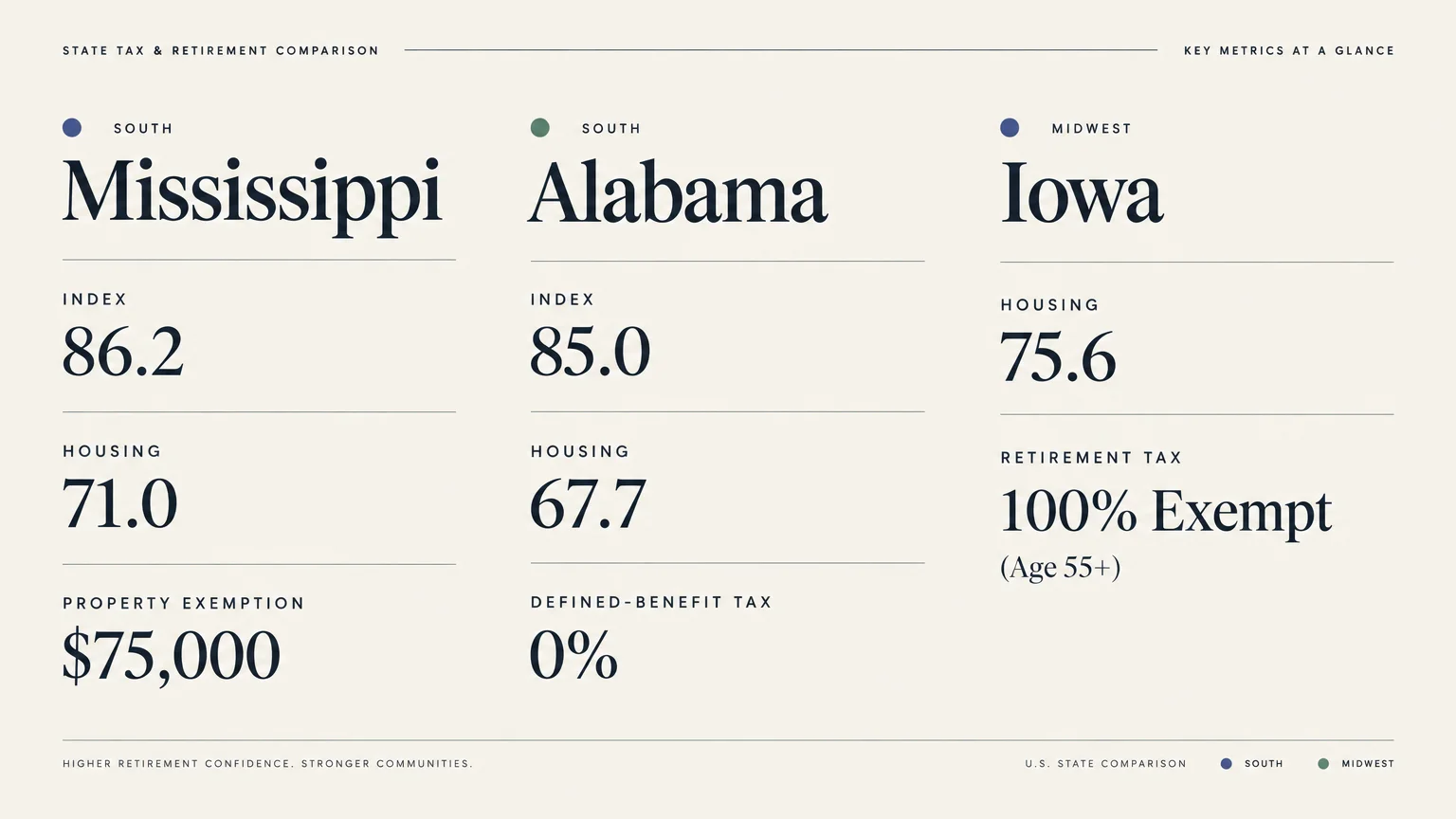
Mississippi consistently delivers one of the lowest costs of living nationwide, scoring an overall index of 86.2. The state housing index sits at 71.0, roughly 29% below national averages.
Even better, Mississippi exempts 100% of qualified retirement income from state taxation. This total exemption covers defined-benefit pensions, 401(k) withdrawals, IRAs, and Social Security benefits.
Homeowners aged 65 and older also receive a property tax exemption on the first $75,000 of their home’s true value. These compounded savings make it one of the best states low pension high value retirees can select.
2. Alabama
Alabama stands out with an overall cost-of-living index of 85.0. Its housing index of 67.7 is the second lowest in the country, providing exceptional value for retirees on fixed budgets.
The Yellowhammer State fully exempts all qualified defined-benefit pension payments from state income taxes. This statutory protection applies across both private employer pensions and government retirement systems.
You also pay zero state income tax on your Social Security income. When you add low baseline property taxes, Alabama emerges as an exceptionally pension friendly state.
3. Iowa
Iowa transformed its retirement landscape through landmark tax legislation. Residents aged 55 and older enjoy a complete 100% state income tax exemption on all qualified retirement income.
This exemption shields private pensions, public pensions, 401(k) distributions, and IRAs without any income caps. Iowa also excludes all Social Security benefits from state taxation.
The state cost of living runs roughly 13% below the national baseline, supported by a housing index of 75.6. That dynamic makes Iowa a premier Midwestern haven for pension income.
4. Pennsylvania
Pennsylvania provides one of the nation’s most favorable tax structures for retirees. The Commonwealth completely exempts qualified private pensions, public pensions, and retirement account withdrawals for individuals who reach age 59½.
Non-retirement earnings face a modest, flat state income tax rate of just 3.07%. Everyday essentials like groceries and prescription medicines are also entirely exempt from state sales taxes.
While real estate taxes vary by school district, overall housing expenses across central and western Pennsylvania remain well below national averages.
5. Oklahoma
Oklahoma holds the lowest overall cost-of-living index in the nation, scoring between 83.5 and 86.0. Its remarkable housing index of 66.9 lets your housing dollars stretch further than anywhere else.
For tax purposes, Oklahoma allows each individual to exclude up to $10,000 of qualifying retirement and pension income annually. Social Security benefits are also completely exempt from state income tax.
Low utility costs and affordable grocery prices provide steady everyday relief for pension recipients. Modest pension checks buy substantial financial security across the Sooner State.
6. Georgia
Georgia pairs a warm Southern climate with exceptional tax advantages for older adults. The state’s overall cost of living stays well below national averages, particularly in communities outside metropolitan Atlanta.
Retirees aged 62 to 64 can exclude up to $35,000 of retirement income annually. Once you reach age 65, that exclusion jumps to $65,000 per individual or $130,000 for a married couple.
Social Security benefits face no state income taxes, and recent legislation dropped the individual flat income tax rate to 4.99%. Georgia gives you high tax protection alongside affordable everyday expenses.
7. West Virginia
West Virginia offers dramatic mountain scenery and some of the most affordable real estate in America. The state housing index registers at a modest 71.3, making homeownership accessible on modest incomes.
Under recent legislative reform, West Virginia successfully eliminated state income taxes on Social Security benefits for all residents. Taxpayers aged 65 and older also qualify for an additional $8,000 income deduction.
With consumer goods and real estate priced far below coastal numbers, your monthly pension checks stretch easily. It serves as an ideal sanctuary for budget-conscious outdoor lovers.
8. Missouri
Missouri ranks seventh in the nation for overall affordability, boasting a low composite index score of 88.2. Housing costs sit roughly 20% below the national baseline across most counties.
State legislation completely exempts Social Security benefits and public pensions from state income taxes regardless of your income level. Private pension recipients can deduct up to $6,000 per year.
Missouri also allows local counties to freeze real property tax assessments for eligible seniors. That keeps your recurring housing costs stable against long-term inflation.
9. Tennessee
Tennessee levies no state personal income tax whatsoever, giving your monthly retirement checks immediate shelter. You pay 0% state tax on your pensions, 401(k) distributions, and Social Security checks.
The state features an appealing housing index of 80.3, keeping rental and homeownership expenses well below national averages. Energy costs and municipal property taxes also remain competitive.
While state sales taxes are higher to offset the lack of income tax, avoiding taxation on your retirement income provides substantial net annual savings.
10. Arkansas
Arkansas combines natural beauty with exceptional affordability, highlighted by an overall housing cost index of 77.2. Modest retirement incomes provide comfortable living in towns throughout the Ozarks and River Valley.
The state exempts up to $6,000 of eligible pension and retirement pay per person each year. Furthermore, Arkansas completely exempts your Social Security income from state taxation.
Low medical costs and reduced property tax rates make Arkansas an attractive destination for retirees seeking peace of mind without financial strain.
11. Illinois
While Illinois faces criticism for high property taxes, its income tax treatment of retirement money is exceptionally generous. The state exempts 100% of qualified employee pensions, 401(k) withdrawals, and traditional IRAs.
Social Security benefits are also completely free from Illinois state income taxes. Retirees who avoid high-tax suburban zones discover tremendous affordability in downstate communities.
Downstate Illinois features housing indices near 84.7, pairing bargain-priced homes with a total state tax shield on your pension payouts.
12. Wyoming
Wyoming combines stunning open landscapes with zero personal state income tax. Your pensions, retirement distributions, and Social Security income will never face state-level deductions.
In addition to zero income tax, Wyoming maintains some of the lowest property and sales tax burdens in the country. Its overall housing index registers at an attractive 86.5.
The state does not tax out-of-state retirement income either, making it a fortress for preserving fixed-income purchasing power.
Pension Friendly States at a Glance
Evaluating overall retirement value requires balancing tax policies against everyday living expenses. The comparison table below highlights how these twelve jurisdictions rank across key metrics.
| State | Pension Tax Exemption Status | Cost of Living Index (US=100) | Housing Cost Index | Social Security Taxable? |
|---|---|---|---|---|
| Oklahoma | Up to $10,000 per person | 84.5 | 66.9 | No |
| Alabama | 100% exempt (Defined-Benefit) | 85.0 | 67.7 | No |
| Mississippi | 100% exempt (Qualified plans) | 86.2 | 71.0 | No |
| West Virginia | $8,000 senior modification | 88.0 | 71.3 | No |
| Iowa | 100% exempt (Age 55+) | 87.0 | 75.6 | No |
| Arkansas | Up to $6,000 per person | 87.5 | 77.2 | No |
| Missouri | 100% public / Up to $6,000 private | 88.2 | 79.5 | No |
| Tennessee | 100% exempt (No state income tax) | 89.0 | 80.3 | No |
| Georgia | Up to $65,000 per person (Age 65+) | 89.5 | 81.2 | No |
| Illinois | 100% exempt (Qualified plans) | 91.0 | 84.7 | No |
| Wyoming | 100% exempt (No state income tax) | 92.5 | 86.5 | No |
| Pennsylvania | 100% exempt (Age 59½+) | 95.0 | 88.0 | No |
Choosing among these states where pensions go furthest depends heavily on your specific mix of retirement income. Compare these tax structures against your personal income breakdown to identify your optimal fit.
“You want to keep as much of your hard-earned money out of the tax collector’s hands as legally possible during retirement.” — Ed Slott, CPA and Retirement Specialist
Pitfalls to Watch For When Relocating
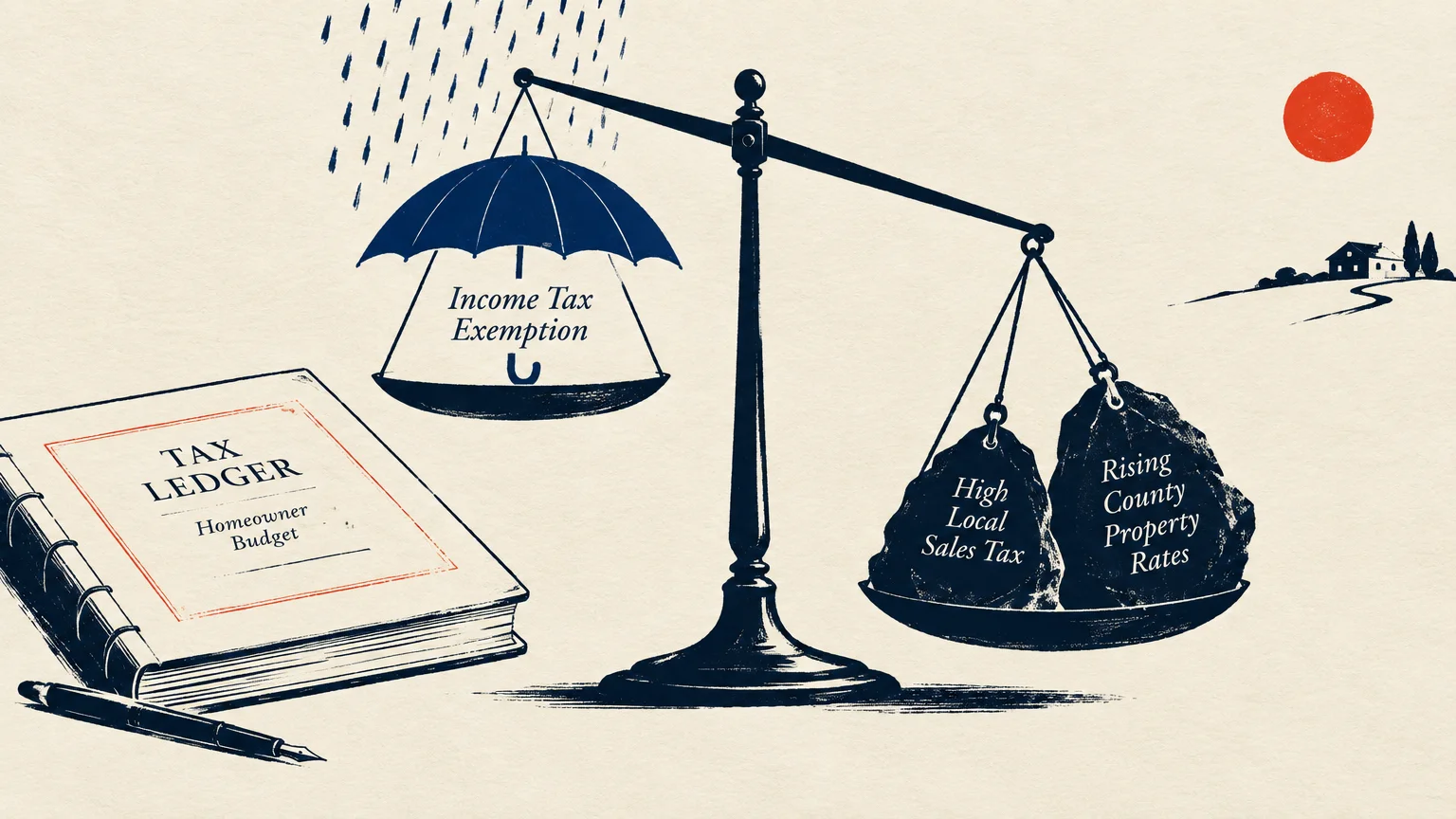
Low income taxes do not automatically guarantee low total living expenses. States without income taxes often rely on steep sales taxes or elevated property assessments to fund municipal budgets.
Review local millage rates carefully before purchasing real estate in a new community. High county tax assessments can quickly erase the financial benefits gained from an income tax exemption.
You should also review guidance from the Consumer Financial Protection Bureau (CFPB) regarding mortgage and relocation expenses.
Healthcare accessibility represents another critical factor that retirees frequently overlook during relocation. Always confirm whether local hospital networks accept your preferred coverage options before finalizing a move.
You can check local physician availability and verify plan acceptance through Medicare.gov before signing closing papers.
Climate and homeowner insurance expenses also impact your bottom line. Severe weather risks can drive annual property insurance premiums significantly higher than you anticipated.

Getting Expert Help
Relocating your household across state lines involves intricate financial, logistical, and legal considerations. Consulting experienced professionals ensures you avoid expensive errors during your transition.
Consider seeking specialized professional assistance in these specific situations:
- Selling appreciated real estate: A tax advisor can help you manage capital gains from selling your primary residence before moving to a lower-cost state.
- Navigating dual-state tax withholding: A certified public accountant ensures your pension distributions are taxed properly if you move mid-year.
- Updating estate planning documents: An elder law attorney can rewrite your wills, trusts, and healthcare directives to match the legal statutes of your new home state.
- Restructuring fixed income streams: A fee-only certified financial planner can align your pension payouts with Social Security claiming strategies to minimize total taxable income.
You can verify financial professional credentials through the Certified Financial Planner Board or research federal tax treatment through the Internal Revenue Service (IRS).
Frequently Asked Questions
Which states do not tax pension income at all?
Mississippi, Pennsylvania, and Iowa completely exempt qualifying public and private pensions from state income taxes. Additionally, states without an income tax—such as Tennessee and Wyoming—never tax pension distributions.
How does cost of living affect a modest pension?
A low cost of living reduces recurring monthly expenses for housing, groceries, and utilities. Moving from an expensive state to an affordable one can increase your disposable income by 20% to 30%.
Are military pensions taxed differently than private pensions?
Most states provide complete exemptions for military retirement pay, even if they partially tax private pensions. Review your specific state department of revenue rules to confirm exact military retirement tax exclusions.
Will moving to a no-income-tax state always save me money?
Not necessarily. States without income taxes frequently offset lost revenue through higher sales taxes, fuel taxes, and property tax assessments.
Selecting the right retirement destination allows you to protect your wealth and enjoy genuine peace of mind. Taking control of your living costs today ensures your modest pension supports an abundant lifestyle tomorrow.
This article provides general retirement education and information only. Everyone’s financial situation is unique—what works for others may not work for you. For personalized advice, consider consulting a qualified financial professional such as a CFP or CPA.
Last updated: February 2026. Retirement benefits, tax laws, and healthcare costs change frequently—verify current details with official sources.