
The classic four percent rule promises that your nest egg will survive a thirty-year retirement without running dry. However, shifting market valuations and unpredictable living costs are forcing modern retirees to challenge this rigid formula.
Following a static annual withdrawal rate can either deplete your portfolio early or force you into unnecessary penny-pinching. You need an income strategy that reflects your real spending habits and current economic conditions.
Discover eight critical reasons smart retirees are rethinking this iconic benchmark—and explore the flexible approaches you can adopt instead to protect your wealth.
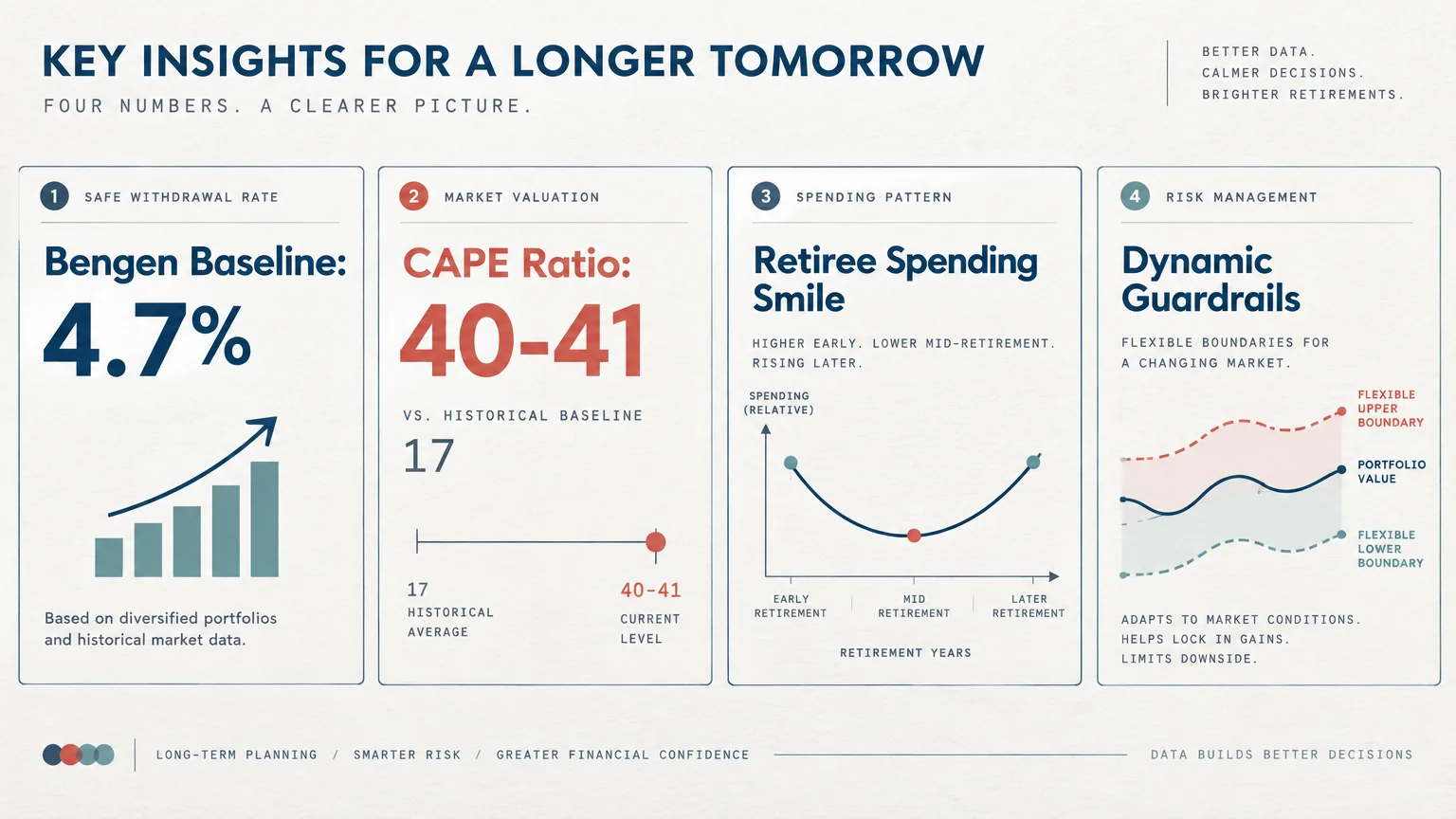
At a Glance: The 4% Rule Under Scrutiny
Financial planner William Bengen created the four percent guideline in 1994 to prevent retirees from exhausting their savings. Today, economic shifts and new research have transformed how experts view sustainable spending.
- William Bengen now recommends a baseline starting withdrawal rate of 4.7% for diversified portfolios.
- Elevated stock valuations threaten near-term equity returns for fresh retirees.
- Real-world spending declines through mid-retirement rather than climbing lockstep with inflation.
- Dynamic guardrails offer significantly higher lifetime income than static formulas.
1. Bill Bengen Himself Updated the Safe Withdrawal Rate
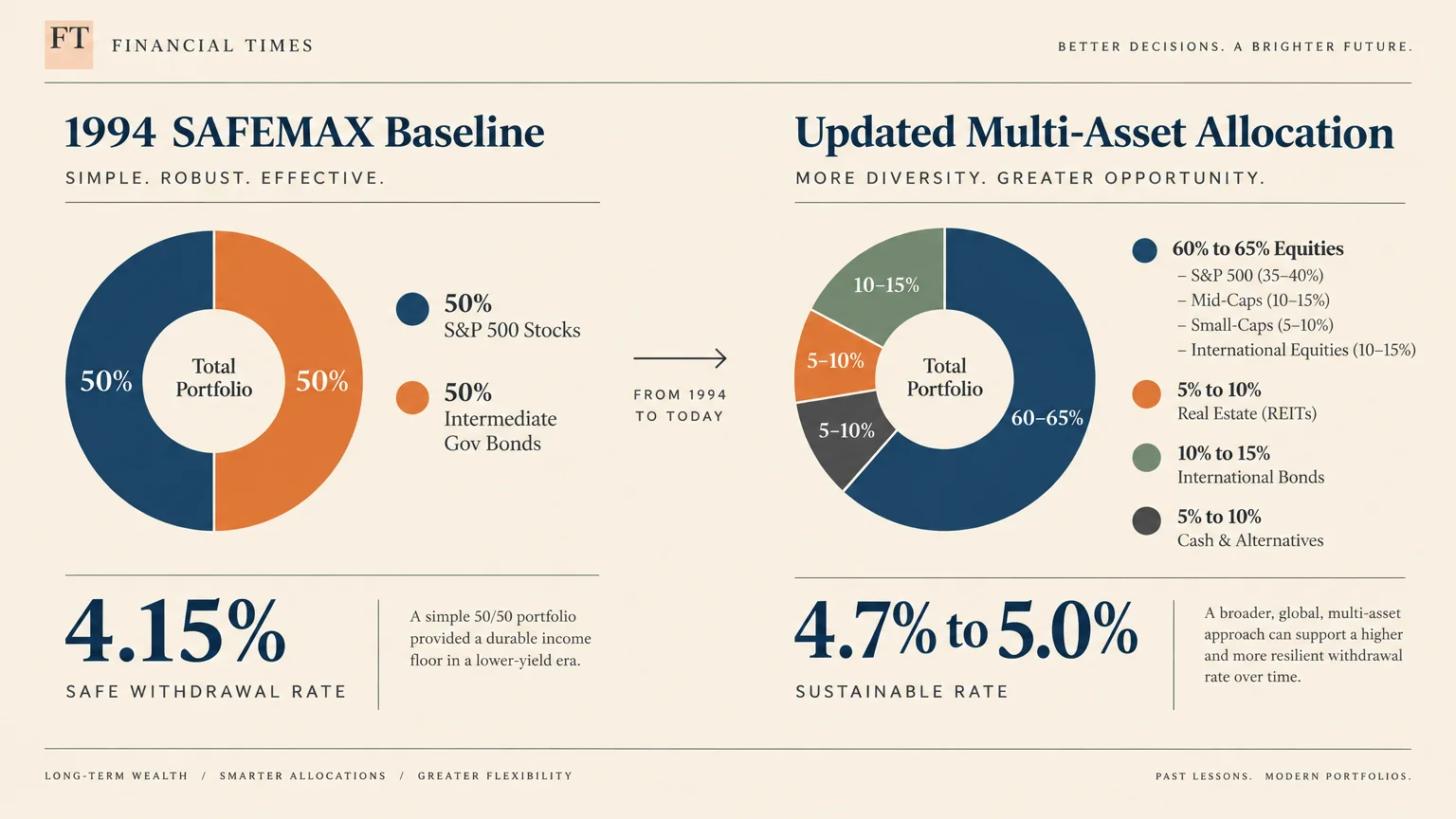
William Bengen originally established his benchmark—known as SAFEMAX—at 4.15% in a landmark 1994 paper. That classic study tested a simple two-asset portfolio holding 50% S&P 500 stocks and 50% intermediate government bonds.
Bengen updated his research in his book A Richer Retirement. He discovered that adding asset classes like mid-caps, small-caps, and international equities increases your sustainable withdrawal rate to roughly 4.7% or even 5.0%.
By lifting equity exposure to 60% or 65% and diversifying broadly, you can generate more retirement income safely. Relying on thirty-year-old assumptions leaves substantial spending power on the table.
2. Elevated Equity Valuations Threaten Near-Term Returns
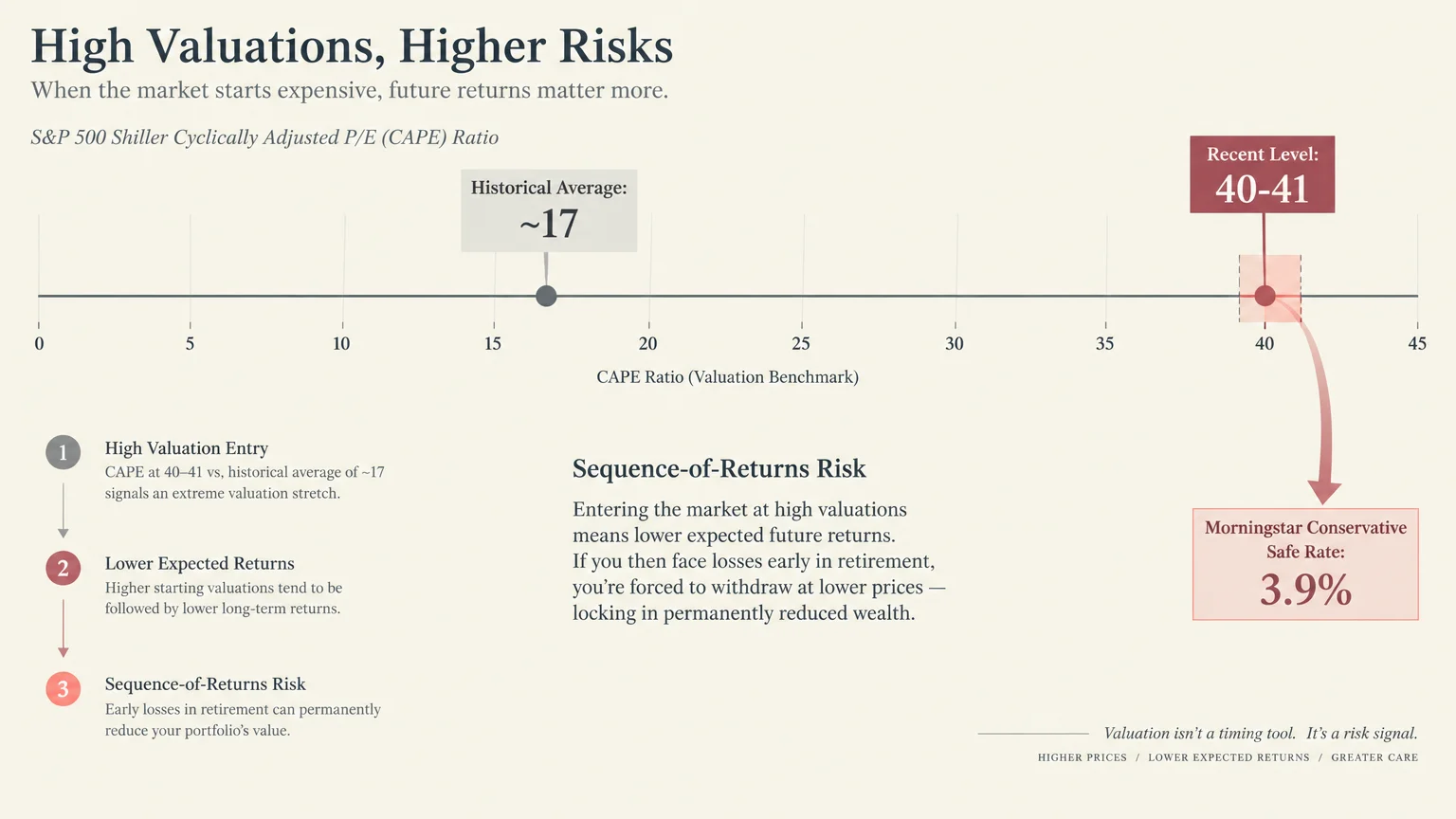
The stock market carries unusually high price tags relative to corporate earnings. The S&P 500 Shiller Cyclically Adjusted P/E ratio, or CAPE ratio, has recently hovered between 40 and 41.
This valuation level sits well above the historical average of roughly 17. Historically, elevated CAPE ratios correlate with subdued stock market returns over the subsequent decade.
Retiring into a market with sky-high valuations increases your sequence-of-returns risk. If stocks drop early in your retirement, taking a static 4% distribution plus inflation can permanently damage your portfolio.
According to research from Morningstar, low forward equity expectations recently pushed conservative initial safe withdrawal rates down toward 3.9% for balanced portfolios.
3. Changing Bond Yields Reshaped Fixed-Income Math
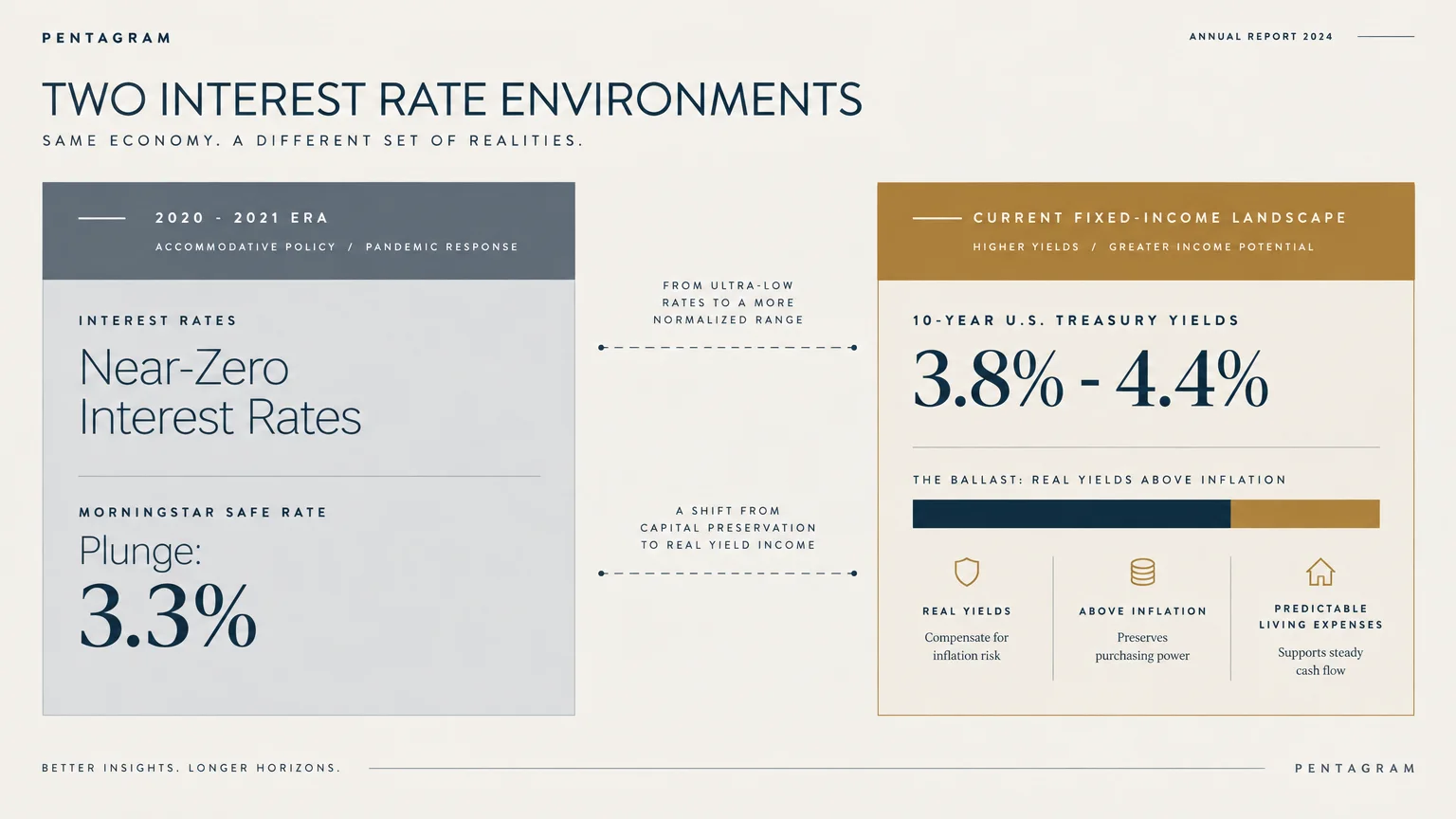
When interest rates sat near zero between 2020 and 2021, traditional bonds produced negligible yield. In that environment, Morningstar estimated that safe initial withdrawals had plunged to just 3.3%.
The fixed-income landscape looks much healthier today. Ten-year U.S. Treasury yields now hover between 3.8% and 4.4%, delivering meaningful real yields above inflation.
Bonds and cash equivalents now provide genuine ballast and predictable interest for your living expenses. You no longer have to push into risky equities just to generate portfolio cash flow.

4. Retiree Spending Follows a Smile, Not a Straight Line
The 4% rule assumes you increase your spending dollar amount every single year by inflation. In practice, almost no retiree spends money this way.
Groundbreaking research by retirement researcher David Blanchett revealed the retirement “spending smile.” Real, inflation-adjusted spending typically declines by 1% to 2% annually throughout the active and mid-retirement years.
You will likely spend more money traveling in your sixties than dining out in your late seventies. Spending only ticks back up late in life to cover specialized healthcare or nursing assistance.
Assuming you need rigid, inflation-matched pay raises throughout a thirty-year timeline grossly overestimates your mid-retirement cash requirements.

5. Retirements Regularly Last Longer Than 30 Years
Bengen designed the 4% rule around a strict thirty-year horizon, assuming retirement at 65 and death by 95. However, increasing longevity and early retirement trends alter that math completely.
If you retire at 55 or 60, your portfolio may need to sustain you for 35, 40, or even 45 years. Over longer horizons, the compounding risk of poor market periods rises dramatically.
Financial modeling reveals that extending your horizon to 40 years drops the safe static withdrawal rate to roughly 3.3% or 3.5%. Treating 4% as universally safe across multi-decade retirements creates dangerous blind spots.

6. The Accidental Legacy: The Risk of Underspending
The 4% rule is an ultra-conservative stress test built to withstand the worst historical economic crises, including 1929 and 1968. Because it protects against worst-case outliers, it severely restricts spending for typical market environments.
Historical rolling analyses show that over 90% of historical thirty-year cohorts ended their retirement with their full starting principal intact. In fact, many retirees died with two to three times their initial wealth.
While leaving an inheritance is noble, needlessly scrimping during your active retirement years robs you of well-earned life experiences. You should enjoy the wealth you spent decades accumulating.
“The game changes when you move from building wealth to distributing it. You need a distribution strategy that accounts for taxes, market fluctuations, and real-life expenses.” — Ed Slott, CPA and Retirement Specialist

7. Volatile Inflation Breaks Static Purchasing Power
The traditional formula tells you to adjust your withdrawal dollar amount by the Consumer Price Index every single year. But rapid inflation spikes followed by market dips create severe sequence-of-returns problems.
Giving yourself a mandatory cost-of-living raise right after your portfolio dropped 15% forces you to liquidate depressed assets. Selling equities at a discount permanently locks in capital losses.
Retirees need flexible spending strategies that pause inflation bumps after down years. Exercising brief spending restraint during downturns preserves your capital far better than mechanical formulas.
8. Dynamic Guardrails Offer Greater Income and Flexibility
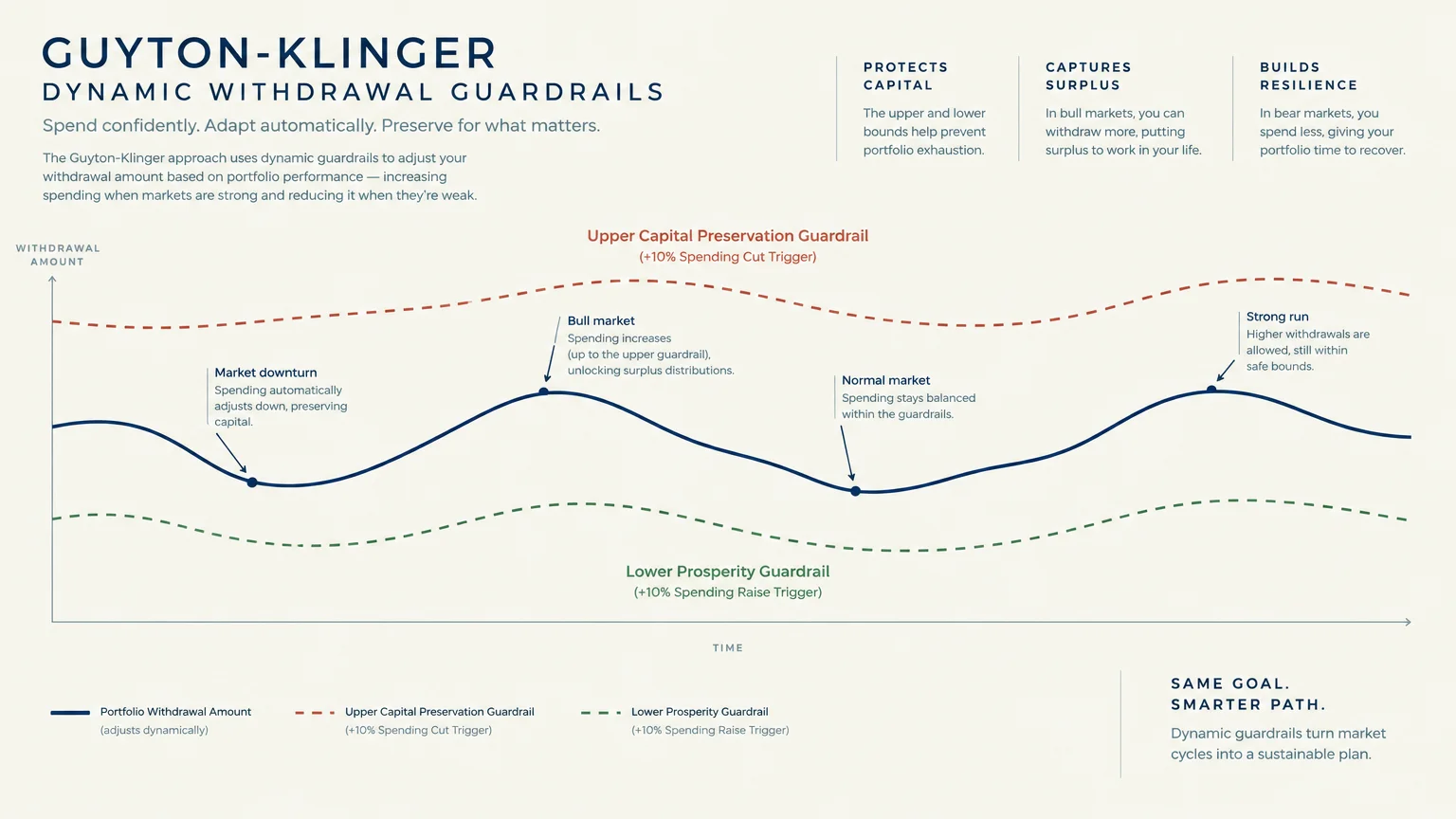
Modern retirees increasingly prefer dynamic withdrawal strategies over rigid rules. The Guyton-Klinger guardrails approach represents the gold standard for adaptive retirement distribution.
Under a guardrails plan, you start with a higher initial withdrawal rate—often between 4.5% and 5.2%. You then make small adjustments only when your portfolio crosses pre-established upper or lower spending triggers.
If the market thrives, you take a spending raise; if the market suffers extended losses, you trim spending by 5% to 10%. This flexibility gives you higher starting income without increasing portfolio failure risk.
Comparing Retirement Withdrawal Strategies
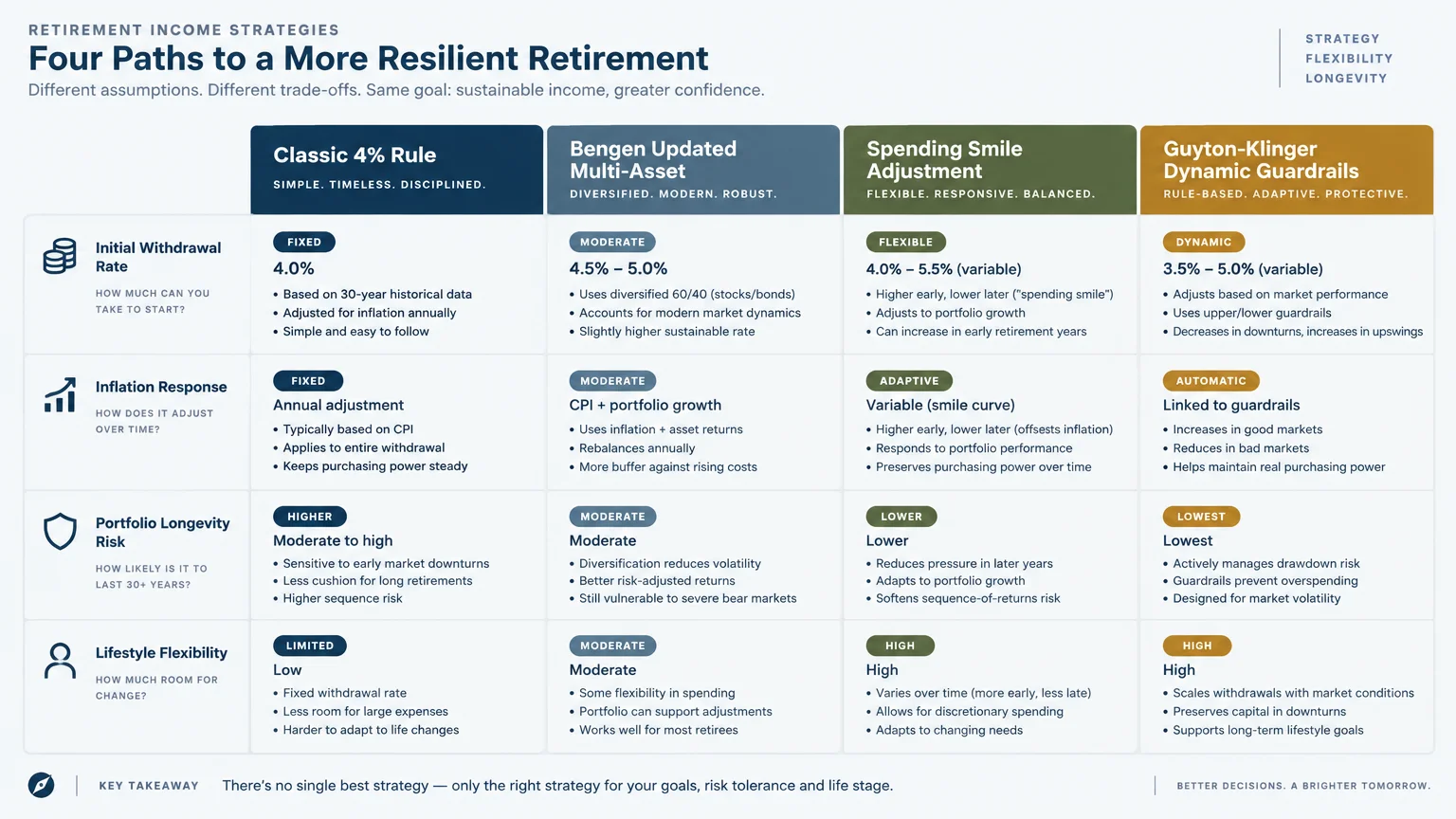
Reviewing different withdrawal frameworks helps you choose an approach tailored to your timeline, risk tolerance, and lifestyle goals.
| Withdrawal Strategy | Initial Withdrawal Rate | Adjustment Mechanism | Best Suited For |
|---|---|---|---|
| Classic 4% Rule (Bengen 1994) | 4.0% to 4.15% | Fixed annual inflation adjustment (CPI) | Hands-off investors wanting simple math |
| Bengen Expanded Asset Framework (2025) | 4.7% to 5.0% | Inflation-adjusted across seven asset classes | Investors holding diversified equity classes |
| Morningstar Annual Safe Baseline | 3.8% to 4.0% | Fixed real spending model updated for valuations | Conservative retirees with 30-year horizons |
| Guyton-Klinger Guardrails | 4.5% to 5.2% | Dynamic rules trim or raise spending as values shift | Retirees willing to adjust budgets yearly |

What Can Go Wrong: Critical Mistakes to Avoid
Rethinking your withdrawal approach gives you freedom, but missteps can jeopardize your financial security. Guard against these common planning traps.
Ignoring Tax Location and Sequencing: Withdrawing money without coordinating tax brackets leads to costly surprises. Review rules on the Internal Revenue Service (IRS) website regarding required minimum distributions and income taxes.
Failing to Adjust During Bear Markets: Flexible rules require the discipline to cut spending when market guardrails trigger. If you cannot trim discretionary expenses during drawdowns, dynamic strategies will falter.
Underestimating Healthcare and Long-Term Care: While everyday spending declines in mid-retirement, medical expenses spike later in life. Keep dedicated reserves or long-term care insurance to protect your investment portfolio.
Neglecting Guaranteed Income Streams: Portfolios do not stand alone. Incorporate your benefits from the Social Security Administration (SSA) and pensions before calculating your net portfolio withdrawal rate.

When to Consult a Professional
Navigating modern distribution strategies involves complex trade-offs between taxes, investment allocations, and market timing. Consider working with a Certified Financial Planner (CFP) under the following circumstances:
- You Hold Assets Across Multiple Account Types: Coordinating withdrawals from taxable brokerage accounts, traditional IRAs, and Roth IRAs requires strategic tax-bracket management.
- You Are Planning an Early Retirement: Managing a 35-to-50-year distribution window demands tailored modeling to mitigate prolonged sequence-of-returns risks.
- You Need Dynamic Spending Guardrails: Calculating mathematical guardrails and annual spending boundaries is complex without dedicated financial planning software.
- You Face Major Healthcare or Legacy Decisions: Balancing long-term care needs with generational wealth transfer requires comprehensive legal and financial coordination.
Frequently Asked Questions About the 4% Rule
Is the 4% rule completely dead?
No, the 4% rule is not dead, but financial experts now treat it as a rough benchmark rather than an unbreakable law. Modern planners recommend dynamic strategies that adjust for market valuations and personal spending shifts.
What is the safe withdrawal rate for 2026?
Morningstar research projects a baseline safe withdrawal rate of around 3.9% for a balanced 30-year portfolio. However, using diversified asset classes or flexible guardrails can allow starting rates between 4.5% and 5.0%.
How does Social Security impact my withdrawal rate?
Social Security reduces how much cash you must pull from personal investments. Subtract your guaranteed annual benefits from your total spending needs, then apply your chosen withdrawal percentage strictly to that remaining gap.
What is the difference between static and dynamic withdrawals?
Static withdrawals fix your spending at a set dollar figure adjusted strictly for inflation, regardless of market performance. Dynamic strategies raise or lower spending based on portfolio gains and losses, protecting principal during downturns.
Next Steps for Your Retirement Plan
The 4% withdrawal rule served as a pioneering baseline, but modern retirement planning requires adaptability and personal customization. Evaluate your portfolio asset mix, test dynamic spending guardrails, and build a plan tailored to your lifestyle.
Explore comprehensive retirement guides from trusted institutions like Vanguard Retirement and Investopedia to deepen your knowledge. Active planning today ensures decades of financial freedom tomorrow.
This article provides general retirement education and information only; everyone’s financial situation is unique—what works for others may not work for you. For personalized advice, consider consulting a qualified financial professional such as a CFP or CPA.
Last updated: February 2026. Retirement benefits, tax laws, and healthcare costs change frequently—verify current details with official sources.