
You do not need to replace 100% of your pre-retirement income to maintain a comfortable lifestyle. Real-world financial data shows that household expenses plunge across multiple categories once you leave the workforce.
While healthcare and groceries require careful planning, other major expenses drop dramatically or disappear entirely. Knowing where older Americans trim costs helps you build a realistic, confident spending plan.
From payroll taxes to daily commuting, retirees consistently pocket thousands of dollars in annual savings. Here are the ten spending categories where retirees report saving the most money.

1. Retirement Plan Contributions
During your working career, financial advisers likely urged you to save aggressively. Most workers allocate 10% to 15% of their gross earnings into 401(k) accounts, IRAs, or workplace pensions.
The moment you retire, that massive monthly outflow drops to zero. You no longer need to allocate wages toward retirement because you have reached the withdrawal stage.
For someone earning $90,000 annually, ending a 12% retirement contribution instantly preserves $10,800 per year. That immediate cash flow relief cushions lower overall gross income.
“Retirement is a major life transition that resets your cash flow; you stop funding the future and start living on what you have built.” — Jean Chatzky, Financial Journalist and Author
2. Payroll Taxes (FICA)
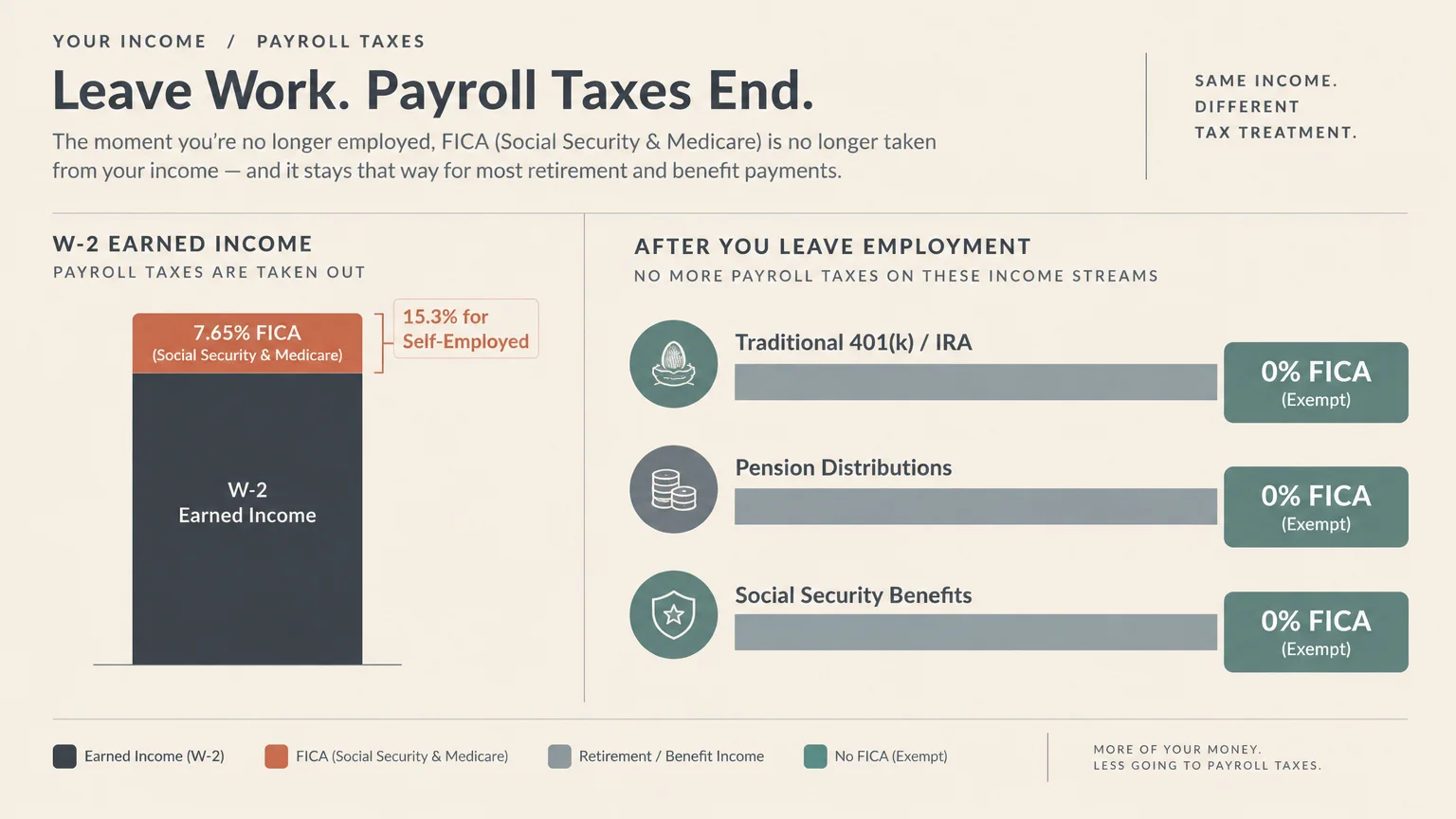
Every W-2 employee pays the Federal Insurance Contributions Act (FICA) tax on earned wages. This payroll tax claims 7.65% of your paycheck to fund Social Security and Medicare.
Self-employed professionals face an even steeper hurdle, paying a 15.3% self-employment tax. This recurring charge disappears once you stop working for earned wages.
Distributions from traditional 401(k) plans, traditional IRAs, and pensions are completely exempt from FICA taxes. Your Social Security benefits and investment gains also bypass payroll taxes entirely.
Eliminating this 7.65% levy provides an immediate spending boost. It means a retiree needs less gross income to match their pre-retirement take-home pay.
3. Federal Income Taxes and Senior Deductions
Retirees often drop into lower marginal tax brackets when active employment salaries end. Strategically managing withdrawals gives you greater control over your annual taxable income.
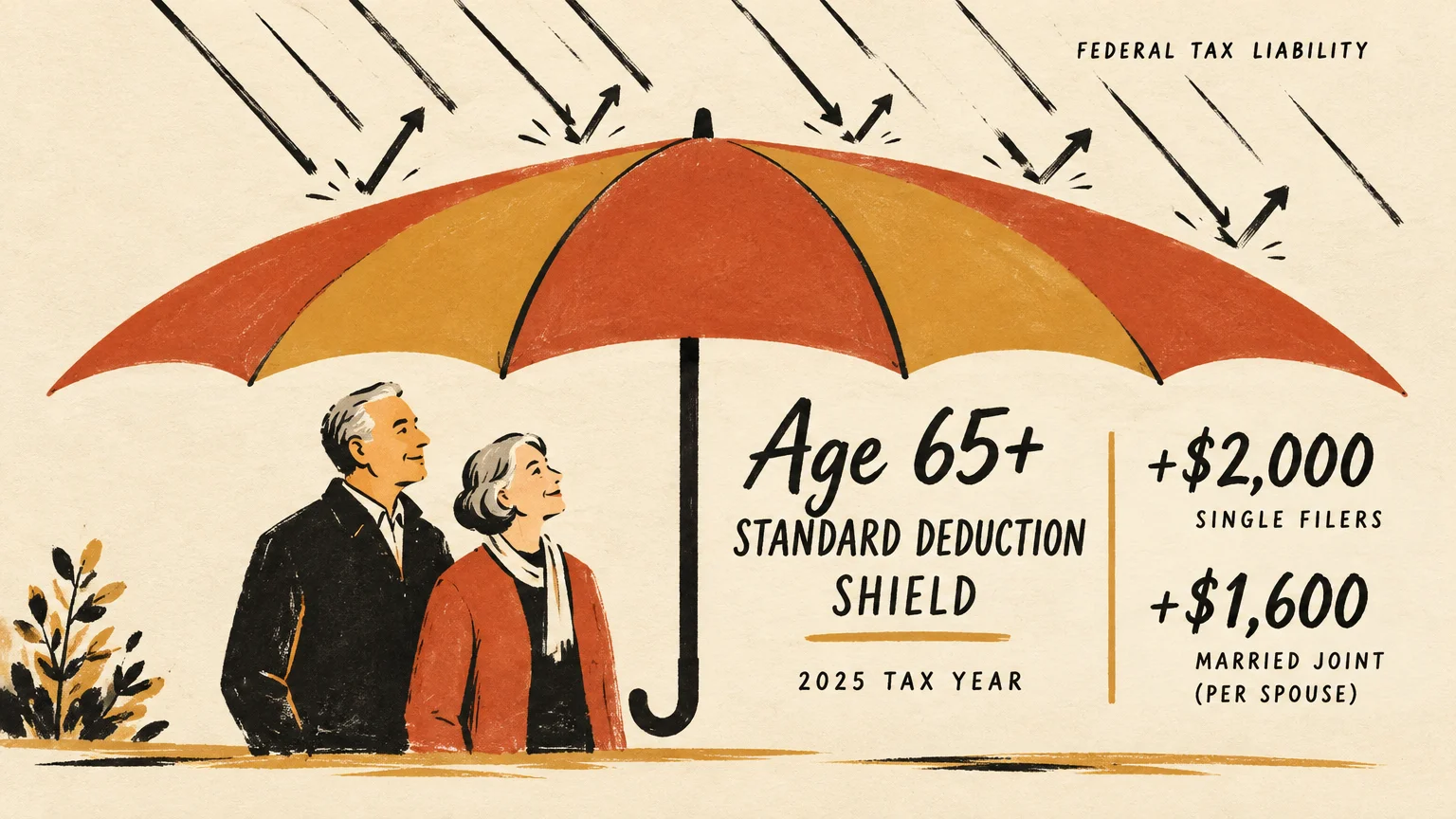
The Internal Revenue Service (IRS) also provides an additional standard deduction for taxpayers aged 65 and older. This bonus deduction shields a larger portion of your income from federal taxes.
For the 2025 tax year, single filers aged 65 or older receive an extra $2,000 standard deduction. Married couples filing jointly receive an extra $1,600 per qualifying spouse.
Combining lower income thresholds with age-based deductions significantly cuts your annual tax bill. That tax relief lets you stretch your retirement portfolio further.
4. Commuting and Daily Transportation
Commuting to an office ranks among the most expensive ongoing costs for working adults. Between fuel, highway tolls, parking passes, and public transit, daily travel drains considerable wealth.
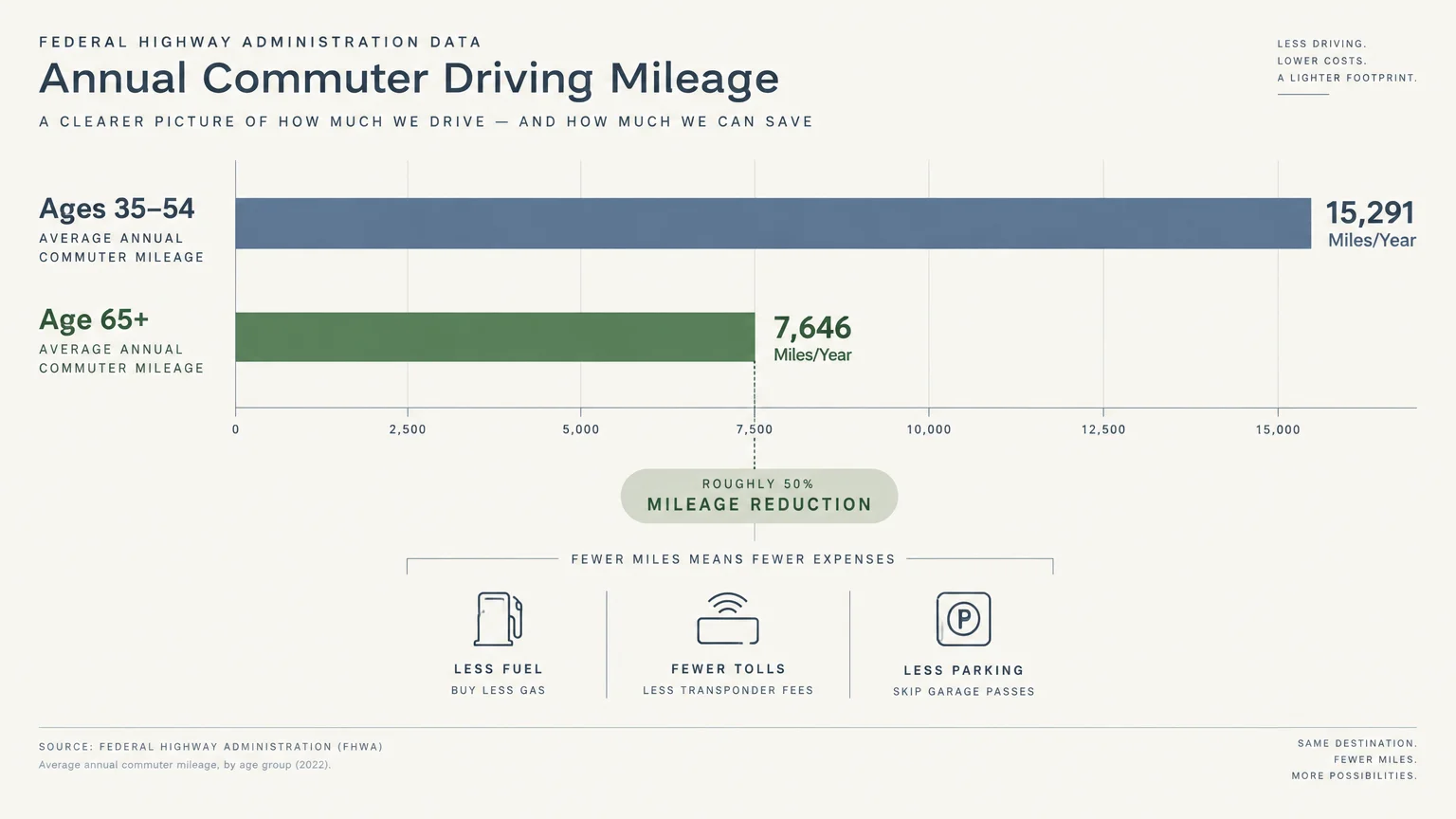
Data from the Federal Highway Administration shows that drivers aged 65 and older average 7,646 miles annually. By contrast, drivers aged 35 to 54 travel 15,291 miles per year.
Cutting your annual driving distance roughly in half yields dramatic savings at the gas pump. You also spend far less on express toll lanes and commercial parking garages.

5. Auto Insurance and Vehicle Maintenance
Driving fewer miles naturally slashes wear and tear on your vehicle. Oil changes, tire rotations, and brake replacements occur far less frequently when your car sits parked.
Most major auto insurance companies offer discounted rates when you drive fewer than 7,500 to 10,000 miles annually. Calling your insurer to reclassify your vehicle from “commute” to “pleasure” reduces your premium.
Many retired couples also choose to downsize from two vehicles to one reliable car. Eliminating a second car erases registration fees, insurance policies, and annual depreciation.

6. Housing and Mortgage Debt
Housing consistently represents the single largest expenditure for working families. In retirement, many older adults free themselves from this massive monthly obligation.
According to the Federal Reserve Survey of Consumer Finances, over 50% of homeowners aged 65 and older own their homes without a mortgage. Eliminating monthly principal and interest provides transformative financial breathing room.
Retirees who carry an existing mortgage often downsize into smaller homes or lower-cost regions. The Consumer Financial Protection Bureau (CFPB) notes that reducing housing overhead stabilizes long-term retirement security.
While property taxes and maintenance remain, wiping out monthly debt service frees up thousands of dollars every year.

7. Work Clothing and Professional Wardrobe
Maintaining a corporate wardrobe requires steady expenditures on business suits, dress shoes, and accessories. Professional garments also require expensive regular dry cleaning and tailoring.
The U.S. Bureau of Labor Statistics Consumer Expenditure Survey confirms this dynamic. Apparel spending drops by 40% to 50% between households aged 55 to 64 and those aged 65 and older.
Retirees adopt casual, comfortable clothing that lasts longer and washes easily at home. This shift quietly preserves hundreds of dollars each year.

8. Dependent Care and Educational Expenses
Raising children and funding higher education creates enormous financial pressure during mid-career years. USDA data indicates that raising a child through age 17 costs well over $300,000 before factoring in college.
By the time most people retire, children have grown up and achieved financial independence. College tuition payments, campus meal plans, and private school costs finally end.
Removing adult dependents from your family health insurance plan also lowers private medical premiums. These completed parenting expenses unlock significant flexibility in your monthly budget.
9. Life and Disability Insurance Premiums
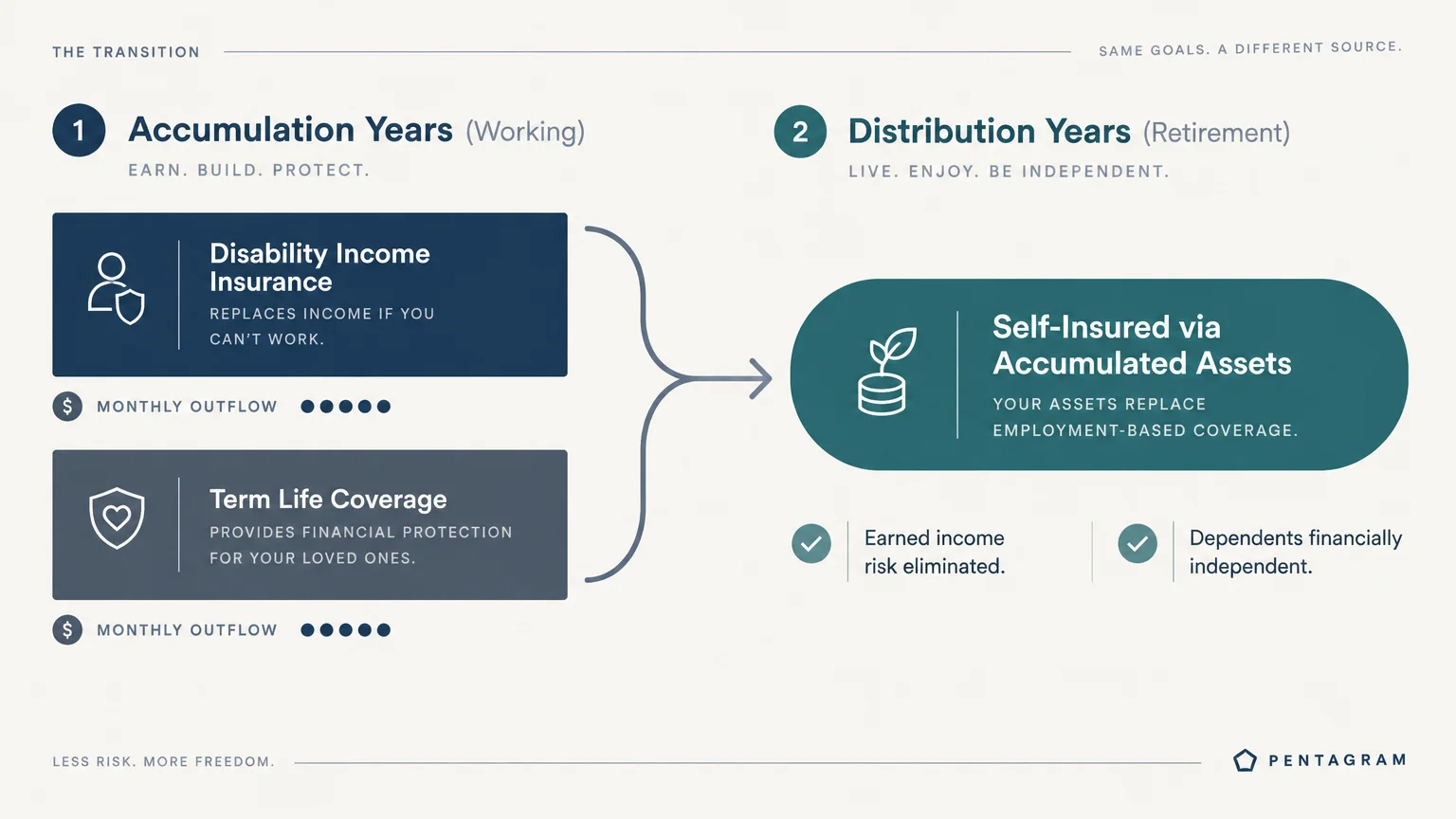
Working adults purchase life and disability insurance to replace their earned income if tragedy strikes. These protection policies safeguard dependents who rely on your regular paycheck.
Once you retire, you no longer depend on wage income to pay your living expenses. Your accumulated assets and guaranteed benefits step forward to sustain your household.
As a result, most retirees safely cancel or sunset private disability policies and expensive term life insurance. Eliminating those annual premiums keeps substantial cash in your pocket.

10. Off-Peak Travel and Senior Recreation Discounts
Retirement gives you control over your calendar, unlocking immense travel flexibility. You no longer have to travel during peak summer holidays or crowded school breaks.
Booking midweek flights, off-season cruises, and shoulder-season hotels secures premium experiences at steep discounts. Flexible retirees regularly save 30% to 50% on vacation bookings.
Public recreation discounts provide another major source of leisure savings. The National Park Service sells an America the Beautiful Senior Pass for $20 annually or $80 for a lifetime.
This pass grants U.S. citizens aged 62 and older entry into more than 2,000 federal recreation sites. Passholders also receive 50% discounts on select camping, boat launch, and tour fees.
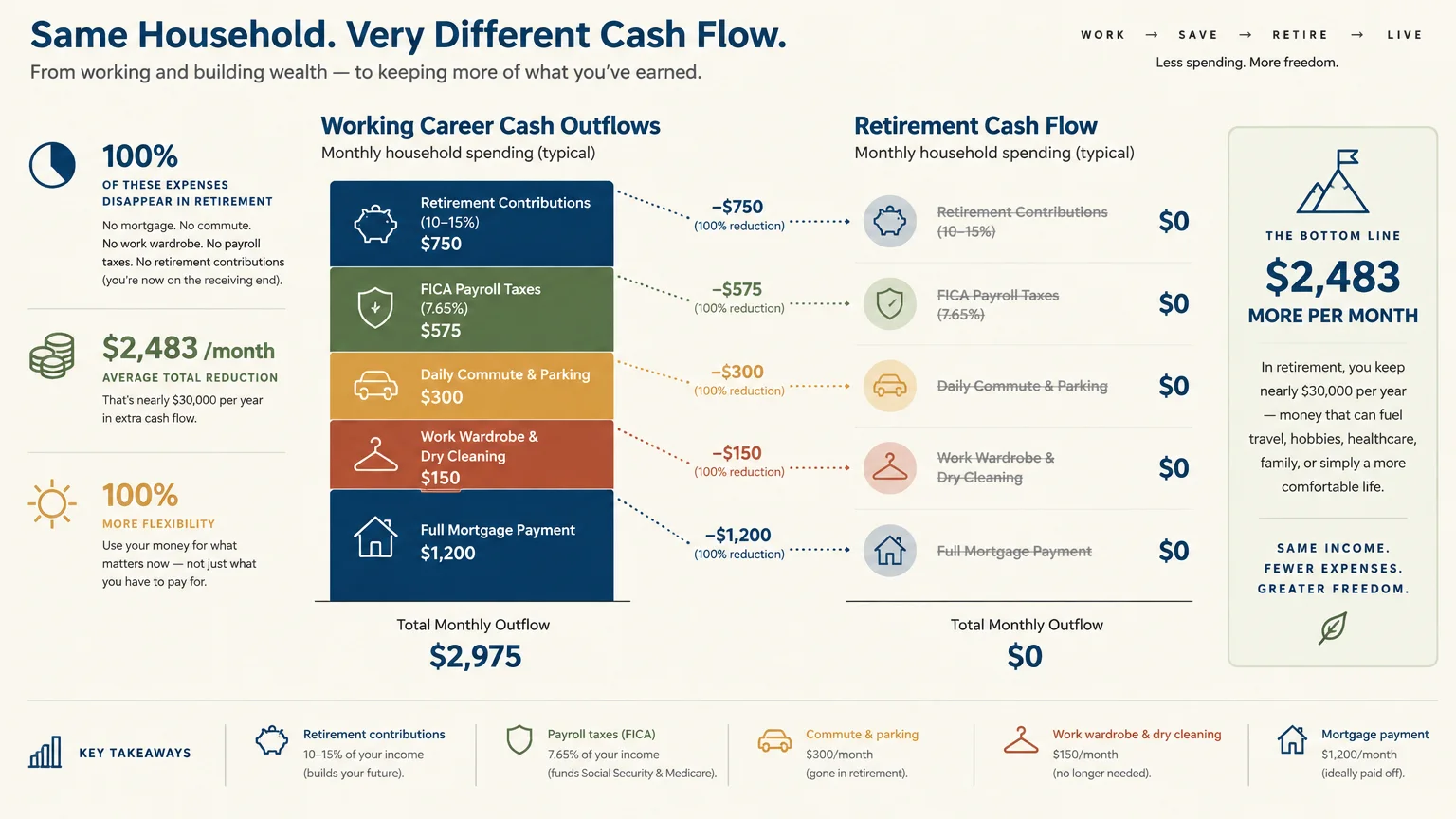
Pre-Retirement vs. Post-Retirement Expense Comparison
The table below highlights how typical household costs change once you transition from full-time employment into retirement.
| Expense Category | Working Years (Ages 45–64) | Retirement Years (Ages 65+) | Financial Impact |
|---|---|---|---|
| Retirement Savings | 10% to 15% of gross earnings | $0 per month | Immediate cash flow increase |
| Payroll Taxes (FICA) | 7.65% on W-2 wages (up to limits) | 0% on distributions and Social Security | Saves $765 per $10,000 of income |
| Annual Driving | 15,291 miles per year average | 7,646 miles per year average | Roughly 50% drop in fuel and wear |
| Auto Insurance | Higher “commute” classification | Lower “pleasure use” rating | Premium discounts of 10% to 25% |
| Apparel & Care | Professional suits, shoes, dry cleaning | Casual everyday wardrobe | Spending drops by 40% to 50% |
| Income Protection | Term life and disability insurance | Self-insured via retirement assets | Hundreds to thousands saved annually |
| National Parks Access | $80 standard annual pass | $20 annual pass or $80 lifetime pass | Substantial lifetime savings |

What Can Go Wrong: Avoiding Common Spending Traps
Assuming all expenses drop automatically can derail an otherwise solid retirement plan. Without disciplined budgeting, leisure spending can quickly expand to consume your extra cash.
Many retirees encounter unexpected home repairs, higher dental costs, or rising healthcare out-of-pocket expenses. Failing to keep an adequate emergency fund leaves you vulnerable to sudden shocks.
Over-subsidizing adult children also poses a major financial risk. Providing ongoing financial support to family members can erase the savings you gain across other spending categories.

When to Consult a Financial Professional
Navigating income distributions and tax efficiency requires thoughtful coordination. Working with a fee-only Certified Financial Planner can clarify complex choices.
Consider seeking professional advice in the following situations:
- When coordinating traditional IRA withdrawals, Roth conversions, and Social Security claiming to minimize taxes.
- When deciding whether to pay off your mortgage before retiring or maintain liquidity in taxable brokerage accounts.
- When re-evaluating permanent life insurance policies or considering long-term care asset protection strategies.
Resources from the National Council on Aging (NCOA) and AARP offer reliable guidance for finding vetted eldercare and financial advisors.
Frequently Asked Questions
Do retirees really need 80% of their pre-retirement income?
Traditional rules suggest replacing 70% to 80% of pre-retirement income. However, retirees with paid-off mortgages and minimal debt often live comfortably on 60% or less.
How do retirees save money on auto insurance?
Inform your insurer that you no longer commute to work and drive fewer miles each year. Most insurance carriers offer low-mileage discounts once annual driving drops below 7,500 miles.
Are Social Security benefits subject to FICA payroll taxes?
No, Social Security benefits are exempt from FICA payroll taxes. You only pay FICA taxes on earned income from employment or active self-employment.
How do senior discounts for national parks work?
Adults aged 62 and older can purchase an America the Beautiful Senior Pass for $80 for lifetime access or $20 annually. This pass covers entrance fees at thousands of federal sites.
Retirement transforms your personal balance sheet in liberating ways. By recognizing which costs vanish, you can direct your resources toward meaningful hobbies, travel, and peace of mind.
This is educational content based on general retirement planning principles, and individual results vary based on your situation. Always verify current benefit amounts, tax laws, and eligibility with official sources.
Last updated: February 2026. Retirement benefits, tax laws, and healthcare costs change frequently—verify current details with official sources.