Working part-time during your early retirement years shields your investment portfolio from premature liquidations. Earning even $1,500 each month allows your nest egg to compound undisturbed during volatile market cycles.
A modest paycheck covers essential living expenses and buys you valuable time before tapping retirement accounts. This bridging strategy protects your wealth while providing financial flexibility.
By substituting investment withdrawals with earned income, you can optimize Social Security benefits and reduce future taxes. Here are nine practical ways retirees leverage part-time work to safeguard their financial future.
1. Mitigating Sequence of Returns Risk in Early Retirement
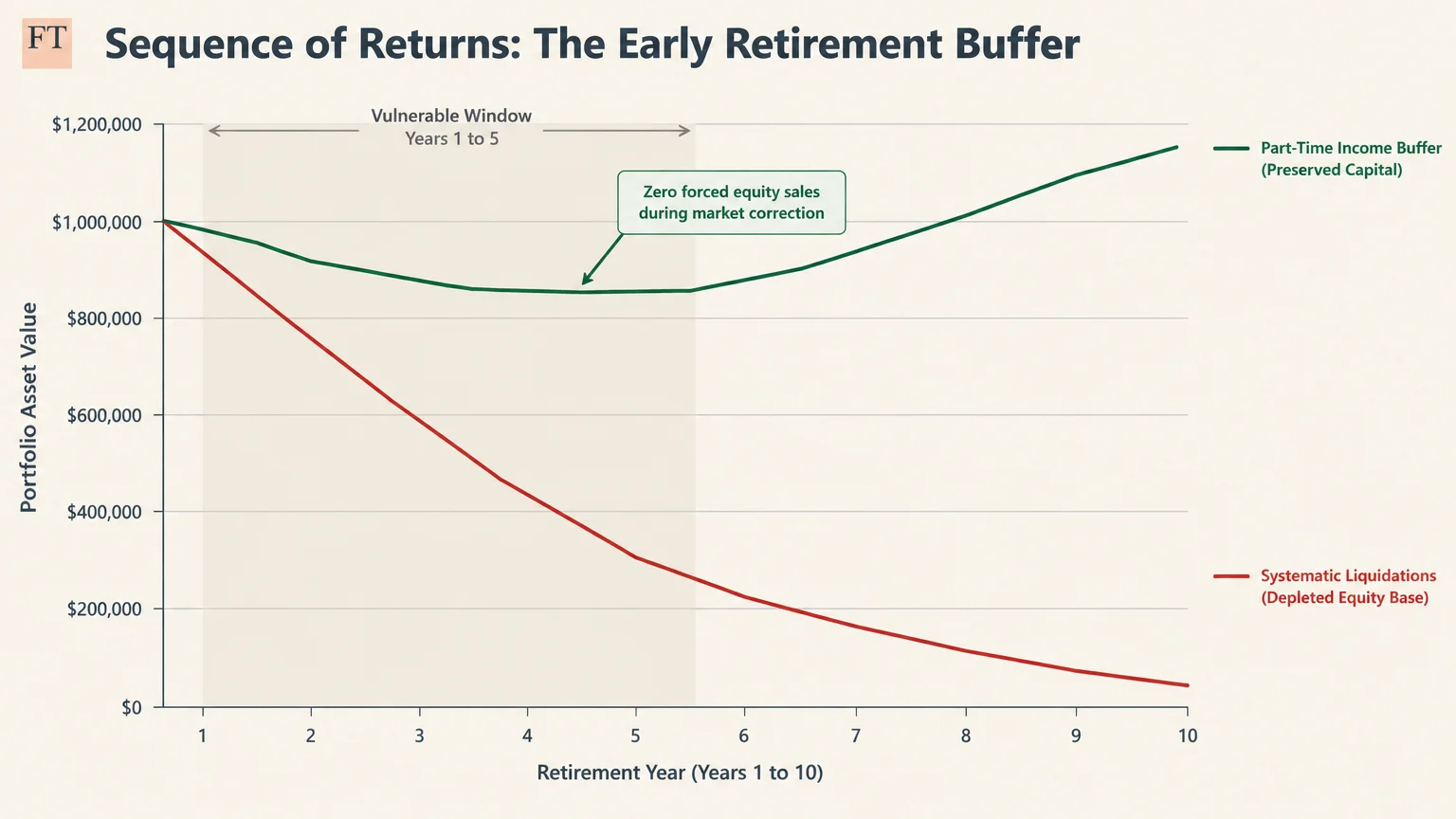
The first five years of retirement represent the most vulnerable window for your portfolio. Experiencing a market downturn while taking systematic withdrawals locks in permanent capital losses.
Selling depreciated equities during a bear market reduces the share count required to generate future growth. That depletion permanently lowers the recovery potential of your accounts.
Generating part-time income covers your daily cash flow needs without forcing asset sales. You effectively create an organic buffer that insulates your equity holdings from severe market drops.
Retirees who pause distributions during down markets give their assets sufficient runway to recover. Even one year of earned income can extend a portfolio’s longevity by several years.
You can treat your wage income as a defensive hedge against unfavorable economic cycles. This simple approach keeps your core investment strategy intact when market conditions deteriorate.
2. Maximizing Social Security via Delayed Retirement Credits
Delaying your Social Security claim remains one of the most reliable ways to secure guaranteed, inflation-adjusted income. Part-time earnings allow you to push your claiming date past full retirement age.
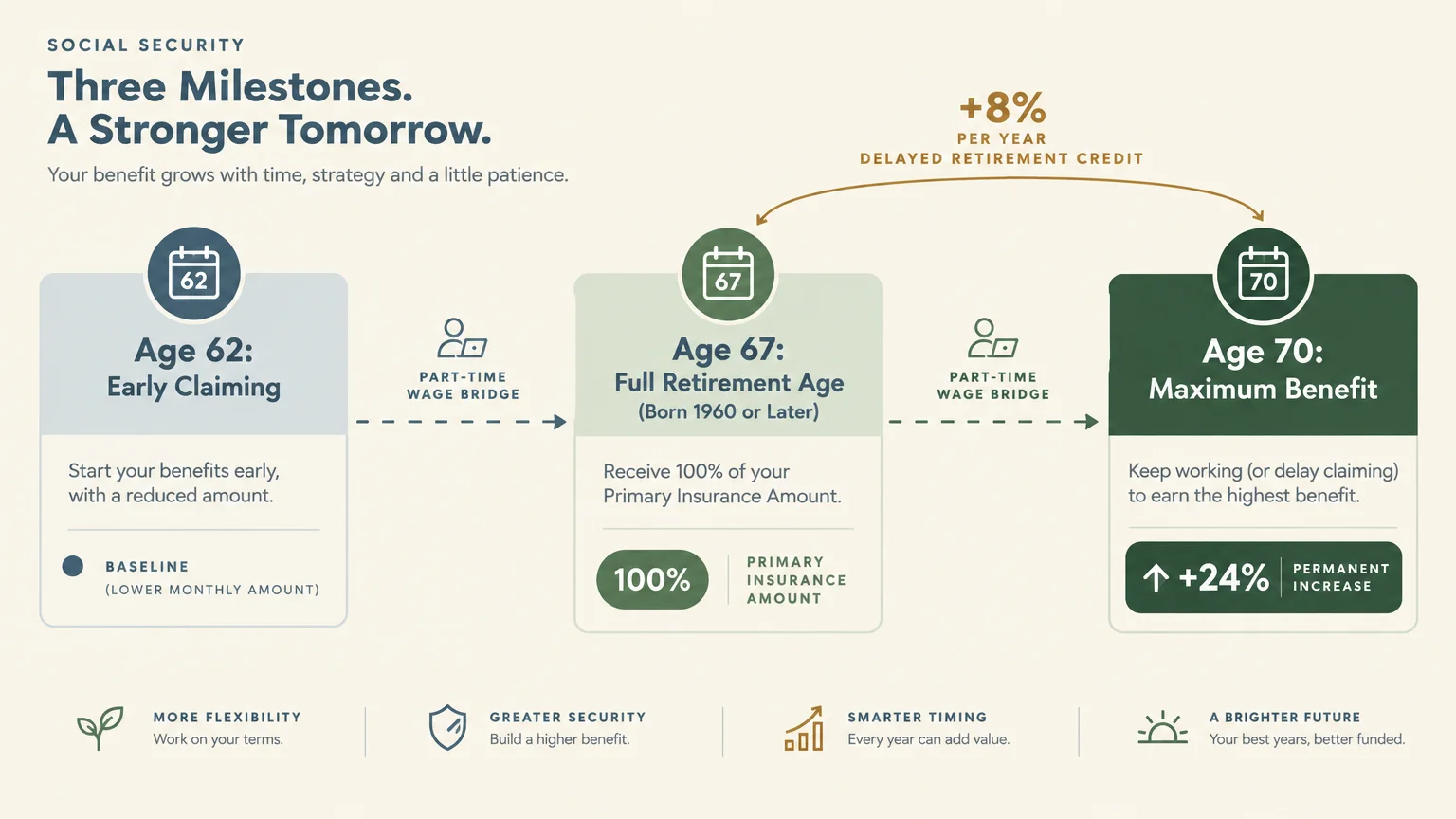
According to the Social Security Administration, every year you delay claiming benefits beyond your full retirement age—up to age 70—adds an 8% permanent increase through delayed retirement credits.
For individuals born in 1960 or later, full retirement age is 67. Claiming at age 70 locks in a permanent 24% benefit increase above your primary insurance amount.
Working part-time acts as an income bridge, providing the cash flow you need while those credits accumulate. This strategy produces a larger guaranteed check for the remainder of your life.
Moreover, claiming later creates a substantially higher survivor benefit for your spouse. Part-time wages directly fund that long-term safety net.
3. Utilizing the 401(k) Still-Working Exception to Postpone RMDs
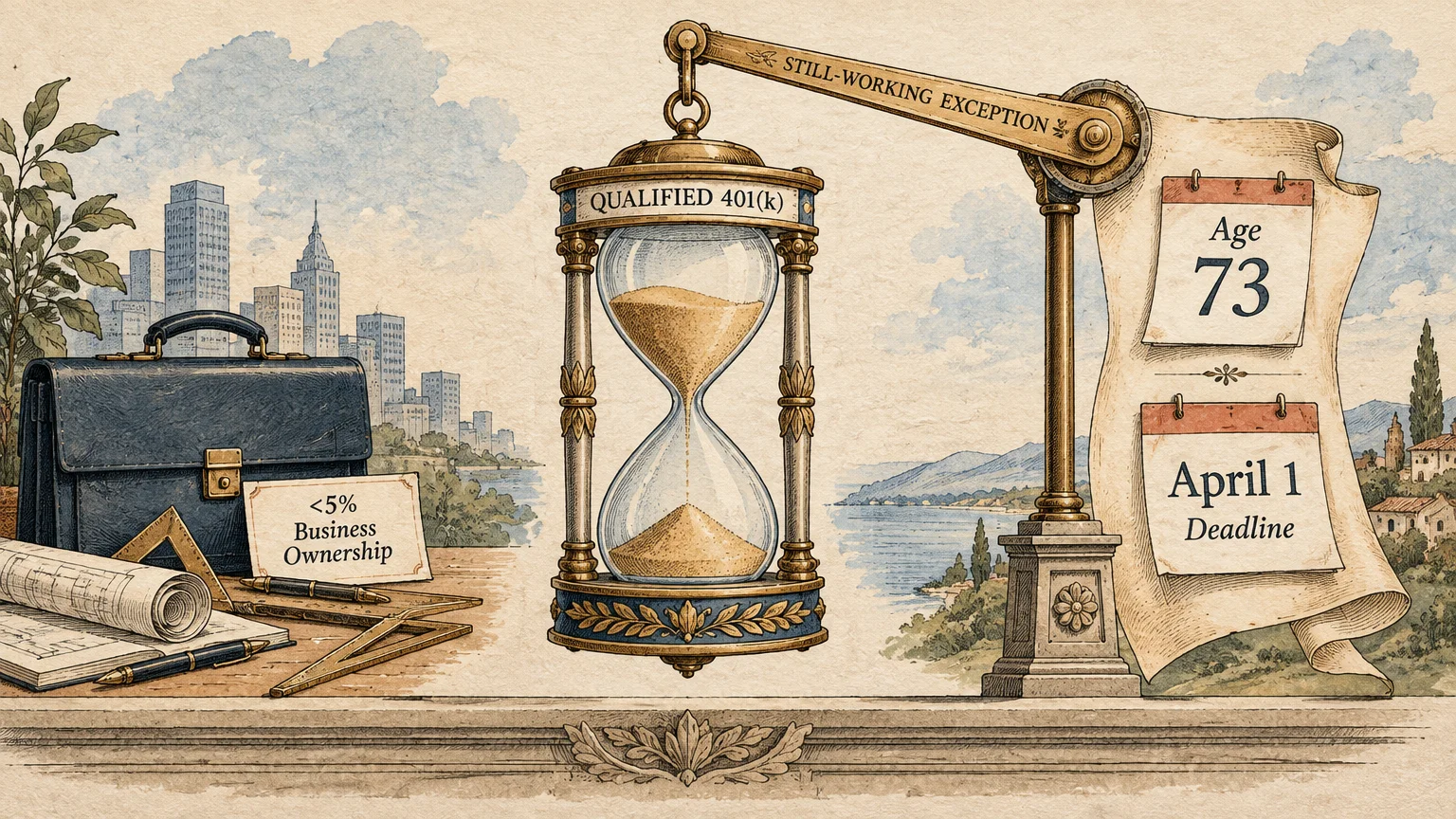
The SECURE 2.0 Act established the Required Minimum Distribution (RMD) age at 73 for those born between 1951 and 1959, rising to age 75 in 2033 for individuals born in 1960 or later.
However, you can postpone mandatory distributions from your current employer’s retirement plan using the statutory still-working exception.
If you work part-time for a company whose plan you participate in, you can delay RMDs from that specific 401(k) or 403(b). You must own less than 5% of the business to qualify.
This exception allows distributions to wait until April 1 following the calendar year in which you fully retire. It prevents mandatory taxable distributions from pushing you into higher brackets.
This rule does not apply to traditional IRAs or plans from previous employers. However, you can often roll old qualified balances into your current employer’s plan to defer distributions further.
“The key to keeping more of your hard-earned retirement savings is controlling when and how you pay the tax collector.” — Ed Slott, CPA and Retirement Distribution Expert

4. Generating Earned Income to Continue Funding IRAs
Retirees often assume that leaving full-time employment ends their ability to make tax-advantaged account contributions. However, eligibility to fund an IRA depends entirely on earned income, not your chronological age.
The Internal Revenue Service allows any individual with active compensation to contribute to traditional or Roth IRAs. Investment yields, pensions, and Social Security benefits do not count as earned income.
For 2025, individuals age 50 and older can contribute up to $8,000 annually ($7,000 baseline plus a $1,000 catch-up contribution). In 2026, the limit expands to $8,600 ($7,500 baseline plus an indexed $1,100 catch-up).
Directing part-time wages into a Roth IRA provides lasting tax benefits. You build a completely tax-free reserve that carries no lifetime mandatory distribution requirements.
If you are married, your part-time compensation can also fund a spousal IRA. That enables you to double your household’s annual retirement plan contributions.
5. Securing Employer Health Coverage to Reduce Medical Out-of-Pocket Costs
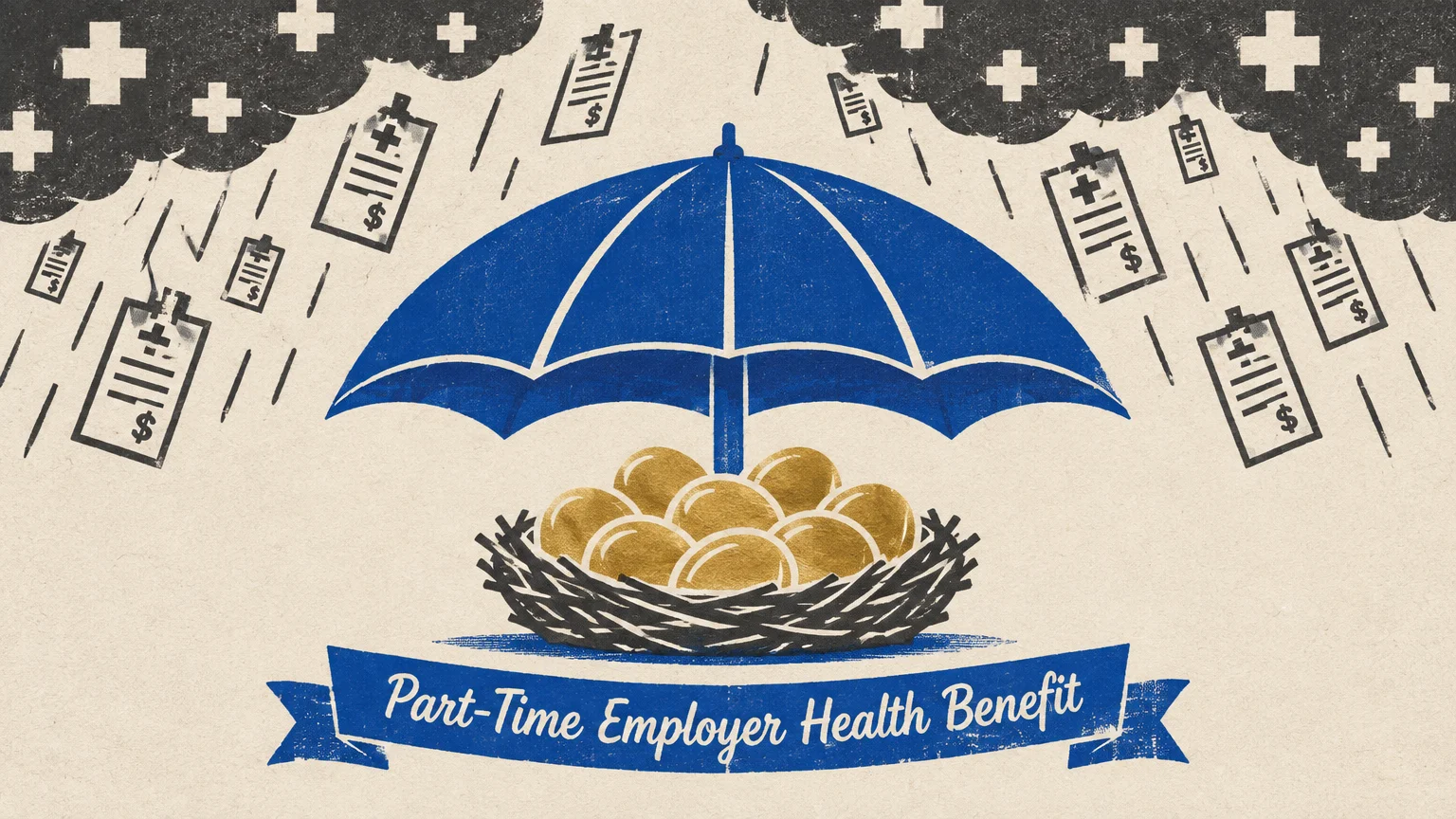
Healthcare expenses frequently rank among the largest financial burdens facing early retirees prior to Medicare eligibility at age 65. Private individual health coverage can easily cost over $10,000 per year in premiums alone.
Many progressive companies now offer comprehensive group health insurance benefits to part-time workers who log 20 or more hours per week.
Securing employer-subsidized health benefits shields your liquid savings from expensive private health insurance policies. You keep capital inside your investment accounts where it continues to compound.
For retirees 65 and older, maintaining qualifying employer group coverage from an employer with 20 or more employees allows you to postpone Medicare Part B without penalties.
Remaining enrolled in an employer-sponsored High-Deductible Health Plan also permits continued Health Savings Account (HSA) contributions. You must delay Medicare Part A and Part B enrollment to preserve your HSA eligibility.
6. Leveraging SECURE 2.0 Long-Term Part-Time Plan Rules
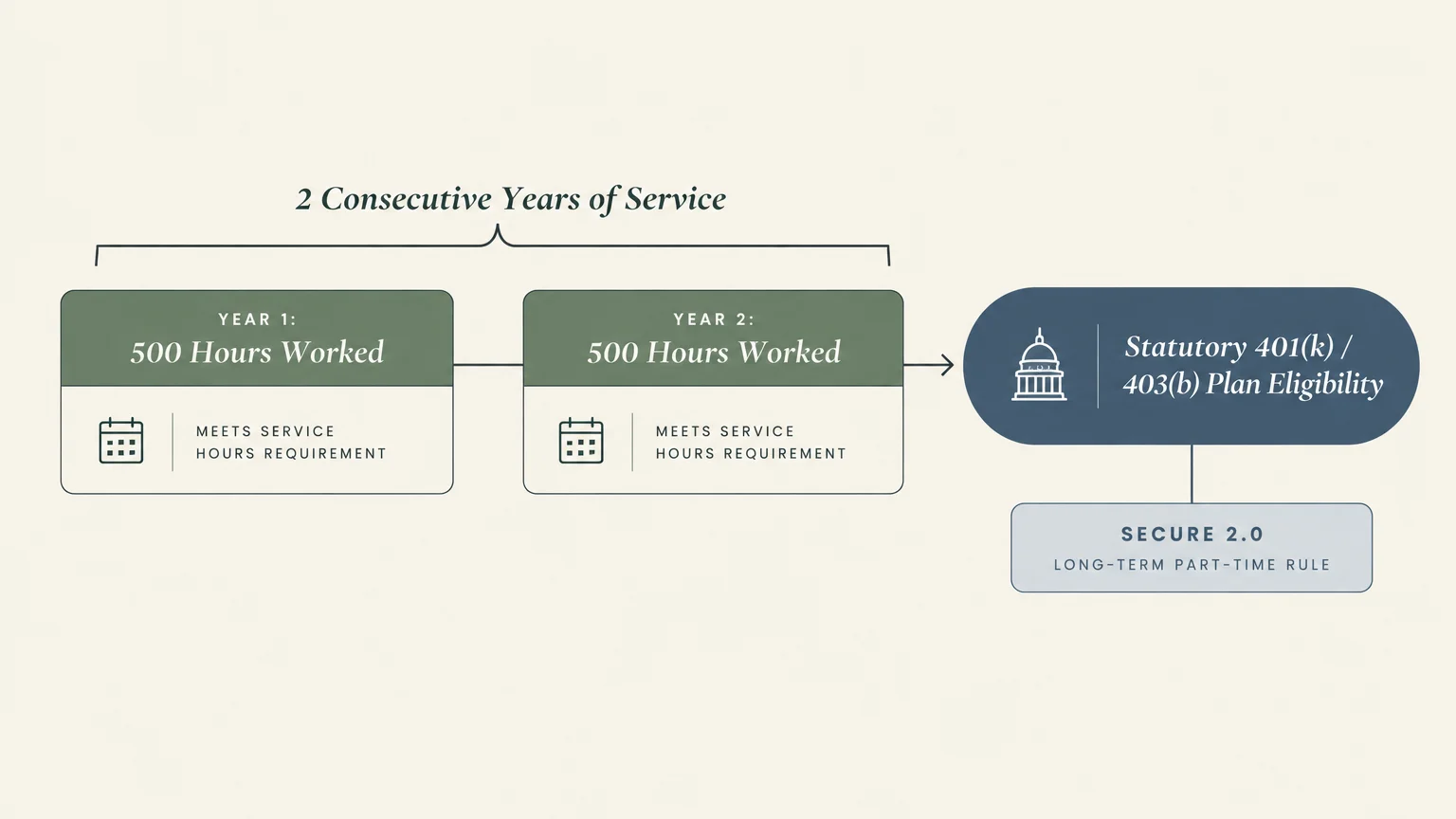
Federal legislation has made it substantially easier for part-time workers to access institutional retirement savings programs. The SECURE 2.0 Act established new access rules for long-term part-time employees.
Under these federal guidelines, employers must permit part-time workers who complete at least 500 hours of service for two consecutive years to participate in qualified 401(k) plans.
These access mandates expand to ERISA-governed 403(b) plans beginning in 2026. This allows educational and nonprofit part-time workers to access structured salary deferrals.
Participating in an employer-sponsored plan lets you defer taxes on part-time wages automatically. In some cases, employers also provide partial matching contributions on your deferrals.
Putting a portion of your wages into an employer plan minimizes your immediate taxable income. At the same time, you avoid tapping existing tax-deferred accounts for living expenses.
7. Managing Marginal Tax Brackets and Capital Gains Realization
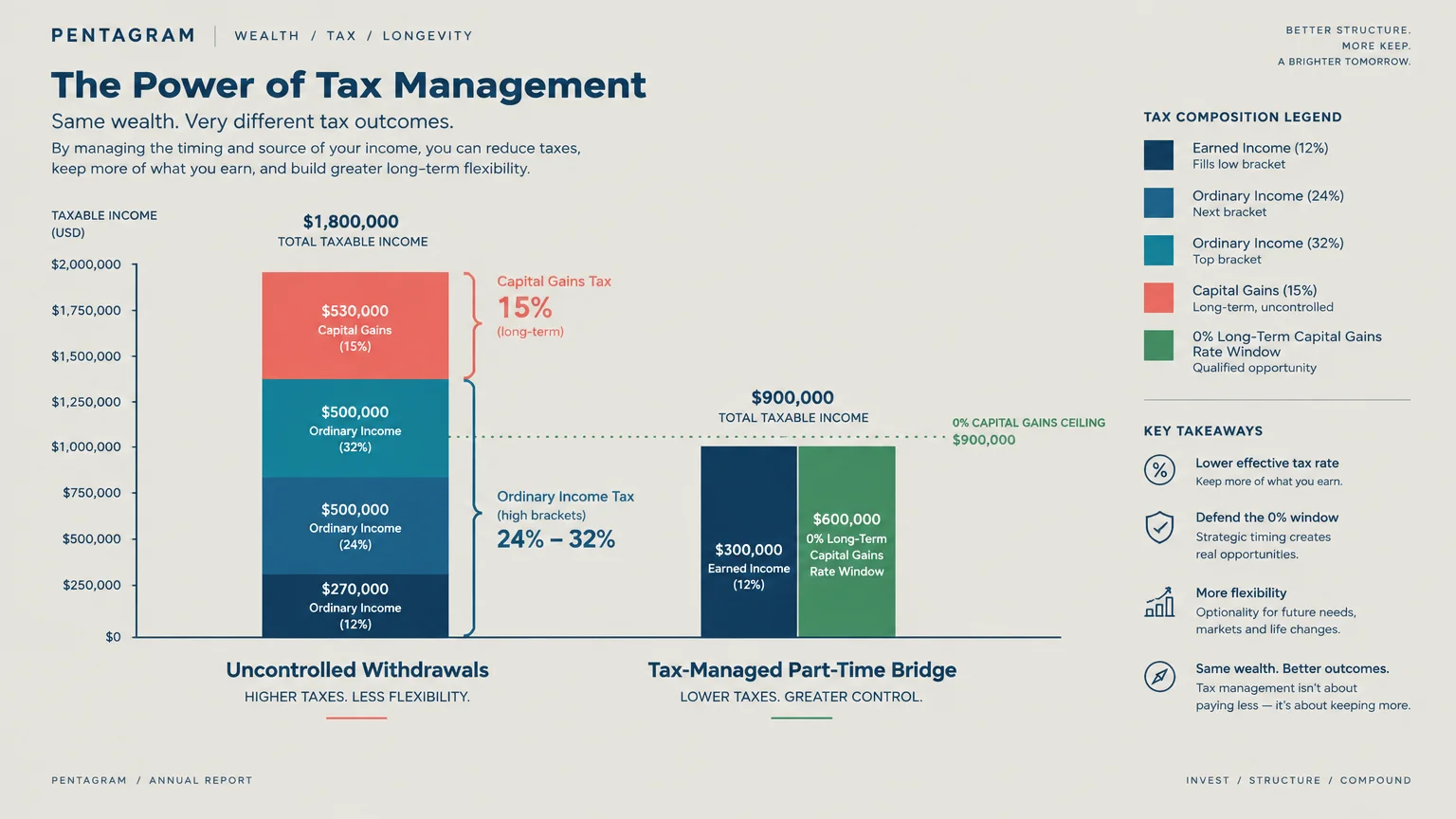
Taking substantial withdrawals from traditional pre-tax retirement accounts to meet living expenses can trigger unwanted tax consequences. Distributions count directly as ordinary income on your federal return.
Large taxable distributions can push you into higher income tax brackets and increase taxes on your capital gains. They can also trigger Medicare Part B and Part D Income-Related Monthly Adjustment Amounts (IRMAA).
Replacing portfolio withdrawals with predictable, moderate part-time wages keeps your taxable income within a controlled window. This stability prevents sharp tax bracket spikes.
This controlled income environment makes partial Roth conversions far more cost-effective. You can systematically convert pre-tax balances into Roth accounts at lower marginal rates.
Carefully managing your distribution profile also keeps your adjusted gross income below thresholds that trigger taxes on Social Security benefits. Every avoided tax dollar stays invested in your portfolio.

8. Allowing Account Principal to Compound Undisturbed
The mathematical power of compound growth works best when assets remain uninterrupted over extended holding periods. Every early withdrawal reduces the base asset pool that drives future returns.
Financial education resources at Investopedia highlight how modest principal preservation in early retirement significantly alters long-term wealth trajectories.
Consider an investment portfolio worth $600,000 growing at a hypothetical 6% annual net return. Leaving that balance untouched for three years allows it to grow to roughly $714,600 without additions.
Conversely, taking $35,000 in annual living distributions lowers the ending balance to approximately $604,000 over that same three-year window. The difference equals over $110,000 in lost growth and capital.
Covering your immediate lifestyle costs through part-time earnings preserves that core asset engine. You protect your baseline balance for the decades ahead.

9. Funding Discretionary Lifestyle Upgrades Directly from Cash Flow
Retirement lifestyle expenses rarely follow a flat, predictable trajectory. Most retirees spend more during their active, early retirement years on travel, entertainment, and hobbies.
Relying on retirement accounts to finance these active lifestyle pursuits accelerates distribution rates. This increases portfolio stress early in retirement.
Using part-time wages as an auxiliary fund lets you pay for discretionary trips and hobbies directly from cash flow. You can travel or pursue interests without feeling financial stress.
Part-time income can comfortably support several common lifestyle expenses, including:
- Extended seasonal travel and international vacation itineraries;
- Fitness club memberships, golf league fees, and recreational sporting gear;
- Home renovation projects, garden updates, and property improvements;
- Gifts, family education funds, and travel to see grandchildren.
Paying for these experiences with current earnings keeps your baseline savings fully committed to essential retirement needs. You enjoy retirement perks without compromising long-term security.
Financial Comparison: Immediate Withdrawals vs. Part-Time Bridge Strategy
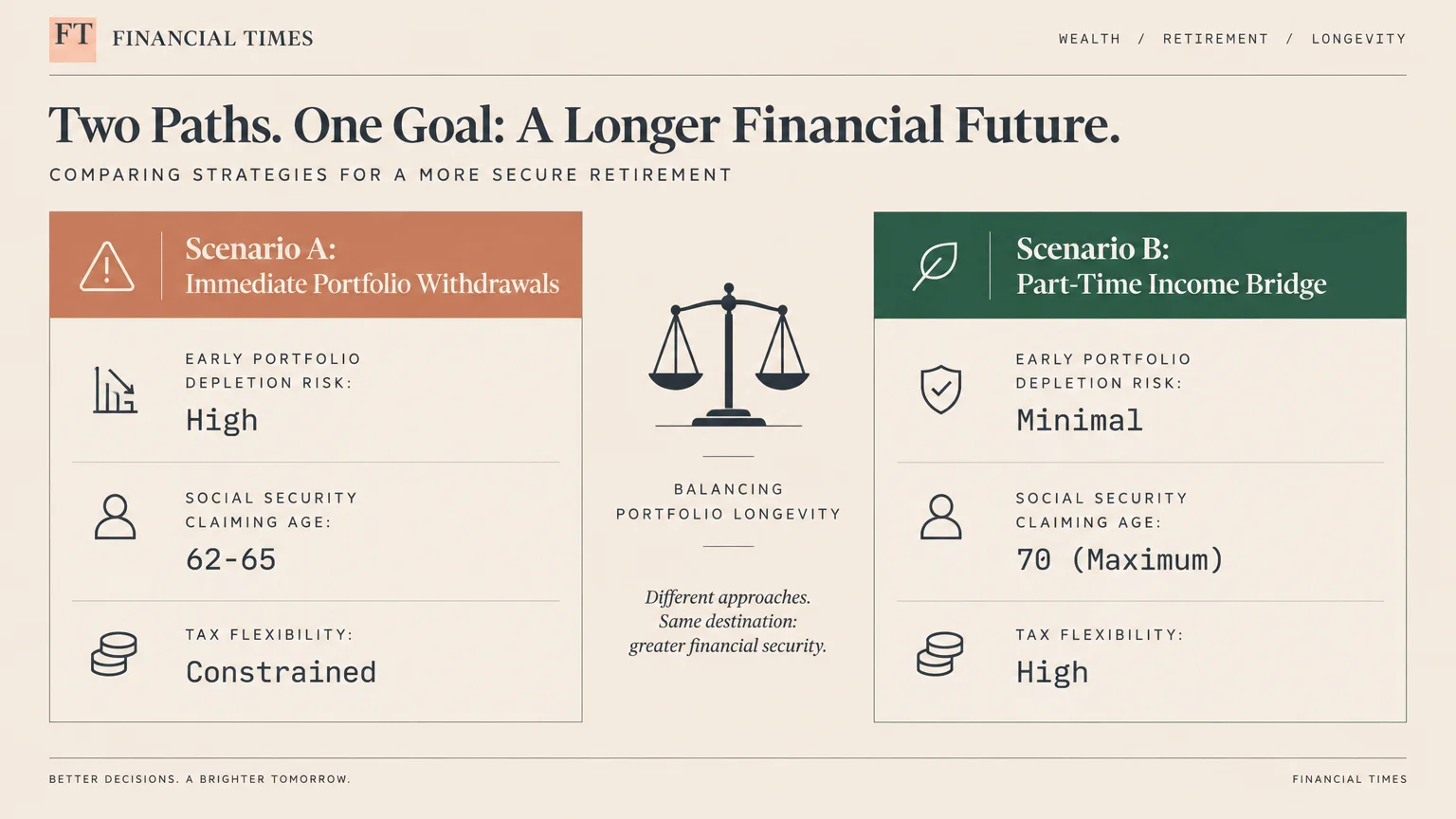
Choosing between taking early portfolio distributions and working part-time impacts your long-term wealth in tangible ways. The table below illustrates how these two approaches compare across core retirement planning benchmarks.
| Planning Category | Immediate Portfolio Withdrawals | Part-Time Bridge Strategy |
|---|---|---|
| Portfolio Capital Preservation | Draws down principal early; exposes assets to sequence risk. | Leaves balance intact; allows uninterrupted compounding. |
| Social Security Optimization | Often requires claiming at 62 or FRA to replace wages. | Enables claiming delay to age 70 for an 8% annual credit. |
| Retirement Account Contributions | Prohibited due to lack of earned compensation. | Permits IRA and 401(k) contributions up to annual limits. |
| Healthcare Cost Structure | Requires self-funded private insurance or ACA plans before 65. | Can provide access to employer-sponsored group health plans. |
| Lifetime Tax Flexibility | Higher mandatory pre-tax draws limit conversion opportunities. | Controls marginal brackets; simplifies partial Roth conversions. |
Common Mistakes to Avoid When Working Part-Time in Retirement
While earning supplemental income provides clear advantages, working during retirement introduces specific financial and tax considerations that require careful management.
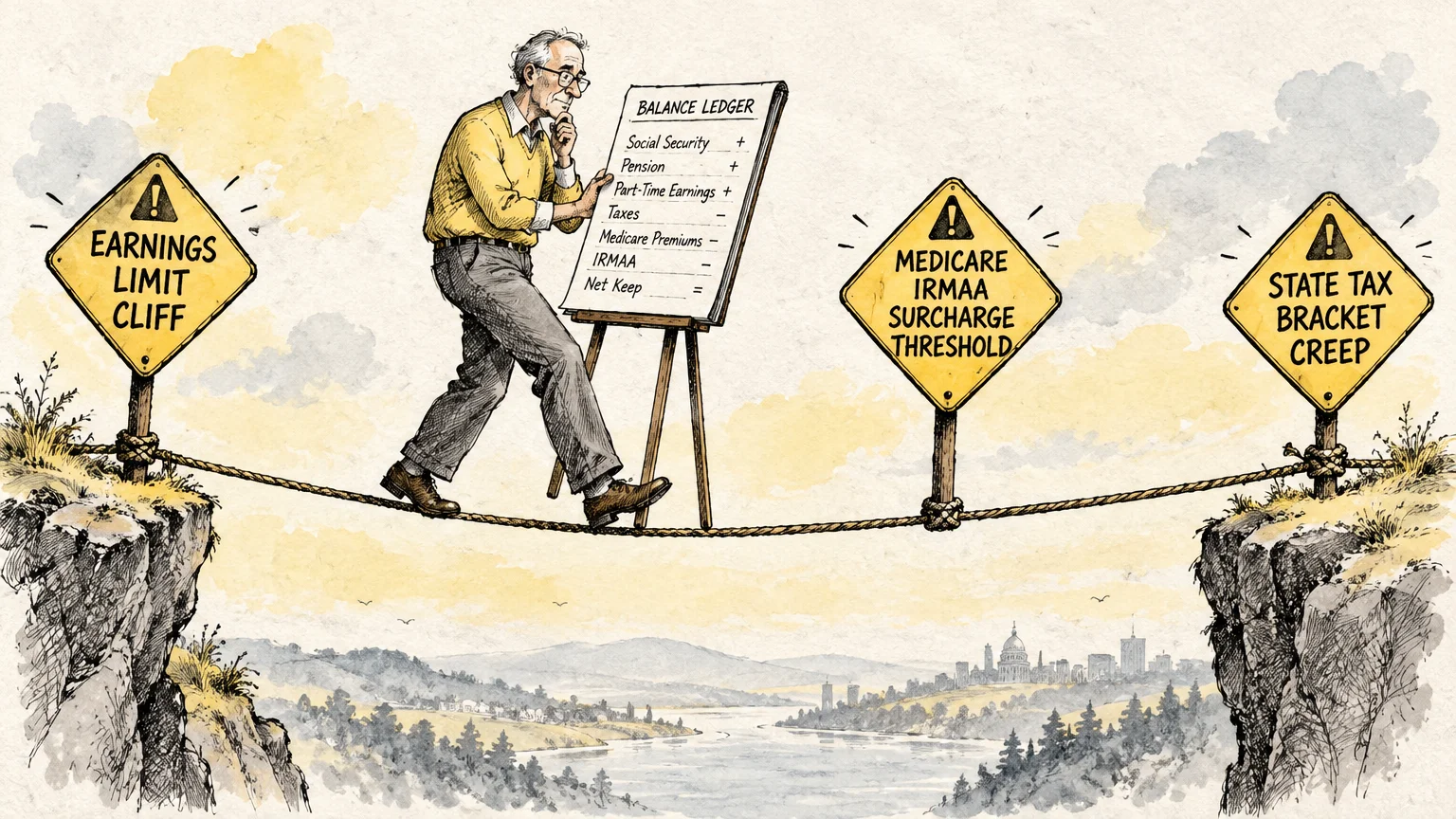
A frequent mistake involves triggering the Social Security Retirement Earnings Test before reaching full retirement age. Exceeding earnings thresholds causes benefit checks to be temporarily withheld.
According to the Social Security Administration, workers under full retirement age in 2025 can earn up to $23,400 ($1,950 per month) before benefits are impacted. In 2026, the limit rises to $24,480 ($2,040 per month).
Earnings above these thresholds reduce your benefits by $1 for every $2 earned. In the calendar year you reach full retirement age, higher limits apply ($62,160 in 2025; $65,160 in 2026), reducing benefits by $1 for every $3 over the cap.
Once you reach full retirement age, the earnings cap disappears entirely. The agency then recalculates your benefit amount upward to credit back previously withheld funds.
Another common misstep involves accidentally losing HSA contribution eligibility by enrolling in Medicare Part A or Part B. You must remain un-enrolled in all Medicare parts to fund an HSA.
Finally, self-employed retirees often overlook the impact of self-employment taxes. You must budget for the 15.3% FICA liability on net freelance or consulting revenue.

Professional vs. Self-Guided: Choosing Your Implementation Strategy
Deciding how to balance part-time earnings with your investment portfolio depends on the complexity of your financial life. Here are four common scenarios to help determine the right approach.
Scenario 1: Simple Wage Income with Direct Cash Flow Needs. If you earn a basic W-2 wage to cover everyday expenses while delaying account withdrawals, a self-guided approach is straightforward. Tracking your monthly budget alongside standard tax software typically suffices.
Scenario 2: Strategic Roth Conversions and Tax Bracket Management. Combining part-time wages with systematic Roth conversions requires careful planning. Working with a Certified Financial Planner or CPA ensures you avoid bumping yourself into higher tax brackets or triggering IRMAA surcharges.
Scenario 3: Consulting Income and Small Business Retirement Plans. Generating 1099 independent contractor income allows you to establish specialized retirement vehicles like a SEP-IRA or Solo 401(k). Professional guidance helps maximize expense write-offs while complying with business tax filings.
Scenario 4: Managing Complex Healthcare and Social Security Timing. Balancing employer-sponsored group health plans, HSA rules, Medicare Part B enrollment periods, and Social Security delayed credits involves rigid rules. A professional advisor prevents expensive late enrollment penalties or tax compliance errors.
Major retirement providers such as Fidelity Investments offer tools and planning calculators to help model these cash flow scenarios.
Frequently Asked Questions
Can I contribute to both a 401(k) and an IRA using part-time earnings? Yes. If you have sufficient earned income and your employer provides a plan, you can fund both accounts up to their respective annual statutory limits.
Does part-time income increase my future Social Security check? It can. Social Security calculates your benefit based on your highest 35 years of indexed earnings. If your part-time income replaces a lower-earning or zero-earning historical year, your benefit will increase.
Can I work part-time if I am already taking pension distributions? Yes. Most private pensions allow outside employment without penalties. However, some public employee pensions restrict returning to work for the same government agency or retirement system.
What qualifies as earned income for IRA contributions? Earned income includes W-2 wages, salaries, tips, bonuses, and net earnings from self-employment. It excludes capital gains, interest, dividends, rental income, and retirement account distributions.
Do part-time wages affect my Medicare Part B premiums? Part-time wages increase your modified adjusted gross income. If that income exceeds federal IRMAA thresholds from two tax years prior, you may face temporary premium surcharges.
Next Steps for Your Retirement Transition
Transitioning into retirement does not require an abrupt shift from full-time work to complete portfolio reliance. Earning modest, flexible income offers a practical bridge that protects your wealth over the long run.
Begin by calculating your baseline living expenses, then identify engaging part-time roles that match your interests. Structuring your income thoughtfully gives your core portfolio the room it needs to compound.
This is educational content based on general retirement planning principles. Individual results vary based on your situation. Always verify current benefit amounts, tax laws, and eligibility with official sources.
Last updated: February 2026. Retirement benefits, tax laws, and healthcare costs change frequently—verify current details with official sources.