Divorce permanently alters your financial landscape, but your former marriage may still provide a substantial foundation for your retirement income through ex-spouse Social Security benefits. Many individuals forfeit thousands of dollars in monthly income simply because they misunderstand how divorced spouse benefit eligibility works. Under federal law, you can claim benefits based on your former partner’s earnings record without their knowledge, without reducing their monthly payout, and without needing their permission. Understanding the critical Social Security rules for divorced spouses ensures you capture every dollar you have earned the right to collect, transforming a past union into a vital financial resource for your future.
1. The 10-Year Marriage Rule Is Non-Negotiable (Down to the Exact Day)
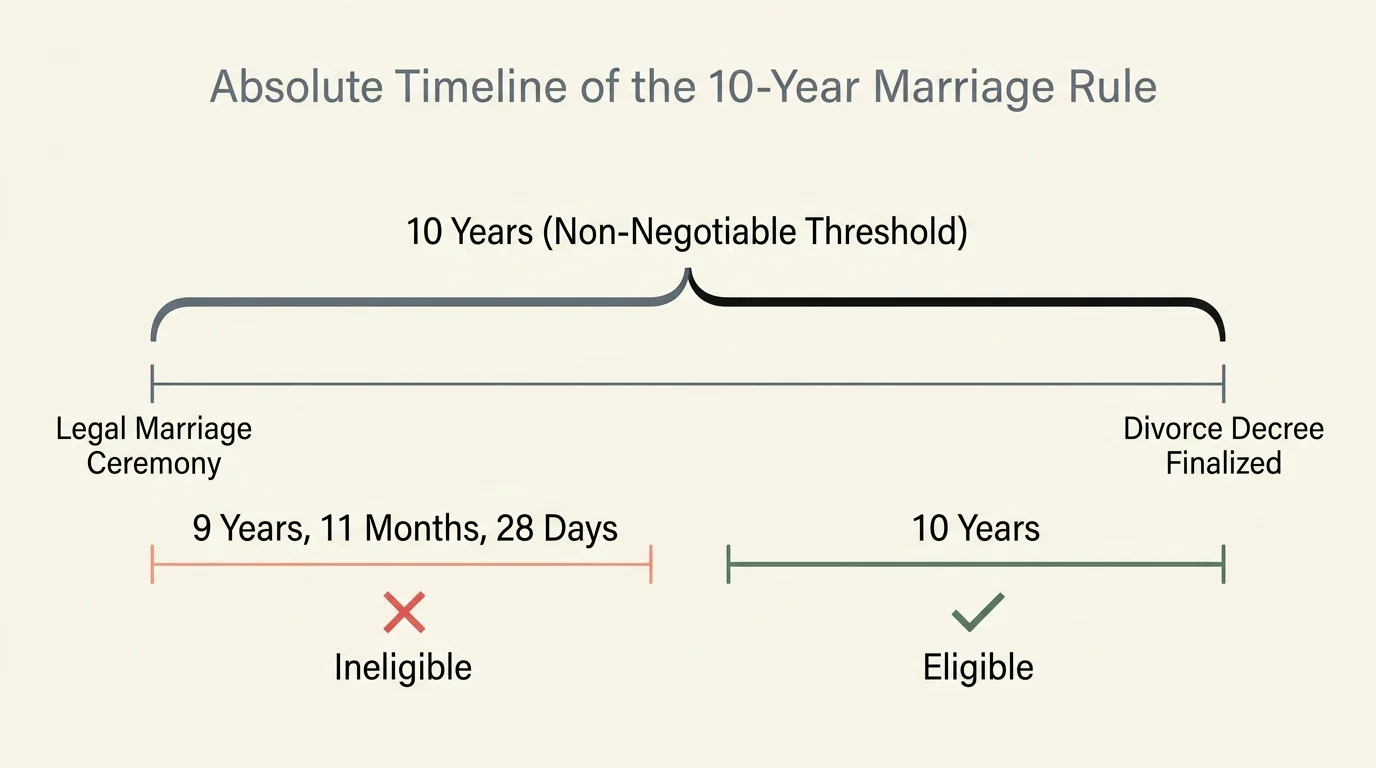
To qualify for benefits on an ex-spouse’s earnings record, your marriage must have lasted for at least 10 consecutive years. The Social Security Administration (SSA) measures this timeframe with exact legal precision: from the date of your legal marriage ceremony to the calendar date your divorce decree became legally final. If your marriage lasted 9 years, 11 months, and 28 days, you do not qualify for divorced spousal benefits on that record.
A common point of confusion involves legal separations. A legal separation does not terminate a marriage in the eyes of the SSA; the clock continues to run until the court enters the final divorce decree. If you were married to the same individual more than once, the SSA permits you to combine those periods to meet the 10-year rule, provided the remarriage occurred no later than the calendar year following the year of the initial divorce.
2. You Do Not Have to Wait for Your Ex to File (The 2-Year Rule)
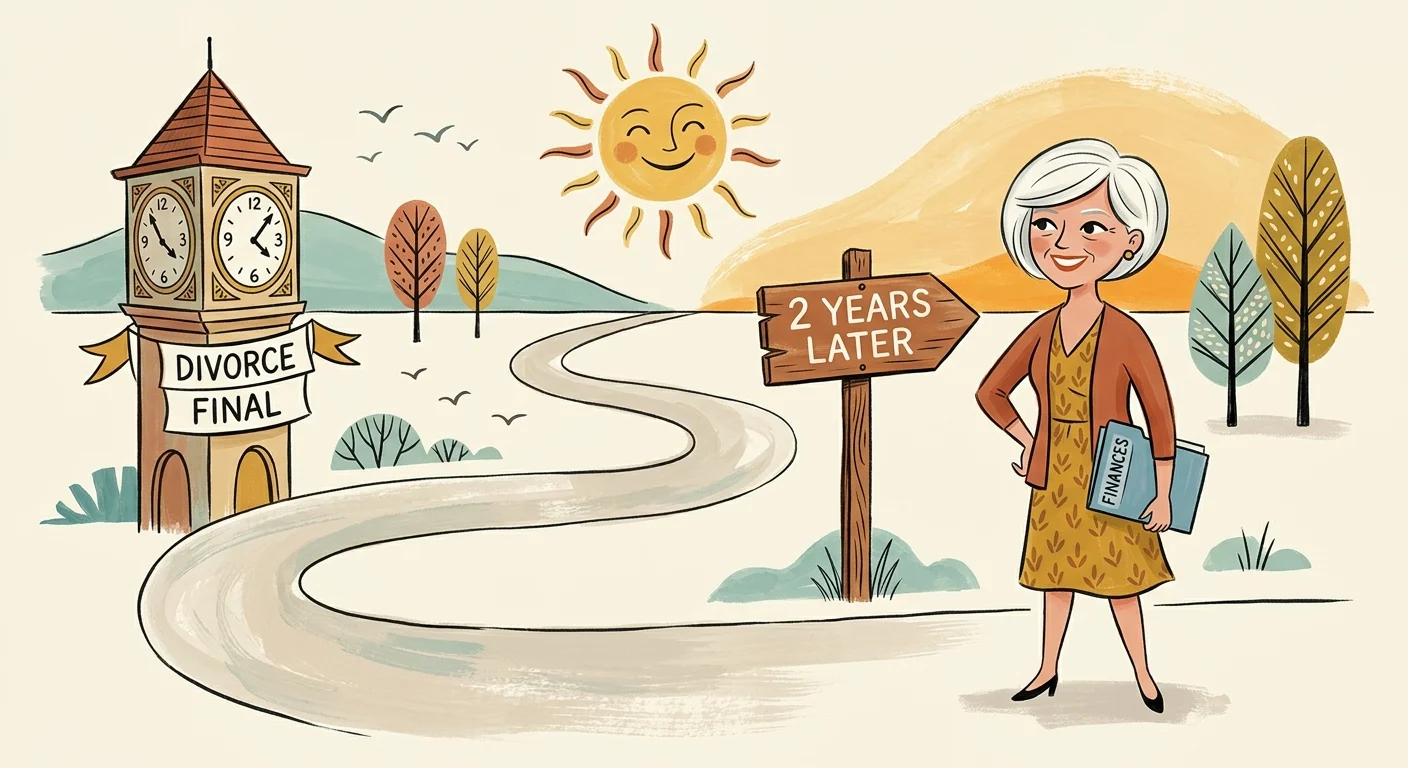
One of the most persistent myths surrounding divorced spouse Social Security rules is that your former spouse must already be collecting their own benefits before you can apply. Under federal law, you can claim benefits as an “independently entitled divorced spouse” even if your ex-spouse has not yet filed, as long as two conditions are satisfied:
- Both you and your ex-spouse are at least 62 years old; and
- Your divorce has been final for at least two consecutive years.
If your ex-spouse is eligible for retirement benefits but delays claiming them to accumulate delayed retirement credits up to age 70, you do not have to wait. Once the two-year post-divorce mark passes, you can file for your spousal portion independently.
“Never assume you are locked out of Social Security benefits earned during a past marriage; federal law guarantees your right to claim independently of your former spouse’s cooperation.” — Suze Orman, Personal Finance Author & Host

3. The Social Security Administration Will Never Notify Your Ex
Many divorced individuals hesitate to claim spousal benefits because they fear opening lines of communication, sparking conflict, or violating personal boundaries. However, claiming Social Security after divorce is a strictly confidential transaction between you and the federal government.
The SSA does not send a notification, letter, or email to your former spouse informing them of your claim. When you apply, the SSA pulls your ex-spouse’s earnings record solely to verify eligibility and calculate your benefit amount. Your former spouse will not see your name, address, payment amount, or any indicator on their annual statements showing that an ex-spouse is collecting against their record.

4. Your Claim Does Not Reduce Your Ex-Spouse’s or Their New Family’s Benefits
A frequent concern among retirees is whether filing on an ex’s record will diminish the ex-spouse’s monthly check or disadvantage their current spouse. By law, divorced spousal benefits are completely separate from the family maximum limit that restricts how much a worker’s immediate family can receive.
Your former spouse continues to receive 100% of their entitled benefit. If your ex-spouse has remarried, their current spouse is also entitled to receive full spousal benefits without any reduction caused by your claim. Multiple ex-spouses—provided each was married to the worker for at least 10 continuous years—can each claim full divorced spousal benefits on that single worker’s record simultaneously without impacting one another.
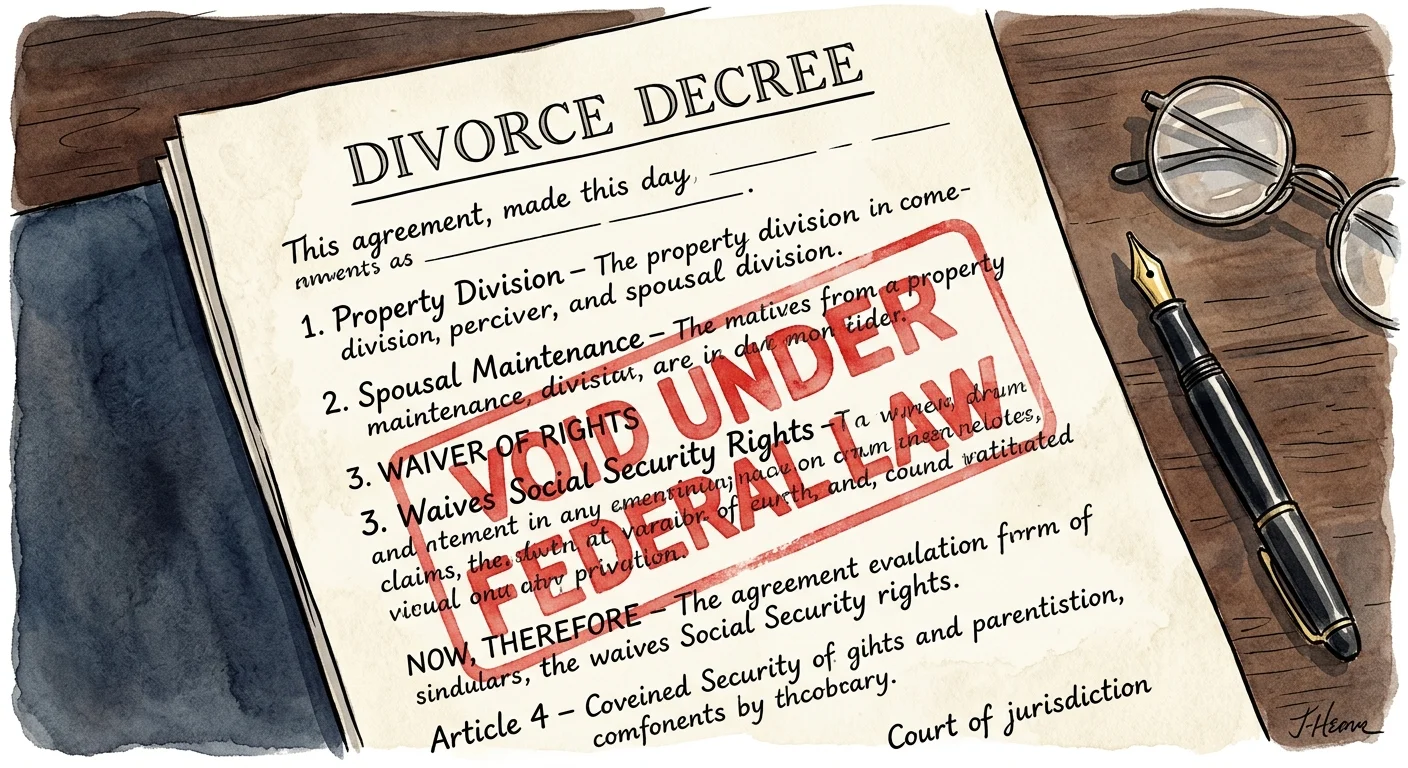
5. Divorce Decree Waivers Regarding Social Security Are Legally Void
During contentious divorce negotiations, attorneys sometimes draft clauses in marital settlement agreements where one spouse agrees to waive all rights to the other’s Social Security benefits. Under federal law, these clauses are entirely void and unenforceable.
Section 207 of the Social Security Act explicitly protects benefits from assignment, transfer, or legal forfeiture through private contracts. Even if you signed a state divorce decree explicitly stating you will never claim your former spouse’s Social Security benefits, the SSA will disregard that clause and award you benefits if you meet the statutory requirements. Social Security is a federal statutory entitlement, not a state-level marital asset subject to division or negotiation.
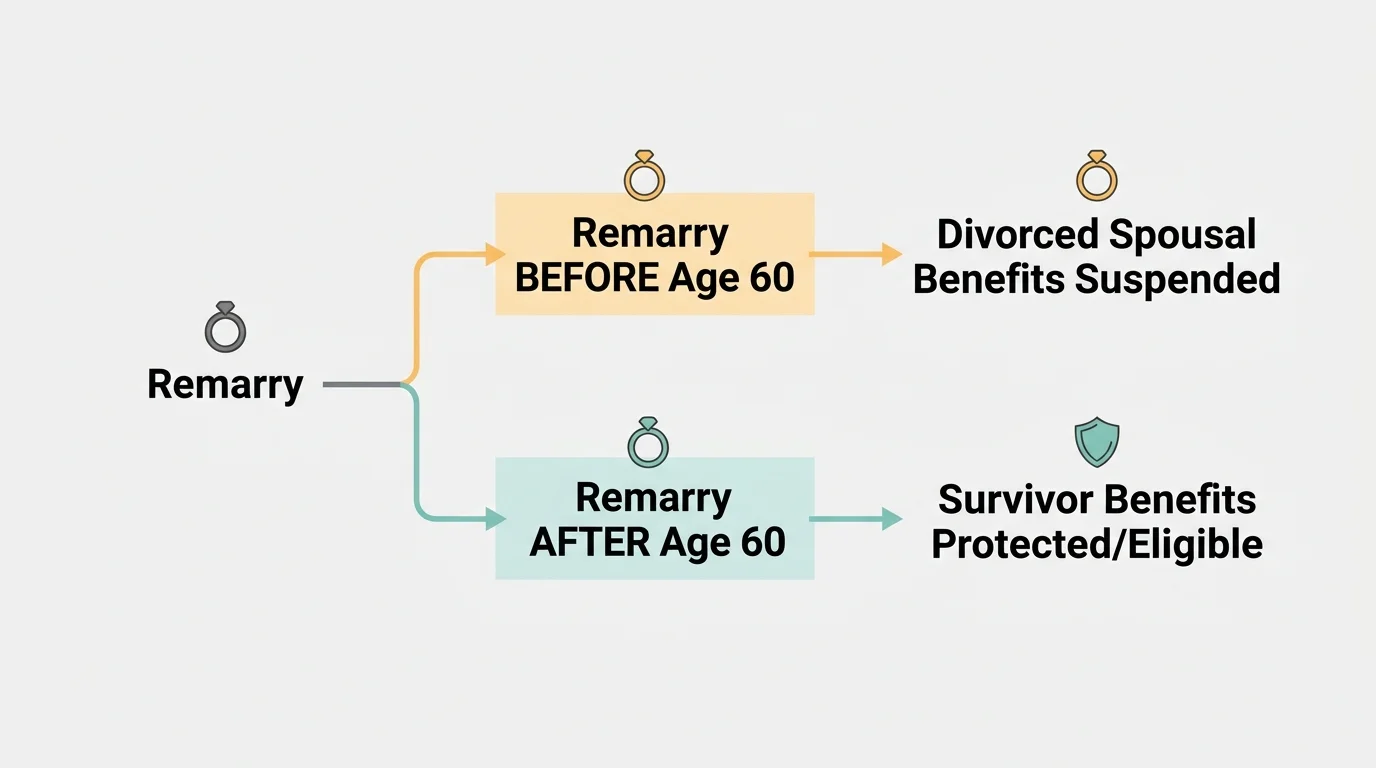
6. Remarriage Resets Eligibility—Except for Survivor Benefits After Age 60
If you remarry while your ex-spouse is alive, you immediately lose eligibility to claim divorced spousal benefits on their record. Your eligibility shifts to your new spouse’s record once you meet the standard marriage duration requirements for current spouses. However, if your subsequent marriage ends due to death, divorce, or annulment, your eligibility to claim on your first ex-spouse’s record is fully restored.
The rules change dramatically if your ex-spouse passes away. If you are eligible for surviving divorced spouse benefits, you can remarry at or after age 60 (or age 50 if you are disabled) without losing your right to collect survivor benefits based on your deceased ex-spouse’s record. This provision enables older widows and widowers to remarry without sacrificing critical retirement income, as highlighted in retirement guidance from AARP.

7. Surviving Divorced Spousal Benefits Can Reach 100% of Your Ex’s Payout
While an ex-spouse is living, your maximum divorced spousal benefit is capped at 50% of your former partner’s Primary Insurance Amount (PIA) at their Full Retirement Age (FRA). But if your former spouse passes away, your status converts to a “surviving divorced spouse,” unlocking substantial financial enhancements:
- Maximum Benefit: You become eligible to receive up to 100% of the deceased ex-spouse’s benefit amount, including any delayed retirement credits they earned before death.
- Earlier Claiming Age: You can claim survivor benefits starting at age 60 (or age 50 if you have a qualifying disability), rather than waiting until age 62.
- Strategic Benefit Switching: Unlike living spousal claims, “deemed filing” does not apply to survivor benefits. You can claim a surviving divorced spouse benefit at age 60 while letting your own retirement benefit grow until age 70, then switch to your higher personal benefit later if advantageous.
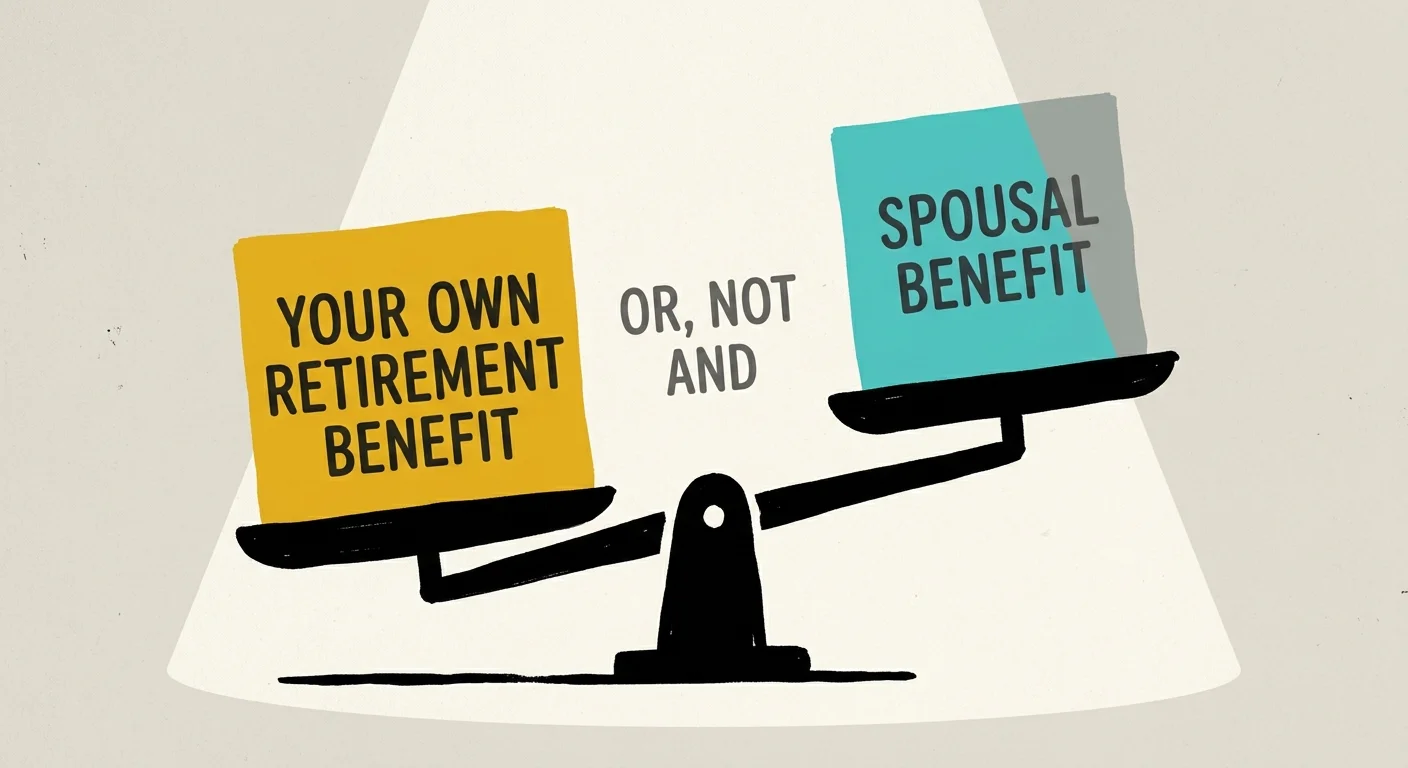
8. Deemed Filing Eliminates the “Double Dip” Strategy for Living Ex-Spouses
Prior to the Bipartisan Budget Act of 2015, individuals reaching Full Retirement Age could file a “restricted application” to collect only their ex-spouse’s benefit while allowing their own retirement benefit to accumulate delayed retirement credits of 8% per year until age 70. For nearly all retirees today, that option is gone.
Under current “deemed filing” rules, when you apply for retirement benefits, you are legally deemed to have applied for all benefits for which you are eligible, including your own worker benefit and any spousal or divorced spousal benefits. The SSA will calculate both amounts and pay you a combined sum equal to the higher of the two. Furthermore, if you claim divorced spousal benefits before reaching your Full Retirement Age (between 66 and 67, depending on your birth year), your benefit is permanently reduced from 50% down to as little as 32.5% of your ex-spouse’s PIA.
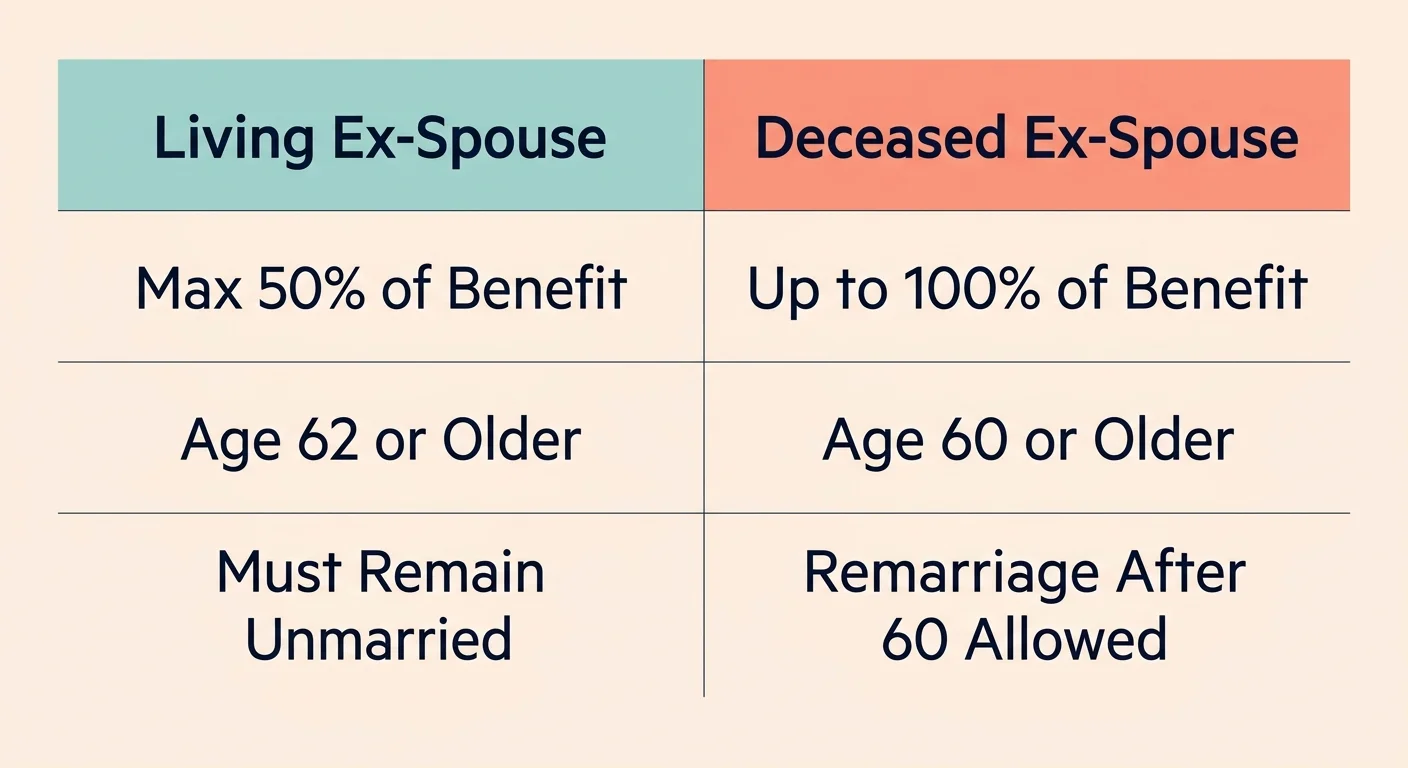
Comparing Divorced Spousal Benefits: Living vs. Deceased Ex-Spouse
The rules, percentages, and claiming flexibilities differ markedly depending on whether your former spouse is alive or deceased. The table below outlines the core differences you must consider when formulating your retirement strategy.
| Feature | Living Ex-Spouse Benefits | Surviving Divorced Spouse Benefits |
|---|---|---|
| Marriage Requirement | 10 continuous years | 10 continuous years |
| Minimum Claiming Age | Age 62 | Age 60 (Age 50 if disabled) |
| Maximum Benefit Percentage | 50% of ex-spouse’s PIA | 100% of deceased ex-spouse’s benefit |
| Effect of Remarriage | Terminates eligibility immediately | Allowed at/after age 60 without penalty |
| Delayed Retirement Credits | Spousal benefit does not grow past FRA | Includes credits earned by deceased ex |
| Deemed Filing Rules | Applies (cannot isolate spousal benefit) | Does not apply (can switch benefits later) |
Pitfalls to Watch For
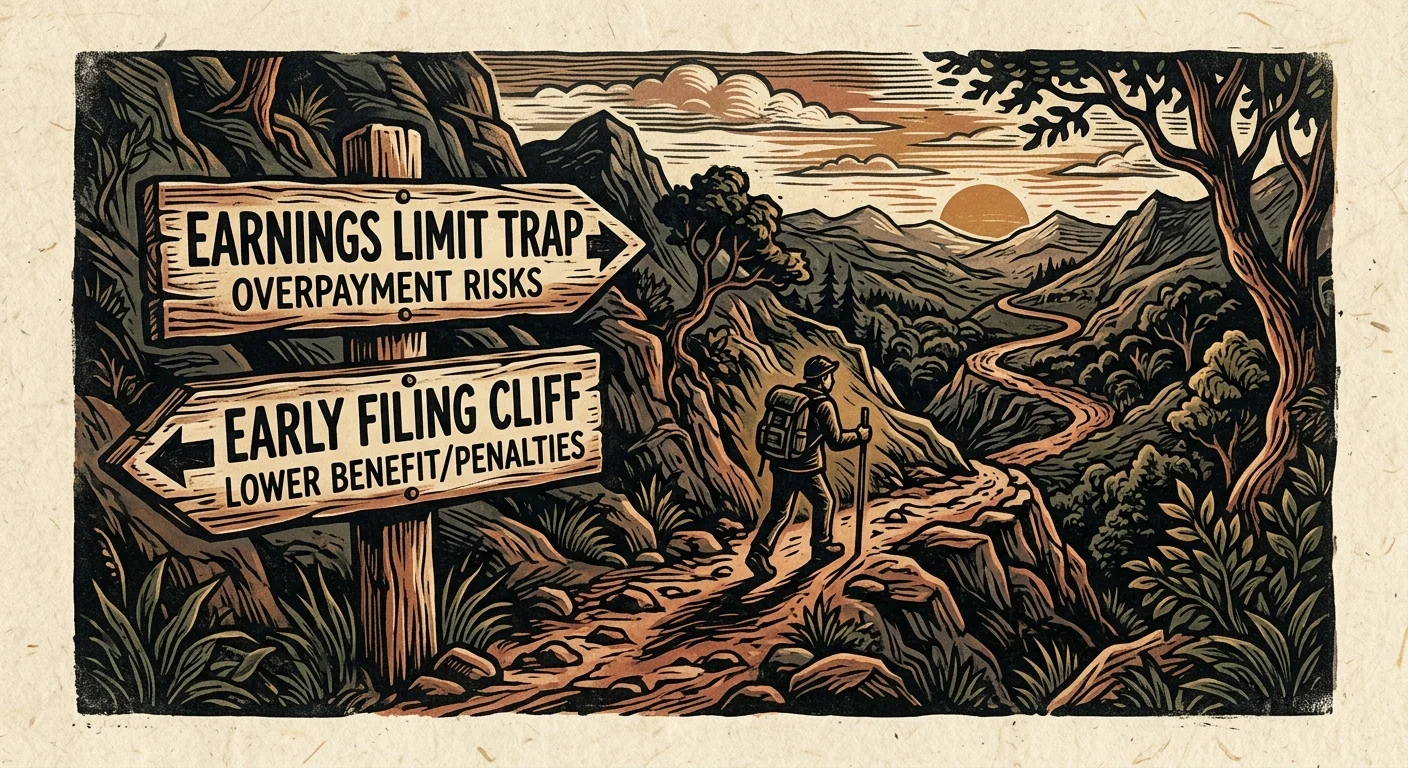
Even when you meet all statutory requirements, administrative oversights and timing errors can reduce or delay your monthly payments. Watch out for these common traps:
- Missing Original Documentation: You must present certified copies of your marriage certificate and final divorce decree to the SSA. If you do not have your ex-spouse’s Social Security number, providing their full legal name, date of birth, place of birth, and parents’ names can allow the SSA to locate the record, though processing times will increase.
- The Retirement Earnings Test: If you claim divorced spousal benefits before reaching your Full Retirement Age and continue to work, your benefits are subject to the annual earnings limit. In 2026, the SSA withholds $1 in benefits for every $2 earned above the annual threshold ($23,400 for those under FRA all year), which can temporarily halt your payments. Detailed thresholds and rules can be reviewed through the Consumer Financial Protection Bureau (CFPB) retirement planning resources.
- Government Pension Offset (GPO): If you receive a pension from a federal, state, or local government job where you did not pay Social Security taxes, your divorced spousal benefit may be reduced by two-thirds of your government pension amount, often eliminating the benefit entirely.

Getting Expert Help
While the SSA administers benefit distribution, agency representatives are not permitted to provide strategic financial planning advice. You should consult a fee-only Certified Financial Planner (CFP) or a specialized Social Security consultant in the following scenarios:
- Multiple Marriages Exceeding 10 Years: If you had more than one marriage that lasted 10 years or longer, an expert can evaluate both earnings records to determine which ex-spouse provides the highest lifetime payout.
- Coordinating Survivor and Personal Benefits: Navigating the non-deemed filing rules for surviving divorced spouses requires precise chronological planning to maximize cumulative benefits between age 60 and 70.
- Cross-Border or Non-Covered Employment: If either you or your ex-spouse worked abroad or earned pensions subject to the Windfall Elimination Provision (WEP) or Government Pension Offset (GPO), specialized modeling is essential to calculate net income. Educational breakdowns on these provisions are regularly updated by financial platforms like Investopedia.
Frequently Asked Questions About Claiming Social Security After Divorce
Can I claim on my ex-spouse’s record if they remarry?
Yes. Your ex-spouse’s subsequent marriages have zero impact on your eligibility. As long as your marriage lasted at least 10 continuous years, you remain unmarried, and you meet the age requirements, you can collect on their record regardless of how many times your ex-spouse remarries.
What happens if my ex-spouse was born before 1954?
Deemed filing rules are tied to the applicant’s date of birth, not the ex-spouse’s. Only individuals born on or before January 1, 1954, retain the ability to file a restricted application for spousal benefits while delaying their own worker benefit. If you were born after that date, deemed filing applies automatically.
Does my ex-spouse have to agree or sign paperwork for me to claim?
No. Your ex-spouse has no legal authority to approve, deny, or contest your claim. You apply directly with the Social Security Administration using your legal documents, and the agency processes the claim independently.
Can I claim divorced spousal benefits online?
If you are applying for benefits on your own record simultaneously, you can begin the application online via the SSA website. However, because verifying a divorced spouse claim requires providing certified marriage and divorce certificates, you will generally need to schedule an appointment with your local SSA office or mail in certified documents.
Taking Action on Your Divorced Spousal Benefits
Divorce should never prevent you from accessing the financial entitlements created during your working and marital years. Review your marriage dates, obtain certified copies of your vital records, and compare your personal earnings record with your former spouse’s potential benefit baseline. Contact the Social Security Administration three months prior to your target claiming age to ensure a smooth transition into your retirement payout phase.
This is educational content based on general retirement planning principles. Individual results vary based on your situation. Always verify current benefit amounts, tax laws, and eligibility with official sources.
Last updated: February 2026. Retirement benefits, tax laws, and healthcare costs change frequently—verify current details with official sources.