
Turning 65 brings an unwelcome surprise if you expect Medicare to pay for every medical bill. Original Medicare leaves substantial gaps that can drain your retirement savings without warning.
While Part A and Part B protect against major hospital stays and physician visits, they completely ignore several essential health services. You remain fully responsible for these costs unless you plan ahead.
Understanding what Medicare excludes helps you protect your nest egg before an unexpected healthcare crisis strikes. Here are the nine major coverage blind spots you must prepare for today.

1. Routine Dental Care and Dentures
Original Medicare excludes 100% of routine dental services. You must pay entirely out of pocket for cleanings, fillings, root canals, extractions, and dentures.
Neither Part A nor Part B covers routine oral health upkeep. This omission catches many retirees off guard because dental health directly impacts overall physical wellness.
The Centers for Medicare & Medicaid Services does offer narrow clinical exceptions. Medicare covers dental exams and treatments directly tied to certain high-risk medical procedures.
For example, Medicare pays for dental clearance before an organ transplant or heart valve replacement. It also covers dental evaluations during head and neck cancer therapies and kidney dialysis treatments.
To bridge this coverage gap, you can purchase standalone dental insurance or join a dental discount savings plan. Many retirees review private options through the National Council on Aging to find affordable local clinics.

2. Routine Vision Exams and Eyeglasses
You will not receive coverage for routine eye refractions, standard exams, or corrective lenses under Original Medicare. Eyeglass frames and contact lenses remain personal out-of-pocket expenses.
Original Medicare allows exactly one specific exception to this standard vision rule. Part B covers one pair of standard eyeglasses or contact lenses following cataract surgery that implants an intraocular lens.
Beyond post-cataract hardware, Medicare covers only diagnostic exams for medical eye conditions. Part B pays for monitoring glaucoma, macular degeneration, and diabetic retinopathy.
You must fund routine vision checkups and updated prescription lenses on your own. Retail optical discount memberships or standalone vision plans offer sensible ways to manage these recurring expenses.

3. Hearing Aids and Routine Hearing Exams
Original Medicare does not cover routine hearing exams, hearing aid fittings, or the hearing aids themselves. You must cover the full purchase price and maintenance costs.
Part B pays for diagnostic hearing evaluations only when your doctor orders them to assess a medical illness or injury. Routine screening tests to check for natural age-related hearing decline do not qualify.
Fortunately, Food and Drug Administration rules established over-the-counter hearing aids for mild-to-moderate hearing loss. These accessible devices cost significantly less than traditional prescription models, saving you thousands of dollars.
If you suffer from severe hearing loss, prescription devices remain your primary choice. You must fund these advanced units through personal savings or specialized supplemental policies.

4. Long-Term Custodial Care
Many retirees mistakenly believe Medicare pays for nursing home stays and assisted living facilities. In reality, Original Medicare excludes non-skilled custodial care completely.
Custodial care includes assistance with daily activities such as bathing, dressing, eating, and walking. Because non-medical staff members generally provide these personal services, Medicare declines to pay for them.
Medicare Part A pays strictly for skilled nursing facility care following a qualifying three-day inpatient hospital stay. Even then, statutory time limits and cost-sharing rules restrict your benefits heavily.
Part A covers your first 20 days in a skilled nursing facility at zero copay. Days 21 through 100 require a substantial daily coinsurance payment.
Once you reach day 101, you pay 100% of all costs out of your own pocket. A prolonged nursing facility stay can exhaust an unprepared retiree’s lifetime savings rapidly.
“Long-term care is the greatest financial risk facing retirees today.” — Suze Orman, Personal Finance Author
Preparing for custodial care requires building dedicated health savings, purchasing private long-term care insurance, or eventually relying on state Medicaid programs once assets deplete.

5. Outpatient Prescription Drugs
Original Medicare does not cover retail prescription drugs that you take at home. Part A covers inpatient hospital medications, while Part B covers physician-administered drugs such as chemotherapy.
If you leave the doctor’s office with a prescription, Parts A and B offer zero financial relief. You must secure separate coverage to pay for maintenance medications.
To avoid severe out-of-pocket prescription bills, you must enroll in a standalone Medicare Part D plan or choose a Medicare Advantage plan that includes pharmacy coverage.
Recent federal reforms deliver substantial relief for your medication costs. The Inflation Reduction Act capped annual out-of-pocket spending on covered Part D medications at $2,000 starting in 2025, with annual adjustments thereafter.
Check plan formularies on Medicare.gov annually during Open Enrollment. Drug tiers and covered medications shift every plan year.

6. Emergency Medical Care Outside the United States
Original Medicare stops working the moment you cross international borders. It provides zero coverage for medical treatment, hospital stays, or emergency evacuations in foreign countries.
Only extremely rare border scenarios qualify for coverage, such as an emergency occurring near the Canadian border while traveling directly between Alaska and the lower 48 states.
Certain standardized Medigap supplemental plans provide limited emergency foreign travel protection. Plans C, D, F, G, M, and N cover emergency medical needs during international travel.
This Medigap foreign benefit comes with strict boundaries. It pays 80% of billed emergency charges after a $250 annual deductible, applies only to the first 60 consecutive days of your trip, and carries a $50,000 lifetime maximum.
If you plan international cruises or extended vacations, purchase dedicated travel health and emergency evacuation insurance. A single medical airlift back to the United States can exceed that lifetime Medigap limit.

7. Alternative and Complementary Therapies
Many retirees rely on alternative therapies to manage chronic discomfort, but Original Medicare categorically excludes most holistic treatments. Part A and Part B will not pay for massage therapy or naturopathy.
Chiropractic coverage remains extremely narrow under Part B. Medicare pays solely for manual manipulation of the spine to correct a documented subluxation; it denies coverage for routine spinal adjustments or related x-rays.
Acupuncture also carries strict diagnostic limitations under Medicare guidelines. Part B covers acupuncture exclusively for chronic lower back pain that has lasted twelve weeks or longer without an identifiable systemic cause.
Eligible patients receive up to 12 acupuncture sessions within a 90-day window, with eight additional sessions if showing progress. Total coverage caps at 20 visits per 12-month period.
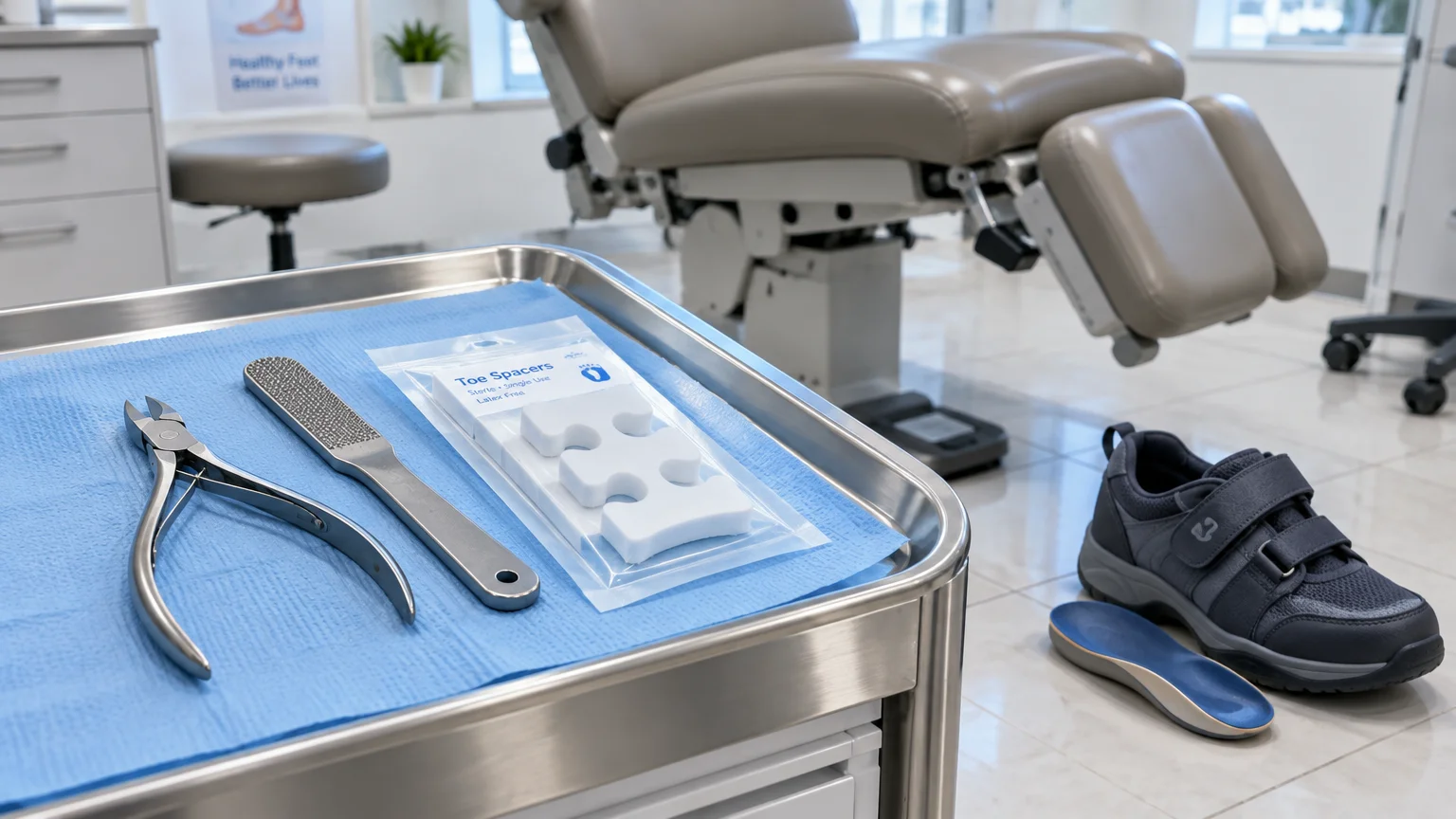
8. Routine Foot Care and Podiatry
Original Medicare excludes routine foot care services. Part B will not reimburse you for clipping toenails, removing corns or calluses, or managing flat-foot comfort.
Medicare views routine foot grooming as personal hygiene rather than essential medical treatment. You must absorb all podiatrist charges for standard foot maintenance.
The sole exception applies to patients with severe underlying systemic illnesses. If you have diabetic peripheral neuropathy or peripheral vascular disease, compromised circulation turns minor cuts into serious threats.
In those high-risk circumstances, Part B covers professional foot maintenance to prevent ulcerations and infections. You must provide clear physician documentation confirming your systemic medical diagnosis.

9. An Annual Out-of-Pocket Maximum
Perhaps the most dangerous structural gap in Original Medicare is the total absence of an annual out-of-pocket maximum. Unlike commercial insurance or employer group health plans, Medicare never caps your financial liability.
Under Medicare Part B, you remain responsible for a 20% coinsurance on all doctor visits, diagnostic tests, outpatient surgeries, and medical equipment. That 20% obligation continues indefinitely.
A major illness involving hundreds of thousands of dollars in cancer therapies or advanced surgeries leaves you responsible for 20% of the entire bill. Without a safety cap, your exposure is limitless.
To shield your finances against this uncapped risk, you must acquire a Medigap supplemental policy. Medigap pays that 20% coinsurance on your behalf, effectively establishing the predictable spending ceiling that Original Medicare lacks.
“Healthcare remains one of the largest unpredictable expenses in retirement, making proactive planning essential.” — Jean Chatzky, Financial Journalist and Author
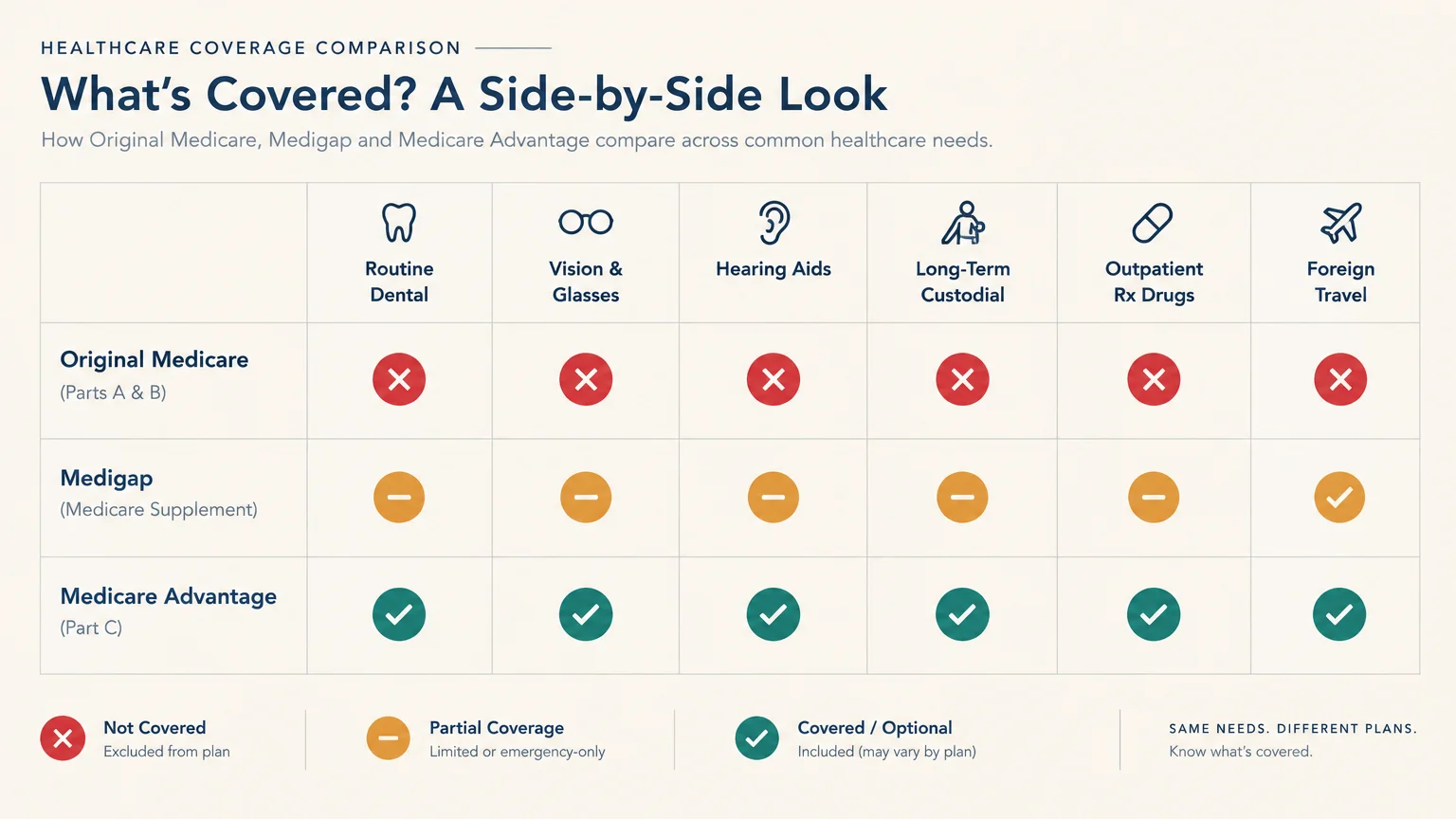
Medicare Coverage Gaps: A Summary Comparison
Reviewing these specific coverage gaps side by side helps you determine which private supplemental policies or cash reserves you need. Use this summary table to identify where your current coverage falls short.
| Excluded Service | Original Medicare Status | Clinical Exceptions | How to Fill the Gap |
|---|---|---|---|
| Routine Dental Care | 100% Excluded | Pre-transplant, heart valve, or cancer therapy clearances | Standalone dental insurance or dental discount plans |
| Routine Vision Care | 100% Excluded | One pair of glasses post-cataract surgery | Vision insurance or retail optical discount programs |
| Hearing Aids | 100% Excluded | Diagnostic tests only if doctor-ordered | Over-the-counter hearing aids or private savings |
| Long-Term Custodial Care | 100% Excluded | Skilled nursing care up to 100 days after hospital stay | Long-term care insurance, hybrid life policies, or Medicaid |
| Outpatient Drugs | 100% Excluded | Part B physician-administered drugs only | Medicare Part D prescription plan or Medicare Advantage |
| Foreign Travel Emergency | 100% Excluded | Rare direct-transit Canadian border emergencies | Medigap Plans C, D, F, G, M, N, or travel health insurance |
| Alternative Therapies | 100% Excluded | Spinal subluxation manipulation; chronic low back acupuncture | Health savings funds or private practitioner discounts |
| Routine Foot Care | 100% Excluded | Diabetic neuropathy or severe peripheral circulatory disease | Self-pay podiatry care or specialized clinical plans |
| Out-of-Pocket Cap | No spending ceiling | None (20% Part B coinsurance applies indefinitely) | Standardized Medigap policy (e.g., Plan G or Plan N) |
Analyzing these coverage rules before an emergency occurs allows you to budget realistically. Knowing where Medicare stops enables you to build an effective financial cushion.

Common Mistakes to Avoid
Failing to recognize Medicare coverage gaps causes avoidable financial hardship for many seniors. Steer clear of these four widespread blunders to safeguard your savings.
Mistake 1: Assuming Medicare pays for nursing home care. Medicare covers short-term skilled rehabilitation, not long-term daily living assistance.
Relying on Medicare for custodial nursing care will quickly deplete your personal assets when an extended health decline occurs.
Mistake 2: Delaying Part D drug enrollment. If you lack creditable drug coverage, postponing Part D triggers a permanent lifetime late enrollment penalty.
Enroll in a low-cost Part D plan right away when you turn 65, even if you currently take no daily medications.
Mistake 3: Missing your Medigap Open Enrollment Period. During your initial six-month Medigap window, private insurers cannot deny you coverage or hike prices based on preexisting health conditions.
Once that window closes, insurers apply medical underwriting and can deny your application outright.
Mistake 4: Traveling abroad without supplemental insurance. Because Original Medicare provides zero overseas coverage, always purchase comprehensive travel medical and evacuation insurance before departing.
Organizations like AARP offer resources to help travelers find dependable international health and evacuation policies.

Professional vs. Self-Guided Medicare Planning
Navigating these coverage exclusions requires deciding whether to plan independently or enlist professional guidance. Here is how to evaluate your strategy across four distinct scenarios.
Scenario 1: Complex chronic conditions. If you manage serious chronic illnesses, consult an independent Medicare broker to align your prescriptions and specialists with proper supplemental plans.
Scenario 2: Healthy retiree with a straightforward budget. If you take no medications and maintain excellent health, you can research options directly through Medicare.gov. Self-guided comparison tools allow you to evaluate premiums with ease.
Scenario 3: Frequent international traveler. If you spend several months abroad each year, speak with an insurance professional specializing in expat and travel medical coverage. Standard Medigap benefits alone cannot protect against catastrophic medical evacuations.
Scenario 4: Limited retirement income. If your financial resources are tight, contact your State Health Insurance Assistance Program (SHIP) or check with the Social Security Administration. Expert counselors help you verify eligibility for Medicare Savings Programs and Extra Help.
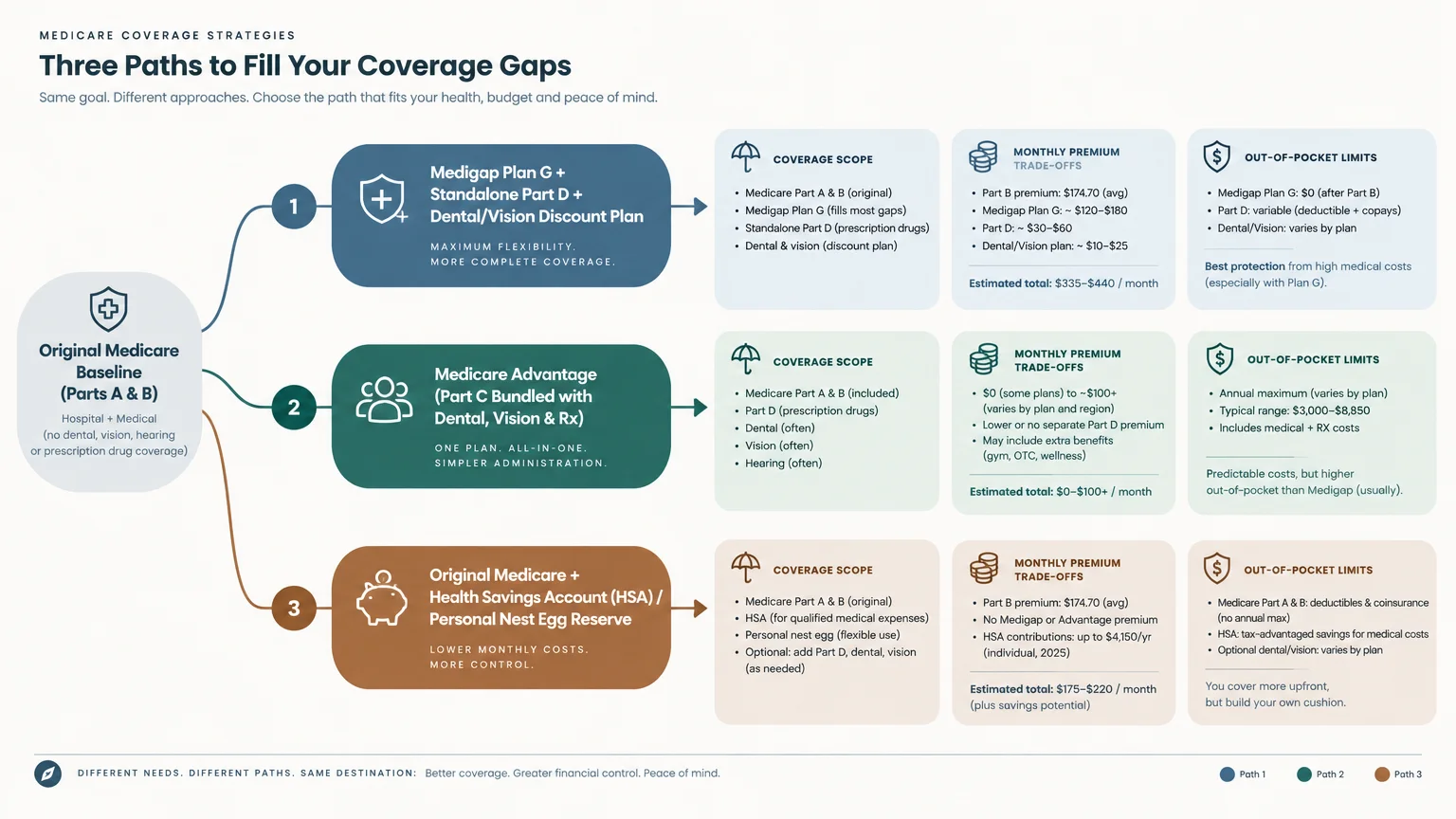
Strategies to Fill Your Medicare Coverage Gaps
Taking immediate control of your retirement healthcare requires proactive planning. Use these steps to build comprehensive protection around Original Medicare:
- Enroll in a standalone Medicare Part D plan to secure retail prescription drug coverage.
- Purchase a comprehensive Medigap policy during your Initial Enrollment Period to eliminate the uncapped 20% Part B coinsurance.
- Evaluate standalone dental and vision insurance policies against the cost of paying cash for routine cleanings and exams.
- Consider over-the-counter hearing aids for mild hearing loss before spending thousands on prescription alternatives.
- Investigate private long-term care insurance or hybrid asset-based life policies to fund custodial care needs.
Reviewing these components every autumn ensures your healthcare coverage stays aligned with your changing medical needs. Small adjustments made during annual enrollment protect your nest egg from major losses.
Frequently Asked Questions
Does Medicare cover dental implants or dentures?
Original Medicare excludes all dental implants, dentures, and basic tooth extractions. You must pay 100% of these expenses out of pocket or purchase a separate private dental insurance policy.
Certain Medicare Advantage plans offer dental allowances, but they often impose annual maximum payouts that cover only a fraction of dental implant costs.
Why doesn’t Original Medicare cover routine vision or hearing?
When Congress created Medicare in 1965, lawmakers designed the program to treat acute illness and serious hospitalizations rather than ongoing wellness maintenance. Routine optical and audiology checkups were viewed as predictable personal costs.
While modern healthcare emphasizes preventive care, updating Medicare’s statutory benefit design requires congressional legislation that has not yet passed.
Can a Medigap plan cover dental, vision, or long-term care?
No, standard Medigap plans do not cover routine dental, routine vision, or long-term custodial care. Medigap supplements exist solely to pay your cost-sharing obligations under Part A and Part B.
Because Original Medicare excludes those services entirely, Medigap cannot pay for them either.
How can I pay for long-term care if Medicare will not?
You can fund long-term custodial care through private long-term care insurance, asset-based hybrid life insurance policies, or personal retirement investments. Many families also rely on state Medicaid once personal financial assets decline below eligibility thresholds.
Consulting an elder law attorney or financial planner early helps you structure your estate before long-term care needs emerge.
Taking Action to Protect Your Healthcare
Closing these nine Medicare coverage gaps requires proactive choices rather than passive assumptions. Evaluate your personal health priorities, check your family medical history, and allocate funds for the services Medicare ignores.
You can combine Original Medicare with a comprehensive Medigap policy, add a Part D prescription plan, and secure standalone dental and vision coverage. Alternatively, you might explore Medicare Advantage plans that bundle these benefits under a managed network.
This is educational content based on general retirement planning principles; individual results vary based on your situation. Always verify current benefit amounts, tax laws, and eligibility with official sources.
Last updated: February 2026. Retirement benefits, tax laws, and healthcare costs change frequently—verify current details with official sources.