
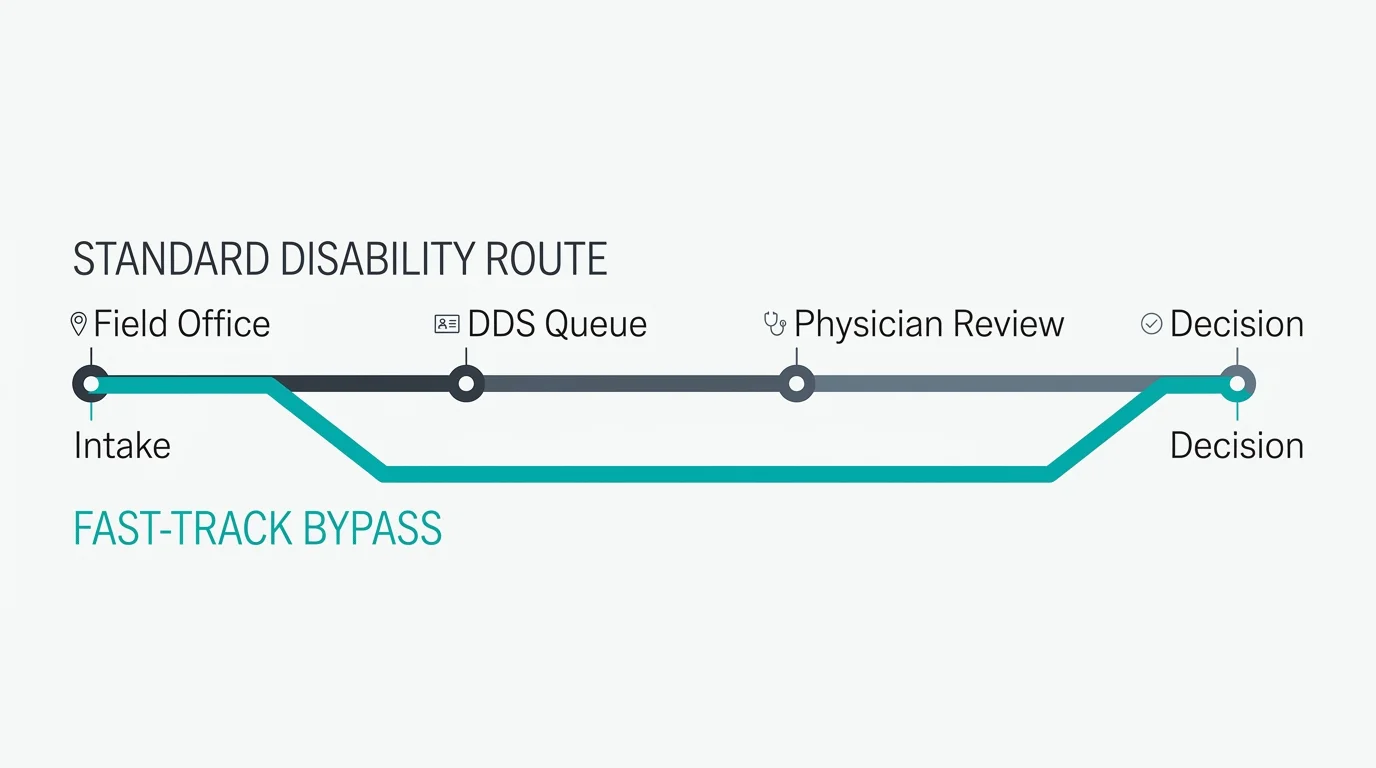
Navigating the standard Social Security disability review can take anywhere from seven months to over a year, putting severe financial strain on households during a health crisis. Fortunately, the Social Security Administration (SSA) maintains specialized fast-track protocols designed to cut processing times down to a matter of days or weeks. If you suffer from a severe, life-altering medical condition, face an immediate financial emergency, or hold specific military service ratings, you do not have to endure the typical application backlog. Recognizing the signs you qualify for priority review empowers you to take decisive action, flag your file correctly, and secure the vital income and healthcare coverage you need immediately.
Understanding Social Security Fast-Track Disability Programs
The standard evaluation process for Social Security Disability Insurance (SSDI) and Supplemental Security Income (SSI) moves through several bureaucratic layers. First, your local Social Security field office verifies non-medical eligibility, such as work credits or income thresholds. Then, the state-level Disability Determination Services (DDS) gathers and reviews clinical records. Because DDS examiners handle massive caseloads, claims often sit in queues waiting for physician reviews, medical records transfers, and consultative examinations.
To prevent undue suffering, the SSA built statutory and administrative pathways that fast-track claims exhibiting extreme medical severity, acute financial distress, or specific military service backgrounds. When a claim meets designated priority criteria, the agency’s automated systems or case officers flag the file, route it around standard backlogs, and assign it to specialized adjudicators. Understanding whether your situation matches one of these eight established categories allows you to proactively request accelerated handling instead of waiting passively for a decision.

Sign 1: You Have a Diagnosis on the Compassionate Allowances List
The Compassionate Allowances (CAL) initiative represents one of the most effective methods for fast tracking a Social Security claim. Launched in 2008, the CAL program allows the SSA to quickly target individuals with medical conditions so severe that their disease clearly meets the statutory definition of disability under the law. According to the Social Security Administration, the CAL list includes 314 conditions, encompassing aggressive cancers, adult brain disorders, and rare diseases.
When you file an application indicating a CAL condition, the SSA’s intake software automatically scans your diagnosis against its list. If matched, the system flags the file for immediate evaluation. Rather than requesting months of longitudinal treatment records to evaluate your residual functional capacity, adjudicators require only confirmed diagnostic documentation—such as a pathology report, genetic testing, or clinical imaging. Decisions under the Compassionate Allowances initiative frequently arrive in days or weeks rather than months, and the program has expedited benefits for more than 1.2 million Americans.
Common CAL diagnoses include:
- Acute leukemia, pancreatic cancer, and esophageal cancer
- Amyotrophic lateral sclerosis (ALS, also known as Lou Gehrig’s disease)
- Early-onset Alzheimer’s disease and frontotemporal dementia
- Huntington’s disease and Creutzfeldt-Jakob disease
- Inoperable or metastatic solid-tumor cancers

Sign 2: Your Condition Falls Under the Terminal Illness (TERI) Protocol
The Terminal Illness (TERI) protocol expedites claims where an applicant’s medical condition is untreatable and expected to result in death. Unlike the CAL program, which relies on an explicit list of 314 diagnoses, the TERI process applies across a broader clinical spectrum based on prognosis and disease progression.
SSA field representatives, DDS examiners, and administrative law judges can initiate the TERI flag at any stage of the application or appeal process. Family members, medical providers, or legal representatives can also alert the agency that a case warrants TERI processing. The agency handles these cases with total confidentiality; adjudicators never inform the claimant directly that their file carries a terminal designation.
You likely qualify for TERI handling if your medical records show any of the following circumstances:
- Enrollment in an inpatient or home hospice care program
- A life expectancy of six months or less documented by an attending physician
- Metastatic, recurrent, or Stage IV cancer that is persistent despite therapy
- Total dependence on life-support equipment, such as cardiopulmonary mechanical ventilation
- A chronic, comatose state persisting for more than 30 days
- End-stage renal disease (ESRD) or chronic liver failure awaiting an urgent organ transplant
Sign 3: SSA’s Predictive Software Flags Your Case for Quick Disability Determination (QDD)
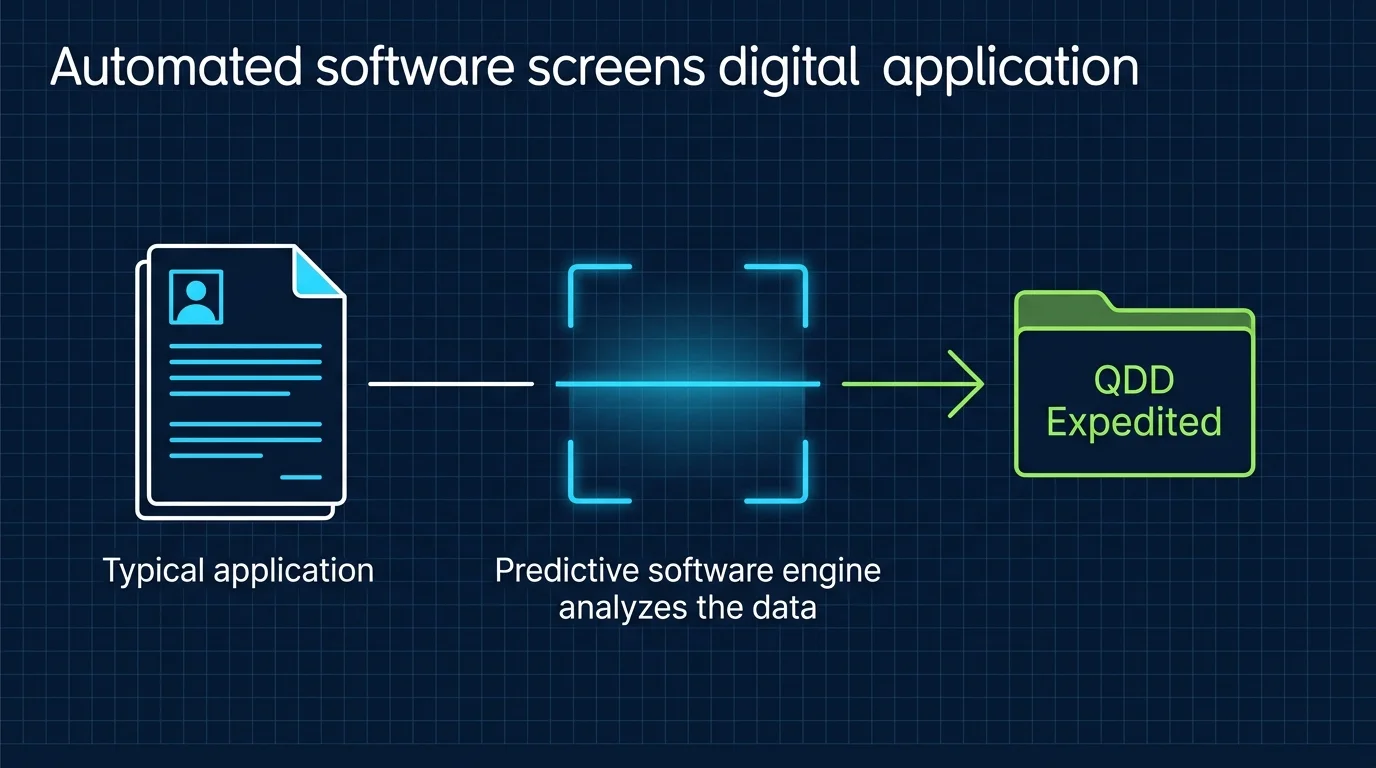
Even if you do not have a terminal illness or a listed CAL condition, your claim may qualify for expedited processing through Quick Disability Determinations (QDD). The QDD program relies on a computer-assisted predictive model that analyzes electronic data points submitted during initial disability applications.
The mathematical model screens incoming files for two criteria: a high statistical probability that the claim will be approved and the immediate availability of electronic medical records. When the algorithm identifies a high-probability case, it routes the application to a dedicated QDD adjudicator team at the state DDS office.
QDD evaluations are often completed in under 20 days. To maximize your chances of triggering a QDD review, ensure you complete your electronic application thoroughly, list every treating physician and hospital system with complete addresses, and grant immediate electronic consent for medical records releases through the SSA-827 authorization form.

Let’s recount:
1. A
2. wooden
3. bridge
4. with
5. a
6. green
7. path
8.
Sign 4: You Qualify for Presumptive Disability or Presumptive Blindness Benefits
For individuals applying for Supplemental Security Income (SSI)—the need-based disability program for low-income seniors and individuals with disabilities—the SSA offers a unique relief mechanism called Presumptive Disability (PD) or Presumptive Blindness (PB). Under this rule, local Social Security field offices can grant immediate, temporary monthly cash payments before DDS makes a final formal medical determination.
Presumptive payments can continue for up to six months while examiners gather complete medical history. Crucially, if the agency ultimately denies your application on medical grounds after six months, you do not have to repay the presumptive SSI benefits you received, provided you gave honest financial and medical information during your application.
Field offices can establish presumptive disability immediately if your claim involves specific, visible, or severe impairments, such as:
- Complete blindness or total bilateral deafness
- Amputation of a leg at the hip
- Confirmed diagnosis of ALS
- Confinement to a wheelchair or bed due to severe stroke, spinal cord trauma, or cerebral palsy
- A child with profound intellectual impairment or low birth weight
- A physician-confirmed diagnosis of symptomatic HIV or Stage IV cancer
“When an unexpected medical catastrophe strikes, a slow government bureaucracy can turn a health crisis into an immediate financial catastrophe. Knowing how to present your case clearly from day one is the single best way to ensure the safety net catches you before you fall.” — Suze Orman, Personal Finance Author and Broadcaster

Sign 5: You Face an Immediate “Dire Need” Financial Crisis
Disability backlogs do not merely delay income; they can push vulnerable families toward economic ruin. If you are awaiting a decision on an SSDI or SSI application—or waiting for a hearing before an Administrative Law Judge (ALJ)—you can request priority processing by demonstrating a “Dire Need” situation.
The SSA defines Dire Need as a circumstance where an applicant faces imminent peril to life, health, or safety due to an extreme lack of financial resources. You can establish Dire Need eligibility by submitting a formal letter accompanied by documentation showing that you:
- Face imminent eviction or active mortgage foreclosure proceedings, leading to homelessness
- Have received utility shutoff notices for essential services like electricity, water, or heating fuel
- Cannot obtain life-sustaining prescription medications, chemotherapy, dialysis, or critical medical care because you lack funds or insurance
- Lack sufficient funds to purchase food for yourself or your immediate dependents
In addition to expediting review, SSI applicants facing acute financial emergencies can request an Emergency Advance Payment (EAP) directly at their local Social Security office. An EAP provides one-time immediate cash up to the federal benefit rate, which the SSA later recoups in manageable, gradual installments from your future monthly benefit checks.
Sign 6: You Are a Military Veteran Rated 100% Permanent and Total (P&T)
Military veterans who have sustained disabling service-connected injuries receive priority lane processing from the SSA. If you hold a 100% Permanent and Total (P&T) disability compensation rating from the Department of Veterans Affairs (VA), the SSA flags your SSDI or SSI claim for expedited adjudication at all processing levels.
Qualifying for 100% P&T fast-track processing requires submitting your official VA rating notification letter or summary of benefits letter alongside your Social Security application. While this status ensures your claim bypasses standard waiting lines, keep in mind that a 100% VA rating does not guarantee an automatic approval from the SSA.
The VA assesses disability based on service connection and loss of earning capacity in specific military or civilian occupations. In contrast, the SSA applies a stricter statutory standard: you must prove an inability to perform any substantial gainful activity (SGA) across the entire national economy. Nevertheless, the shared medical evidence compiled by the VA frequently helps DDS examiners reach a swift, favorable decision.
Sign 7: You Are an Active Duty Military Member or Wounded Warrior
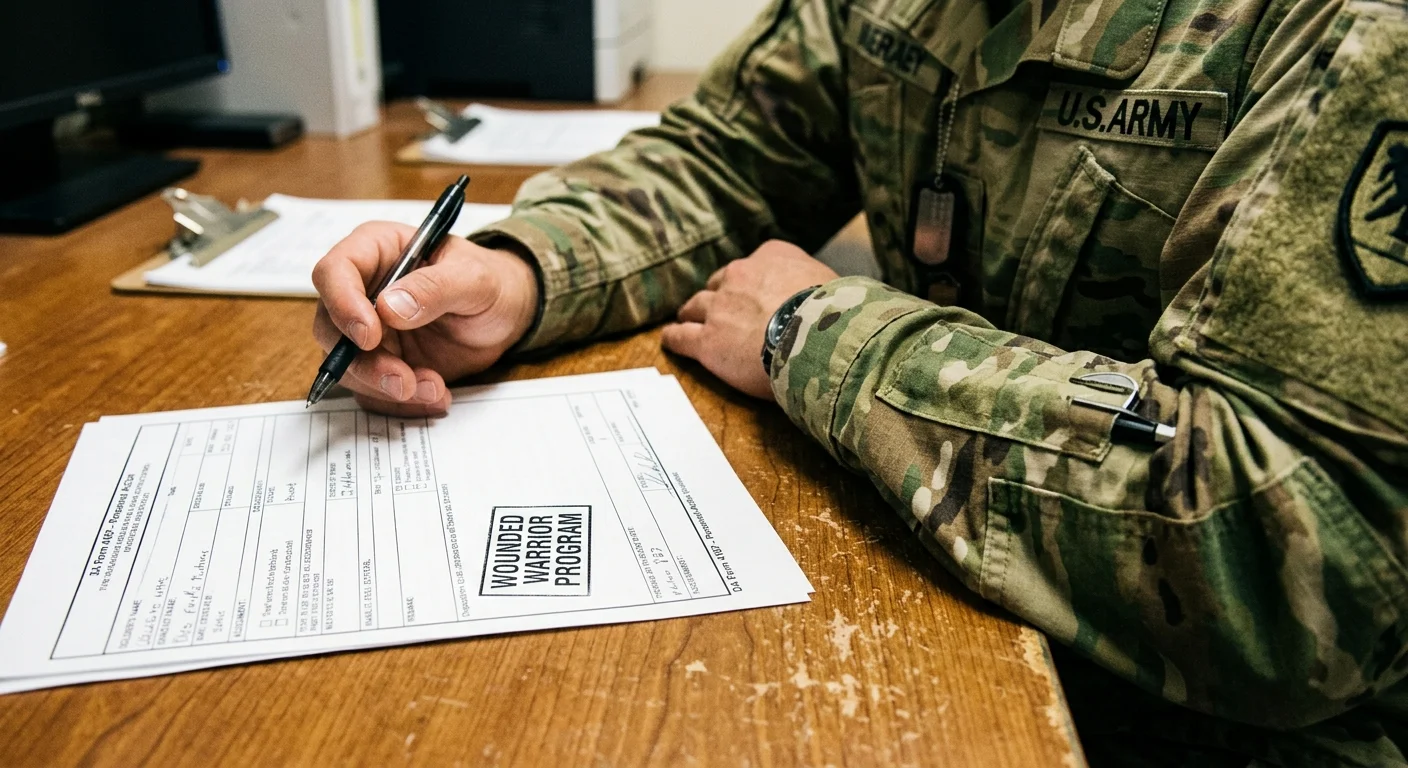
The SSA provides expedited handling for active-duty military service members who sustained disabling mental or physical impairments while on active duty on or after October 1, 2001. Popularly known as the Wounded Warrior initiative, this provision applies regardless of whether you sustained the injury in combat, during training exercises, or while stationed domestically.
Key aspects of the Wounded Warrior provision include:
- Priority processing for SSDI claims through initial DDS evaluations, reconsideration appeals, and ALJ hearings
- The ability to apply for and receive SSDI cash payments while still on active duty, provided you are receiving military medical pay and are not actively performing substantial gainful work
- Accelerated coordination with military medical facilities and the Department of Defense to obtain service health records
Sign 8: You Are Requesting Expedited Reinstatement (EXR) After Returning to Work
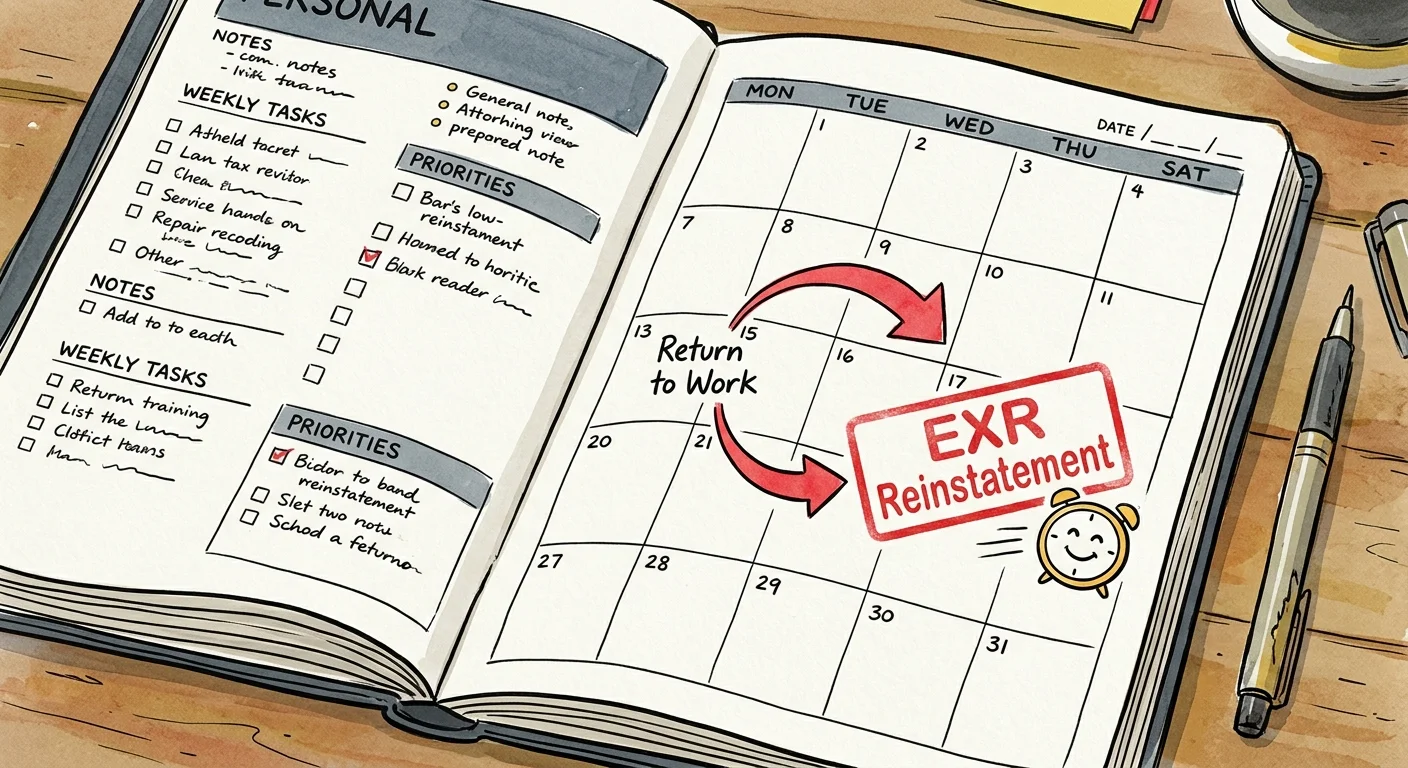
Many disabled beneficiaries attempt to rejoin the workforce through SSA work incentive programs like the Ticket to Work initiative. However, if your medical condition flares up and forces you to stop working again, you do not need to repeat the grueling initial application process from scratch.
Under Expedited Reinstatement (EXR), former recipients of SSDI or SSI whose benefits stopped due to employment earnings can request immediate benefit reinstatement if they become unable to work again within 60 months (5 years) of their benefit termination date. To qualify, your current disability must be the same as—or directly related to—the original medical condition that qualified you for benefits previously.
The defining advantage of EXR is the provision of up to six consecutive months of provisional cash benefits while the SSA conducts a medical review. During these six months, you also receive active healthcare coverage through Medicare or Medicaid. If the SSA eventually determines that your condition has improved and denies permanent reinstatement, you are not required to repay the provisional payments you received.
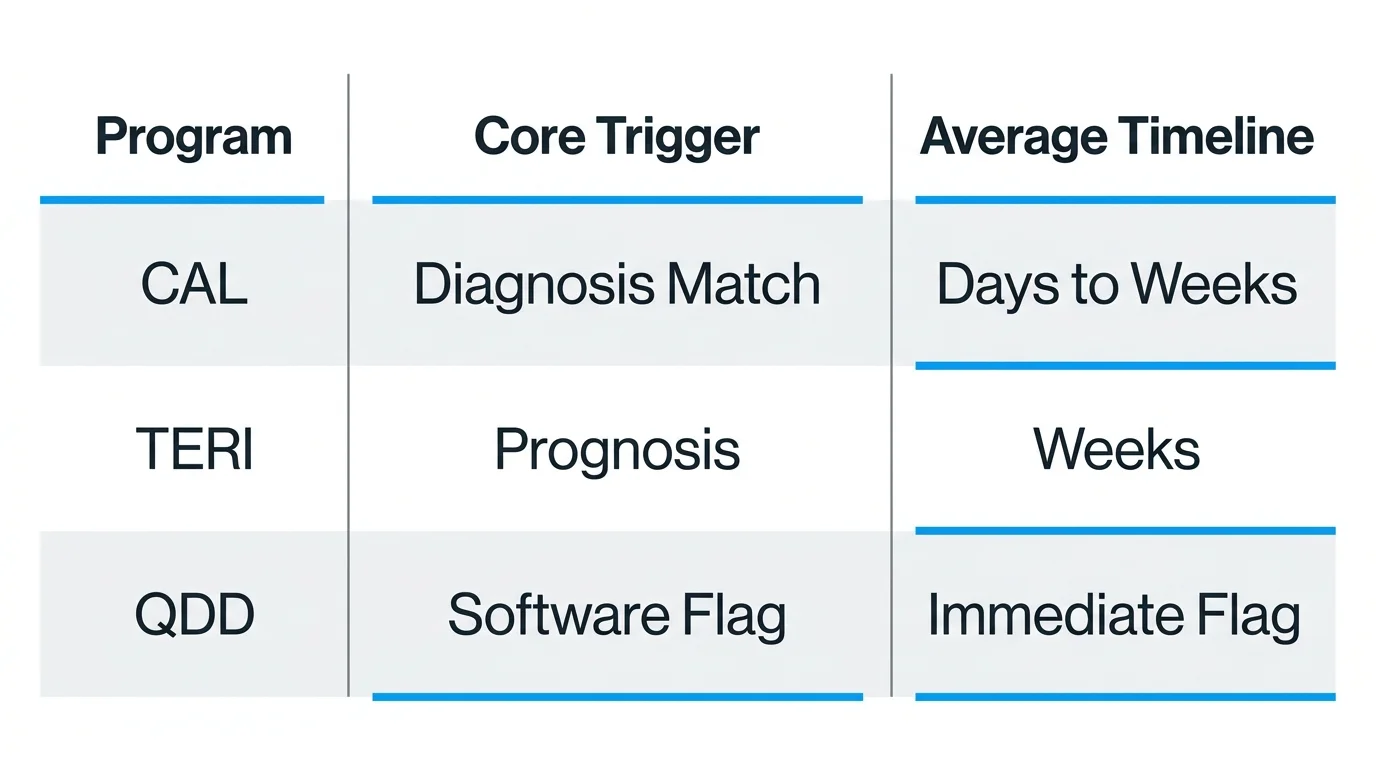
Comparing Expedited Social Security Review Pathways
The following table illustrates how the primary expedited processing tracks compare across eligibility criteria, documentation needs, and the specific relief provided:
| Fast-Track Program | Primary Eligibility Trigger | Key Documentation Required | Speed & Benefit Relief Provided |
|---|---|---|---|
| Compassionate Allowances (CAL) | Diagnosis on the SSA’s official 314-condition list | Pathology reports, imaging, or genetic testing confirming diagnosis | Initial approval in days or weeks; standard SSDI 5-month waiting period still applies (except for ALS) |
| Terminal Illness (TERI) | Untreatable condition; life expectancy under 6 months; hospice care | Hospice admission records or attending physician statement | Immediate priority routing across all administrative and hearing levels |
| Quick Disability Determinations (QDD) | Statistical screening model indicating high probability of approval | Comprehensive electronic medical records available at initial filing | Decisions frequently delivered in under 20 days |
| Presumptive Disability (PD / PB) | SSI applicant with severe, obvious physical or sensory impairment | Visual confirmation by field office, hospital records, or physician letter | Up to 6 months of provisional monthly SSI cash payments; non-repayable if medically denied |
| Dire Need Protocol | Imminent homelessness, utility shutoff, or lack of food and medicine | Eviction notices, utility disconnection bills, or pharmacy debt statements | Priority queue placement for DDS reviews and ALJ hearings; optional Emergency Advance Payment |
| 100% P&T Veteran Priority | VA disability rating of 100% Permanent and Total | VA Rating Decision letter or VA summary benefits document | Expedited file routing through all state DDS offices and hearing offices |
| Wounded Warrior | Disabling injury sustained on active duty on or after Oct 1, 2001 | Military service records, DD Form 214, or military treatment facility files | Immediate priority handling across all administrative stages |
| Expedited Reinstatement (EXR) | Prior beneficiary unable to sustain work within 60 months of exit | Prior claim number and records showing worsening of original impairment | Up to 6 months of provisional cash benefits plus active Medicare/Medicaid during review |
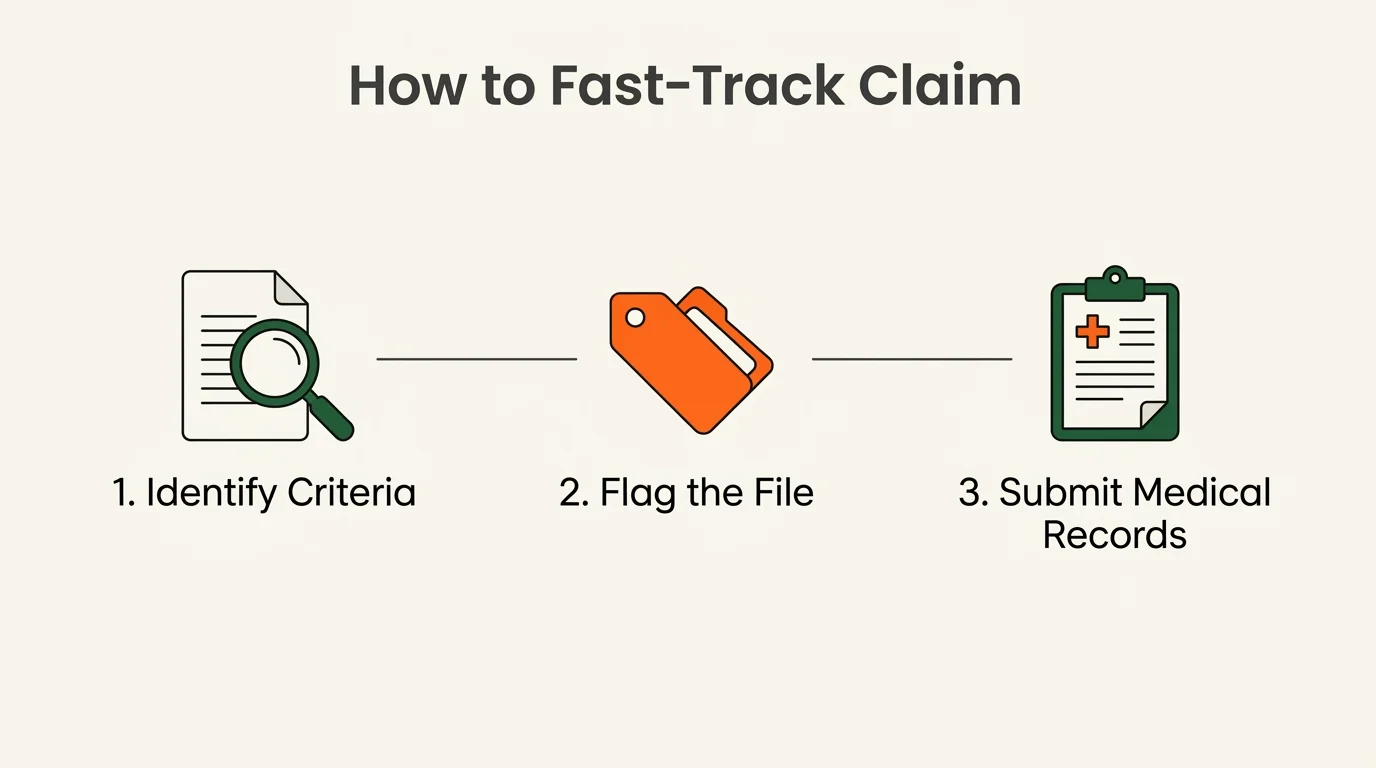
How to Proactively Fast-Track Your Application
Even if you meet the requirements for fast-track processing, administrative oversights can occur if you do not actively highlight your status. Adopting a structured approach ensures agency adjudicators recognize your priority eligibility immediately:
- Label Your Paperwork Clearly: When submitting paper forms, medical evidence, or cover letters to your local field office, write “EXPEDITED REVIEW REQUESTED:” followed by your specific category (e.g., “CAL CLAIM,” “TERI CASE,” “DIRE NEED,” or “100% P&T VETERAN”) in bold letters at the top of every document.
- Gather Medical Evidence in Advance: Do not rely on DDS examiners to request your medical files from unresponsive hospital bureaucracies. Request electronic copies of your objective diagnostic reports, surgical summaries, and pathology findings yourself, and submit them at the time of your initial application.
- Obtain a Treating Physician Statement: Ask your primary specialist to complete a formal Medical Source Statement detailing your exact diagnosis, clinical limitations, prognosis, and why your condition matches the criteria in the SSA Listing of Impairments.
- Submit Tangible Financial Evidence for Dire Need: If you face an economic emergency, gather concrete proof before contacting the SSA. The agency cannot grant Dire Need status based solely on verbal statements; you must provide copies of past-due notices, formal eviction filings, or written letters from pharmacies refusing to dispense medication. For consumer credit and debt relief protections during a crisis, review guidance from the Consumer Financial Protection Bureau.
- Track Your Claim Online and by Phone: Monitor your application status weekly through your personal my Social Security online account. If your status does not change within several weeks, call your assigned DDS adjudicator or local field office to verify that the priority flag remains active on your file. Organizations like the National Council on Aging offer additional advocacy resources for seniors navigating complicated benefit applications.
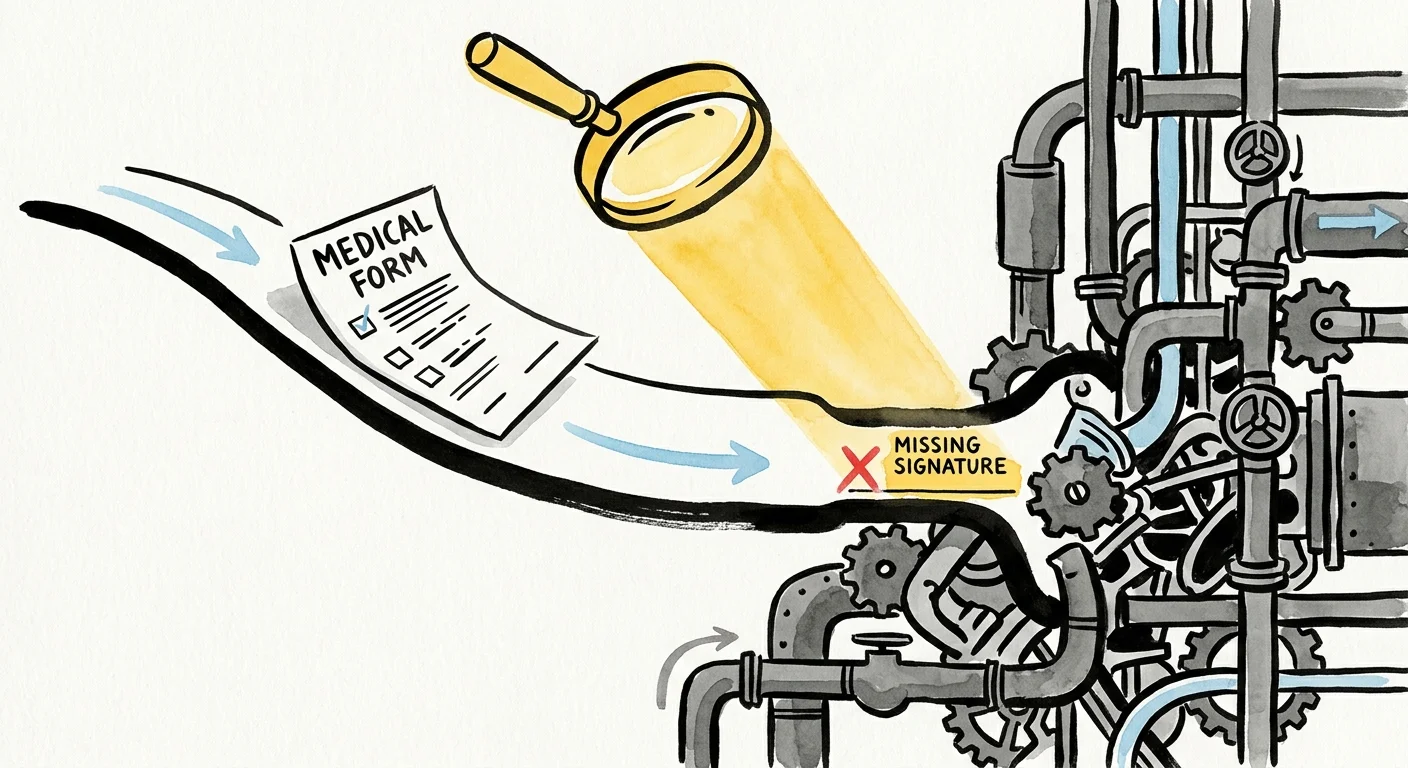
What Can Go Wrong: Common Pitfalls That Delay Priority Claims
Securing expedited status does not make an application immune to bureaucratic delays. Being aware of common mistakes helps you avoid preventable holdups:
Submitting Incomplete Contact Information for Doctors: If a DDS examiner cannot reach your treating specialists or receives medical records requests returned as undeliverable, your claim will stall. Always verify phone numbers, fax numbers, clinic suite numbers, and medical records department addresses before submitting your forms.
Assuming VA Ratings Equal Automatic SSA Approvals: A common misconception among disabled military personnel is that a 100% VA disability rating automatically guarantees Social Security approval. The SSA operates under federal statutory definitions that require independent medical proof of total vocational inability. Failing to submit detailed objective medical evidence because you already hold a VA rating can lead to an unexpected denial.
Overlooking the Mandatory 5-Month SSDI Waiting Period: It is essential to distinguish between expedited processing and the statutory waiting period for payments. Federal law imposes a mandatory five-month waiting period from the established disability onset date before SSDI cash payments can begin. Even if the SSA approves your CAL or QDD claim within 10 days of filing, your cash payments cannot start until this five-month window elapses. The only statutory exception to this waiting period is a confirmed diagnosis of ALS.
Ignoring Mail or Phone Calls from Disability Determination Services: DDS examiners frequently call applicants to clarify employment dates or request signatures on missing disclosure forms. If you screen your calls or ignore letters, examiners will place your priority file on hold or issue an administrative denial based on failure to cooperate.

When to Consult a Professional
While many individuals navigate straightforward Compassionate Allowances or QDD applications independently, certain complex situations benefit from professional legal or advocacy assistance. You should consider consulting an accredited disability attorney or non-attorney representative if you face any of the following scenarios:
- Your Expedited Claim Was Denied: If the SSA denies a CAL, TERI, or Dire Need claim at the initial determination or reconsideration stage, appealing to an Administrative Law Judge requires formal legal briefing and cross-examination of vocational and medical experts.
- You Have a Complex Dual SSDI/VA Offset Case: Coordinating high VA disability compensation, military retirement pay, and SSDI requires careful calculation to ensure you maximize non-taxable benefits and avoid unexpected overpayments.
- You Need Assistance Proving a Borderline Listing: If your severe condition shares clinical features with a CAL disorder but lacks a definitive genetic or histological marker, a legal professional can help assemble the necessary medical opinion evidence to establish equivalence.
- Navigating Strict SSI Asset Thresholds: For SSI presumptive disability cases, receiving retroactive back pay can inadvertently push your liquid resources over the strict $2,000 individual ($3,000 couple) resource cap, jeopardizing ongoing Medicaid and monthly cash benefits without proper planning.
Frequently Asked Questions
How long does expedited Social Security disability processing take?
While standard disability applications typically take seven to twelve months, expedited programs substantially shorten this timeframe. Claims under Compassionate Allowances (CAL) and Quick Disability Determinations (QDD) frequently receive determinations within 10 to 30 days. Presumptive Disability (PD) decisions can provide monthly SSI cash benefits in as little as one to two weeks, while Dire Need requests generally accelerate ALJ hearing dates by several months.
Can I request expedited processing after I have already submitted my application?
Yes. If your medical condition deteriorates, if you receive a new terminal diagnosis, or if your financial situation worsens into an eviction or foreclosure crisis while your claim is pending, you can notify the SSA immediately. Submit a written request with updated medical records or eviction notices to your local field office or the hearing office handling your file to request an immediate priority flag.
What happens if I receive Presumptive Disability payments and my claim is later denied?
If the SSA grants you Presumptive Disability or Presumptive Blindness payments for up to six months while evaluating your SSI claim, and your application is ultimately denied on medical grounds, you are not required to repay the funds you received. The SSA only pursues overpayment recovery for presumptive benefits if the denial stemmed from financial ineligibility, excess earnings, or fraudulent misrepresentation.
Do Compassionate Allowances waive the 5-month SSDI waiting period?
No. Fast-track processing accelerates how quickly the SSA reviews and approves your paperwork, but it does not alter statutory payment rules. By federal law, SSDI cash payments cannot begin until five full calendar months have passed from your established disability onset date, regardless of how quickly the claim is approved. The single exception created by Congress is for individuals diagnosed with ALS, who are exempt from the five-month waiting period.
Next Steps for Securing Priority Review
If you or a loved one meets any of the criteria for priority review, do not let your application get lost in standard backlogs. Begin by requesting complete electronic diagnostic records from your treating physicians, obtaining a detailed medical assessment, and highlighting your specific qualifying category on every form you submit. Prompt communication with your local field office ensures your claim receives the immediate attention it deserves.
The information in this guide is meant for educational purposes. Your specific circumstances—including income, savings, health coverage, and goals—may require different approaches. When in doubt, consult a licensed professional.
Last updated: February 2026. Retirement benefits, tax laws, and healthcare costs change frequently—verify current details with official sources.