
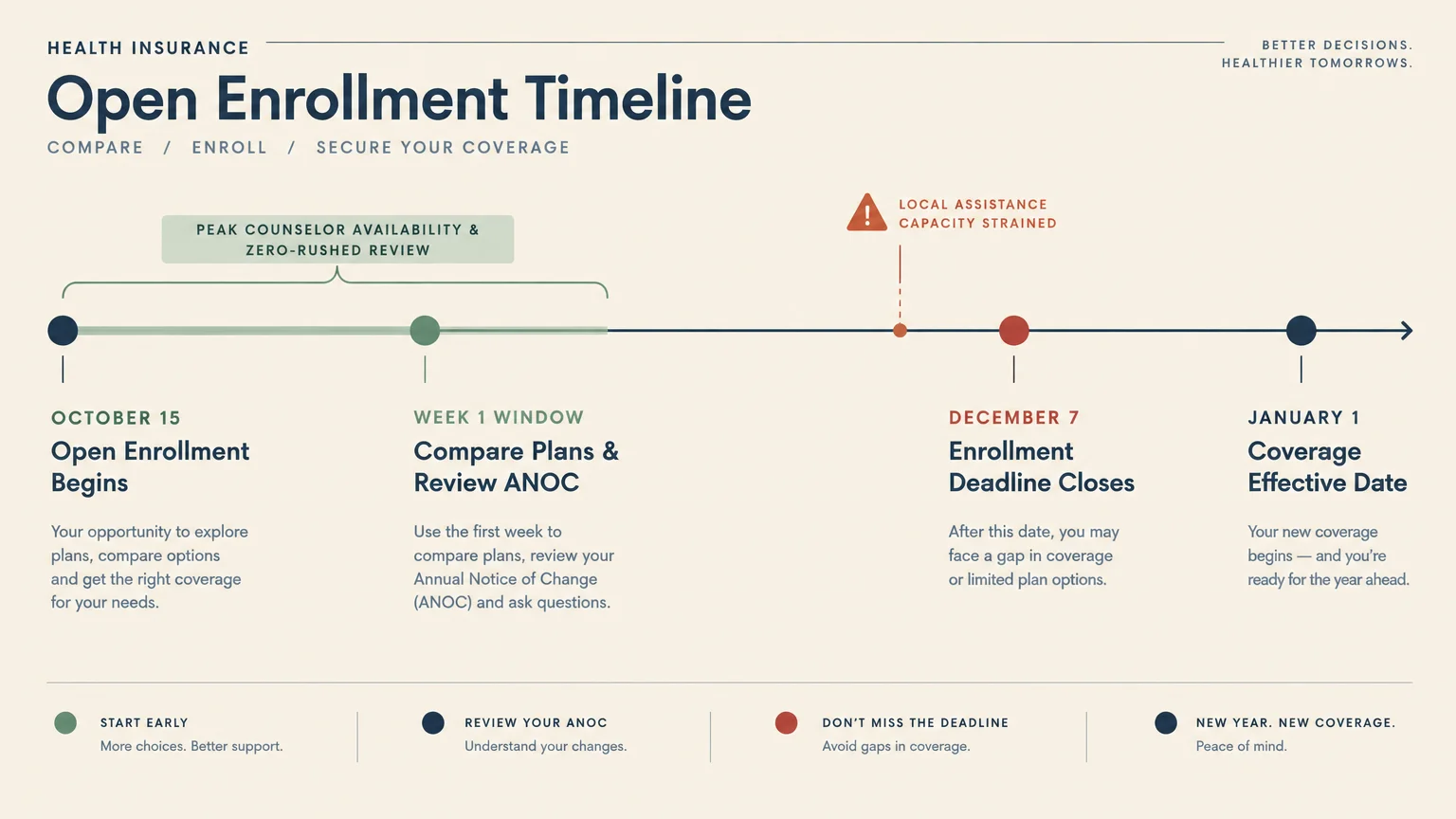
Medicare Open Enrollment begins every year on October 15, giving you seven weeks to lock in your healthcare coverage. Taking action during this first week protects your retirement budget from unexpected out-of-pocket costs next year.
Insurance providers adjust provider networks, prescription formularies, and out-of-pocket maximums every single autumn. Ignoring these annual updates can force you to pay thousands of dollars in surprise medical bills.
A structured review completed early gives you time to compare options and secure professional assistance before peak-season deadlines arrive. Here is your essential checklist for the opening week of medicare open enrollment 2026.
Why the First Week of Medicare Open Enrollment Matters
The official Medicare Annual Enrollment Period runs from October 15 through December 7 each year. Any modifications you make during this window become effective on January 1.
Procrastination carries real financial risks during open enrollment. If you wait until early December, local assistance resources become overwhelmed, leaving little time to fix mistakes.
Starting your medicare plan review during week one creates breathing room. You can evaluate complex plan changes at your own pace without pressure.

1. Retrieve and Audit Your Annual Notice of Change (ANOC)
Federal regulations require insurance carriers to deliver your Annual Notice of Change (ANOC) by September 30. This formal document outlines every modification your existing plan will introduce next year.
Locate this packet immediately in your physical mail or online member portal. Plan sponsors often reclassify drugs or alter physician networks without extensive publicity.
Check the document for three primary shifts: premium adjustments, copay increases, and revised pharmacy tiers. Even modest copay adjustments can dramatically raise your annual medical spending.
2. Compile Your Complete Medication and Pharmacy Inventory
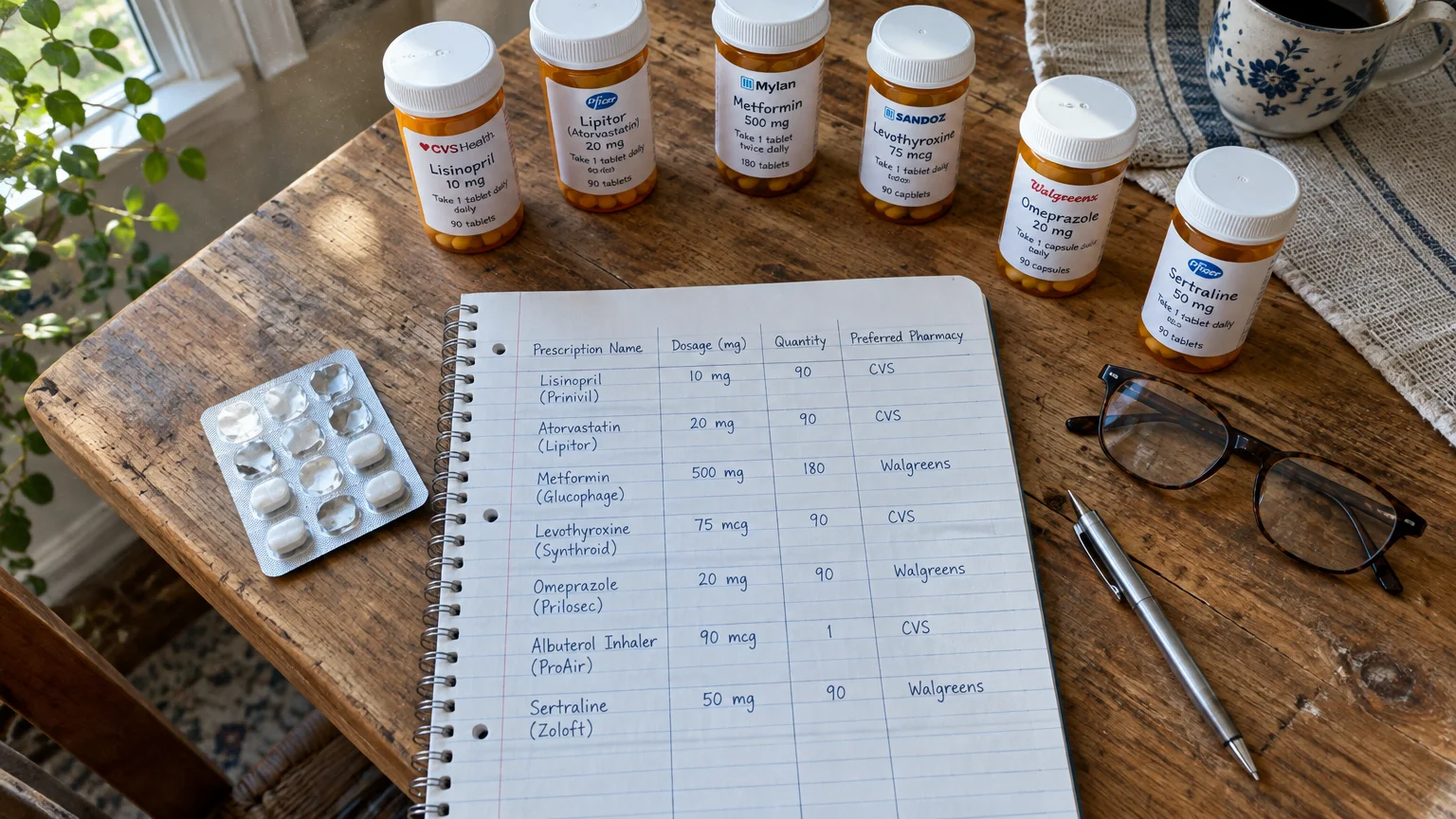
Before browsing new insurance plans, build an exhaustive inventory of your current prescriptions. Accurate comparisons require exact medication names, dosages, and monthly fill quantities.
Note whether you take generic formulas or brand-name medications. Insurance carriers frequently adjust their drug formularies, reassigning popular pharmaceuticals into higher, more expensive tiers.
Include your preferred retail pharmacies and mail-order preferences on this list. Most Part D plans use preferred pharmacy networks that charge significantly lower copays than standard locations.
3. Log In to Medicare.gov and Update Your Profile
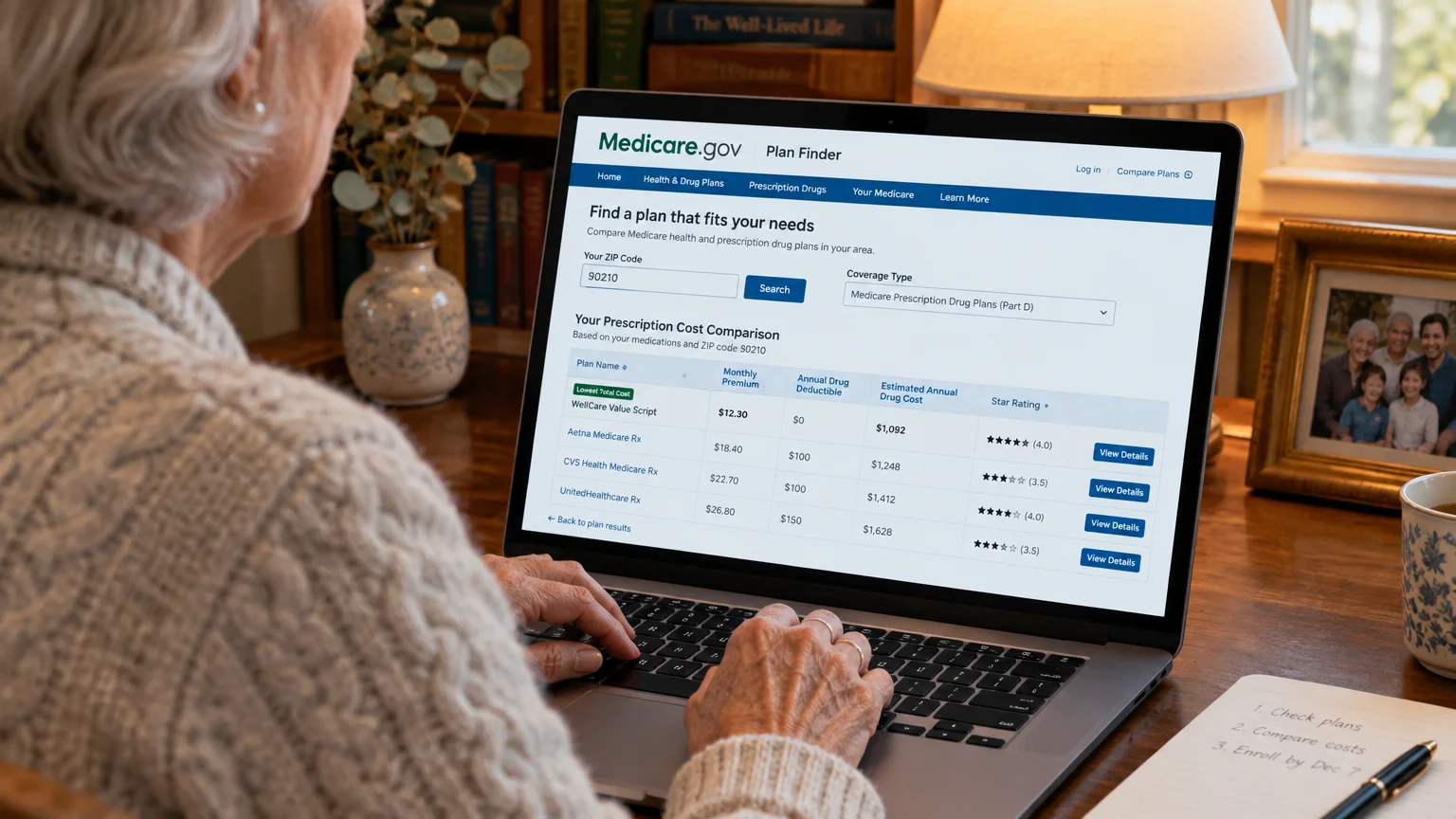
The federal government updates the official Medicare Plan Finder tool just before enrollment begins. Logging into your account at Medicare.gov allows you to store your medical profile safely.
Entering your drug inventory into Plan Finder reveals your projected total out-of-pocket costs for every available policy. The algorithm accounts for annual deductibles, tier copays, and monthly premiums.
Verify that your current residential zip code matches your account records. Plan availability and premium pricing vary by county across the United States.

4. Cross-Check Doctor Networks and Hospital Affiliations
Medicare Advantage plans frequently revise their provider directories from year to year. A specialist or hospital network you relied on this year might leave your plan on January 1.
Do not rely solely on online provider directories, as they often contain outdated entries. Call your doctors directly to confirm whether they will accept your specific plan in the upcoming year.
Ask billing departments for the exact plan network name rather than the overarching insurance company. Insurers frequently offer multiple distinct network structures under one brand banner.
5. Account for the 2026 Part D Cap and Negotiated Drug Prices
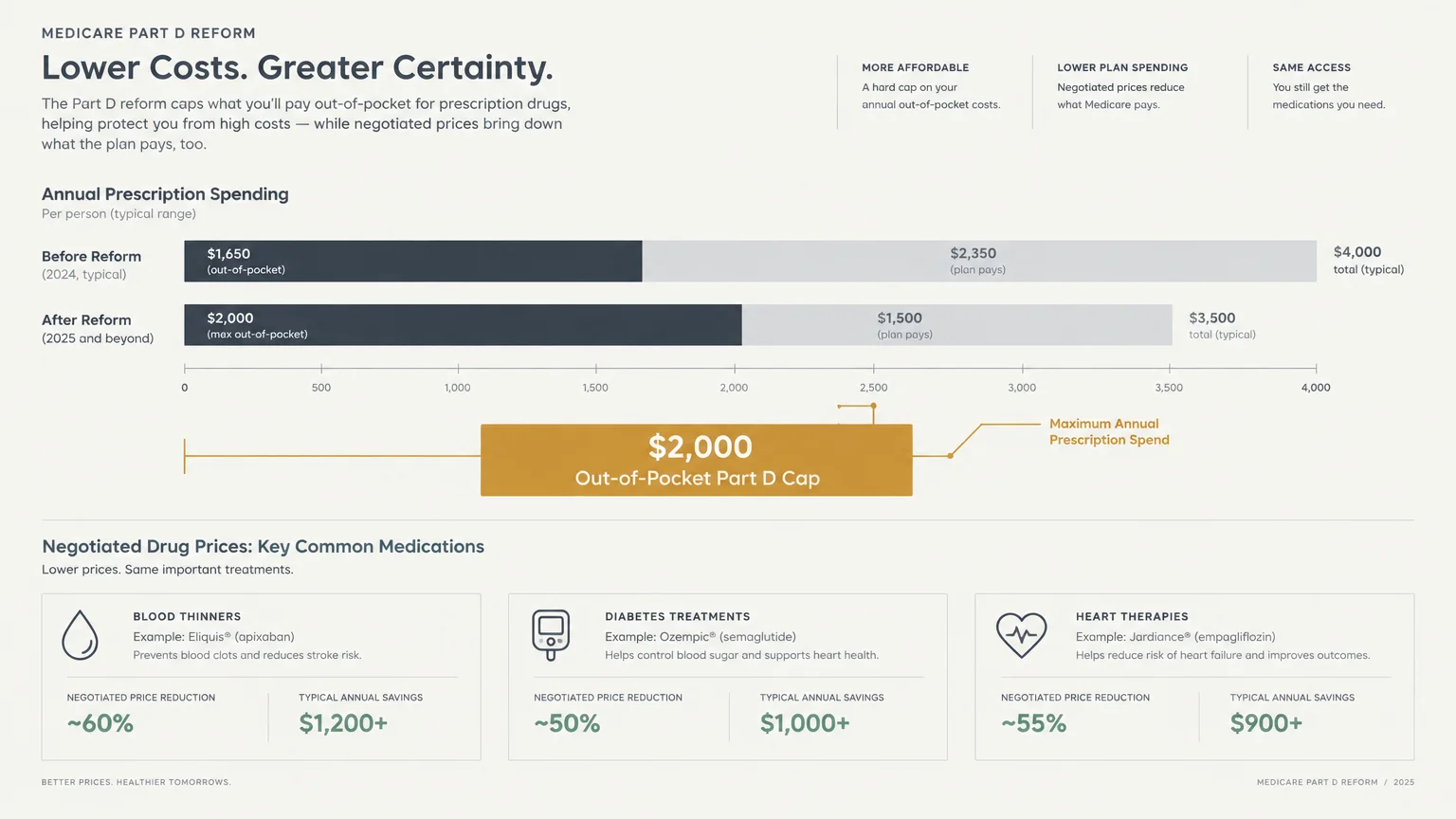
The Inflation Reduction Act introduced sweeping updates to Part D prescription drug coverage. For 2026, out-of-pocket spending on covered Part D medications is legally capped at $2,100 per year.
Once your spending hits this $2,100 ceiling, you pay nothing for covered prescription drugs for the rest of the year. This structural reform protects individuals taking costly maintenance therapies.
Additionally, federal negotiated prices for ten high-cost medications take effect on January 1, 2026. This initial list includes widespread medications such as Eliquis, Jardiance, Xarelto, and Januvia.
Review how these pricing adjustments affect your specific regimen when shopping for policies. Even with federal caps, plan formularies determine which specific drugs count toward that out-of-pocket limit.
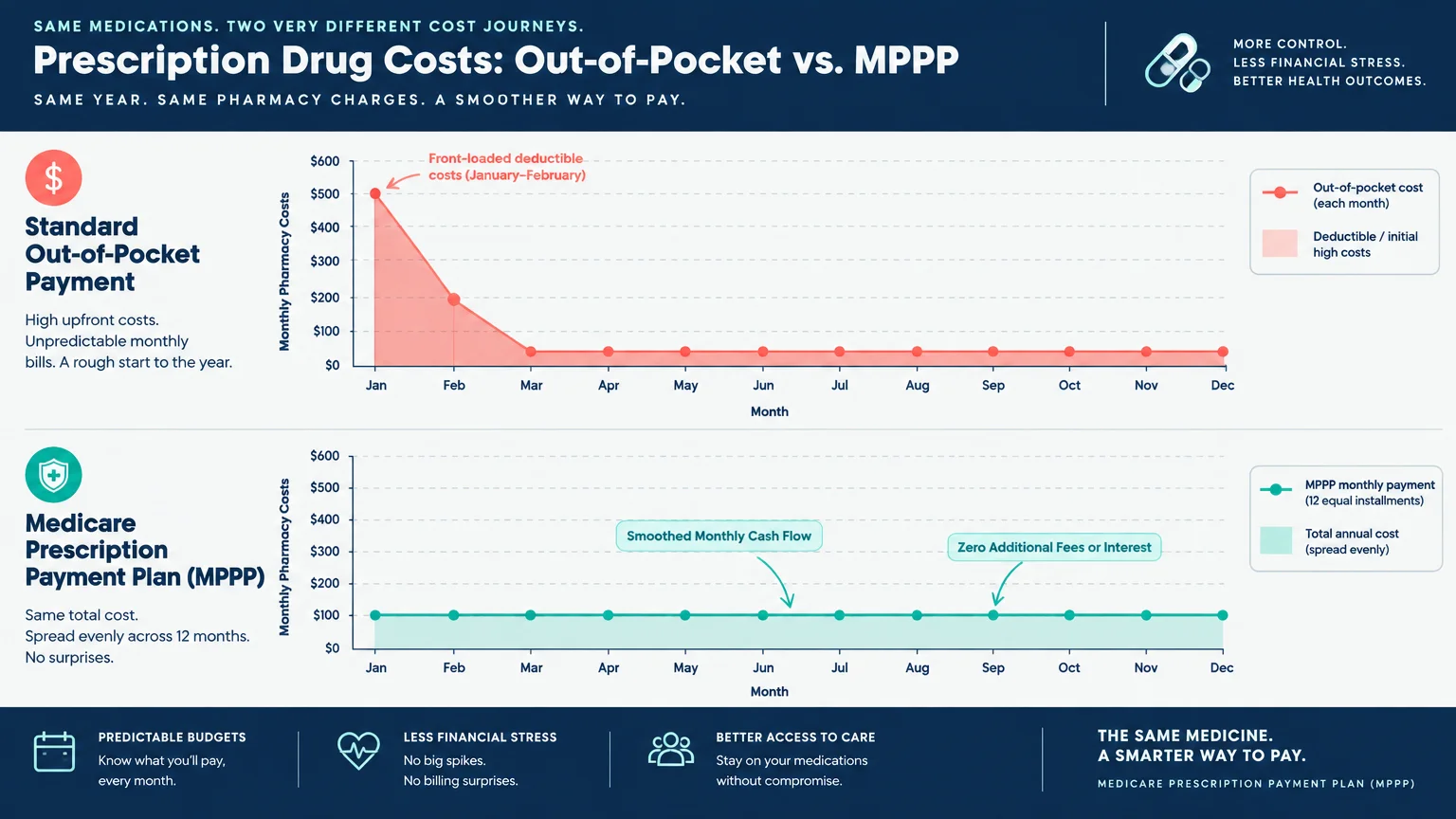
6. Assess the Medicare Prescription Payment Plan Option
The Medicare Prescription Payment Plan provides an optional mechanism to smooth your prescription drug expenses. Every Part D sponsor must offer this interest-free payment option to all enrollees.
Instead of paying massive copayments at the pharmacy counter in January or February, the program divides your expenses into monthly installments. This structure prevents severe cash-flow shocks early in the year.
Participation is voluntary and does not lower your total annual drug cost. Evaluate whether spreading your out-of-pocket obligations into manageable monthly bills matches your retirement cash-flow strategy.
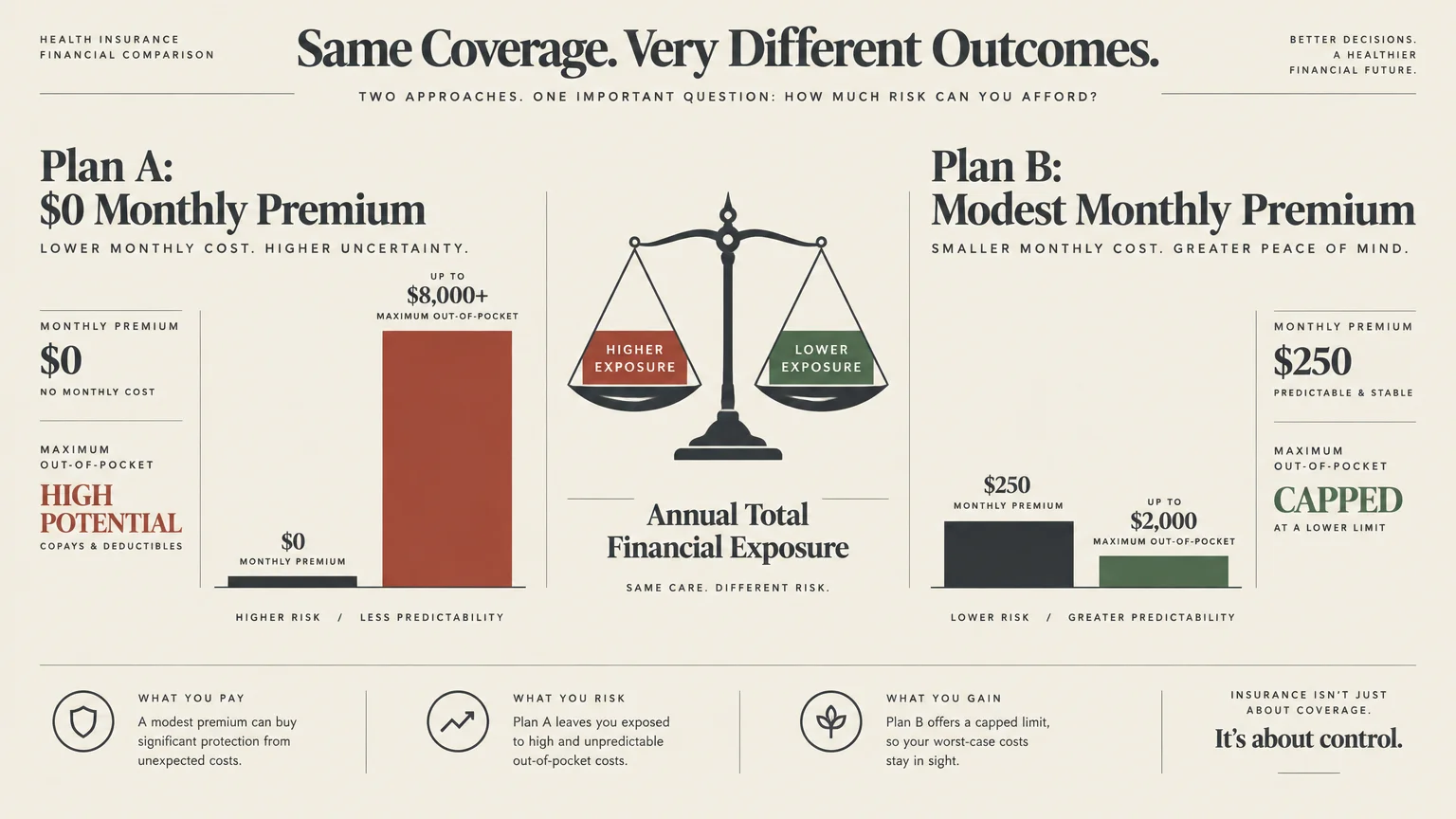
7. Calculate Total Out-of-Pocket Maximums Over Low Premiums
Zero-dollar premium plans frequently tempt retirees during open enrollment marketing blitzes. However, an attractive premium often disguises steep specialist copays and high maximum out-of-pocket (MOOP) limits.
A single hospital stay or outpatient procedure can quickly exhaust any savings gained from a $0 premium. Focus on total potential annual liability rather than monthly billing amounts.
Review the plan’s mandatory maximum out-of-pocket cap before committing. High caps can expose your savings to significant bills if unexpected health emergencies arise.
“Health care costs represent one of the largest wildcards in retirement planning; reviewing your coverage annually is the best insurance against financial shock.” — Jean Chatzky, Financial Journalist and Author
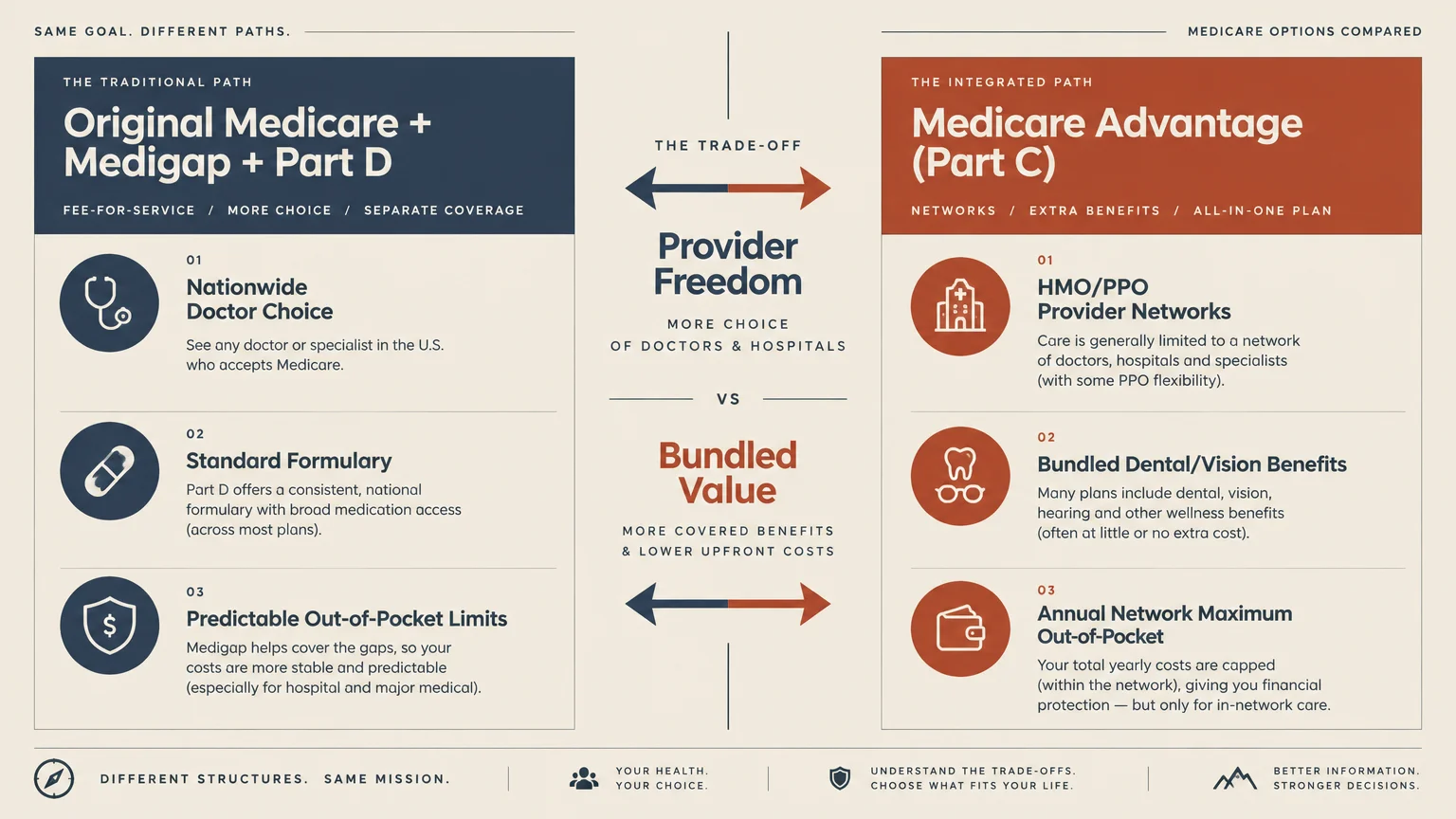
Comparing Coverage Structures: Medicare Advantage vs. Original Medicare
Choosing between Medicare Advantage and Original Medicare paired with a Part D drug plan requires weighing flexibility against bundled perks. The table below outlines core differences.
| Feature | Original Medicare with Part D & Medigap | Medicare Advantage (Part C) |
|---|---|---|
| Provider Choice | Any doctor or hospital nationwide accepting Medicare | Restricted to HMO or PPO provider networks |
| Referrals Required | No specialist referrals needed | Often requires primary care doctor referrals |
| Drug Cap (2026) | $2,100 statutory out-of-pocket cap on Part D drugs | $2,100 statutory cap on Part D drug component |
| Medical Out-of-Pocket Cap | Predictable and low with Medigap coverage | Federal cap applies; plans vary widely up to legal limit |
| Ancillary Benefits | None included (separate dental/vision policies required) | Often includes basic dental, vision, hearing, and gym perks |
Carefully weigh whether network restrictions match your healthcare usage patterns. Individuals who travel regularly across state lines often benefit from Original Medicare’s national provider access.
Resources from AARP can also help you evaluate how supplemental coverage interacts with your expected routine medical appointments.

8. Book Free Assistance with a SHIP Counselor Early
Navigating plan details can become overwhelming, but you do not have to make choices alone. The State Health Insurance Assistance Program provides free, unbiased Medicare counseling in every state.
According to the Administration for Community Living (ACL), local SHIP counselors do not sell insurance or work on commission. They focus exclusively on finding the best plan for your needs.
SHIP appointment schedules fill up rapidly after opening week. Contact your state program or call 1-800-MEDICARE immediately to reserve a personalized consultation.

Professional vs. Self-Guided Plan Selection
Deciding whether to navigate open enrollment independently or partner with a professional depends on your health needs. Review these scenarios to determine your optimal path.
Scenario 1: Stable Health and Generic Medications
If you take only standard generic drugs and have uncomplicated medical needs, a self-guided review works well. You can easily compare plans using the Medicare Plan Finder tool within an hour.
Scenario 2: Complex Chronic Illnesses and Specialty Drugs
Patients managing multiple chronic conditions benefit greatly from certified professional advice. A SHIP counselor or licensed agent can verify complex formularies, prior authorization hurdles, and specialized tier structures.
Scenario 3: Frequent Travel and Multi-State Living
Snowbirds and frequent domestic travelers need careful guidance to avoid network penalties. Professional advisors can help identify plans with national networks or suggest switching to Original Medicare with Medigap.
Scenario 4: Limited Income and Program Subsidy Eligibility
Beneficiaries with modest retirement incomes should consult an advocate through organizations like the National Council on Aging (NCOA). Advisors can screen you for Extra Help and Medicare Savings Programs.
You can also verify your financial eligibility details directly with the Social Security Administration (SSA). Securing low-income subsidies significantly reduces copayments and eliminates Part D deductibles.

Common Mistakes to Avoid During Open Enrollment
Avoiding common pitfalls preserves both your health and retirement nest egg. Watch out for these standard missteps during the first week of enrollment.
- Ignoring the ANOC: Tossing your Annual Notice of Change in the trash leaves you vulnerable to unannounced formulary cuts and premium hikes.
- Focusing Exclusively on Premiums: Choosing a zero-dollar premium plan often leads to higher out-of-pocket expenses when specialized hospital or diagnostic care is required.
- Overlooking Pharmacy Status: Filling prescriptions at a standard retail pharmacy rather than a preferred partner can cost you hundreds of dollars in unnecessary copayments.
- Waiting Until December: Postponing research until the final days of enrollment limits your ability to speak with physicians or secure professional counseling.
Many enrollees assume their existing policy will automatically remain unchanged for the upcoming year. Insurers regularly modify medication coverage, requiring you to actively verify your formulary status annually.
Another critical error is conflating the fall enrollment period with the winter Medicare Advantage window. The January-to-March window only applies to beneficiaries currently enrolled in Medicare Advantage.
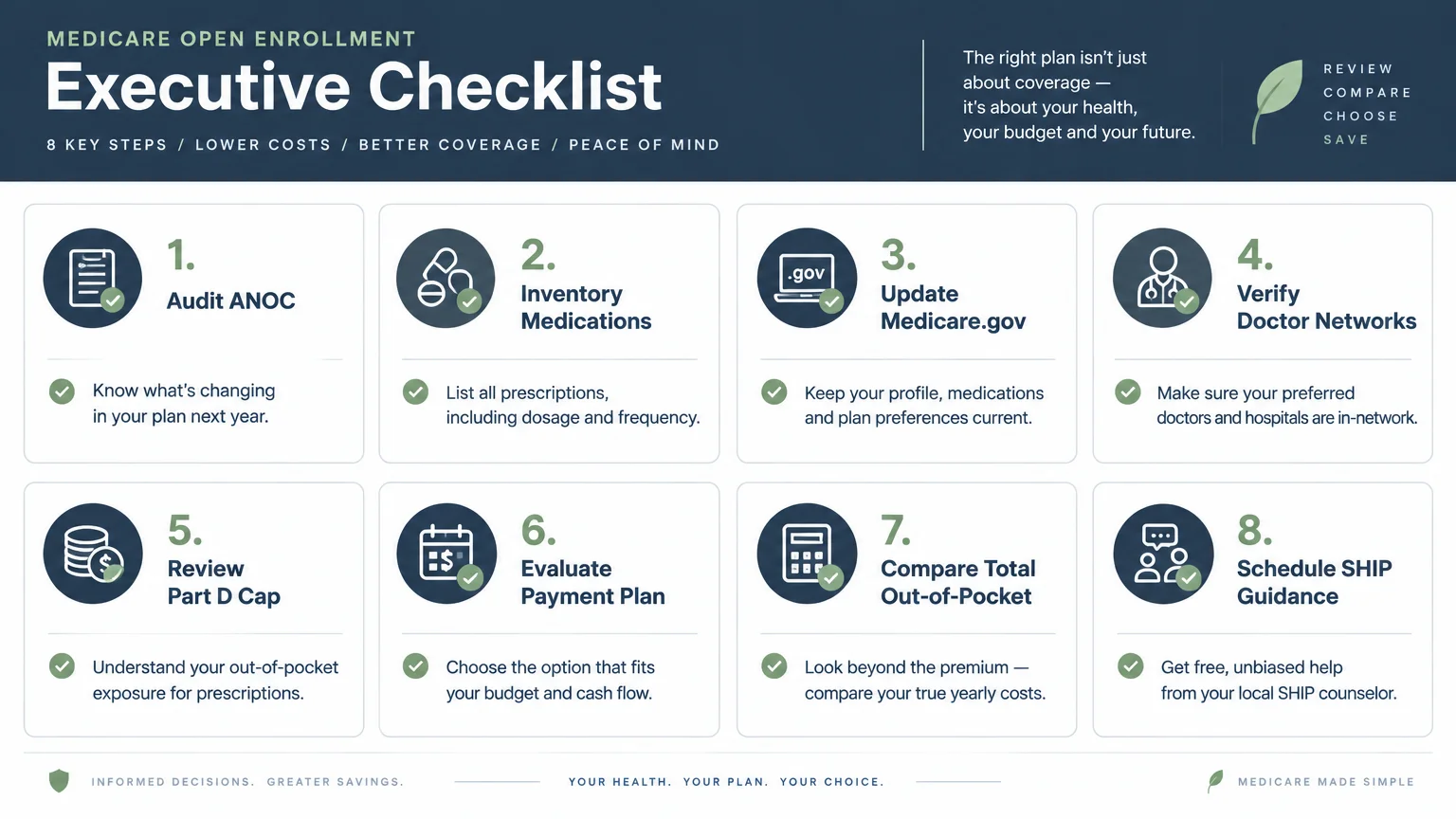
Your Medicare Open Enrollment First Week Checklist
Follow this chronological checklist to maximize productivity during the first seven days of enrollment. Checking these boxes early eliminates year-end anxiety.
- Retrieve and highlight changes in your Annual Notice of Change (ANOC).
- Write down all current medications, dosages, and monthly prescription volumes.
- Log into your Medicare.gov profile to confirm saved prescription lists.
- Contact your primary care physician and specialists to confirm 2026 network inclusion.
- Run side-by-side plan comparisons using the Plan Finder tool.
- Review the $2,100 Part D spending cap and evaluate the Medicare Prescription Payment Plan.
- Book an appointment with a local SHIP counselor if your coverage scenario is complex.
Completing these preliminary tasks during the opening days ensures plenty of time for careful consideration. You avoid rushed choices before the December 7 closing deadline.
Frequently Asked Questions About Medicare Open Enrollment
What are the exact dates for Medicare Open Enrollment?
Medicare Open Enrollment runs every year from October 15 through December 7. Any coverage choices or policy modifications you select take effect on January 1.
Can I switch between Medicare Advantage and Original Medicare during this period?
Yes, you can move freely between Medicare Advantage and Original Medicare during the fall enrollment window. You may also join, drop, or change standalone Part D prescription plans.
What is the out-of-pocket prescription cap for 2026?
Under the Inflation Reduction Act, the Part D out-of-pocket prescription cap is set at $2,100 for 2026. Once you reach this limit, covered drugs carry zero out-of-pocket cost.
What is the difference between AEP and the Medicare Advantage OEP?
The fall period (AEP) is open to all Medicare beneficiaries for any plan switch. In contrast, the January 1 to March 31 window only serves existing Medicare Advantage members.
Next Steps for a Confident Enrollment Season
Taking decisive steps during the first week of open enrollment puts you in complete control of your healthcare. Start by gathering your documents and checking your medications on Medicare.gov today.
This article provides general retirement education and information only. Everyone’s financial situation is unique—what works for others may not work for you. For personalized advice, consider consulting a qualified financial professional such as a CFP or CPA.
Last updated: February 2026. Retirement benefits, tax laws, and healthcare costs change frequently—verify current details with official sources.