
Retiring on $2,400 a month with no savings and an active mortgage feels daunting, but you can build a stable lifestyle with the right geographic move. Strategic adjustments will instantly relieve your cash flow pressure.
Roughly half of American adults aged 65 to 74 hold no retirement savings accounts. Millions of households face this exact financial threshold every month while carrying housing debt into their retirement years.
By eliminating your mortgage and relocating to high-value areas, you can stretch your monthly fixed income far further than you think. Here is your roadmap to living well on $2,400 a month.
The Real Cash Flow: Breaking Down Your $2,400 Monthly Budget
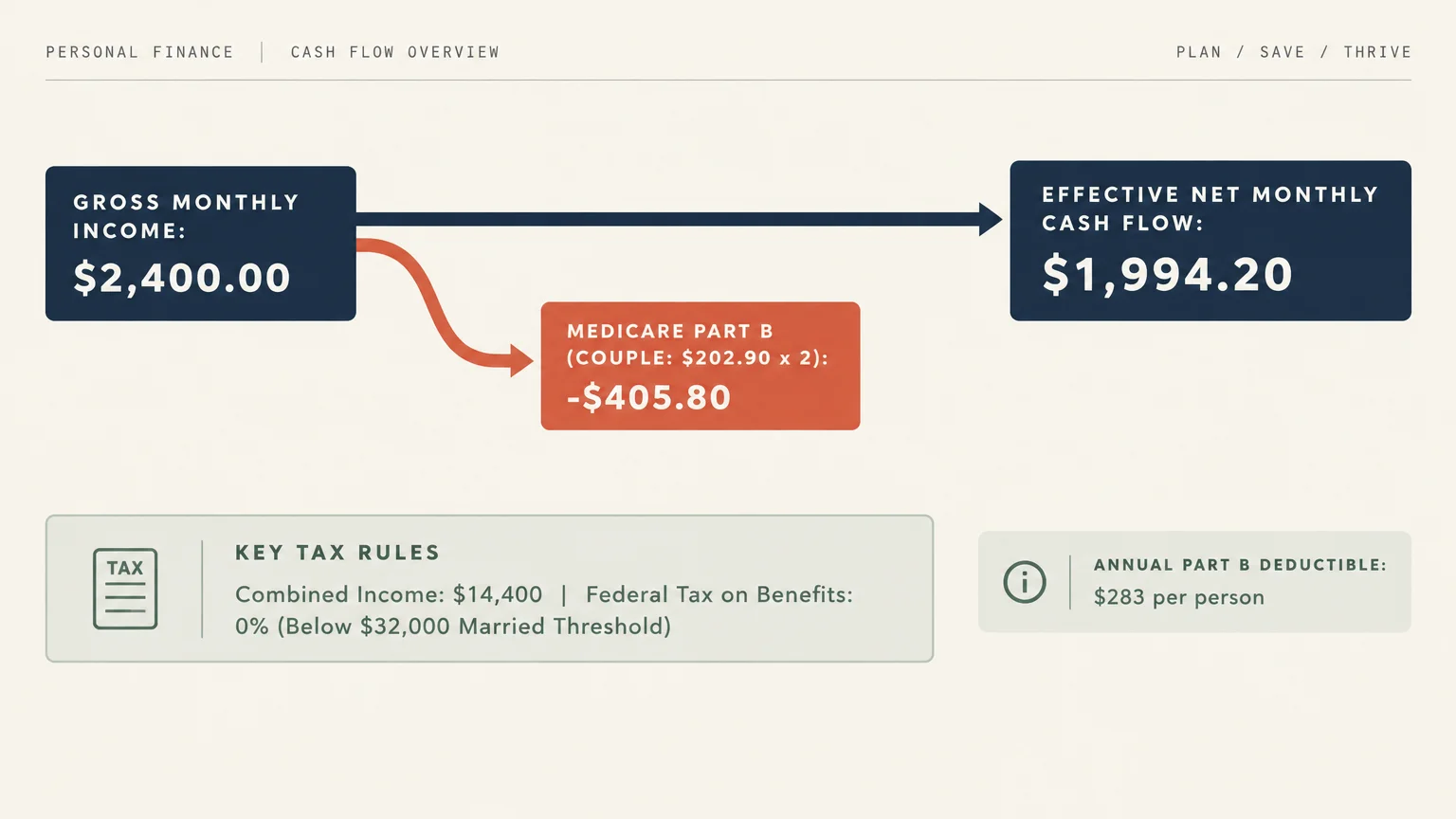
On paper, an income of $2,400 a month provides $28,800 annually. However, you cannot allocate every dollar to food, gas, and utilities.
Healthcare expenses immediately reduce your take-home pay. The standard Medicare Part B monthly premium is $202.90 per person.
For a retired couple, Medicare Part B premiums consume $405.80 each month. That automatic deduction leaves you with an effective net income of $1,994.20.
You must also plan for the annual Medicare Part B deductible of $283 per person. Out-of-pocket medical co-pays and prescription medications will require additional monthly cushions.
Annual Cost-of-Living Adjustments (COLA) help cushion inflation over time. A recent 2.8% COLA increase raised typical monthly checks, yet healthcare inflation often absorbs these gains.
Fortunately, federal tax rules offer substantial relief at this income tier. The Internal Revenue Service (IRS) calculates your combined income by adding half your Social Security benefits to your other earnings.
Because your combined income equals $14,400, you remain well below the $32,000 federal threshold for married couples. Consequently, you will owe 0% in federal income taxes on your benefits.
Your state tax liability depends entirely on where you decide to settle. Most states exempt your benefits entirely, protecting your remaining cash flow.
The Mortgage Dilemma: Why Carrying Debt Strangles a Fixed Income
Carrying an ongoing mortgage on a $2,400 monthly income presents an extreme financial danger. Fixed incomes offer zero margin for rising property taxes or major home repairs.
According to the Federal Reserve, the national median monthly mortgage payment sits at $1,600. Paying that average sum leaves a couple with less than $400 for all remaining expenses.
Data reveals that 10.7 million homes with an active mortgage belong to seniors aged 65 or older. That accounts for roughly 20% of all mortgaged households nationwide.
Half of those senior homeowners report that monthly housing payments severely restrict their quality of life. Housing costs turn retirement into a constant struggle for basic survival.
When an unexpected maintenance crisis strikes, retirees without emergency savings turn to credit cards. That cycle rapidly produces catastrophic high-interest debt.
Homeowners insurance premiums and local municipal property taxes also climb every single year. A fixed income cannot keep pace with compounding escrow increases.
“Entering retirement with debt is like walking into a storm with an open umbrella.” — Suze Orman, Personal Finance Author
You cannot afford to maintain a $1,600 housing payment on a $1,994 net budget. Resolving your housing debt must become your absolute primary objective.
Unlocking Home Equity: The Debt-Free Housing Strategy
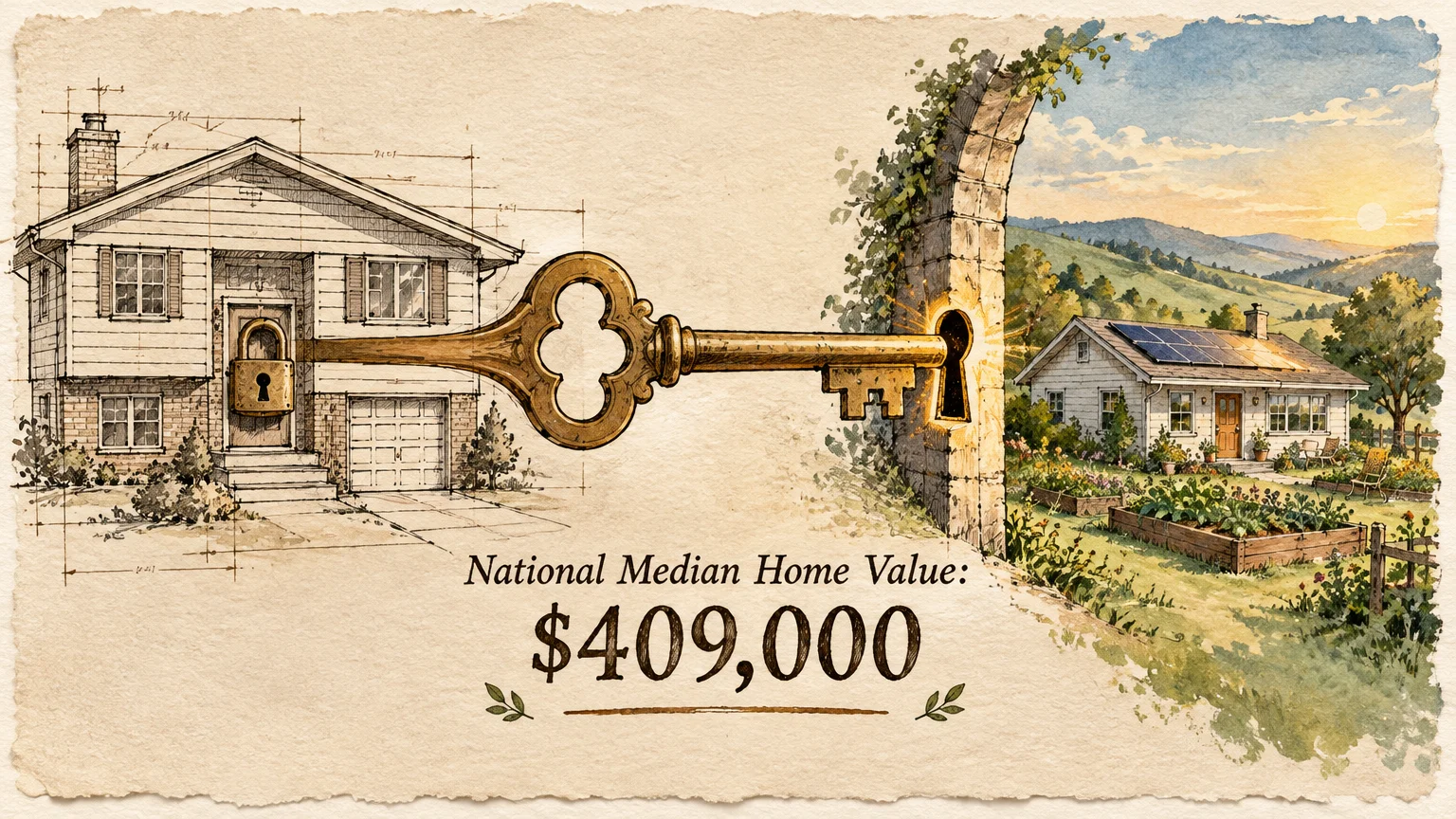
Even if you hold no liquid savings, your current mortgaged property may hold significant accumulated value. Surging national real estate values have built record equity for longtime owners.
The National Association of Realtors reports that the national median single-family home price is $409,000. The median seller age is 63.
Furthermore, 30% of repeat home buyers now pay all-cash by deploying their accumulated home equity. You can use this exact mechanism to eliminate your monthly mortgage permanently.
Selling your home pays off the outstanding mortgage balance and delivers a clean lump-sum check. You can redirect those proceeds to purchase a cheaper home outright in an affordable market.
Owning your home free and clear reduces your essential housing overhead to property taxes and insurance. That single move converts an unmanageable budget into a sustainable retirement plan.
If your equity balance is modest, you can explore low-cost independent senior communities or subsidized housing options through the Department of Housing and Urban Development (HUD).
Programs like HUD Section 202 cap rental costs at roughly 30% of adjusted income. This provides an immediate safety net if selling does not yield enough purchase equity.
Removing mortgage principal and interest payments allows your $2,400 benefit to cover daily living needs comfortably.
Top Affordable U.S. Cities for a $2,400 Monthly Budget
Relocating across state or county lines can dramatically reduce your living costs. Several American communities offer exceptional infrastructure alongside deeply discounted housing prices.
Midland, Michigan ranks as the top retirement city in national affordability evaluations. With a median home price of $206,000, selling a median-priced home elsewhere lets you buy debt-free.
Midland delivers low everyday costs, quality healthcare networks, and serene recreational trails along the Pere Marquette Rail-Trail. Winters bring cold temperatures, but the community boasts low utility rates.
If you prefer warm desert climates, Green Valley, Arizona offers an attractive alternative. Located 20 miles south of Tucson, this hub features 130 mostly age-restricted communities.
While the median home price in Green Valley is $282,000, refurbished one-bedroom condos frequently sell for half that amount. You can easily secure a turnkey home without taking on new debt.
Green Valley also provides extensive recreation centers, swimming pools, and dedicated golf cart lanes. You enjoy resort-style amenities on a modest Social Security budget.
Fort Wayne, Indiana features reliable regional healthcare systems and grocery costs well below the national baseline. The median home price hovers around $225,000.
Fort Wayne seniors enjoy free community events, scenic riverfront parks, and affordable municipal water services. Daily transportation costs remain exceptionally manageable throughout the metro area.
Huntsville, Alabama and El Paso, Texas offer low-tax environments and inexpensive utilities. Both cities support active senior centers and accessible municipal transit.
In El Paso, bilingual community healthcare providers offer extensive care networks. Low property assessment ratios help keep annual housing taxes well under control.
Knoxville and Chattanooga, Tennessee combine scenic mountain views with zero state income tax. Housing inventory in surrounding suburbs remains attainable for cash buyers downsizing from high-cost markets.
Pittsburgh, Pennsylvania delivers premier healthcare facilities through major university hospital systems. Affordable row homes and condos allow retirees to preserve their cash flow while securing world-class care.
Pittsburgh also exempts prescription drugs and food from local sales taxes. That targeted tax relief creates tangible savings on everyday senior necessities.
State-by-State Taxes and Living Costs
State tax policy directly affects how far your monthly benefit will stretch. Minimizing state tax burdens protects every precious dollar of your fixed income.
Only eight states continue to tax Social Security benefits: Colorado, Connecticut, Minnesota, Montana, New Mexico, Rhode Island, Utah, and Vermont. Most of these states exempt low earners.
West Virginia completed a three-year phaseout and now exempts 100% of Social Security benefits. It joins Missouri, Kansas, and Nebraska in dropping the tax entirely.
Nine states assess no broad-based individual income tax at all: Alaska, Florida, Nevada, New Hampshire, South Dakota, Tennessee, Texas, Washington, and Wyoming.
A recent Seniorly affordability analysis ranked Pennsylvania as the number-one state for retirees on a fixed income. Iowa, Tennessee, Nevada, and Texas completed the top five most affordable states.
Look beyond income taxes to property tax rates before purchasing a home. High real estate levies can quickly undermine the benefits of cheap initial home purchase prices.
For example, Texas has no personal income tax but levies relatively high property tax rates. Seniors must take full advantage of homestead exemptions and local tax freezes.
In contrast, states like Alabama, Indiana, and Tennessee pair reasonable home valuations with modest annual property assessments. This balanced tax structure protects your remaining fixed income.
| Location | Median Home Price | State Income Tax | Social Security Taxed? | Est. Monthly Non-Housing Expenses |
|---|---|---|---|---|
| Midland, Michigan | $206,000 | Flat 4.25% | No | $1,550 |
| Green Valley, Arizona | $282,000 | Flat 2.5% | No | $1,650 |
| Fort Wayne, Indiana | $225,000 | Flat 3.05% | No | $1,500 |
| Knoxville, Tennessee | $310,000 | None | No | $1,600 |
| Pittsburgh, Pennsylvania | $230,000 | Flat 3.07% | No | $1,620 |
| Central Portugal | $160,000 | Progressive / Treaty | Exemptions Apply | $1,300 |

Looking Abroad: Realistic International Retirement Options
Retiring abroad sounds exotic, but thousands of Americans use foreign exchange rates to maximize modest incomes. A $2,400 monthly Social Security check delivers upper-middle-class comfort in select nations.
However, visa restrictions disqualify many popular countries if you lack substantial savings. You must examine legal income thresholds before booking a one-way flight.
Mexico ranks as a top expat destination where a couple can live well on $1,500 to $2,000 a month. Unfortunately, legal residency requirements present a major hurdle for zero-savings households.
Mexico requires permanent residency applicants to show monthly income of $7,322 or investment savings of $292,859. A couple with only $2,400 in income cannot qualify for legal residency there.
In contrast, Portugal offers a viable legal pathway through its D7 passive-income visa. The D7 visa requires approximately $1,000 per month in documented passive earnings.
Portugal also requires a Portuguese bank deposit of roughly $12,000 to cover unexpected emergencies. You can easily fund this initial deposit from your home sale proceeds.
Once established in central or northern Portugal, a retired couple can live comfortably on $2,000 a month. High-quality universal healthcare and affordable fresh food make daily life stress-free.
Greece also provides attractive Mediterranean living options with moderate living expenses. Coastal Greek villages offer low rental costs, fresh local markets, and deeply discounted private health coverage.
Southeast Asia provides another deeply affordable alternative for adventurous retirees. International Living highlights Vietnam, where furnished one-bedroom apartments in Hanoi rent for under $500 monthly.
An American couple can live comfortably in Vietnam on $1,800 a month, including dining out regularly. Visa renewals require careful navigation, but the purchasing power remains unmatched.
Remember that standard Medicare coverage stops at the United States border. You must purchase private international health insurance or utilize local national healthcare systems when living overseas.
How to Safely Supplement Your $2,400 Monthly Cash Flow
Adding a small side income can transform a tight budget into a comfortable lifestyle. Working just ten hours a week provides valuable breathing room for entertainment and travel.
You can verify your benefit baseline and track your lifetime earnings through the Social Security Administration (SSA) online portal.
If you have reached your Full Retirement Age—which is 67 for anyone born in 1960 or later—you can earn unlimited income without benefit deductions.
If you claim benefits before age 67, the SSA enforces an annual earnings test limit of $24,480. That translates to $2,040 per month in allowable wage income.
If you exceed $24,480, the SSA temporarily withholds $1 in benefits for every $2 earned above the threshold. Earning $1,500 a month stays comfortably beneath this penalty cap.
Consider low-stress roles such as community center desk work, library assistance, or retail customer service. The extra $18,000 per year will rebuild your missing liquid emergency savings.
Part-time work also provides valuable social connection and daily structure during early retirement. Even seasonal employment during peak holidays generates meaningful emergency buffers.

Professional vs. Self-Guided: Choosing Your Financial Path
Navigating a fixed-income retirement requires careful decisions regarding home equity and tax filings. You must decide whether to handle these steps independently or hire specialized counsel.
Scenario 1: Selling a high-equity home to buy outright. An experienced real estate agent and a certified fee-only financial planner can help model closing costs and tax exclusions.
Self-guided homeowners can research regional sales trends independently, but professional tax advice protects your capital gains exclusion. The IRS allows up to $500,000 in tax-free home gains for couples.
Scenario 2: Managing high out-of-pocket medical expenses. Independent navigation through Medicare.gov lets you compare Part D drug plans and Medicare Advantage options.
Alternatively, working with an independent State Health Insurance Assistance Program (SHIP) counselor provides free, unbiased guidance on prescription drug tiers and subsidies.
SHIP counselors receive no commissions, ensuring their plan recommendations remain completely objective. They can help you apply for Medicare Extra Help programs if you qualify.
Scenario 3: Resolving debt with little home equity. If your mortgage balance equals your market value, contact a non-profit credit counselor approved by the Consumer Financial Protection Bureau (CFPB).
Professional counselors can negotiate fee waivers and establish structured repayment plans that prevent foreclosure without draining your fixed monthly check.
Attempting to settle severe debt without professional counsel often exposes seniors to predatory debt-relief scams. Certified credit counselors protect your rights under federal consumer laws.
Scenario 4: Relocating to an international destination. Navigating foreign immigration rules and international tax treaties requires professional immigration attorneys in your target country.
Relying on unverified expat blogs can result in rejected visa petitions and lost application fees. Licensed immigration specialists guarantee proper document certification and embassy submissions.
Common Mistakes to Avoid When Retiring on a Fixed Income
Retiring on a tight budget leaves very little room for unforced financial errors. Sidestepping frequent missteps ensures your fixed income remains dependable over the long haul.
Mistake 1: Refusing to downsize your primary residence. Holding onto an expensive family home out of nostalgia drains your cash flow through maintenance and insurance.
Emotional attachment to a home should never compromise your day-to-day food and medical security. Downsizing into an affordable market gives you an immediate financial clean slate.
Mistake 2: Ignoring Medicare Part B premium deductions. Budgeting around your gross $2,400 benefit without subtracting $405.80 in Part B premiums causes immediate overdrafts.
Always calculate your disposable income based strictly on the net deposit reaching your bank account. Overlooking automatic federal healthcare deductions leads to immediate budget shortfalls.
Mistake 3: Overlooking property taxes and condo association dues. A cheap $150,000 condo can become unaffordable if monthly HOA fees exceed $400 or special assessments arrive.
Always inspect the financial reserve study of any homeowners association before signing purchase agreements. Weak reserves lead to sudden special assessments that wreck fixed budgets.
Mistake 4: Withdrawing home equity through high-fee reverse mortgages. Reverse mortgages carry substantial origination fees and ongoing insurance premiums that erode your remaining equity rapidly.
Selling your home outright and purchasing a cheaper replacement property represents a cleaner, debt-free wealth preservation strategy.
Mistake 5: Failing to build a modest emergency reserve. Funneling every spare penny into home improvements leaves you vulnerable when a car transmission fails.
Stash your home sale residual cash in a high-yield savings account immediately. That liquid cushion shields you from relying on high-interest credit cards during minor household emergencies.
A Realistic Monthly Budget Breakdown
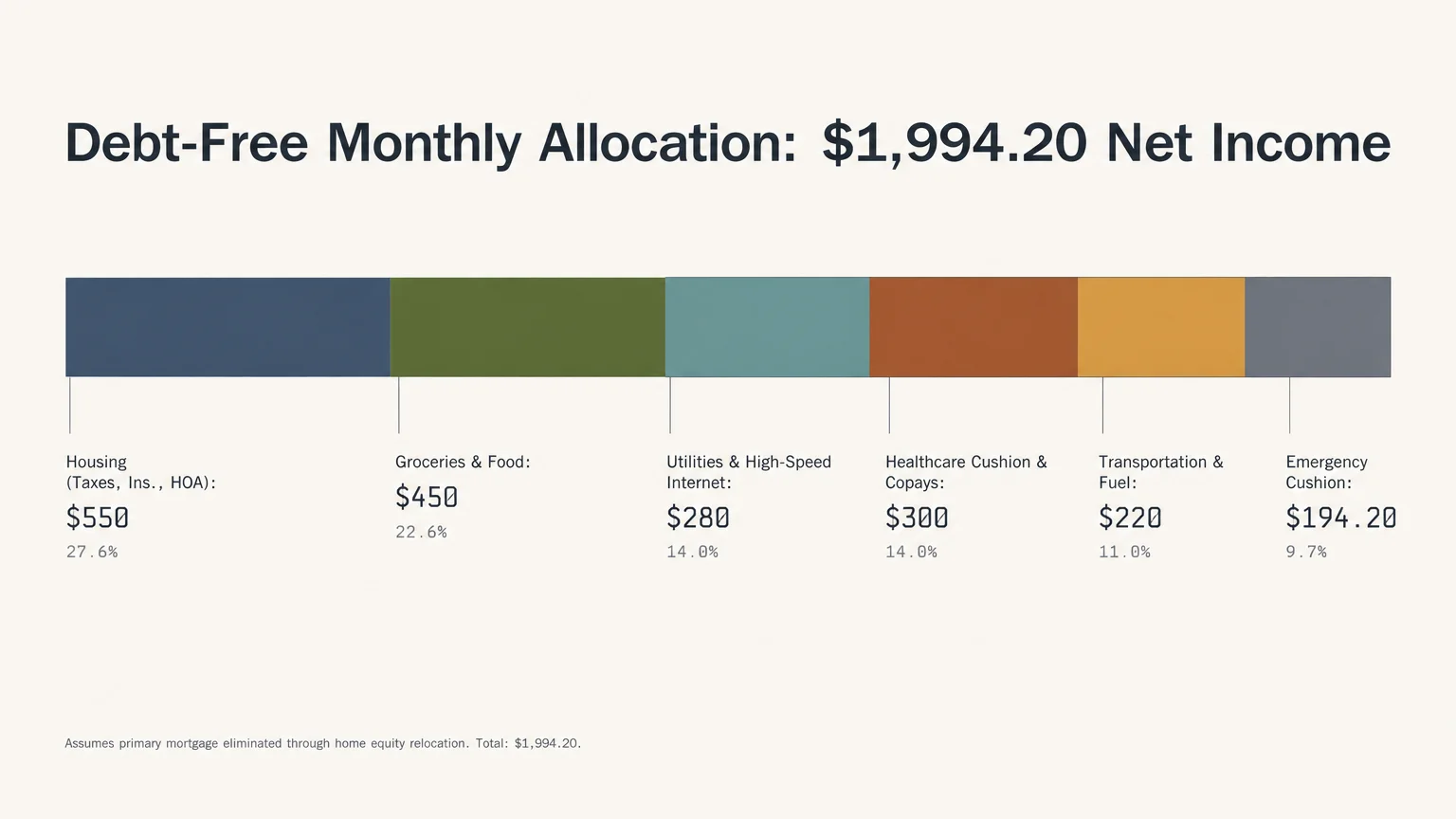
To visualize how this lifestyle functions day to day, examine a debt-free spending model. This allocation assumes you sold your mortgaged home and bought a replacement outright.
Here is how a retired couple allocates their $2,400 monthly benefit:
- Medicare Part B Premiums: $405.80 (standard deduction for two individuals)
- Property Taxes & Homeowners Insurance: $350.00 (in low-tax regions like Indiana or Alabama)
- Utilities, Water, & High-Speed Internet: $320.00
- Groceries & Household Supplies: $550.00
- Transportation & Auto Insurance: $250.00 (paid-off vehicle)
- Out-of-Pocket Healthcare & Medications: $150.00
- Emergency Savings & Discretionary Fun: $374.20
Total monthly expenditures equal exactly $2,400.00. This balanced structure builds a $374 monthly cash buffer while maintaining all essential health and housing needs.
If an unexpected home repair arises, your monthly savings surplus covers the bill without requiring credit card borrowing.
Keeping auto insurance competitive by shopping policies annually will free up even more disposable cash. Small budgeting adjustments compound into substantial peace of mind.
Frequently Asked Questions
Here are answers to common questions retirees ask when managing fixed incomes and housing transitions.
Can a married couple live decently on $2,400 a month in retirement?
Yes, but only if you eliminate monthly housing debt. Eradicating your mortgage payment frees up 70% to 80% of your net income for everyday essentials.
Relocating to affordable regions such as the Midwest or South allows your dollars to cover food, utilities, and healthcare comfortably.
Will our $2,400 monthly Social Security benefit be taxed?
Under current federal tax formulas, married couples filing jointly pay zero federal tax on Social Security if combined income remains under $32,000.
Since your combined income is half your benefit ($14,400), you owe 0% in federal income taxes. Most states also exempt your benefits.
What should we do if our home has no equity to cash out?
If you lack home equity, consider selling anyway to eliminate mortgage liability and moving into HUD-subsidized senior housing.
HUD Section 202 housing caps your rent payment at roughly 30% of your adjusted monthly income, guaranteeing long-term affordability.
Can we move to Mexico on $2,400 a month if we have no savings?
No, you will not meet Mexico’s legal residency thresholds. Permanent residency requires proof of $7,322 in monthly income or $292,859 in savings.
Instead, look into countries like Portugal, where the D7 passive income visa requires only around $1,000 in monthly passive income.
What happens to our budget if one spouse passes away?
When a spouse dies, the household loses the smaller Social Security check and retains only the larger benefit amount.
Living completely debt-free ensures the surviving spouse can maintain baseline housing and utility costs even after household income drops.
Taking Action: Your Next Steps to Retirement Stability
A fixed monthly income of $2,400 and zero savings requires bold, decisive decisions. Eliminating your mortgage unlocks the financial security you deserve.
Start by requesting a comparative market analysis from a local real estate agent to determine your true home equity. Research low-cost target markets and tour senior communities online.
The information in this guide is meant for educational purposes. Your specific circumstances—including income, savings, health coverage, and goals—may require different approaches; when in doubt, consult a licensed professional.
Last updated: November 2026. Retirement benefits, tax laws, and healthcare costs change frequently—verify current details with official sources.