
Roughly 3.15 million Americans aged 65 and older move each year, according to the U.S. Census Bureau, and many trade metro congestion for small town living. Historic towns retirees favor pair walkable streets with enduring local character.
Choosing among charming historic towns means looking past brick sidewalks and waterfront views. Housing costs, property taxes, insurance requirements, and nearby hospitals determine how far your savings stretch.
These eight retirement destinations stand out for their heritage and daily livability. Current 2026 housing figures and state tax rules can help you compare your top places to retire.
How to Budget for Small-Town Retirement in 2026 and 2027
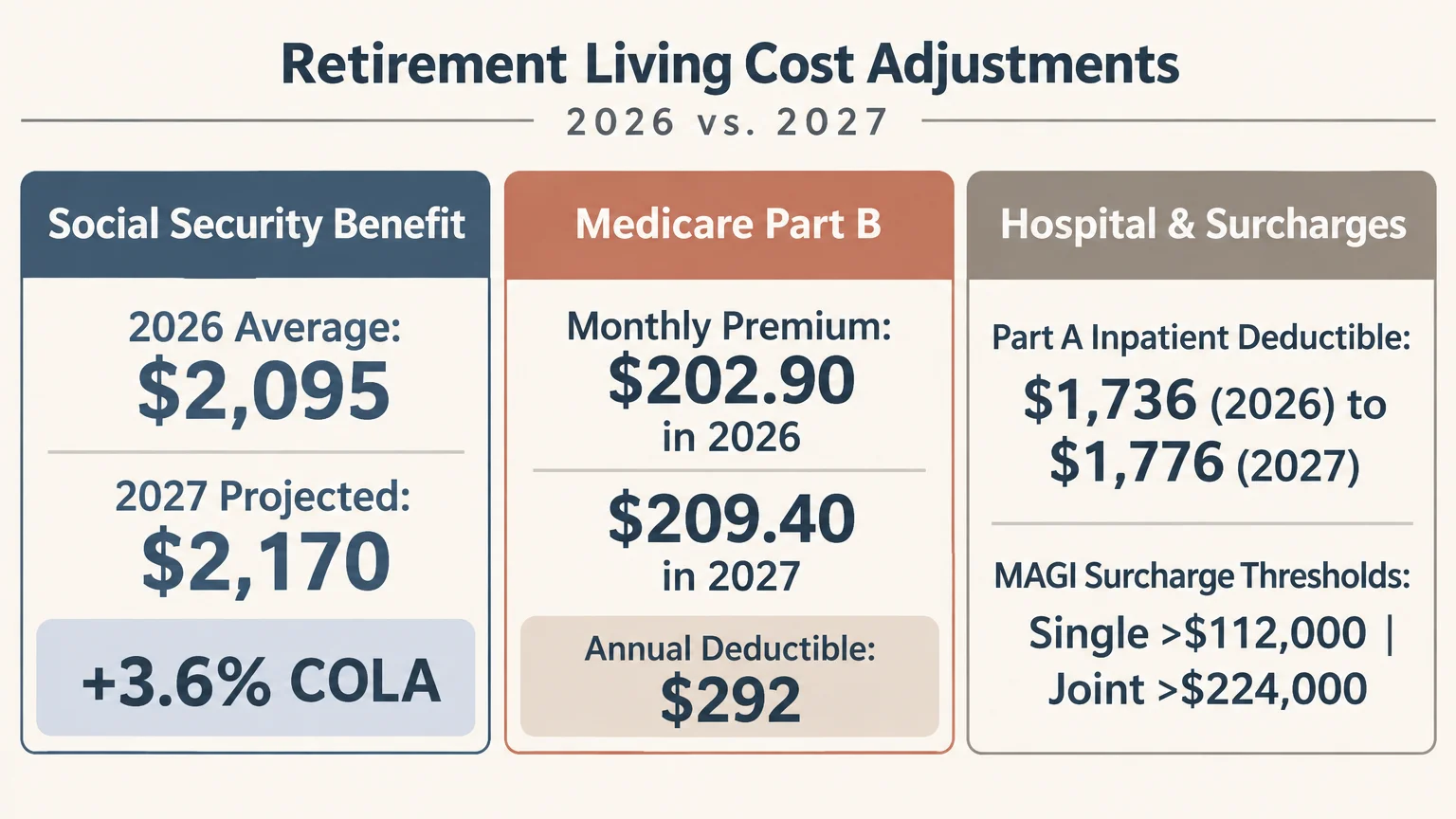
Your monthly cash flow anchors every relocation decision. Following a 2.8% adjustment in 2026, Social Security Administration (SSA) benefits rise 3.6% in January 2027, lifting the average retired worker check from roughly $2,095 to about $2,170.
Healthcare premiums deserve equal attention in your moving budget. The Centers for Medicare & Medicaid Services (CMS) set the standard Medicare Part B premium at $202.90 for 2026, rising to $209.40 in 2027 with a $292 annual deductible.
Hospital stays carry separate out-of-pocket costs, with the Part A inpatient deductible increasing from $1,736 in 2026 to $1,776 in 2027. Single filers above $112,000 or joint filers above $224,000 in modified adjusted gross income also pay Part B surcharges.
State tax rules create another sharp divide when evaluating places to retire. Nine states levy no broad-based personal income tax, while 42 states plus Washington, D.C. exempt Social Security benefits for tax year 2026.
A low home price or zero state income tax rarely tells the full financial story. Always add property taxes, homeowners insurance, flood coverage, and historic upkeep before signing a contract.

8 Historic Towns Worth Exploring for Retirement
1. St. Augustine, Florida
Founded in 1565, St. Augustine is the oldest continuously occupied European- and African-American-established settlement in the country. Landmarks like Fort Mose and the Lincolnville historic district give this coastal city of 16,141 residents deep cultural roots.
Florida Department of Revenue and county records show a $450,000 median single-family home sale price from September 2025 through August 2026. U.S. Census Bureau 2020–2024 estimates place median gross rent at $1,653 per month.
Florida charges no personal income tax, and St. Johns County effective property tax rates run roughly 0.75% to 0.90%. Before buying an older home, inspect flood-zone elevation, roof age, and wind-mitigation reports because they heavily drive insurance costs.
2. Beaufort, South Carolina
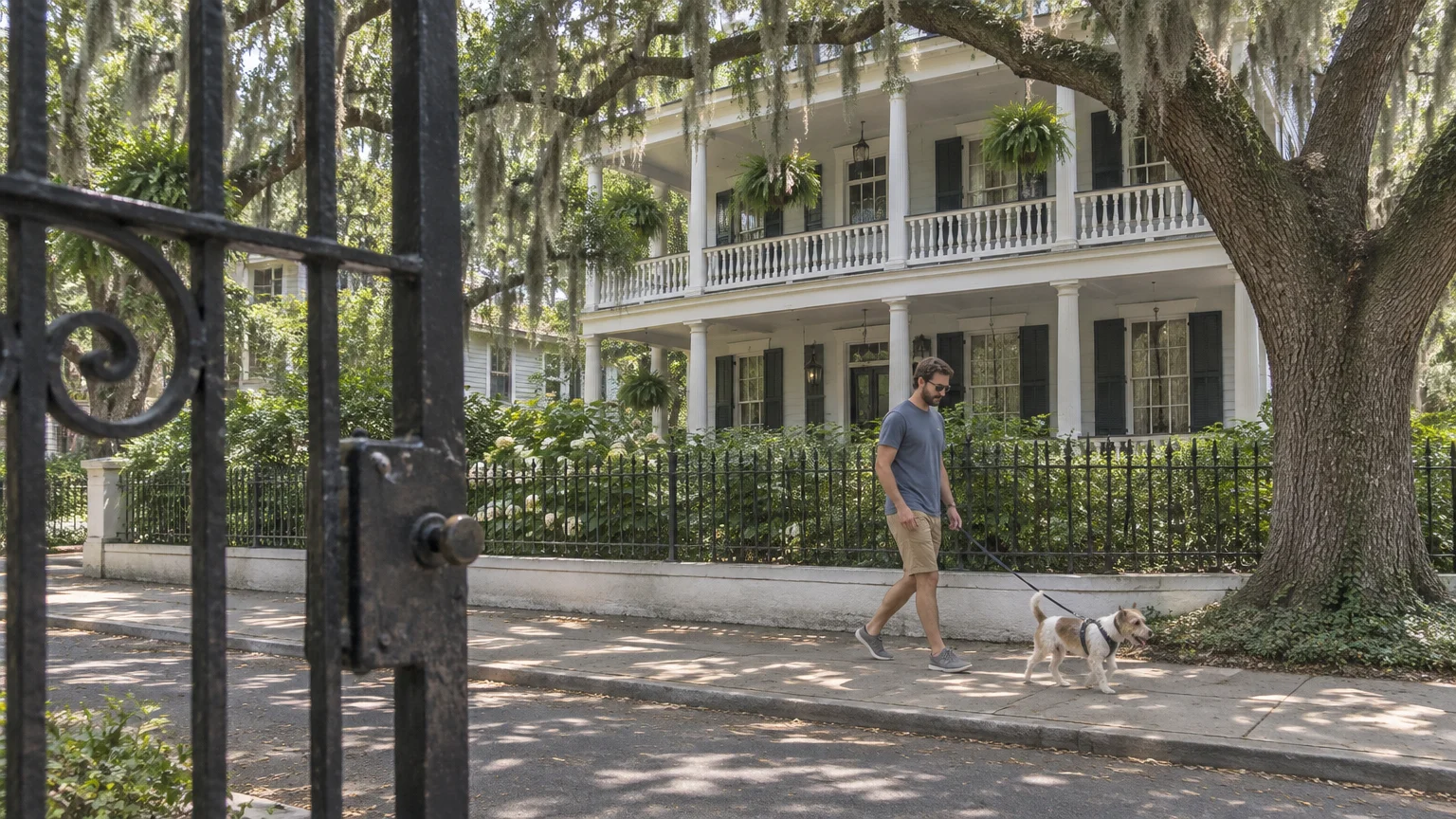
Chartered in 1711, Beaufort centers around a 304-acre National Historic Landmark District shaded by live oaks. Its population reached an estimated 15,775 in July 2025, reflecting steady growth along the Lowcountry coast.
Zillow’s June 2026 data placed Beaufort’s average home value at $416,559—well below Charleston at $598,419 or Hilton Head Island at $789,690. South Carolina also led all states in net older-adult migration in 2025, adding 5,427 residents per Hire A Helper.
Fixed-income households gain meaningful tax relief here. South Carolina exempts Social Security benefits and lets residents aged 65 and older deduct up to $10,000 in qualifying retirement income annually.
3. Fredericksburg, Texas
Settled by German immigrants in 1846, Fredericksburg blends limestone architecture, Hill Country vineyards, and roughly 224 sunny days per year. Nearly one-third of its 11,900 residents are aged 65 or older, creating an active peer community.
Home prices vary between in-town historic cottages and rural acreage. Zillow recorded a $521,138 typical home value in July 2026, while Redfin reported a $366,947 median sale price for the three months ending September 2026.
Texas imposes no state income tax, though property taxes take a larger share of your housing budget. Effective rates run roughly 1.27% inside city limits versus about 1.05% on unincorporated Gillespie County parcels.
4. Lewes, Delaware
Settled by the Dutch in 1631, Lewes sits beside Cape Henlopen State Park and the Cape May–Lewes Ferry. This walkable seaside town of roughly 3,500 residents appeals heavily to retirees, with Rent.com reporting an average resident age of 66.4.
Atlantic beach proximity pushes local home prices above Delaware’s early-2025 statewide median of roughly $330,000. Even with higher coastal purchase prices, broad tax exemptions help stretch your everyday retirement budget.
Delaware charges no sales tax and collects no state estate or inheritance tax. According to Delaware.gov, the state exempts Social Security benefits and lets residents aged 60 and older exclude up to $12,500 per year in retirement income.
5. Galena, Illinois
Home to preserved 19th-century storefronts and Ulysses S. Grant’s historic residence, Galena draws nearly 1 million visitors yearly while keeping a tight-knit population of about 2,899. WorldAtlas reported in December 2025 that 42% of village residents are 65 or older.
Housing remains accessible, with a December 2025 median price near $289,205 and three- to four-bedroom homes often ranging from $150,000 to $300,000. Property taxes run around 2.1% of assessed value, or $3,150 to $6,300 yearly.
Midwest Medical Center anchors local care, while the Illinois Department of Revenue exempts Social Security, pensions, and most retirement withdrawals. Preservation rules ban vinyl siding and street-visible aluminum windows, pushing exterior renovation costs 15% to 25% higher.
6. Port Townsend, Washington
Tucked inside the Olympic Peninsula rain shadow, Port Townsend is a Victorian seaport spanning 6.99 square miles. U.S. Census 2020–2024 figures show 43.6% of its roughly 10,500 residents are 65 or older, and 67.9% of homes are owner-occupied.
Zillow placed the town’s Home Value Index at $644,009 in July 2026, while Census median owner-occupied values stood at $543,400—far below Seattle’s $938,600. Jefferson Healthcare handles local medical care, and crime rates sit below 2024 Bureau of Justice Statistics averages.
Washington levies no personal income tax on Social Security, pensions, or IRA distributions. Review state rules if you hold large taxable portfolios, as Washington taxes high-bracket long-term capital gains.
7. Staunton, Virginia
Laid out in 1746 in the Shenandoah Valley, Staunton pairs Victorian neighborhoods with Mary Baldwin University’s arts calendar and Woodrow Wilson’s birthplace. Its population holds steady near 25,750, offering small-town rhythm alongside everyday amenities.
Staunton maintains a lower cost of living than many Virginia metros, where the September 2025 statewide average home value sat at $323,261. Local households earn a median income of $62,115, keeping services reasonably priced.
Virginia exempts Social Security benefits from state income tax and offers an age-based retirement income deduction. Checking your withdrawal mix against Internal Revenue Service (IRS) and state brackets helps prevent tax surprises.
8. Portsmouth, New Hampshire
Portsmouth blends working-harbor scenery with Market Square, Prescott Park, and the Strawbery Banke Museum. Home to 23,028 residents as of July 2025, this seacoast city connects directly to Portsmouth Regional Hospital and nearby Wentworth-Douglass Hospital.
Tight inventory makes Portsmouth the priciest option here, with an $887,500 single-family median sale price through September 2026 and a $789,000 Zillow value in August 2026. Only 45 homes were on the market in September 2026.
New Hampshire offsets housing costs with no income tax, no sales tax, and no interest or dividends tax after 2024. Portsmouth’s $11.51 rate per $1,000 is the lowest city property tax rate statewide, per the New Hampshire Department of Revenue Administration.

Side-by-Side Comparison of These Retirement Destinations
Comparing home values alongside state tax advantages shows how differently these charming historic towns impact your annual expenses.
| Town | Recent Home Value / Median | Key Tax Advantage | Standout Feature |
|---|---|---|---|
| St. Augustine, FL | $450,000 median single-family | No personal income tax | 1565 coastal heritage |
| Beaufort, SC | $416,559 average value | Social Security exempt; $10,000 deduction | 304-acre historic district |
| Fredericksburg, TX | $366,947–$521,138 range | No personal income tax | 224 sunny days annually |
| Lewes, DE | Above $330,000 state median | No sales tax; $12,500 exclusion | Beach and ferry access |
| Galena, IL | $289,205 median price | Full retirement income exemption | 19th-century downtown |
| Port Townsend, WA | $644,009 home value index | No income tax on retirement accounts | Victorian seaport setting |
| Staunton, VA | Lower-cost VA market ($323,261 state avg.) | Social Security exempt; age deduction | Shenandoah Valley arts |
| Portsmouth, NH | $789,000–$887,500 range | No income, sales, or dividend tax | Lowest NH city property tax rate |

What Can Go Wrong When Buying a Historic Home
Falling for a century-old porch without checking local regulations or inspection reports can strain a fixed retirement income. Watch for these four pitfalls before making an offer:
- Preservation district rules: Local boards often dictate exterior paint, siding, and window materials, pushing renovation budgets up significantly as seen in Galena.
- Aging systems and storm insurance: Outdated wiring, plumbing, and roofs—combined with coastal flood exposure—can raise homeowners insurance faster than property values.
- Property tax surprises: States without an income tax frequently rely on higher property levies, so compare municipal tax rates using HUD housing resources before committing.
- Specialist medical travel: Rural community hospitals handle routine and emergency care well, yet complex procedures may require regular drives to larger regional centers.
Frequently Asked Questions About Retiring in Historic Towns
Which historic towns offer the lowest taxes for retirees?
St. Augustine, Fredericksburg, Port Townsend, and Portsmouth sit in states with no personal income tax on retirement withdrawals. Galena also delivers major relief because Illinois exempts Social Security, qualified pensions, and most retirement-plan distributions.
How should you evaluate healthcare before moving to a small town?
Confirm whether local hospitals accept your specific Medicare plan and measure drive times to regional specialists. Planning guides from AARP can also help you assess community walkability, transit, and aging-in-place services.
Are historic homes expensive to maintain and insure in retirement?
Older homes often require specialized contractors, custom millwork, and larger cash reserves for aging roofs or coastal storms. Ordering wind-mitigation, sewer-scope, and structural inspections during contingencies protects you from unexpected six-figure repairs.
Next Steps for Planning Your Move
Narrow your shortlist to two or three towns and rent locally for a week during the off-season to test weather, traffic, and neighborhood noise. Build a complete annual budget covering housing, property taxes, insurance premiums, and healthcare travel.
The information in this guide is meant for educational purposes. Your specific circumstances—including income, savings, health coverage, and goals—may require different approaches. When in doubt, consult a licensed professional.
Last updated: November 2026. Retirement benefits, tax laws, and healthcare costs change frequently—verify current details with official sources.