
If you receive Supplemental Security Income and attend school, you can earn more money in 2027 without reducing your monthly benefit. The updated Student Earned Income Exclusion shields more of your wages than ever before.
Starting January 2027, the Social Security Administration excludes up to $2,500 per month, up to an annual maximum of $10,080. This policy lets young disabled workers gain valuable job experience while keeping their basic financial support.
Learning how these thresholds work helps you protect your monthly income and plan your financial future with confidence. Here is how you can make the most of the 2027 adjustments.

New 2027 Student Earned Income Exclusion Limits
On October 14, 2026, the Social Security Administration announced a 3.6% cost-of-living adjustment for 2027. This adjustment directly boosts monthly SSI payments as well as student earnings thresholds.
Effective January 1, 2027, the Student Earned Income Exclusion (SEIE) increases to $2,500 per month. The calendar-year maximum rises to $10,080.
These adjustments provide meaningful breathing room compared to prior limits. Students working summer jobs or seasonal internships can take on additional shifts without sacrificing necessary monthly aid.
| Threshold Category | 2026 Limit | 2027 Limit |
|---|---|---|
| SEIE Monthly Cap | $2,410 | $2,500 |
| SEIE Annual Cap | $9,730 | $10,080 |
| Federal SSI Individual Rate | $994 | $1,029 |
| Federal SSI Couple Rate | $1,491 | $1,544 |
Who Meets SSA Student Criteria?
To qualify for the SEIE, you must meet two core requirements. You must be under age 22, and you must regularly attend school or vocational training.
Under SSA rules, your marital status does not disqualify you from claiming the exclusion. It also applies to earned income deemed from an ineligible spouse or parent under age 22.
The Social Security Administration enforces specific weekly attendance requirements based on your educational institution:
- College or university: At least 8 hours per week under a semester or quarter system.
- Grades 7 through 12: At least 12 hours per week in state-compliant coursework.
- Vocational or technical school: At least 12 hours per week, or 15 hours per week if courses include shop practice.
- Homeschooling: At least 12 hours weekly following state education requirements.
You also remain eligible during summer vacations and school holidays. As long as you attended classes before the break and intend to resume coursework immediately afterward, your exclusion stays active.
How the Math Protects Your Benefit
Standard SSI rules reduce your monthly cash payment by roughly one dollar for every two dollars you earn. The SEIE changes this calculation completely by wiping out countable earnings before standard deductions apply.
The SSA subtracts the SEIE first from your gross wages. If you earn $2,200 in a month, the entire sum is excluded, leaving countable earned income at zero.
If your monthly wages exceed $2,500, regular exclusions kick in for the remaining balance. Social Security applies the $20 general income exclusion, then subtracts the $65 earned income exclusion.
Finally, the agency excludes half of any remaining earnings. This stacking order ensures you keep maximum benefits while building practical work experience.
For 2027, the standard individual federal benefit is $1,029 per month. Without the SEIE, a recipient’s benefit reaches zero around $2,143 in monthly gross wages.
Protecting Your Savings with ABLE Accounts
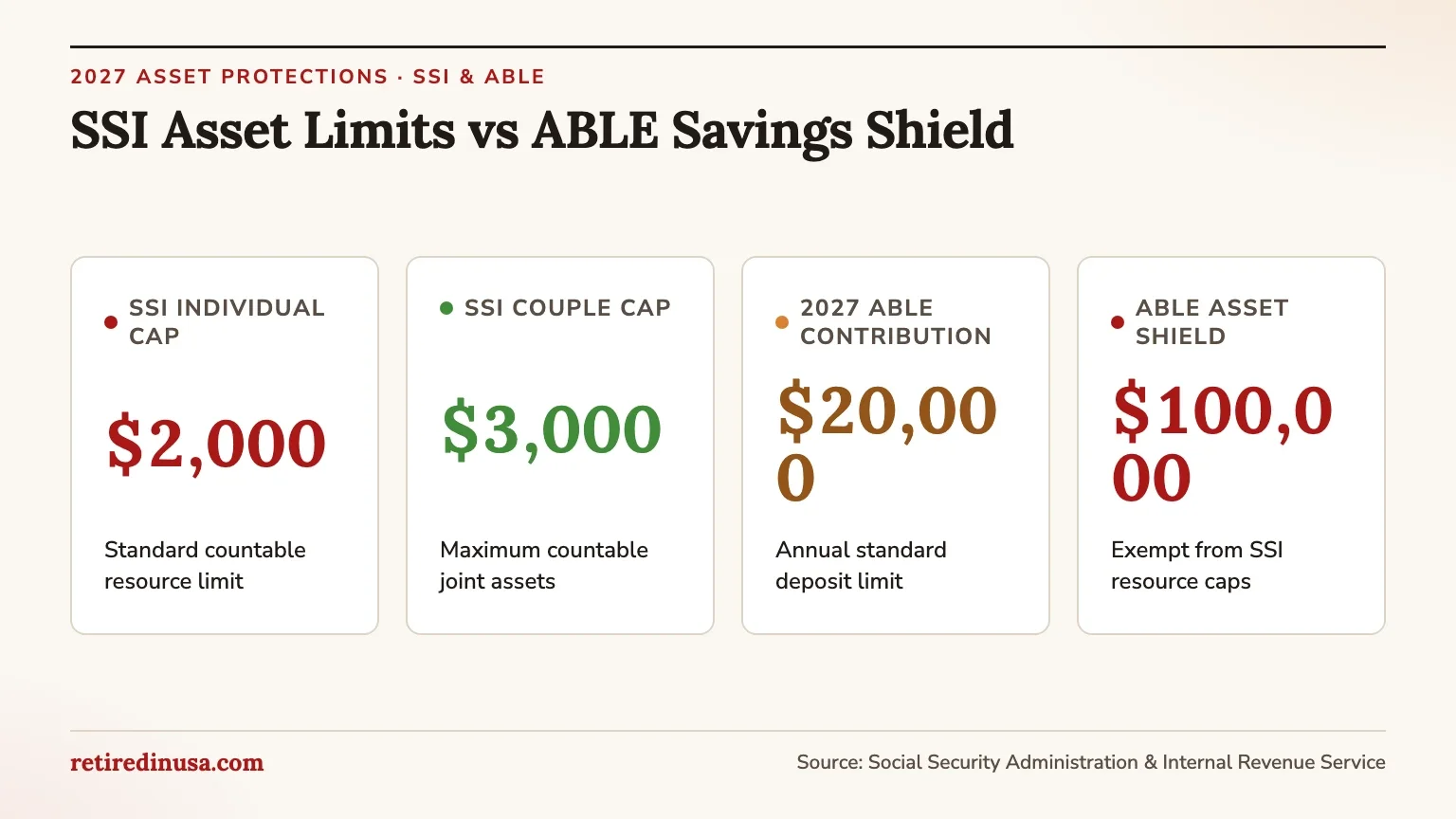
While the SEIE shields earnings from monthly benefit reductions, it does not modify federal asset caps. The countable resource limit remains unchanged at $2,000 for an individual and $3,000 for a couple.
Accumulating unspent wages in a standard checking account can easily push you over the $2,000 threshold. Doing so can cause Social Security to suspend your benefits.
An ABLE account solves this dilemma by shielding savings. Under federal law, the first $100,000 saved inside an ABLE account does not count toward the SSI resource limit.
The standard annual ABLE contribution limit is $20,000 in 2027. Working students can deposit even more earned income under the ABLE-to-Work provision.
You can learn more about asset management and financial protections through the Consumer Financial Protection Bureau and the Internal Revenue Service.
“Financial independence isn’t about how much money you make; it’s about how much money you keep.” — Suze Orman, Personal Finance Author

Avoiding Common Errors
The most common student mistake involves failing to report wages on time. You must report all gross earnings to Social Security by the sixth day of each following month, even if the exclusion shields the full amount.
Submit paystubs through your my Social Security online account or the mobile reporting app. Timely reporting prevents inaccurate calculations and protects you from unexpected overpayment demands.
Another pitfall involves your birthday. The SEIE ends the month after you turn age 22, meaning standard income deductions apply immediately after that point.
Finally, always retain copies of your class schedules and enrollment verifications. Having enrollment documentation on file ensures smooth reviews when SSA verifies your student status.
When DIY Isn’t Enough
Managing wage reporting and work rules can become complex if you navigate multiple benefit systems. You should seek guidance from a certified benefits counselor or Work Incentives Planning and Assistance project in several scenarios:
- You receive concurrent SSI and SSDI benefits, which follow different work activity rules.
- Your earnings approach the $10,080 calendar-year cap and you need a plan for standard wage deductions.
- You incur Impairment-Related Work Expenses (IRWE) or wish to establish a Plan to Achieve Self-Support (PASS).
Advocacy groups like the National Council on Aging provide reliable community connections and educational tools for managing long-term benefit rules.
Frequently Asked Questions
Does the SEIE apply to Social Security Disability Insurance (SSDI)?
No. The SEIE applies strictly to Supplemental Security Income. SSDI relies on separate work incentives, including the Trial Work Period and Substantial Gainful Activity thresholds.
What happens if I earn more than $2,500 in one calendar month?
Only the wages exceeding $2,500 count toward standard SSI calculations. Your regular $20 general exclusion, $65 earned income exclusion, and 50% deduction then apply to the remaining balance.
Can I use the SEIE if I take a summer job?
Yes. You maintain student status during vacation periods if you attended classes before the break and intend to resume coursework immediately when school reopens.
Next Steps for Working Students
Review your school schedule and planned job hours to project your earnings for 2027. Pairing the updated SEIE limits with an ABLE account gives you a proven path to build career skills and personal savings simultaneously.
The information in this guide is meant for educational purposes. Your specific circumstances—including income, savings, health coverage, and goals—may require different approaches. When in doubt, consult a licensed professional.
Last updated: November 2026. Retirement benefits, tax laws, and healthcare costs change frequently—verify current details with official sources.