
You could face a sudden $50 monthly surcharge on your prescription drug coverage next year if you let your Medicare plan roll over automatically. Insurers are adjusting rates sharply across the country as federal stabilization subsidies expire.
Staying in your current stand-alone Part D plan without reviewing alternatives could cause your average monthly premium to jump by 50 percent. Fortunately, you have until the December 7 open enrollment deadline to lock in a more affordable option.
Taking thirty minutes to compare Medicare drug plans can safeguard your retirement budget against unnecessary price increases for 2027.
Why Your Medicare Part D Premiums Could Spike in 2027
A major shift is happening in the stand-alone Medicare Part D marketplace. If you rely on Original Medicare and a separate drug policy, your monthly invoice could look startlingly different in January.
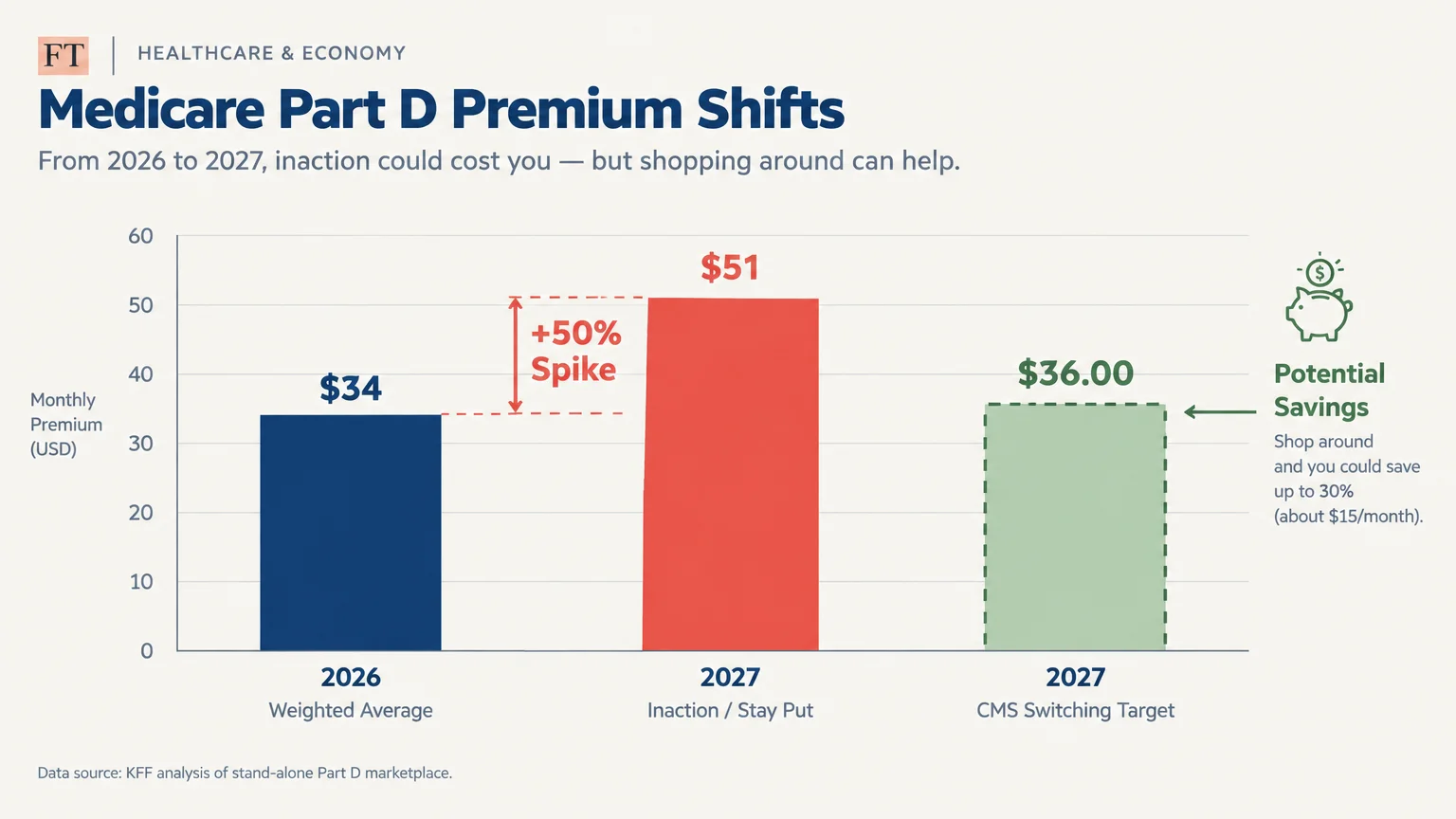
An October 2026 analysis by KFF revealed that the enrollment-weighted average monthly premium for stand-alone prescription plans could rise 50 percent. That represents an increase from $34 in 2026 to $51 in 2027 for enrollees who stay put.
For several specific plans, the monthly cost is surging by $50 or more. An unexpected $600 annual increase per person can disrupt a fixed household budget.
Federal officials at the Centers for Medicare & Medicaid Services (CMS) project an overall average premium of $36.00 for 2027. However, that modest CMS estimate assumes that beneficiaries will actively switch to lower-cost plans.
If you take no action, you will absorb whatever rate increase your current insurer dictates. Shopping the open market remains the only reliable defense against these automated hikes.
Understanding the Subsidy Cliff Behind the Premium Hikes
To understand why rates are climbing, you have to look at recent legislative changes. The Inflation Reduction Act fundamentally restructured Medicare drug benefits to lower out-of-pocket pharmacy costs for seniors.
To cushion insurers against the immediate financial impact of these caps, CMS created the Part D Premium Stabilization Demonstration. This demonstration offered direct premium subsidies to participating insurance companies.
In 2026, this federal demonstration lowered base premiums by $10 and placed a strict $50 cap on monthly rate increases. That cap kept private plans from raising monthly prices beyond $50 in a single calendar year.
That temporary stabilization program concludes on December 31, 2026. With the subsidy ending and the $50 hike limit gone, insurers must fund their coverage obligations without government intervention.
Because private plans must absorb higher pharmacy claims, many have raised their 2027 premiums dramatically. In some areas, plans that once cost $35 monthly now charge upwards of $85 to $110.
The Inaction Penalty: 1.2 Million Enrollees in Terminating Plans
The financial risk for 2027 extends beyond rising monthly fees. The number of stand-alone drug plans available nationwide continues to decline at a rapid pace.
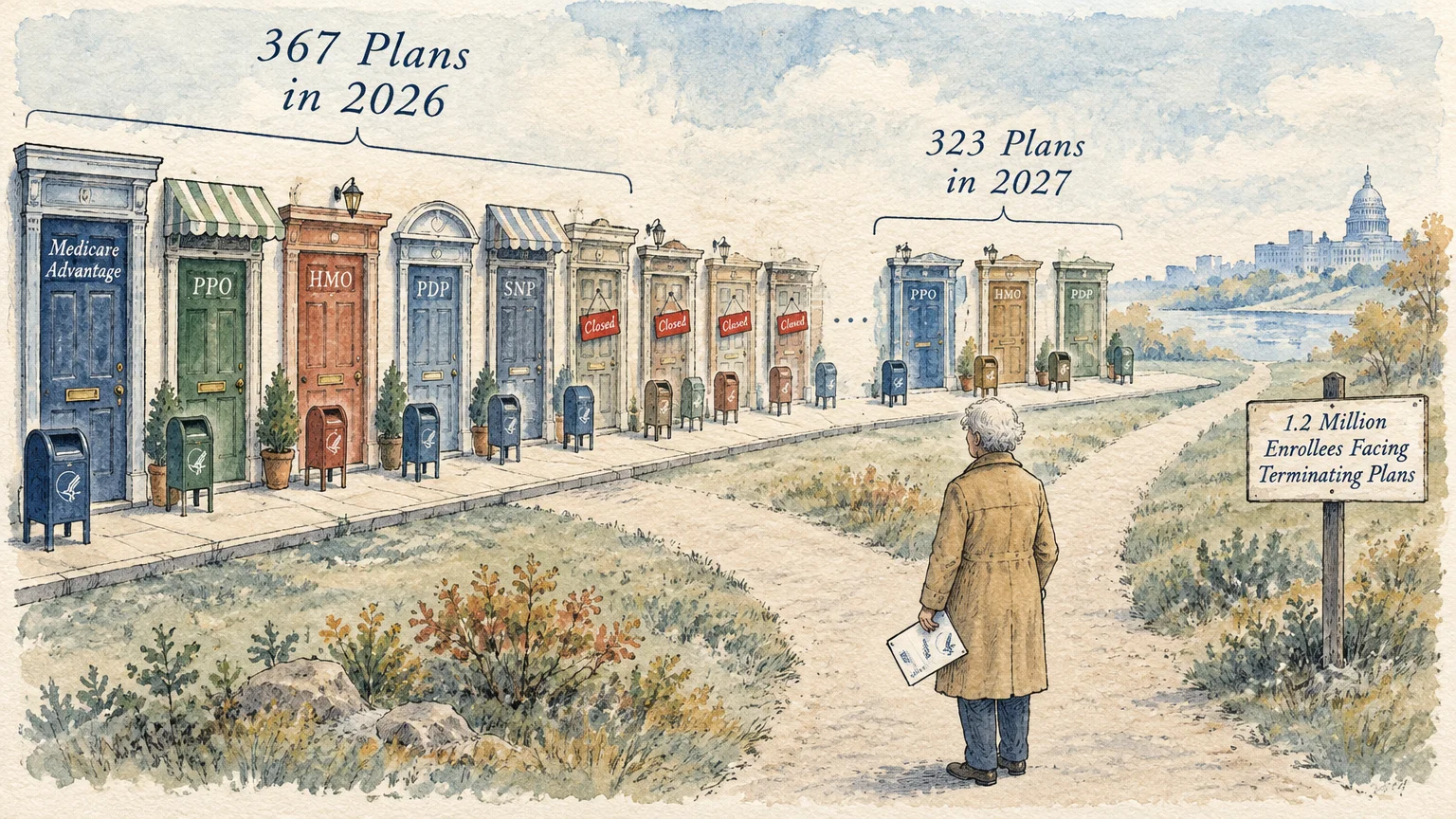
For the 2027 plan year, only 323 distinct stand-alone Part D plans are operating nationally. That total represents a decline from 367 offerings available during 2026.
Roughly 1.2 million beneficiaries currently belong to stand-alone plans that will terminate on December 31, 2026. If your plan is leaving the market, your insurer should have mailed you an official termination notice.
When an insurer drops a plan, you cannot assume you will be moved into an identical, low-cost replacement. In many cases, members get reassigned to a higher-tier plan from the same parent carrier.
Automatic reassignment can mean paying substantially higher premiums for a formulary that may not cover your specific drugs. Taking control of your enrollment prevents costly surprises at the pharmacy counter in January.
“Failing to review your healthcare coverage each fall is one of the most expensive financial mistakes in retirement.” — Jean Chatzky, Financial Educator and Author
Stand-Alone Drug Plans vs. Medicare Advantage in 2027
While stand-alone Part D policies face severe pricing pressure, Medicare Advantage prescription drug (MA-PD) plans show a completely different trend. Insurers use diverse funding sources to offset their drug costs within integrated plans.
According to CMS projections, the average monthly drug portion of an MA-PD premium will drop 38 percent in 2027. That premium drops from $11.32 in 2026 down to $7.00 in 2027.
Overall average Medicare Advantage premiums will decline 16.5 percent, falling from $14.37 to $12.00 per month. These low costs prompt many seniors to consider abandoning stand-alone drug plans altogether.
However, switching from Original Medicare to Medicare Advantage requires careful evaluation. Advantage plans often limit you to local provider networks and require prior authorization for specialized care.
If you prefer Original Medicare paired with a Medigap policy, you must remain in a stand-alone Part D plan. Fortunately, affordable stand-alone choices still exist if you take time to search.
While there are no $0-premium stand-alone drug plans for 2027, the lowest available monthly premium starts at just $5.30. In fact, CMS notes that 93 percent of beneficiaries have access to an enhanced plan costing under $6 monthly.
Additionally, 88 percent of non-low-income enrollees can enroll in a basic stand-alone plan for $10.30 or less. You simply must initiate the switch yourself instead of accepting your insurer’s automatic rollover.
Crucial Medicare Part D Benchmarks for 2026 and 2027
Federal regulations establish statutory benchmarks and payment limits for prescription plans each calendar year. The table below outlines how key Part D metrics compare between 2026 and 2027.
| Coverage Parameter | 2026 Plan Year | 2027 Plan Year | Key Difference |
|---|---|---|---|
| Annual Out-of-Pocket Cap | $2,100 | $2,400 | Increases by $300 |
| Maximum Standard Deductible | $615 | $700 | Increases by $85 |
| Base Beneficiary Premium | $38.99 | $41.33 | Statutory 6% benchmark increase |
| National Average Monthly Bid (NAMBA) | $239.27 | $296.05 | Increases by $56.78 (nearly 24%) |
| Projected Stand-Alone Premium (No Switch) | $34.00 | $51.00 | 50% jump if you stay in existing plan |
| Projected Stand-Alone Premium (CMS Weighted) | $35.09 | $36.00 | Increases by less than $1 with switching |
| Average MA-PD Drug Premium Portion | $11.32 | $7.00 | Decreases by 38% |
| Stand-Alone Plan Options (Nationwide) | 367 offerings | 323 offerings | Market shrinks by 44 plans |
How the 2027 $2,400 Out-of-Pocket Cap and Deductible Work
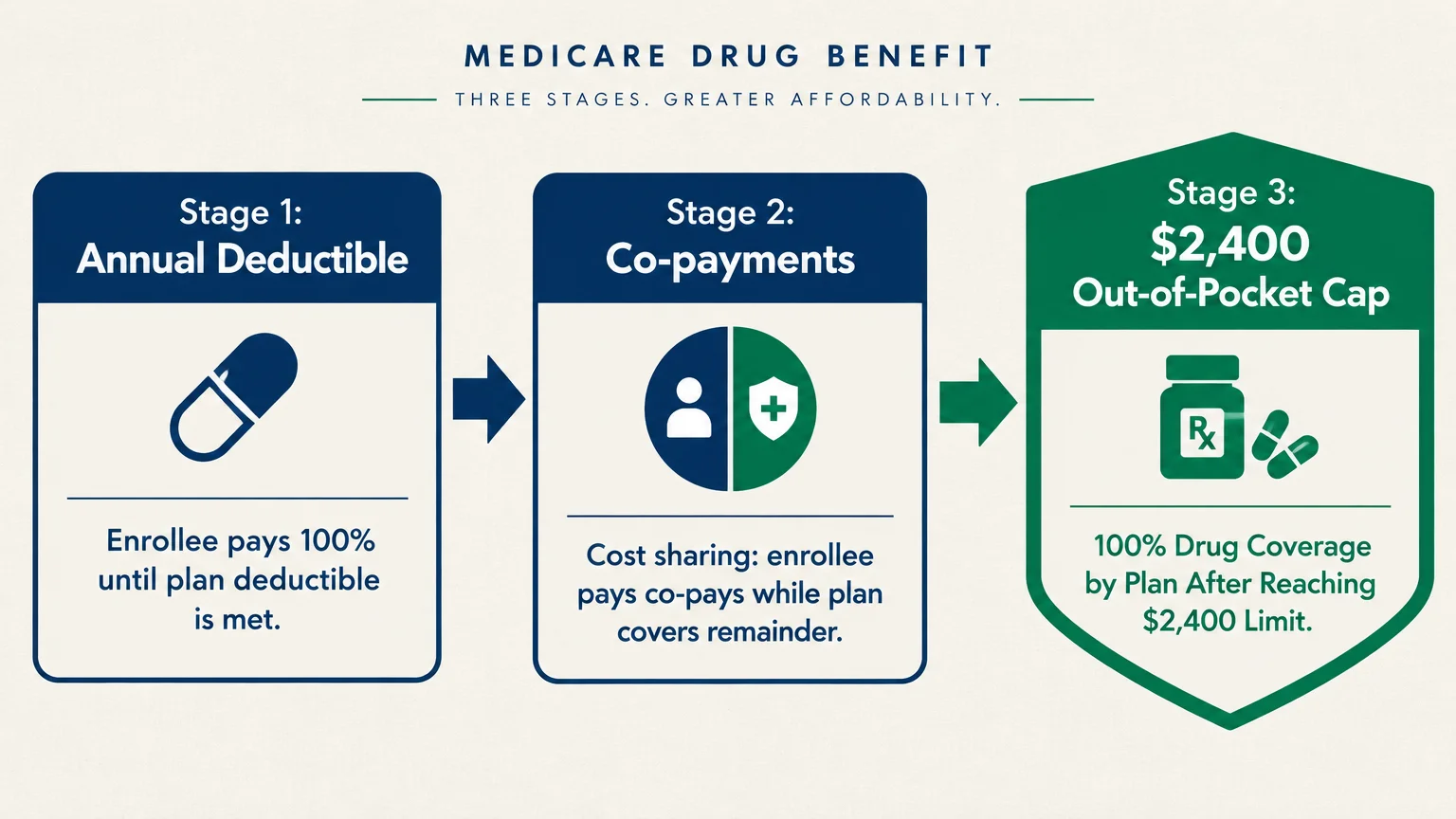
The core feature of modern Part D coverage is the annual out-of-pocket maximum. In 2027, this cap is set at $2,400, up from $2,100 in 2026.
Once your deductible, copayments, and coinsurance reach $2,400, your plan pays 100 percent of covered drug costs. You pay $0 at the pharmacy counter for the rest of the year.
This protection provides peace of mind for seniors taking costly specialty medications or name-brand maintenance drugs. However, reaching that cap requires navigating your plan’s initial deductible.
The standard maximum deductible increases to $700 in 2027, compared to $615 in 2026. Insurers are not required to charge the full $700, but many basic plans will adopt this limit.
KFF reports that the average deductible for stand-alone drug plans in 2027 will be $643. By comparison, Medicare Advantage drug plans carry an average deductible of $489.
Many plans waive the annual deductible entirely for Tier 1 and Tier 2 generic medications. That structure allows you to receive low-cost maintenance prescriptions right away without paying upfront deductible fees.
Keep in mind that monthly plan premiums do not count toward your $2,400 out-of-pocket cap. That exclusion makes choosing an unnecessarily expensive monthly premium counterproductive.
The New Medicare GLP-1 Bridge Program Explained
For 2027, Medicare is launching a specialized initiative known as the Medicare GLP-1 Bridge Program. This targeted program helps certain enrollees afford breakthrough medications.
Popular GLP-1 receptor agonists have historically faced strict Medicare coverage exclusions when prescribed strictly for weight management. Coverage was often restricted exclusively to patients with Type 2 diabetes diagnoses.
Under the new 2027 Bridge Program, qualifying Part D enrollees can obtain select GLP-1 treatments for weight loss and health improvement. The medication copayment is capped at a flat $50 per month.
However, there is a critical rule you must understand before enrolling. The $50 monthly copayment under this program does not apply toward your $2,400 annual out-of-pocket maximum.
Furthermore, these payments do not reduce your annual Part D deductible. If you use this program, you must budget $600 annually for these treatments in addition to your standard drug spending.
Step-by-Step Guide: How to Switch Your Drug Plan Before Dec. 7
Enrolling in a new prescription drug plan is simple and requires no contact with your current insurance company. The federal government automatically cancels your old coverage when your new plan is accepted.
Follow these practical steps to evaluate your choices and execute your change before the enrollment window closes.
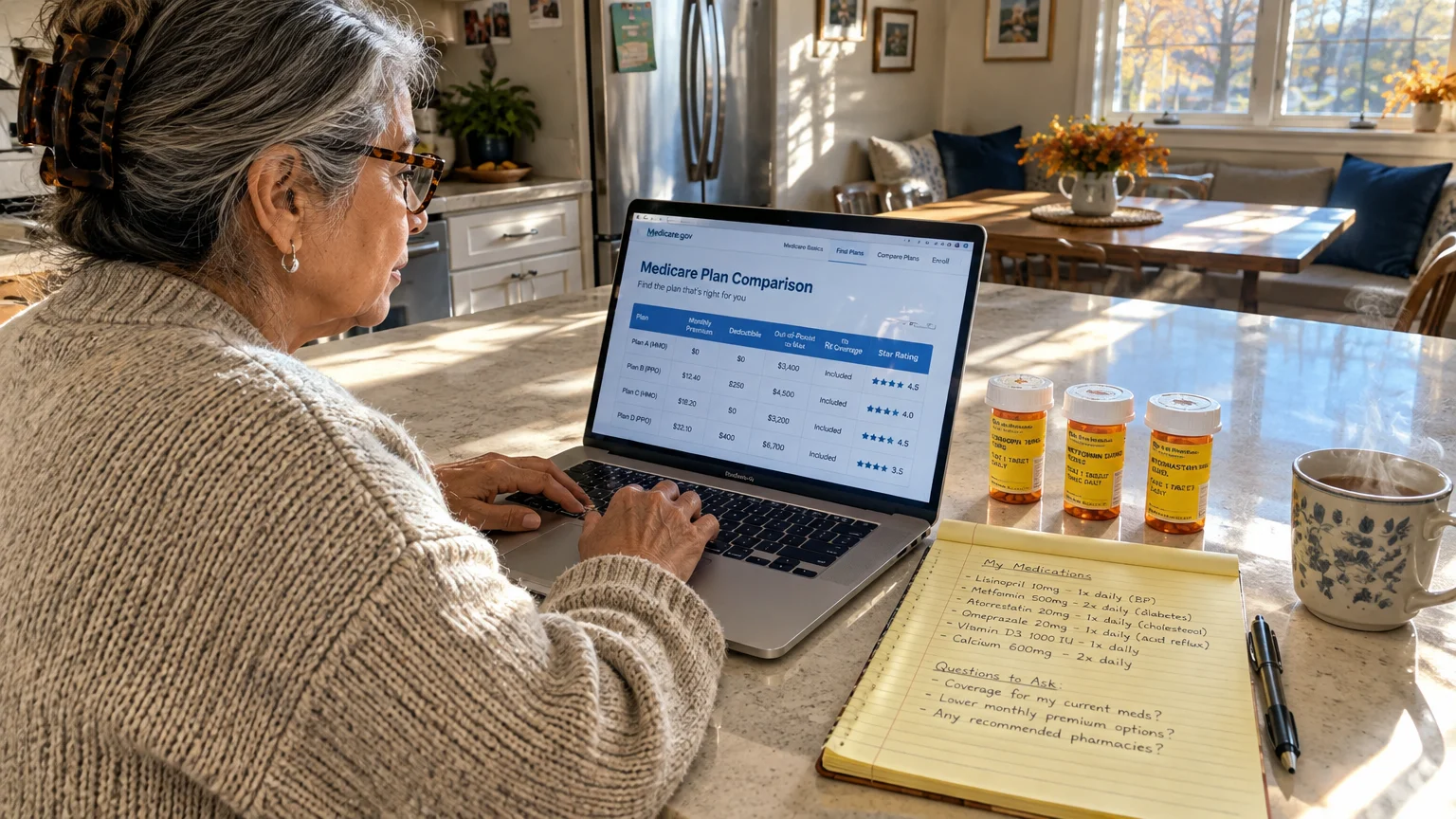
- Assemble your complete prescription list: Write down the exact brand names, dosages, and monthly refill frequencies for every prescription you currently take.
- Identify your preferred pharmacies: Check whether you prefer brick-and-mortar retail locations or home mail-order delivery. Plan pricing varies significantly based on pharmacy partnerships.
- Access the official comparison system: Visit Medicare.gov and log into your account. For the 2027 enrollment period, Medicare supports secure authentication via ID.me, Login.gov, or CLEARme.com.
- Input your medication dosages: Enter each drug into the Medicare Plan Finder to view precise out-of-pocket price estimates across every available plan in your zip code.
- Sort plans by total annual cost: Do not sort exclusively by monthly premium. Review the total estimated cost, which combines twelve months of premiums with your specific copayments.
- Verify pharmacy network status: Confirm that your preferred local pharmacy is designated as a “preferred in-network” provider rather than a standard or out-of-network pharmacy.
- Submit your new enrollment online: Select the most cost-effective plan and submit your application directly through the portal before midnight on December 7, 2026.
If you prefer personal phone assistance, you can call 1-800-MEDICARE round the clock. A representative can review your medication list and process your plan switch directly over the phone.
You can also check community resources like the National Council on Aging for local enrollment counseling. State Health Insurance Assistance Programs (SHIP) offer free, unbiased local guidance.
What Can Go Wrong: Costly Open Enrollment Pitfalls
Medicare drug enrollment mistakes can create months of frustration and thousands in unnecessary expenses. Being aware of the most frequent errors helps you navigate the market safely.
One major error is shopping based strictly on the monthly premium. A policy charging a low $6 monthly premium may classify your brand-name drug as a non-preferred tier with a 45 percent coinsurance charge.
Another common mistake involves ignoring pharmacy network tiers. In-network preferred pharmacies offer the lowest negotiated copays, while standard in-network locations may charge double for the exact same pill.
Reviewing the annual Notice of Change (ANOC) letter from your current plan is equally vital. Many seniors discard this September mailing, missing warnings that their insurer is dropping their primary medication.
Formularies change every single year. A drug categorized as a Tier 2 generic this year might move to a Tier 3 preferred brand next year, triggering higher copayments.
Assuming that your doctor’s office will handle coverage hurdles can also cause delays. Many plans impose prior authorization requirements or step therapy rules on expensive therapies.
Missing the firm December 7 deadline will lock you into your current plan for the entire 2027 calendar year. If your plan’s premium jumps by $50 per month, you will be obligated to pay that extra rate through December 2027.
Enrollees who qualify for the Part D Late Enrollment Penalty must also exercise care. The national base beneficiary premium increases to $41.33 in 2027, which directly inflates monthly late penalties calculated from that base figure.

When to Consult a Professional
While the online Plan Finder makes independent shopping accessible, certain retirement circumstances warrant professional guidance. Professional advice can prevent structural gaps in your broader healthcare safety net.
- Qualifying for Extra Help or Low-Income Subsidies: If your monthly income is limited, you might qualify for the federal Extra Help program administered through the Social Security Administration. A benefits counselor can ensure you select a benchmark plan with zero premium and minimal copays.
- Transitioning between Medicare Advantage and Medigap: If you plan to drop an Advantage plan to return to Original Medicare and buy a stand-alone drug policy, review state Medigap underwriting rules first. A licensed broker can verify whether you have a guaranteed issue right for supplemental coverage.
- Navigating complex specialty medications: Patients requiring biologics or oncology medications should work with a patient navigator or SHIP counselor. These specialists can verify tier exceptions, copay assistance programs, and manufacturer grants alongside your Part D plan.
- Employer or union retiree coverage transitions: If you receive creditable coverage through an employer retirement trust, dropping it for a commercial Part D plan could permanently cancel your former employer’s medical benefits. Review your benefits handbook with a corporate human resources specialist before making any changes.
Seniors looking for clear advocacy updates on prescription drug affordability can consult resources from AARP. Independent organizations provide consumer-friendly breakdowns of evolving Medicare regulations each fall.
Frequently Asked Questions About 2027 Medicare Drug Coverage
Why is my current Part D monthly premium jumping so high for 2027?
The temporary federal demonstration program that subsidized Part D plans and capped monthly increases at $50 expires on December 31, 2026. Without that financial assistance, insurers must absorb higher prescription expenses directly, leading many to raise premiums substantially.
What happens if I miss the December 7 open enrollment deadline?
If you miss the December 7 deadline, your existing stand-alone drug plan will automatically renew on January 1, 2027, along with any premium hikes. If your current plan was eliminated entirely, Medicare may reassign you to another plan that may not fit your medication needs.
Do I get a second chance to switch my stand-alone Part D plan after December 7?
No. The Medicare Advantage Open Enrollment Period from January 1 to March 31 only applies to beneficiaries currently enrolled in a Medicare Advantage policy. Stand-alone Part D enrollees cannot switch plans after December 7 unless they qualify for a Special Enrollment Period.
Can I keep my doctor if I switch to a different stand-alone Part D plan?
Yes. Stand-alone Part D policies cover prescription medications dispensed at pharmacies and have no bearing on your doctors or hospitals. Because you remain in Original Medicare, you can visit any healthcare provider in the nation who accepts Medicare.
How does the $2,400 out-of-pocket maximum protect me in 2027?
Once your deductible and pharmacy copayments total $2,400 on covered Part D medications, you enter the catastrophic phase and pay $0 for the rest of the year. However, monthly premiums and GLP-1 Bridge Program payments do not count toward this $2,400 threshold.
Protecting Your Retirement Budget Before December 7
Medicare open enrollment provides an annual opportunity to protect your fixed income from escalating healthcare costs. The changes coming for 2027 make passive auto-renewal exceptionally risky.
Gather your prescription bottles, log into the Medicare Plan Finder, and confirm your total estimated costs for next year. Switching plans takes only minutes, yet it can preserve hundreds of dollars in your retirement accounts.
The information in this guide is meant for educational purposes. Your specific circumstances—including income, savings, health coverage, and goals—may require different approaches. When in doubt, consult a licensed professional.
Last updated: November 2026. Retirement benefits, tax laws, and healthcare costs change frequently—verify current details with official sources.