
Navigating your Social Security claiming options directly impacts your household income throughout retirement. Choosing between your own individual earned benefit and a spousal benefit requires a clear understanding of full retirement age rules, reduction penalties, and lifetime earning calculations. Making an informed choice can secure thousands of dollars in additional household cash flow over your golden years. This comprehensive guide breaks down the side-by-side differences between individual retirement benefits and spousal benefits, detailing eligibility rules, benefit formulas, delayed growth potential, and critical timing considerations for 2026 so you can maximize your total retirement payout.
Understanding Individual Retirement Benefits
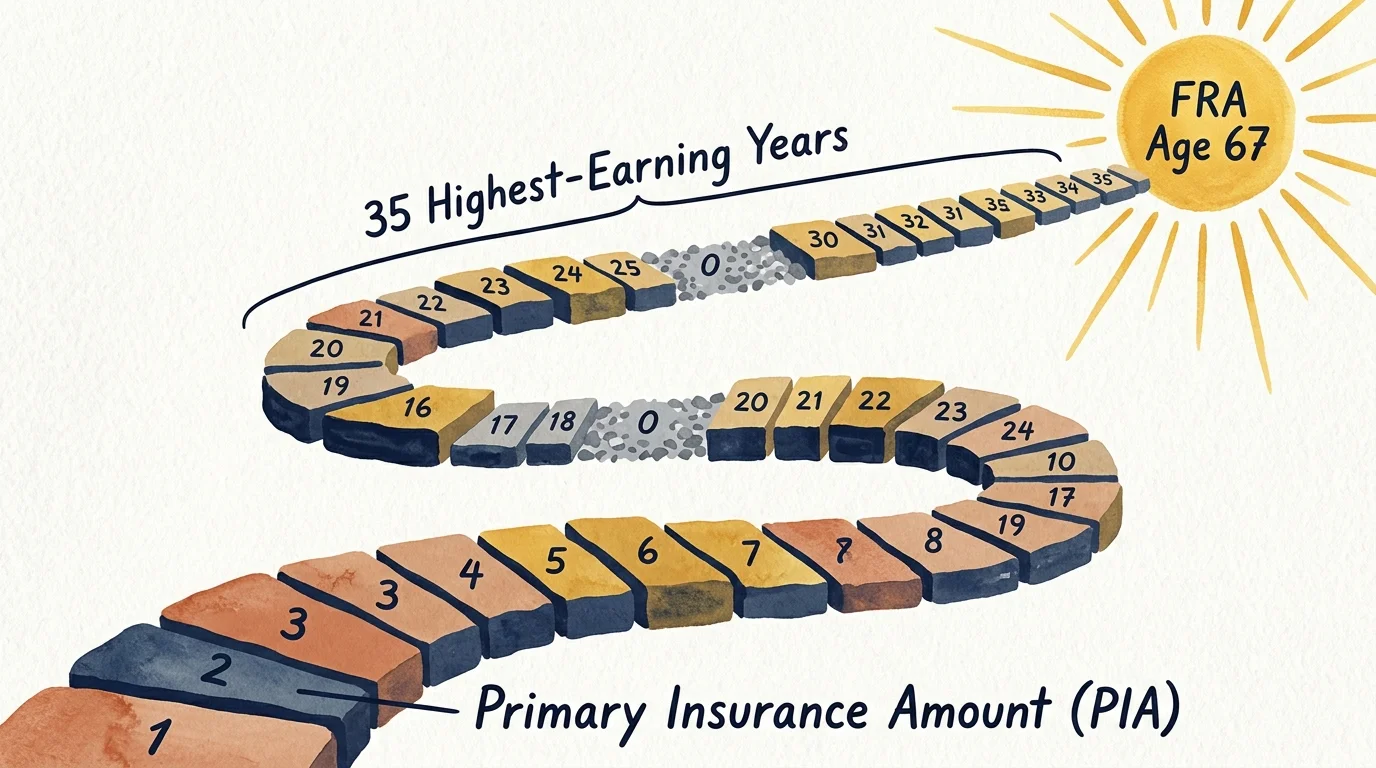
Your individual Social Security retirement benefit relies entirely on your own earnings history over your career. The Social Security Administration (SSA) calculates your benefit by indexing your 35 highest-earning years of indexed earnings. If you work fewer than 35 years, Social Security fills in the missing years with zeros, which lowers your calculated average monthly earnings.
This calculation determines your Primary Insurance Amount (PIA), which represents the exact monthly check you receive if you claim benefits at your Full Retirement Age (FRA). For individuals born in 1960 or later, Full Retirement Age is 67. For those born in 1959, FRA is 66 and 10 months.
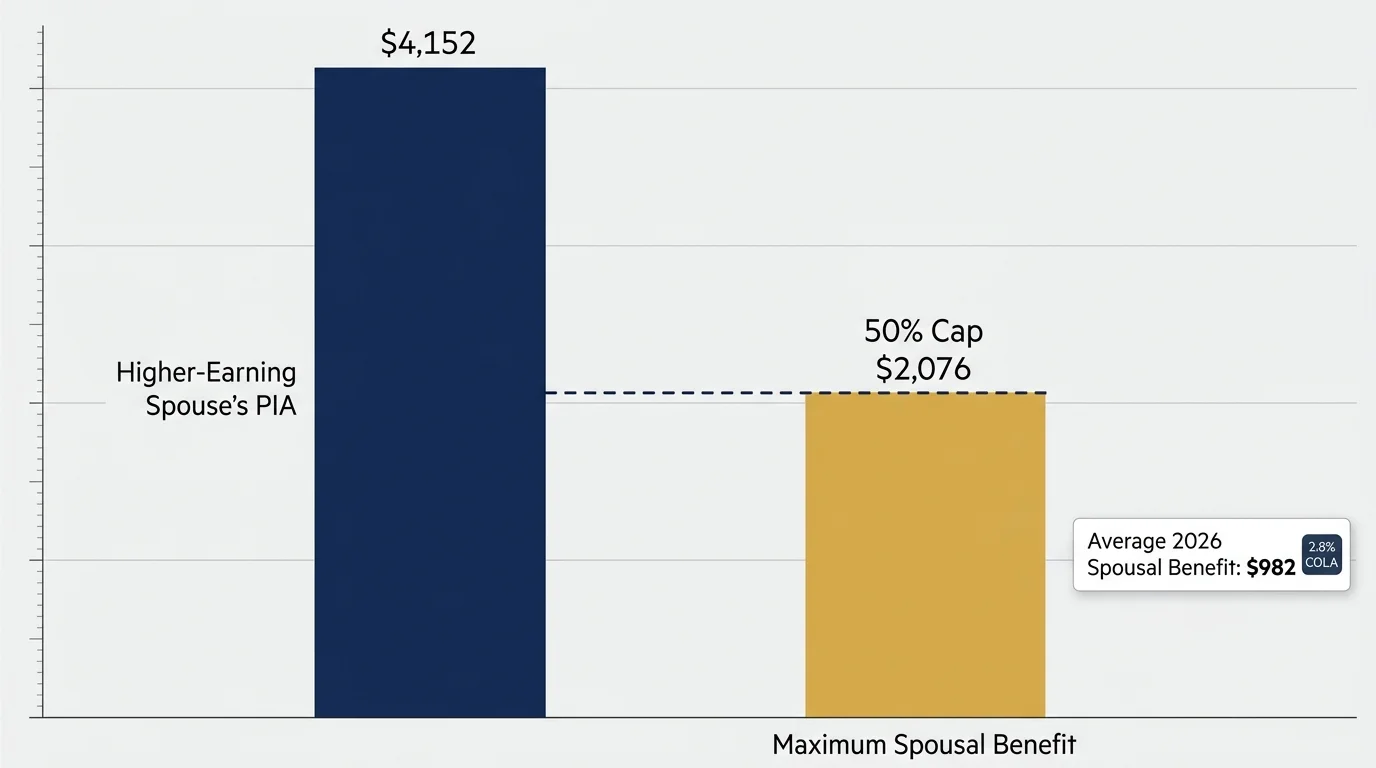
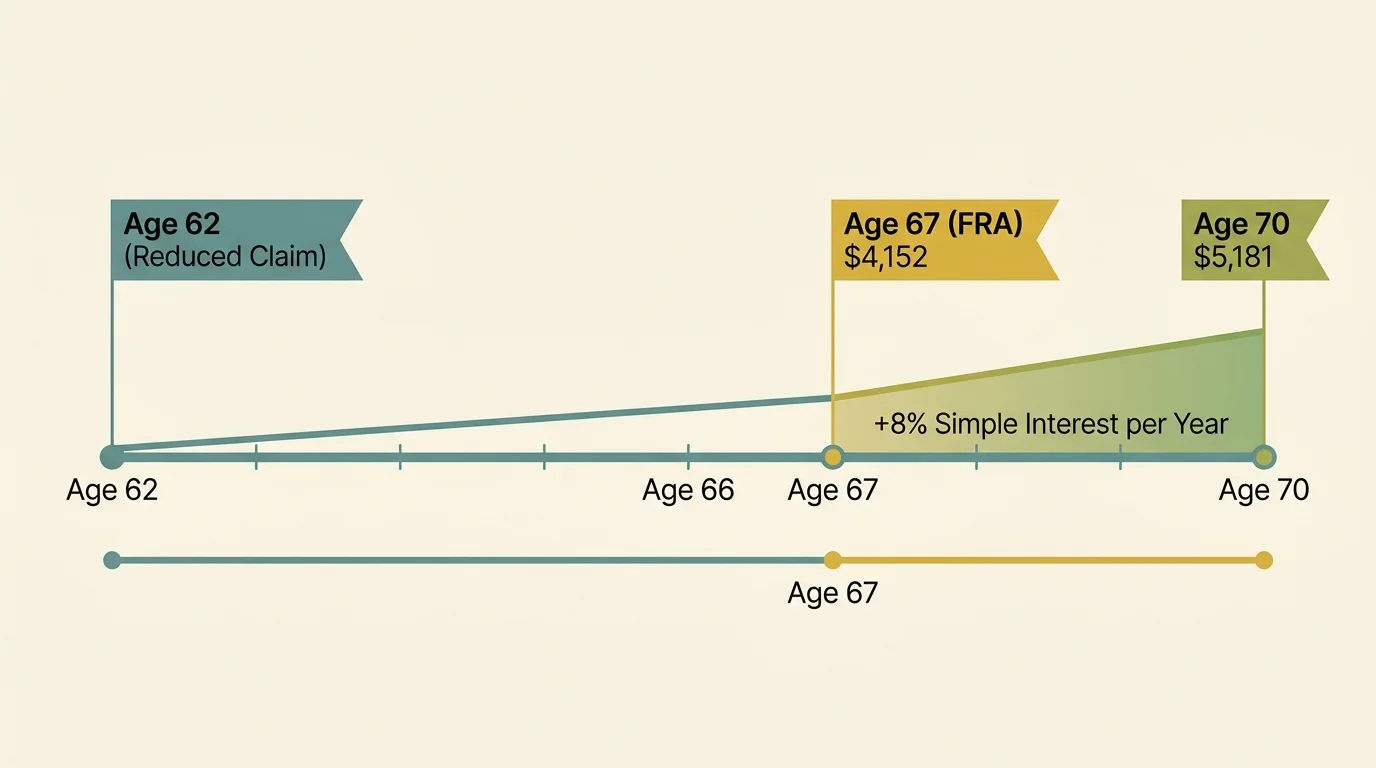
You can choose to claim individual retirement benefits as early as age 62, but doing so permanently reduces your monthly check. Conversely, if you delay claiming past your Full Retirement Age, your benefit grows by 8% per year in simple interest through delayed retirement credits. This growth stops when you reach age 70. In 2026, the maximum monthly individual retirement benefit payable at FRA is $4,152 per month, whereas an individual delaying until age 70 can collect up to $5,181 per month.
Understanding Social Security Spousal Benefits
Social Security spousal benefits provide financial support to lower-earning or non-working spouses. A spousal benefit allows you to claim up to 50% of your spouse’s Primary Insurance Amount (PIA) if that amount exceeds your own individual benefit payout.
Unlike individual retirement benefits, spousal benefits do not accumulate delayed retirement credits. A spousal benefit reaches its absolute maximum—50% of the higher-earning spouse’s PIA—when the lower-earning spouse reaches their Full Retirement Age (age 67 for those born in 1960 or later). Waiting past your FRA to claim a spousal benefit generates zero additional income.
To claim a spousal benefit, you must meet specific legal and timing criteria:
- Marriage Duration: You must be married to your spouse for at least one continuous year prior to applying.
- Primary Earner Requirement: Your spouse must actively file for their own individual retirement benefits before you can receive a spousal benefit on their record.
- Minimum Age: You must be at least 62 years old to claim spousal benefits, unless you care for a child who is under age 16 or disabled, in which case age restrictions differ.
Following the 2.8% Cost-of-Living Adjustment (COLA) implemented in January 2026, the estimated average monthly spousal benefit check in the United States reached $982 per month.
Side-by-Side Comparison: Spousal vs. Individual Benefits
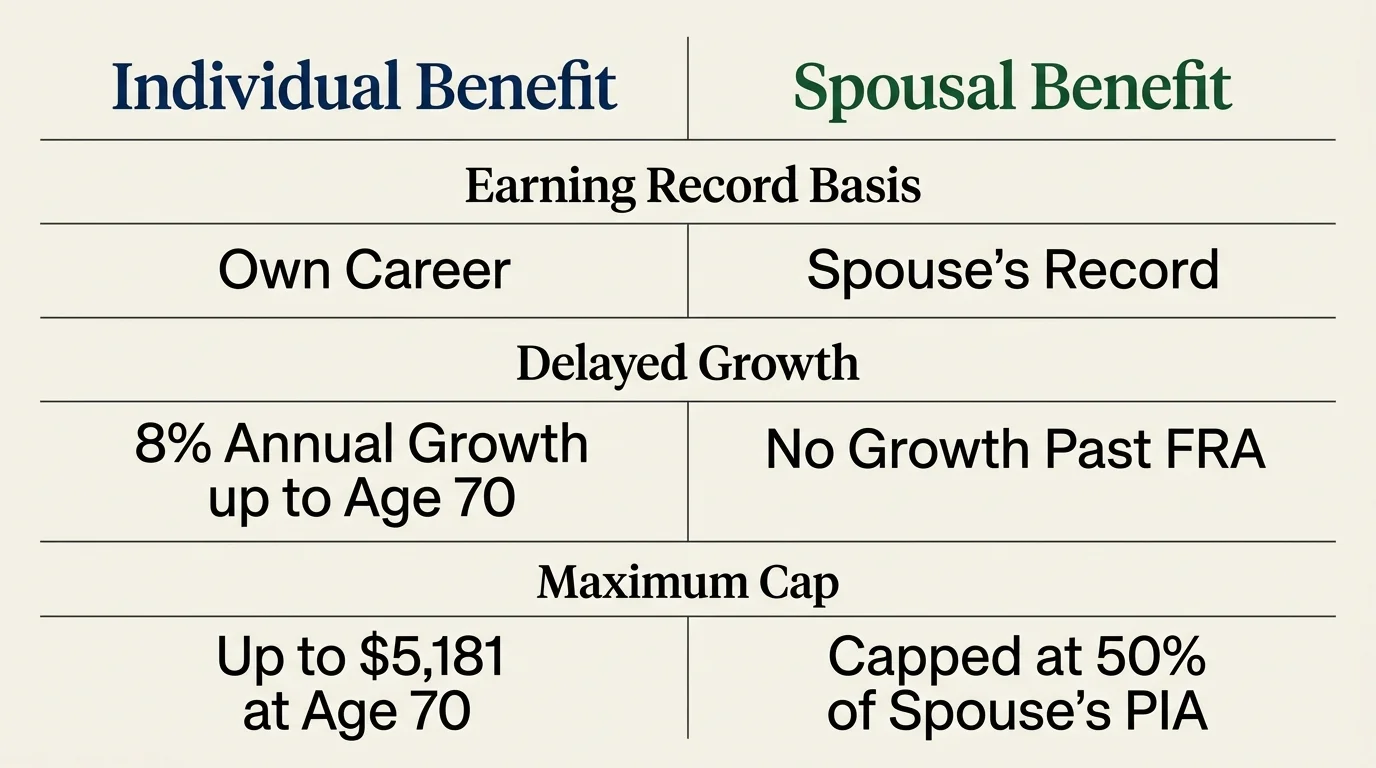
Comparing these two benefit types directly highlights how claiming rules, growth caps, and timing penalties differ between individual and spousal claims.
| Feature | Individual Retirement Benefit | Spousal Benefit |
|---|---|---|
| Earning Record Basis | Your own top 35 years of covered earnings | Your spouse’s Primary Insurance Amount (PIA) |
| Maximum Benefit at FRA | 100% of your Primary Insurance Amount | 50% of your spouse’s Primary Insurance Amount |
| Growth Past Full Retirement Age | Grows 8% per year up to age 70 (delayed credits) | No growth past FRA (capped at 50% of spouse’s PIA) |
| Claiming at Age 62 (FRA 67) | Reduced by 30% (you receive 70% of PIA) | Reduced by 35% (you receive 32.5% of spouse’s PIA) |
| Filing Interdependency | Independent; you can claim whenever eligible | Dependent; primary spouse must file first |
| 2026 Earnings Test Limit | Subject to $24,480 exempt limit prior to FRA | Subject to $24,480 exempt limit prior to FRA |
| Transition Upon Death of Spouse | Remains your individual benefit or converts to survivor benefit | Converts to a Survivor Benefit (up to 100% of deceased spouse’s check) |
The Math Behind Claiming Ages and Reductions
Claiming Social Security before reaching your Full Retirement Age incurs permanent financial penalties. However, the penalty structures for individual benefits and spousal benefits differ significantly under Social Security law.
For individuals with a Full Retirement Age of 67, claiming an individual retirement benefit at age 62 results in a 30% lifetime reduction. For example, if your PIA is $2,000 at age 67, claiming at age 62 reduces your payment to $1,400 per month.
Spousal benefits suffer a steeper early-claiming reduction. If you claim a spousal benefit at age 62 when your FRA is 67, Social Security reduces the spousal portion by 35%. Instead of receiving 50% of your spouse’s PIA, you receive just 32.5% of their PIA.
Consider a real-world scenario involving a hypothetical couple, Mark and Sarah, both born in 1960 with Full Retirement Ages of 67:
- Mark’s PIA (Higher Earner): $3,000 per month at age 67.
- Sarah’s PIA (Lower Earner): $800 per month at age 67.
If Mark and Sarah both wait until age 67 to claim, Mark collects his full individual benefit of $3,000 per month. Sarah’s full spousal benefit equals 50% of Mark’s $3,000 PIA, which is $1,500 per month. Because Sarah’s earned benefit ($800) is less than $1,500, Social Security gives Sarah her $800 individual benefit plus a $700 spousal top-off, giving her a combined monthly payment of $1,500. Their total household income reaches $4,500 per month.
If Sarah claims at age 62 while Mark waits until age 67, the math changes drastically. Sarah’s individual benefit drops from $800 to $560 (a 30% reduction). Her spousal top-off ($700) drops by 35% to $455. Sarah receives a combined check of just $1,015 per month at age 62 instead of $1,500 at age 67.
“Social Security is the bedrock of retirement income for millions of Americans, yet claiming too early without understanding the full family impact remains one of the costliest financial missteps you can make.” — Jean Chatzky, Financial Journalist and Author
Understanding Deemed Filing and Dual Entitlement
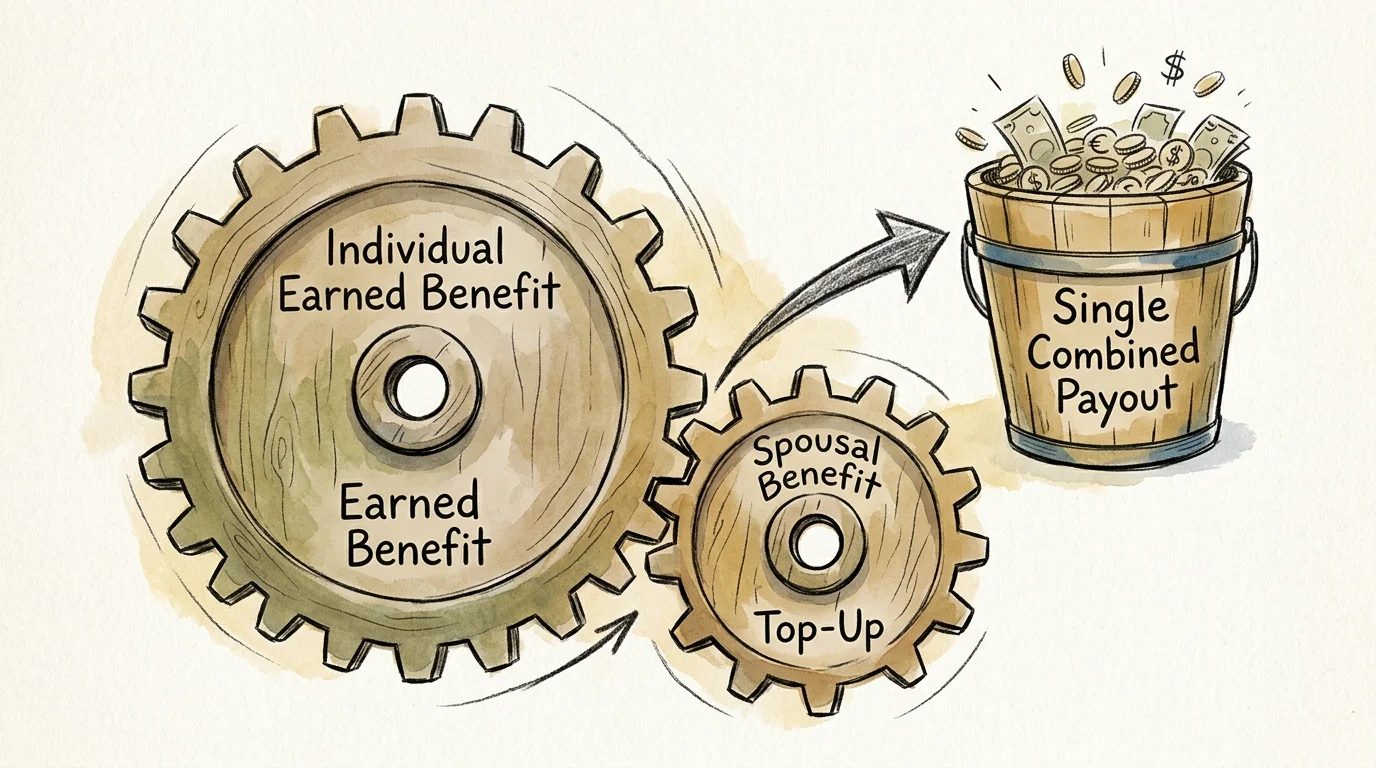
Under rules established by the Bipartisan Budget Act of 2015, the “deemed filing” rule applies to anyone born on or after January 2, 1954. Deemed filing means that when you apply for either your individual retirement benefit or your spousal benefit, Social Security automatically considers you to have applied for both benefits simultaneously.
In the past, beneficiaries could file a “restricted application” to claim only spousal benefits at FRA while allowing their own individual benefit to accrue 8% annual delayed credits up to age 70. That option no longer exists for current retirees.
Today, Social Security always pays your own individual earned benefit first. If 50% of your spouse’s PIA is higher than your individual benefit, Social Security adds a supplementary spousal payment to cover the difference. This structure, known as “dual entitlement,” guarantees that you receive total monthly compensation equal to whichever benefit is larger, but you cannot choose to isolate or defer one benefit type over the other.

Spousal Benefits for Divorced Individuals
If you are divorced, you can still claim spousal benefits on your former spouse’s earnings record. This allows lower-earning ex-spouses to preserve financial stability without relying on their ex-spouse’s permission or cooperation.
To qualify for divorced spousal benefits, you must satisfy four strict criteria outlined by the Consumer Financial Protection Bureau (CFPB) and SSA regulations:
- 10-Year Marriage Rule: Your marriage to your ex-spouse must have lasted for at least 10 continuous years.
- Current Marital Status: You must currently be unmarried. If you remarried before age 60, you generally cannot collect spousal benefits on your former partner’s record unless that subsequent marriage ended by death, divorce, or annulment.
- Age Requirement: You and your ex-spouse must both be at least 62 years old.
- Benefit Comparison: The benefit you are entitled to receive based on your own work history must be less than the benefit you would receive based on your ex-spouse’s record.
A crucial rule called “independent entitlement” applies to divorced spouses. If you have been divorced for at least two consecutive years, you can claim spousal benefits on your ex-spouse’s record even if your ex-spouse has not yet filed for their own retirement benefits. Furthermore, your claim on an ex-spouse’s record operates in total privacy; Social Security will not notify your ex-spouse, nor will your claim reduce the benefit amounts paid to your ex-spouse or their current partner.
Working While Claiming Benefits: The 2026 Retirement Earnings Test
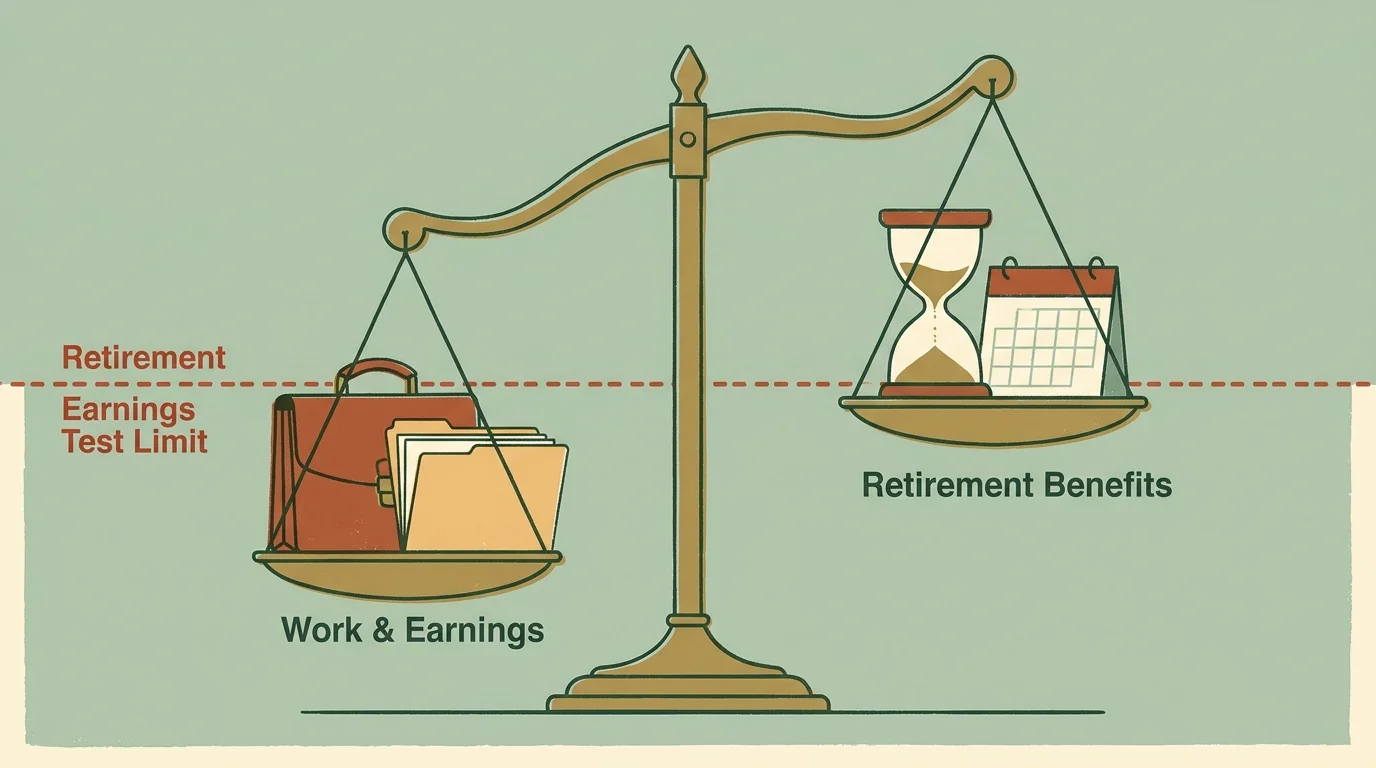
If you choose to claim either an individual retirement benefit or a spousal benefit before reaching your Full Retirement Age while continuing to earn employment income, your benefits are subject to the Social Security Retirement Earnings Test.
For the year 2026, the earning thresholds set by the federal government are:
- Under FRA for the Entire Calendar Year: The earnings exempt limit is $24,480. Social Security withholds $1 of benefits for every $2 you earn above $24,480.
- Reaching FRA During 2026: The earnings exempt limit rises to $65,160 for earnings made prior to the exact month you reach FRA. Social Security withholds $1 of benefits for every $3 you earn above $65,160.
- Month of FRA and Beyond: There is no earnings limit. You can earn unlimited income without any reduction in your Social Security checks.
Money withheld under the earnings test is not lost permanently. Once you reach your Full Retirement Age, Social Security recalculates your monthly benefit amount upward to credit you back for the benefits that were withheld due to your earnings.

Common Mistakes to Avoid
Strategic errors in timing your Social Security claims can permanently lower your household income. According to financial educational resources from AARP and industry experts, retirees frequently stumble on four major missteps:
- Delaying Spousal Claims Past Age 67: Many retirees assume spousal benefits grow by 8% per year past Full Retirement Age, just like individual benefits. They do not. Spousal benefits cap at 50% of the primary earner’s PIA at age 67; waiting until age 70 to claim a spousal check wastes time without yielding higher payments.
- Filing Early for Spousal Benefits Before the Primary Earner Claims: Unless you are divorced and meet the two-year independent entitlement rule, you cannot receive a spousal benefit until your primary earning spouse actually files for their own retirement benefit.
- Confusing Spousal Benefits with Survivor Benefits: A spousal benefit caps at 50% of the primary earner’s base benefit while both spouses are alive. A survivor benefit allows a widowed spouse to inherit up to 100% of the deceased spouse’s actual monthly check, including any delayed retirement credits the deceased earned up to age 70.
- Assuming Remarriage After Age 60 Forfeits Survivor Rights: While remarrying before age 60 generally invalidates your right to claim divorced spousal benefits, remarrying at age 60 or older does not prevent you from claiming survivor benefits on a deceased ex-spouse’s record.

Professional vs. Self-Guided Social Security Planning
Deciding whether to handle your Social Security filing independently or consult a financial professional depends on the complexity of your financial profile and household circumstances.
Self-Guided Planning Works Well When:
- You and your spouse have simple, continuous wage histories under the Social Security tax system.
- Your individual benefits are relatively equal, meaning spousal top-offs are irrelevant.
- You have a clear retirement timeline and do not intend to work while receiving early benefits.
Professional Guidance (CFP or CPA) Is Highly Recommended When:
- There is a substantial wage gap between spouses combined with an age gap of five or more years.
- Either spouse worked in public sector positions (such as government employment or teaching) that paid pensions not covered by Social Security, triggering potential Government Pension Offset (GPO) rules.
- You have complex marital histories, such as multiple previous marriages that lasted over 10 years, where optimizing spousal and survivor claims across ex-spouses requires precise coordination.
- You need to balance Social Security claiming ages against tax-deferred IRA withdrawals to prevent pushing your household into higher tax brackets or triggering Medicare IRMAA surcharges.
Frequently Asked Questions
Can I claim spousal benefits if my spouse hasn’t claimed their individual benefit yet?
If you are currently married, no. Your spouse must actively file for their individual retirement benefit before Social Security can award you spousal benefits on their record. If you are divorced and were married for at least 10 years, you can claim under “independent entitlement” once you have been divorced for two continuous years and both of you are at least age 62.
Does my spousal benefit increase if I wait until age 70 to claim it?
No. Spousal benefits do not accumulate delayed retirement credits. They reach their absolute maximum—50% of your spouse’s Primary Insurance Amount—when you reach your Full Retirement Age (age 67 for those born in 1960 or later). Delaying past your FRA will not increase your spousal payment.
Will my spousal benefit claim lower my partner’s monthly check?
No. Claiming a spousal benefit on your partner’s record has no impact on their monthly payout. Your spouse will continue to receive the full retirement benefit they earned based on their career earnings history.
What happens to my spousal benefit if my husband or wife passes away?
Your spousal benefit ends and transitions into a survivor benefit upon your spouse’s death. Instead of receiving up to 50% of their base benefit, you can receive up to 100% of the monthly check your deceased spouse was actually receiving at the time of death, including any delayed credits they accrued.
Next Steps for Your Retirement Strategy
Optimizing your Social Security strategy starts with gathering exact data. Log into your account on the official Social Security Administration website to obtain the current Primary Insurance Amount estimates for both you and your spouse. Review your earnings records for any reporting errors that could artificially lower your lifetime average.
Once you have both benefit estimates, map out claiming timelines that account for your age differences, health statuses, and broader retirement savings. Coordinate your claims so that the higher earner maximizes their individual check—and the potential future survivor benefit—while ensuring the lower earner collects full spousal top-offs at Full Retirement Age.
This article provides general retirement education and information only. Everyone’s financial situation is unique—what works for others may not work for you. For personalized advice, consider consulting a qualified financial professional such as a CFP or CPA.
Last updated: February 2026. Retirement benefits, tax laws, and healthcare costs change frequently—verify current details with official sources.