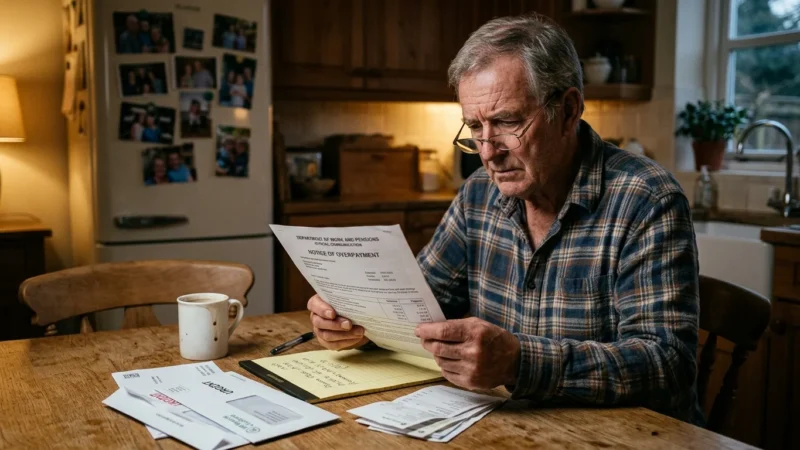
Losing a spouse brings profound emotional grief alongside immediate financial disruption, especially when your household transitions from two Social Security checks down to one. Social Security survivor benefits provide vital financial protection by replacing lost household income, yet millions of surviving spouses and ex-spouses overlook benefits they legally earned. Filing at the right moment can mean tens of thousands of dollars in additional lifetime retirement security. Whether you are nearing age 60, raising dependent children, or coordinating complex dual-benefit claiming strategies, knowing when to contact the Social Security Administration ensures you protect your cash flow. Here are eight clear signs that signal it is time to file for Social Security survivor benefits.

1. You Have Reached Age 60 and Your Deceased Spouse Was the Higher Earner
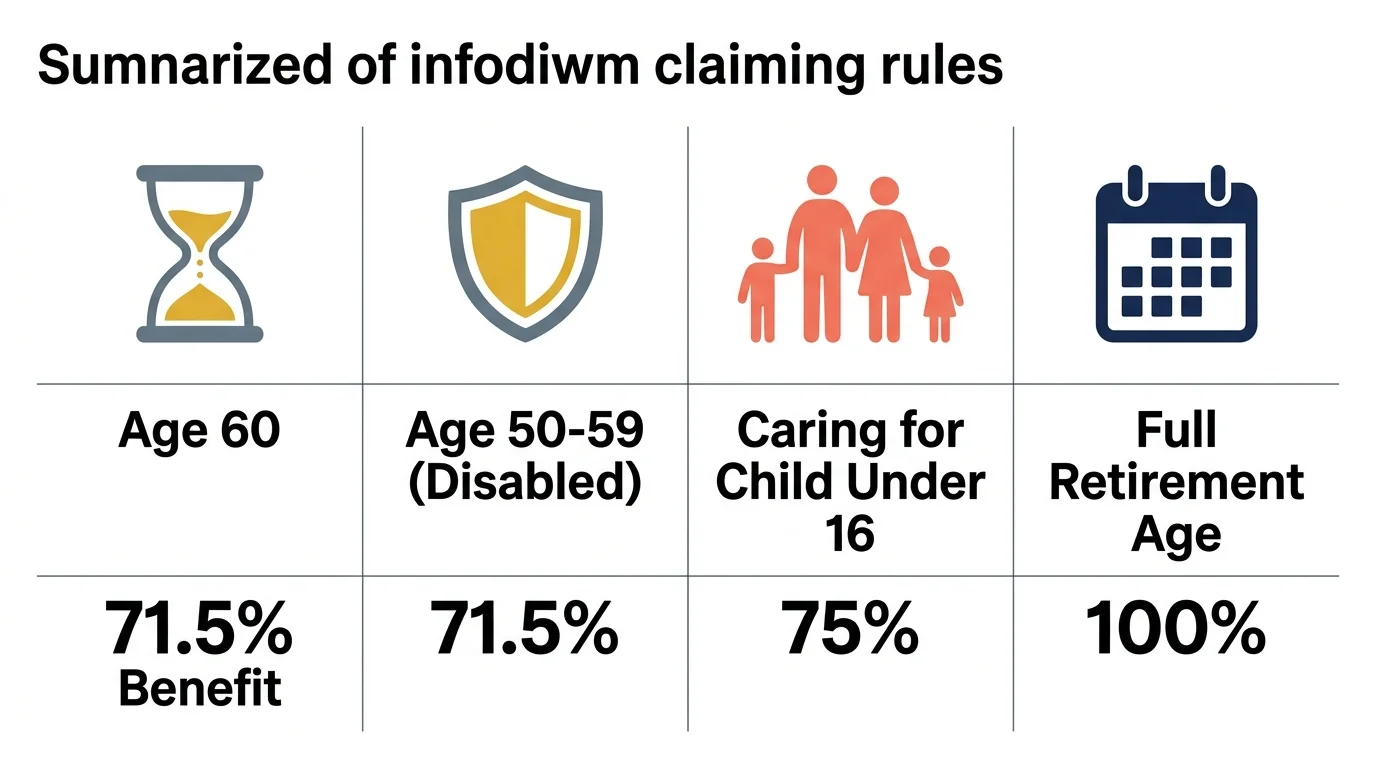
The standard eligibility age to claim a widow or widower benefit begins at age 60. If your deceased spouse earned significantly more than you during their working career, their Social Security record may yield a substantially higher monthly check than your own record ever could. According to the Social Security Administration, a surviving spouse who claims benefits at age 60 receives approximately 71.5% of the deceased worker’s primary insurance amount (PIA).
That payout percentage rises steadily for each month you delay filing up to your Survivor Full Retirement Age (FRA). For anyone born in 1962 or later, the survivor FRA is 67. Claiming at your survivor FRA entitles you to 100% of the deceased spouse’s earned benefit. If you are at least 60 and currently have little or no earned income, filing for reduced survivor benefits immediately can provide critical cash flow while preserving your long-term solvency.

2. You Are Between Ages 50 and 59 with a Qualifying Disability
If you live with a permanent or severe disability that prevents substantial gainful activity, you do not have to wait until age 60 to access survivor benefits. The SSA allows disabled surviving spouses to begin receiving monthly survivor benefits as early as age 50. To qualify, your physical or mental impairment must meet Social Security’s strict definition of disability, and the disability must have started either before your spouse died or within seven years of their passing.
The benefit amount for a disabled surviving spouse aged 50 to 59 is fixed at 71.5% of the deceased worker’s basic benefit. Filing under these rules provides a monthly safety net when medical bills mount and working is no longer an option. If you already receive Social Security Disability Insurance (SSDI) on your own record, compare both amounts; the SSA will pay the higher total benefit.

3. You Are Caring for Your Late Spouse’s Child Under Age 16
Age restrictions on the surviving parent disappear entirely when dependent children are involved. If you are caring for the deceased worker’s biological child, adopted child, or eligible stepchild who is under age 16 (or disabled before age 22), you can claim mother’s or father’s survivor benefits regardless of your current age. The SSA pays the surviving parent 75% of the deceased parent’s basic benefit amount.
Additionally, each qualifying unmarried child under age 18 (or up to age 19 if still attending secondary school full-time) can receive their own independent survivor benefit equal to 75% of the deceased parent’s primary insurance amount. Keep in mind that family benefits are subject to the maximum family benefit limit, which typically caps total household monthly payments at 150% to 188% of the worker’s basic benefit.
“Understanding how survivor benefits coordinate with your own Social Security record is one of the most critical moves in retirement planning. Claiming the right benefit at the right time protects your lifetime purchasing power.” — Jean Chatzky, Financial Educator and Author
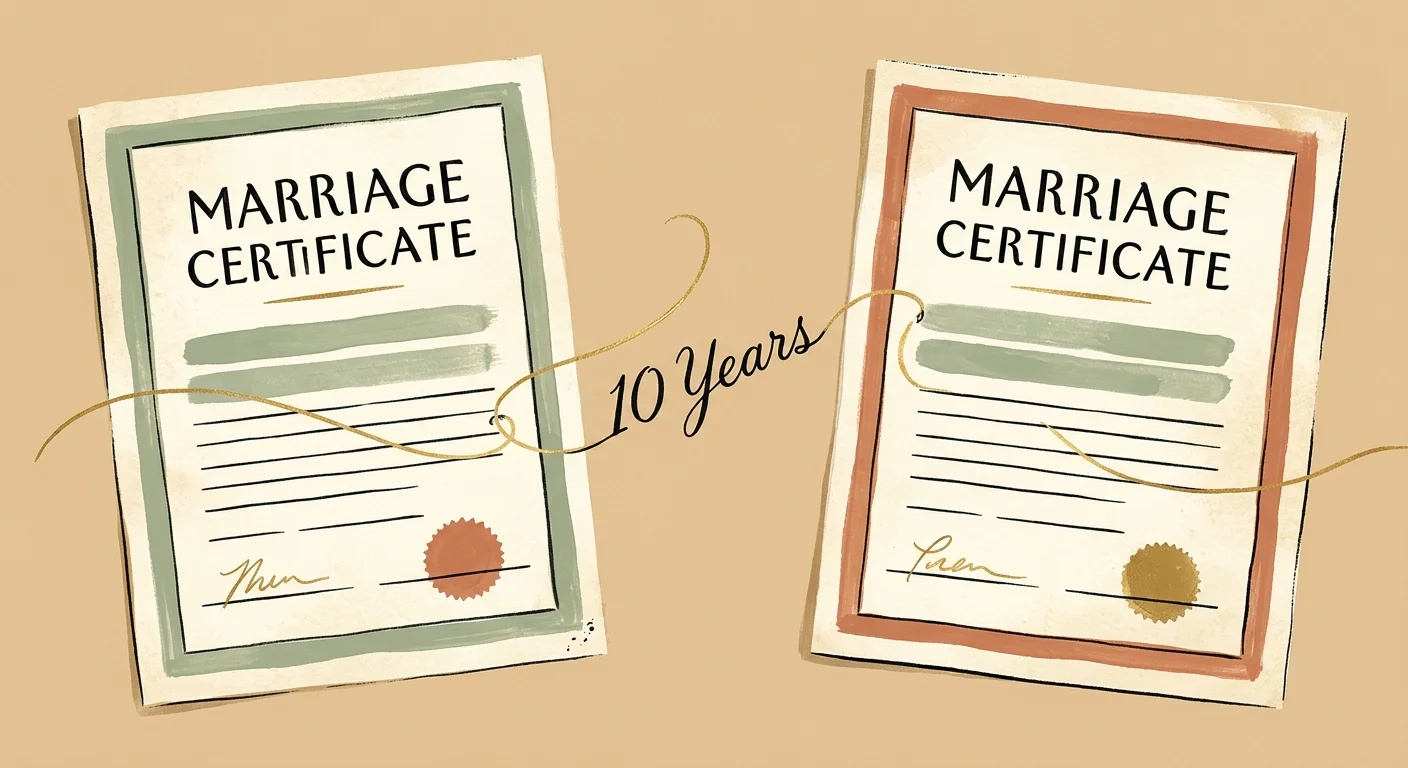
4. You Were Married for at Least 10 Years and Your Ex-Spouse Has Passed Away
Many divorced individuals assume that dissolving a marriage eliminates all rights to their former partner’s Social Security record. That assumption is costly and incorrect. If you were legally married to your ex-spouse for at least 10 continuous years, you qualify for surviving divorced spouse benefits upon their death under identical terms as a surviving widow or widower.
You can claim benefits as early as age 60 (or age 50 if disabled). Furthermore, filing for survivor benefits on an ex-spouse’s earnings record does not impact the benefits paid to the deceased’s current spouse, nor does it reduce what any other surviving family members receive. If your ex-spouse had a higher lifetime earnings record than your own, you should look into claiming widow widower Social Security benefits on their record.

5. You Remarried After Age 60 (or Age 50 if Disabled)
Timing dictates everything when remarriage intersects with Social Security survivor eligibility. If you remarry before reaching age 60 (or before age 50 if disabled), the SSA generally suspends your right to receive survivor benefits based on your deceased spouse’s earnings. However, if you remarry after reaching age 60 (or age 50 with a disability), your eligibility remains completely intact.
This statutory protection allows older adults to enter new marriages without forfeiting the vital financial baseline built during a prior marriage. When you reach retirement age, the SSA evaluates your current spouse’s spousal benefit, your deceased spouse’s survivor benefit, and your own retirement benefit, allowing you to collect the highest dollar amount among them.
6. Your Late Spouse Earned Delayed Retirement Credits
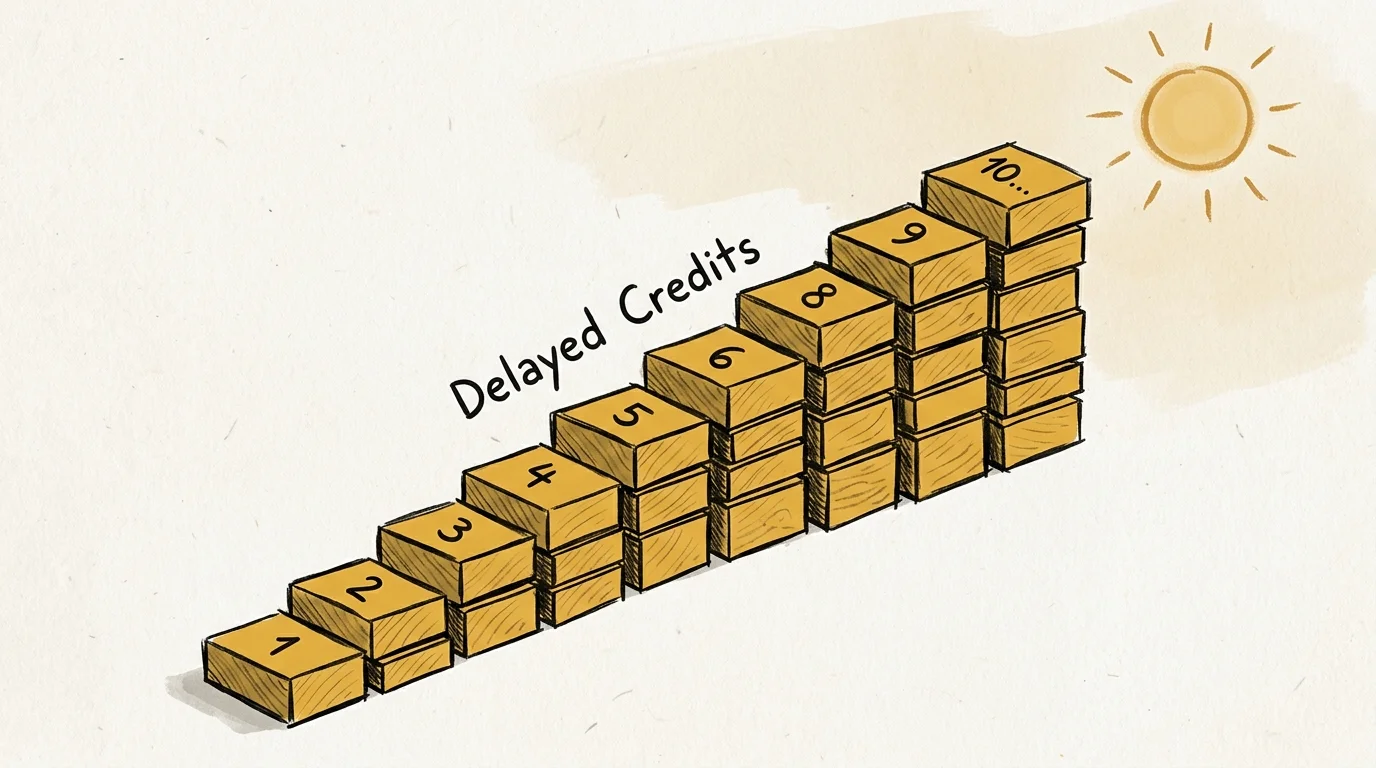
When a worker delays claiming their Social Security retirement benefit past their Full Retirement Age up to age 70, their benefit grows by 8% per year through delayed retirement credits. If your spouse delayed claiming their benefit before passing away, those valuable credits do not disappear; they pass directly to you as the surviving spouse.
If you wait until your own Survivor FRA to claim survivor benefits, your monthly check will reflect 100% of your late spouse’s benefit, including every delayed retirement credit they accumulated. If your spouse waited until age 70 to collect, your survivor benefit will equal that maximum enhanced amount for the rest of your life.
7. You Want to Maximize Your Own Benefit at Age 70 Using Benefit Switching
The Bipartisan Budget Act of 2015 eliminated “restricted applications” for standard spousal retirement benefits, but Congress explicitly preserved this flexibility for survivor benefits. Survivor benefits are exempt from the SSA’s “deemed filing” rules. This exemption creates a powerful strategic advantage for surviving spouses who have worked and earned their own Social Security credits.
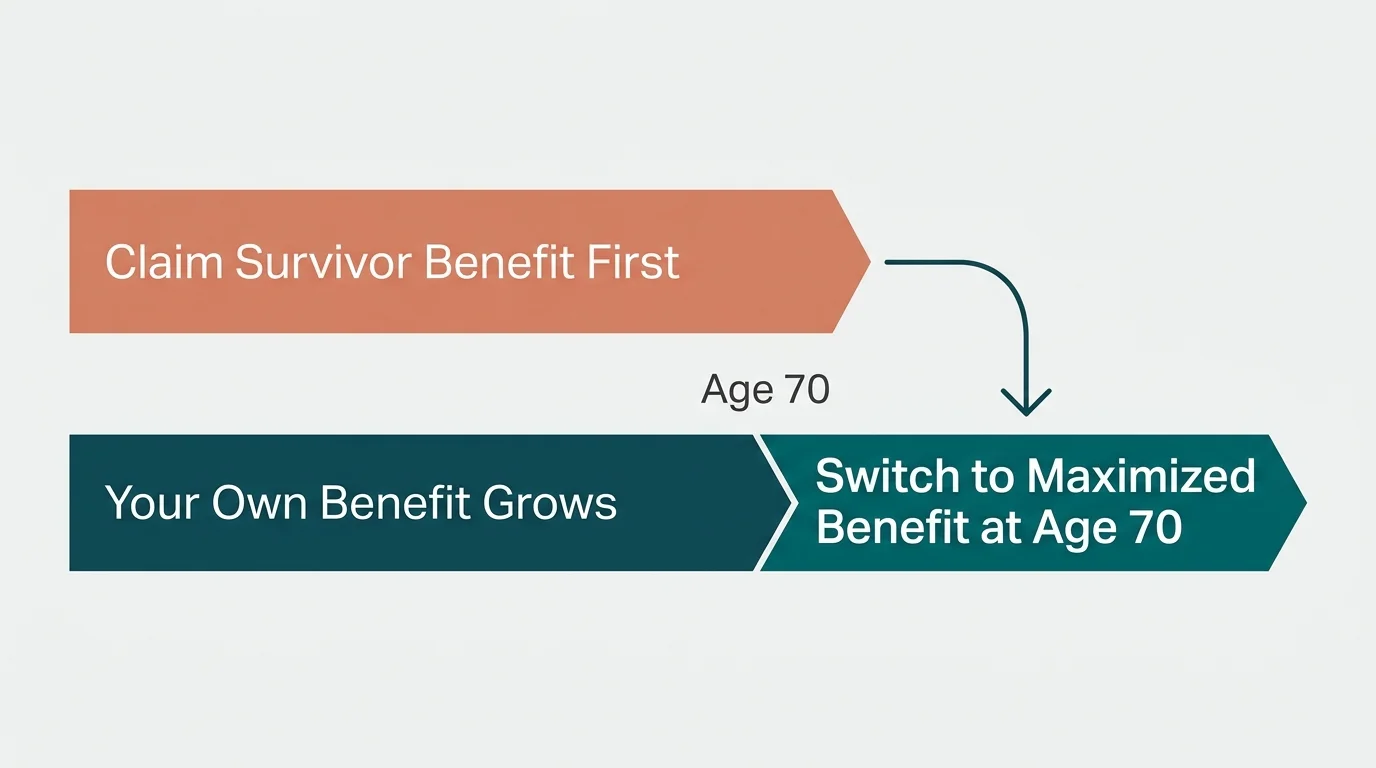
You can choose to claim a survivor benefit early (for example, at age 60 or at your survivor FRA) while allowing your personal retirement benefit to accrue delayed retirement credits up to age 70. Once you reach age 70, you switch to your own maximized retirement benefit if it has grown larger than the survivor benefit. Conversely, if your own retirement benefit is modest, you can claim your own benefit at age 62 and switch to a full 100% survivor benefit once you reach your survivor FRA.

8. Your Household Suffered a Sudden Drop in Monthly Income
Married couples who rely on two Social Security checks face a severe financial cliff when one spouse passes away. Upon the death of a spouse, the lower of the two Social Security checks stops immediately. Surviving spouses frequently discover that their ongoing living expenses—such as property taxes, home insurance, and utilities—do not drop by half when their household income is cut substantially.
If the income reduction threatens your ability to cover basic living costs, that cash crunch is a direct sign to contact the SSA immediately. In addition to regular survivor benefits, an eligible surviving spouse living in the same household receives a one-time lump-sum death payment of $255. Applying quickly prevents financial shortfalls and stabilizes your cash flow during a difficult transition.
Survivor Benefit Claiming Rules at a Glance
Navigating Social Security survivor benefits eligibility requires balancing age thresholds, disability status, and family circumstances. The following table summarizes the key claiming categories and benefit levels:
| Survivor Category | Minimum Age Requirement | Benefit Payout Percentage | Key Conditions & Restrictions |
|---|---|---|---|
| Surviving Spouse (Full FRA) | Age 67 (if born 1962 or later) | 100% of deceased’s basic benefit | Includes all delayed retirement credits earned by deceased. |
| Surviving Spouse (Early Filing) | Age 60 | 71.5% to 99% of basic benefit | Subject to annual earnings test limits if still working. |
| Disabled Surviving Spouse | Age 50 | 71.5% of basic benefit | Disability must start within 7 years of worker’s death. |
| Spouse Caring for Child Under 16 | Any age | 75% of basic benefit | Child must be under 16 or disabled before age 22. |
| Surviving Divorced Spouse | Age 60 (Age 50 if disabled) | 71.5% to 100% (depending on age) | Marriage must have lasted at least 10 continuous years. |
| Dependent Minor Child | Under age 18 (or 19 if in school) | 75% of basic benefit | Subject to Social Security maximum family benefit cap. |
How to Apply for Social Security Survivor Benefits
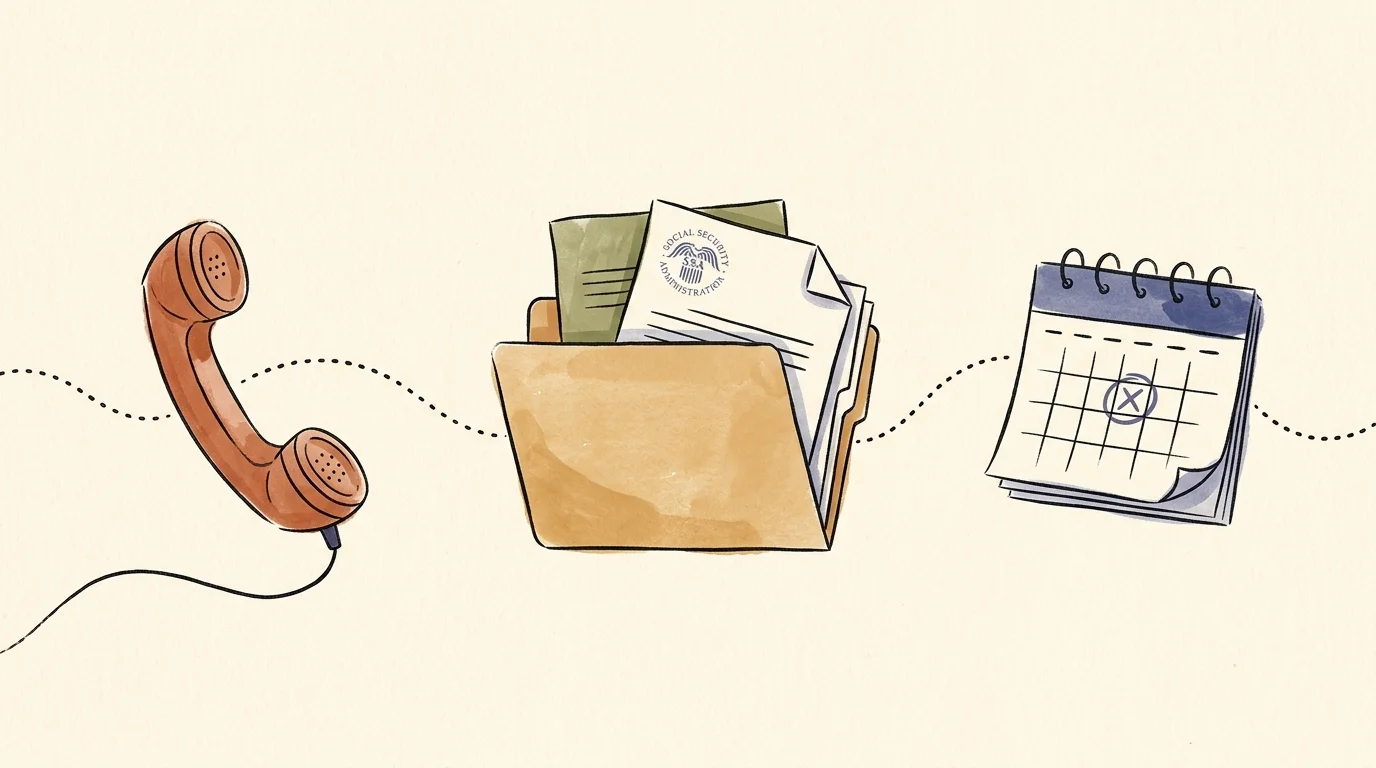
Unlike standard retirement applications, the SSA does not permit individuals to file for survivor benefits online. You must apply either by phone or by scheduling an in-person appointment at your local Social Security office. Take the following steps to ensure a smooth application process:
- Contact the SSA: Call the national toll-free line at 1-800-772-1213 (TTY 1-800-325-0778) between 8:00 a.m. and 7:00 p.m., Monday through Friday, or locate your local field office via SSA.gov to book an appointment.
- Gather Required Documentation: Assemble certified copies of your late spouse’s death certificate, your marriage certificate, your birth certificate, your Social Security number, and your late spouse’s Social Security number.
- Provide Proof of Income: Have your most recent W-2 forms or federal tax returns (Form 1040 with Schedule SE if self-employed) ready, as reviewed by the Internal Revenue Service.
- Supply Banking Information: Provide your bank account routing and account numbers to establish direct deposit for monthly payments.

Avoiding Common Errors When Claiming Survivor Benefits
Filing mistakes can permanently reduce your monthly retirement income or trigger unexpected repayment demands from the government. When planning your claiming survivor benefits Social Security strategy, avoid these common traps:
- Ignoring the Retirement Earnings Test: If you claim survivor benefits prior to reaching your full retirement age and continue working, your benefits may be reduced. The SSA withholds $1 in benefits for every $2 earned above the annual earnings limit ($23,400 in 2025; adjusted annually for wage inflation). In the year you reach FRA, the reduction drops to $1 for every $3 earned above a higher threshold ($62,160 in 2025). Once you reach FRA, earnings limits vanish entirely.
- Claiming Both Benefits Concurrently Without a Strategy: You cannot collect your full retirement benefit and your full survivor benefit simultaneously. If you qualify for both, Social Security will pay an amount equal to the higher benefit. Failing to sequence your claims strategically can forfeit years of delayed retirement credits on your own earnings record.
- Waiting Too Long to Report a Spouse’s Death: Social Security survivor benefits generally offer very limited retroactive payments (typically no more than six months, and only if filing past FRA). Delaying your application can result in the permanent loss of monthly checks.

When DIY Isn’t Enough
While standard survivor claims are straightforward, certain financial and legal scenarios demand personalized analysis before submitting paperwork to the SSA. Consider consulting a professional credentialed through the Certified Financial Planner Board or an experienced elder law attorney under these conditions:
- Non-Covered Government Pensions: If you worked in a state, local, or federal position that did not pay into Social Security, the Government Pension Offset (GPO) can reduce your survivor benefit by two-thirds of your government pension amount, potentially wiping out the survivor check entirely.
- Multiple Marriages: If you were married to more than one deceased spouse for at least 10 years each, calculating which earnings record produces the highest lifetime payout requires careful coordination.
- Complex Tax Intersections: Large survivor benefit checks can push your provisional income over the thresholds where up to 85% of your Social Security benefits become subject to federal income taxes. Exploring strategic IRA withdrawals or charitable distributions can mitigate this tax bite. Guidance from organizations like AARP and tax professionals can help you navigate these thresholds.
Frequently Asked Questions About Survivor Benefits
Can I collect my own Social Security benefit and survivor benefits at the same time?
No, you cannot receive the combined total of both full benefits. The SSA will pay your own retirement benefit first; if the survivor benefit on your late spouse’s record is higher, you receive an additional amount to bring your total monthly payment up to that higher survivor benefit level. However, you can choose to take one benefit early while allowing the other to grow.
Do survivor benefits reduce my late spouse’s remaining estate?
No. Social Security survivor benefits are statutory insurance benefits funded by federal payroll taxes, not assets of the deceased person’s estate. Claiming survivor benefits has no impact on wills, trusts, probate processes, or estate taxes.
What happens to my survivor benefit if I remarry after age 60?
Remarrying at or after age 60 (or age 50 if you are disabled) does not affect your eligibility for survivor benefits. You can continue receiving monthly survivor benefits based on your late spouse’s record, or evaluate your new spouse’s record later to determine which option yields the highest payout.
How long do Social Security survivor benefits last?
Survivor benefits for widows, widowers, and qualifying surviving divorced spouses are paid for life, provided you do not remarry before age 60 and remain eligible. Benefits for dependent children typically end at age 18 (or 19 if still in high school), and child-in-care benefits for parents end when the youngest child turns 16 unless the child is disabled.
Taking prompt, informed action when you recognize the signs of survivor benefit eligibility will protect your household finances during retirement. Review your earnings records, assess your current living expenses, and reach out to the Social Security Administration to start the application process.
This article provides general retirement education and information only. Everyone’s financial situation is unique—what works for others may not work for you. For personalized advice, consider consulting a qualified financial professional such as a CFP or CPA.
Last updated: February 2026. Retirement benefits, tax laws, and healthcare costs change frequently—verify current details with official sources.