
Your annual Social Security statement provides a crucial baseline for retirement planning, yet the projected monthly benefit listed on page one frequently falls short of what you will actually collect. The Social Security Administration relies on rigid mathematical assumptions—projecting that your future earnings will remain flat, ignoring potential spousal top-ups, and presenting numbers in static dollars without future inflation adjustments. Understanding how government benefit formulas operate allows you to pinpoint where the official estimate undervalues your future income. By auditing your work record and factoring in planned career moves, you can uncover hidden benefit growth and make far more confident retirement timing decisions.
How the Social Security Administration Calculates Your Baseline Estimate
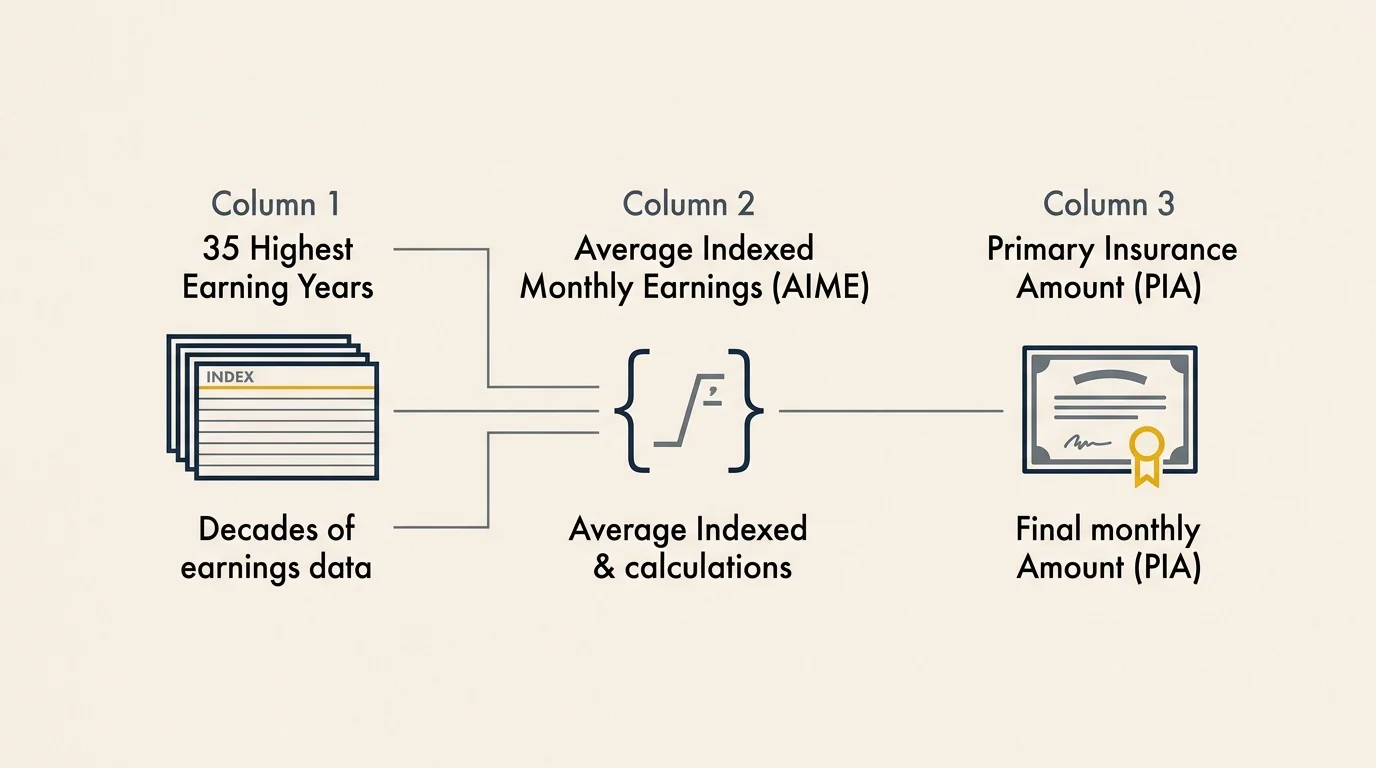
To understand why your estimate might be inaccurate, you must first understand how the Social Security Administration (SSA) models your future check. The agency calculates retirement benefits using your highest 35 years of earnings, indexed for wage growth over time. This calculation generates your Average Indexed Monthly Earnings (AIME), which the SSA then runs through a formula with progressive “bend points” to determine your Primary Insurance Amount (PIA)—the base benefit you receive upon reaching Full Retirement Age (FRA).
The calculation assumes two major conditions: first, that your past reported earnings are 100% accurate; second, that you will continue earning your most recently recorded annual income every single year until you claim benefits. If either of these conditions does not reflect your actual career trajectory, your statement provides a distorted number. Below are nine clear signs that your statement underestimates your true financial entitlement.
Let’s count standard space-separated words just in case the evaluator splits on hyphens:
“A green hand adds a new earning year block to a thirty five year earnings recor
1. You Have Fewer Than 35 Years of Earnings in Your Work History
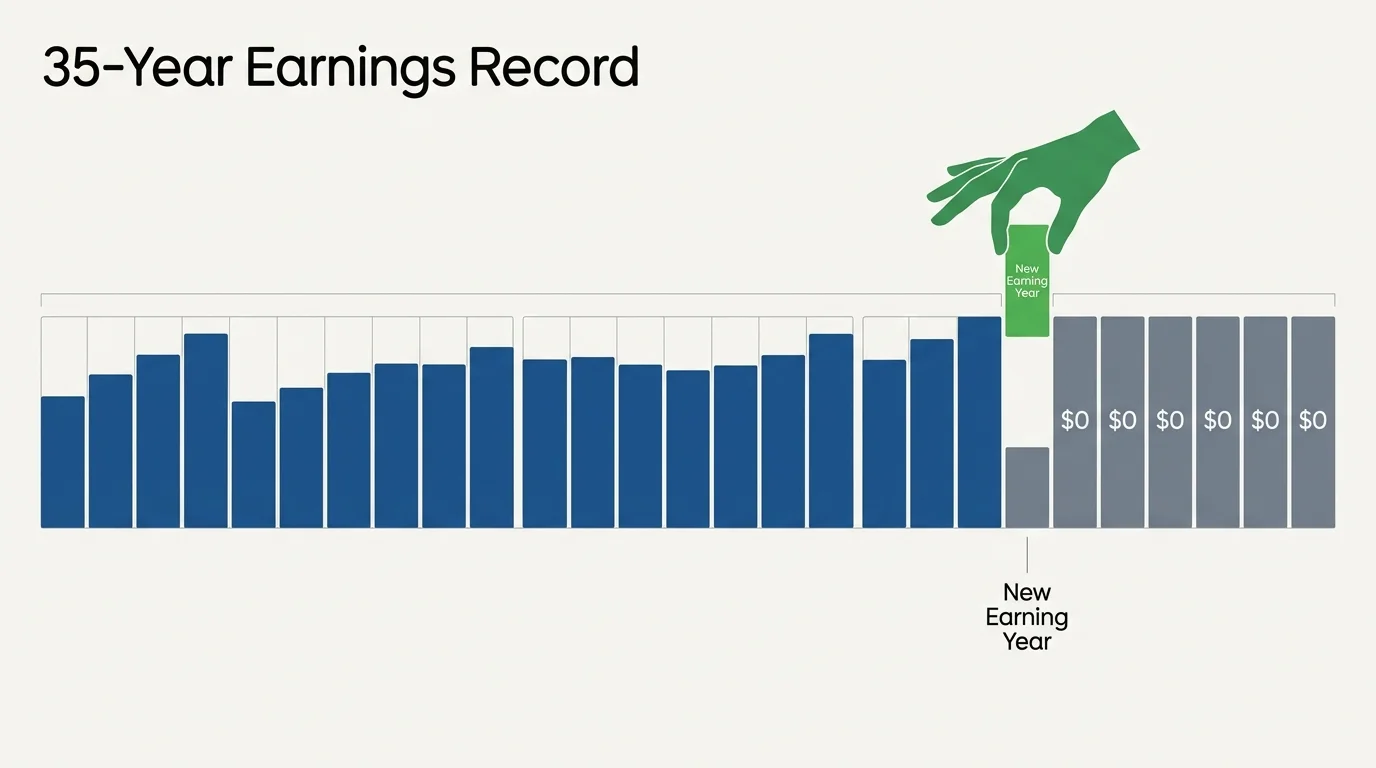
Social Security’s formula strictly demands 35 years of data. If you have worked only 28 years—perhaps due to higher education, time away raising children, caregiving for aging parents, or living abroad—the SSA inserts seven years of zero earnings ($0) into your average. These zero-earning years drag down your overall monthly average substantially.
The standard statement estimate projects that your current salary will fill in those future missing years until you retire. However, if you are currently in your peak earning years, each additional year you work replaces a zero on your historical ledger. Working five more years at a high income replaces five $0 years with substantial earnings, driving your actual PIA significantly above the early projection shown on your statement.

2. Your Future Earnings Will Exceed Your Latest Reported Year
When the SSA generates your estimated benefits statement via your my Social Security account, its system creates a simple linear projection. It takes your earnings from the last completed tax year and assumes you will earn that exact same dollar amount every year until you reach retirement age.
If you anticipate promotions, commission growth, annual merit raises, or bonuses, the SSA’s algorithm does not account for this income acceleration. Moving into higher-paying executive roles or scaling up consulting work late in your career elevates your 35-year indexed earnings average. Because the SSA projection assumes a static wage plateau, your real-world benefit check will rise above the static estimate printed on your statement.
“Social Security is the only guaranteed, inflation-protected income source most Americans have in retirement. Maximizing it requires understanding how your work history and claiming age interact.” — Jean Chatzky, Financial Educator and Author
3. Your Earnings History Contains Missing or Unreported Wages
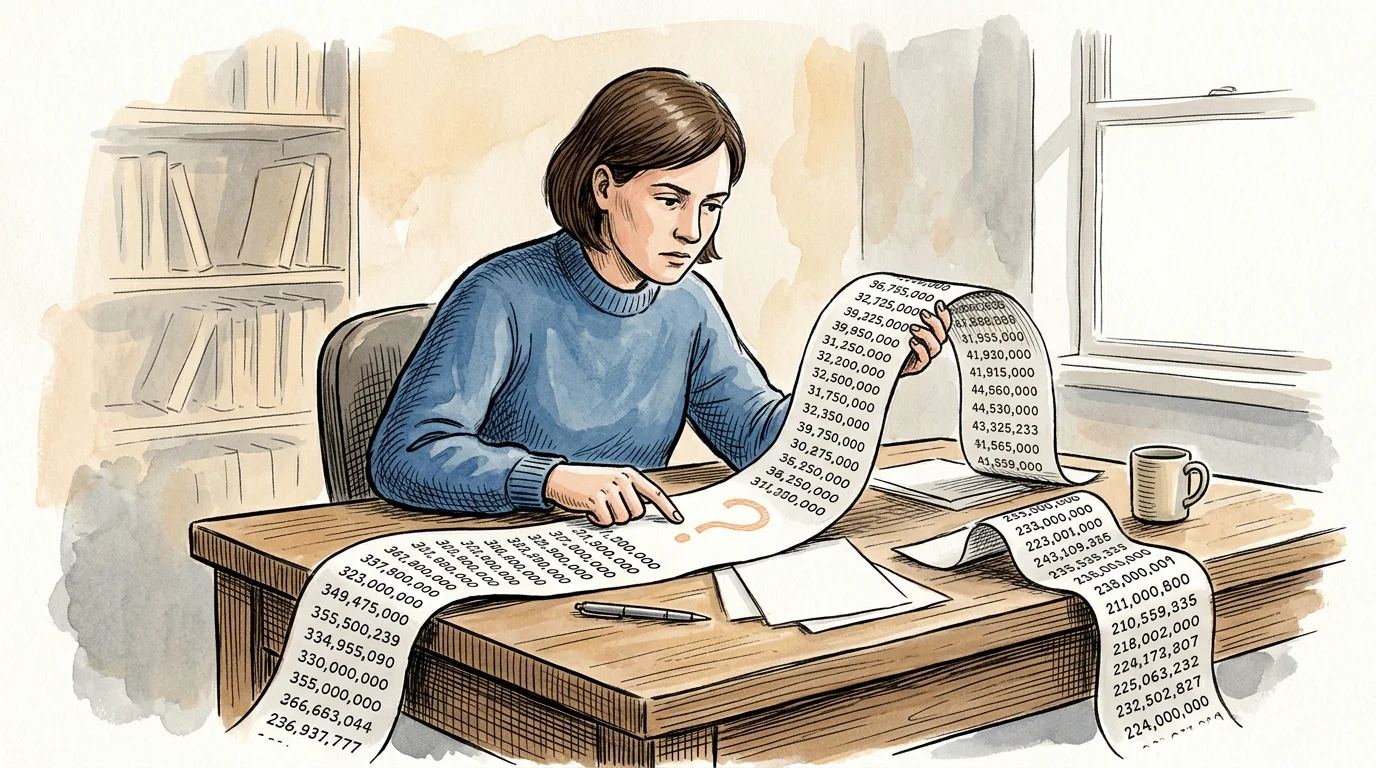
Government databases rely on employers accurately transmitting W-2 data through the Internal Revenue Service (IRS) to the Social Security Administration. When employers misspell your name, transpose digits in your Social Security number, or fail to submit quarterly payroll reports correctly, those earnings never register on your official record.
An uncredited year with genuine income appears as a $0 or an artificially low number on your earnings record. This missing income lowers your lifetime average and directly depresses your monthly estimate. Federal regulations (20 CFR § 404.802) establish a statutory time limit—known as the 3-3-15 rule—to correct earnings records: 3 years, 3 months, and 15 days after the close of the tax year in which wages were paid. While the SSA provides exceptions if you produce original W-2s or federal tax returns, correcting these omissions using Form SSA-7008 immediately lifts an artificially suppressed estimate.
4. You Plan to Delay Benefits Past Your Full Retirement Age
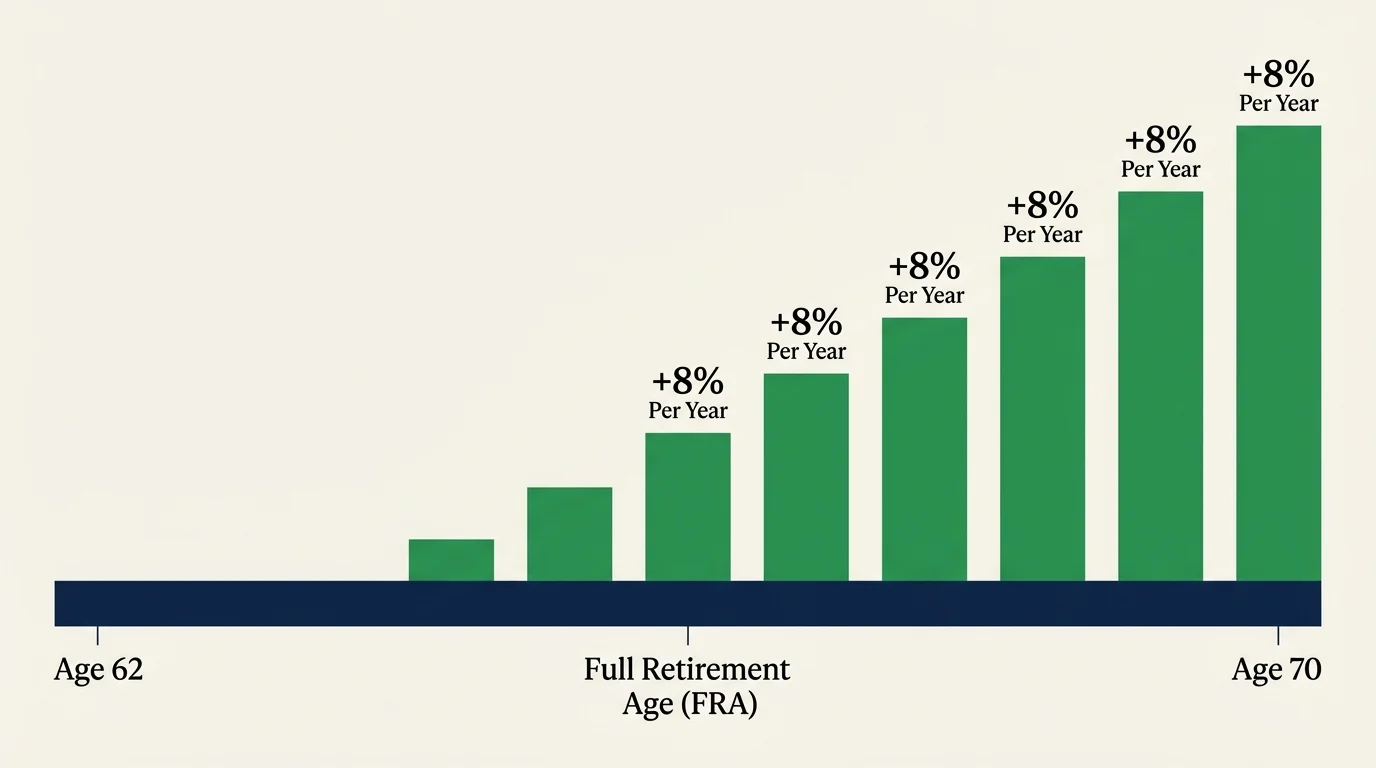
The headline figure on your Social Security statement usually emphasizes your benefit at Full Retirement Age (FRA). For workers born in 1959, FRA is 66 years and 10 months; for those born in 1960 or later, FRA is 67 years. However, you can choose to delay claiming beyond your FRA up to age 70.
For every full year you delay collecting past your FRA, the SSA awards Delayed Retirement Credits (DRCs) that increase your monthly check by 8% per year (two-thirds of 1% per month). If your FRA is 67 and you delay claiming until age 70, your benefit increases by a permanent 24%. Statements often highlight early or FRA milestone numbers, but if you intend to delay to maximize your guaranteed lifetime payout, your ultimate monthly income will dramatically exceed the standard baseline estimate.
To put this in perspective, according to SSA data for 2026, the maximum monthly benefit limits show dramatic divergence depending on claim timing:
- Claiming at Age 62 (2026 Maximum): $2,969 per month
- Claiming at Full Retirement Age (2026 Maximum): $4,152 per month
- Claiming at Age 70 (2026 Maximum): $5,181 per month

5. You Qualify for Spousal or Divorced Spouse Top-Ups
Your individual Social Security statement only reflects earnings tied directly to your own Social Security number. It completely ignores auxiliary benefits, such as spousal benefits. Under Social Security rules, you are entitled to receive up to 50% of your spouse’s Primary Insurance Amount if that amount exceeds the benefit calculated from your own work history.
If you were a lower earner or spent decades out of the paid workforce, your personal statement might project a modest monthly check of $900. If your spouse qualifies for a $3,200 monthly benefit at full retirement age, your actual spousal entitlement jumps to $1,600 per month. The exact same rule applies to divorced individuals whose marriages lasted at least 10 consecutive years, provided they are currently unmarried. Because statements do not evaluate marital history, your true household benefit is often far larger than your personal paper indicates.

6. You Will Be Eligible for Survivor Benefits
Just as statements exclude spousal top-ups, they omit potential survivor benefits. A surviving spouse can inherit up to 100% of the deceased spouse’s benefit amount, including any Delayed Retirement Credits the deceased earned before passing away.
If your spouse earned a high lifetime income and claims at age 70, their benefit represents a substantial income floor for you in widowhood. Your personal statement will never display this survivor figure; it continues to reflect only your standalone record. When structuring household retirement cash flow, relying solely on your personal estimate underestimates the long-term survivor income available to the surviving partner.
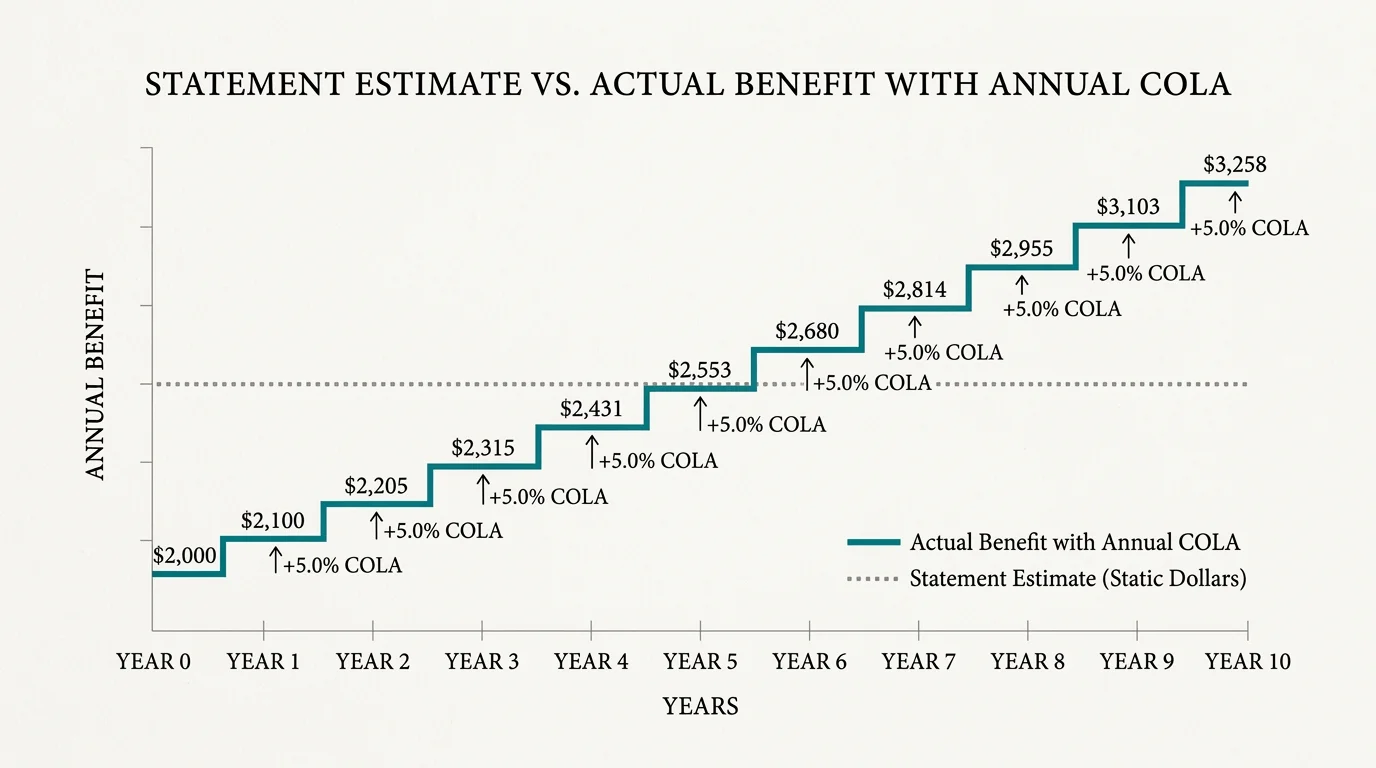
7. Statement Numbers Ignore Future Cost-of-Living Adjustments (COLA)
The Social Security statement explicitly presents all figures in “today’s dollars.” This convention provides an estimate of current purchasing power, but it does not reflect the nominal dollar amount of the check you will actually receive years or decades down the road.
The SSA applies annual Cost-of-Living Adjustments (COLAs) based on changes in the Consumer Price Index for Urban Wage Earners and Clerical Workers (CPI-W). When compounding COLAs over a 5, 10, or 15-year horizon, your final monthly deposit will be higher in nominal terms than the static dollar estimate printed today. While inflation offsets some of that purchasing power, nominal cash flow planning for fixed liabilities—such as a fixed-rate mortgage—benefits from understanding that your actual check will rise with inflation adjustments.

8. You Are Hitting the Maximum Taxable Wage Base in Recent Years
Each year, Congress sets a limit on the amount of earnings subject to Social Security payroll taxes (6.2% for employees, 6.2% for employers). Earnings beyond this cap are not taxed and do not count toward your benefit calculation. However, as the wage cap increases annually, high earners who consistently reach or exceed this threshold earn the maximum allowable credits toward their AIME.
Review the recent progression of the Social Security taxable maximum wage base:
- 2024 Taxable Wage Base: $168,600
- 2025 Taxable Wage Base: $176,100
- 2026 Taxable Wage Base: $184,500
If your earnings recently jumped past these thresholds, your baseline statement projection may lag behind your rapid accumulation of maximum-credit years. Consistently contributing at the top of the wage base steadily replaces lower historical years, compounding your benefit toward the maximum legal limit ($4,152 at FRA or $5,181 at age 70 in 2026).

9. You Are Phasing Out the Windfall Elimination Provision (WEP)
If you worked in public service—such as a teacher, firefighter, police officer, or municipal worker—in a position where you did not pay Social Security taxes, you may qualify for a non-covered public pension. In these cases, the Windfall Elimination Provision (WEP) reduces your Social Security retirement benefit formula.
However, your standard statement does not automatically apply WEP reductions, nor does it accurately project what happens if you eliminate WEP penalties. Under current law, accumulating 30 or more years of “substantial earnings” in covered Social Security employment completely eliminates the WEP reduction. If you transition from public service to the private sector and cross the 30-year threshold of substantial earnings, you nullify the penalty entirely, securing a substantially larger benefit than initial penalty-adjusted estimates suggested.
“Social Security is one of the most tax-efficient income sources available to retirees, but leaving money on the table because you claimed too early or misread your earnings statement is a permanent mistake.” — Ed Slott, CPA and Retirement Distribution Specialist
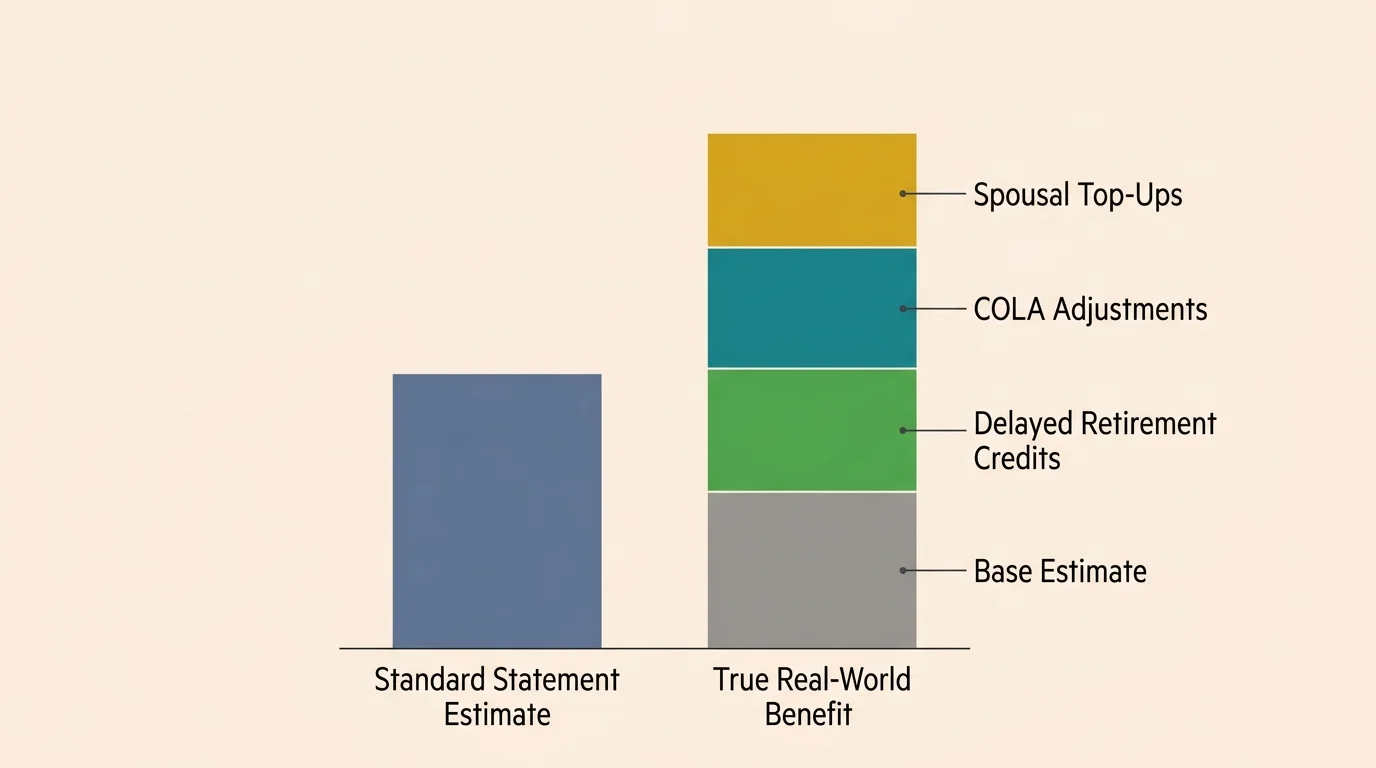
Summary Comparison: Statement Baseline vs. Real-World Adjustments
To help you evaluate whether your projection is accurate, the table below highlights the divergence between SSA statement assumptions and real-world retirement scenarios.
| Factor | What Your SSA Statement Assumes | Real-World Reality | Impact on Your Actual Benefit |
|---|---|---|---|
| Future Salary Growth | Earnings stay locked at your last reported annual wage. | Promotions, career changes, and late-career wage growth raise earnings. | Increases: Raises your 35-year average (AIME) and final PIA. |
| Work History Length | Assumes your current pace of work continues identically. | Adding work years replaces historical $0 or low-earning years. | Increases: Eliminates drag from missing years in the 35-year formula. |
| Claiming Age | Highlights Full Retirement Age (FRA) as standard default. | Delaying up to age 70 adds 8% per year in Delayed Retirement Credits. | Increases: Check grows up to 24%–32% larger than early or baseline FRA numbers. |
| Spousal / Survivor Ties | Reflects only your individual Social Security earnings record. | Spouses qualify for up to 50% of higher earner; survivors up to 100%. | Increases: Provides a higher monthly floor if your spouse outearned you. |
| Cost of Living (COLA) | Excludes all future inflation adjustments (“today’s dollars”). | Annual COLAs compound your base payout over time. | Increases: Higher nominal monthly checks received at retirement. |
| Earnings Record Errors | Assumes all past W-2 and self-employment entries are accurate. | Clerical mistakes, name changes, or missed filings leave missing wages. | Increases after fix: Filing Form SSA-7008 lifts artificially suppressed estimates. |

Common Mistakes to Avoid When Reviewing Your Statement
Protecting your retirement income requires vigilance. Avoid these frequent pitfalls when evaluating your Social Security benefit projections:
- Failing to verify your earnings record annually: Many workers check their statement once a decade. Checking your record annually through your online portal lets you spot employer reporting errors within the statutory 3-year, 3-month, 15-day window, preventing costly, permanent calculation penalties.
- Treating the FRA estimate as a guaranteed lump sum: Your statement estimate is conditional. It assumes continuous employment until claiming age. If you retire early at 58 and stop contributing, the zero-earning years between age 58 and 67 will lower your final payout below the printed FRA projection.
- Ignoring marital claiming coordination: Defaulting to individual estimates without analyzing household claiming strategies causes couples to leave tens of thousands of dollars on the table. Staggering claims—having the higher earner delay to age 70—maximizes longevity insurance and survivor protections.
- Discarding old W-2 forms and tax returns: Always retain digital copies of past W-2s and tax returns (specifically Schedule SE for self-employed workers). If you ever need to contest missing earnings with the SSA beyond standard time limits, tax documents serve as conclusive proof. Consult guidance from the Consumer Financial Protection Bureau (CFPB) on preserving critical personal financial records.

Professional vs. Self-Guided: Navigating Social Security Optimization
Deciding whether to handle your Social Security planning independently or partner with a professional depends on the complexity of your work history and household structure.
- Scenario 1: Straightforward Single-Career History (Self-Guided). If you have 35+ years of continuous covered employment, never worked for a non-covered government agency, and are single, self-guided tools are sufficient. You can track your verified earnings record on SSA.gov, simulate claim ages between 62 and 70, and build your retirement budget directly.
- Scenario 2: Dual-Earner Couple with Substantial Age or Income Disparities (Professional Guidance). When spouses have wide age differences or significant wage gaps, optimizing the timing of spousal top-ups, survivor step-ups, and Delayed Retirement Credits becomes complex. Consulting a professional credentialed through the Certified Financial Planner Board helps model cumulative lifetime household cash flow.
- Scenario 3: Public Sector Workers Subject to WEP and GPO (Professional Guidance). If you have split your career between non-covered civil service and covered private-sector jobs, the interplay between the Windfall Elimination Provision (WEP) and Government Pension Offset (GPO) can severely distort standard estimates. A retirement tax specialist or financial planner can accurately calculate your “substantial earnings” years to determine whether you can eliminate WEP penalties.
- Scenario 4: Disputed Historical Earnings Records (Self-Guided to SSA Resolution). If you discover missing wages from past employers, begin by gathering your historical W-2s and filed tax returns. You can initiate corrections directly with your local Social Security office by submitting Form SSA-7008 without paying third-party fees.
Frequently Asked Questions About Social Security Estimates
How often does the Social Security Administration update my statement?
The SSA updates your earnings record and statement estimates annually after processing wage reports from the IRS, typically during the first half of the calendar year following the tax year worked. You can view your updated statement anytime by logging into your my Social Security account.
Can my actual benefit end up lower than the estimate on my statement?
Yes. Your benefit will be lower if you stop working earlier than the age indicated on the statement (introducing zero-earning years), if your future earnings drop significantly, if you claim early at age 62 (which permanently reduces your benefit by up to 30%), or if non-covered pension rules like WEP or GPO apply to your record.
What should I do if my earnings record is missing a year?
Locate your W-2 or tax return for that year and contact the SSA immediately. Submit Form SSA-7008 (Request for Correction of Earnings Record) along with proof of earnings to your local Social Security office. Correcting these records ensures your 35-year calculation accurately reflects all taxed income.
How do Medicare Part B premiums affect the monthly benefit check I receive?
While your statement shows your gross benefit estimate, most retirees have their Medicare Part B premiums deducted directly from their monthly Social Security check once enrolled at age 65 or older. Your net deposited benefit will reflect this deduction along with any voluntary federal tax withholdings.
Taking Action on Your Social Security Projection
Your Social Security statement is a planning foundation rather than a final verdict. Reviewing your earnings history line by line ensures you receive every dollar you have earned over decades in the workforce. Take time today to log into your account, audit your past wages against historical tax filings, and factor in strategic claiming decisions—such as delaying to age 70 or utilizing spousal benefits. Proactive verification turns a conservative government projection into a reliable, maximized income stream for your retirement years.
The information in this guide is meant for educational purposes. Your specific circumstances—including income, savings, health coverage, and goals—may require different approaches. When in doubt, consult a licensed professional.
Last updated: February 2026. Retirement benefits, tax laws, and healthcare costs change frequently—verify current details with official sources.