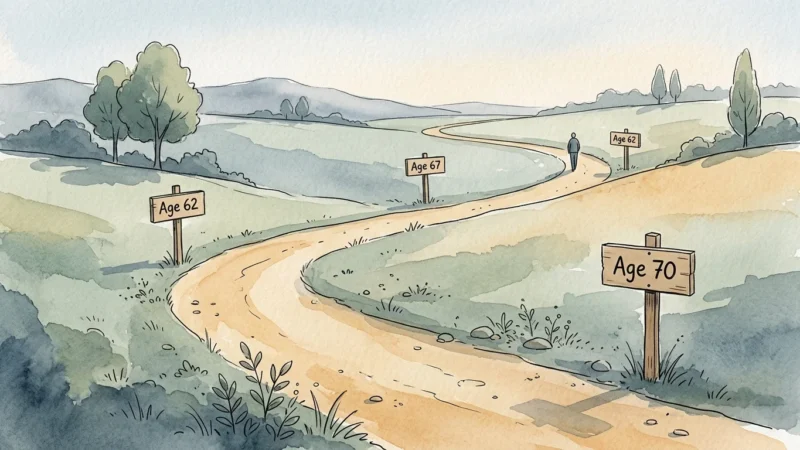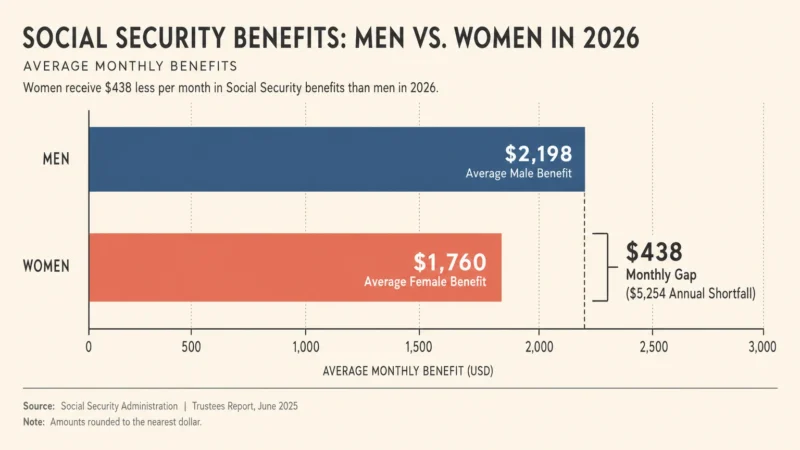
Planning your retirement requires aligning your personal financial timeline with shifting Federal regulations, and 2027 represents a monumental structural shift in Social Security history. As the first cohort of workers born in 1960 reaches their Full Retirement Age (FRA) of 67, the multi-decade transition established by Congress in 1983 reaches its final destination. Claiming strategies that worked for prior generations may now leave substantial money on the table if you fail to account for higher FRA thresholds, earnings test limits, and tax interactions. By understanding how benefit calculations evolve in 2027, you can protect your guaranteed income stream, reduce tax liabilities, and build a resilient retirement portfolio.
At a Glance: The 2027 Social Security Shift
- Full Retirement Age Cap Reaches Completion: Anyone born in 1960 or later reaches Full Retirement Age (FRA) at exactly 67. If you turn 67 in 2027, you are in the first full birth-year group subject to this permanent ceiling.
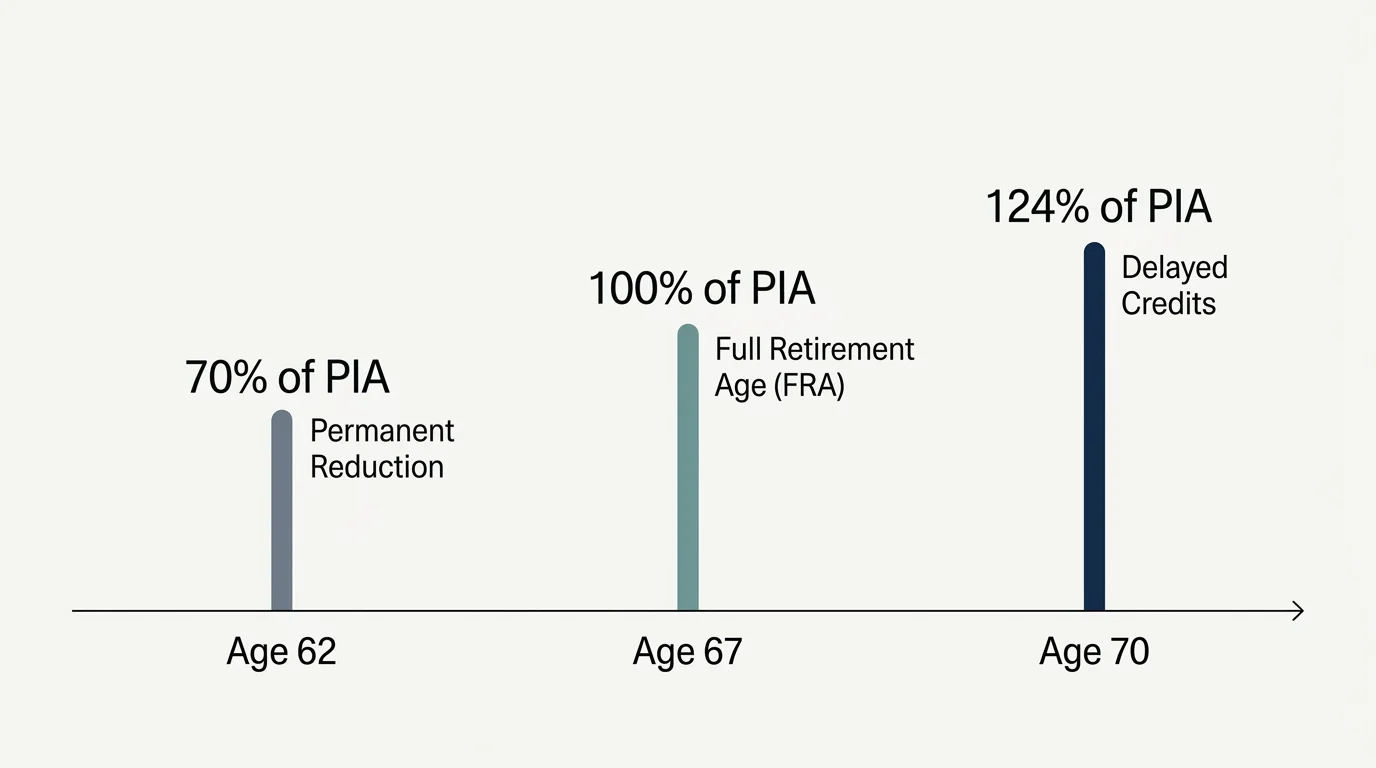
- Steeper Early Claiming Penalties: Claiming at the earliest age of 62 when your FRA is 67 triggers a permanent 30% reduction in your monthly benefit—the largest early penalty in the history of the program.
- The Power of Delaying to Age 70: Delaying your claim past age 67 yields an 8% annual boost in simple interest, topping out at 124% of your Primary Insurance Amount (PIA) at age 70.
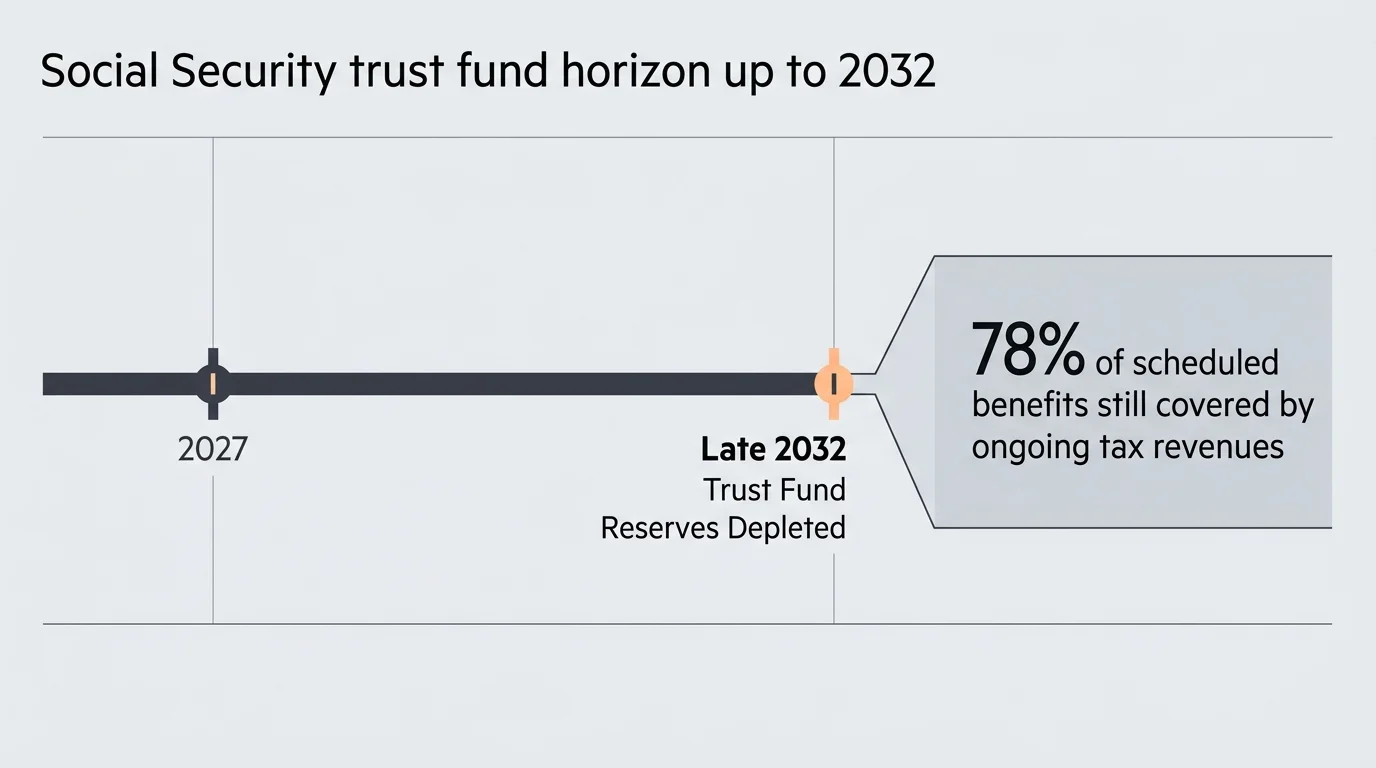
- Insolvency Timeline Reality Check: According to the Social Security Administration (2026), the Old-Age and Survivors Insurance (OASI) Trust Fund reserves face depletion in late 2032. However, tax revenues would still cover approximately 78% of scheduled benefits—making premature, fear-based early claims a costly financial mistake.
- Earnings Test Friction: If you work while collecting benefits before reaching your FRA in 2027, the Social Security Administration temporarily withhold $1 for every $2 earned above the annual exempt threshold.
The 2027 Milestone: Full Retirement Age Reaches Age 67
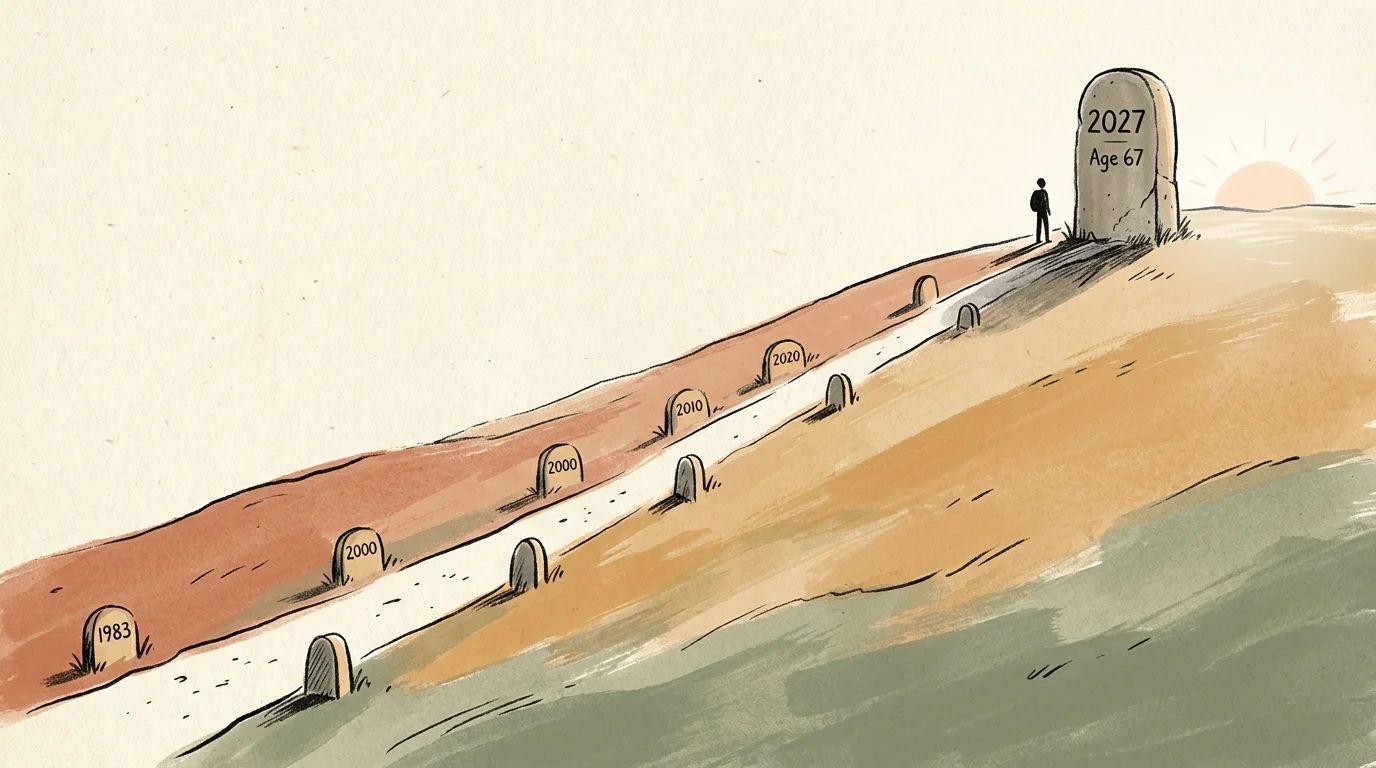
For over forty years, the timeline for Social Security retirement benefits moved along a gradual slope. Passed in 1983 under President Ronald Reagan, major bipartisan amendments instituted a phased increase in the Full Retirement Age to ensure long-term solvency. That multi-decade ramp officially reaches its peak in 2027. If you were born in 1960, you turn 67 in 2027, making your cohort the very first to face an FRA of age 67 for your entire birth year.
Why does this matter so much for Social Security planning 2027? Because every percentage calculation for early or delayed claiming uses your baseline Full Retirement Age—known formally as your Primary Insurance Amount (PIA)—as its anchor. When the baseline shifts, the mathematical trade-offs change dramatically for early retirement versus delayed retirement.
Consider the stark difference in monthly checks when claiming at various ages with an FRA of 67:
| Claiming Age | % of Primary Insurance Amount (PIA) | Adjustment Relative to Baseline | Ideal Candidate Profile |
|---|---|---|---|
| 62 | 70.0% | -30.0% (Permanent Reduction) | Individuals with critical health concerns or urgent liquidity needs. |
| 65 | 86.7% | -13.3% (Permanent Reduction) | Retirees needing to bridge income until Medicare coverage begins. |
| 67 (FRA) | 100.0% | 0.0% (Full Unreduced Benefit) | Workers transitioning out of full-time employment with balanced assets. |
| 70 | 124.0% | +24.0% (Delayed Credits) | Primary earners, healthy retirees, and those minimizing survivor risk. |
If your calculated baseline benefit (PIA) at age 67 is $3,000 per month, filing at age 62 shrinks your monthly check to just $2,100. That represents a permanent $900 monthly haircut—amounting to $10,800 lost every single year for the rest of your life. Conversely, waiting until age 70 increases that monthly check to $3,720. Comparing an early claim at 62 ($2,100) to a delayed claim at 70 ($3,720) reveals a massive 77% increase in lifetime monthly income. Incorporating this reality into your retirement income planning is critical to managing long-term inflation and healthcare costs.
Navigating the 2032 Trust Fund Insolvency Horizon
One of the most persistent topics in pre-retiree conversations is the fiscal health of the system. Panic over headlines leads many workers to file for benefits at age 62 under the mistaken belief that “the money won’t be there later.” As a financial professional, I constantly advise clients to base their financial decisions on data rather than media sensationalism.
According to official reports from the Social Security Trustees (2026), the OASI Trust Fund reserves are projected to be depleted in the fourth quarter of 2032. If Congress takes no legislative action before that date, dedicated payroll tax revenues will still continue flowing into the system, which are estimated to pay out roughly 78% of scheduled benefits. If the combined Old-Age, Survivors, and Disability Insurance (OASDI) funds are evaluated together, full depletion moves to 2034, with 83% of benefits payable thereafter.
Filing early at age 62 out of insolvency panic locks in a guaranteed 30% reduction immediately. If Congress later resolves the funding shortfall—as they have during every major fiscal deadline in the past—you permanently forfeit that lost income with no way to reset your baseline benefit. Even in a hypothetical worst-case scenario where benefits are cut across the board by 22% in 2032, a delayed monthly check of $3,720 (reduced to $2,901) still far outpaces an early check of $2,100 (reduced to $1,638). Delaying your claim remains one of the most powerful risk mitigation strategies available.
“Social Security isn’t just an investment return calculation; it is longevity insurance. It is the only inflation-indexed asset backed by the federal government that you cannot outlive.” — Ed Slott, CPA and IRA Specialist
4 Core Strategies for Your Social Security Strategy in 2027
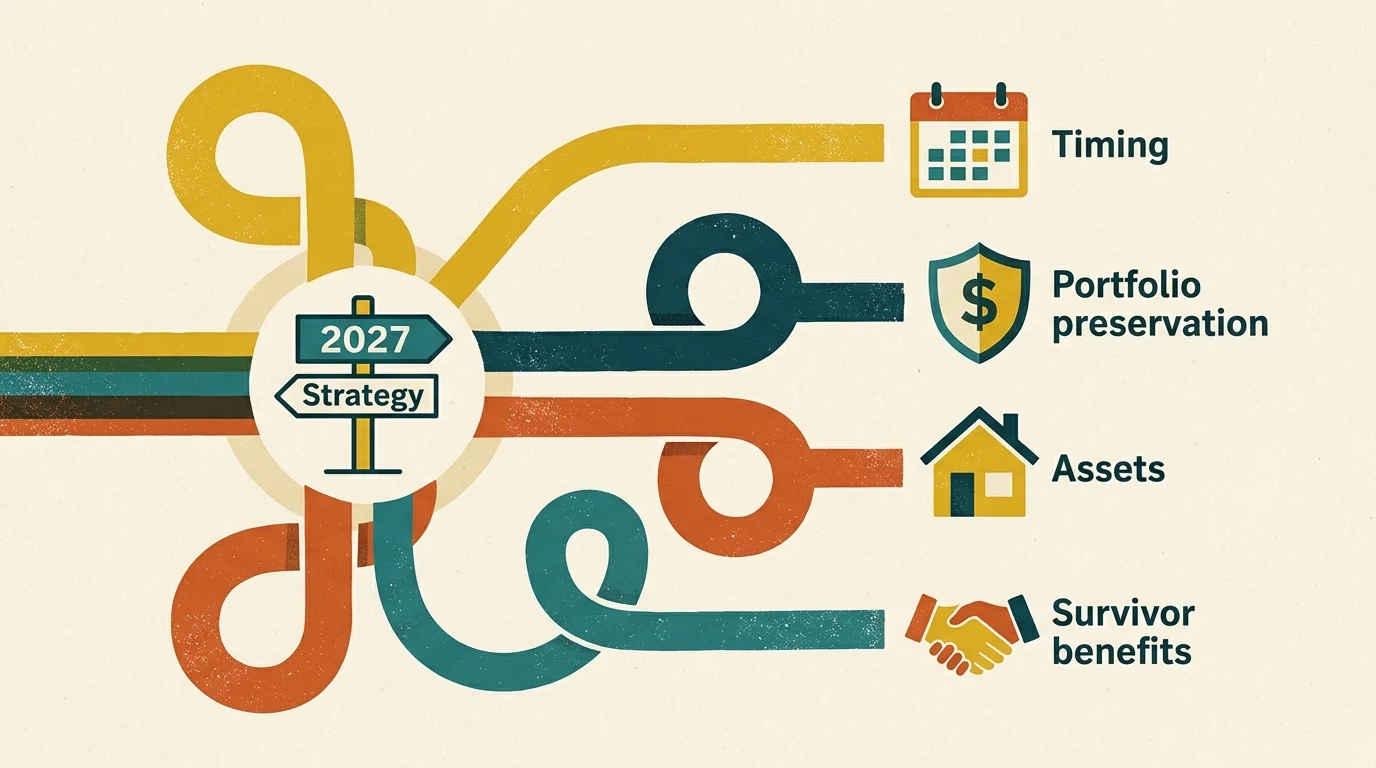
Effective Social Security changes 2027 planning requires integrating your claims into a broader wealth-management blueprint. Here are four actionable strategies designed for pre-retirees preparing for the 2027 environment.
1. The “Bridge Capital” Strategy
If you choose to stop working at age 62, you do not have to claim Social Security immediately. Instead, you can create an income “bridge” by spending down assets from taxable brokerage accounts, traditional IRAs, or 401(k) plans between ages 62 and 70. This approach allows your underlying Social Security benefit to grow at a guaranteed 8% simple annual rate through delayed retirement credits past your FRA.
Drawing down traditional IRA assets first during your early 60s offers a key secondary benefit: it lowers your overall traditional retirement account balances. Doing so systematically reduces the size of your future Required Minimum Distributions (RMDs) at age 75, effectively shielding your overall income from higher tax brackets later in life. You can explore retirement withdrawal mechanics through the SEC Investor Education portal.
2. The Higher-Earner Optimization Blueprint
For married couples, Social Security planning should never be treated as two independent decisions; it must be approached as a joint longevity plan. When one spouse dies, the surviving spouse inherits the higher of the two individual Social Security payments, while the smaller check disappears entirely.
To maximize the financial protection of the surviving spouse, the higher-earning partner should make every effort to delay claiming until age 70. This locks in the highest possible baseline benefit for the duration of either spouse’s life. Meanwhile, the lower-earning spouse can file earlier—at FRA or earlier if necessary—to provide household liquidity while the higher benefit continues to compound.
3. Spousal Benefit Coordination
Spousal benefits allow you to receive up to 50% of your partner’s Primary Insurance Amount if that amount exceeds your own earned benefit. However, to receive a spousal benefit, the primary worker must have already filed for their own retirement benefit. Furthermore, spousal benefits do not earn delayed retirement credits past Full Retirement Age. If you are eligible for a spousal benefit, claiming it past your FRA of 67 will not increase the payout beyond the 50% threshold. You can review official guidelines regarding spousal qualifications directly on the Social Security Administration website.
4. Tax-Bracket Smoothing via Roth Conversions
The gap between your retirement date and the age you start taking Social Security represents a prime tax-planning window. If you retire at age 62 but defer Social Security until age 67 or 70, your taxable income may temporarily drop into lower tax brackets. You can use these low-income years to execute systematic Roth IRA conversions.
By converting pre-tax IRA funds into tax-free Roth accounts prior to starting Social Security, you lower future RMDs and create a pool of tax-free capital. Once Social Security payments begin, you can draw tax-free income from your Roth IRA without triggering unnecessary taxes on your Social Security benefits.
The Tax Impact on Social Security: Avoiding the “Tax Torpedo”
A common surprise for new retirees is discovering that Social Security benefits can be taxed at the federal level. Whether your benefits are taxed depends on a metric known as your Combined Income (or Provisional Income).
The IRS calculates your Combined Income using a specific formula:
Combined Income = Adjusted Gross Income (AGI) + Non-Taxable Interest + 50% of total Social Security Benefits
The thresholds that trigger taxes on Social Security benefits are not indexed to inflation. Because these levels were fixed decades ago, ordinary wage growth and inflation push more retirees into taxable territory every year:
| Filing Status | Combined Income Threshold | % of Benefits Subject to Federal Income Tax |
|---|---|---|
| Single / Head of Household | Under $25,000 | 0% taxable |
| Single / Head of Household | $25,000 – $34,000 | Up to 50% taxable |
| Single / Head of Household | Over $34,000 | Up to 85% taxable |
| Married Filing Jointly | Under $32,000 | 0% taxable |
| Married Filing Jointly | $32,000 – $44,000 | Up to 50% taxable |
| Married Filing Jointly | Over $44,000 | Up to 85% taxable |
Crossing these thresholds creates the “tax torpedo”—a sharp spike in your marginal tax rate where an extra dollar of IRA withdrawal causes an additional 85 cents of Social Security to become taxable. To prevent this, coordinate your withdrawals across taxable, tax-deferred, and tax-exempt accounts. Detailed guidance on retirement income distributions can be found at the Internal Revenue Service official site.

Working in Retirement: Navigating the 2027 Earnings Test
Reaching early retirement age does not automatically mean you must stop working. Many individuals transition into consulting, part-time work, or small business ownership. However, if you claim Social Security prior to reaching your FRA of 67 and continue working, your benefits will be subject to the Retirement Earnings Test (RET).
If you are under your Full Retirement Age for the entire calendar year, the Social Security Administration withhold $1 in benefits for every $2 you earn above the annual exempt threshold. In the calendar year you reach your Full Retirement Age (2027 for those born in 1960), the rule softens: $1 is withheld for every $3 earned above a significantly higher threshold, counting only the earnings made before the exact month you turn 67.
It is crucial to note that withheld benefits are not permanently lost. Once you reach your FRA of 67, the Social Security Administration recalculates your monthly check upward to credit you back for the payments that were withheld. However, in the short term, failing to anticipate the earnings test can cause severe cash-flow disruption. Once you reach age 67, the earnings test disappears entirely, allowing you to earn an unlimited income without any benefit reductions.

Avoiding Common Errors in Social Security Planning
Through years of financial advisor Social Security advice sessions, I have seen bright, well-intentioned individuals commit avoidable errors that permanently shrink their retirement safety nets. Be on guard against these frequent mistakes:
- Claiming Early Due to Insolvency Fears: As established, taking a guaranteed 30% reduction at age 62 out of fear usually results in lower total lifetime wealth than waiting, even if future broad reductions occur.
- Ignoring Medicare Part B and D Premium Interactions (IRMAA): Medicare Part B premiums are typically deducted directly from your monthly Social Security check. If high taxable income or large IRA withdrawals trigger Income-Related Monthly Adjustment Amounts (IRMAA), higher Medicare premiums can noticeably offset your net Social Security income. Check official rates at Medicare.gov.
- Failing to Coordinate Spousal Health and Age Gaps: If the primary breadwinner is significantly older than the non-working spouse, filing early can severely compromise the younger spouse’s future survivor benefits. Always model survivor scenarios out to age 90 or 95.
- Treating Social Security as an Isolated Asset: Social Security must be evaluated alongside your pensions, IRAs, home equity, and health profile. Deciding when to claim without reviewing your total portfolio strategy often leads to paying unnecessarily high taxes.

When DIY Isn’t Enough
While basic calculations can be handled using online estimators, certain financial situations involve complex regulatory overlaps that justify professional guidance. You should consult a Certified Financial Planner (CFP) or CPA under the following circumstances:
- Complex Family Structures: If you have ex-spouses from marriages that lasted over 10 years, minor dependent children, or disabled adult children, you may qualify for specialized auxiliary benefits that require precise execution.
- Public Pensions and Non-Covered Employment: If you worked for a government entity, school district, or foreign entity that did not collect Social Security taxes, your benefits may be impacted by statutory rules like the Windfall Elimination Provision (WEP) or Government Pension Offset (GPO).
- High-Net-Worth Estate and Tax Modeling: If your total combined income easily exceeds the upper IRS thresholds, optimizing distributions across multiple tax buckets requires tailored multi-year projections. You can learn about professional advisory standards via the CFP Board guidance portal.
- Severe Health Disparities Between Spouses: Balancing short-term life expectancy challenges against long-term survivor benefit needs demands personalized cash-flow modeling.
Frequently Asked Questions
What happens if I turn 67 in 2027 and want to keep working full-time?
If you reach your Full Retirement Age of 67 in 2027, you can work as much as you want without facing any benefit reductions from the earnings test. Once you reach age 67, your earned income will no longer reduce your monthly Social Security payments, regardless of how much you earn.
Can I change my mind if I claim Social Security early at age 62?
Yes, but conditions apply. You have a one-time option to perform a benefit withdrawal within 12 months of your initial claim. However, you must repay every dollar received by you and your family members back to the Social Security Administration. After 12 months, you cannot undo your claim, though you can choose to suspend your payments once you reach your Full Retirement Age to earn delayed retirement credits up to age 70.
How does inflation affect my benefit after I claim?
Once you begin receiving benefits, your monthly check is adjusted annually using the Cost-of-Living Adjustment (COLA). COLA adjustments are determined by changes in consumer price indices during the third quarter of each year and are applied automatically every January, helping preserve your purchasing power throughout retirement.
How are my baseline Social Security benefits calculated?
Your basic benefit is calculated using your 35 highest-earning years, adjusted for historical wage growth. If you work fewer than 35 years in jobs that paid into Social Security, zero-income years are factored into the equation, which lowers your overall average monthly benefit.
Taking Action on Your 2027 Retirement Plan
Preparing for Social Security in 2027 requires moving beyond simplistic rules of thumb and taking a proactive, comprehensive approach to your financial future. The completion of the Full Retirement Age step-up to age 67 changes the math for early claiming penalties, spousal strategies, and delayed retirement credits. By evaluating your household health, investment portfolio, tax bracket, and long-term income goals, you can build a timing strategy that maximizes your guaranteed lifetime income.
Start today by reviewing your official earnings statement through your online Social Security account. Check your 35-year earning history for accuracy, run scenario calculations for ages 62, 67, and 70, and integrate those numbers into your comprehensive wealth plan. Making informed decisions today helps ensure that your retirement years are backed by reliable, tax-optimized income.
This article provides general retirement education and information only. Everyone’s financial situation is unique—what works for others may not work for you. For personalized advice, consider consulting a qualified financial professional such as a CFP or CPA.
Last updated: February 2026. Retirement benefits, tax laws, and healthcare costs change frequently—verify current details with official sources.