A sudden discrepancy in your monthly Social Security check can disrupt your entire retirement budget, yet administrative and recordkeeping errors happen more frequently than most retirees realize. The Social Security Administration processes millions of claims each year, and outdated earnings records, flawed pension offsets, or delayed benefit recalculations can easily shortchange your earned monthly income. Catching these calculation mistakes early ensures you receive every dollar you paid into the system over your career. If your benefit check seems lower than expected, recognizing the warning signs allows you to demand a swift correction and secure the back pay you rightfully deserve.
How Social Security Determines Your Benefit Amount
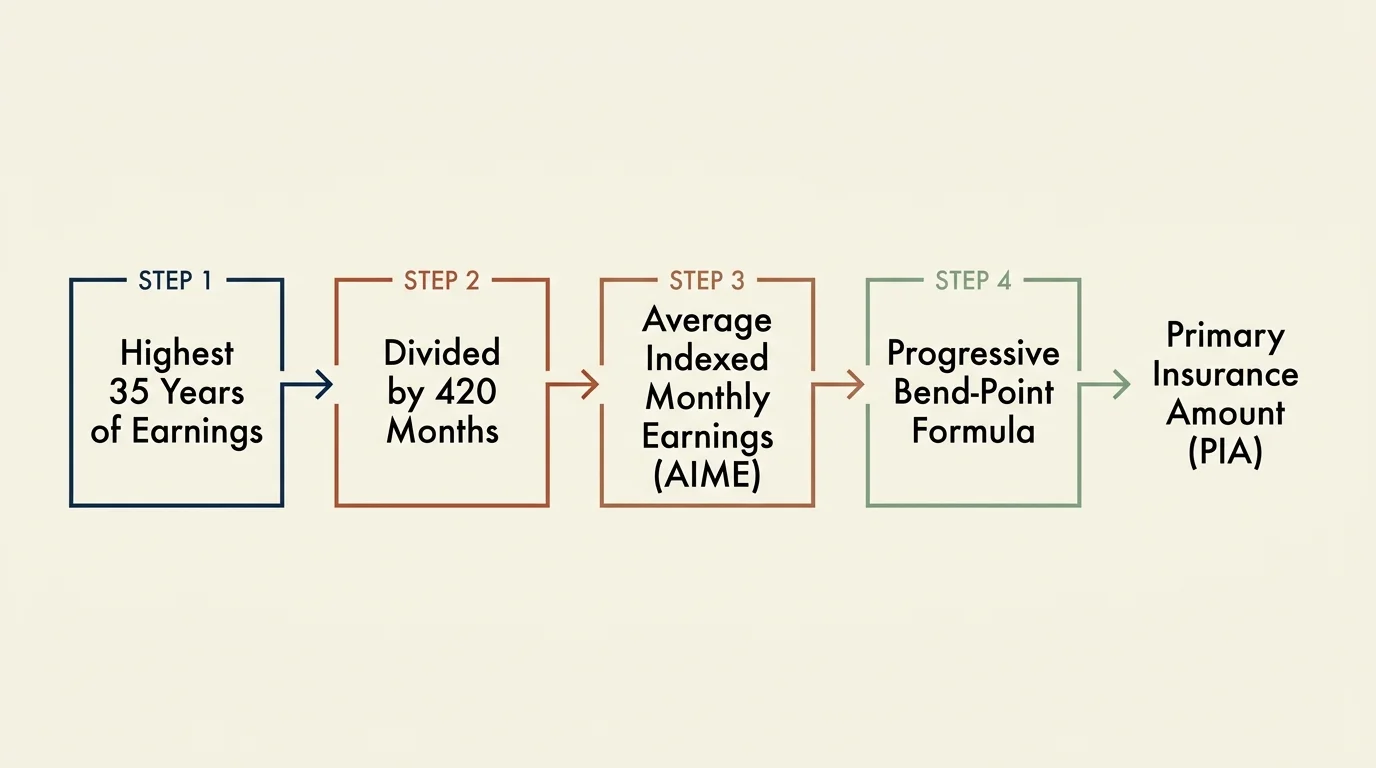
To spot a calculation error, you must understand the mathematical foundation of your monthly benefit. The Social Security Administration (SSA) calculates your Primary Insurance Amount (PIA)—the base amount you receive at your Full Retirement Age (FRA)—using a strict multi-step formula based on your lifetime earnings.
The agency adjusts your historical earnings for national wage growth over time, converting your nominal wages into wage-indexed values. The SSA then identifies your highest 35 years of wage-indexed earnings. It divides the sum of these 35 years by 420 (the number of months in 35 years) to establish your Average Indexed Monthly Earnings (AIME).
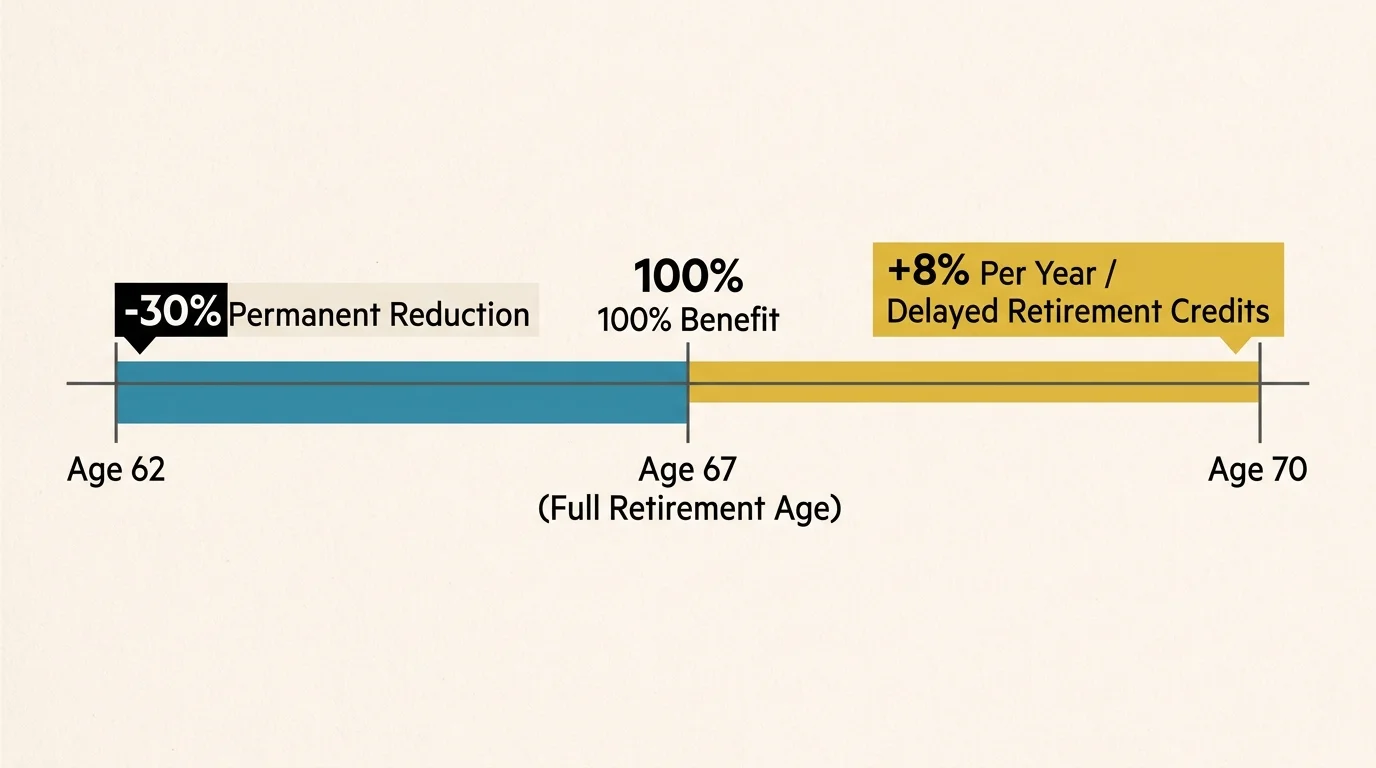
Finally, the SSA applies a progressive bend-point formula to your AIME to determine your PIA. For workers reaching age 62, the formula replaces a higher percentage of lower-tier earnings and a lower percentage of higher-tier earnings. If you claim benefits before your FRA—which reaches age 67 for everyone born in 1960 or later—the SSA permanently reduces your monthly check by up to 30%. Conversely, delaying benefits past your FRA earns you Delayed Retirement Credits (DRCs) of 8% per year up to age 70.
Because this formula relies on decades of historical data, multiple external tax feeds, and precise claiming age calculations, a single data omission anywhere in the chain will skew your monthly check.
“Social Security is often your largest retirement asset, but the government does not double-check your wage history for you. Auditing your earnings record is entirely your responsibility.” — Ed Slott, CPA and Retirement Distribution Expert

8 Signs Your Social Security Benefit Was Miscalculated
Administrative oversights, scrambled records, and flawed benefit transitions trigger improper payments across the country. According to reports from the Social Security Administration Office of the Inspector General (OIG), improper payments—including substantial underpayments—account for billions of dollars across agency programs. Look for these eight clear signs that your check may contain an error.
1. Missing or Zero-Earning Years in Your Official Wage History
The SSA’s 35-year calculation baseline assumes zero earnings for any year without recorded wages. If your earnings record shows a $0 entry for a year in which you paid Federal Insurance Contributions Act (FICA) taxes, your overall AIME drops, artificially depressing your monthly benefit check for life.
Missing wages occur when an employer reports your income under an incorrect Social Security Number (SSN), typos occur during manual data entry, or you change your legal name following marriage or divorce without updating the SSA. Under standard federal rules, you generally have 3 years, 3 months, and 15 days following the taxable year to correct wage records. However, the SSA makes exceptions beyond this statutory deadline if you provide definitive tax records, such as a Form W-2 or a certified tax return copy from the Internal Revenue Service (IRS).
2. Your Actual Monthly Check Falls Far Below Your Online Estimates
If you regularly reviewed your annual statements on your my Social Security account prior to claiming, your initial benefit award letter should closely mirror those projections, assuming your earnings remained stable. A sudden, unexplained drop of several hundred dollars between your final estimate and your actual award letter indicates a potential systemic error.
This discrepancy frequently happens when the SSA fails to index your final two years of earnings before retirement or applies an incorrect Full Retirement Age benchmark to your record. Compare the AIME displayed on your official award letter against the wages shown on your lifetime earnings statement to pinpoint where the numbers diverge.
3. The SSA Continues Withholding Earnings Penalties Past Full Retirement Age
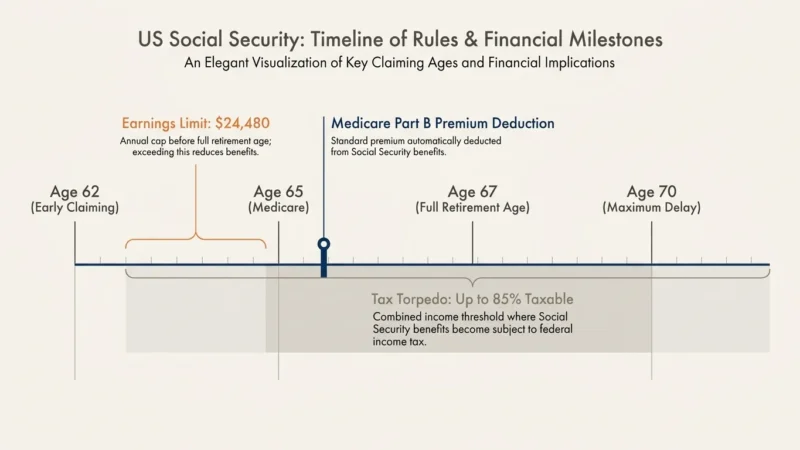
If you claim retirement benefits before reaching your Full Retirement Age and continue to work, you fall under the Social Security Retirement Earnings Test (RET). The agency withholds benefits if your earned wages exceed annual statutory thresholds:
- Under FRA for the entire year: The exempt earnings limit is $24,480. The SSA withholds $1 in benefits for every $2 earned above this limit.
- The calendar year you reach FRA: The exempt earnings limit is $65,160. The SSA withholds $1 in benefits for every $3 earned above this limit for the months prior to reaching your birthday month.
A widespread calculation mistake occurs when the SSA fails to eliminate this withholding once you reach your FRA. The month you attain Full Retirement Age, the earnings cap vanishes completely. Furthermore, the SSA must recalculate your monthly benefit amount upward to credit you for the months your benefits were withheld under the earnings test. If your payments remain suppressed or your check does not adjust upward within a year of reaching FRA, the agency has misapplied the earnings test rules to your account.
4. You Did Not Receive the Dual-Entitlement Spousal or Survivor Top-Off
Spouses and surviving partners often face complex calculation errors due to “dual entitlement.” As a spouse, you are entitled to up to 50% of your higher-earning spouse’s Full Retirement Age PIA if you claim at your own FRA. As a surviving spouse, you can receive up to 100% of your deceased spouse’s benefit amount.
When you qualify for both your own worker benefit and a spousal or survivor benefit, the SSA does not pay both amounts in full. Instead, the agency pays your own earned benefit first, then layers an auxiliary benefit on top to bring your total check up to the higher spousal or survivor rate. Calculation errors occur when SSA claim representatives fail to link the two records, leaving you with only your lower worker benefit. If your spouse earns significantly more than you, or if your spouse has passed away, and your monthly check did not increase, your auxiliary entitlement was likely omitted.
5. Unjustified Application of the Windfall Elimination Provision (WEP) or Government Pension Offset (GPO)
If you earned a pension from a government entity or school district where you did not pay Social Security taxes, the Windfall Elimination Provision (WEP) or Government Pension Offset (GPO) may reduce your benefit. However, the SSA regularly misapplies these offsets to workers who are legally exempt.
Under federal guidelines, you are completely exempt from the WEP reduction if you have 30 or more years of “substantial earnings” in employment covered by Social Security. The WEP penalty also phases out gradually between 21 and 29 years of substantial covered earnings. If the SSA applies the maximum WEP reduction to your check despite your long career in the private sector, your check has been erroneously penalized. Similarly, the GPO should never apply to pensions earned from jobs where you paid full FICA taxes.
6. Your Benefit Failed to Recalculate After Working in Retirement
Many retirees work part-time or consult after claiming Social Security. If your current annual earnings surpass one of the lowest-earning years in your historical 35-year calculation base, your monthly PIA must increase. The SSA runs an automated annual review known as the Automatic Earnings Appraisal Operation (AERO) to catch these changes and adjust benefits retroactively to January of the year following the earnings.
Systemic data processing backlogs can stall AERO adjustments for years. If you paid substantial FICA taxes over the past two years while collecting benefits and never received a notice of benefit increase along with a retroactive lump-sum check, your earnings record has not been properly updated.
7. Incorrect Medicare Part B or IRMAA Surcharges Reduce Your Net Check
Most retirees have their Medicare Part B premiums deducted directly from their Social Security payments. In 2026, the standard monthly Part B premium is deducted automatically, but higher earners face the Income-Related Monthly Adjustment Amount (IRMAA), which adds surcharges based on tax returns from two years prior.
A miscalculation occurs when the SSA deducts IRMAA surcharges based on outdated tax data after you have experienced a qualifying life-changing event (such as retirement, work reduction, or the death of a spouse). If your income dropped significantly due to retirement, you have the legal right to file Form SSA-44 to recalculate your premiums using your current income. If the SSA ignores this appeal or applies an incorrect income bracket from the Medicare.gov schedule, your net monthly check will be incorrect.
8. You Receive an Inaccurate Overpayment Notice
The SSA occasionally sends alarming letters claiming they overpaid you thousands of dollars and demanding immediate repayment by withholding future monthly checks. These notices often stem from system calculation glitches, delayed data sharing between federal agencies, or scrambled worker identity files.
According to consumer protection guidance from the Consumer Financial Protection Bureau (CFPB), you should never assume an overpayment demand from a government entity is mathematically correct. An erroneous overpayment determination is a clear sign that the SSA’s internal calculation models for your account contain fundamentally flawed data.
Comparing Benefit Expectations Against Common Calculation Errors
Review this comparison table to identify how typical calculation errors distort what you should legally receive under Social Security program guidelines:
| Benefit Type / Scenario | Correct Statutory Rule | Common SSA Error | Net Financial Impact |
|---|---|---|---|
| Lifetime Worker Benefit | Top 35 wage-indexed earnings years divided by 420 months. | Missing W-2 years recorded as $0 earnings. | Permanent reduction of $50 to $300+ in your monthly check. |
| Post-FRA Earnings | No earnings penalty applies once reaching age 67. | System continues applying early Retirement Earnings Test cuts. | Unlawful withholding of $1 for every $2 or $3 earned. |
| Spousal Entitlement | Up to 50% of higher earner’s PIA at Full Retirement Age. | Failure to establish dual-entitlement cross-link. | Beneficiary receives only their smaller individual worker check. |
| Non-Covered Pension (WEP) | 0% WEP reduction if worker has 30+ years of substantial earnings. | Applying the full WEP penalty regardless of covered work history. | Monthly benefit reduced by up to several hundred dollars unfairly. |
| Medicare Deductions | Standard Part B premium unless modified by verified two-year tax lookback. | Failing to process Form SSA-44 life-changing event income drops. | Excessive monthly IRMAA surcharges deducted from net benefit. |

How to Audit Your Social Security Record
You do not need to wait for the government to discover an error. You can audit your Social Security history systematically by taking these steps:
- Access Your Online Statement: Log in to your personal account on the SSA website to download your complete lifetime earnings statement.
- Cross-Reference Historical W-2s and Tax Returns: Compare the wages recorded on your statement against your personal historical tax records, focusing specifically on your highest earning years.
- Verify Your Full Retirement Age: Confirm that the SSA assigned you the correct FRA (age 67 for those born in 1960 or later) and applied the accurate early-claiming reduction or delayed retirement percentage.
- Check Offset Statuses: If you receive a civil service, municipal, or foreign pension, verify whether the SSA correctly documented your total years of substantial covered earnings before applying WEP or GPO deductions.
- Audit Net Medicare Deductions: Review your annual benefit adjustment letter sent each December to ensure the Medicare Part B and Part D deductions match your true tax bracket.

How to Dispute a Social Security Calculation Error
If you uncover a mistake in your wage record, benefit award letter, or monthly check, act immediately. The SSA maintains a formal appeals structure with strict deadlines.
You have 60 days from the date you receive an initial determination letter to file a formal appeal. The SSA presumes you received the notice five calendar days after the date printed on the letter. To challenge a mathematical error, benefit reduction, or incorrect award amount, file Form SSA-561 (Request for Reconsideration).
When completing Form SSA-561, clearly write “Benefit Calculation Error” at the top of your explanation. Attach clear supporting documentation, such as copies of W-2 forms, certified tax filings, marriage certificates, or pension plan statements confirming covered employment. Submit your appeal via certified mail with return receipt requested, or deliver it directly to your local Social Security field office and demand a date-stamped receipt copy for your records.
What Can Go Wrong When Disputing Errors
Challenging a federal agency can introduce unexpected hurdles if you handle the process incorrectly. Avoiding these common mistakes will protect your claim:
- Missing the 60-Day Appeal Window: If you miss the 60-day deadline without establishing “good cause” (such as hospitalization or serious illness), the SSA may dismiss your appeal, forcing you into a prolonged administrative battle.
- Relying on Phone Conversations: Field representatives fielding phone calls cannot officially alter your computational record without submitted forms. Always establish a verifiable paper trail.
- Submitting Original Documents Without Copies: Never mail your only original copies of W-2s or tax filings to an SSA processing center. Send certified copies or bring originals to a field office for in-person verification.
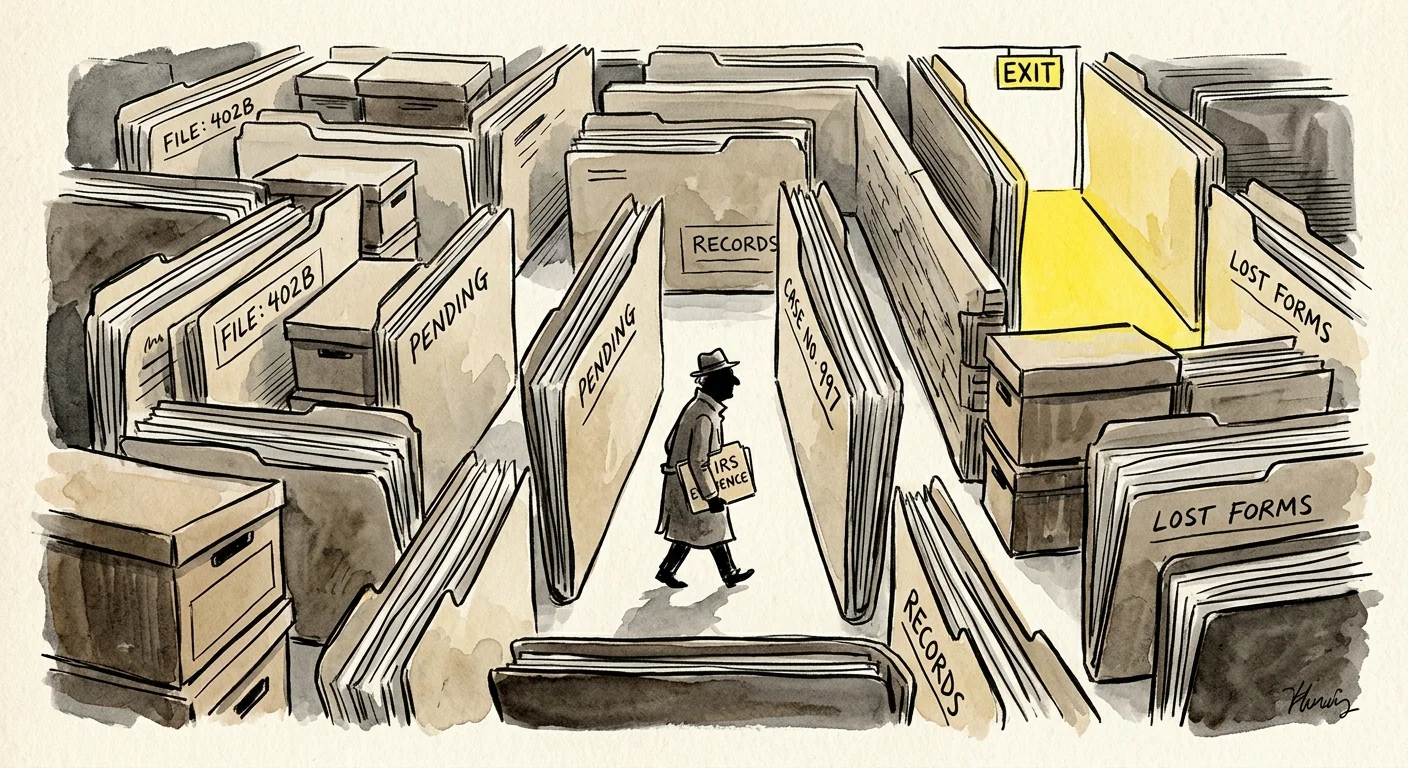
- Failing to Track Open Tickets: The SSA frequently faces massive backlogs. If you do not follow up on your Form SSA-561 every 30 days, your file may sit untouched in regional processing queues.

When to Consult a Professional
While many wage corrections require only straightforward tax documentation, certain complex scenarios warrant professional guidance. Consider consulting an accredited elder law attorney, a Certified Financial Planner (CFP), or a specialized Social Security consultant in the following situations:
- Complex Dual-Entitlement Disputes: When navigating overlapping spousal, divorced spousal, and survivor benefits across multiple marriages.
- Multi-Decade WEP/GPO Adjustments: If you split a 35-year career between state government positions and private-sector employment across multiple states.
- Stalled Administrative Appeals: If the SSA denies your Form SSA-561 Reconsideration and you must present your calculation case before an Administrative Law Judge (ALJ).
- Large Erroneous Overpayment Claims: If the agency attempts to claw back tens of thousands of dollars due to an internal administrative miscalculation. Organizations like AARP provide free legal resource locators for seniors facing contested benefit determinations.
Frequently Asked Questions
How far back can the Social Security Administration correct an error?
Under federal regulations, the standard limit to correct wage record mistakes is 3 years, 3 months, and 15 days following the year earnings were received. However, if you possess official tax returns, W-2 forms, or employer wage reports proving FICA taxes were paid, the SSA can correct wage records regardless of how many decades have passed. In cases of agency computational error, the SSA must pay all accumulated retroactive back pay once the mistake is verified.
What should I do if the SSA says I was overpaid because of their calculation mistake?
If you receive an overpayment notice, you have the right to file Form SSA-561 within 60 days to dispute the validity of the overpayment. If the error was genuinely caused by agency staff and you cannot afford repayment, file Form SSA-632 (Request for Waiver of Overpayment Recovery). The SSA cannot collect funds while an active waiver request or reconsideration appeal is pending review.
Can my monthly benefit decrease if I ask the SSA for a recalculation?
Yes. When you request a formal recalculation or file Form SSA-561, the SSA reviews your entire earnings file. If the agency discovers that an earlier calculation erroneously credited you with unearned wages or applied an incorrect bend point, your monthly benefit could be adjusted downward. Always audit your own wage history thoroughly before requesting a formal agency review.
How long does the SSA take to process a benefit recalculation?
Processing times vary depending on agency backlogs and the complexity of your file. Simple wage record updates supported by clear W-2 forms typically take 60 to 90 days. Complex appeals involving WEP exemptions, dual-entitlement corrections, or Administrative Law Judge hearings can take between 6 and 18 months to resolve completely.
Protecting Your Hard-Earned Benefit
Your Social Security benefit represents decades of dedicated work and payroll tax contributions. Administrative errors, system backlogs, and missing wage records should never reduce the income you earned. Take the time to audit your earnings statement annually, understand the rules governing your Full Retirement Age, and scrutinize every adjustment letter you receive from the government.
If you spot an error, assert your rights promptly by gathering your tax documentation and filing a formal appeal before deadlines lapse. Securing an accurate calculation today ensures financial security and steady income throughout your entire retirement journey.
This is educational content based on general retirement planning principles. Individual results vary based on your situation. Always verify current benefit amounts, tax laws, and eligibility with official sources.
Last updated: February 2026. Retirement benefits, tax laws, and healthcare costs change frequently—verify current details with official sources.