
Retiring from a full-time career does not mean shelving your lifetime of hard-won wisdom, professional expertise, and passion for helping others. Today, nearly 20 percent of Americans aged 65 and older remain active in the labor force, with many turning toward rewarding part time education jobs retirees love for flexibility and purpose. Whether you want to guide young minds, train corporate professionals, or help small business owners navigate complex challenges, teaching jobs for retirees offer the perfect blend of mental stimulation, social connection, and supplemental income. Exploring mentoring part time work allows you to share your skills while maintaining complete control over your schedule.

Why Teaching and Mentoring Make Ideal Retirement Careers
Transitioning into educational or advisory roles during retirement provides advantages that extend far beyond a paycheck. According to data from the Bureau of Labor Statistics (2026), senior workforce participation remains near historic highs because modern retirees seek meaningful engagement rather than complete inactivity. When you choose to step into a instructional role, you leverage knowledge you already possess, minimizing job-related stress while maximizing mental acuity.
Teaching and mentoring naturally foster sharp cognitive health. Engaging with students or mentees requires active problem-solving, organization, and clear communication—activities that protect memory and mental agility as you age. Furthermore, these positions offer remarkable schedule control. Unlike traditional corporate jobs, part-time educational positions often let you select specific days, hours, or academic terms to work, leaving ample time for travel, family, and leisure.
From a financial perspective, generating modest earned income helps preserve your investment portfolio. Earning even $1,000 to $2,000 per month through flexible work can delay withdrawals from your tax-advantaged retirement accounts, allowing compound growth to work in your favor longer. However, managing earned income alongside benefits requires attention to detail. According to the Social Security Administration (2026), if you work while collecting Social Security before reaching your Full Retirement Age (FRA), you can earn up to $24,480 per year ($2,040 per month) without affecting your benefits. For those reaching FRA during 2026, the limit rises to $65,160 ($5,430 per month). Keeping your earnings within these parameters ensures you maximize income without incurring unexpected benefit withholdings.
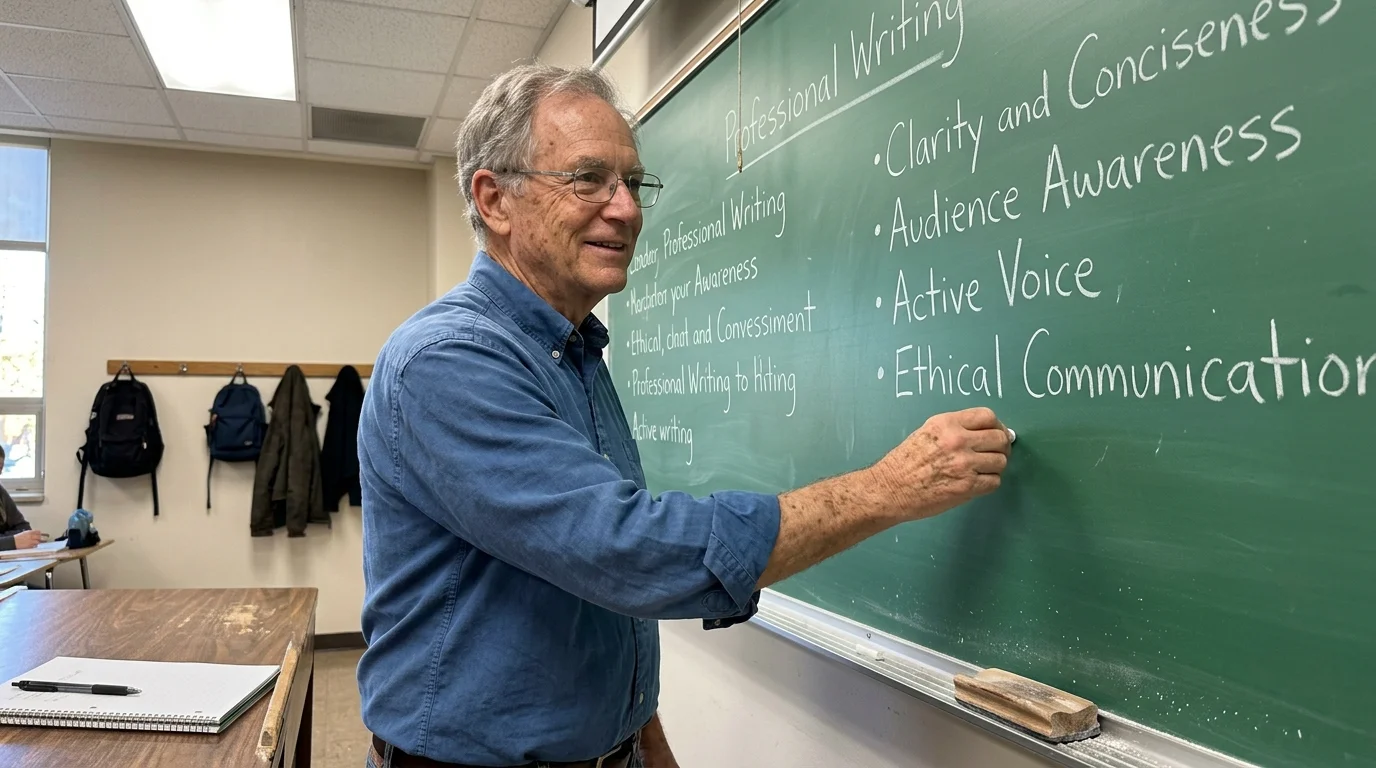
10 Best Part-Time Jobs for Retirees Who Love to Teach or Mentor
If you enjoy explaining concepts, solving problems, or inspiring growth in others, diverse opportunities exist across traditional academia, digital platforms, and local community spaces. Here are ten top positions tailored for retired professionals seeking flexible instruction and advisory roles.
1. Community College Adjunct Professor
Community colleges frequently hire industry veterans to teach specialized courses in business, writing, computer science, healthcare, and trade disciplines. You do not always need a doctorate; many institutions value decades of hands-on professional experience alongside a master’s degree or bachelor’s degree with relevant certifications. As an adjunct instructor, you teach one or two courses per semester, holding office hours and grading assignments on your own schedule.
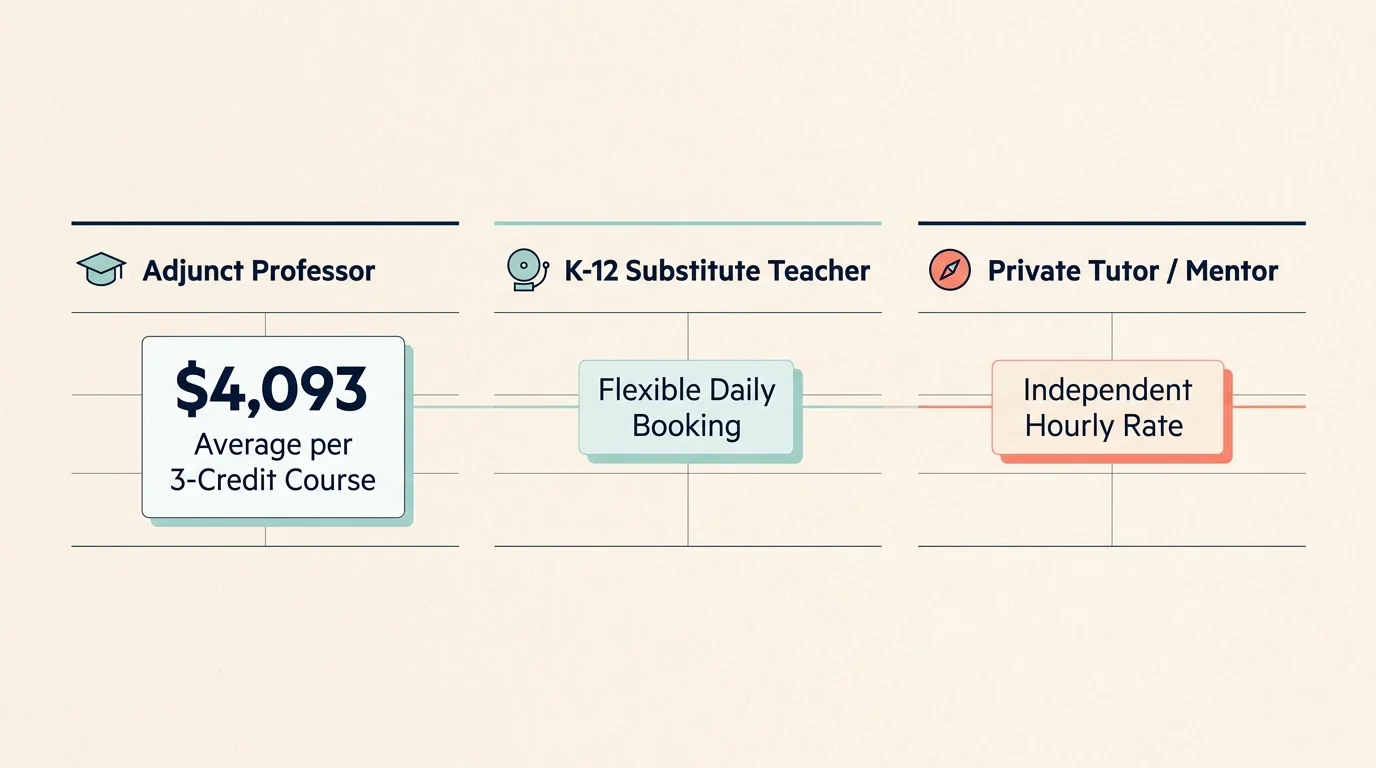
Data from the American Association of University Professors (AAUP) indicates that adjunct instructors earn an average of $4,093 per 3-credit course, with compensation typically ranging between $2,500 and $5,000 depending on the institution and geographic region. This role provides rich academic immersion without the administrative burdens of full-time tenure-track faculty.
2. K-12 Substitute Teacher
Public and private school districts across the nation face ongoing shortages of reliable substitute teachers. If you enjoy interacting with children or teenagers, substitute teaching delivers absolute scheduling freedom; you decide exactly which days you want to accept assignments through automated district scheduling apps. You can teach diverse subjects daily or request long-term subbing positions in fields matching your career background.
According to current labor estimates, short-term substitute teachers earn a national average hourly wage of $18.80 to $21.77, translating to roughly $100 to $200 per daily shift. Certified retired teachers or candidates holding state emergency substitute credentials frequently command higher pay tiers.
3. Online Private Tutor or Academic Coach
If you prefer working from home, tutoring jobs for seniors offer exceptional comfort and flexibility. Digital platforms like Wyzant, Tutor.com, and Varsity Tutors connect experienced mentors with elementary, high school, and college students seeking help in reading, mathematics, test preparation, or foreign languages. Alternatively, you can launch an independent tutoring practice, setting your own hourly rates and serving local families.
General online tutors average $15.00 to $25.00 per hour on major platforms. However, specialized tutors who coach advanced STEM subjects, corporate writing, or standardized tests (such as the SAT, ACT, GRE, or LSAT) command $30.00 to $50.00+ per hour in private practice.
4. SCORE Business Mentor
For retired executives, entrepreneurs, accountants, and managers, serving as a SCORE mentor represents an impactful way of sharing skills in retirement. SCORE, a nonprofit partner of the U.S. Small Business Administration (SBA), pairs seasoned business leaders with aspiring entrepreneurs and small business owners. While primary SCORE positions operate on a volunteer basis, the experience often leads to paid advisory board seats, private consulting retainer contracts, and paid seminar speaking engagements paying $35.00 to $75.00+ per hour.
5. Adult Continuing Education Instructor
Local high school evening programs, community centers, and universities with Osher Lifelong Learning Institutes (OLLI) hire adult education instructors to teach non-credit enrichment classes. Topics range from personal finance, creative writing, and digital photography to genealogy, gardening, and computer literacy. Instructors design their own simple syllabus and teach adult students who are eager to learn purely for personal enrichment.
Pay typically ranges from $20.00 to $45.00 per hour, or instructors receive a flat percentage of total student enrollment fees for multi-week workshop series.
6. Corporate Trainer or Executive Mentor
Companies frequently contract retired senior leaders to conduct staff workshops, facilitate leadership development programs, or mentor high-potential junior executives. If you spent your career in management, human resources, finance, or engineering, corporate mentoring allows you to monetize your institutional knowledge on a project-by-project basis.
Because corporate training directly impacts business revenue and leadership performance, compensation is among the highest for retiree jobs, ranging from $50.00 to $150.00+ per hour or $500.00 to $2,000.00 per full-day training session.
7. English as a Second Language (ESL) Instructor
Teaching English to non-native speakers offers deep cultural exchange and personal fulfillment. You can teach adults at local community literacy organizations, refugee assistance programs, or community colleges. Alternatively, numerous online platforms connect native English speakers with international students around the world for conversational practice and structured grammar lessons.
Online ESL platforms pay between $14.00 and $24.00 per hour, while local community colleges or non-profit adult literacy programs pay $20.00 to $35.00 per hour for qualified instructors holding a TEFL or TESOL certificate.
8. Vocational or Trade Workshop Leader
If your background involves technical trades, craftsmanship, or hands-on skills—such as woodworking, welding, automotive repair, culinary arts, or electronics—vocational schools and maker spaces actively seek experienced mentors. You can lead hands-on workshops for teenagers entering trade apprenticeships or adults taking up new technical hobbies.
Trade instructors earn average wages of $22.00 to $40.00 per hour, depending on technical specialization, safety certifications, and region.
9. Museum Docent or Historical Tour Guide
Retirees who love history, science, art, or local culture often thrive as paid museum docents, botanical garden guides, or historical tour leaders. You research historical artifacts or exhibit collections and deliver engaging educational presentations to visiting school groups, tourists, and senior organizations.
Paid museum and historical docent positions pay between $15.00 and $22.00 per hour, with commercial tour guides often earning additional tips from tour groups.
10. Music, Art, or Craft Workshop Teacher
If you have artistic talents, teaching private music lessons or hosting craft workshops offers continuous creative expression. You can teach piano, guitar, painting, ceramics, or knitting from your home studio, local music stores, or craft supply chains.
Private music teachers charge between $25.00 and $60.00 per half-hour or hour lesson, while group craft workshop facilitators earn $15.00 to $30.00 per attendee for weekend specialized classes.
Comparing Top Part-Time Teaching and Mentoring Roles
Selecting the right role depends on your financial goals, desired schedule, and technical preferences. The table below compares the ten best options across key operational criteria.
| Job Title | Average Pay Range | Work Format | Schedule Flexibility | Key Requirement |
|---|---|---|---|---|
| Adjunct Professor | $2,500 – $5,000 per course | In-Person or Hybrid | Moderate (Semester-based) | Master’s Degree / Expertise |
| K-12 Substitute Teacher | $100 – $200 per day | In-Person | High (Daily choice) | Sub Certification / Background Check |
| Online Private Tutor | $15 – $50+ per hour | Remote / Online | Very High | Subject Mastery / Computer Setup |
| SCORE Business Mentor | Volunteer to $75+/hr consulting | In-Person or Virtual | High | Executive or Business Experience |
| Adult Education Instructor | $20 – $45 per hour | In-Person | High (Evening/Weekends) | Practical Subject Expertise |
| Corporate Trainer | $50 – $150+ per hour | Hybrid / On-site | Moderate (Project-based) | Proven Corporate Leadership |
| ESL Instructor | $14 – $35 per hour | Remote or In-Person | High | Native Fluency / TEFL optional |
| Vocational Trade Instructor | $22 – $40 per hour | In-Person / Workshop | Moderate | Trade Certification / Practical Skill |
| Museum Docent / Tour Guide | $15 – $22 per hour | In-Person | Moderate (Shift-based) | Strong Communication & History Knowledge |
| Music or Art Teacher | $25 – $60 per hour | Home Studio or Local Shop | Very High | Artistic Mastery & Patience |

Navigating Taxes and Social Security Earnings Limits
Working during retirement requires thoughtful tax planning. Earned income from teaching or mentoring affects your tax return differently depending on whether an employer hires you as a W-2 employee or an independent 1099 contractor.
When working as a 1099 contractor—common in private tutoring, corporate consulting, and workshop hosting—you are responsible for self-employment taxes (15.3% for Social Security and Medicare combined) in addition to federal and state income taxes. However, 1099 status allows you to deduct legitimate business expenses, such as home office setups, educational supplies, software subscriptions, and mileage driven for work purposes. Reviewing guidelines with the Internal Revenue Service ensures you properly track deductions and make estimated quarterly payments when appropriate.
“Working in retirement shouldn’t just be about money—it should be about finding purpose while protecting your financial freedom and keeping your tax burden under control.” — Jean Chatzky, Personal Finance Expert and Author
If you are receiving Social Security benefits prior to reaching Full Retirement Age (FRA), closely monitor your annual gross earnings. In 2026, every $2 you earn over the $24,480 threshold reduces your Social Security benefit payout by $1. Once you reach your exact FRA month, those earning caps disappear entirely, allowing you to earn unlimited wages without benefit reductions. Furthermore, earnings after age 62 may increase your future monthly Social Security payout if your part-time income replaces lower-earning years in your top 35-year historical earnings record.

Common Mistakes to Avoid When Working in Retirement
Stepping back into the workforce should enrich your retirement, not introduce unnecessary complexity or stress. Avoid these four common missteps when pursuing teaching or mentoring opportunities:
- Unintentionally Exceeding Earnings Caps: Working extra substitute teaching shifts or taking on too many tutoring clients can inadvertently push your earnings past Social Security limits, triggering benefit withholdings and tax bracket shifts.
- Ignoring Self-Employment Tax Obligations: Many new 1099 tutors and independent mentors forget to set aside 25% to 30% of gross earnings for federal tax, self-employment tax, and state tax, facing unexpected penalties at year-end.
- Overcommitting and Causing Burnout: Accepting rigid schedules or taking on excessive grading assignments can erode the freedom you worked decades to achieve. Set clear boundaries regarding total weekly hours.
- Delaying Background Checks and Credentials: School districts and higher education institutions require state background checks, fingerprinting, and verified transcripts before hiring. Starting these application steps early prevents frustrating delays.

Professional vs. Self-Guided: Choosing the Right Mentoring Path
Understanding your preferred structure will help you target the right part time education jobs retirees excel at. Consider which of the following scenarios fits your personality and lifestyle best:
Scenario 1: Institutional Employment (Structured and Direct)
If you thrive with set schedules, pre-planned curricula, and guaranteed payroll deposits, institutional roles like substitute teaching or adjunct lecturing work best. The school district or community college handles student enrollment, facility management, and tax withholding (W-2), leaving you free to focus purely on instruction.
Scenario 2: Independent Entrepreneurship (Maximum Freedom and Control)
If you want complete autonomy over your rates, client selection, and working hours, independent private tutoring or corporate consulting is ideal. You operate as a business owner (1099 contractor), controlling your schedule completely while maximizing potential hourly earnings, provided you enjoy marketing your services.
Scenario 3: Community Non-Profit Engagement (Maximum Purpose)
If personal fulfillment and social impact outweigh compensation needs, community-focused positions like SCORE business mentoring, museum docent work, or adult literacy tutoring provide high satisfaction with minimal administrative pressure.

How to Launch Your Part-Time Teaching Career
Ready to transition into teaching or mentoring? Follow this practical checklist to launch your post-retirement educational career smoothly:
- Inventory Your Core Expertise: List your professional skills, academic qualifications, specialized hobbies, and life experiences to identify topics you can comfortably teach.
- Select Your Preferred Work Format: Decide whether you want in-person interaction, remote online flexibility, or a hybrid arrangement.
- Update Credentials and Resume: Tailor your resume to emphasize communication skills, leadership development, training, or public speaking rather than purely managerial duties.
- Apply Directly to Local Institutions: Contact nearby community colleges, school district HR departments, local libraries, adult education centers, and museum volunteer/employment directors.
- Set Up Profiles on Digital Platforms: If teaching online, create professional profiles on reputable tutoring platforms like Wyzant or ESL teaching networks.
- Consult a Financial Advisor: Verify how your anticipated earnings will interact with your Social Security benefits, pension payouts, Medicare premiums, and overall tax strategy. You can evaluate broad health coverage guidelines through Medicare.gov and senior community employment tools at the National Council on Aging.
Sharing your skills during retirement offers one of the most rewarding ways to remain active, connected, and financially secure. By matching your expertise with the right teaching or mentoring format, you can make a lasting difference in the lives of students while enjoying the flexibility and independence you have earned.
This article provides general retirement education and information only. Everyone’s financial situation is unique—what works for others may not work for you. For personalized advice, consider consulting a qualified financial professional such as a CFP or CPA.
Last updated: February 2026. Retirement benefits, tax laws, and healthcare costs change frequently—verify current details with official sources.