
Missing a single Social Security cutoff can permanently shrink your monthly benefit or trigger lifetime penalties. Tracking these critical timing rules helps you protect tens of thousands of dollars across your retirement years.
The Social Security Administration enforces strict federal rules with virtually zero forgiveness for late filers. A single paperwork delay can lock in smaller checks or trigger expensive healthcare surcharges.
Understanding each cutoff date gives you complete control over your claiming strategy. Here are the eight critical deadlines you cannot afford to overlook.
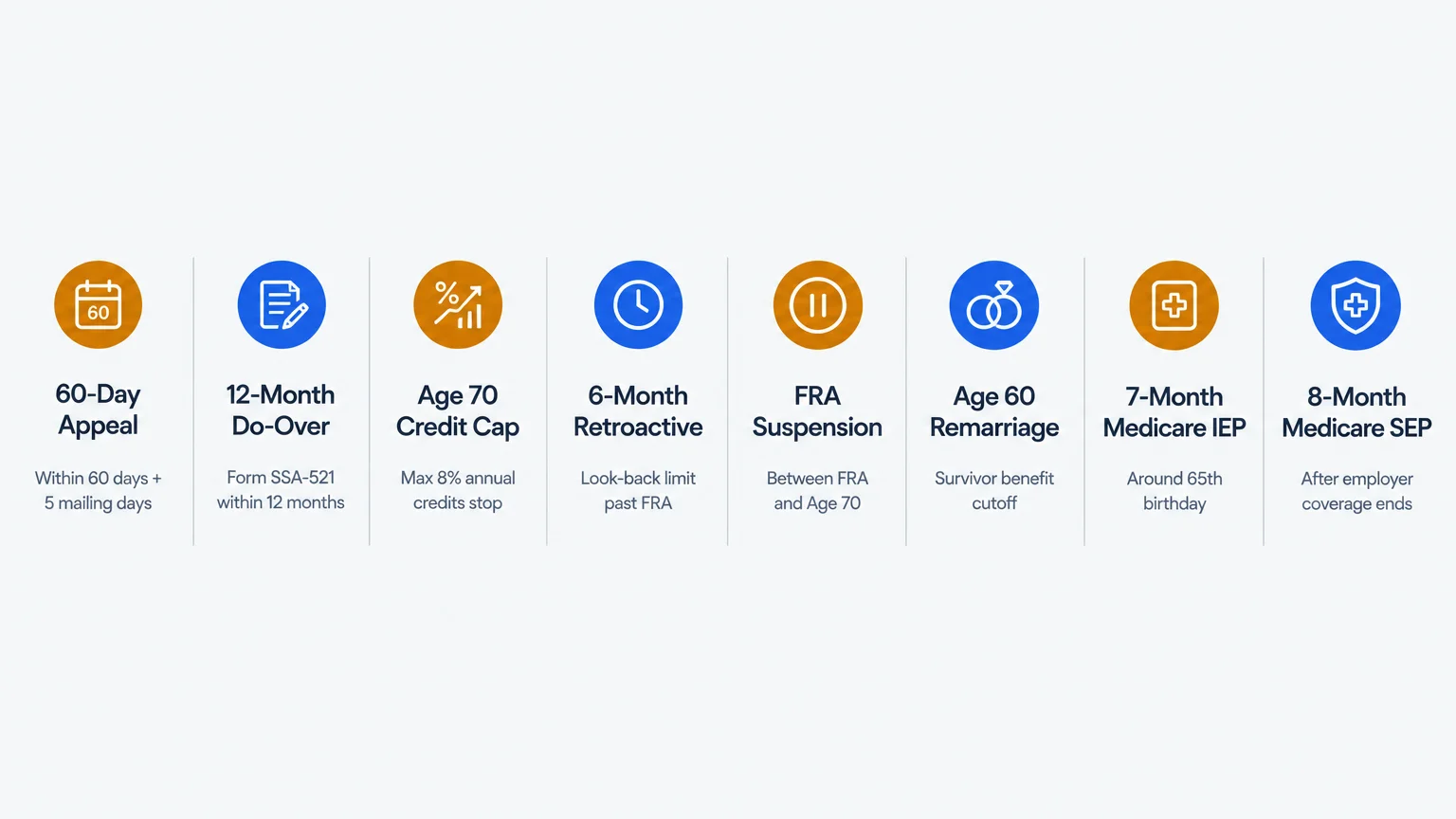
At a Glance: Key Social Security and Medicare Deadlines
Federal retirement programs follow rigid statutory timetables. This comparison table highlights the essential deadlines, their rules, and the financial consequences of missing them.
| Deadline Event | Timeframe | Financial Impact of Missing It |
|---|---|---|
| Appealing an SSA Decision | 60 days from notice receipt (plus 5 mailing days) | Permanent forfeiture of appeal rights; loss of back pay or benefit corrections. |
| Claim Withdrawal (“Do-Over”) | Within 12 months of initial entitlement | Locked into a permanently reduced benefit for life. |
| Delayed Credits Cap | Age 70 | Permanent forfeiture of monthly benefits with zero additional credit growth. |
| Retroactive Benefit Window | Up to 6 months (after reaching FRA) | Loss of lump-sum payout or unintended permanent reduction in future monthly checks. |
| Voluntary Benefit Suspension | Between Full Retirement Age and age 70 | Missed opportunity to earn 8% annual delayed retirement credits. |
| Survivor Remarriage Threshold | Age 60 (age 50 if disabled) | Permanent disqualification from deceased spouse’s survivor benefits during remarriage. |
| Medicare Initial Enrollment (IEP) | 7-month window around 65th birthday | Permanent 10% annual Part B late penalty and delayed healthcare coverage. |
| Medicare Special Enrollment (SEP) | 8 months after employer coverage or work ends | Coverage gaps, out-of-pocket medical bills, and lifetime premium penalties. |

1. The 60-Day Social Security Appeal Deadline
If you disagree with an official determination from the agency, the clock starts ticking immediately. You have exactly 60 calendar days to file an appeal after receiving your notice.
The Social Security Administration (SSA) legally presumes you receive any letter within five business days of the date stamped on the notice. That creates an effective 65-day cutoff from the letter date.
This cutoff applies to initial application denials, benefit calculation disputes, and overpayment demand letters. If the agency demands money back, filing within 30 days can pause collection while your appeal undergoes review.
Missing this window generally forfeits your right to contest the decision. The agency rarely grants extensions unless you prove severe hospitalization or natural disaster disruptions.
2. The 12-Month Application Withdrawal Window
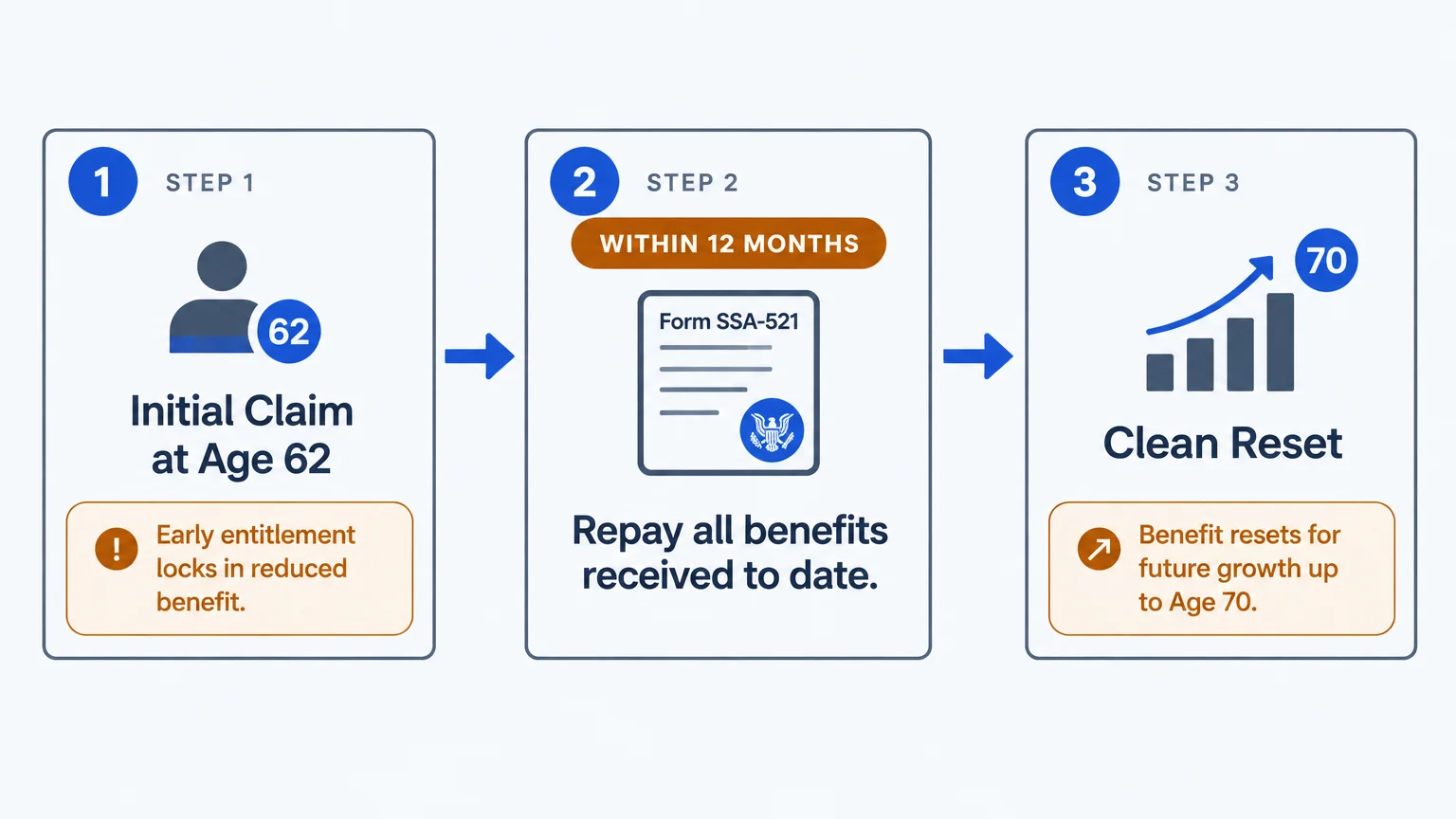
Many retirees claim benefits early at age 62, only to regret locking in a permanently reduced check. Fortunately, federal regulations provide a temporary escape hatch known as an application withdrawal.
You have exactly 12 months from your initial entitlement date to file Form SSA-521. This action cancels your original application and resets your earnings record as if you never claimed.
However, this strategy carries a major financial requirement. You must repay every dollar received, including spousal benefits and any Medicare Part B premiums withheld from your checks.
You can only use this withdrawal option once in your lifetime. Once the 12-month calendar window closes, your early election becomes permanent until you reach Full Retirement Age.

3. The Age 70 Delayed Retirement Credit Cap
Delaying your retirement claim past your Full Retirement Age (FRA) is one of the most profitable financial moves available. Your monthly payout grows by two-thirds of 1% each month, or 8% per year.
However, delayed retirement credits stop permanently in the month you turn age 70. The agency will not credit you a single additional cent for delaying past your 70th birthday.
Waiting until age 71 or 72 simply leaves earned income on the table. If your monthly benefit at age 70 is $3,500, waiting one year throws away $42,000 in unrecoverable funds.
Reach out to the agency three months before your 70th birthday to set up your payments. This ensures your first maximum-value payment arrives right on time.
4. The 6-Month Retroactive Benefit Look-Back Limit
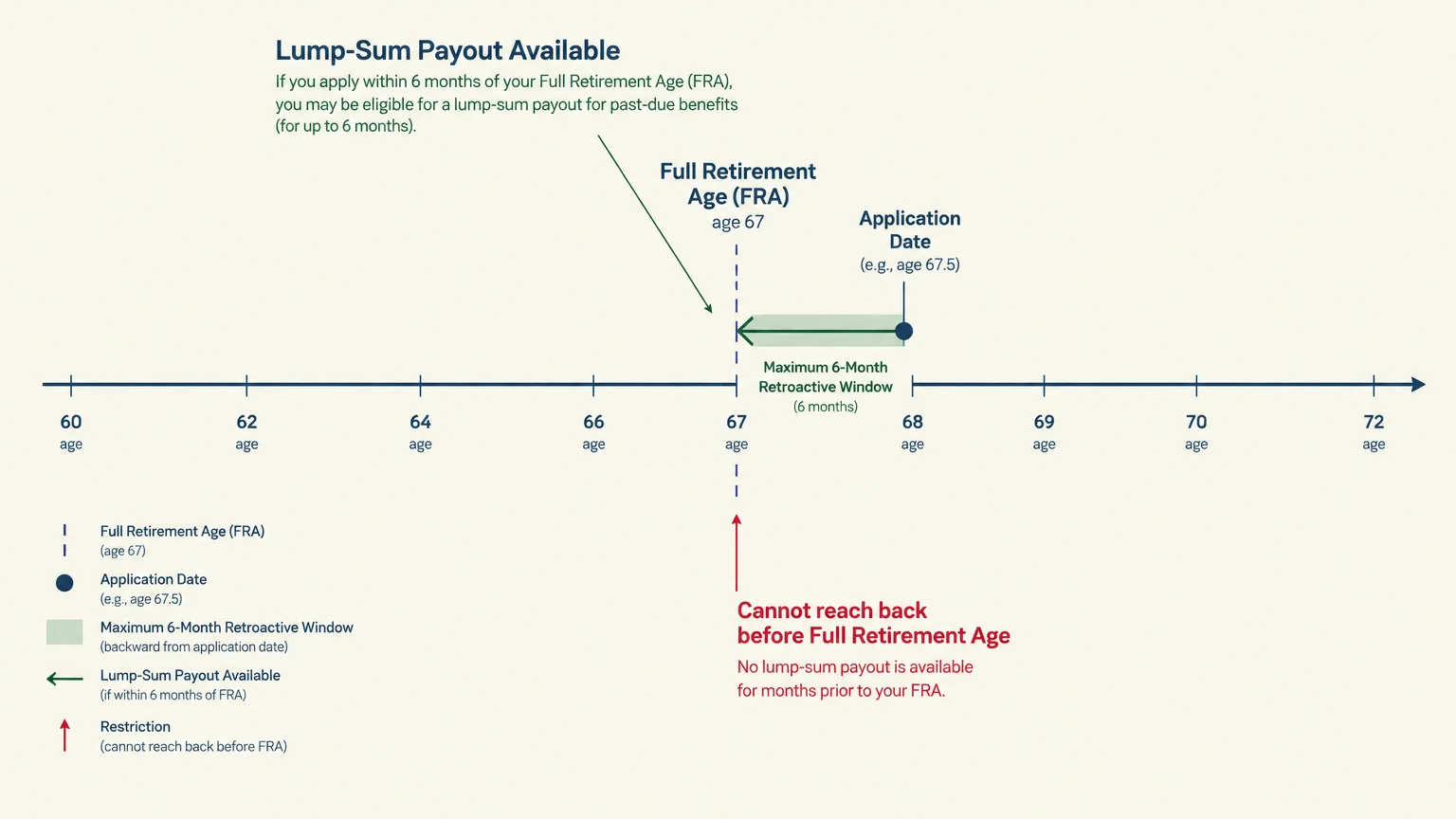
If you claim Social Security after reaching your Full Retirement Age, the agency allows you to request retroactive payments. You can receive up to six months of back benefits in a single lump sum.
However, this retroactive window cannot reach back prior to the month you attained Full Retirement Age. A worker reaching FRA at 66 years and 8 months cannot claim retroactivity beyond that specific milestone.
Taking the lump sum also comes with a significant trade-off. Claiming six months of retroactivity permanently erases six months of delayed retirement credits, reducing your monthly check by 4% for life.
Review your cash flow needs carefully before accepting a retroactive lump sum. What looks like an instant windfall might permanently erode your surviving spouse’s future safety net.

5. The Full Retirement Age Benefit Suspension Window
If you claimed early and missed the 12-month withdrawal deadline, you gain another opportunity once you reach Full Retirement Age. You can voluntarily suspend your benefit checks until age 70.
Suspension lets your benefit earn delayed retirement credits of 8% annually without repaying previous checks. Your monthly payment resumes automatically at age 70 at the higher rate.
Be aware that the Bipartisan Budget Act created strict suspension rules. When you suspend your worker benefit, any auxiliary benefits tied to your earnings record—such as spousal checks—also stop immediately.
Divorced spousal benefits remain untouched during your voluntary suspension. Evaluate your household cash flow before filing a suspension request with your local field office.

6. The Age 60 Remarriage Deadline for Survivor Benefits
Survivor benefits provide essential financial protection for widows and widowers. However, tying the knot again can abruptly terminate these payments if you do not watch your calendar.
If you remarry before age 60 (or age 50 if you have a qualified disability), you forfeit your right to claim survivor benefits on your late spouse’s record. The agency stops survivor eligibility during that marriage.
Waiting until your 60th birthday changes the equation completely. Remarrying at or after age 60 allows you to retain full eligibility for survivor benefits from your prior spouse.
This rule also applies to surviving divorced spouses who were married for at least 10 years. Timing your wedding ceremony around this milestone can protect thousands of dollars in annual retirement income.

7. The 7-Month Medicare Initial Enrollment Period
Social Security and Medicare remain administratively interconnected. If you are not claiming Social Security when you turn 65, the government does not enroll you in Medicare automatically.
You must actively enroll through Medicare.gov during your 7-month Initial Enrollment Period (IEP). This window spans the three months before your birth month, your birth month, and the three months after.
Missing your IEP without qualifying employer coverage triggers a permanent late penalty. Medicare adds a 10% surcharge to your monthly Part B premium for every full 12-month period you delayed.
In addition to penalties, late filers face coverage delays that leave them exposed to catastrophic medical expenses. Mark your 65th birthday months in advance to navigate this transition smoothly.
8. The 8-Month Medicare Special Enrollment Window
Many Americans work past age 65 and maintain coverage under an active employer group health plan. In this scenario, you can safely delay Medicare Part B without incurring late penalties.
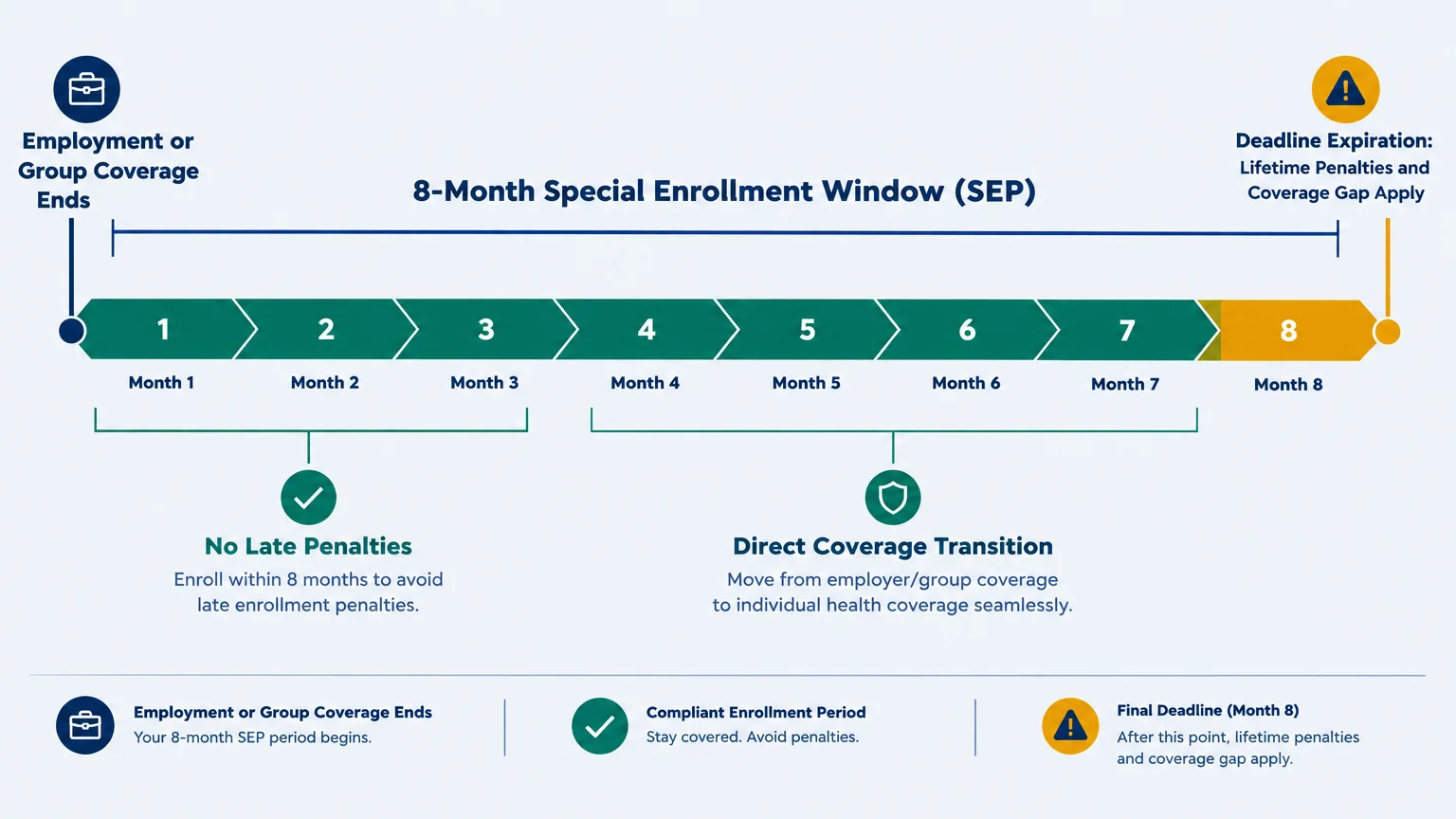
However, once that employment ends, an urgent timer begins. You have an 8-month Special Enrollment Period (SEP) to enroll in Medicare Part B without penalty.
This 8-month clock starts the month after your employment ends or your group coverage ends—whichever happens first. Do not assume severance extensions or COBRA delay this federal requirement.
COBRA and retiree health insurance do not count as creditable coverage for avoiding Part B late penalties. If you rely on COBRA and miss the 8-month window, you must wait for the General Enrollment Period and pay lifetime fines.
“You cannot afford to treat Social Security rules as suggestions. A single miscalculated deadline can permanently reduce your monthly cash flow for thirty years.”
— Ed Slott, CPA and Retirement Distribution Expert

What Can Go Wrong: Real-World Deadline Mistakes
Overlooking administrative timing rules can quickly derail a carefully constructed retirement plan. Here are three common scenarios where missed deadlines cause severe financial damage.
- The COBRA Trap: John retired at 65 and chose COBRA coverage for 18 months, assuming he could delay Medicare Part B. Because COBRA is not active employment coverage, he missed his 8-month SEP, faced an 18-month coverage gap, and incurred a permanent Part B monthly premium penalty.
- The Past-70 Oversight: Sarah waited until age 71 to apply for Social Security, believing her benefit grew continuously until she filed. She discovered her credits stopped at 70, forfeiting 12 months of maximum benefits totaling over $45,000.
- The Premature Wedding: David remarried at age 59, three months shy of his 60th birthday. By marrying early, he permanently forfeited a $2,200 monthly survivor benefit from his deceased first wife.

When to Consult a Professional
While standard retirement filings are straightforward, complex family or tax dynamics warrant specialized advice. A qualified advisor can help you avoid irreversible filing traps.
You should consider consulting a credentialed advisor like a Certified Financial Planner (CFP) or CPA in the following circumstances:
- Coordinating Dual-Earner Strategies: When couples must optimize spousal benefits, age-gap filing schedules, and survivor protections simultaneously.
- Managing Substantial Overpayment Notices: When the SSA claims an administrative error and demands the return of tens of thousands of dollars within 30 to 60 days.
- Navigating Post-65 Health Transitions: When transitioning from small-employer group health plans or Health Savings Accounts (HSAs) to Medicare without triggering tax penalties.
- Handling Divorce and Remarriage Planning: When evaluating how remarriage dates affect survivor benefits, alimony agreements, and individual earnings records.
Frequently Asked Questions
Can the Social Security Administration waive a missed deadline?
The SSA rarely grants deadline waivers unless you demonstrate “good cause” under federal regulations. Acceptable reasons typically require documented medical incapacitation, serious illness, or agency-admitted misinformation.
What happens if my 60-day appeal deadline falls on a weekend or federal holiday?
If your 60-day deadline falls on a Saturday, Sunday, or legal federal holiday, the agency extends the cutoff to the next business day. Always submit your appeal documents by certified mail to prove timely filing.
Can I suspend my benefit before reaching Full Retirement Age?
No, federal law prohibits voluntary benefit suspensions prior to your Full Retirement Age. Before reaching FRA, your only mechanism to cancel benefits is the one-time 12-month application withdrawal process.
Does Medicare enrollment affect my ability to contribute to an HSA?
Yes, enrolling in any part of Medicare disqualifies you from making further Health Savings Account contributions. If you enroll in Medicare retroactively, you may face tax penalties from the IRS for contributions made during those months.
Proactive calendar management remains the foundation of a secure retirement. Set reminders well in advance of your major age milestones to ensure you capture every dollar you have earned.
This article provides general retirement education and information only. Everyone’s financial situation is unique—what works for others may not work for you. For personalized advice, consider consulting a qualified financial professional such as a CFP or CPA.
Last updated: February 2026. Retirement benefits, tax laws, and healthcare costs change frequently—verify current details with official sources.