
Navigating Social Security updates can directly determine how far your income stretches each month, especially as economic conditions shift. According to the Social Security Administration (2026), critical benefit rules, earnings thresholds, and taxation caps have changed significantly for the current calendar year. Understanding these subtle statutory shifts allows you to preserve your hard-earned benefits, avoid unexpected IRS tax bills, and coordinate Medicare deductions without financial surprises. Whether you plan to claim benefits soon, continue working part-time in retirement, or optimize your monthly payout, these four recent updates will directly affect your bottom line.
At a Glance: Key Social Security Updates
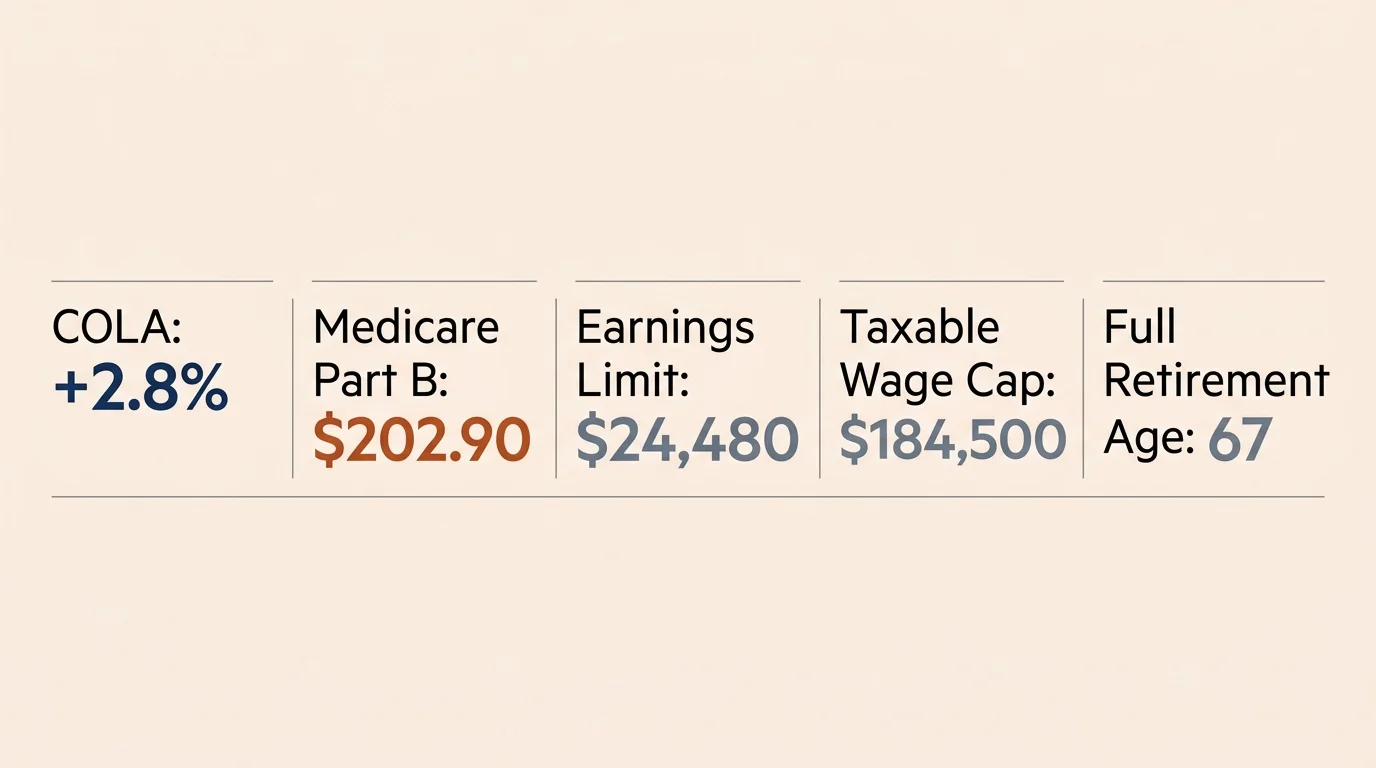
- 2.8% Cost-of-Living Adjustment (COLA): Adds roughly $56 per month to the average retiree benefit, moving the standard payout from $2,015 to $2,071 per month.
- Medicare Part B Premium Increase: The standard monthly Part B premium rose to $202.90 in 2026, absorbing approximately $17.90 of the average retiree’s monthly COLA bump.
- Higher Retirement Earnings Test Limits: Working retirees under Full Retirement Age (FRA) can now earn up to $24,480 per year before Social Security withholds benefits.
- Taxable Maximum Wage Base Raised: The salary cap subject to Social Security payroll taxes expanded to $184,500, affecting higher earners and self-employed consultants.
- Full Retirement Age Reaches Age 67: Workers born in 1960 or later hit their official FRA at age 67, setting maximum benefit caps at $4,152 per month at FRA and $5,181 at age 70.
1. The 2026 Cost-of-Living Adjustment (COLA) and the Real Net Benefit Increase
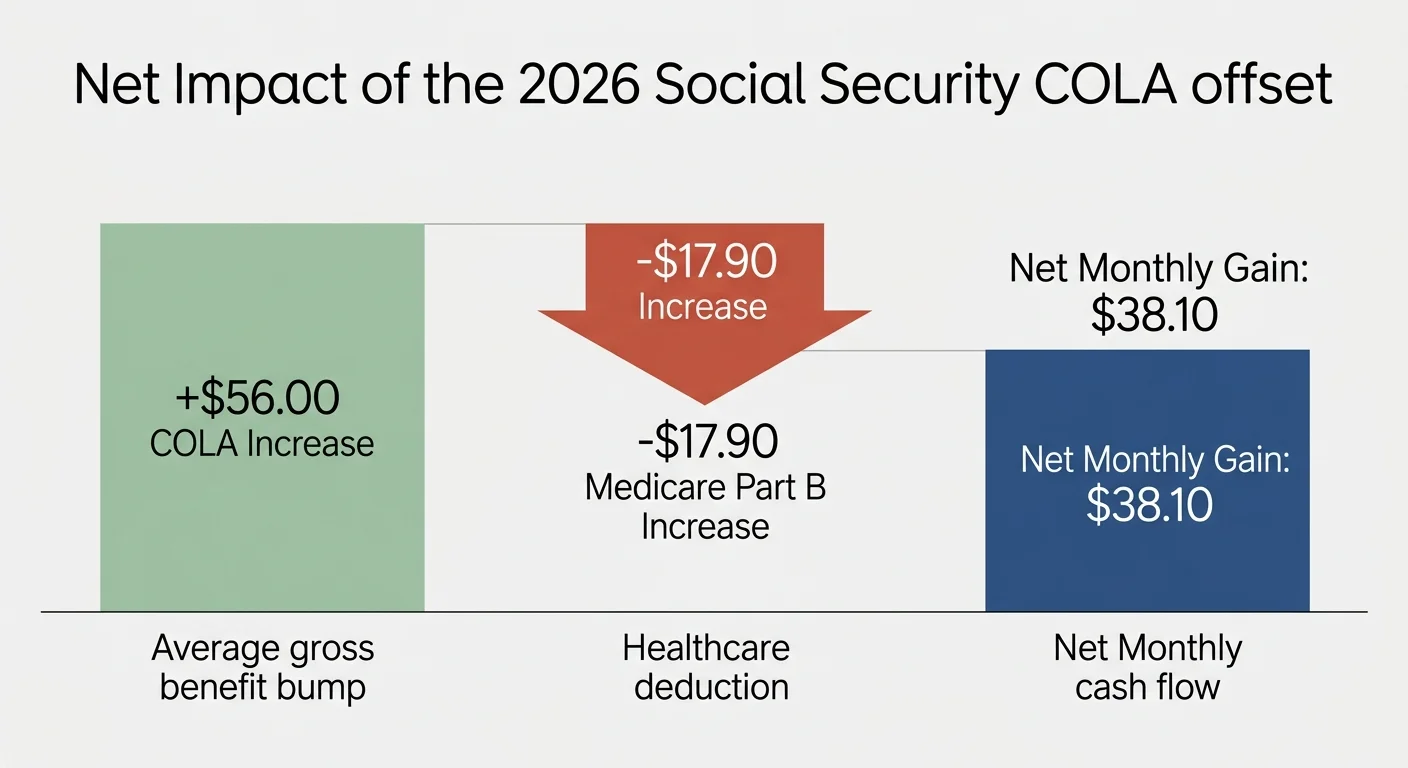
The Social Security Administration officially instituted a 2.8% Cost-of-Living Adjustment (COLA) for 2026; this adjustment builds upon the prior year’s 2.5% increase to combat ongoing price increases across housing, food, and medical care. For the average retired worker, this percentage bump translates to an extra $56 per month, elevating the average benefit payment from $2,015 in 2025 to $2,071 per month in 2026. While any increase in guaranteed lifetime income helps, evaluating this raise in isolation delivers an incomplete financial picture.
Most retirees have their monthly Medicare Part B premiums deducted directly from their Social Security checks. According to Medicare.gov, the standard monthly Part B premium increased from $185.00 in 2025 to $202.90 in 2026—an increase of $17.90 per month. Because this healthcare premium takes top priority in your benefit breakdown, it automatically consumes over 30% of the average retiree’s gross COLA increase. Consequently, the typical beneficiary sees a net monthly gain of approximately $38.10 in cash flow rather than the full $56 baseline increase.
To see how this net offset functions across different monthly payout tiers, examine the direct impact on various benefit levels:
- $1,500 Monthly Benefit: A 2.8% COLA adds $42.00 per month. Subtracting the $17.90 Medicare Part B premium increase yields a net monthly gain of $24.10.
- $2,071 Average Benefit: A 2.8% COLA adds $56.00 per month. Subtracting the $17.90 Medicare Part B increase yields a net monthly gain of $38.10.
- $3,000 High-Tier Benefit: A 2.8% COLA adds $84.00 per month. Subtracting the $17.90 Medicare Part B increase yields a net monthly gain of $66.10.
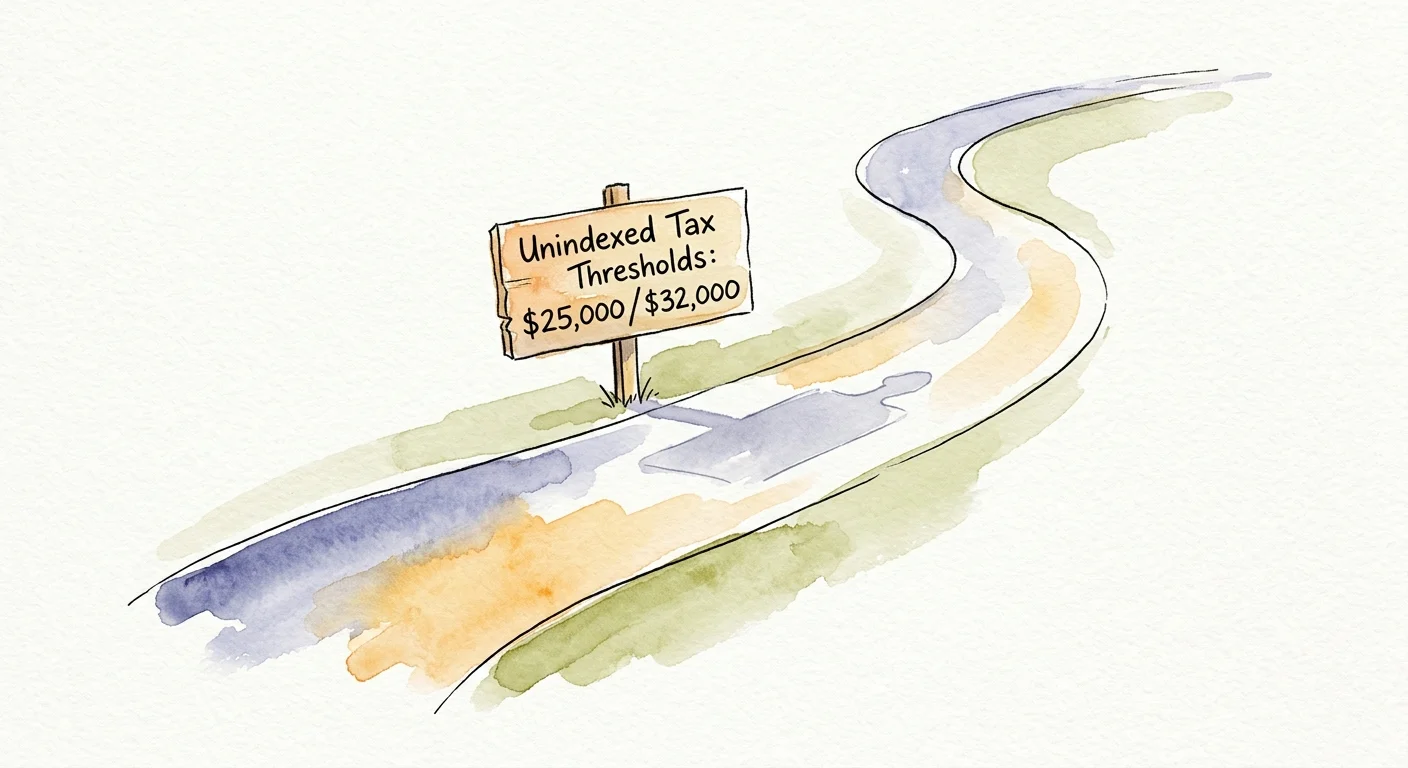
Beyond healthcare deductions, another factor quietly erodes this benefit expansion: tax bracket creep. The federal income tax thresholds governing Social Security benefits—$25,000 for single filers and $32,000 for married couples filing jointly—were established decades ago and are not indexed to inflation. As annual COLAs elevate your nominal gross income, thousands of retirees accidentally cross these fixed limits for the first time, exposing up to 50% or 85% of their Social Security benefits to federal income taxes. Reviewing your tax withholding via IRS Form W-4V helps prevent an unexpected tax bill when filing annual returns with the Internal Revenue Service.

2. Updated Retirement Earnings Test Limits for Working Retirees
Continuing to work while receiving Social Security has become a standard strategy for modern retirees seeking active lifestyles and supplementary income. However, if you claim benefits prior to reaching your Full Retirement Age (FRA), your earnings remain subject to the official Retirement Earnings Test (RET). The Social Security Administration adjusted these earnings thresholds upward for 2026, granting working retirees greater earning flexibility before benefits are temporarily withheld.
For beneficiaries who remain under their Full Retirement Age for the entire calendar year, the 2026 earnings limit sits at $24,480 per year (or $2,040 per month), up from $22,320 in 2025. If your earned income from wages or self-employment exceeds this benchmark, the agency withholds $1 in benefits for every $2 earned above the threshold. It is essential to recognize that “earned income” strictly includes gross wages and net self-employment earnings; passive distributions from pensions, 401(k) plans, traditional IRAs, dividends, and capital gains do not count toward this limitation.
For retirees reaching their Full Retirement Age during 2026, a significantly more generous rule applies. In the months leading up to your specific FRA birth month, you can earn up to $65,160 per year ($5,430 per month). Earnings above this elevated threshold trigger a smaller withholding rate: $1 in benefits is withheld for every $3 earned above the limit. Starting the exact month you attain your FRA, the earnings test disappears entirely—allowing you to earn unlimited wage income without any benefit withholdings regardless of your total salary.
Consider this practical scenario: Suppose you turned 63 in early 2026, claimed benefits early, and secured a part-time consulting contract paying $30,000 per year. You exceed the $24,480 annual threshold by $5,520. Under the $1-for-$2 rule, Social Security withholds $2,760 of your benefits during the year. The agency accomplishes this withholding by pausing your full monthly benefit check for the initial months of the year until the offset amount is satisfied, after which normal monthly payments resume.
A common misconception is that withheld earnings are permanently lost. In reality, withheld funds act as a temporary operational pause. Once you reach your Full Retirement Age, the Social Security Administration automatically recalculates your primary insurance amount to credit you for the months benefits were withheld. This administrative adjustment permanently increases your monthly benefit payout for the remainder of your life, ensuring you recoup those withheld earnings over time.

3. Full Retirement Age Hits 67 and Maximum Monthly Benefit Caps Rise
Under the landmark statutory changes enacted by the 1983 Social Security Amendments, the schedule for Full Retirement Age reached its final legislative benchmark. For anyone born in 1960 or later, Full Retirement Age is permanently set at 67 years old. If you reach age 62 in 2026, claiming benefits immediately results in a permanent 30% reduction in your baseline monthly payout compared to waiting until age 67.
Along with this age baseline, the Social Security Administration adjusted the maximum achievable monthly benefit limits across all claiming ages. These maximums reflect higher baseline earnings, updated wage indexing, and compound interest calculations for workers who consistently earned at or above the maximum taxable wage base for at least 35 years of their careers.
The maximum monthly benefit caps for workers claiming in 2026 breakdown as follows:
- Claiming Early at Age 62: The absolute maximum monthly benefit payment is capped at $2,969 per month.
- Claiming at Full Retirement Age (Age 67): The maximum monthly benefit payment reaches $4,152 per month (up from $4,018 in 2025).
- Delaying Claiming to Age 70: By earning 8% annual Delayed Retirement Credits each year between ages 67 and 70, the maximum monthly benefit payment escalates to $5,181 per month.
Deciding when to claim remains one of the most vital financial calls in retirement planning. Claiming early provides immediate cash flow, which can prove essential if health concerns or unexpected job disruptions arise. However, delaying your claim builds an inflation-protected income stream that maximizes lifetime protection against longevity risk. For married couples, delaying the higher earner’s benefit to age 70 establishes the highest possible survivor benefit for the surviving spouse—protecting the remaining partner from a severe drop in household income later in life.
4. Taxable Maximum Wage Base Expands to $184,500
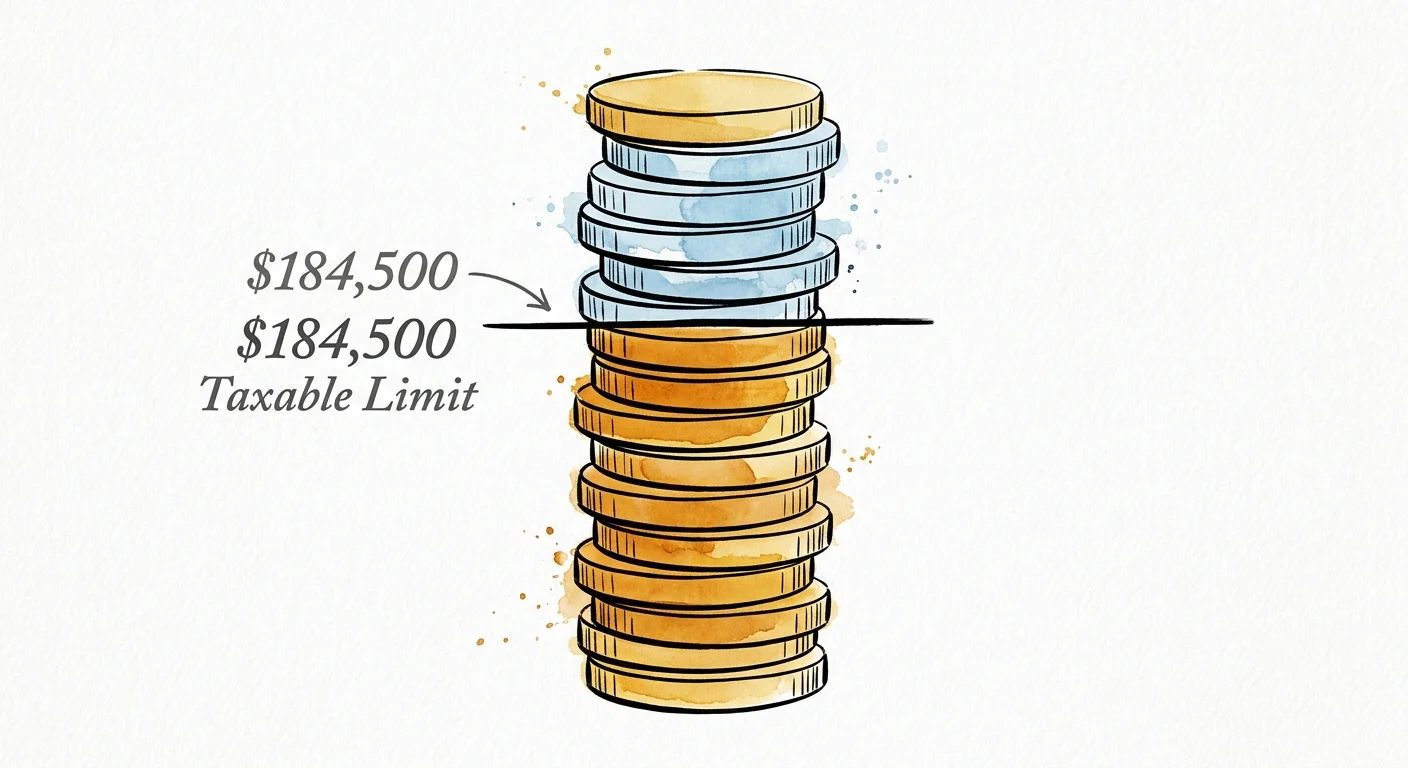
While the first three updates focus directly on cash coming into retiree bank accounts, the fourth major adjustment alters the financial equations for current high-earning workers, working retirees, and self-employed professionals. For 2026, the maximum amount of annual earnings subject to the Social Security payroll tax increased to $184,500, up from $176,100 in 2025—an $8,400 expansion in taxable wages.
The Old-Age, Survivors, and Disability Insurance (OASDI) tax rate remains fixed at 6.2% for employees and 6.2% for employers, bringing the total payroll tax rate to 12.4%. If you earn at or above the new $184,500 threshold as a traditional employee, you will pay an additional $520.80 in Social Security taxes throughout 2026 ($8,400 x 6.2%). Your employer matches this amount dollar for dollar.
If you operate as an independent contractor, consultant, or small business owner in retirement, you pay the entire 12.4% self-employment tax rate (SECA). For self-employed individuals earning above the new cap, this change means paying up to an additional $1,041.60 in Social Security taxes for the year. Integrating this additional tax obligation into your estimated quarterly tax payments managed through USA.gov Benefits or the IRS prevents underpayment penalties.
This increased wage base plays a central long-term role in overall benefit planning. Social Security benefit formulas assess your top 35 years of indexed earnings. Paying taxes on a higher wage base during senior executive or consulting years replaces lower-earning years early in your career within the SSA formula, directly raising your ultimate primary insurance amount when you decide to claim benefits.
Social Security Parameters: 2025 vs. 2026 Comparison
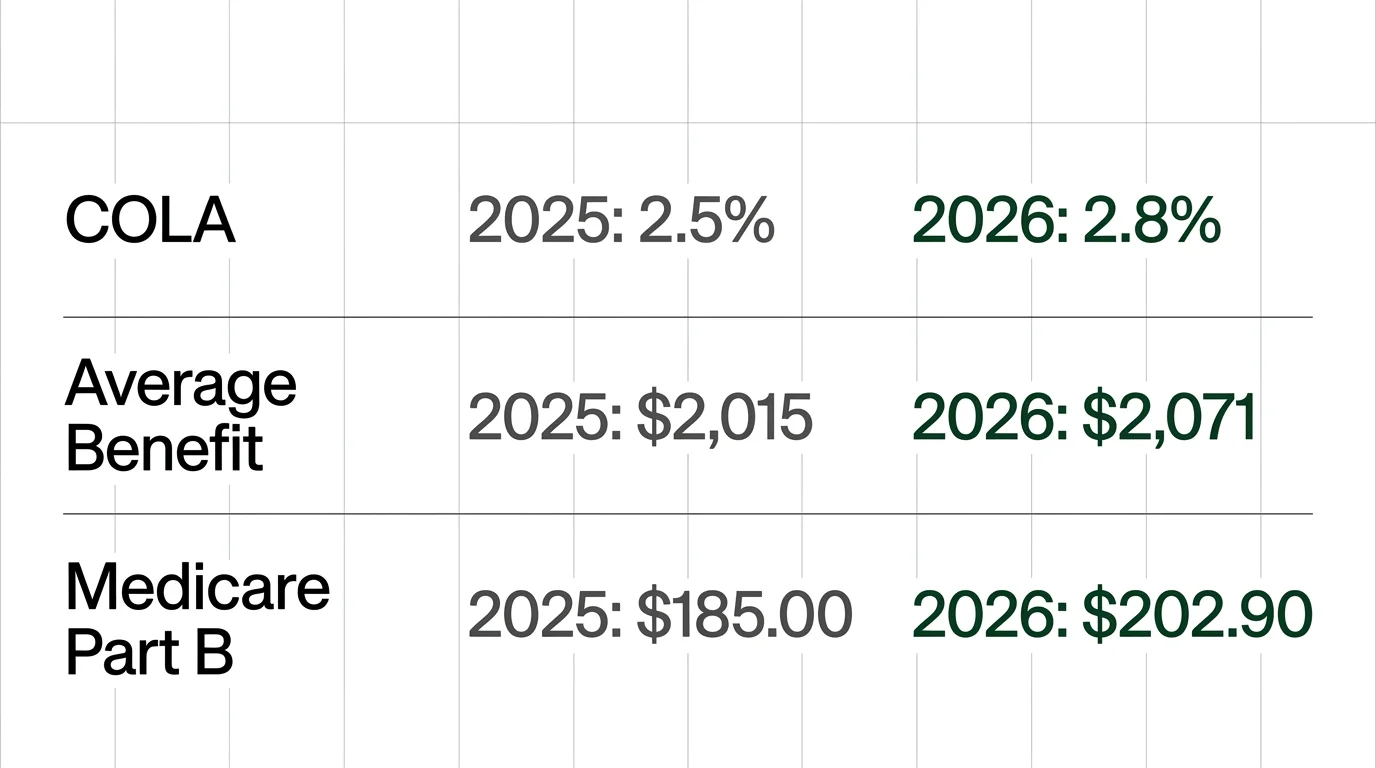
To help you evaluate how these regulatory mechanics shifted year-over-year, the following table breaks down key official figures, limits, and tax thresholds between 2025 and 2026:
| Parameter / Metric | 2025 Baseline | 2026 Updated Value | Net Dollar / Percentage Shift |
|---|---|---|---|
| Cost-of-Living Adjustment (COLA) | 2.5% | 2.8% | +0.3 percentage points |
| Average Monthly Retired Worker Benefit | $2,015.00 | $2,071.00 | +$56.00 per month |
| Standard Medicare Part B Monthly Premium | $185.00 | $202.90 | +$17.90 per month |
| Earnings Test Limit (Under FRA All Year) | $22,320 / year | $24,480 / year | +$2,160 allowable earnings |
| Earnings Test Limit (Year Reaching FRA) | $59,520 / year | $65,160 / year | +$5,640 allowable earnings |
| Maximum Monthly Benefit at FRA (Age 67) | $4,018.00 | $4,152.00 | +$134.00 per month |
| Maximum Monthly Benefit at Age 70 | $5,108.00 | $5,181.00 | +$73.00 per month |
| Taxable Maximum Wage Base | $176,100.00 | $184,500.00 | +$8,400 wages subject to tax |
What Can Go Wrong: Common Pitfalls with New Social Security Rules
Managing Social Security updates requires active attention; relying on assumptions or outdated advice can trigger unnecessary financial friction. Here are four common mistakes retirees make when dealing with recent rule changes:
- Assuming the Full COLA Hits Your Bank Account: Expecting your bank deposit to increase by the full gross COLA amount often leads to budgeting errors. Always factor in the standard Medicare Part B deduction ($202.90 in 2026) alongside any voluntary federal income tax withholdings before setting your monthly spending limit.
- Overspending Past Earnings Limits While Under FRA: Taking on seasonal consulting work or returning to a part-time job without tracking earnings can inadvertently breach the $24,480 annual limit. Exceeding this limit causes Social Security to hold back whole monthly checks, disrupting short-term household cash flow even if those funds are credited back later in life.
- Ignoring “Provisional Income” Tax Triggers: With drawdowns from traditional 401(k)s, IRAs, and pension payouts combined with higher nominal Social Security benefits, you can easily cross the un-indexed $25,000 (single) or $32,000 (joint) income boundaries. Crossing these markers subjects up to 85% of your benefits to federal income taxes.
- Failing to Coordinate Spousal and Survivor Benefits: Rushing to claim early at age 62 to offset temporary expenses locks in a permanent 30% benefit reduction. This decision permanently lowers the maximum survivor benefit available to your spouse if you are the primary earner in the household.
“Tax planning in retirement isn’t about what you make; it’s about what you keep. Unmanaged Social Security timing and unexpected tax triggers can silently erase years of disciplined savings.” — Ed Slott, CPA and Retirement Tax Expert

When to Consult a Professional
While standard guidance provides strong general boundaries, specific personal situations demand tailored professional advice. Consider consulting a Fee-Only Certified Financial Planner (CFP) or a Certified Public Accountant (CPA) specializing in senior tax strategies under the following circumstances:
- You Plan to Earn Significant Income While Under FRA: A fiduciary advisor helps evaluate whether the long-term wealth benefits of working outweigh temporary benefit withholdings under the $24,480 retirement earnings test.
- Your Household Combined Income Nears Benefit Taxation Thresholds: A professional can design optimal withdrawal strategies across tax-deferred (Traditional IRA), tax-free (Roth IRA), and taxable brokerage accounts to keep your provisional income below key IRS taxation cliffs.
- You and Your Spouse Have a Large Lifetime Wage Disparity: Coordinating primary benefits, spousal top-ups, and survivor provisions across two lifetime earnings histories requires detailed mathematical modeling to maximize lifetime household income.
- You Face Impending Required Minimum Distributions (RMDs): When RMDs begin at age 73 or 75, tax-deferred withdrawals can suddenly push you into much higher tax brackets, elevating both your Medicare Part B premiums (via IRMAA surcharges) and the taxable portion of your Social Security benefits.
Frequently Asked Questions
Does Medicare Part B automatically reduce my Social Security COLA increase?
Yes. If you have your Medicare Part B premium deducted directly from your monthly Social Security check, the Social Security Administration automatically subtracts the updated premium amount ($202.90 in 2026) before depositing your net payout into your bank account. However, a statutory “variable hold-harmless” provision protects established beneficiaries from seeing an actual dollar reduction in their net monthly check if a Medicare premium hike ever exceeds their annual COLA dollar raise.
What happens to the money withheld under the Social Security earnings test?
Withheld benefits are not permanently lost or surrendered to the government. When you reach your Full Retirement Age (age 67 for those born in 1960 or later), the Social Security Administration recalculates your monthly benefit amount upward. This recalculation adjusts your payment to credit you for the specific months that benefits were withheld, permanently raising your ongoing monthly payout for the rest of your life.
How does the 2026 wage base limit affect retirees who consult part-time?
If you perform consulting work or earn self-employment income after retiring, your net earnings up to $184,500 are subject to the 12.4% self-employment tax (SECA) for Social Security. If your gross earnings exceed this $184,500 cap, you owe no further Social Security payroll taxes on earnings above that limit, though Medicare taxes (2.9% plus any applicable High-Income Medicare surtax) continue to apply to all earnings without any cap.
Are the income thresholds for taxing Social Security benefits increasing in 2026?
No. The provisional income thresholds that determine whether your Social Security benefits are taxed remain fixed at $25,000 for single tax filers and $32,000 for married couples filing jointly (with up to 85% taxed once provisional income exceeds $34,000 for single filers or $44,000 for joint filers). Because these threshold numbers are not indexed for inflation, annual COLA benefit increases push more retirees into taxable territory over time.
Taking Action: Managing Your Social Security Strategy in 2026
Keeping up with changing Social Security regulations is one of the most effective ways to protect your income in retirement. Rather than letting annual adjustments happen on autopilot, take proactive control of your financial strategy. Log in to your personal account at SSA.gov to review your latest official benefit statement, check your earnings record for accuracy, and verify your updated net monthly payout after Medicare deductions.
By mapping out your earned income against the updated $24,480 earnings limit, reviewing tax withholding percentages, and evaluating spousal benefit options, you turn these complex legislative changes into clear financial advantages. Stay informed, adjust your budget to reflect real net increases, and consult qualified financial professionals when navigating intricate retirement decisions.
The information in this guide is meant for educational purposes. Your specific circumstances—including income, savings, health coverage, and goals—may require different approaches. When in doubt, consult a licensed professional.
Last updated: February 2026. Retirement benefits, tax laws, and healthcare costs change frequently—verify current details with official sources.