
Decades in the classroom earn you more than fond memories and a well-deserved break. Your career also unlocks high-value retirement perks that school administrators rarely explain during exit interviews.
While most corporate workers rely solely on volatile 401(k) plans, public educators access institutional privileges that extend well into retirement. Tapping these lesser-known opportunities can save you thousands of dollars each year.
From permanent pension adjustments to exclusive banking terms, these advantages provide meaningful financial relief. Here are nine underutilized benefits every retired educator should claim today.
The Educator Advantage: Traditional Pensions vs. Private Sector Plans
Public school teachers enter retirement on significantly stronger institutional footing than the average American worker. Understanding this structural difference helps you maximize your benefits.
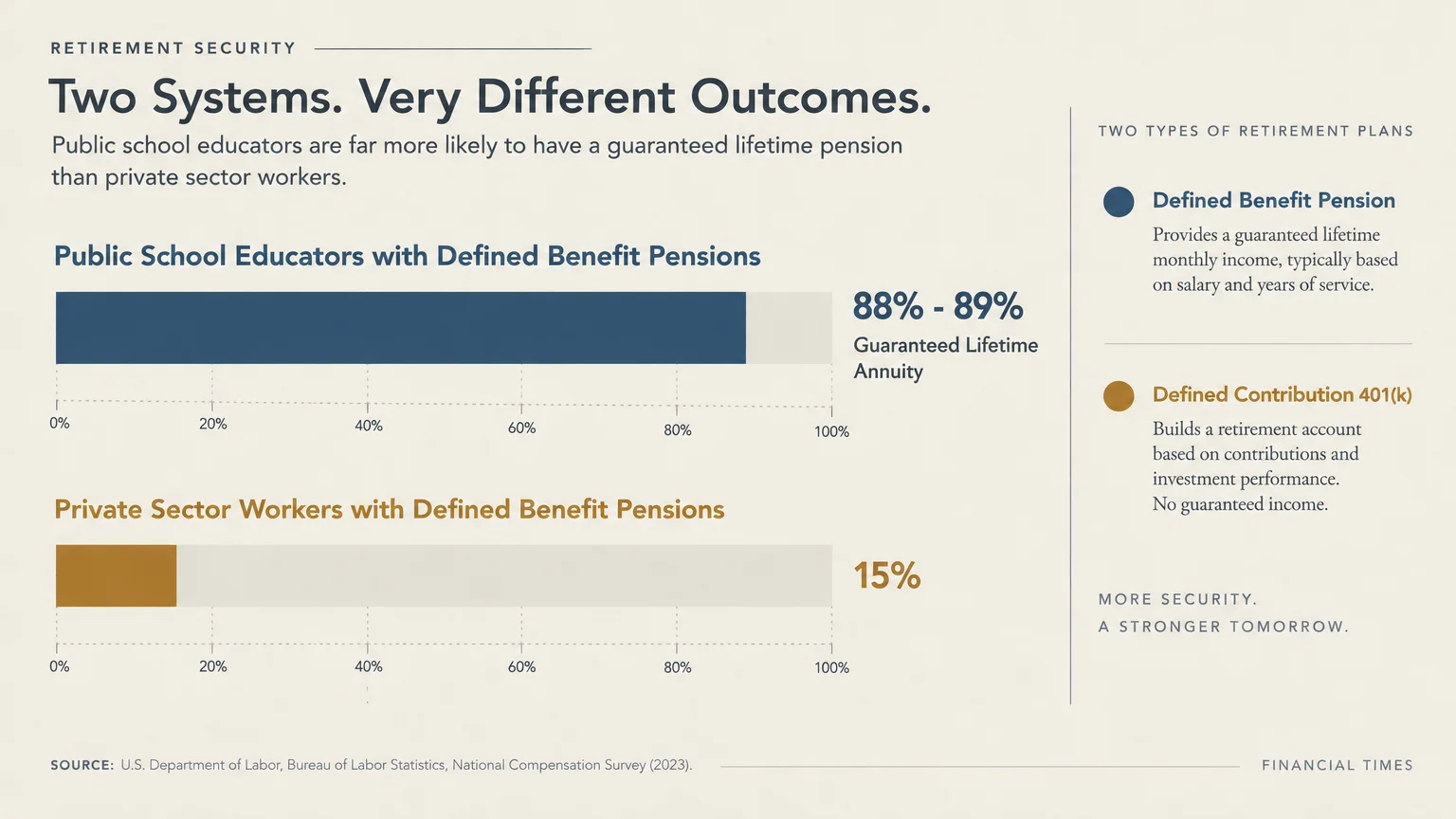
According to the Bureau of Labor Statistics, roughly 88% to 89% of public school educators participate in a defined benefit pension plan. In contrast, only about 15% of private-sector employees receive a guaranteed lifetime pension.
Guaranteed lifetime monthly payments shield you from the sequencing risk that plagues standard market portfolios. You can read more about retirement annuities through Investopedia’s defined benefit guide.
This steady income base creates unique opportunities. Because your core living expenses enjoy pension coverage, you can leverage ancillary benefits that traditional retirees cannot access.
| Retirement Feature | Standard Private Sector Retiree | Retired Public School Teacher |
|---|---|---|
| Primary Retirement Vehicle | Defined Contribution Plan (401k / IRA) | Defined Benefit Pension Annuity |
| Unused Sick Leave Conversion | Forfeited upon separation | Converts to service credit or cash payout |
| Retiree Association Advocacy | Rare or non-existent | National unions (NEA-Retired, AFT) |
| Post-Retirement Return to Work | Subject to corporate rehiring policies | Statutory substitute exemptions with full pension |
| Tuition-Free University Auditing | Limited senior programs | Expansive state higher-education exemptions |
| Credit Union Membership Retention | Dependent on corporate charters | Lifetime NCUA protected educator access |
1. Converting Unused Sick Days Into Permanent Pension Boosts
Most corporate workers forfeit unused sick days when they retire. School districts, however, frequently allow you to exchange accumulated leave for higher monthly pension checks.
State retirement boards calculate your pension using your total service credit years and final average salary. Converting unused sick time directly increases your credited service timeline.
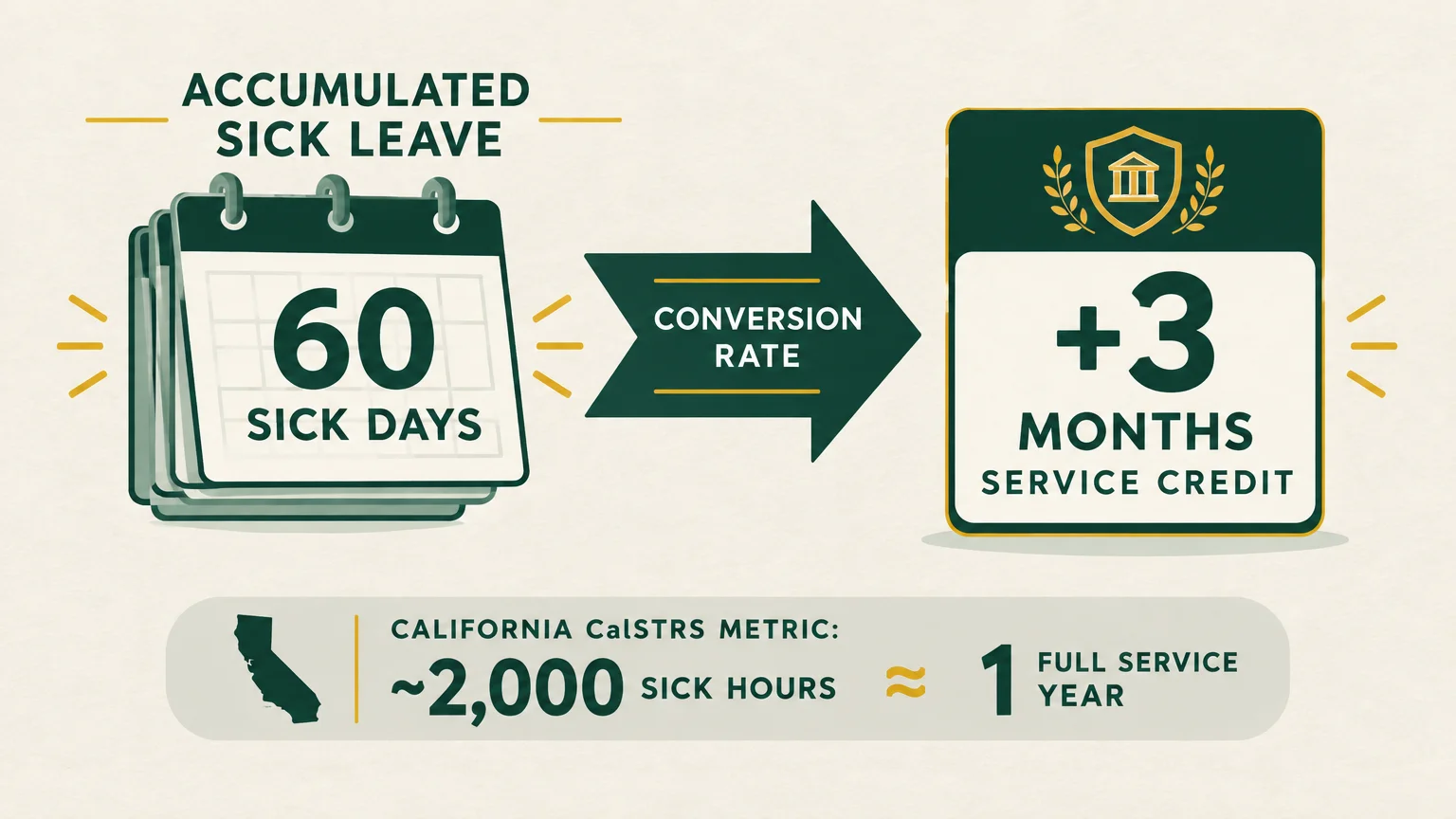
In Georgia, the Teachers Retirement System allows members to convert accumulated sick leave into service credit. The system awards three months of service credit for every 60 accumulated sick days.
California systems offer similar conversions for educators. The California State Teachers’ Retirement System calculates full-time service credit by converting accumulated sick hours at approximately 2,000 hours per service year.
An extra half-year of service credit permanently raises your monthly payout. That compound growth delivers thousands of extra dollars over a thirty-year retirement.
Contact your district human resources office twelve months before retiring. Request an audit of your accrued leave balance to ensure payroll credits every eligible day accurately.

2. Lifetime Union Affiliation and Advocacy Privileges
Many teachers assume their union benefits disappear once they pack up their classrooms. In reality, national teacher unions offer dedicated retiree divisions that preserve valuable perks.
The National Education Association offers an NEA-Retired lifetime membership for a one-time fee of $300, or an annual membership for $35 per year. State affiliate dues may apply depending on your jurisdiction.
This single enrollment maintains your access to union travel discounts, group-rate auto insurance, and specialized secondary health coverages. It also provides legislative advocacy to defend cost-of-living adjustments on state pensions.
Lifetime membership also keeps your educator liability insurance active. This protection proves vital if you decide to substitute teach or supervise student teachers during retirement.
The American Federation of Teachers maintains an identical retiree division. AFT Retirees receive tailored financial planning tools, prescription discount cards, and disaster relief grants.

3. Classroom Double-Dipping Under Statutory Exemptions
Shortages of certified personnel have led state legislatures to relax post-retirement employment rules. You can frequently collect your full pension while earning daily wages as a substitute or instructional mentor.
In past years, returning to work in your home district jeopardized your pension checks. Today, states maintain clear statutory safe harbors that let you double-dip within strict boundaries.
The Teacher Retirement System of Texas permits retirees to work up to 92 hours per month without forfeiting pension distributions. This provision allows Texas retirees to earn steady supplemental cash.
California enacted Senate Bill 765 to offer temporary regulatory flexibility and adjust post-retirement earnings limits for classroom substitutes. These changes let retired teachers earn meaningful income without triggering benefit suspensions.
Always observe mandatory separation periods before accepting work. Most states require a bona fide break in service of 30 to 180 days before you perform paid tasks.

4. Lifelong Access to Educator Credit Unions
Teachers enjoy access to some of the most stable, member-friendly credit unions in the country. Thanks to the National Credit Union Administration charter rules, your membership never expires when you retire.
Under the NCUA principle of “once a member, always a member,” you retain full banking privileges for life. Your spouse and dependent children also retain eligibility to join.
Institutions like SchoolsFirst Federal Credit Union and State Employees’ Credit Union consistently deliver lower loan interest rates. They also offer certificates of deposit that outperform national commercial bank averages.
You can learn more about consumer protections and cooperative banking structures at the Consumer Financial Protection Bureau. Credit unions distribute their operational surplus back to members through reduced account fees.
Take advantage of specialized senior auto refinance packages and dedicated fee-free estate planning accounts. These member-owned cooperatives prioritize senior financial stability over commercial profit margins.

5. Tuition-Free College Auditing and Continuing Education
Your passion for learning does not terminate when you finish grading your final exam. State universities across the country offer retired educators the chance to attend college courses for free.
State laws often grant seniors free or deeply discounted access to state university lecture halls. As a former educator, you can bypass tuition bills while studying history, foreign languages, or art.
The University of Maryland operates the Golden ID Card Program for fully retired Maryland residents age 60 and older. Eligible retirees take undergraduate and graduate courses tuition-free on a space-available basis.
Texas Education Code Section 54.365 authorizes state-supported colleges to allow senior residents to audit up to six credit hours per semester without paying tuition fees. You merely cover parking and textbook costs.
You can review educational programs for seniors through the AARP retirement lifestyle community. Check with your local community college or state university registrar to view their auditing policies.

6. Permanent Commercial Tech and Software Subsidies
Hardware and software developers rarely publicize that their educator discounts extend to retired teachers. You do not need an active district email address to prove eligibility.
Third-party identity services like ID.me allow retired educators to verify their professional credentials using state pension statements. Once verified, you unlock permanent commercial discounts.
Apple offers special education pricing on Mac computers and iPad tablets. Retired educators routinely save 5% to 10% on high-ticket hardware purchases through the online Apple Education Store.
Adobe provides its complete Creative Cloud suite at up to 60% off standard commercial subscription prices. This discount gives you access to industry-standard photo editing and graphic tools for personal projects.
Major telecommunications providers also honor lifetime educator service. Verizon and AT&T both offer signature program discounts that reduce monthly unlimited wireless bills by $10 to $25 per line.

7. Craft, Bookstore, and Cultural Reductions
Retail stores have supported working teachers for years with classroom supply discounts. Major retail chains often extend those identical price reductions to retired educators who present valid proof.
Arts and crafts retailers like Michael’s and Joann Fabric offer a 15% discount on in-store purchases. You can use these savings for your personal crafting hobbies, quilting projects, or holiday decor.
Independent bookstores and national retailers like Barnes & Noble often honor educational discounts on professional literature and classic fiction. Present your retiree union credentials or pension card at the register.
National museums, science centers, and botanical gardens frequently provide free or discounted admission to educators holding union identification. Always ask the customer service desk about educator pricing before purchasing tickets.
Carry your NEA-Retired card, your state union membership card, or your pension badge in your wallet. These simple credentials regularly slash admission fees when you travel domestically.
8. Group-Negotiated Bridge Healthcare and Supplemental Insurance
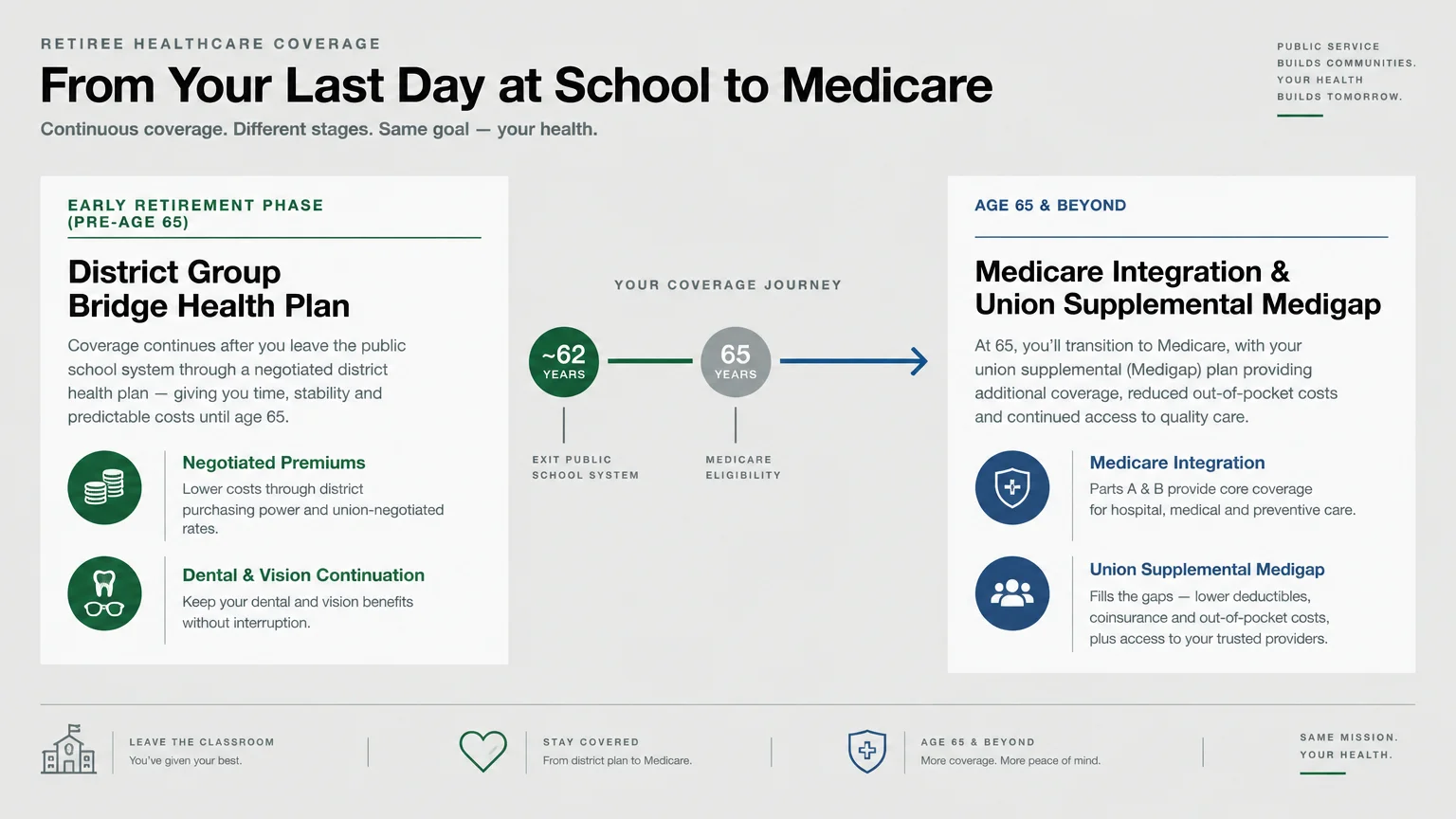
Retiring before age 65 creates a significant health insurance coverage dilemma. Fortunately, public school districts often maintain collective retiree healthcare pools that provide bridge coverage.
District-sponsored group plans let you retain comprehensive medical and prescription drug benefits until Medicare begins. These group plans cost substantially less than private individual policies found on state exchanges.
Once you reach age 65, your union or district may offer dedicated Medicare Advantage or supplemental plans. You can research baseline Medicare premiums and enrollment criteria directly at Medicare.gov.
Districts negotiate these group plans directly with health insurers to secure lower deductibles and extensive provider networks. Some contracts even include vision and dental benefits that standard Medicare policies omit.
Review your district’s collective bargaining agreement carefully. Many urban and suburban school districts subsidize a portion of your retiree health insurance premium based on your total years of service.

9. Discounted Educational Travel and Cultural Expeditions
Retired teachers make up a substantial portion of cultural travelers across the globe. Travel organizations create specialized programs and exclusive pricing structures specifically for retired educators.
The NEA Member Benefits Travel Program grants retirees deeply discounted access to car rentals, hotel bookings, and guided international excursions. These packages eliminate retail booking surcharges.
Educational tour groups like Road Scholar offer specialized cultural and historical learning adventures. Retired educators often qualify for exclusive regional scholarships or donor-funded travel stipends.
You can also participate in international teacher exchange networks and volunteer consulting programs abroad. These initiatives provide housing stipends and cultural immersion while you advise foreign community classrooms.
Planning off-peak travel during September and May lets you travel when prices drop. You can explore destinations comfortably without crowds while school remains in session.
“The goal isn’t more money. The goal is living life on your terms.” — Jean Chatzky, Financial Journalist and Author
What Can Go Wrong: Avoiding Costly Teacher Retirement Traps
While teacher retirement perks provide strong financial security, serious regulatory missteps can derail your plans. You must understand state pension rules and federal tax laws.
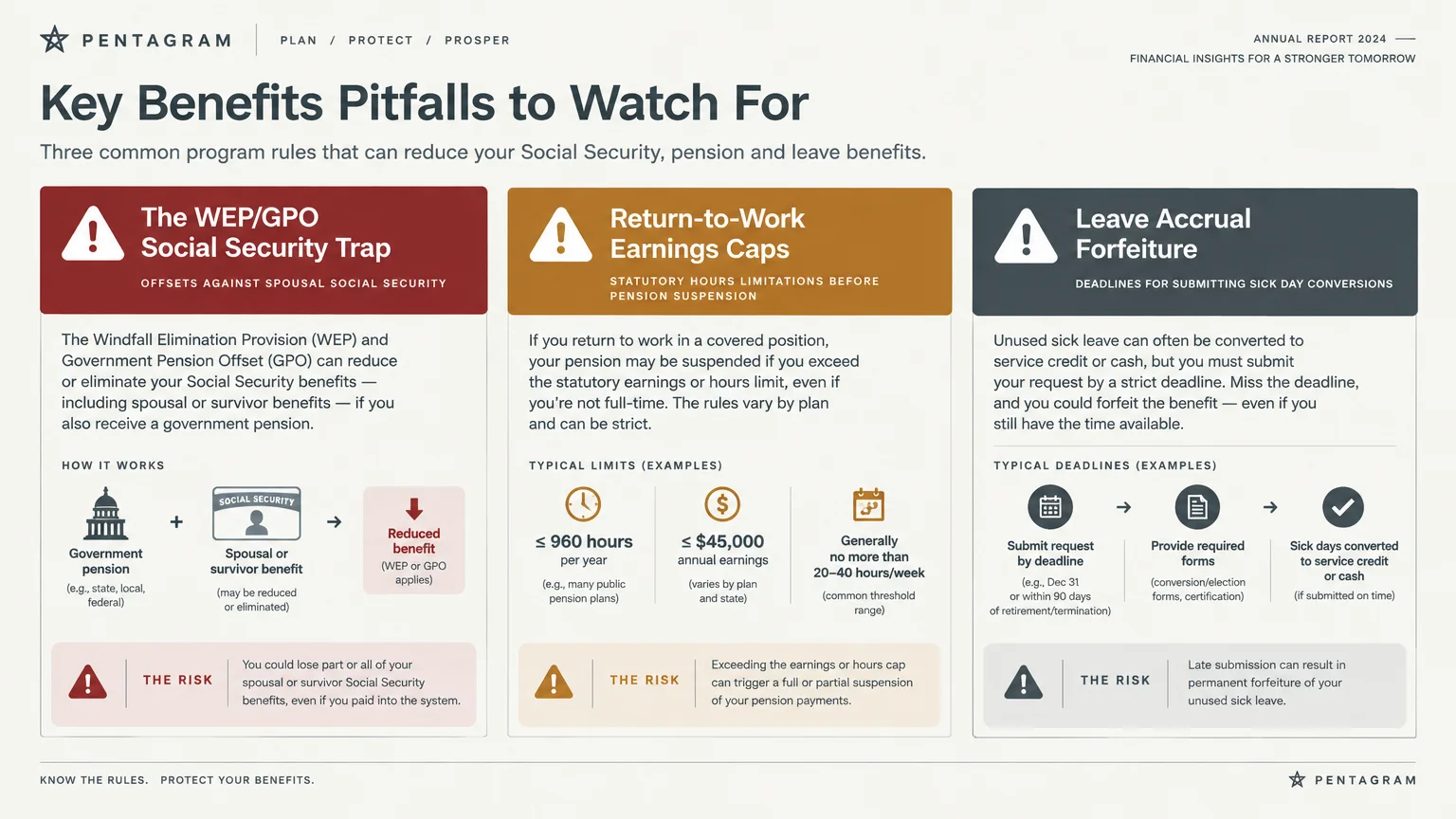
The most dangerous pitfall involves Social Security offset rules. In approximately 15 states, public school teachers do not pay into the federal Social Security system through their school payroll.
If you earned a pension in a non-covered district, you are subject to the Windfall Elimination Provision and Government Pension Offset. You can verify these rules at the Social Security Administration website.
The WEP reduces your individual Social Security retirement benefit based on outside private-sector employment. The GPO reduces or eliminates spousal or survivor benefits you might otherwise collect.
Another common mistake involves violating post-retirement work limits. If you exceed the maximum monthly hours allowed by your state pension system, the state can suspend your monthly annuity.
Always verify local earnings caps with your pension representative before you sign any part-time employment contract. Never rely on informal advice from school principals or colleagues.
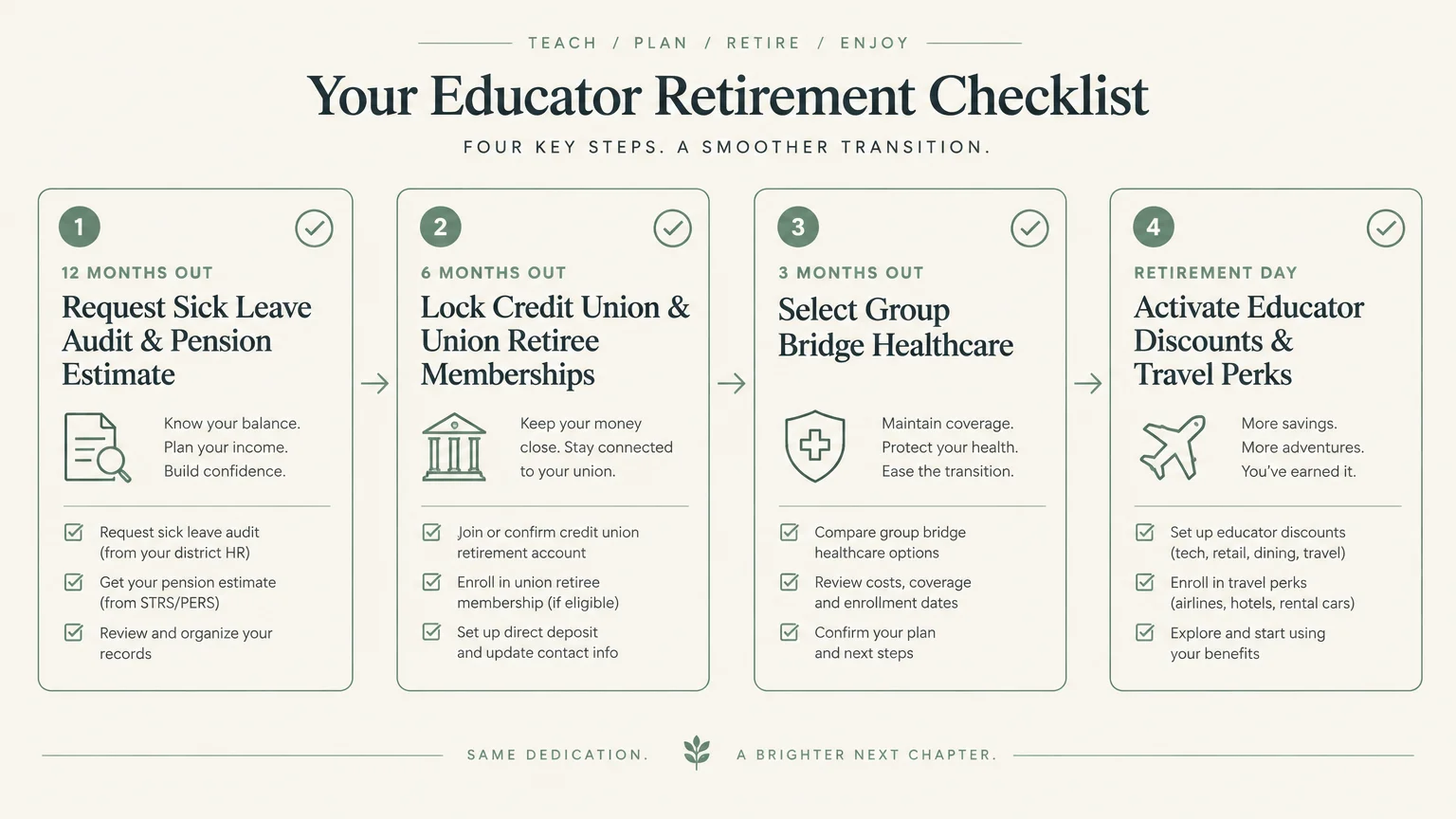
Checklist for Maximizing Your Retired Teacher Benefits
- Request an official sick leave balance audit from your human resources office one year before retiring.
- Join your state and national union retiree chapters (NEA-Retired or AFT) to preserve your discounts.
- Register your educator status on credential verification websites like ID.me using your pension award letter.
- Keep an active membership account at your local teacher credit union to maintain preferred loan rates.
- Check local state university guidelines to register for tuition-free course auditing programs.
- Verify your district’s post-retirement work guidelines and separation-from-service timelines.
- Consult with a qualified financial planner to calculate the exact impact of WEP and GPO rules on your household.

When to Consult a Professional
State pension systems operate under intricate legislative codes that change every year. Navigating these rules alone can lead to missed income or unexpected tax penalties.
Consult a fee-only certified financial planner if you have split career service between public schools and private-sector jobs. A planner can project your exact net income after WEP adjustments.
You should also seek professional guidance when selecting your pension payout election. Choosing between a single-life annuity or a joint-and-survivor option permanently affects your spouse’s future income.
Finally, meet with a health insurance specialist three months before turning 65. They will help you compare your district retiree healthcare plan against standard Medicare and Medigap options.
Frequently Asked Questions
Can I keep my teacher discounts if I lose my school email address?
Yes. You can verify your educator status by uploading a copy of your monthly pension stub or retirement award letter to identity verification platforms like ID.me.
Does substituting in a private school count against my public pension limit?
Usually no. State pension earnings limits apply to participating public employers in your state retirement system, leaving private schools, out-of-state institutions, and online academies exempt.
Is the NEA-Retired lifetime membership worth the one-time $300 fee?
For most retirees, yes. The savings on cell phone plans, secondary insurance coverage, and travel discounts easily offset the fee within two years.
Do all states let teachers convert unused sick leave into service credit?
No. Sick leave policies vary by state and local collective bargaining agreements. Some districts offer pension conversion credits, others provide cash buyouts, and some offer no compensation.
Your years in public education represent an enormous service to your community. Make sure you claim every benefit, financial discount, and institutional advantage you earned.
This is educational content based on general retirement planning principles. Individual results vary based on your situation. Always verify current benefit amounts, tax laws, and eligibility with official sources.
Last updated: February 2026. Retirement benefits, tax laws, and healthcare costs change frequently—verify current details with official sources.