
Working at a ski resort lets you turn a winter hobby into paid exercise, social connection, and mountain access. You can earn an hourly wage while enjoying free season passes and steep equipment discounts.
Resort operators actively recruit dependable retirees for high-contact hospitality and base lodge roles. These positions provide flexible scheduling so you can hit the slopes between your shifts.
Whether you prefer an active outdoor assignment or a cozy indoor post, mountain lodges offer ideal winter opportunities. Here are nine rewarding resort roles suited for active seniors.
Why Mountain Lodges and Ski Resorts Love Hiring Seniors
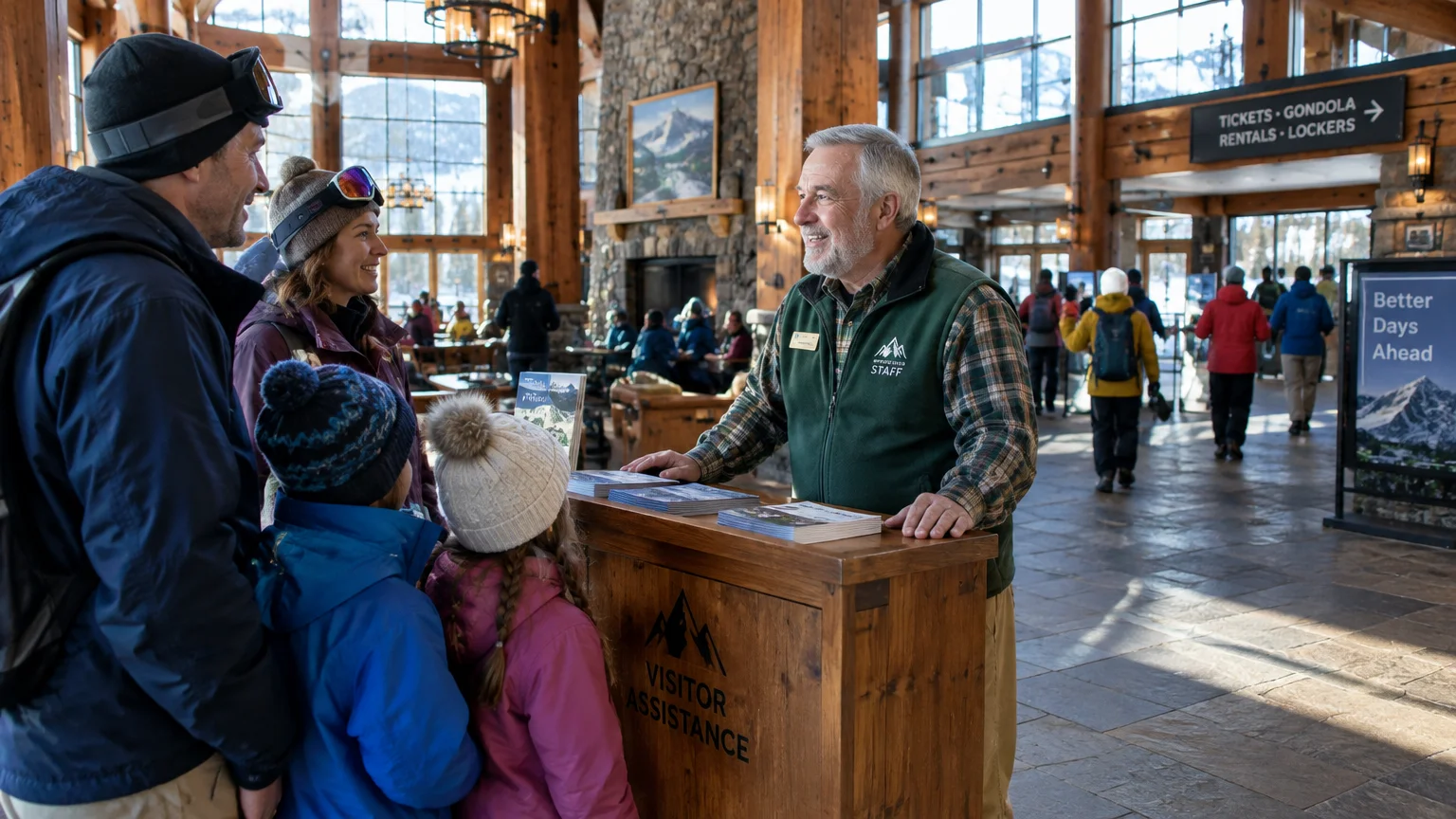
Ski resorts face immense seasonal staffing challenges every autumn. Operators need dependable team members who arrive on time and handle customer service challenges with patience.
Retirees bring decades of professional workplace experience to front-facing hospitality roles. Your calm temperament and reliability make you an invaluable asset on busy holiday weekends.
According to the National Ski Areas Association (NSAA), skiers aged 55 and older account for roughly 16% to 20% of total skier visits nationwide. Older guests appreciate interacting with peers who understand their pacing and perspective.
Resort managers know that mature workers rarely call out sick to chase fresh powder. You provide operational stability while younger staff members navigate fluctuating college schedules.
The Financial Perks: Free Ski Passes and Hourly Pay
A seasonal resort job offers financial benefits that extend far beyond an hourly paycheck. The biggest perk for winter sports enthusiasts is a complimentary employee season pass.
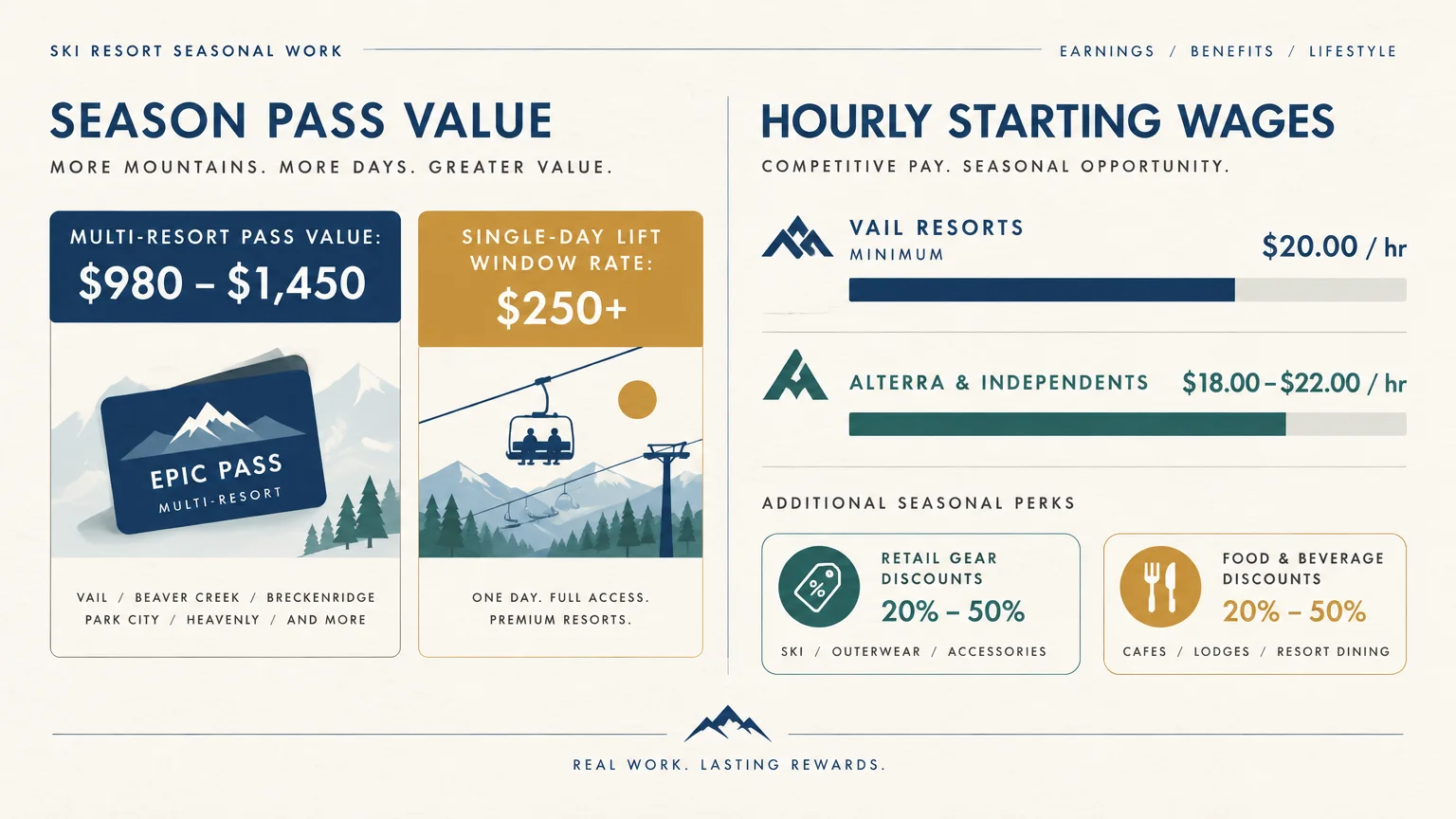
Top-tier multi-resort passes represent substantial monetary value. An Epic Pass from Vail Resorts or an Ikon Pass from Alterra Mountain Company typically retails between $980 and $1,450 per season.
Single-day lift tickets at premier destinations routinely surpass $250 at the ticket window. A part-time job provides unlimited skiing without touching your retirement investment portfolio.
Hourly wages have also increased significantly across the snowsports industry. Vail Resorts maintains a minimum starting wage of $20.00 per hour across all North American locations.
Alterra Mountain Company and independent resorts generally offer frontline wages between $18.00 and $22.00 per hour. Most resorts also offer steep discounts on retail gear, food, lodging, and family guest passes.
Research published by AARP shows that working part-time in retirement boosts physical vitality and mental health while providing useful discretionary income.
9 Rewarding Ski Resort Roles for Active Seniors
1. Mountain Ambassador and Welcome Host
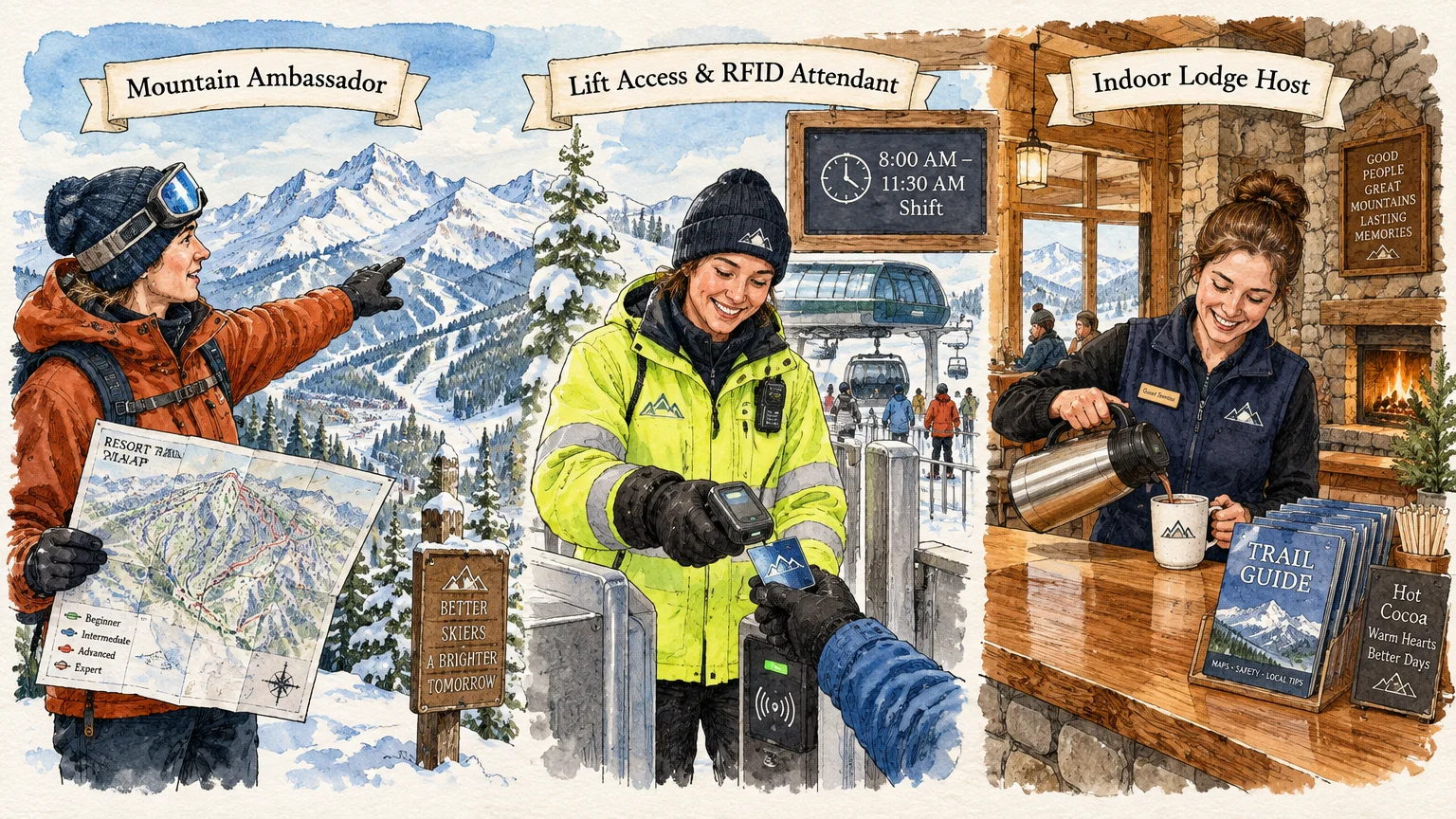
Mountain ambassadors serve as the smiling face of the ski area. You greet arriving visitors, distribute trail maps, answer logistical questions, and help newcomers navigate the base village.
Some ambassador positions take place on skis or snowboards. In these roles, you lead intermediate orientation tours across groomed runs, pointing out mountain dining spots and historical landmarks.
Indoor ambassador roles keep you warm inside transit centers and base lodges. It is a social, low-stress position ideal for outgoing retirees who love sharing local mountain knowledge.
2. Ticket Scanner and Lift Access Attendant
Ticket scanners verify passes and scan radio-frequency identification (RFID) cards at base area lifts. You ensure guests have valid tickets while offering cheerful morning greetings.
This role provides straightforward responsibilities without complicated technical computer tasks. Most resorts schedule scanners during peak morning hours between 8:00 AM and 11:30 AM.
Once morning crowds dissipate, managers frequently dismiss scanners for the day. That schedule leaves your afternoons completely free to make turns on the mountain.
3. Rental Shop Technician and Boot Fitter
The rental shop serves as Grand Central Station for vacationing families. Technicians adjust ski bindings, inspect equipment for damage, and fit guests with comfortable ski boots.
Boot fitting requires active listening and genuine empathy. Many novice skiers struggle with uncomfortable footwear; your patient guidance can save their entire mountain vacation.
Resorts provide comprehensive certification training on binding release calibration. This indoor job keeps you warm while allowing you to work alongside active outdoor enthusiasts.
4. Lodge Front Desk and Concierge Agent
Mountain hotels and ski-in/ski-out lodges require organized front desk professionals. You manage guest check-ins, process room keys, and handle billing inquiries.
As a concierge, you recommend local dinner options, book sleigh rides, and coordinate spa reservations. Your mature presence brings reassurance to guests arriving after long travel days.
These roles stay entirely indoors, protecting you from harsh mountain blizzards. Many properties offer shifts ending early in the day or starting in the late afternoon.
5. Beginner Ski or Snowboard Instructor
If you have solid skiing fundamentals and love teaching, consider joining the ski school. Resorts constantly seek instructors to teach first-time children and nervous adult beginners.
You do not need to ski double-black diamonds to instruct novices. Empathy, patience, and clear communication matter far more than expert athletic performance.
Resorts run internal teaching clinics and often sponsor professional certification through the Professional Ski Instructors of America (PSIA). Private lessons frequently include substantial client tips.
6. Mountain Retail Sales Associate
Resort retail shops sell high-end winter outerwear, thermal base layers, and souvenir merchandise. Associates organize clothing displays, manage inventory, and ring up sales.
Retirees with previous corporate, administrative, or retail backgrounds excel in this environment. You assist shoppers with sizing while sharing advice on staying warm on the chairlift.
Working in retail guarantees steady hours in a heated, comfortable shop. You also gain access to generous employee pro-deal discounts on technical ski clothing and winter gear.
7. Resort Shuttle Driver and Parking Coordinator
Resort transportation networks depend on experienced drivers to move guests between parking lots, lodges, and village centers. Most routes operate at low speeds on predetermined loops.
If you hold a clean driving record and feel comfortable in snowy conditions, shuttle driving pays well. Some large bus routes require a commercial driver’s license (CDL), but many vans do not.
Alternatively, parking hosts guide vehicles into orderly rows during morning arrival rushes. Parking shifts wrap up by midday, leaving your afternoons wide open.
8. Base Lodge Cashier and Cafe Barista
Mountain lodges need friendly staff to run coffee stations, grab-and-go markets, and cafeteria checkout registers. Early morning coffee baristas serve the mountain’s first eager skiers.
Shifts often start early at 6:30 AM and wrap up before noon. You handle simple point-of-sale transactions and brew espresso drinks in a lively, upbeat atmosphere.
These positions avoid heavy lifting and keep you out of the cold. Most food and beverage roles also include free shift meals, cutting your everyday grocery expenses.
9. Mountain Safety and Courtesy Patrol
Mountain safety hosts promote safe skiing and snowboarding across congested trail intersections and slow zones. You remind guests to reduce speed near beginner areas and lift lines.
This role differs from the professional ski patrol because you do not handle medical trauma or avalanche blasting. Instead, you focus on accident prevention and guest education.
You spend your entire workday skiing groomed trails and assisting guests who need directions. It represents an exceptional assignment for expert senior skiers who want maximum time on snow.
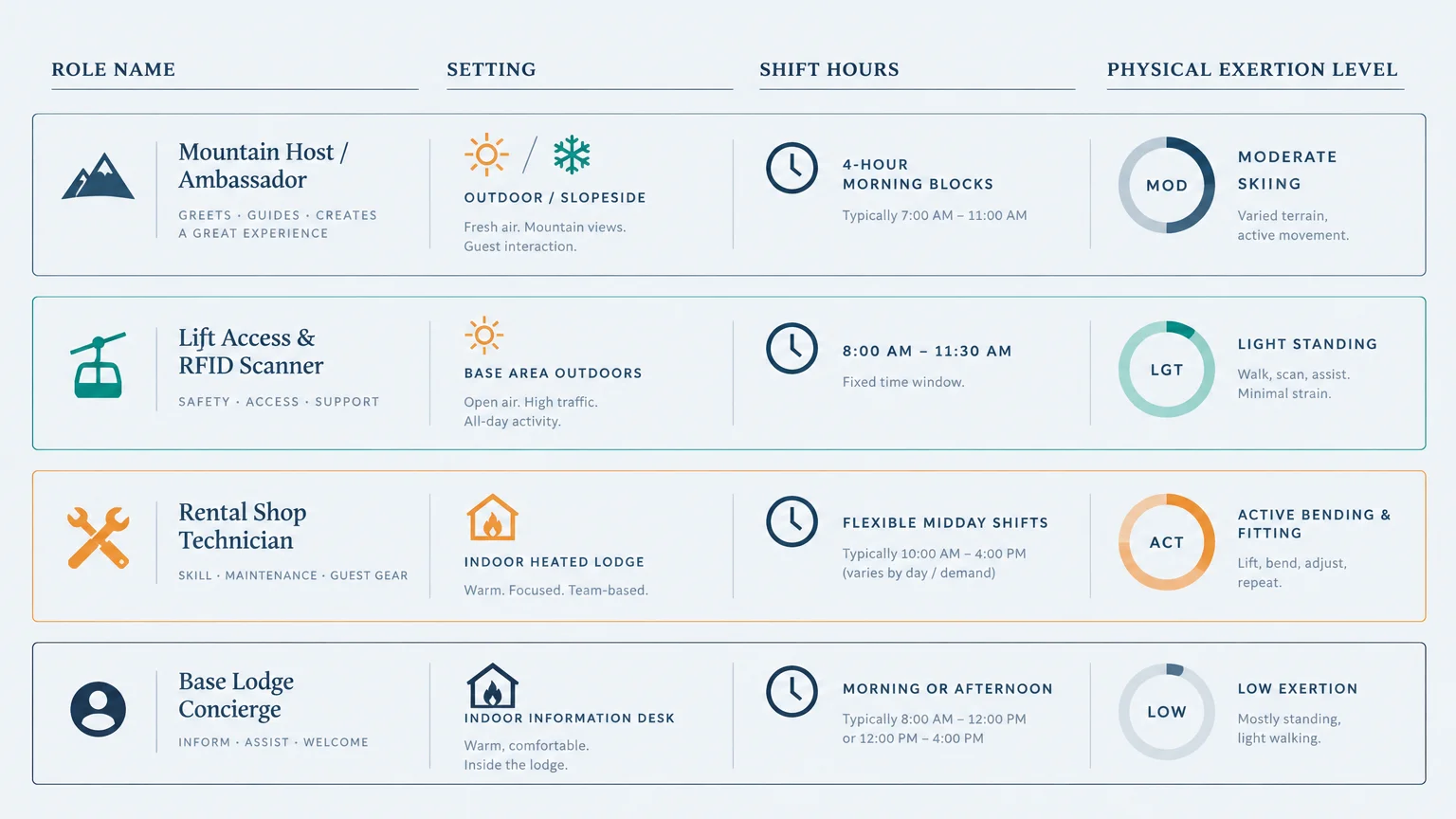
Comparison of Part-Time Mountain Roles
| Job Title | Work Environment | Physical Demand | Key Scheduling Advantage |
|---|---|---|---|
| Mountain Ambassador | Outdoor (On snow or base) | Moderate | Flexible 4-hour morning or midday shifts |
| Ticket / RFID Scanner | Outdoor (Base lifts) | Light to Moderate | Early morning shifts; off by noon |
| Rental Technician | Heated Base Shop | Moderate (Bending) | Split shifts or weekend coverage options |
| Lodge Concierge / Desk | Indoor Hotel Lobby | Light (Sedentary) | Late afternoon or evening shifts available |
| Beginner Instructor | Outdoor (Learning slope) | Moderate to High | Consistent daytime hours plus tips |
| Retail Sales Associate | Heated Village Shop | Light (Standing) | Predictable indoor hours and gear discounts |
| Resort Shuttle Driver | Vehicle Cab | Light | Early morning or evening split shifts |
| Lodge Cafe Cashier | Indoor Dining Area | Light | Breakfast shifts end before lunch; free meals |
| Mountain Safety Host | Outdoor (On trails) | High (Skiing) | Spends the entire working shift on skis |

Social Security and Tax Considerations for Seasonal Workers
Earning extra income during retirement requires basic tax planning. If you receive early Social Security benefits before reaching your full retirement age (FRA), wage caps apply.
According to the Social Security Administration, the earnings limit for beneficiaries younger than full retirement age in 2026 is $24,480. The agency withholds $1 in benefits for every $2 earned above this limit.
If you reach full retirement age during 2026, the threshold rises to $65,160 for the months preceding your birthday. The withholding rate drops to $1 for every $3 earned above that cap.
Once you reach your full retirement age, the earnings limitation disappears entirely. You can earn an unlimited seasonal income without triggering any benefit withholdings.
Remember that your seasonal wages also represent taxable earned income. The Internal Revenue Service requires regular income tax and FICA withholdings on resort wages.
Financial planners note that bridge employment offers emotional satisfaction alongside financial perks. Practical semi-retirement keeps your mind sharp and your days structured.
“Semi-retirement gives you the freedom to stay engaged, earn supplemental income, and enjoy your passions without the grind of a traditional career.” — Jean Chatzky, Financial Journalist and Author
Guidance from financial educators at Investopedia underscores that keeping earned income below key phaseout thresholds prevents surprise Medicare premium surcharges.
How and When to Apply for Mountain Jobs
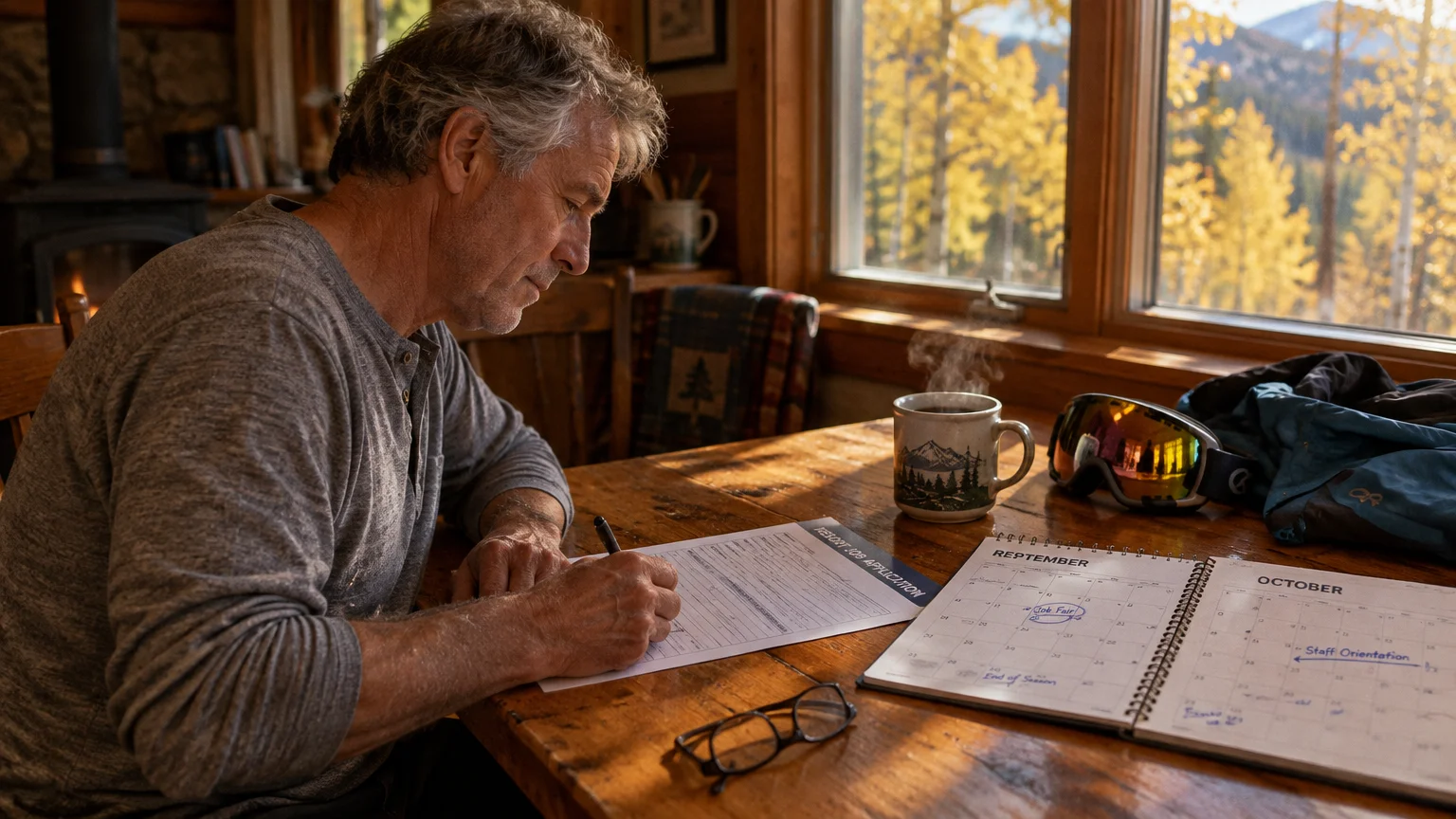
Ski resorts follow strict hiring calendars to prepare for winter openings. Mountain operations begin recruiting for the upcoming season during late August and September.
Most major resort conglomerates host virtual and in-person career fairs throughout September and October. Applying early ensures you secure your preferred department and weekly schedule.
- Highlight customer service skills: Emphasize reliability, conflict resolution, and communication on your resume rather than corporate management credentials.
- Clarify availability: Resorts value workers who commit to peak holiday periods, including Christmas week, Martin Luther King Jr. Day, and Presidents’ Day weekend.
- Secure local housing: Employee housing remains scarce in mountain communities. Applicants who already own or lease local housing receive immediate preference.
- Obtain ski gear early: Take advantage of early-season employee equipment checks and uniform distribution days before opening weekend.
Common Mistakes to Avoid When Working at a Resort
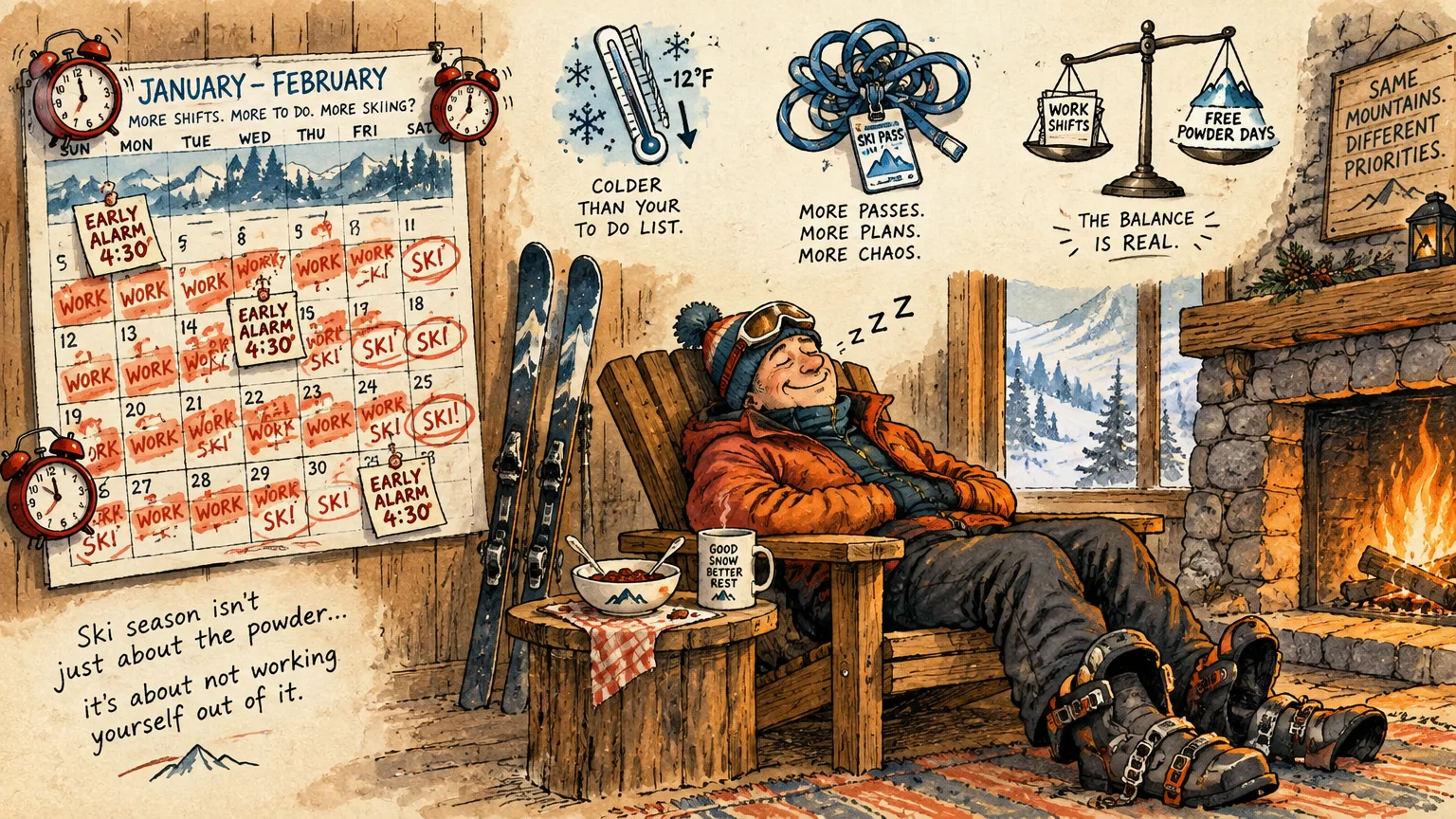
Working at elevation carries unique physical demands. Many new seasonal employees underestimate the impact of freezing temperatures, thin air, and icy walking surfaces.
Invest in quality thermal base layers, moisture-wicking socks, and slip-resistant footwear with ice spikes. Dehydration happens rapidly in high-altitude environments, so carry water constantly.
Another frequent mistake involves overcommitting your weekly hours. Remember why you took a seasonal position: you want time to enjoy the mountain lifestyle.
Request a schedule of two or three shifts per week. A part-time schedule preserves your energy and provides ample days for relaxation and skiing.
Frequently Asked Questions
Do ski resorts hire older adults who do not ski?
Yes. Resorts employ thousands of non-skiers in guest services, retail shops, cash registers, front desks, and administrative positions across base villages.
Will a part-time seasonal resort job affect my Medicare coverage?
Part-time seasonal wages do not replace or alter your Medicare coverage. However, substantial seasonal earnings could slightly affect income-related monthly adjustment amounts (IRMAA) two years later.
Are employee ski passes truly free for part-time staff?
Most resorts grant free season passes to part-time workers who commit to a minimum threshold, typically 16 to 20 hours per week throughout the operating season.
Can I take time off to visit family during the winter?
Resorts expect all hands on deck during major holiday weeks. However, managers readily approve midweek time off during quieter periods in January, February, and April.
Final Steps for Your Mountain Adventure
A seasonal mountain job lets you enjoy world-class skiing, maintain social connections, and earn supplemental retirement income. You become part of a passionate alpine community while keeping your body active throughout the winter months.
Start browsing resort career portals this summer to review upcoming seasonal openings. Review your target resort’s job listings, prepare a concise customer-focused resume, and get ready for a memorable winter.
This article provides general retirement education and information only. Everyone’s financial situation is unique—what works for others may not work for you. For personalized advice, consider consulting a qualified financial professional such as a CFP or CPA.
Last updated: February 2026. Retirement benefits, tax laws, and healthcare costs change frequently—verify current details with official sources.