
Determining your true housing budget in retirement requires looking far beyond standard mortgage approvals. While commercial lenders might approve you for a substantial loan, hidden ongoing expenses can quietly jeopardize your hard-earned financial independence.
A secure retirement home should deliver daily peace of mind rather than recurring cash flow anxiety. Balancing non-negotiable living costs against fixed monthly distributions guarantees that your savings outlive your mortgage balance.
Whether you plan to downsize, relocate across state lines, or purchase your forever property, practical guidelines protect your lifestyle. Here is how you can accurately evaluate your real housing capacity.
The Essentials: Key Benchmarks for Retirement Home Buyers
Traditional mortgage underwriting models assume your earnings will naturally increase over time. In retirement, your earnings trajectory shifts toward fixed distributions, pensions, and guaranteed government benefits.
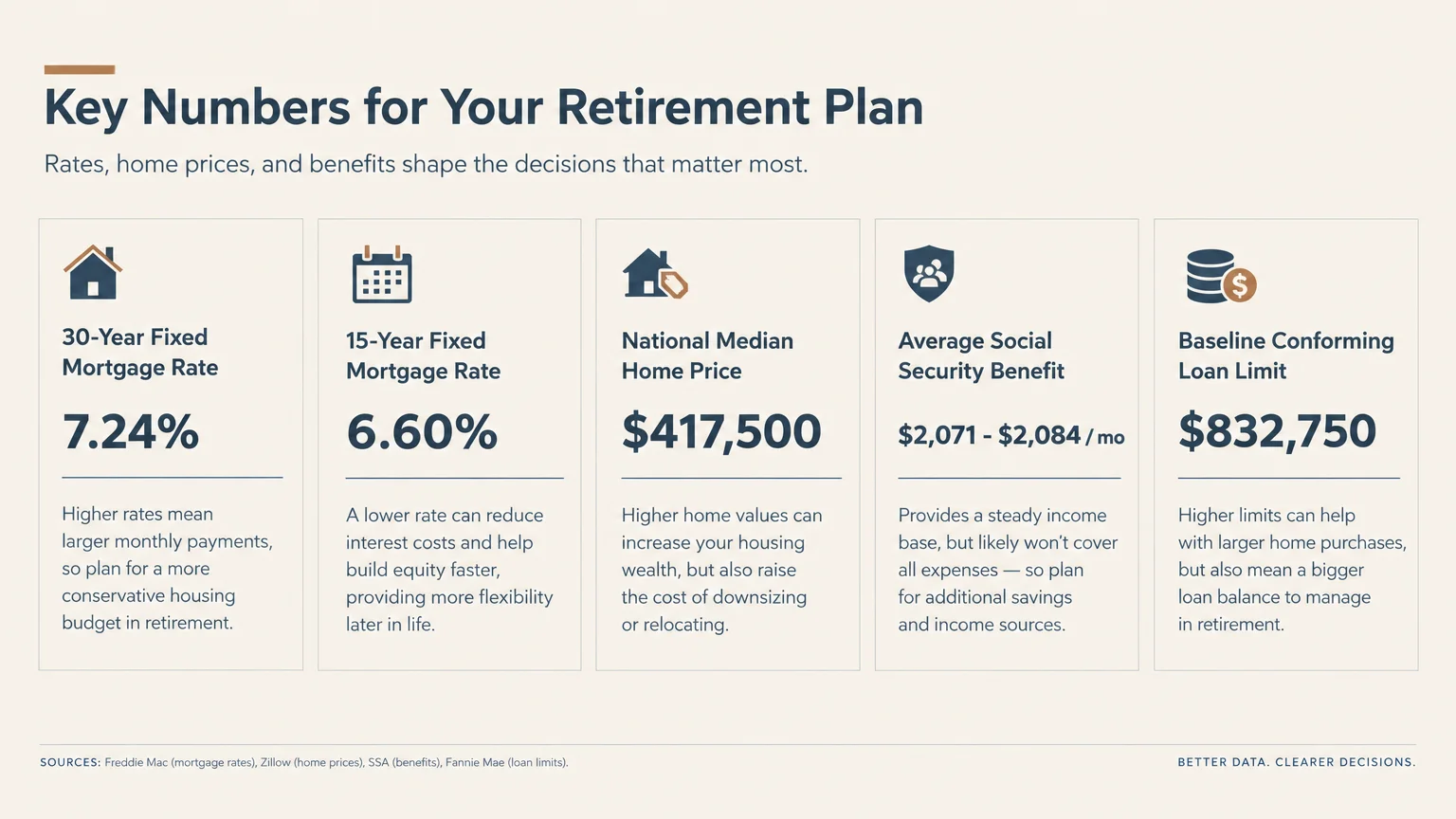
Evaluating an affordable purchase price demands calculating both upfront capital requirements and long-term carrying costs. The following national metrics reflect the modern real estate landscape for buyers planning a transition.
| Metric | Current Benchmark | Retirement Planning Implication |
|---|---|---|
| 30-Year Fixed Mortgage Rate | 7.24% | Elevated borrowing costs increase monthly carrying expenses significantly. |
| 15-Year Fixed Mortgage Rate | 6.60% | Compresses interest expense but demands substantially higher monthly cash flow. |
| National Median Home Price | $417,500 | Represents the overall national median price across all existing home types. |
| Single-Family Median Price | $432,900 | Reflects regional variations, ranging from $342,500 in the Midwest to $629,000 in the West. |
| Baseline Conforming Loan Limit | $832,750 | Standard threshold for conventional financing before entering jumbo territory. |
| Average Social Security Benefit | $2,071 to $2,084 / month | Provides a stable base, yet rarely covers substantial housing debts alone. |
Your goal is not discovering the maximum financing a bank will provide. Your goal is identifying the monthly carrying cost that keeps your retirement plan completely resilient.
Rethinking Housing Affordability on a Fixed Income
Mortgage guidelines developed for thirty-somethings do not fit the economic reality of life after work. Working households can recover from financial miscalculations through salary raises, promotions, or extra employment hours.
Retirees, however, face sequence-of-returns risk and fixed income ceilings. Liquidating equities during market downturns to service an oversized mortgage permanently impairs portfolio longevity.
According to Harvard University’s Joint Center for Housing Studies, a record 12.4 million to 12.5 million older households spend more than 30% of their income on shelter. More than half of those seniors—roughly 6.7 million households—are severely cost-burdened, committing over 50% of their revenue to basic housing.
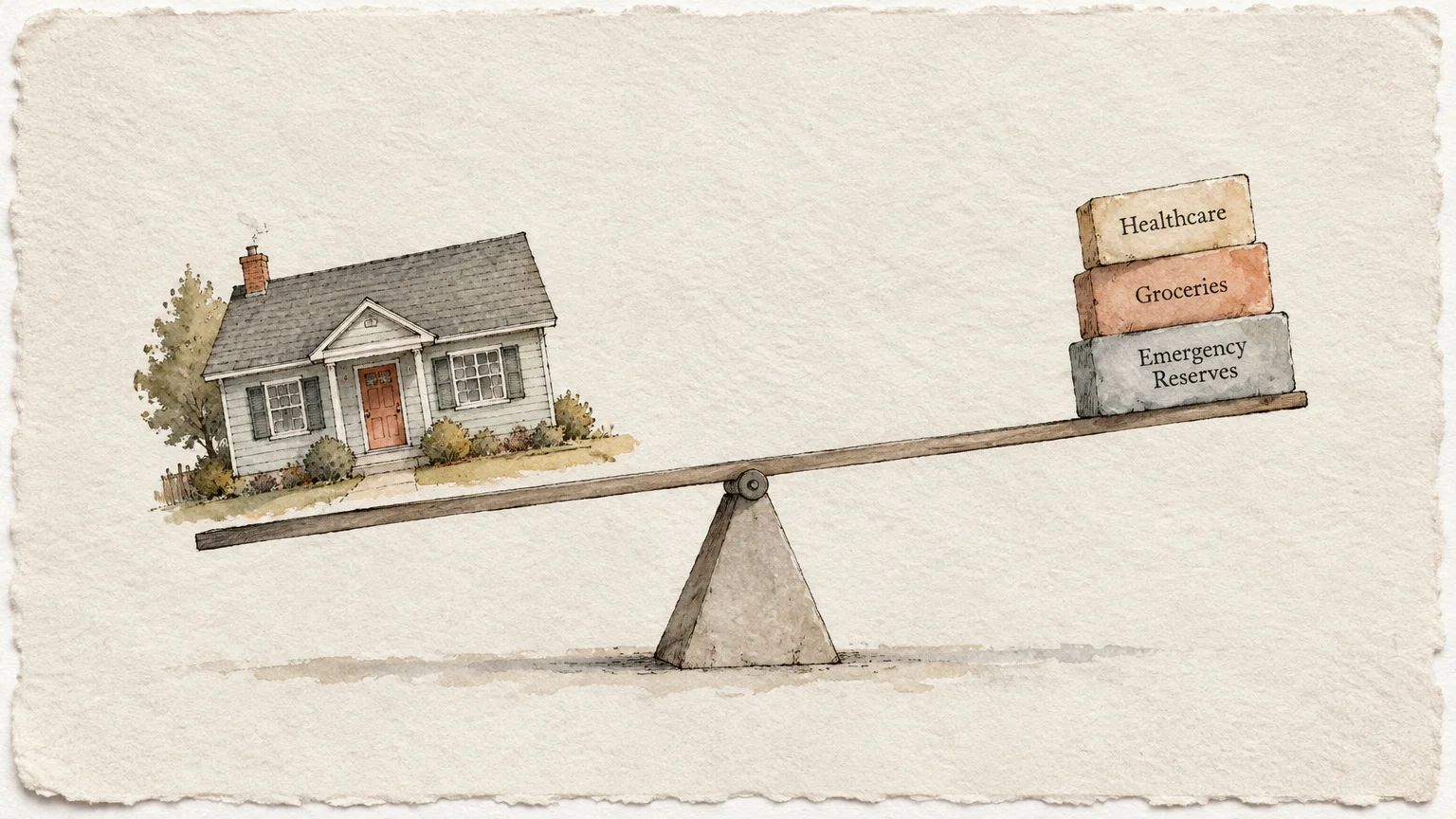
Becoming house-rich and cash-poor severely restricts your lifestyle. It forces harsh trade-offs between regular home maintenance, essential healthcare needs, and leisure travel.
“A home is not just an asset; it is a major ongoing expense that must never jeopardize your daily peace of mind.” — Suze Orman, Personal Finance Author
Recognizing the boundary between theoretical borrowing capacity and sustainable living expenses protects your portfolio from unnecessary stress.
The 28/36 Rule and Front-End Versus Back-End Ratios
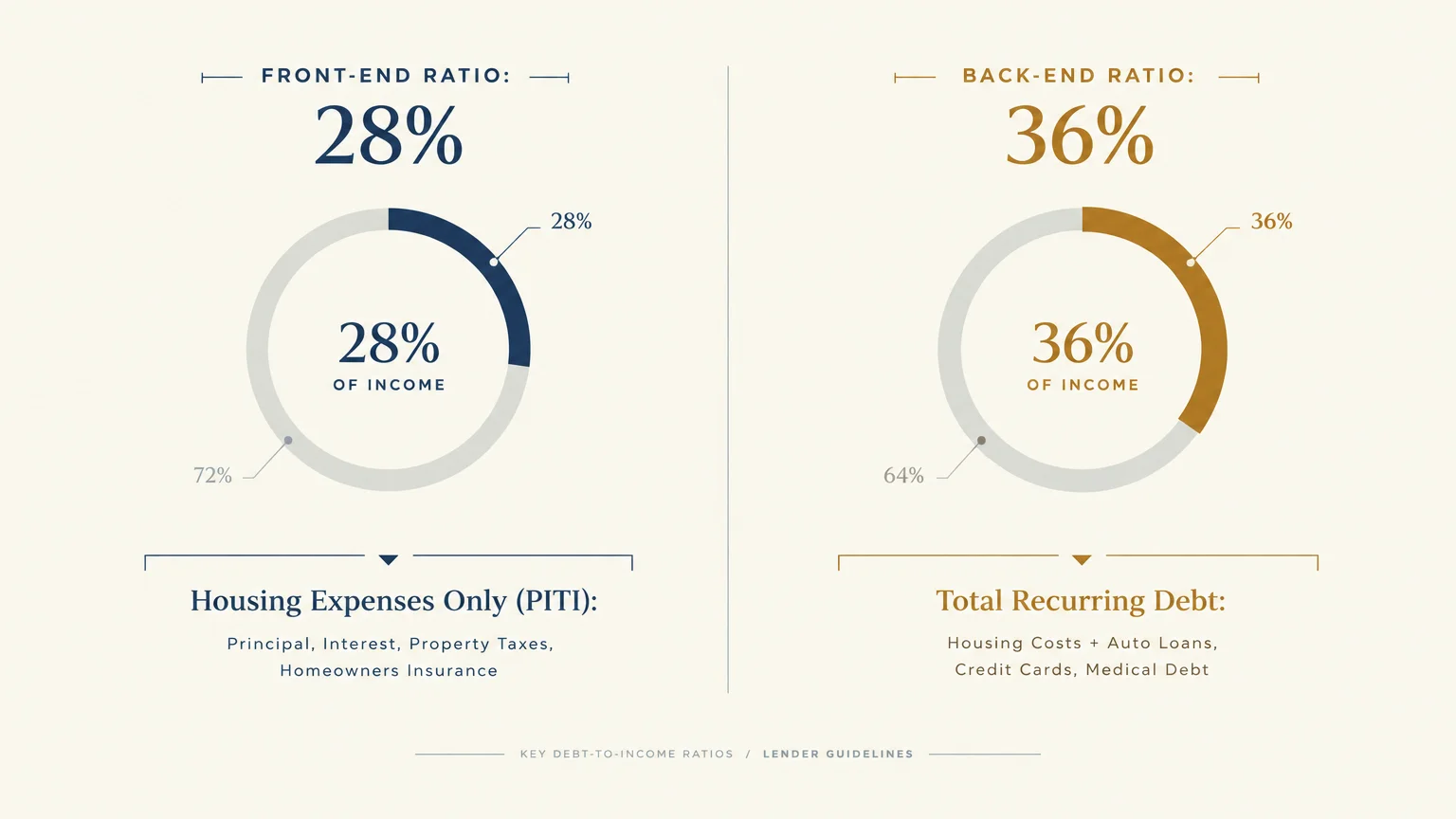
Financial planners frequently rely on the classic 28/36 rule to establish conservative affordability boundaries. Under this model, your housing expenses should never exceed 28% of your gross monthly income.
Housing expenses encompass principal, interest, real estate taxes, and homeowners insurance—commonly abbreviated as PITI. Condominium dues and homeowners association (HOA) fees also factor directly into this front-end ratio calculation.
The back-end ratio limits your total monthly debt obligations to 36% of gross income. Total obligations include your full housing payment plus credit cards, auto financing, and personal loans.
Modern conventional lenders frequently allow debt-to-income (DTI) ratios up to 43% to 50% for borrowers with excellent credit scores. The Federal Housing Administration (HUD) often permits back-end DTI limits between 43% and 55%.
Stretching your budget toward these commercial lending limits in retirement introduces substantial structural danger. If 45% of your fixed income flows toward debt, unexpected medical expenses or inflation shocks can dismantle your cash reserves.
Most retirees should adopt an even stricter standard than working professionals. Capping total housing costs at 20% to 25% of gross retirement income creates an invaluable safety margin.

How Mortgage Lenders Underwrite Retirement Income
Securing a home loan without a traditional W-2 paycheck can feel intimidating. However, federal lending rules accommodate non-employment income through clearly established verification standards.
Under the Equal Credit Opportunity Act, enforced by the Consumer Financial Protection Bureau, lenders cannot discriminate based on age. Underwriters cannot ask about your life expectancy or decline a 30-year mortgage simply because you are 70 years old.
Lenders evaluate your creditworthiness by analyzing predictable income streams. These streams include defined-benefit pensions, government annuities, and Social Security payments.
The Social Security Administration reports that recent benefit adjustments brought the average retired worker payment to roughly $2,084 per month. Maximum monthly benefits reach $2,969 at age 62 and climb to $5,181 for high earners waiting until age 70.
Mortgage underwriting standards provide a distinct advantage for non-taxable retirement income. Lenders allow you to “gross up” non-taxable distributions by 25% for conventional loans and 15% for FHA loans.
Under federal guidelines from the Internal Revenue Service, at least 15% of Social Security benefits remain exempt from federal income tax. Because of this exemption, lenders automatically increase qualifying Social Security income by a minimum of 3.75%, and up to a full 25% if your total benefits are completely untaxed.
Qualifying via Asset Depletion and the 3-Year Continuance Rule
If you hold substantial wealth inside retirement portfolios but draw modest monthly distributions, traditional underwriting might understate your purchasing ability. In response, lenders utilize specialized asset depletion calculations.
Under agency guidelines from Fannie Mae and Freddie Mac, underwriters evaluate total eligible financial assets. These assets include 401(k) plans, traditional IRAs, Roth accounts, savings balances, and taxable brokerage portfolios.
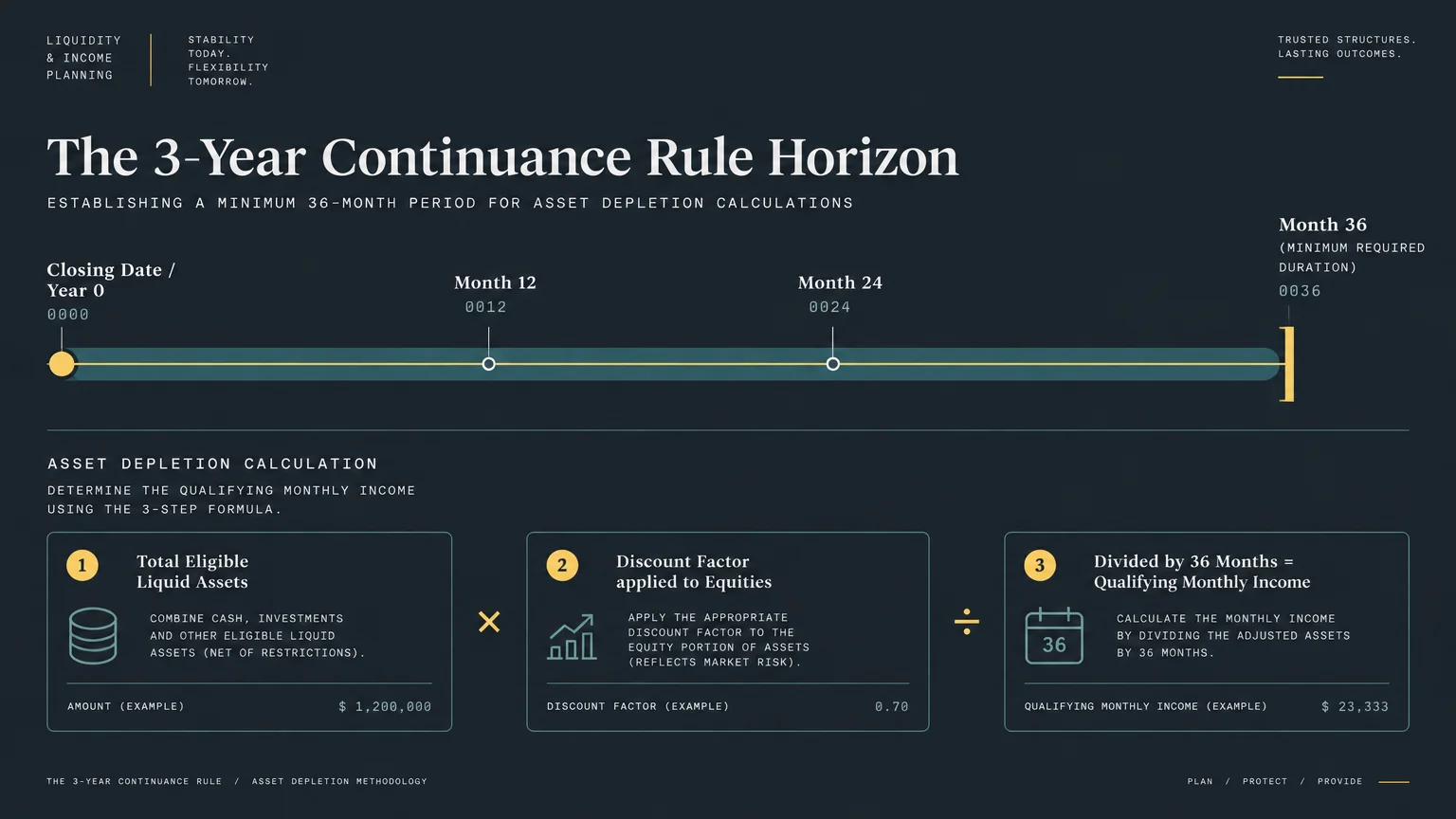
Lenders first discount market-sensitive assets, such as stocks and mutual funds, by 20% to 30% to insulate against market volatility. They subtract your required down payment, closing costs, and three to six months of emergency reserves.
The underwriter then divides the remaining net asset balance by 360 months—regardless of the actual loan term. The resulting monthly figure counts as qualifying income on your debt-to-income worksheet.
To count retirement accounts toward asset depletion, you must have unrestricted, penalty-free access. This means borrowers must be at least 59½ years of age at the time of loan application.
If you rely on regular retirement account distributions instead of asset depletion, you must satisfy the 3-year continuance rule. Underwriters review account balances to ensure your historical withdrawal rate can continue for at least 36 consecutive months.
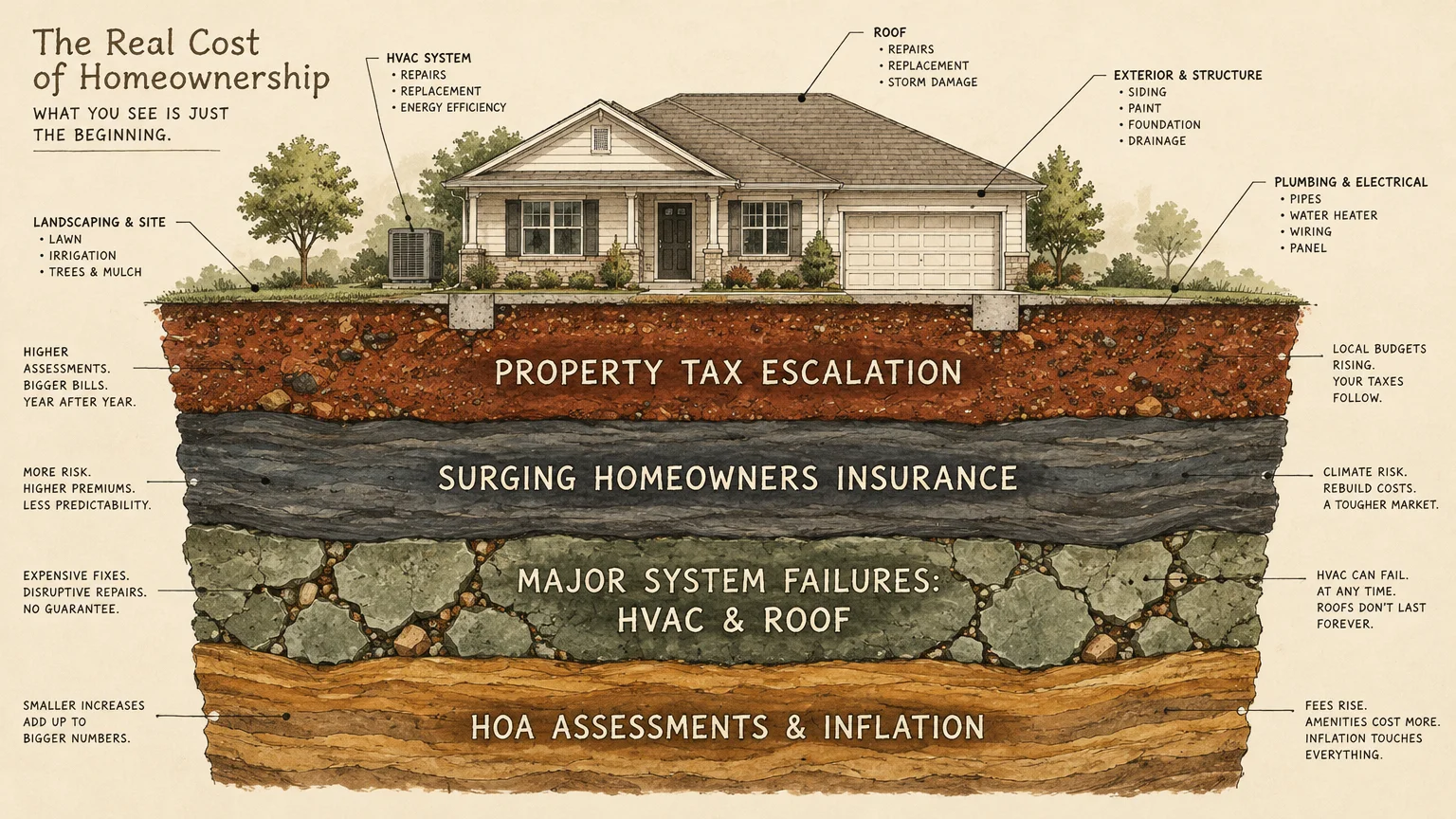
The Creeping Hidden Costs of Homeownership
Calculating your monthly principal and interest payment addresses only part of the financial equation. Unchecked non-mortgage housing expenses create severe cash flow disruptions for retired property owners.
Data reveals that median housing costs for mortgage-free seniors increased 35% between 2019 and 2026. This surge outpaced typical retirement cost-of-living adjustments by roughly 1.5 times.
Rising carrying costs stem primarily from rapid spikes in insurance premiums and municipal property taxes. Nationwide homeowners insurance rates jumped an average of 40.4%, while municipal real estate taxes rose 25% over the same timeframe.
When you establish your retirement home budget, you must account for these variable expenses:
- Property Taxes: Municipalities periodically reassess property values, often erasing original tax caps after an ownership transfer.
- Hazard and Flood Insurance: Severe weather trends have driven insurance carriers to adjust premiums and increase deductibles across major retirement destinations.
- HOA Assessments: Planned retirement communities frequently implement special capital assessments to repair aging private infrastructure and clubhouses.
- Maintenance and Aging-in-Place Upgrades: Setting aside 1% to 2% of the home’s market value annually covers roof replacements, mechanical repairs, and accessibility modifications.
- Utility Expenses: Heating and cooling larger living spaces can consume hundreds of dollars each month, directly competing with your grocery and healthcare budgets.
Ignoring these supplementary costs leads to severe budget imbalances. Factoring them into your initial calculation keeps your retirement plan secure.

Buying With Cash Versus Taking a Mortgage in Retirement
Retirees blessed with substantial home equity or cash reserves often debate financing a home versus purchasing it outright. Eliminating debt offers unmatched psychological peace, yet locking up liquid capital carries distinct trade-offs.
According to Freddie Mac’s Primary Mortgage Market Survey, 30-year fixed mortgage rates average 7.24%, while 15-year fixed loans sit near 6.60%. Paying elevated borrowing costs redirects valuable retirement cash flow toward financial institutions.
“Entering retirement without a housing payment gives you an incredible amount of breathing room.” — Dave Ramsey, Personal Finance Author
Choosing an all-cash purchase eliminates monthly interest expenses entirely. It also protects your household from credit market swings and simplifies monthly budgeting.
However, liquidating traditional tax-deferred retirement accounts to buy a home with cash triggers substantial income taxes. Large withdrawals can push you into higher tax brackets and trigger Medicare premium surcharges.
The optimal approach depends on your total liquid net worth, existing tax brackets, and available emergency reserves. The following comparison highlights key considerations across different financing strategies.
| Strategy | Primary Advantages | Primary Risks & Considerations |
|---|---|---|
| 100% Cash Purchase | Eliminates monthly debt service; removes interest charges; lowers non-discretionary baseline spending. | Locks wealth into an illiquid asset; potential massive tax bill if funded via tax-deferred accounts. |
| 30-Year Fixed Mortgage (7.24%) | Preserves liquid portfolio assets; maintains low mandatory monthly payment compared to 15-year debt. | Substantial interest paid over time; high borrowing rates demand higher portfolio withdrawal rates. |
| 15-Year Fixed Mortgage (6.60%) | Slightly lower interest rate; accelerates equity building; completely clears debt within a defined window. | Significantly higher monthly cash flow requirement; strains household liquidity during economic downturns. |
| Substantial Down Payment (50%+) | Keeps monthly payments exceptionally low; preserves a healthy liquidity buffer for healthcare emergencies. | Requires balancing equity lockup against taxable investment returns; moderate financing friction. |
Maintaining a dedicated liquid emergency fund of at least one to two years of living expenses remains essential. Never drain your entire liquid reserve simply to avoid a mortgage payment.
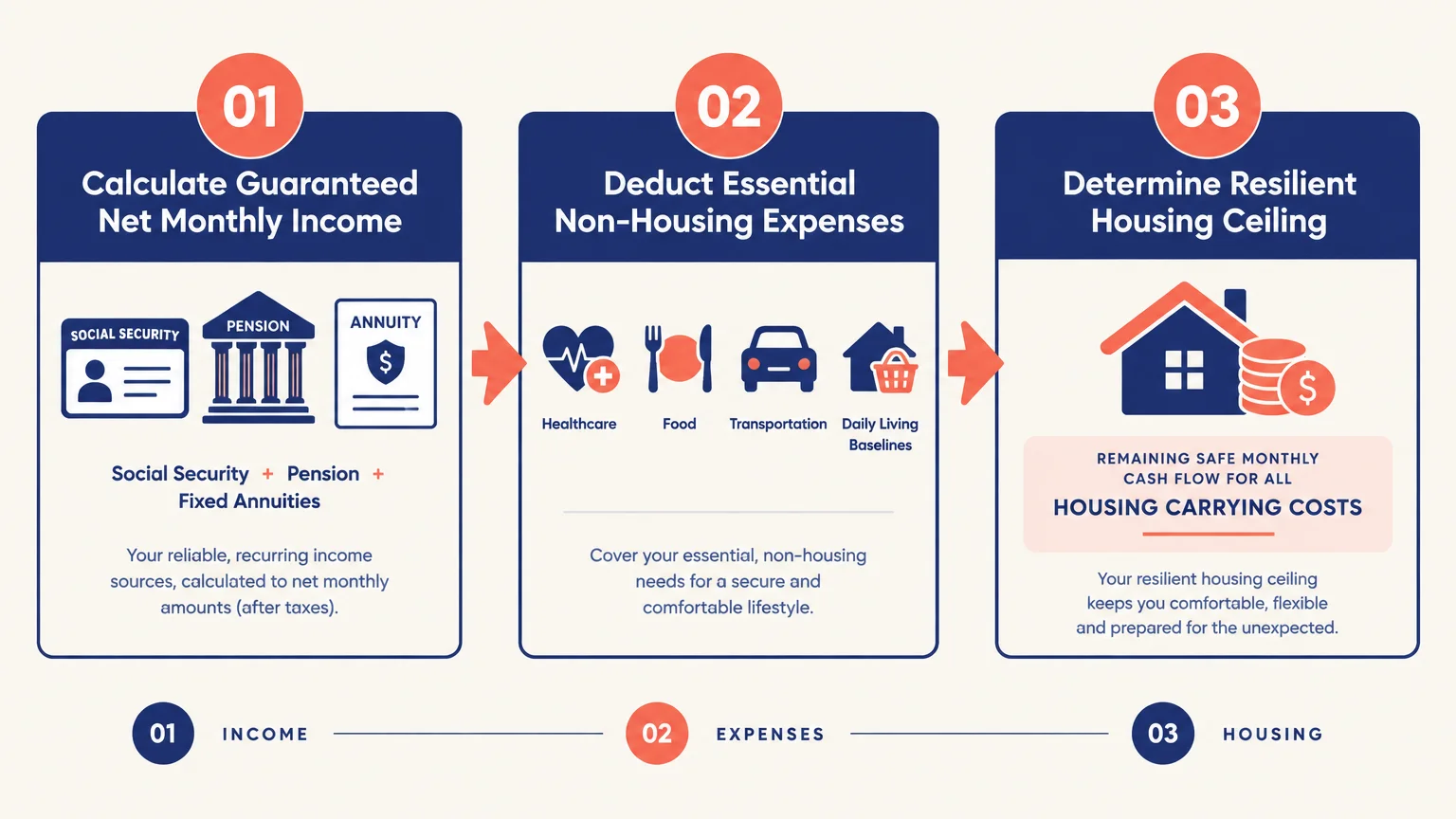
Calculating Your Safe Retirement Housing Budget Step-by-Step
Calculating an affordable purchase price requires working backward from your net guaranteed cash flow. Relying on gross income alone often overstates your purchasing power after taxes.
Follow these structured steps to identify your ideal housing limit:
- Establish Your Net Baseline Monthly Income: Combine reliable income sources, including Social Security, pension payments, and safe portfolio distributions. Exclude speculative windfalls or unpredictable investment gains.
- Apply the 25% Conservative Shelter Ceiling: Multiply your net monthly income by 0.25. This dollar figure represents the maximum amount you should allocate toward total shelter costs.
- Deduct Non-Mortgage Housing Costs: Subtract realistic estimates for property taxes, insurance, HOA dues, and basic utility expenses. The remaining balance represents your maximum allowable monthly mortgage payment.
- Calculate Maximum Loan Principal: Using current prevailing interest rates, determine the loan amount that matches your allowable principal and interest payment.
- Add Your Cash Down Payment: Combine your maximum comfortable loan balance with available down payment funds to determine your total affordable property price.
Consider a practical example using typical national metrics. Assume a retired couple generates $7,500 in combined monthly net income from pensions, Social Security, and conservative portfolio distributions.
Applying the 25% housing rule establishes a maximum monthly shelter ceiling of $1,875. In their target area, property taxes and insurance average $500 monthly, while community maintenance fees run $175.
Subtracting $675 in carrying costs leaves exactly $1,200 monthly for principal and interest. At an average 30-year fixed rate of 7.24%, a $1,200 monthly payment supports a mortgage of approximately $176,000.
If the couple applies $200,000 in equity from their prior home as a down payment, their maximum safe purchase price equals $376,000. This deliberate approach ensures their recurring housing costs remain completely manageable.
Avoiding Common Errors
Navigating real estate purchases during retirement involves significant financial friction. Small oversights can trigger permanent setbacks for households living on structured distributions.
Retirees most frequently encounter the following critical errors:
- Depleting Emergency Reserves for a Down Payment: Liquidity is your primary line of defense against healthcare shocks. Spending your last liquid dollar on property equity leaves you vulnerable to sudden medical bills.
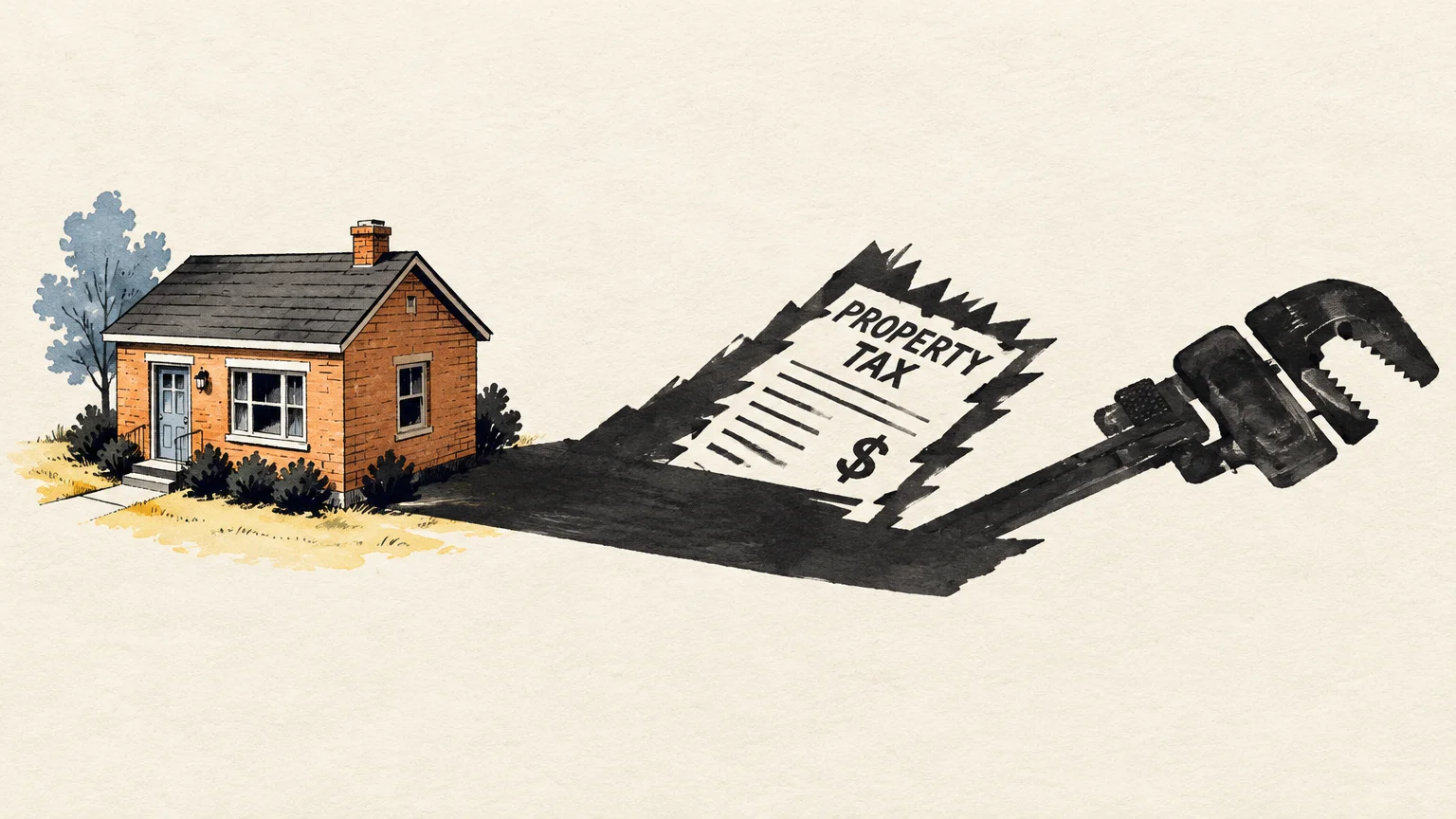
- Underestimating Local Property Tax Reassessments: Existing property tax figures on real estate listings often reflect long-term senior exemptions held by the current owner. Municipalities routinely reset assessments to the full sale price upon transfer.
- Overlooking Physical Accessibility: Multi-story floor plans with steep staircases can force expensive retrofits or premature relocations if your mobility changes. Prioritize single-story layouts, step-free entryways, and wide hallways.
- Failing to Account for Medicare Surcharges: Liquidating significant pre-tax retirement balances to fund a real estate transaction can trigger higher Medicare Part B and Part D premiums under IRMAA rules two years later.
- Overleveraging in High-Cost Regions: Single-family homes in the West average $629,000 and the Northeast average $561,500. Attempting to purchase in these competitive markets without substantial equity can easily strain fixed income streams.
Sidestepping these common pitfalls preserves your liquidity and protects your baseline quality of life throughout your retirement years.

When DIY Isn’t Enough
While standard mortgage calculators provide quick estimates, complex financial scenarios demand specialized professional guidance. Navigating real estate decisions alongside estate plans and tax structures often exceeds basic DIY planning.
Engaging a credentialed professional, such as a Certified Financial Planner (CFP) or CPA, becomes vital in the following specific situations:
- Complex Multi-Account Asset Depletion: If your wealth spans traditional 401(k)s, Roth IRAs, brokerage accounts, and executive deferred compensation, an advisor ensures mortgage qualification without triggering unnecessary income taxes.
- Interstate Relocations With Asymmetric Tax Codes: Moving to a state with zero income tax often masks higher property, sales, or municipal transfer taxes. A tax professional models the holistic net impact on your disposable retirement cash flow.
- Balancing Long-Term Care Capital Against Home Equity: Tying too much net worth into residential property can leave you cash-poor if skilled nursing care or assisted living support becomes necessary.
Professional guidance helps you optimize liquidity while protecting your estate from avoidable tax liabilities.
Frequently Asked Questions
Can a mortgage lender deny my application because of my age?
No. Under the federal Equal Credit Opportunity Act, lenders cannot deny credit or alter loan terms based on age. Lenders must evaluate your credit score, assets, and verified income exactly as they would for any working applicant.
How does Social Security income affect mortgage pre-approval?
Social Security provides steady, qualifying income that lenders value highly. Furthermore, conventional loan guidelines allow lenders to gross up non-taxable portions of your benefit by 25%, boosting your qualifying purchasing power.
Should I pay off my existing mortgage before I retire?
Eliminating debt removes your largest recurring monthly expense and reduces required portfolio withdrawals. However, you should avoid using essential cash reserves to pay off a mortgage if it compromises your emergency fund or healthcare reserves.
What percentage of home value should I budget for annual maintenance?
Financial planners recommend budgeting 1% to 2% of your home’s total market value each year for routine upkeep and capital repairs. For an older property, planning toward the 2% threshold provides a safer margin for aging roofs and mechanical systems.
Moving Forward With Confidence
Purchasing a home in retirement should enhance your daily lifestyle, not introduce continuous balance sheet tension. By evaluating true carrying costs, respecting strict debt ceilings, and protecting your liquidity, you can choose a home that fits your life perfectly.
Take time to review your full monthly budget, verify your non-taxable benefit advantages, and model multiple down payment scenarios. A disciplined approach ensures that your new living space remains a source of comfort and security for years to come.
This article provides general retirement education and information only. Everyone’s financial situation is unique—what works for others may not work for you. For personalized advice, consider consulting a qualified financial professional such as a CFP or CPA.
Last updated: November 2026. Retirement benefits, tax laws, and healthcare costs change frequently—verify current details with official sources.