
Ditching a second vehicle cuts your retirement budget by over $1,000 every month while keeping you active. You can run your daily errands entirely on foot if you choose a town designed around pedestrian convenience.
Too many suburbs force you into heavy traffic just to buy milk or fill a prescription. The best walkable towns integrate pharmacies, grocers, and clinics within a gentle fifteen-minute stroll.
These eleven pedestrian-friendly communities prove you can downsize your vehicle expenses without sacrificing independence or quick access to daily essentials.

The Financial and Physical Payoff of Pedestrian Living
According to AAA’s annual driving cost study, owning and operating a single vehicle now costs over $12,000 per year. Eliminating a second car lets you redirect hundreds of dollars monthly toward travel, investments, or healthcare.
Walking to do errands also builds functional fitness into your daily routine without requiring gym memberships. Physical movement reduces cardiovascular risks and supports joint mobility as you age.
The National Council on Aging highlights regular neighborhood walking as a primary safeguard against chronic illness. Everyday pedestrian trips preserve muscle mass and mental acuity naturally.
“When you reduce your fixed living costs in retirement, you immediately buy yourself flexibility and peace of mind.” — Jean Chatzky, Financial Journalist and Author
What Makes a Town Truly Functional for Errand Walking?
A scenic tourist strip does not equal an errand-friendly hometown. Vacation towns often offer souvenir shops and fine dining, but lack the practical infrastructure retirees need every week.
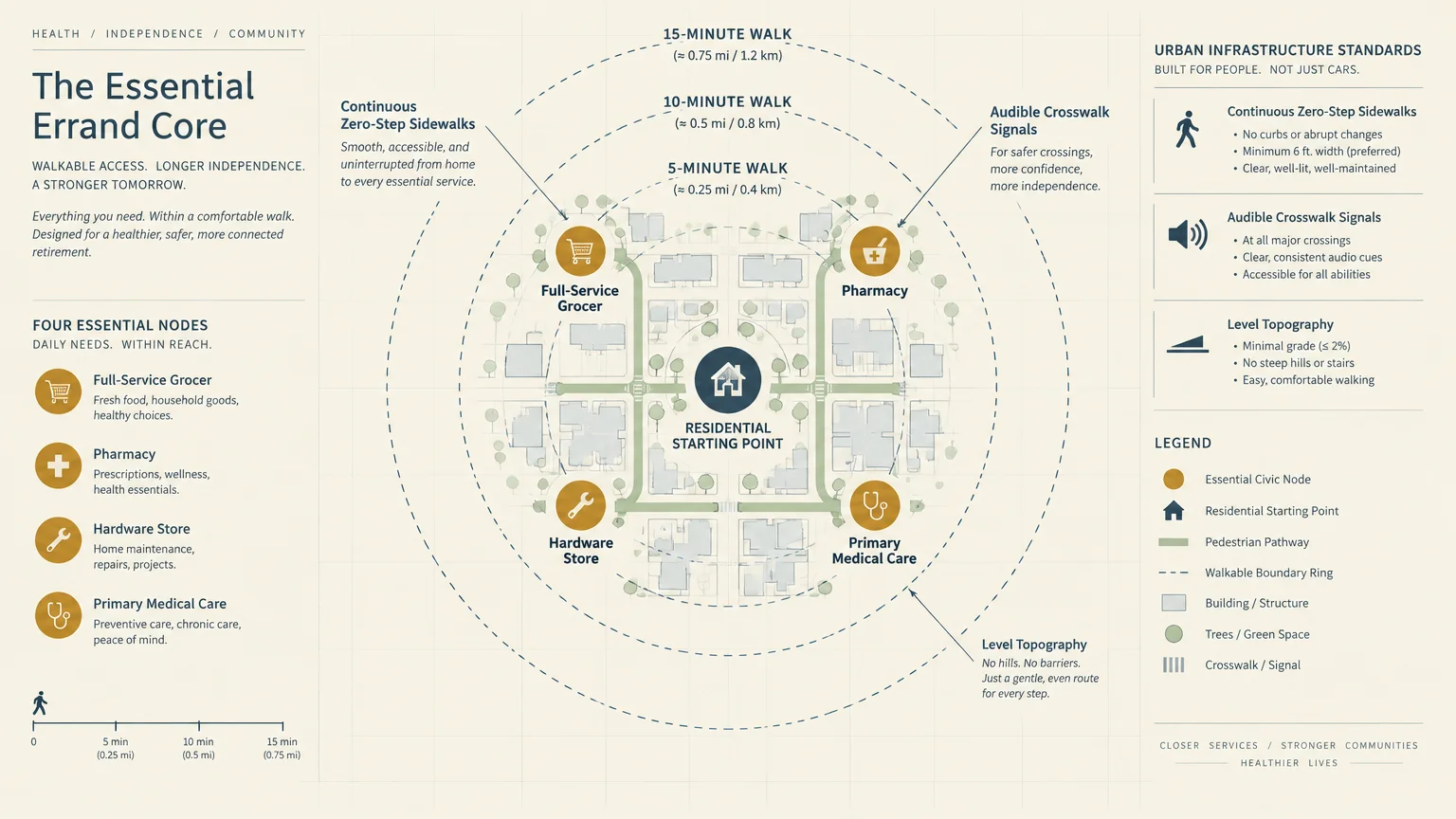
To live comfortably with fewer car trips, you need what urban planners call the essential errand core. This cluster includes a full-service grocer, a pharmacy, a hardware store, and primary medical care.
Sidewalk quality and geography also dictate your daily comfort. Continuous, well-maintained sidewalks, audible crosswalk signals, and flat terrain make walking safe for seniors carrying bags or pushing personal carts.
Resources from the AARP Livable Communities initiative emphasize that proximity to daily necessities directly influences how long seniors can age in place independently.
11 Standout Towns for Car-Light Everyday Errands
1. Lititz, Pennsylvania
Nestled in Lancaster County, Lititz features an exceptionally preserved Main Street lined with everyday necessities. You can walk to the post office, local pharmacies, independent food markets, and the community library within minutes.
Lititz Springs Park provides a level green space connecting residential side streets to the central commercial district. The borough’s flat sidewalks and dense layout allow residents to handle weekly banking and shopping without driving.
2. Decatur, Georgia
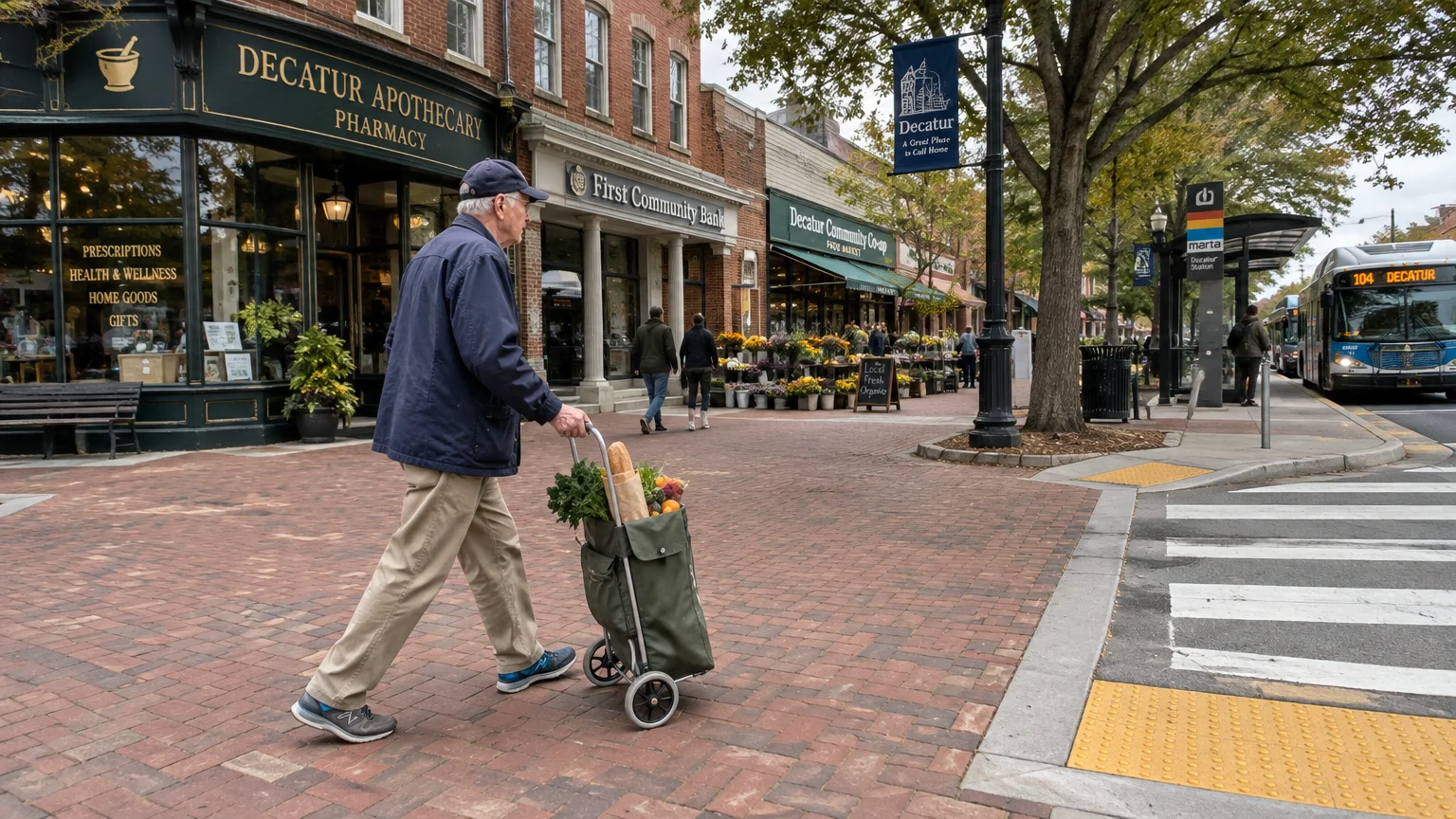
Decatur operates as an independent, ultra-walkable city just east of Atlanta. Its historic downtown square features independent grocers, banks, medical clinics, and dozens of service providers arranged around a central transit hub.
The on-square rail station connects you directly to Emory Healthcare facilities and downtown Atlanta. Wide sidewalks and zero-step curbs make navigating Decatur on foot or with a grocery trolley effortless.
3. Traverse City, Michigan
While famous for lakefront tourism, Traverse City offers an active commercial core built for year-round residents. The downtown grid houses the Oryana Community Co-op, multiple pharmacies, and financial branches along level streets.
Munson Healthcare’s main hospital campus sits just west of the downtown core, supported by dedicated public transit loops. Snow clearance on central sidewalks remains a municipal priority throughout northern Michigan winters.
4. Doylestown, Pennsylvania
Doylestown serves as the historic county seat of Bucks County, organized around a compact, pedestrian-first street layout. Retirees walk directly to McCaffrey’s Food Market, several independent pharmacies, and the local public library.
Doylestown Hospital borders the central neighborhoods, giving pedestrians reassuring access to high-quality healthcare. Regional rail service also stops right in town, offering direct transit connections into Philadelphia for specialized appointments.
5. Fairhope, Alabama
Perched on the bluffs of Mobile Bay, Fairhope blends coastal charm with practical downtown convenience. Greer’s St. Louis Market sits downtown, allowing residents to complete full grocery runs without entering a parking lot.
Thomas Hospital lies less than a mile from the central shopping district, surrounded by flat, shady sidewalks. Flower-lined crosswalks and low vehicle speed limits make running errands on foot a peaceful daily ritual.
6. Port Townsend, Washington
Port Townsend combines maritime history with an active, community-focused errand grid on the Olympic Peninsula. The Port Townsend Food Co-op anchors the uptown district, providing fresh produce and bulk pantry staples.
You will find bakeries, a community clinic, and the public library just blocks from residential streets. Jefferson Transit operates zero-fare buses throughout the county, providing a seamless backup when you carry heavy loads.
7. Northampton, Massachusetts
Northampton delivers a vibrant, compact downtown anchored along Main Street in the Pioneer Valley. Retirees can walk to neighborhood grocery stores, pharmacies, eye clinics, and hardware shops without confronting highway traffic.
Cooley Dickinson Hospital sits just outside the town center, accessible via level walkways or local bus lines. Flat terrain and extensive bike-pedestrian paths make running errands on foot or on an e-bike exceptionally convenient.
8. Black Mountain, North Carolina
Located fifteen miles east of Asheville, Black Mountain occupies a rare, remarkably flat valley basin in the Blue Ridge Mountains. Downtown residents stroll to local meat markets, pharmacies, banks, and the town post office.
The town’s compact square eliminates the steep hills common across western North Carolina communities. You get mountain scenery alongside the convenience of completing all basic errands within a four-block radius.
9. Winter Park, Florida
Winter Park centers on Park Avenue, an oak-canopied corridor flanked by retail shops, banks, and daily services. A downtown SunRail commuter station and nearby grocery stores make car-free living completely realistic.
AdventHealth Winter Park provides comprehensive medical care within walking or short golf-cart distance of downtown. Continuous sidewalks and pedestrian refuges allow older adults to cross busy avenues safely and confidently.
10. Bellingham, Washington
Bellingham’s Fairhaven Historic District and downtown core both provide walkable, self-contained errand hubs overlooking Puget Sound. The Community Food Co-op and local pharmacies sit alongside postal branches and routine medical offices.
The Whatcom Transportation Authority operates frequent, senior-friendly buses connecting Fairhaven to larger commercial centers. Well-lit walking corridors and mild Pacific Northwest temperatures encourage daily foot transit throughout the year.
11. Staunton, Virginia
Staunton features one of Virginia’s best-preserved nineteenth-century commercial grids, nestled in the Shenandoah Valley. Beverly Street offers Cranberry’s Grocery, local pharmacies, banks, and an active community library within a five-minute stroll.
The BRITE transit network provides reliable fixed-route and paratransit services throughout the city. Compact residential streets surround the downtown core, enabling retirees to run errands without ever starting their engines.
At a Glance: Walkability and Everyday Amenities Compared
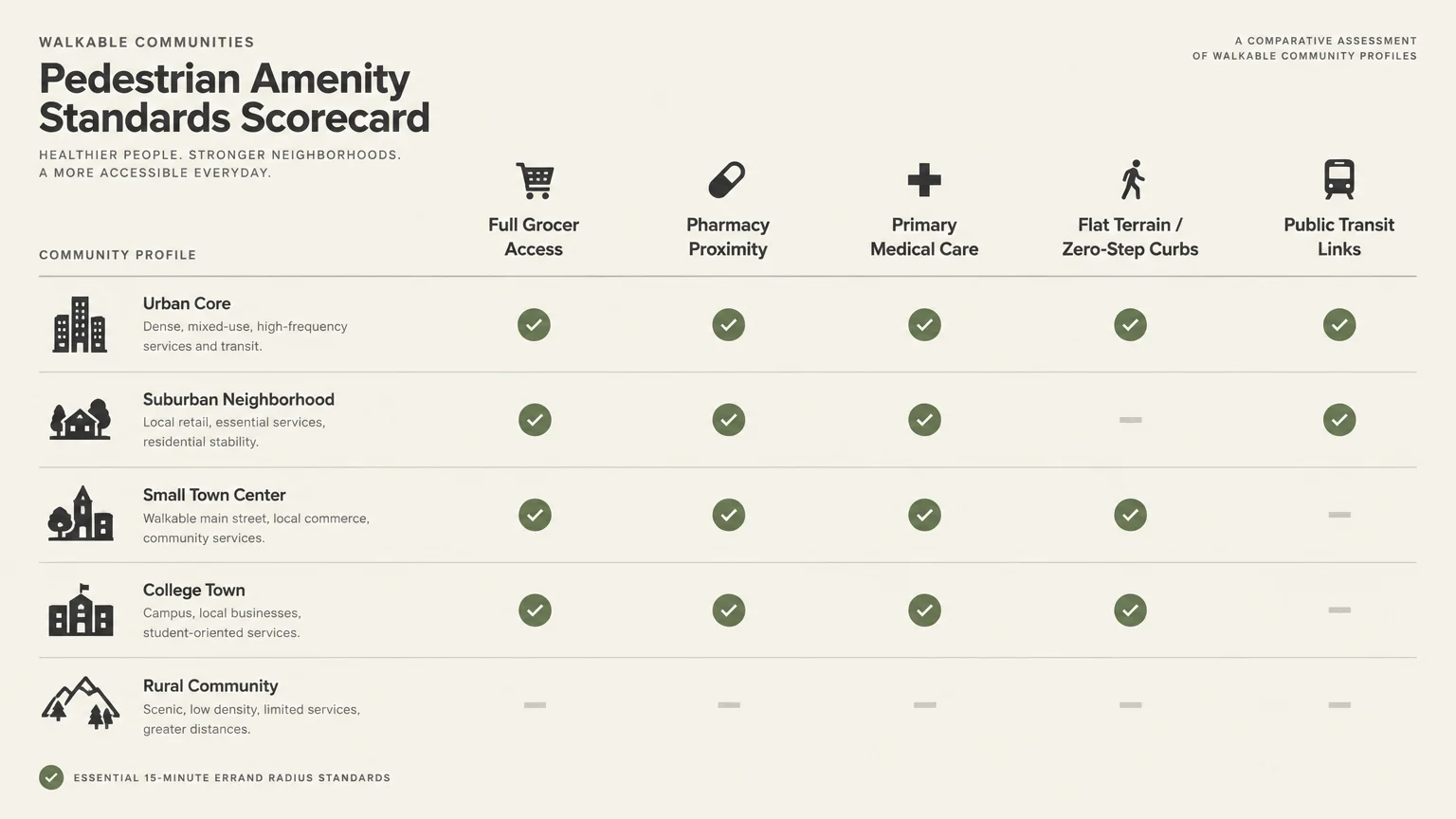
Before selecting a destination, examine how well each town balances commercial proximity with transit alternatives.
| Town | Region | Core Errand Anchor | Estimated Walk Score | Senior Transit Backup |
|---|---|---|---|---|
| Lititz, PA | Mid-Atlantic | Main Street Markets & Pharmacy | 75–82 | Lancaster RRTA Bus |
| Decatur, GA | Southeast | Downtown Square & Health Hub | 90–94 | MARTA Rail & Bus |
| Traverse City, MI | Midwest | Front St & Food Co-op | 78–84 | BATA City Link Transit |
| Doylestown, PA | Mid-Atlantic | Borough Center & Supermarket | 80–86 | SEPTA Regional Rail |
| Fairhope, AL | Gulf Coast | Downtown Greer’s & Clinics | 72–78 | BRATS On-Demand Vans |
| Port Townsend, WA | Pacific Northwest | Uptown Co-op & Civic Core | 70–76 | Fare-Free Jefferson Transit |
| Northampton, MA | Northeast | Main Street Retail & Markets | 85–90 | PVTA Regional Transit |
| Black Mountain, NC | Southeast | Cherry Street Commercial Grid | 70–75 | Mountain Mobility Transit |
| Winter Park, FL | Southeast | Park Ave District & Markets | 82–88 | SunRail & Lynx Bus |
| Bellingham, WA | Pacific Northwest | Fairhaven & Downtown Co-ops | 80–85 | WTA High-Frequency Lines |
| Staunton, VA | Mid-Atlantic | Beverly Street Business Center | 74–80 | BRITE Fixed-Route Bus |
How to Test a Community’s Walkability Before Committing
Never buy a retirement home based on a sunny weekend vacation. Rent a short-term apartment in the target neighborhood for at least two weeks during the off-season.
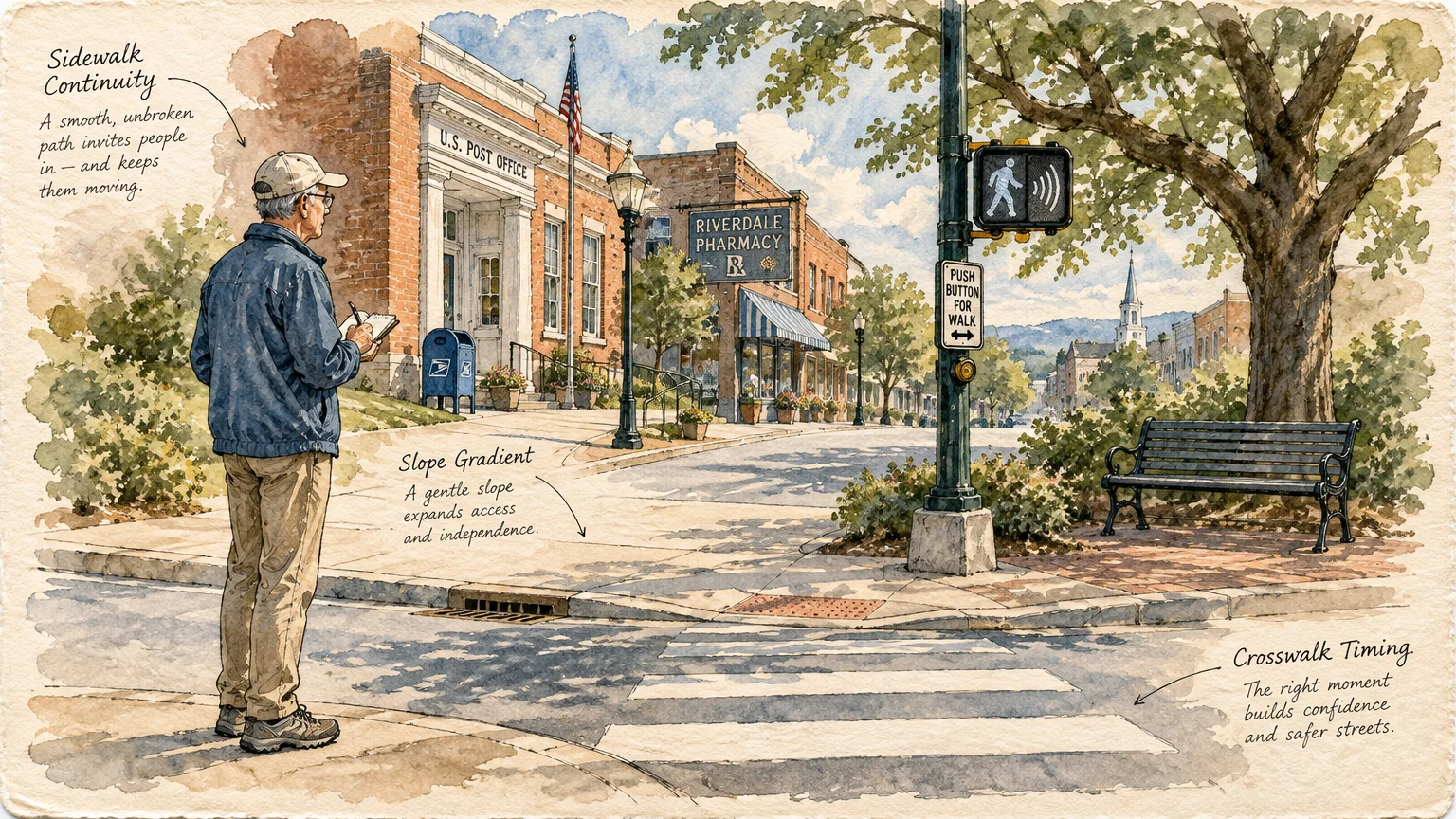
Conduct genuine errand trials on foot during your stay. Walk to the nearest grocery store, buy a gallon of milk, and carry it home to gauge sidewalk safety and physical effort.
Before signing a lease or mortgage, investigate local housing resources through the U.S. Department of Housing and Urban Development to understand neighborhood zoning protections.
Consult the Consumer Financial Protection Bureau for objective guidance on managing your housing costs and mortgage options in retirement.
- Test the walking route to a pharmacy and primary care clinic during morning rush hours.
- Check sidewalk lighting and surface conditions after dark or following heavy rain.
- Verify whether local transit offers curb-to-curb paratransit service for seniors when weather turns severe.
- Confirm how many blocks you must walk to reach a dependable fresh produce market.
Frequently Asked Questions About Walkable Retirement Living
How can I manage heavy grocery trips without a car?
Most car-free retirees use insulated, folding stair-climbing utility carts for weekly grocery runs. You can also walk for light daily staples and schedule monthly home deliveries for bulky household goods.
Does living in a walkable town cost more than suburban living?
Housing prices in walkable downtowns often run higher per square foot than sprawling suburban subdivisions. However, shedding car payments, insurance, fuel, and maintenance frequently balances your overall monthly retirement budget.
What happens if my mobility declines in a walkable community?
Truly walkable towns feature accessible transit, level sidewalks, and micro-mobility options like golf carts or mobility scooters. Choosing a town with on-demand paratransit ensures you stay connected even if your walking endurance decreases.
What Walk Score should a retiree look for?
Look for a Walk Score of 70 or higher in your specific neighborhood pocket. Scores above 70 indicate that you can complete most daily errands without relying on an automobile.
Building Your Active Retirement Lifestyle
Trading long highway drives for brisk morning walks to the market revitalizes both your physical health and financial independence. Choosing the right town lets you age gracefully on your own terms.
The information in this guide is meant for educational purposes; your specific circumstances—including income, savings, health coverage, and goals—may require different approaches. When in doubt, consult a licensed professional.
Last updated: February 2026. Retirement benefits, tax laws, and healthcare costs change frequently—verify current details with official sources.