
Leaving the workforce completely alters your annual routine with the Internal Revenue Service. Instead of receiving a standard Form W-2 each January, you will suddenly encounter unfamiliar documents detailing pensions, investment withdrawals, and government benefits.
Handling these documents properly protects you from unexpected IRS penalties, surprise tax liabilities, and accidental double taxation. Navigating retirement tax filing with confidence ensures you preserve more of your hard-earned wealth throughout your retirement years.
Here are eight essential tax forms for retirees you will likely encounter after stepping away from the daily workforce.
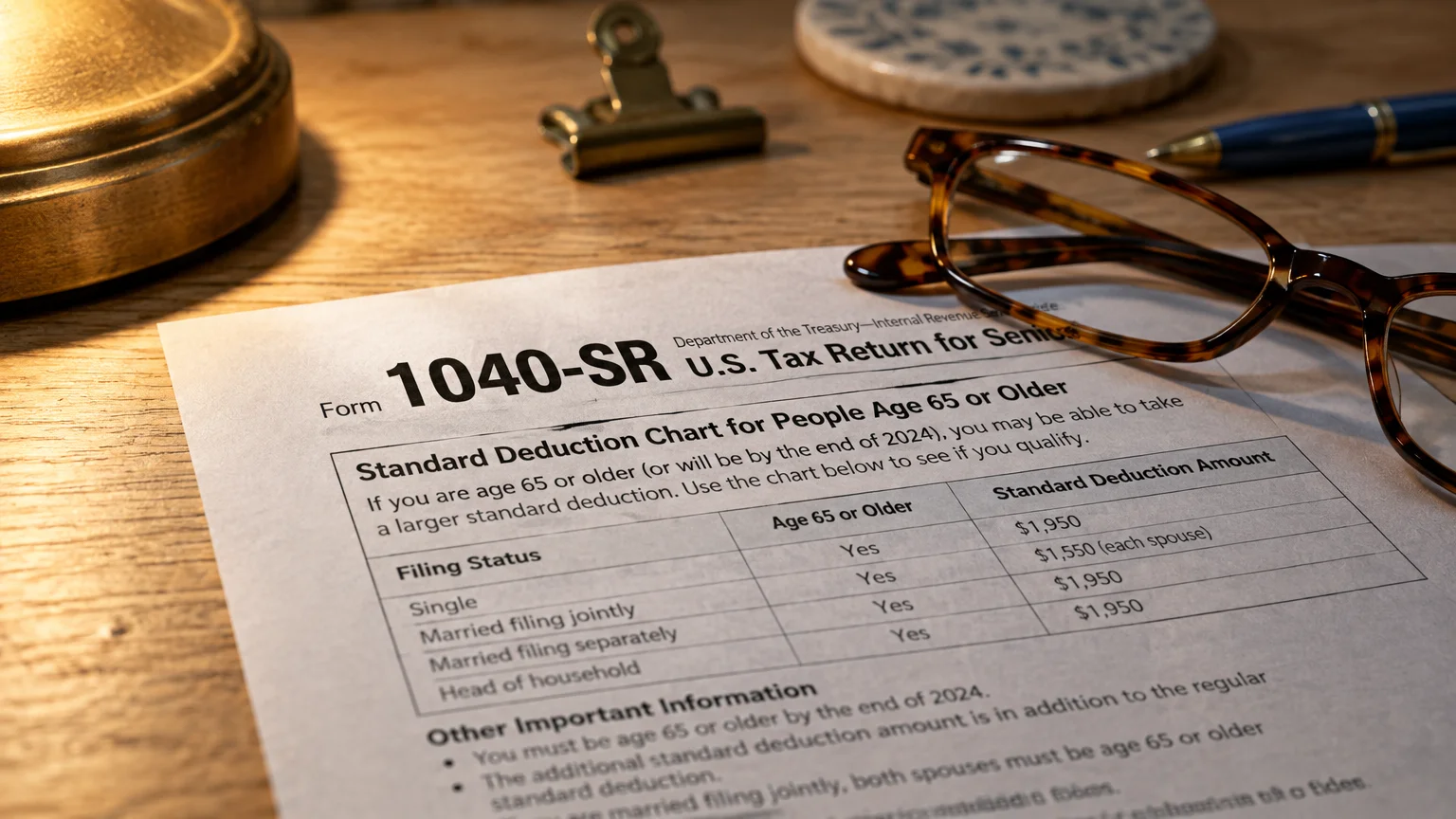
1. Form 1040-SR: The Senior-Specific Tax Return
Created under Section 41106 of the Bipartisan Budget Act of 2018, Form 1040-SR debuted for tax year 2019. Any taxpayer turning age 65 before the close of the tax year qualifies to use it.
The form features larger print and embeds a dedicated standard deduction comparison chart directly on the page. This integrated chart allows you to easily tally your extra senior deduction without cross-referencing external tables.
Form 1040-SR uses the exact same tax lines, schedules, and calculation formulas as the standard Form 1040. You face identical tax rates whether you file the senior version or the traditional return.
Most major commercial tax software programs generate Form 1040-SR automatically once your entered birthdate confirms you reached age 65. You can also print and mail paper copies directly to the Internal Revenue Service.
2. Form SSA-1099: Social Security Benefit Statement
Each January, the Social Security Administration distributes Form SSA-1099 to summarize the total retirement benefits paid to you during the preceding calendar year. This statement provides the starting numbers for your post-career tax calculations.
Box 5 reflects your net benefits received, while Box 6 shows any voluntary federal income tax withheld. You must use Box 5 to calculate your provisional income and establish tax liability.
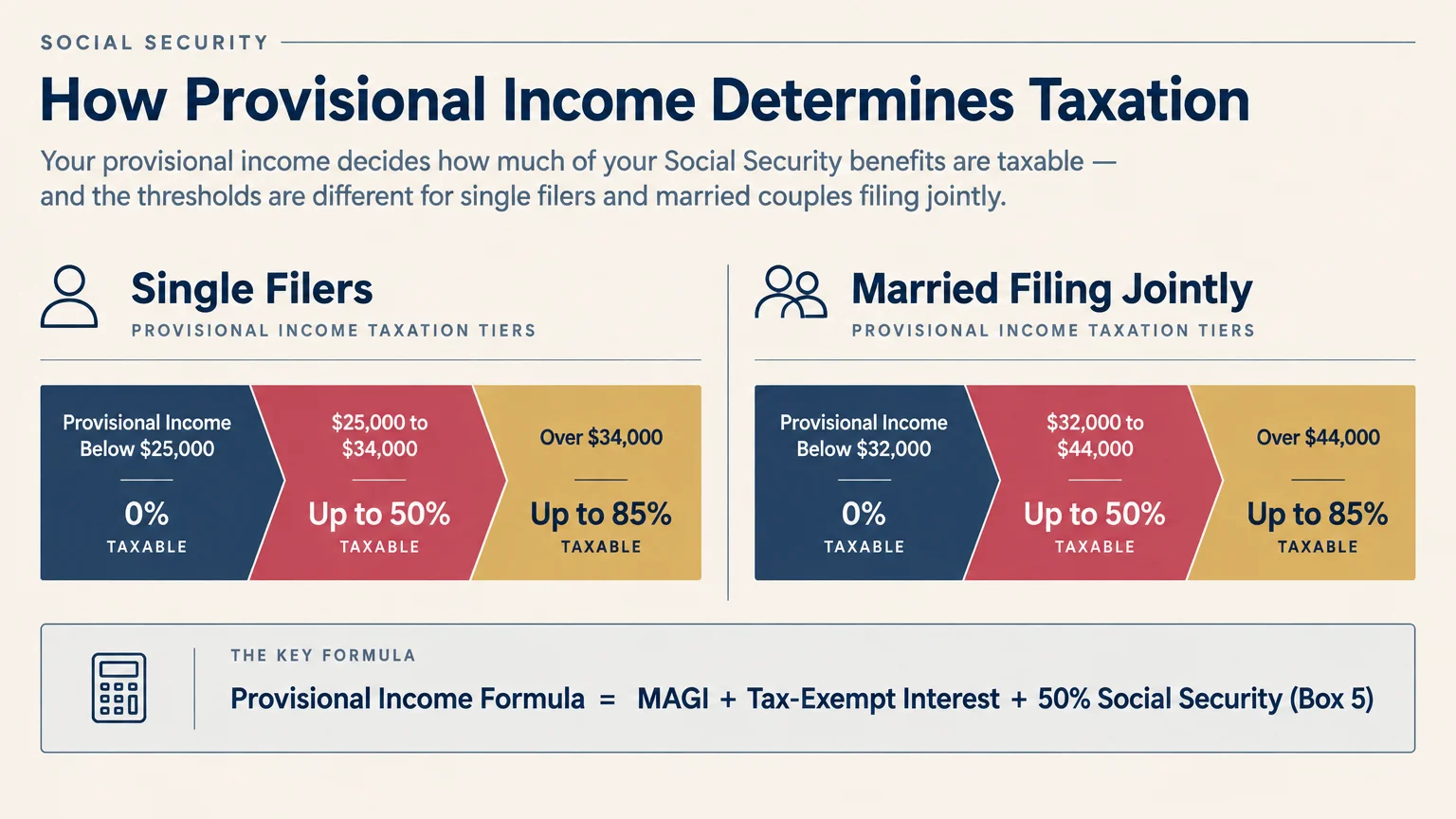
Provisional income equals your modified adjusted gross income plus nontaxable interest income and 50% of your total Social Security benefits. Once your provisional income crosses statutory thresholds, a portion of your benefits becomes taxable.
Single filers with provisional income between $25,000 and $34,000 pay federal income tax on up to 50% of their benefits. If provisional income exceeds $34,000, up to 85% of benefits become taxable.
For married couples filing jointly, the 50% threshold applies between $32,000 and $44,000, while amounts above $44,000 trigger taxation on up to 85% of benefits. Congress established these baseline tiers in 1983 and 1993 without indexing them for inflation.
3. Form 1099-R: Retirement Account and Pension Distributions
Plan custodians mail Form 1099-R by January 31 to document distributions from pensions, 401(k) plans, traditional IRAs, and commercial annuities. You will receive a separate Form 1099-R for each individual account that distributed funds.
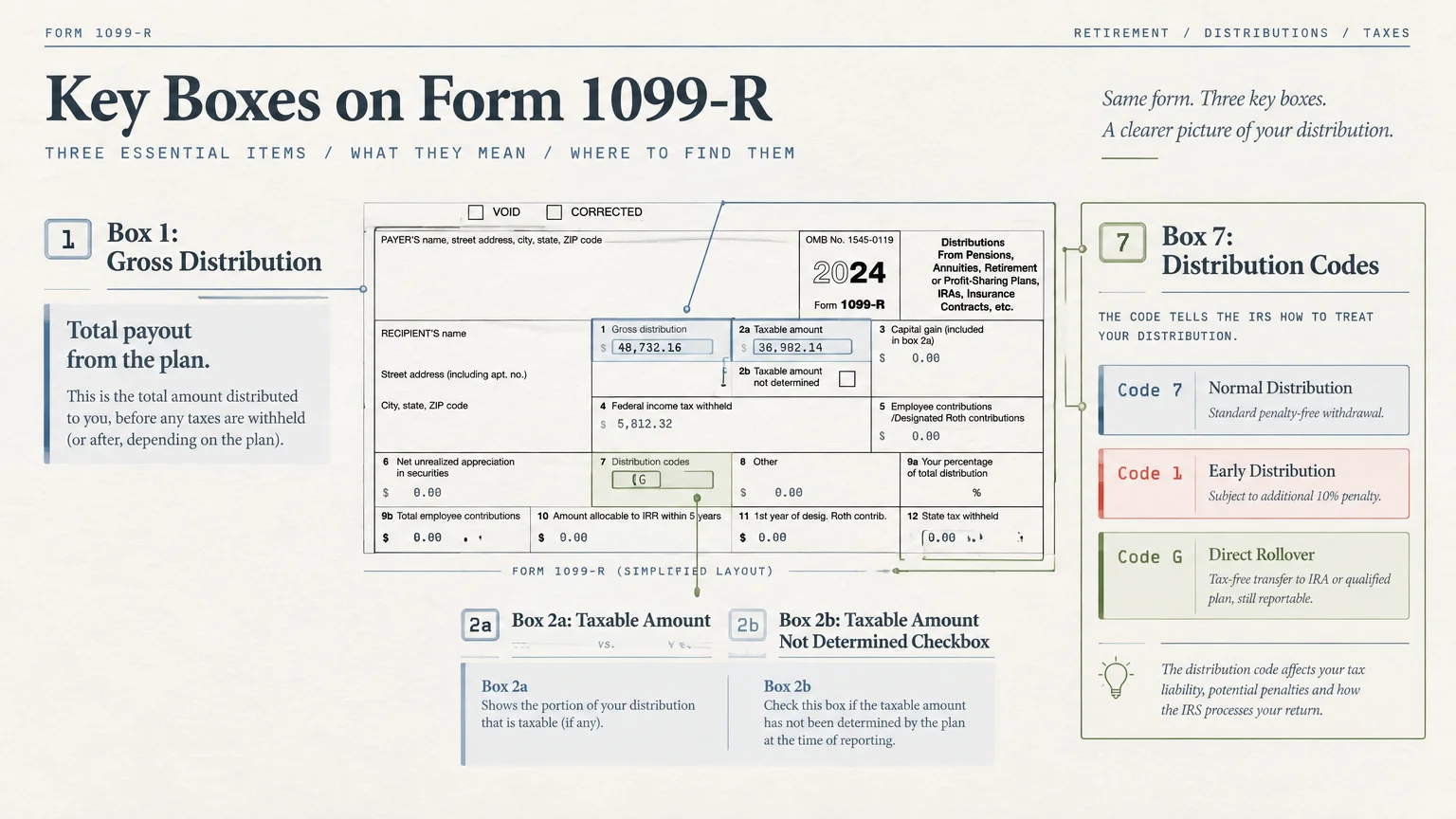
Box 1 reports the gross distribution amount paid out, while Box 2a specifies the portion subject to federal income tax. If the issuer cannot compute the taxable amount, they mark Box 2b instead.
Box 7 lists a distribution code that informs the IRS about the exact nature of your payout. Code 7 signals a routine, normal distribution, whereas Code 1 indicates an early distribution that may incur penalty taxes.
Code G indicates a direct rollover to another eligible qualified retirement plan or traditional IRA. Even though a direct rollover generates zero current income tax, you must still report the Form 1099-R on your return.
“The greatest mistake retirees make is assuming their taxes will automatically be lower in retirement.” — Ed Slott, CPA and Retirement Tax Expert
4. Form 5329: Penalty Calculations and RMD Failures
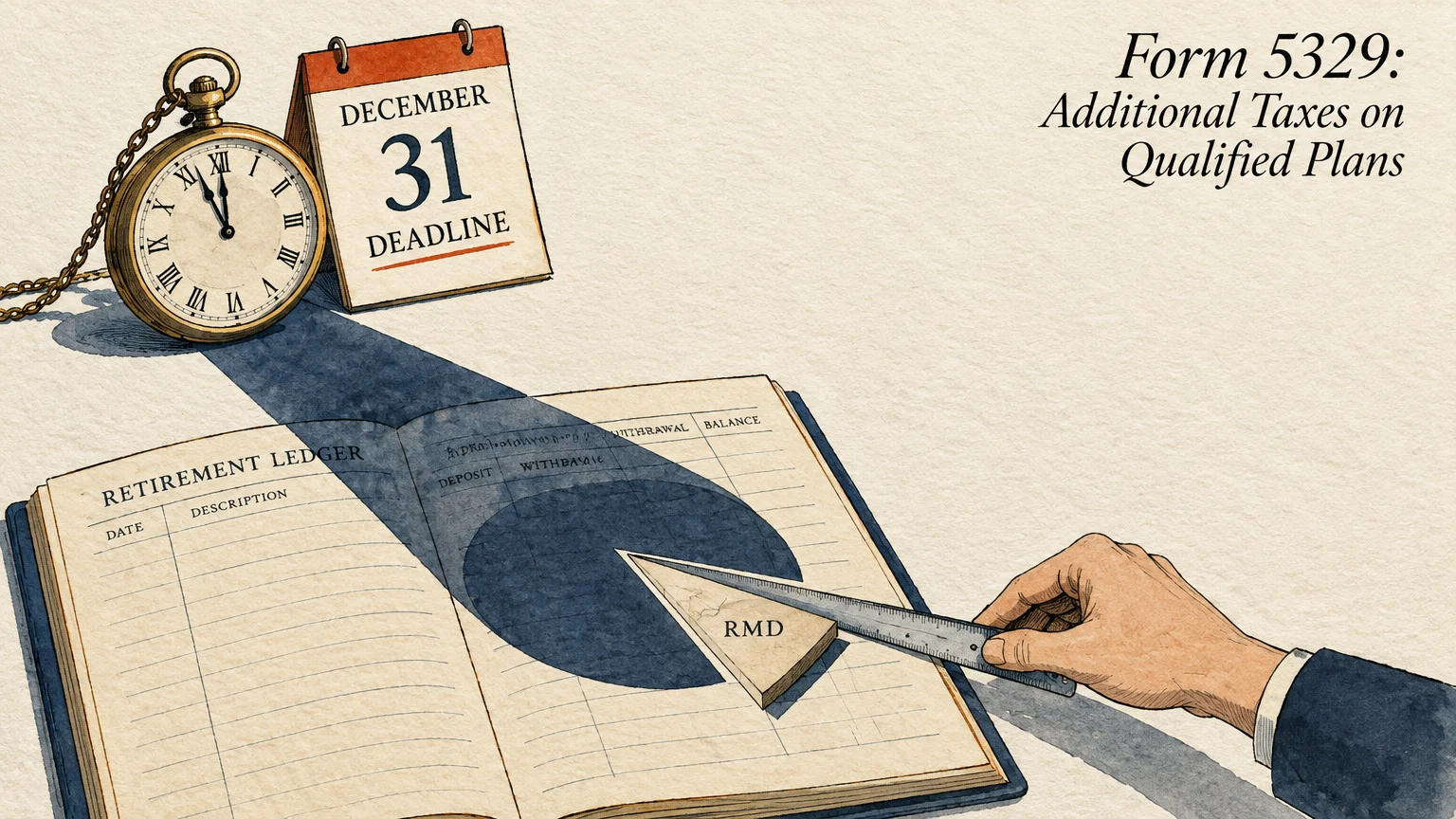
Retirees use Form 5329 to report excise taxes on qualified retirement plans, early withdrawals, and excess account contributions. You encounter this form most often when dealing with Required Minimum Distribution (RMD) rules.
Under the SECURE 2.0 Act, your initial RMD age is 73 if born between 1951 and 1959. That mandatory distribution threshold increases to age 75 starting in 2033 for individuals born in 1960 or later.
Failing to withdraw your full RMD on schedule triggers a punitive federal excise tax. The SECURE 2.0 Act lowered this penalty from 50% down to 25% of the unwithdrawn shortfall.
The penalty drops further to 10% if you correct the missed distribution within a statutory two-year correction window. You must file Form 5329 alongside a formal explanatory statement to request an IRS penalty waiver for reasonable cause.
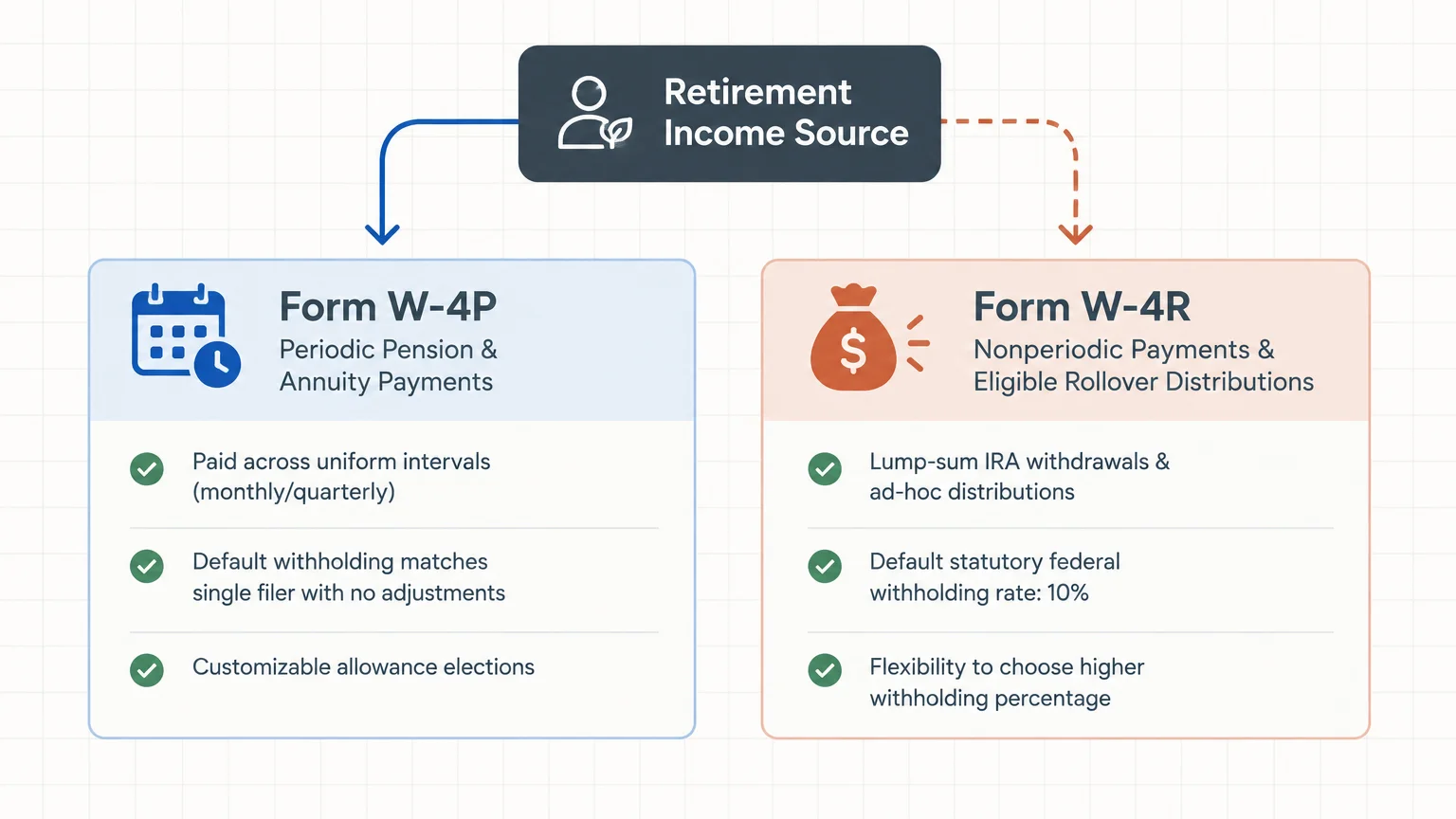
5. Forms W-4P and W-4R: Retirement Tax Withholding Certificates
During your working career, you controlled tax withholding through Form W-4. The IRS split retirement account withholding into two distinct documents: Form W-4P and Form W-4R.
You submit Form W-4P strictly for periodic payments lasting more than one calendar year, such as regular monthly corporate pensions. The form allows you to calculate withholding based on filing status, dependents, and other annual income.
Conversely, Form W-4R dictates federal withholding for nonperiodic distributions and eligible rollover payments. You use this form when requesting ad-hoc withdrawals from an IRA or taking a lump-sum distribution.
Nonperiodic IRA distributions default to a standard 10% federal withholding rate unless you designate a different percentage on Form W-4R. Eligible rollover distributions paid directly to you carry a mandatory 20% federal withholding rate.
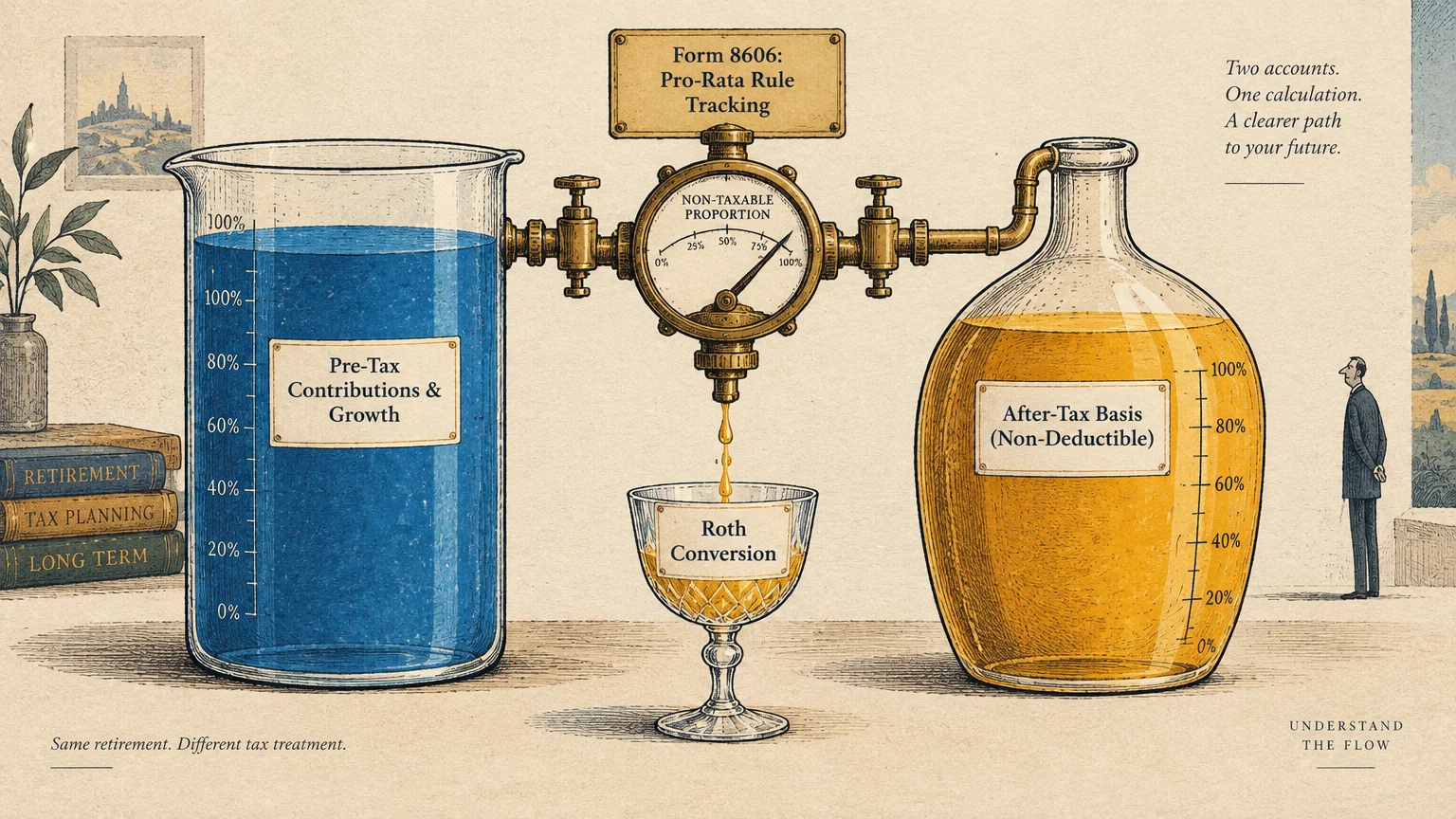
6. Form 8606: Tracking After-Tax IRA Basis and Roth Conversions
If you made nondeductible contributions to a traditional IRA over your working years, Form 8606 is mandatory. This form tracks your cumulative after-tax basis so you avoid paying taxes twice on those same dollars.
You must also file Form 8606 whenever you convert pre-tax traditional IRA balances into a Roth IRA. Converting retirement assets requires careful monitoring through educational portals such as Investor.gov.
The IRS applies the pro-rata rule across all your traditional, SEP, and SIMPLE IRAs when calculating conversion taxes. You cannot choose to convert only after-tax dollars while leaving taxable pre-tax funds behind.
Omitting Form 8606 causes the IRS to treat all distributions as fully taxable pre-tax income. Keeping copies of past 8606 filings prevents costly administrative disputes and redundant income taxation.
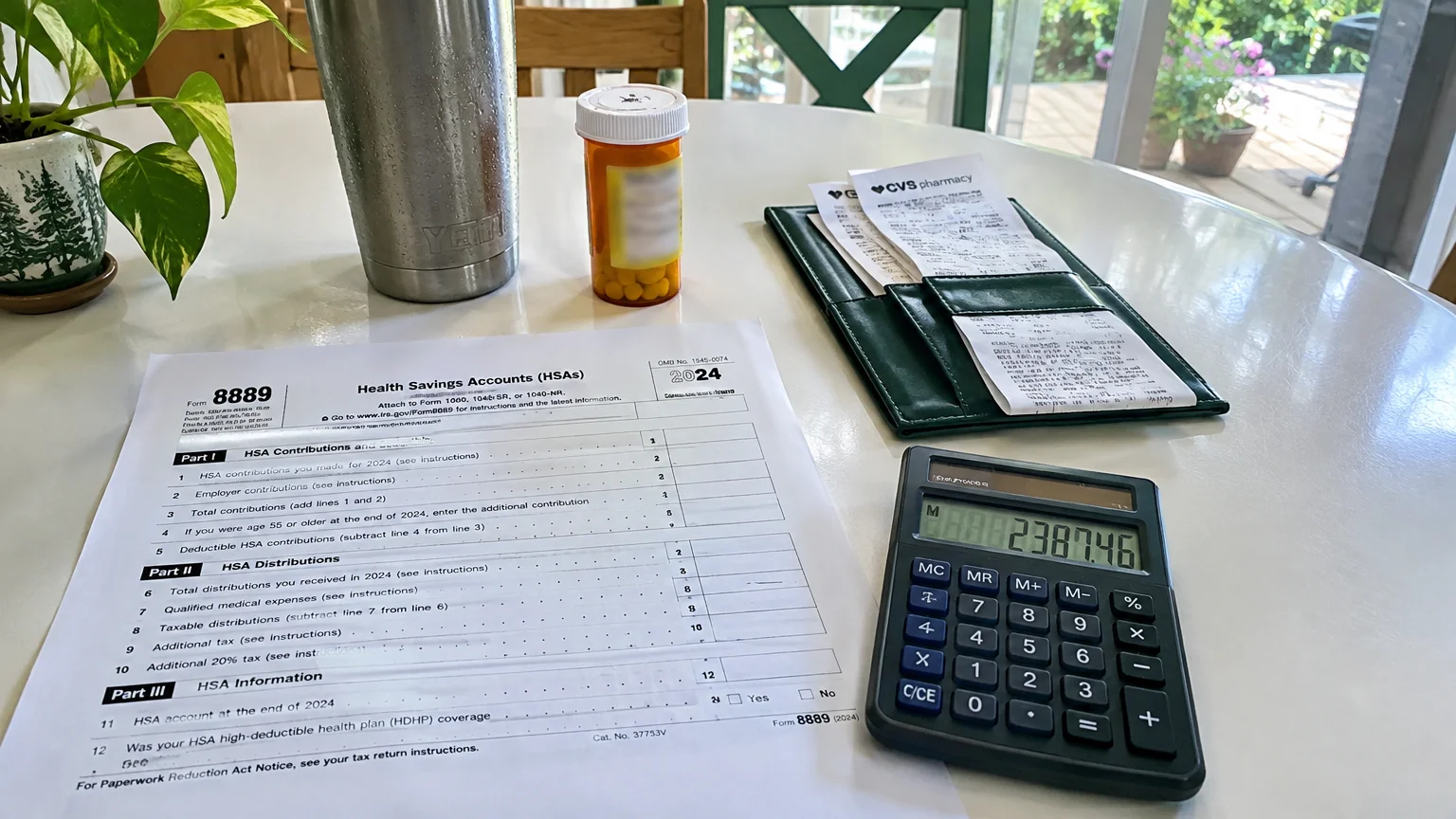
7. Form 8889: Health Savings Account Reconciliation
Health Savings Accounts (HSAs) provide triple tax advantages, but turning 65 alters your relationship with the account. Enrolling in Medicare terminates your eligibility to make new HSA contributions.
Signing up for Medicare Part A after age 65 triggers up to six months of retroactive coverage. You must cease HSA contributions six months prior to applying for Medicare to avoid excess contribution penalties.
You file Form 8889 alongside your tax return to verify that all annual HSA distributions covered qualified medical expenses. Spending HSA funds on qualifying medical bills keeps those withdrawals completely income-tax-free.
You can also use tax-free HSA distributions to pay Medicare Part B, Part D, and Medicare Advantage premiums. However, IRS regulations prohibit using HSA distributions to pay Medicare Supplement (Medigap) policy premiums.
Once you reach age 65, non-medical HSA distributions no longer face the standard 20% early withdrawal penalty. Those non-medical distributions are simply taxed as ordinary income, mirroring traditional IRA withdrawals.

8. Form 1099-LTC: Long-Term Care and Accelerated Death Benefits
When you file claims on a long-term care insurance policy, the insurance carrier issues Form 1099-LTC. This document details gross benefit disbursements made to support chronic or terminal healthcare needs.
Box 1 displays total payments distributed, while Box 3 specifies whether benefits were disbursed as per diem payments or actual reimbursements. Reimbursement payments that directly match documented long-term care expenses remain completely tax-free.
Per diem contracts pay fixed daily sums regardless of actual expenses. You must file Form 8853 to compare per diem payouts against IRS statutory caps; amounts exceeding daily limits become taxable income.
“Tax planning does not stop when paychecks end; in fact, managing your tax brackets becomes your full-time job.” — Jean Chatzky, Financial Journalist and Author
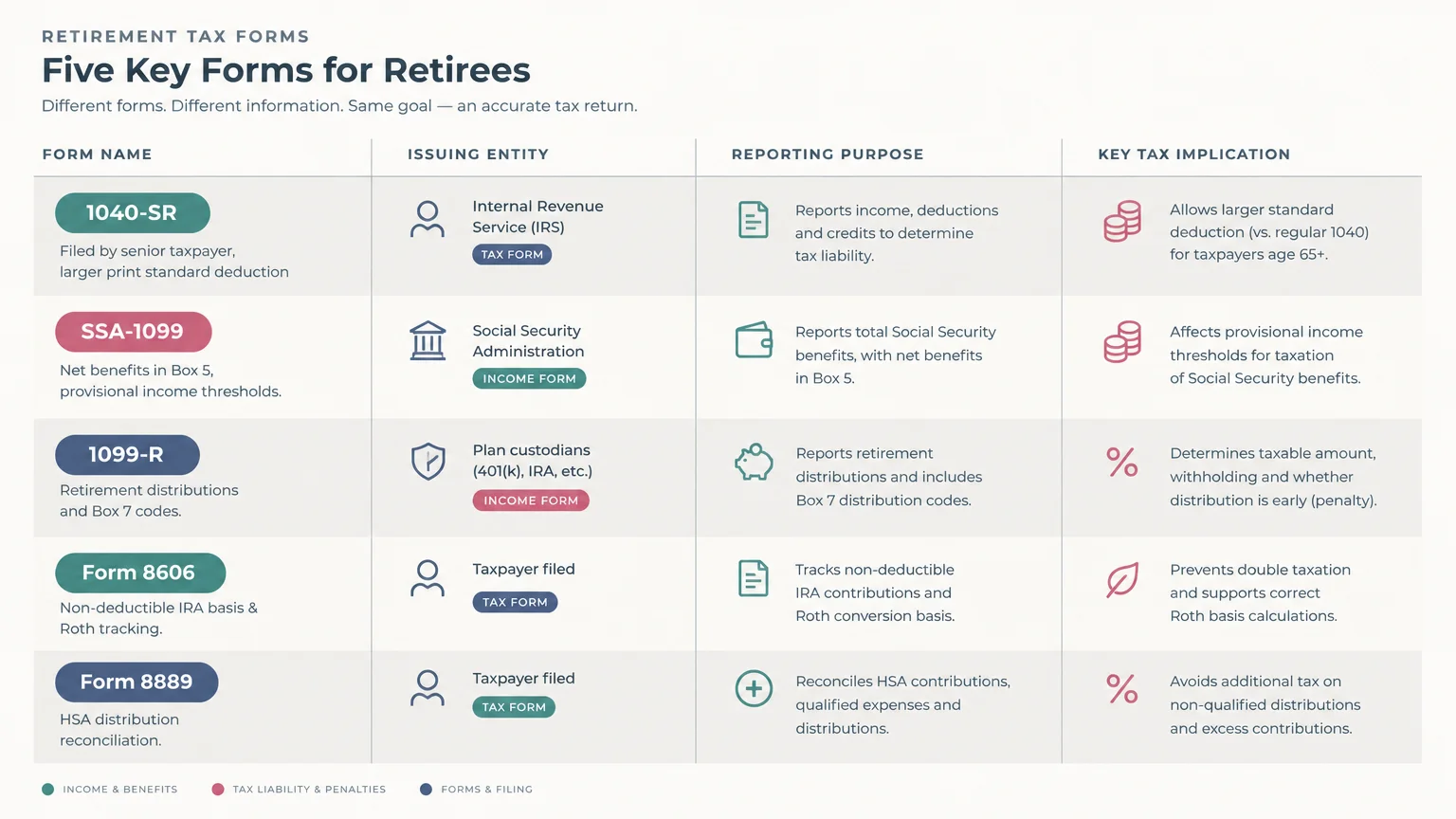
Comparing Key Retirement Tax Forms at a Glance
Keeping track of new reporting documents prevents filing delays. This reference table summarizes the primary purpose and source for each essential retirement form.
| Form Number | Issuing Entity | Primary Function | Critical Detail to Verify |
|---|---|---|---|
| Form 1040-SR | IRS / Taxpayer | Senior-specific return for filers 65 and older | Displays integrated standard deduction chart |
| Form SSA-1099 | Social Security Administration | Reports annual net Social Security benefits | Box 5 net benefits; Box 6 tax withheld |
| Form 1099-R | Financial Custodians | Reports distributions from pensions and IRAs | Box 7 distribution codes (Code 7, Code G) |
| Form 5329 | Retiree / Tax Preparer | Calculates penalties for missed RMDs | Provides waiver request for reasonable cause |
| Form W-4P | Retiree to Payer | Elects withholding on periodic pensions | Establishes ongoing monthly tax withholdings |
| Form W-4R | Retiree to Custodian | Elects withholding on nonperiodic IRA payouts | Defaults to 10% rate unless customized |
| Form 8606 | Retiree / Tax Preparer | Tracks nondeductible IRA basis and Roth conversions | Enforces the mandatory IRS pro-rata rule |
| Form 8889 | Retiree / Tax Preparer | Reports HSA contributions and distributions | Reconciles Medicare enrollment lookback periods |
| Form 1099-LTC | Insurance Companies | Reports long-term care insurance payouts | Requires reconciliation on Form 8853 |
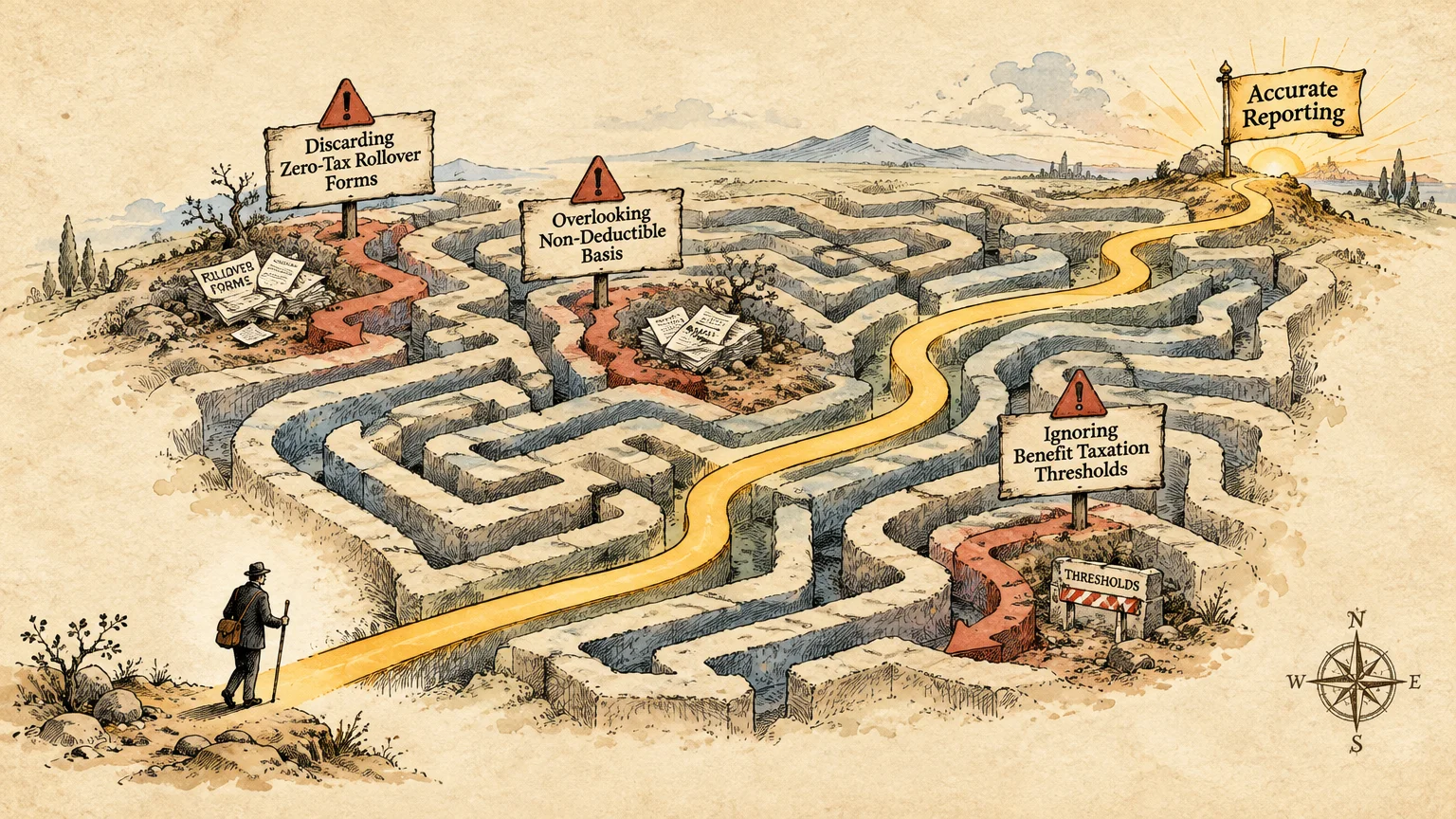
Common Mistakes to Avoid
Navigating retirement tax filing requires vigilance. Steering clear of these common reporting oversights keeps your returns compliant and prevents unwanted IRS correspondence.
- Discarding Form 1099-R for direct rollovers: Even though Code G rollovers incur no tax, omitting the form causes automated IRS notices for unreported income.
- Failing to track after-tax IRA basis on Form 8606: Omitting this form forces you to pay ordinary income tax again on non-deductible contributions when withdrawing funds.
- Contributing to an HSA after enrolling in Medicare: Ignoring the six-month retroactive Medicare enrollment window triggers an ongoing 6% excise penalty on excess contributions.
- Overlooking Social Security provisional income calculations: Unexpected capital gains or IRA withdrawals can push your benefits into the 85% taxable tier without warning.
- Relying on default withholding rates on Form W-4R: The default 10% withholding rate on IRA withdrawals often leaves high-income retirees under-withheld, resulting in surprise penalties.

Professional vs. Self-Guided: Choosing the Right Filing Path
Deciding between self-preparation software and a professional tax advisor depends entirely on the moving parts in your post-career income plan. Review these scenarios to determine which approach fits your household.
Scenario 1: Fixed Pension and Social Security Income (Self-Guided). If your annual retirement cash flow consists solely of a regular monthly pension and Social Security benefits, self-guided tax software handles the work easily. Entering Forms SSA-1099 and 1099-R requires basic data entry that commercial software manages smoothly.
Scenario 2: Multi-Account Withdrawals and Roth Conversions (Professional). Navigating multi-year Roth conversions alongside traditional IRA distributions requires sophisticated bracket coordination. A Certified Financial Planner (CFP) or CPA ensures correct Form 8606 documentation while safeguarding you against Medicare premium surcharges.
Scenario 3: Correcting a Missed RMD Under SECURE 2.0 (Professional). Rectifying a missed minimum distribution requires filing Form 5329 with a detailed formal statement. Enlisting an experienced tax professional ensures your reasonable cause argument meets strict IRS standards for a penalty waiver.
Scenario 4: Routine HSA Reimbursements and Clean IRAs (Self-Guided). Retirees with fully pre-tax accounts who keep neat digital medical receipts can comfortably manage their own returns. Completing Form 8889 and standard Form 1040-SR lines requires minimal effort when records remain organized.
Frequently Asked Questions
Is Form 1040-SR mandatory for taxpayers age 65 and older?
Form 1040-SR is completely optional. You can continue filing the standard Form 1040, as both forms use identical line items, schedules, and tax rates.
Why did I receive Form 1099-R if my 401(k) rollover was nontaxable?
Custodians must report all assets leaving a qualified account. Box 7 will display Code G to confirm your transfer was a nontaxable direct rollover.
How can I stop owing taxes on my Social Security benefits every spring?
Submit Form W-4V to the Social Security Administration to request voluntary withholding at 7%, 10%, 12%, or 22%. You can also make quarterly estimated payments directly to the IRS.
What should I do if I forgot to file Form 8606 in prior tax years?
You can file Form 8606 retroactively for earlier years without amending your entire return. Filing establishes your basis and shields you from double taxation on future distributions.
Take charge of your post-career finances by reviewing each reporting statement before submitting your return to the IRS. Verifying numbers early eliminates filing headaches and safeguards your nest egg.
The information in this guide is meant for educational purposes. Your specific circumstances—including income, savings, health coverage, and goals—may require different approaches; when in doubt, consult a licensed professional.
Last updated: February 2026. Retirement benefits, tax laws, and healthcare costs change frequently—verify current details with official sources.