Planning your retirement budget requires anticipating healthcare expenses well before official rate announcements arrive. According to the Medicare Trustees Report, the standard Medicare Part B monthly premium will rise to an estimated $209.50 in 2027, an increase of $6.60 per month over the 2026 rate of $202.90.
While a 3.25% increase remains manageable for most retirees—especially with forecasted Social Security Cost-of-Living Adjustments (COLA) outpacing the hike—higher-income surcharges and shifting Part D drug caps demand proactive planning.
Understanding these projected changes across Part A, Part B, Part D, and income brackets helps you protect your retirement cash flow and eliminate costly surprises.
The Essentials: Projected 2027 Medicare Costs at a Glance
Every year, the Boards of Trustees of the Medicare Trust Funds release baseline projections that outline the financial trajectory of the Medicare program. While the Centers for Medicare & Medicaid Services (CMS) confirms official figures each autumn, these trustee estimates provide a reliable framework for forecasting your upcoming medical expenses.
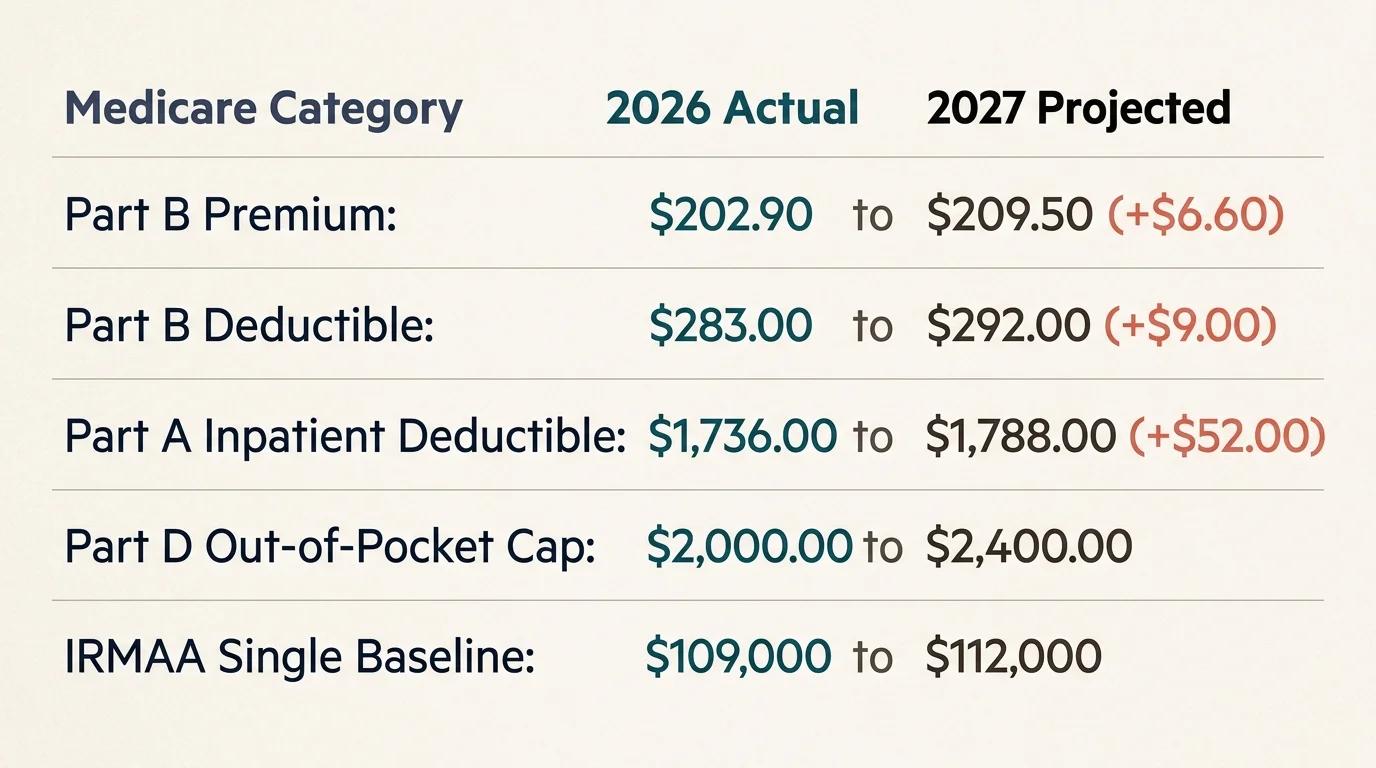
| Medicare Cost Category | 2026 Actual Rate | 2027 Projected Rate | Estimated Change |
|---|---|---|---|
| Part B Standard Monthly Premium | $202.90 | $209.50 | +$6.60 (+3.25%) |
| Part B Annual Deductible | $283.00 | $292.00 | +$9.00 (+3.18%) |
| Part A Hospital Inpatient Deductible | $1,736.00 | $1,788.00 | +$52.00 (+2.99%) |
| Part D Base Beneficiary Premium | $38.99 | $41.33 | +$2.34 (+6.00%) |
| Part D Out-of-Pocket Prescription Cap | $2,000.00 (Base) | $2,400.00 | +$400.00 (Indexed) |
| Initial IRMAA Surcharge Threshold (Single / Joint) | $109,000 / $218,000 | $112,000 / $224,000 | Indexed for Inflation |
Medicare Part B in 2027: Monthly Premiums and Deductibles
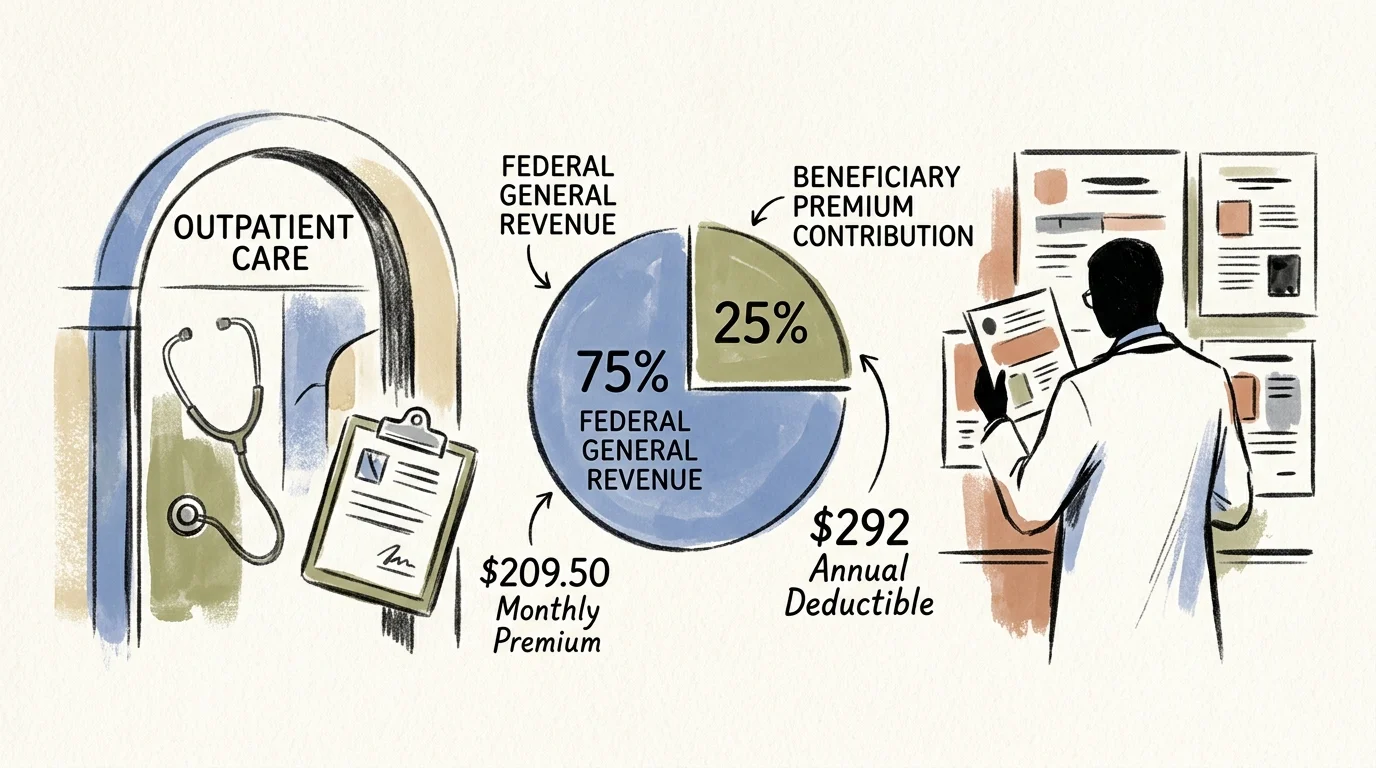
Medicare Part B covers essential outpatient services, including doctor visits, preventive screenings, ambulance transportation, and durable medical equipment. Because the federal government funds approximately 75% of Part B expenditures from general revenues while beneficiary premiums cover the remaining 25%, monthly premiums directly mirror rising medical costs.
The projected 2027 standard monthly premium of $209.50 represents a modest 3.25% bump over 2026. However, independent healthcare analysts caution that medical cost trends and outpatient utilization could push final figures into a range of $215 to $219 per month. Concurrently, the annual Part B deductible is slated to rise from $283 in 2026 to approximately $292 in 2027. You must pay this deductible out-of-pocket each calendar year before Original Medicare begins covering its standard 80% share of approved outpatient services.
Several underlying factors drive these Part B increases:
- Increasing Outpatient Volume: More surgical procedures and advanced therapies continue shifting from inpatient hospital settings to outpatient clinics, elevating Part B program spending.
- Specialty Drug Administration: Physician-administered biologics and oncology drugs covered under Part B carry high price points, increasing the aggregate program cost base.
- Economic Inflation in Medical Services: Clinical wage growth and hospital supply chain costs consistently outpace baseline consumer price inflation.

Medicare Part D and Prescription Drug Changes Under Federal Law
Medicare Part D prescription drug coverage has undergone significant structural transformations following reforms enacted in the Inflation Reduction Act. To protect retirees from severe premium spikes during this transition, federal statute caps annual increases in the Part D base beneficiary premium at 6% per year through 2030.
As a result, the national base beneficiary premium will rise from $38.99 in 2026 to approximately $41.33 in 2027. Keep in mind that your actual monthly plan premium depends on the specific private Part D insurer you select, your local service area, and the plan formulary design.
The structural changes to out-of-pocket prescription drug costs also continue to evolve:
- Out-of-Pocket Spending Cap: After introducing the landmark $2,000 out-of-pocket spending cap, federal law indexes this threshold annually based on per-capita Part D spending growth. For 2027, projections place the annual maximum out-of-pocket cost for covered medications at approximately $2,400. Once you reach this limit, you pay $0 for covered Part D drugs for the remainder of the calendar year.
- Part D Standard Deductible: The statutory maximum annual deductible for standard Part D plans is projected to adjust to approximately $700 in 2027, up from previous benchmark levels.
- Manufacturer Discount Programs: Drug manufacturers and plan sponsors now absorb a higher proportion of costs in the catastrophic coverage phase, stabilizing out-of-pocket outlays for seniors managing chronic conditions.
“Managing your healthcare expenses requires looking at the total picture—premiums, deductibles, and drug formularies—rather than focusing on a single monthly number.” — Jean Chatzky, Financial Educator and Author
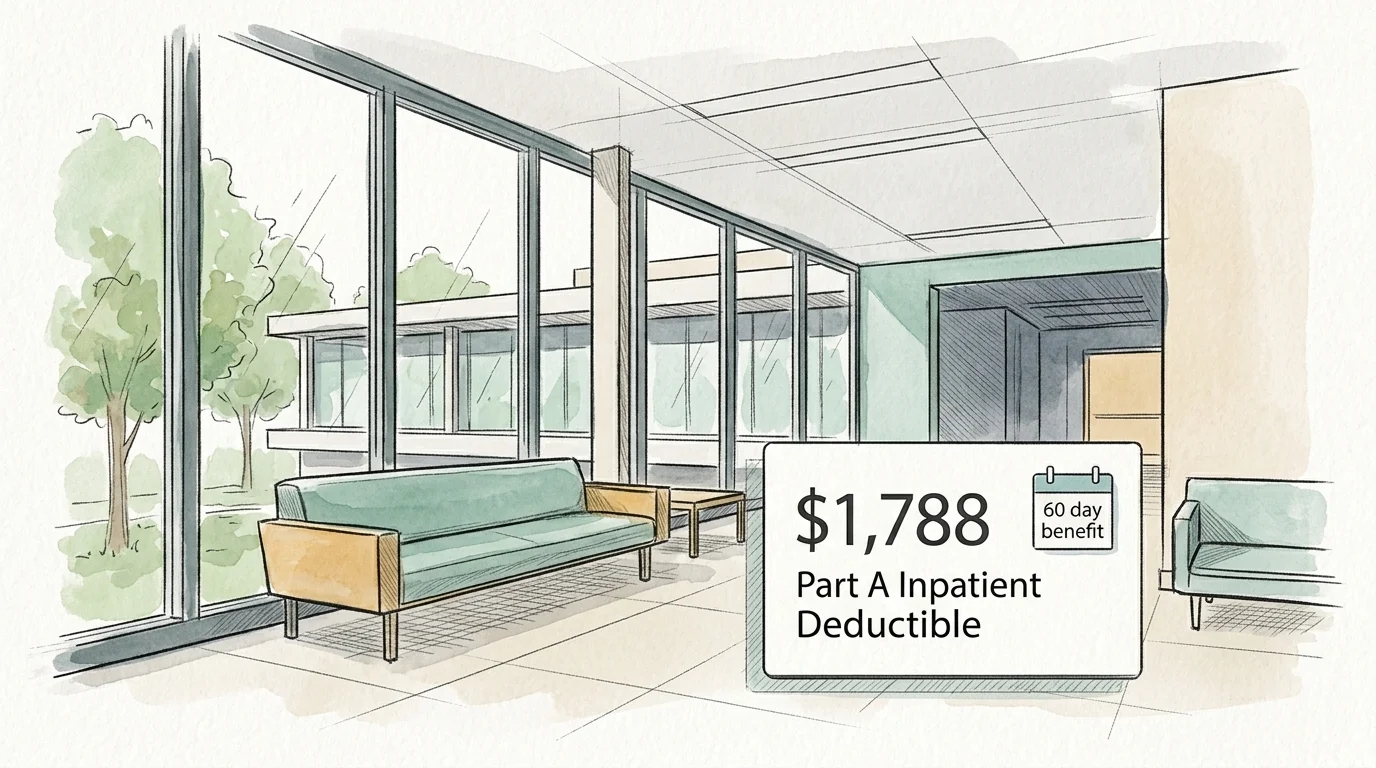
Part A Hospital Insurance: Projected Inpatient Cost-Sharing
Most Americans do not pay a monthly premium for Medicare Part A because they or their spouse paid Medicare payroll taxes for at least 40 calendar quarters (10 years). However, Part A cost-sharing requirements—deductibles and daily hospital copayments—adjust upward each year based on hospital spending trends.
For 2027, the Part A inpatient hospital deductible is estimated to reach $1,788 per benefit period, an increase of $52 from the 2026 deductible of $1,736. Remember that a Part A deductible applies per benefit period, not per calendar year. A benefit period begins the day you enter a hospital or skilled nursing facility and ends after you have been out of inpatient care for 60 consecutive days.
Daily coinsurance amounts for extended inpatient stays in 2027 are projected as follows:
- Days 1 through 60: $0 coinsurance after meeting the $1,788 benefit period deductible.
- Days 61 through 90: Approximately $447 per day (equal to 25% of the inpatient deductible).
- Days 91 through 150 (Lifetime Reserve Days): Approximately $894 per day (equal to 50% of the inpatient deductible).
- Skilled Nursing Facility (Days 21 through 100): Approximately $223.50 per day (equal to 12.5% of the inpatient deductible).

2027 IRMAA Surcharges: What High Earners Must Expect
If your taxable income exceeds specific federal thresholds, you will pay the Income-Related Monthly Adjustment Amount (IRMAA). This surcharge applies on top of your standard Part B premium and your monthly Part D plan premium. Less than 10% of Medicare beneficiaries pay IRMAA, but for those who do, the financial impact is substantial.
The Social Security Administration (SSA) determines your 2027 IRMAA status using the modified adjusted gross income (MAGI) reported on your 2025 federal tax return (filed in early 2026). This two-year lookback makes strategic income planning vital.
| 2025 Taxable Income (Single Filer) | 2025 Taxable Income (Married Filing Jointly) | Projected 2027 Monthly Part B Surcharge | Projected 2027 Monthly Part D Surcharge |
|---|---|---|---|
| $112,000 or less | $224,000 or less | $0.00 (Standard $209.50) | $0.00 (Plan Premium Only) |
| $112,001 to $140,000 | $224,001 to $280,000 | +$83.80 | +$14.50 |
| $140,001 to $175,000 | $280,001 to $350,000 | +$209.50 | +$37.40 |
| $175,001 to $210,000 | $350,001 to $420,000 | +$335.20 | +$60.30 |
| $210,001 to $499,999 | $420,001 to $749,999 | +$460.90 | +$83.10 |
| $500,000 or greater | $750,000 or greater | +$502.80 | +$91.00 |
Because the top tier of IRMAA ($500,000 for single filers and $750,000 for joint filers) is fixed by law and does not adjust for inflation, more high-income retirees cross into this tier each year as investment distributions grow.
“Taxes in retirement don’t just reduce your account balances—they trigger hidden stealth taxes like IRMAA that dramatically increase your monthly Medicare expenses.” — Ed Slott, CPA and Retirement Tax Specialist
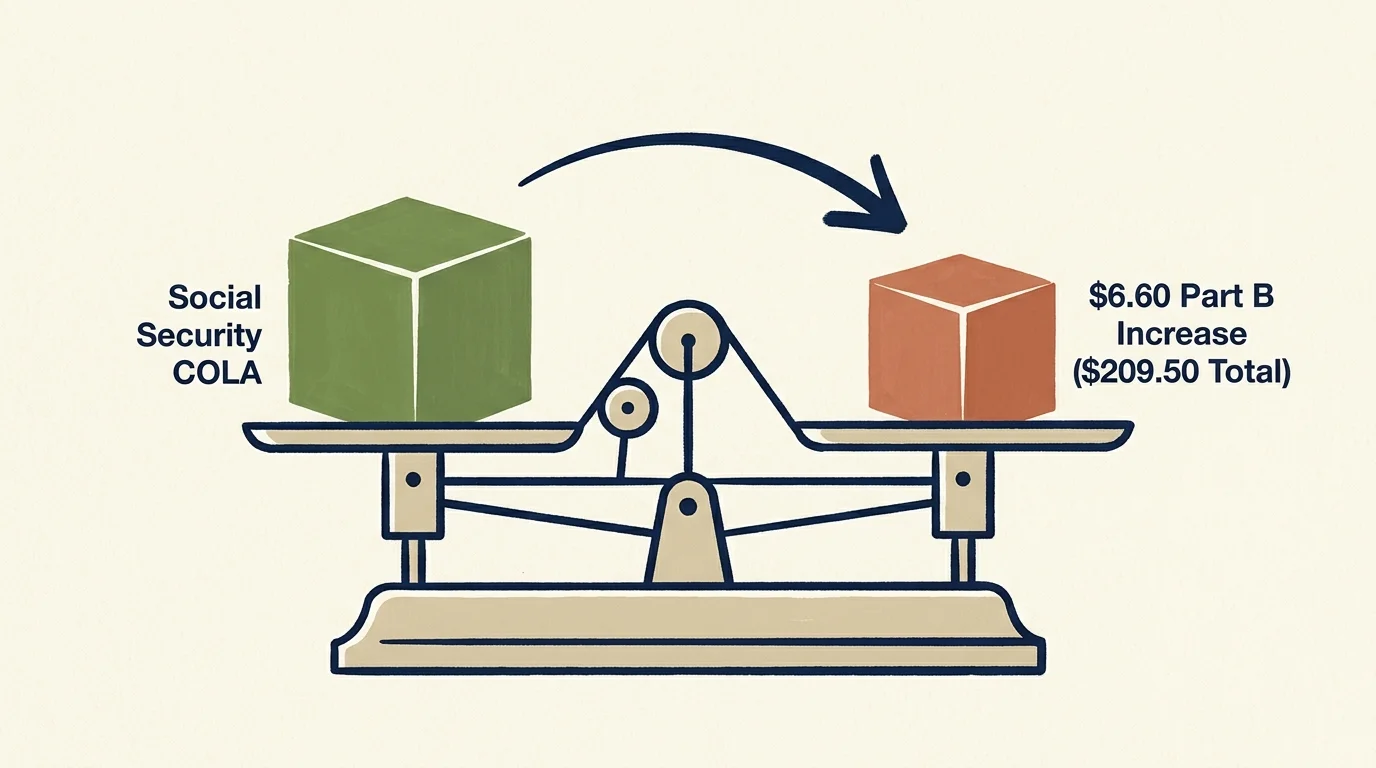
Social Security COLA vs. Medicare Part B: Protecting Net Cash Flow
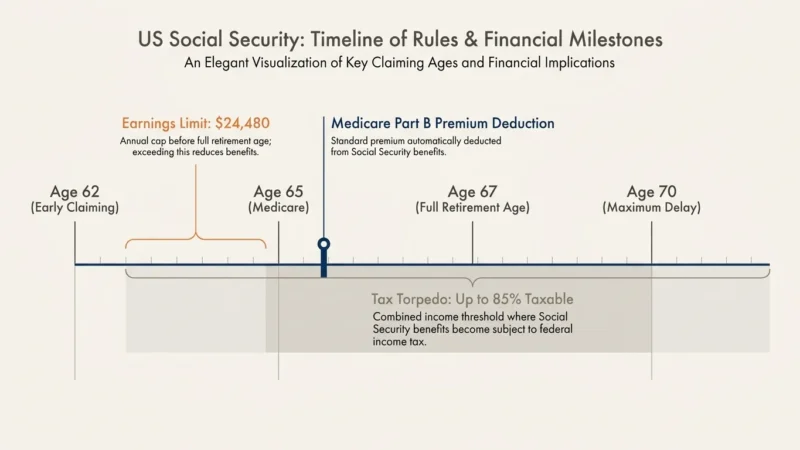
Most retirees have their Medicare Part B premiums deducted directly from their monthly Social Security benefit checks. When Part B premiums rise, retirees naturally wonder whether the increase will consume their annual Social Security Cost-of-Living Adjustment (COLA).
For 2027, economic forecasts project a Social Security COLA between 2.8% and 3.6%. For an average retired worker receiving approximately $1,980 to $2,050 per month from Social Security, a 3.0% COLA generates an additional $59 to $62 each month. Because the projected Part B increase is only $6.60 per month (moving from $202.90 to $209.50), the COLA will comfortably absorb the Part B hike, leaving the vast majority of beneficiaries with higher net monthly take-home income.
Additionally, qualifying retirees benefit from the statutory Hold Harmless provision under Section 1839(f) of the Social Security Act. This legal safeguard ensures that a standard Part B premium increase cannot reduce your net monthly Social Security payment below what you received the previous year. To qualify for Hold Harmless protection, you must receive Social Security benefits and have your Part B premiums automatically deducted from those monthly payments. Note that the Hold Harmless rule does not protect high-income individuals subject to IRMAA surcharges or new Medicare enrollees enrolling for the first time.

What Can Go Wrong: 4 Medicare Planning Traps to Avoid
Navigating annual Medicare adjustments requires vigilance. Overlooking key structural rules can lead to unexpected out-of-pocket costs and irreversible financial penalties.
- Falling into the Two-Year IRMAA Window: Many individuals execute large traditional IRA withdrawals, realize substantial capital gains, or convert traditional retirement funds to a Roth IRA without realizing that income earned in 2025 directly dictates 2027 Medicare surcharges. Review your tax strategies with an eye on the two-year lookback rule via the Internal Revenue Service guidelines.
- Ignoring Annual Part D Formulary Changes: Even if the Part D national base premium rises modestly, private insurance plans frequently reclassify medications across tiers or drop specific drugs altogether. Staying on auto-pilot during the Annual Election Period without reviewing your annual Notice of Coverage changes often leads to unexpected pharmacy bills.
- Assuming Medigap Rates Stay Flat: While Medicare Supplement (Medigap) plans cover deductibles and coinsurance from Original Medicare, their private premiums adjust independently. If your state uses attained-age rating structures, your Medigap premium will rise alongside Medicare Part B.
- Missing Life-Changing Event Appeals: If your income dropped significantly between 2025 and 2027 due to marriage, divorce, death of a spouse, work stoppage (retirement), or loss of pension income, SSA allows you to appeal an IRMAA surcharge using Form SSA-44. Failing to file this form leaves money on the table.
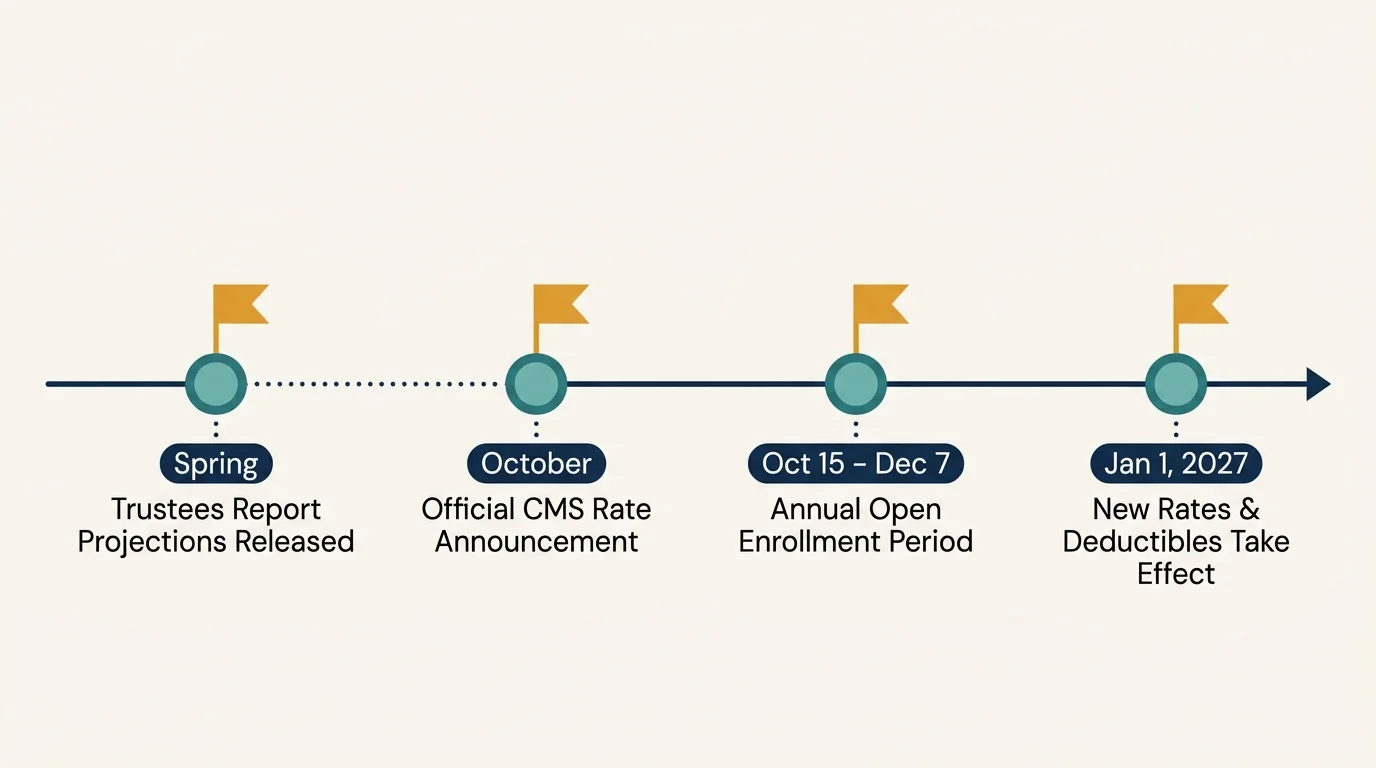
Key Milestone Dates for Your 2027 Medicare Planning
Staying ahead of healthcare cost adjustments requires following key administrative dates throughout 2026. Keep this timeline in your financial calendar:
- June 2026: The Medicare Trustees release their updated financial projections, refining the expected Part A, Part B, and Part D cost ranges.
- Mid-October 2026: The Social Security Administration officially announces the finalized 2027 COLA percentage based on third-quarter consumer price index data.
- October 15 – December 7, 2026: The annual Medicare Open Enrollment Period. This window allows you to switch Part D prescription plans or move between Medicare Advantage and Original Medicare. Research options through resources like Kiplinger’s Retirement Planning Guides to compare cost structures.
- Late October / Early November 2026: CMS publishes the final, binding 2027 Medicare Part A and B premiums, deductibles, and official IRMAA income brackets.
- January 1, 2027: All updated premiums, deductibles, out-of-pocket maximums, and IRMAA adjustments take effect.

When to Consult a Professional
While standard Medicare adjustments are automated for most beneficiaries, certain financial events call for professional guidance. Consider consulting a fee-only financial planner, certified tax professional, or licensed Medicare specialist in these specific scenarios:
- You Are Planning a Major Capital Transaction: If you plan to sell real estate, cash out stock options, or execute large Roth conversions, an adviser can help structure distributions to prevent triggering higher IRMAA surcharge tiers.
- You Experienced a Qualifying Life Event: If you retired or reduced working hours in 2025 or 2026, a specialist can guide you through the SSA-44 life-changing event appeal process to reduce or eliminate IRMAA charges immediately.
- You Are Choosing Between Medicare Advantage and Original Medicare with Medigap: Analyzing total out-of-pocket exposure across doctor networks, hospital indemnity, and prescription formularies requires evaluating comprehensive retirement accounts through institutions like Vanguard Retirement Planning to ensure long-term coverage matches your healthcare needs.
- You Have a High-Deductible Health Plan (HDHP) and HSA: If you continue working past age 65, coordinating your Health Savings Account contributions with Medicare Part A delay rules prevents severe tax penalties.
Frequently Asked Questions About 2027 Medicare Costs
Will my Medicare Part B premium definitely be $209.50 in 2027?
The $209.50 figure is the official projection from the Medicare Trustees Report. CMS calculates the final, binding rate in late October or November 2026 based on actual program expenditures and reserve fund balances. While the final number may fluctuate by a few dollars, it provides a highly reliable baseline for budget planning.
How does the 2027 Part D out-of-pocket maximum work?
Under the Inflation Reduction Act, catastrophic prescription drug coverage begins once your eligible out-of-pocket drug spending reaches the indexed annual threshold (projected at $2,400 for 2027). After reaching this amount on covered medications, your Part D plan covers 100% of your remaining covered prescription costs for the rest of that calendar year.
How do I know if my income triggers 2027 IRMAA surcharges?
The Social Security Administration reviews your tax return from two years prior (tax year 2025 for the 2027 benefit year). If your modified adjusted gross income—which includes your adjusted gross income plus tax-exempt municipal bond interest—exceeds $112,000 as an individual filer or $224,000 on a joint return, you will receive an IRMAA determination notice in late 2026 detailing your monthly surcharges.
Does the Medicare Hold Harmless rule protect me from all premium increases?
No. The Hold Harmless rule applies only to the standard Part B premium for individuals who have their premiums directly deducted from their Social Security payments. It does not apply to Part D premiums, Part A deductibles, Medigap policies, or high-income IRMAA surcharges.
Protecting Your Retirement Income Against Rising Healthcare Costs
Staying informed about upcoming Medicare adjustments allows you to maintain financial control well before new premium schedules take effect. Factoring the projected $209.50 monthly Part B premium, the $292 outpatient deductible, and evolving Part D drug limits into your annual cash flow models ensures that healthcare inflation will not disrupt your lifestyle.
Take time during the annual fall open enrollment window to audit your drug plans, review supplemental policies, and evaluate tax distributions against IRMAA brackets. Proactive planning transforms unpredictable medical expenses into a reliable, manageable component of your long-term retirement strategy.
The information in this guide is meant for educational purposes. Your specific circumstances—including income, savings, health coverage, and goals—may require different approaches. When in doubt, consult a licensed professional.
Last updated: February 2026. Retirement benefits, tax laws, and healthcare costs change frequently—verify current details with official sources.