
Switching Medicare Advantage plans can lower your monthly premiums or restore access to preferred doctors. However, hidden administrative traps often disrupt ongoing medical care and trigger major surprise expenses.
More than 54% of eligible Medicare beneficiaries now enroll in private Medicare Advantage plans, according to KFF (2025). Yet marketing materials rarely explain the strict contractual rules governing plan changes.
Before adjusting your healthcare coverage, you must understand how network shifts, underwriting penalties, and reset spending limits impact your retirement budget.

1. Your Out-of-Pocket Maximum Resets to Zero Mid-Year
Medicare Advantage plans include a mandatory annual Maximum Out-of-Pocket (MOOP) limit for covered medical services. In 2026, federal regulations cap this in-network threshold at $9,350, though many individual plans set lower limits.
If you switch plans midway through the year, your accumulated spending does not transfer to your new insurer. Every dollar you spent toward your prior plan deductible and copays resets to zero instantly.
Suppose you incurred $4,500 in medical copayments under your old plan between January and February. If you switch to another insurer during the March enrollment window, you start over with a fresh out-of-pocket maximum.
This spending reset exposes you to double the financial liability in a single calendar year. Chronically ill patients who switch plans mid-year frequently face devastating cumulative deductibles and co-insurance expenses.
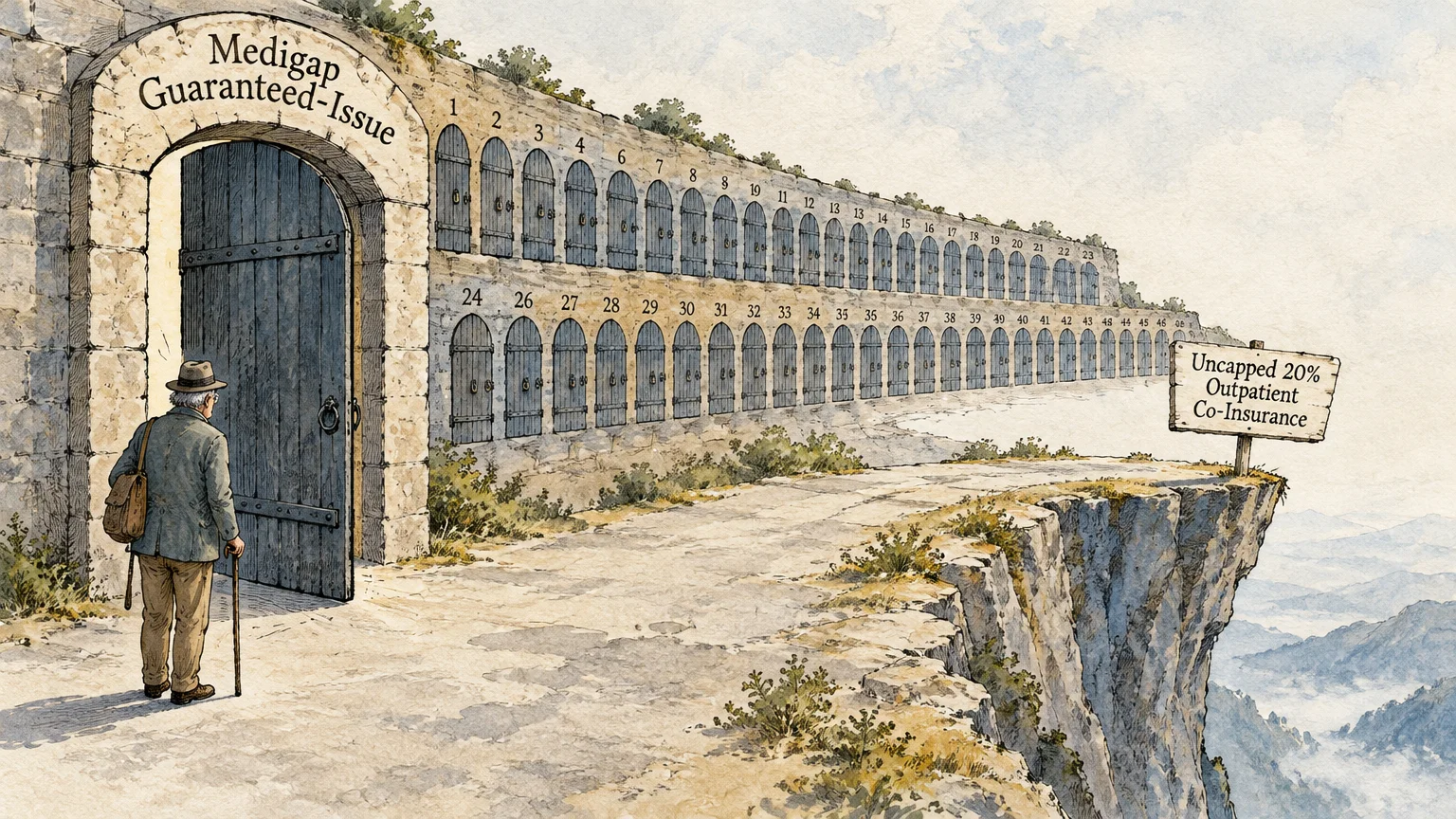
2. Medigap Guaranteed-Issue Rights Disappear in Most States
Television commercials often suggest you can easily transition between private insurance and government coverage. In reality, switching from Medicare Advantage to Original Medicare carries substantial financial risk.
When you first turn 65, federal law guarantees you can purchase any Medicare Supplement (Medigap) policy without medical underwriting. During that six-month window, insurers cannot reject you or inflate premiums based on pre-existing health conditions.
Once that initial window closes, private Medigap carriers in roughly 46 states evaluate your complete medical history. They can charge exorbitant monthly premiums or deny your application entirely due to cancer history, diabetes, or cardiovascular issues.
If you abandon Medicare Advantage expecting to buy a comprehensive Medigap Plan G, you could end up trapped. Without Medigap, Original Medicare leaves you exposed to an uncapped 20% co-insurance on all outpatient medical procedures.
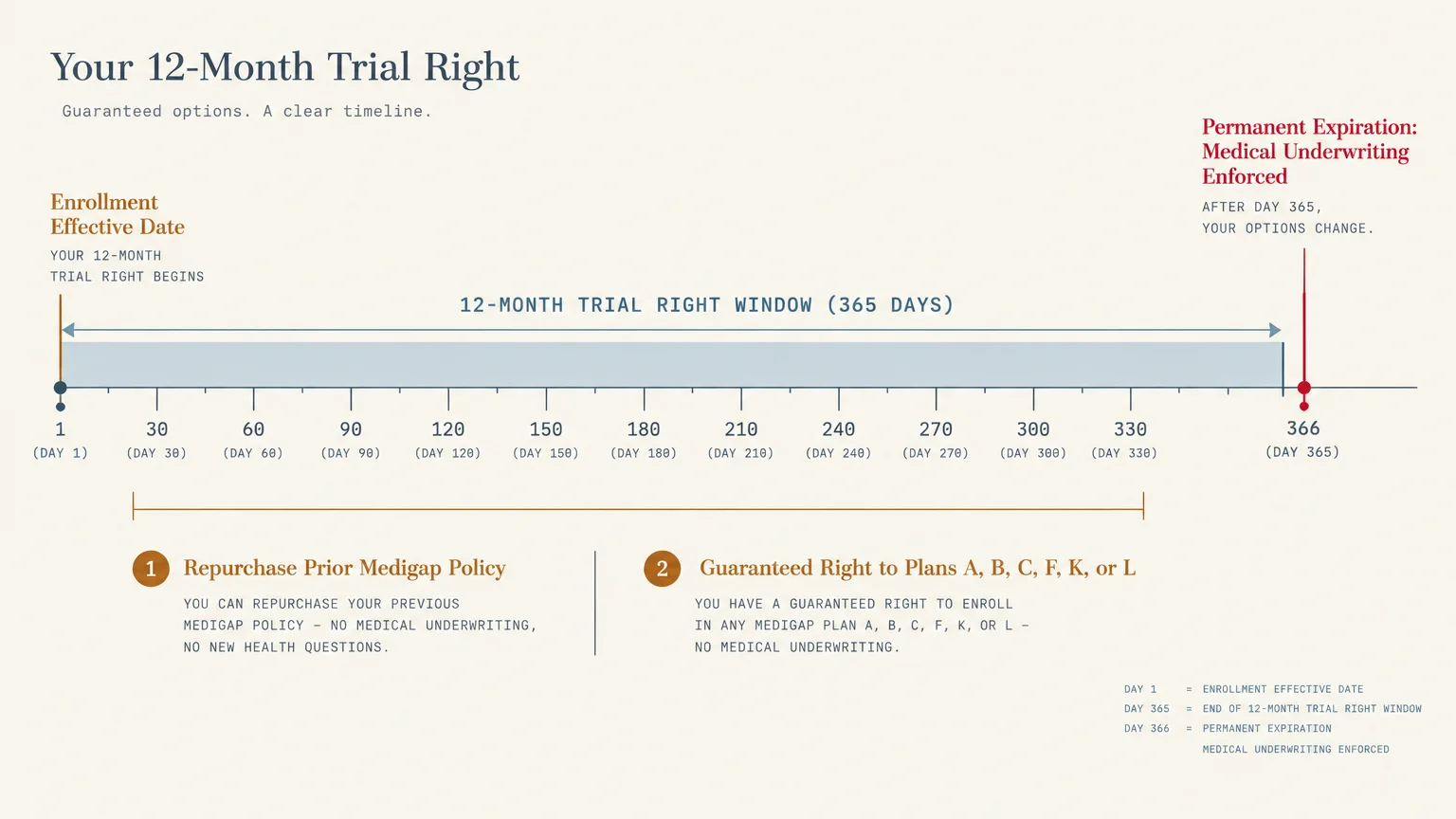
3. The 12-Month “Trial Right” Is a One-Time Escape Hatch
Federal law protects beneficiaries through a specific statutory mechanism known as a trial right. If you enroll in Medicare Advantage at age 65, you retain a 12-month window to return to Medigap without medical screening.
This trial right also applies if you drop an existing Medigap policy to try a Medicare Advantage plan for the first time. You have precisely 365 days from your effective start date to reverse your choice.
If you return to Original Medicare within this 12-month period, you can repurchase your previous Medigap policy. If that specific policy is no longer sold, you maintain a guaranteed right to buy plans A, B, C, F, K, or L.
Missing this deadline by even one calendar day permanently forfeits your guaranteed-issue rights. You will then face full medical underwriting if you ever attempt to leave Medicare Advantage in the future.

4. Prior Authorizations Evaporate When You Switch Plans
Medicare Advantage insurers process more than 50 million prior authorization requests every year, according to KFF research. Roughly 7.7% of initial requests encounter outright administrative denials.
When you switch carriers, an approved prior authorization from your previous insurer becomes entirely void. The new insurance company has no legal obligation to honor treatment clearances granted by your former carrier.
This administrative disconnect frequently interrupts scheduled chemotherapy, physical therapy regimens, and monthly specialty drug infusions. You must submit brand-new approval requests alongside updated clinical notes from your physician.
Before changing plans, obtain physical copies of all current prior authorization letters and treatment protocols. Work with your physician to submit authorization requests to the new insurer weeks before your new coverage takes effect.
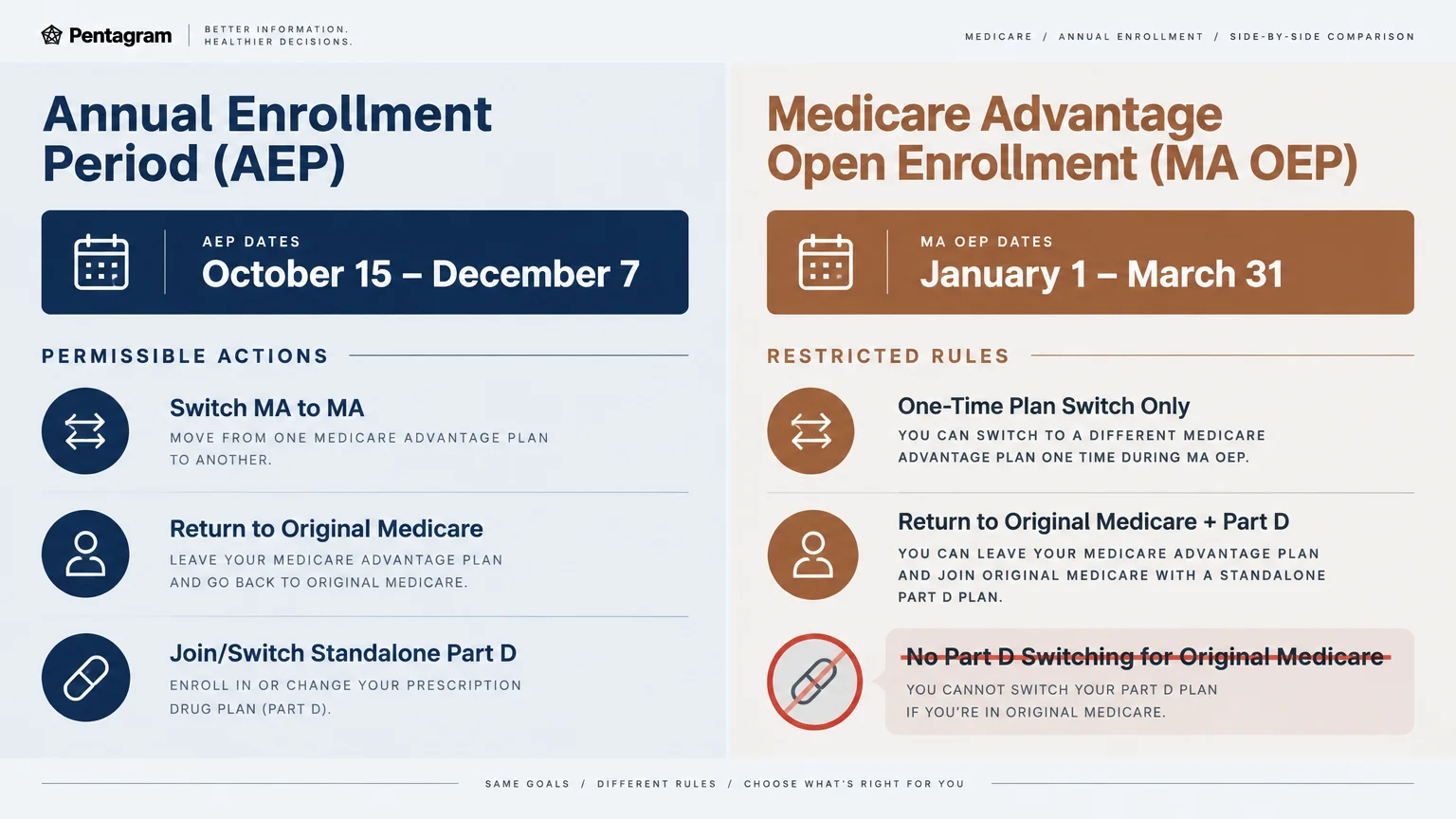
5. AEP and MA OEP Follow Vastly Different Rules
Retirees often confuse the fall Annual Enrollment Period with the winter Medicare Advantage Open Enrollment Period. While both allow plan adjustments, their legal parameters differ substantially.
The fall Annual Enrollment Period (AEP) runs from October 15 through December 7 each year. During AEP, you can move freely between Original Medicare, Part D drug plans, and different Medicare Advantage networks.
The Medicare Advantage open enrollment period (MA OEP) occurs from January 1 through March 31. This window is strictly reserved for individuals already enrolled in a private Medicare Advantage plan on January 1.
During MA OEP, you can make exactly one plan change. You may switch to a competing Medicare Advantage plan or drop private coverage to return to Original Medicare.
Crucially, beneficiaries enrolled in Original Medicare cannot use the winter window to join a Medicare Advantage plan. Understanding these specific Medicare plan change rules prevents missed enrollment opportunities and coverage lapses.

Comparing Medicare Advantage Switching Options
Every switching scenario introduces distinct administrative requirements and cost considerations. Review how your coverage rules shift depending on your destination plan.
| Switching Scenario | Permitted Windows | Medical Underwriting | Drug Coverage Steps | Primary Risk |
|---|---|---|---|---|
| MA Plan to MA Plan | AEP (Fall) or MA OEP (Winter) | None (Federal Guarantee) | Embedded in new plan | MOOP resets to zero; loss of preferred doctors |
| MA to Original Medicare + Medigap | AEP or MA OEP | Yes (Unless using 12-month Trial Right) | Must enroll in standalone Part D | Underwriting denial leaves you without supplemental coverage |
| MA to Original Medicare Only | AEP or MA OEP | None | Must enroll in standalone Part D | Uncapped 20% co-insurance on Part B medical care |

6. Provider Networks Dissolve Without Warning Mid-Year
When selecting a plan during fall enrollment, marketing directories show specific doctors and hospital systems as participating providers. However, provider agreements do not align with the Medicare calendar year.
Hospital chains and physician groups renegotiate contracts with private insurers continuously throughout the year. When contract disputes occur, hundreds of specialists can drop out of your network overnight.
The loss of your primary care doctor or specialty oncologist does not qualify you for a Special Enrollment Period. You remain legally locked into the insurance plan until the next formal enrollment window arrives.
If your doctor leaves the network, you must pay expensive out-of-network rates or establish care with an unfamiliar physician. Always confirm whether your doctors participate in multiple insurance networks before choosing a carrier.

7. Enrolling in Standalone Part D Cancels Your Advantage Plan
Medicare beneficiaries frequently misunderstand how prescription drug policies interact with managed healthcare plans. Federal regulations prohibit individuals from maintaining both a comprehensive Medicare Advantage plan and a standalone Part D policy.
If you belong to an HMO or PPO Advantage plan and purchase a standalone Part D plan, the Centers for Medicare and Medicaid Services (CMS) intervenes. CMS will automatically cancel your Medicare Advantage enrollment.
You will drop back to Original Medicare on the first day of the following month. Because this happens without Medigap underwriting protections, you become personally liable for Original Medicare co-insurance costs.
Only enroll in a standalone Part D drug plan if you intentionally want to leave Medicare Advantage. Always verify plan codes before signing any enrollment application during open enrollment periods.

8. The Part D Prescription Cap Requires Coordinated Enrollment
The Inflation Reduction Act dramatically reshaped prescription drug costs for American retirees. Federal law established a $2,000 annual out-of-pocket maximum on Part D covered prescriptions in 2025, indexed to $2,100 in 2026.
If you drop Medicare Advantage to return to Original Medicare between January and March, you must actively purchase standalone Part D coverage. Failing to select a standalone drug plan leaves you without any prescription benefits.
Going without creditable prescription drug coverage triggers permanent, cumulative late enrollment penalties enforced by the Social Security Administration. The penalty accrues for every month you delay coverage and stays on your record permanently.
When transitioning coverage, coordinate your Part D enrollment so it begins the exact day your Medicare Advantage policy terminates. This ensures continuous prescription access under the new federal spending cap.

9. Supplemental Perks Often Mask Weak Core Medical Coverage
Insurance commercials emphasize supplemental benefits such as zero-dollar gym memberships, over-the-counter grocery allowances, and basic dental cleanings. While attractive, these minor perks distract retirees from critical clinical limitations.
Insurers often fund generous supplemental allowances by increasing copayments on expensive medical services. You might gain $300 in annual vision credits while facing a $450 daily copayment for inpatient hospital stays.
“When planning for retirement, healthcare is the wild card that requires active management every single year.” — Jean Chatzky, Financial Educator and Author
Cancer treatments, specialized imaging, and daily physical therapy copayments add up quickly. Evaluate the maximum financial exposure of a plan rather than choosing coverage based on minor ancillary allowances.
A single outpatient surgery copayment can easily eclipse five years of gym membership allowances. Compare the maximum out-of-pocket limits and tier-four specialty drug co-insurance rates before finalizing your switch.
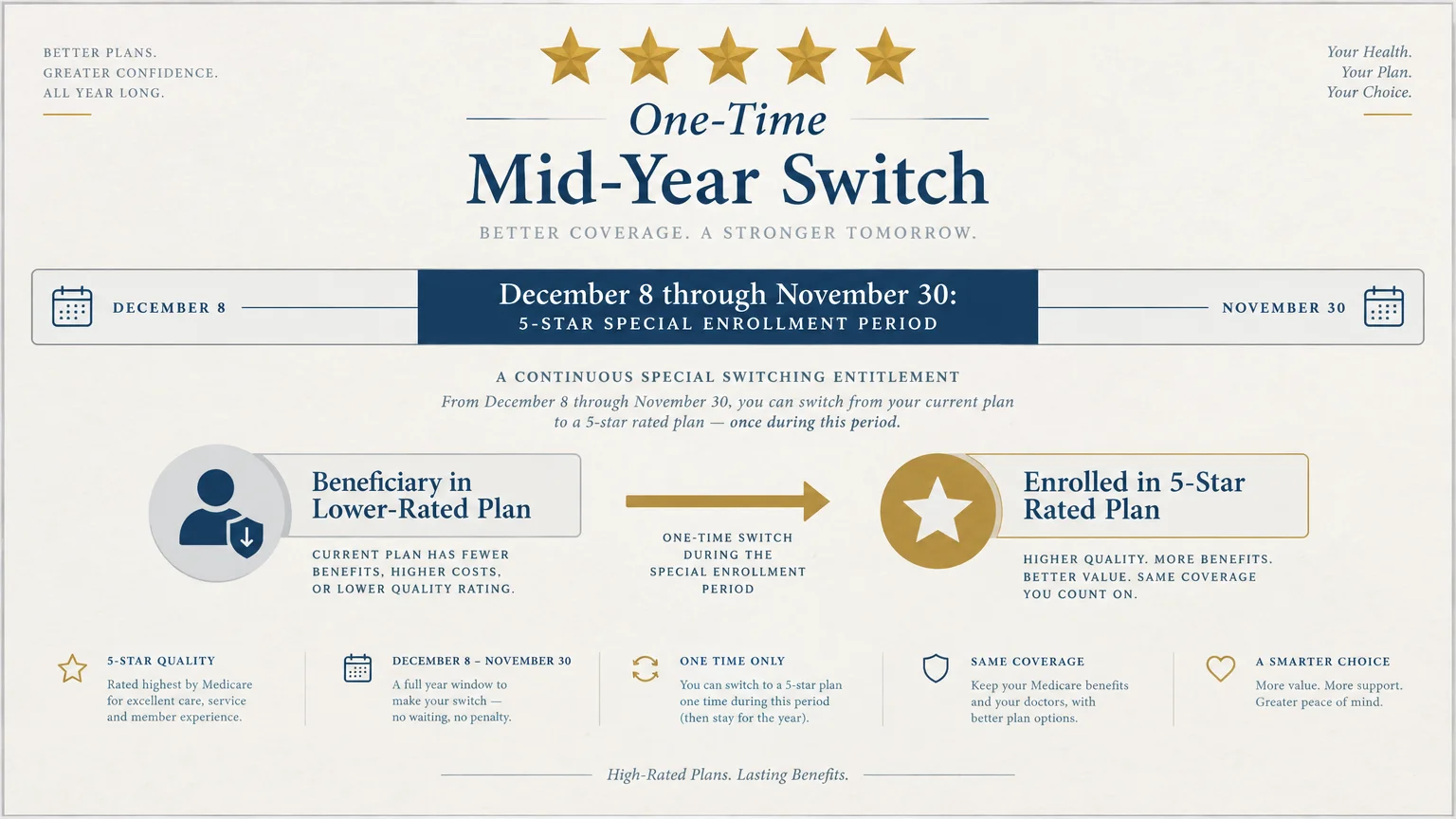
10. Five-Star Plans Provide a Hidden Switching Window
CMS rates Medicare Advantage plans annually using a performance system ranging from one to five stars. Plans earning a five-star rating demonstrate superior clinical outcomes, responsive customer service, and high patient satisfaction.
If a five-star Medicare Advantage plan operates in your county, you gain access to a powerful Special Enrollment Period. You can switch into that top-rated plan once between December 8 and November 30 of the following year.
This special enrollment rule operates completely outside standard fall and winter enrollment windows. It enables you to escape a frustrating, low-performing insurance network without waiting for the annual enrollment cycle.
Review the plan ratings published on Medicare.gov each autumn to verify if any local carriers achieved five-star status. This little-known option offers an essential safety valve when administrative disputes compromise your medical treatment.

Pitfalls to Watch For
Switching plans without examining administrative details can introduce serious complications to your retirement healthcare. Avoid these frequent switching missteps:
- Ignoring Pharmacy Networks: Preferred network pharmacies offer significantly lower copayments than standard pharmacies. Check whether your neighborhood drugstore remains preferred under the new plan.
- Overlooking Formularies: Drug formularies change every January. A prescription classified as Tier 2 under your current plan could shift to Tier 4 under your new carrier.
- Assuming PPO Plans Cover All Providers: While PPOs permit out-of-network care, out-of-pocket costs run dramatically higher. Non-participating doctors can also decline to bill your plan entirely.
- Missing Trial Right Deadlines: Assuming you can acquire Medigap after Medicare Advantage without underwriting is dangerous. You must track your 365-day trial right window meticulously.

Getting Expert Help
Navigating Medicare regulations requires precision, especially when severe health conditions complicate your coverage options. Seek professional counsel in these specific circumstances:
Managing a Chronic Illness: If you receive treatment for rheumatoid arthritis, kidney disease, or cancer, work with an independent broker. They will verify whether your treatment team participates in the prospective network.
Relocating to a New County: Moving across county lines triggers a Special Enrollment Period. Contact your local State Health Insurance Assistance Program (SHIP) to review available plans in your new location.
Navigating Medigap Medical Underwriting: If you want to return to Original Medicare after your trial right has passed, consult an independent agent. They know which Medigap carriers offer lenient underwriting guidelines.
Qualifying for Dual Eligibility: If your retirement income fluctuates, you may qualify for both Medicare and Medicaid. Organizations like AARP provide tools to help you identify dual-eligible special needs plans.
Frequently Asked Questions
Can I switch from Medicare Advantage back to Original Medicare at any time?
No, you can only drop Medicare Advantage during specific periods like the fall Annual Enrollment Period (Oct 15 – Dec 7) or the winter Open Enrollment Period (Jan 1 – Mar 31), unless you qualify for a Special Enrollment Period.
Will my doctor tell me if they leave my Medicare Advantage network?
Physicians try to notify patients, but insurers are only required to provide written notice 30 days before contract termination. You should verify your doctor’s network status directly before scheduling major medical procedures.
Does medical underwriting apply if I switch to another Medicare Advantage plan?
No, medical underwriting never applies when switching between Medicare Advantage plans. By federal law, private Medicare Advantage insurers cannot deny your application based on pre-existing health conditions.
What happens to my prescription benefits if I drop Medicare Advantage without buying Part D?
You will have no outpatient prescription drug coverage. You will also accumulate permanent Part D late enrollment penalties for every month you go without creditable prescription insurance.
Take time each autumn to audit your prescription drug formulary, medical provider networks, and anticipated healthcare needs. Making informed plan adjustments during open windows protects your physical health and your long-term retirement savings.
This is educational content based on general retirement planning principles. Individual results vary based on your situation. Always verify current benefit amounts, tax laws, and eligibility with official sources.
Last updated: February 2026. Retirement benefits, tax laws, and healthcare costs change frequently—verify current details with official sources.