
Unseen financial drains can quietly erode even the most carefully calculated retirement plan. While you track obvious monthly living expenses, structural tax traps and portfolio fees siphon away thousands of dollars every single year.
Plugging these five silent money leaks safeguards your hard-earned nest egg and significantly extends portfolio longevity. Taking action now prevents compounding losses from shrinking your lifestyle.
Here is how you can spot these hidden costs, fix your retirement cash flow, and keep more money in your pocket.
1. The Medicare IRMAA Surcharge Trap
Healthcare costs represent one of the largest ongoing expenses in retirement. According to Fidelity’s Retiree Health Care Cost Estimate, an average 65-year-old retiring today can expect to spend approximately $185,500 out-of-pocket on medical expenses.
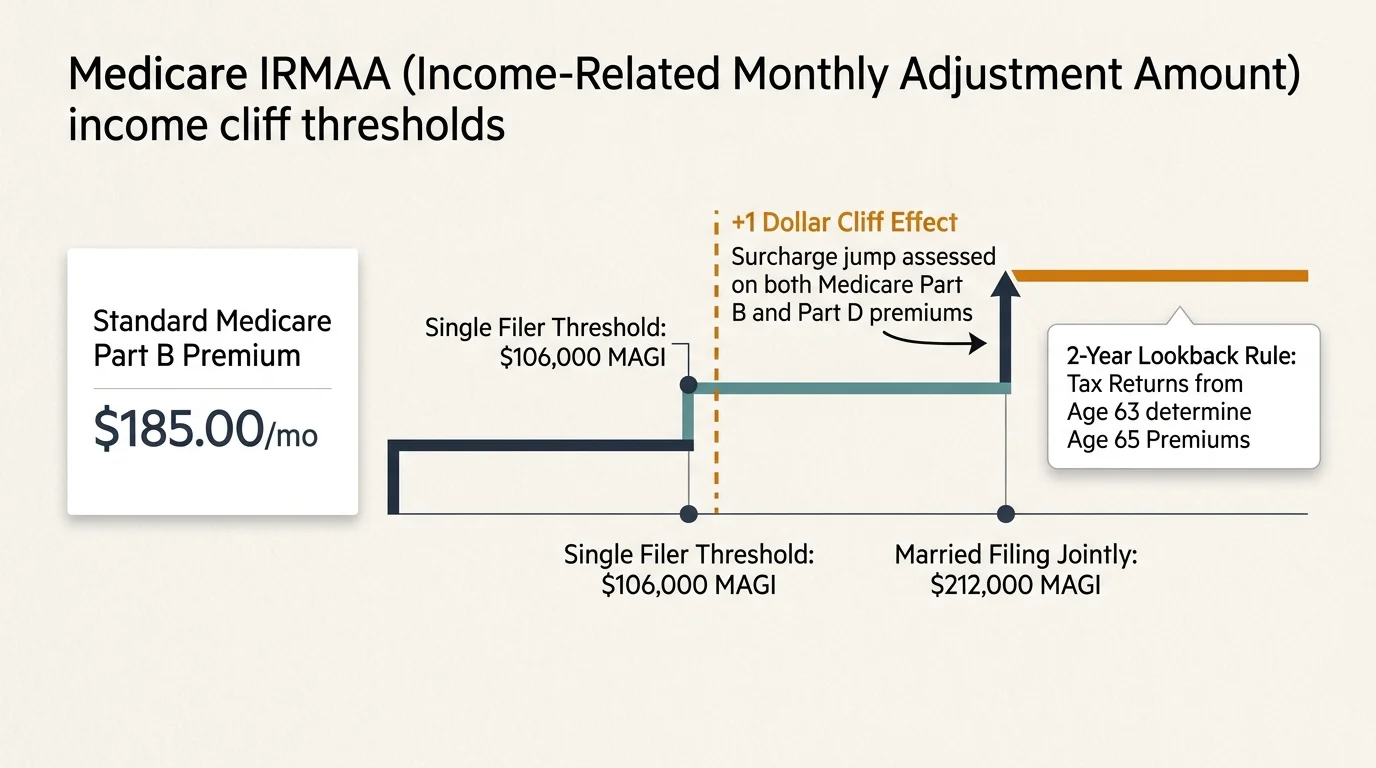
The standard monthly Medicare Part B premium sits at $185.00. However, high-income retirees often pay substantially more due to Income-Related Monthly Adjustment Amounts, known as IRMAA.
The federal government assesses these surcharges on both Medicare Part B and Part D plans. Check current premium schedules directly at Medicare.gov to understand your baseline costs.
IRMAA surcharges trigger when your modified adjusted gross income exceeds $106,000 for single filers or $212,000 for married couples filing jointly. Exceeding a threshold by a single dollar increases your premiums across the entire year.
The Social Security Administration calculates IRMAA using tax returns from two years prior. A large capital gain or Roth conversion at age 63 can quietly hike your Medicare premiums at age 65.
2. The Social Security Tax Torpedo
Many retirees assume Social Security benefits arrive completely tax-free. In reality, an outdated tax formula frequently creates an unexpected tax bill on your monthly checks.
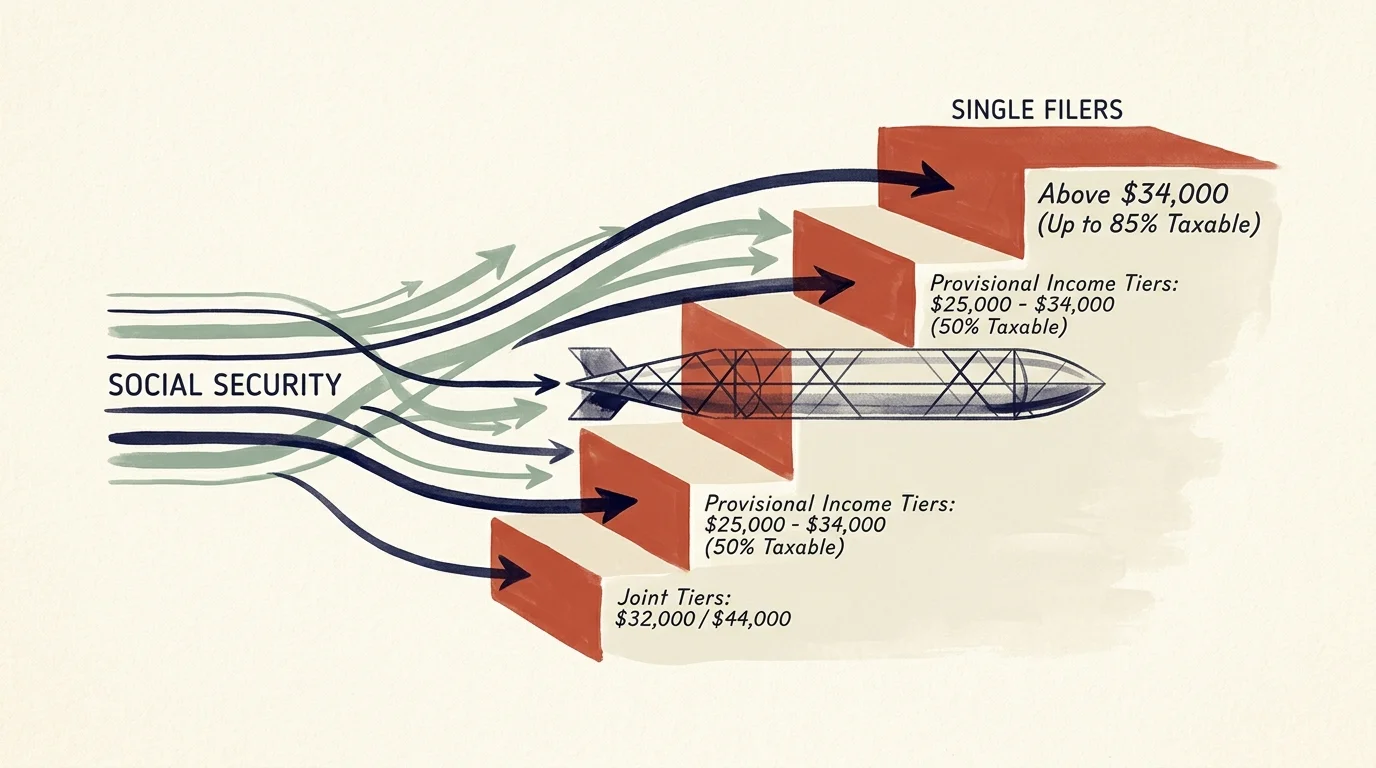
The Social Security Administration calculates benefit taxation using a metric called provisional income. This figure equals your adjusted gross income plus non-taxable interest and half of your annual Social Security benefit.
Congress established the taxation thresholds in 1983 and 1993, but never indexed them to inflation. As a result, standard cost-of-living adjustments steadily push moderate earners into taxable territory.
If your provisional income falls between $25,000 and $34,000 as a single filer, you pay income tax on up to 50% of your benefits. Above $34,000, up to 85% of your benefits become taxable.
For married couples, the 50% taxable threshold starts at just $32,000, while the 85% tier begins at $44,000. Every extra dollar withdrawn from a traditional IRA can trigger taxes on an additional 85 cents of benefits.

3. Portfolio Fee Drag and Advisory Costs
Investment expenses silently erode your retirement wealth because financial institutions deduct them automatically before displaying returns. You never write a physical check, making these expenses easy to overlook.
“In investing, you get what you don’t pay for. Costs matter.” — John Bogle, Founder of Vanguard
A total annual fee of 1.75%—combining a 1% advisory fee with 0.75% mutual fund expense ratios—severely diminishes your compounding returns. Over a 25-year retirement, that fee structure can consume more than 25% of your total portfolio value.
Verify your fund expense ratios and transaction costs using educational resources on Investor.gov. Switching to low-cost broad-market index funds immediately preserves your portfolio capital.
| Fee Scenario | Annual Total Fee | Portfolio Value (25 Years)* | Total Wealth Lost to Fees |
|---|---|---|---|
| Low-Cost Index Portfolio | 0.08% | $1,582,000 | $35,000 |
| Standard Advisory + Mutual Funds | 1.75% | $1,085,000 | $532,000 |
*Assumes an initial $500,000 balance with a 6% gross annual return before fee deductions.

4. Unmanaged Required Minimum Distributions (RMDs)
The IRS requires you to withdraw minimum amounts from tax-deferred accounts once you reach a specific age. Under the SECURE 2.0 Act, RMDs begin at age 73 and will rise to age 75 in 2033.
“The single biggest mistake retirees make is waiting until age 73 to address massive tax-deferred balances.” — Ed Slott, CPA and IRA Specialist
Failing to withdraw your exact RMD triggers a stiff 25% excise tax on the remaining shortfall. The penalty drops to 10% only if you correct the error within two years.
Even when taken on time, large mandatory distributions can push you into higher tax brackets. Review official distribution worksheets at IRS.gov to calculate accurate annual withdrawal requirements.
5. Cash Drag and Inactive Recurring Subscriptions
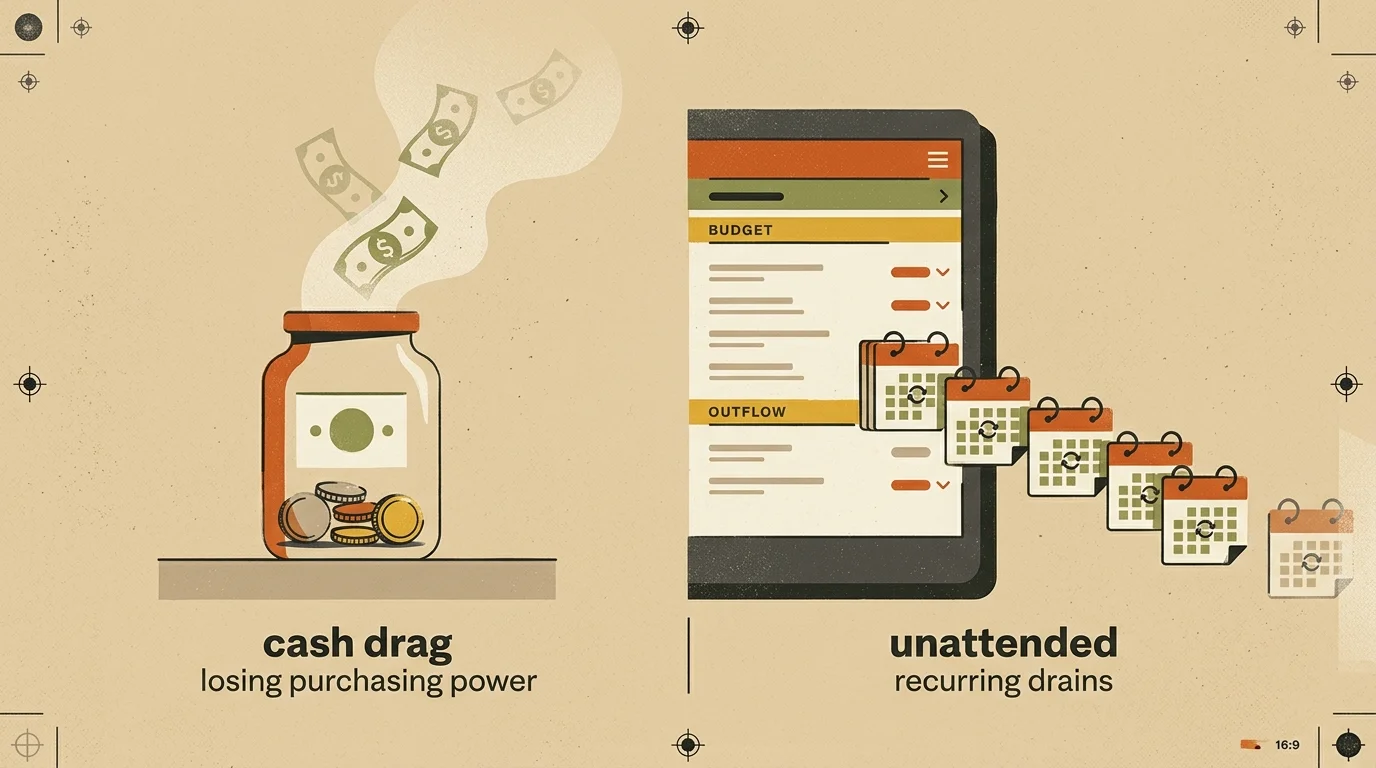
Holding excessive cash in traditional checking or savings accounts paying near-zero interest causes severe purchasing power erosion. While maintaining a cash cushion provides peace of mind, surplus uninvested cash steadily loses value to inflation.
Automated subscription renewals and unreviewed insurance policies represent another common drain. Legacy policies often carry outdated coverage limits or redundant riders that no longer match your current lifestyle.
Auditing your recurring bank statements twice a year eliminates forgotten digital services, club memberships, and uncompetitive insurance premiums. Reallocating those wasted dollars into high-yield cash accounts generates meaningful risk-free returns.

Comparing the 5 Silent Leaks and Their Solutions
| Silent Money Leak | Primary Risk | Actionable Solution |
|---|---|---|
| Medicare IRMAA Surcharges | Higher Part B and Part D monthly premiums | Execute strategic Roth conversions before age 63 |
| Social Security Tax Torpedo | Effective marginal tax rates reaching 40%+ | Draw from Roth accounts to manage provisional income |
| Portfolio Fee Drag | Loss of up to 30% of lifetime investment gains | Transition to low-cost index funds and flat-fee advice |
| Unmanaged RMD Inefficiencies | Steep 25% penalty or forced tax bracket creep | Use Qualified Charitable Distributions (QCDs) after age 70½ |
| Cash Drag & Recurring Subscriptions | Purchasing power erosion and unmonitored waste | Conduct semiannual budget audits and use Treasury bills |

Pitfalls to Watch For
Navigating retirement cash flow requires vigilance against subtle financial missteps. Watch for these common operational traps when managing your budget:
- Overlooking the two-year lookback period for Medicare IRMAA income calculations.
- Triggering the Social Security tax torpedo through poorly sequenced retirement account withdrawals.
- Neglecting annual Medicare Part D open enrollment reviews when drug formularies change.
- Leaving required minimum distributions until late December, risking calculation and processing errors.
- Paying ongoing asset management fees for accounts that receive no active tax planning.

Getting Expert Help
While you can fix many leaks independently, complex scenarios benefit from specialized financial guidance. Consider working with a Certified Financial Planner (CFP) or CPA in the following situations:
- Designing a multi-year Roth conversion plan to minimize IRMAA surcharges and future RMD brackets.
- Filing a Medicare IRMAA appeal (Form SSA-44) following a life-changing event like retirement or spousal loss.
- Structuring an asset-location and withdrawal strategy to protect Social Security benefits from excessive taxation.
- Optimizing estate transfer plans to eliminate embedded income taxes for non-spouse beneficiaries.
Frequently Asked Questions
How can I appeal a Medicare IRMAA surcharge if my income dropped after retiring?
File Form SSA-44 with the Social Security Administration documenting your life-changing event, such as retirement or work reduction. Provide tax transcripts showing your updated, lower income.
What is the Social Security tax torpedo?
The tax torpedo occurs when additional taxable income pushes provisional income over static federal thresholds. This forces up to 85% of your Social Security benefits into taxable income.
How do Roth conversions reduce silent retirement money leaks?
Converting traditional balances reduces future required minimum distributions. Smaller RMDs keep your taxable income lower, protecting you from higher Medicare premiums and benefit taxation.
What is the penalty for missing a Required Minimum Distribution?
The IRS assesses a 25% excise tax on the undistributed RMD shortfall. You can reduce this penalty to 10% by taking the distribution and submitting a timely correction.
Plugging silent money leaks transforms your retirement financial security without requiring drastic lifestyle cutbacks. Start by auditing your annual tax return, investment fees, and Medicare premium statements today.
This article provides general retirement education and information only. Everyone’s financial situation is unique—what works for others may not work for you. For personalized advice, consider consulting a qualified financial professional such as a CFP or CPA.
Last updated: February 2026. Retirement benefits, tax laws, and healthcare costs change frequently—verify current details with official sources.