Soaring housing costs force millions of retirees to rethink their golden years. With national median home prices hovering near $425,000, moving unlocks immediate financial breathing room.
You do not need a multi-million-dollar portfolio to enjoy a secure retirement. Across the country, welcoming small towns offer sturdy single-family homes under $200,000 alongside reliable local healthcare.
Downsizing into an affordable housing market allows you to stretch fixed income sources like Social Security. These ten small towns deliver rich community life and exceptional value for your savings.
Why Relocating to an Affordable Small Town Makes Sense
Housing remains the largest single expense in any retirement budget. Eliminating a mortgage or slashing property tax bills immediately protects your nest egg from market volatility.
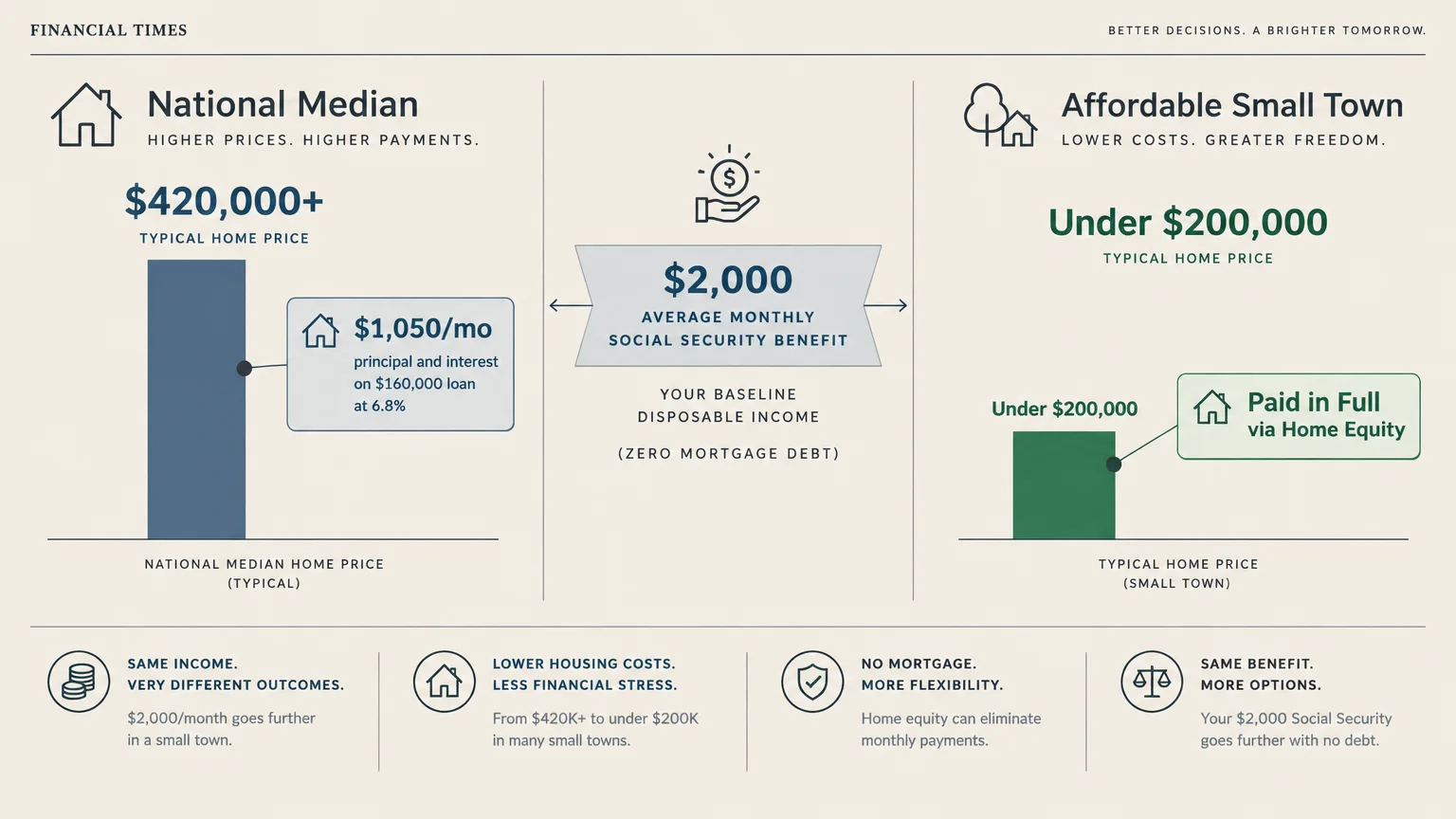
According to the National Association of Realtors, the national median price for existing homes sits well above $420,000. In contrast, target markets with homes below $200,000 cut your housing capital requirement by more than half.
According to the Social Security Administration, the average retired worker collects approximately $2,000 per month. Eliminating high mortgage debt allows this baseline benefit to cover your essential everyday living expenses comfortably.
If prevailing mortgage rates fluctuate between 6.5% and 6.8%, borrowing $160,000 creates a monthly principal-and-interest bill near $1,050. Buying with cash from existing home equity eliminates that debt completely.
“Downsizing your home can reduce your mortgage, utility bills, and property taxes, freeing up cash for everyday living.” — Jean Chatzky, Financial Journalist and Author
What Makes a Budget-Friendly Town Truly Livable
Low prices alone do not guarantee a fulfilling retirement. A cheap home becomes a burden if you cannot access a physician or buy groceries easily.
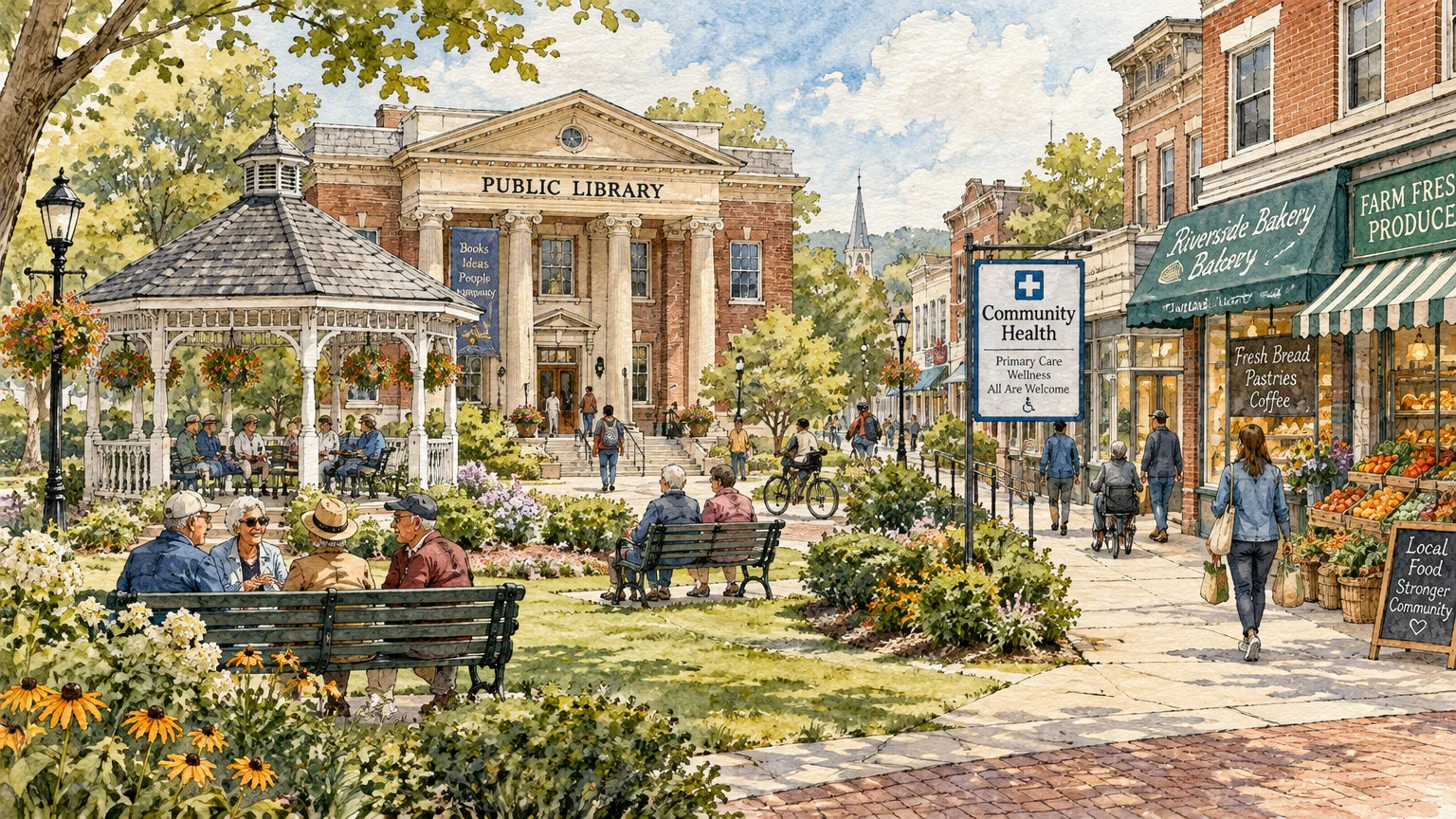
Every community on this list provides direct access to reliable healthcare centers and regional hospitals. You should never have to drive hours for routine wellness checks or emergency care.
State tax policies also shape your bottom line. Several states on this list exempt pensions and Social Security benefits from state income taxes entirely.
Finally, community culture matters. Towns with active public libraries, parks, and downtown squares provide everyday engagement without expensive admission fees.
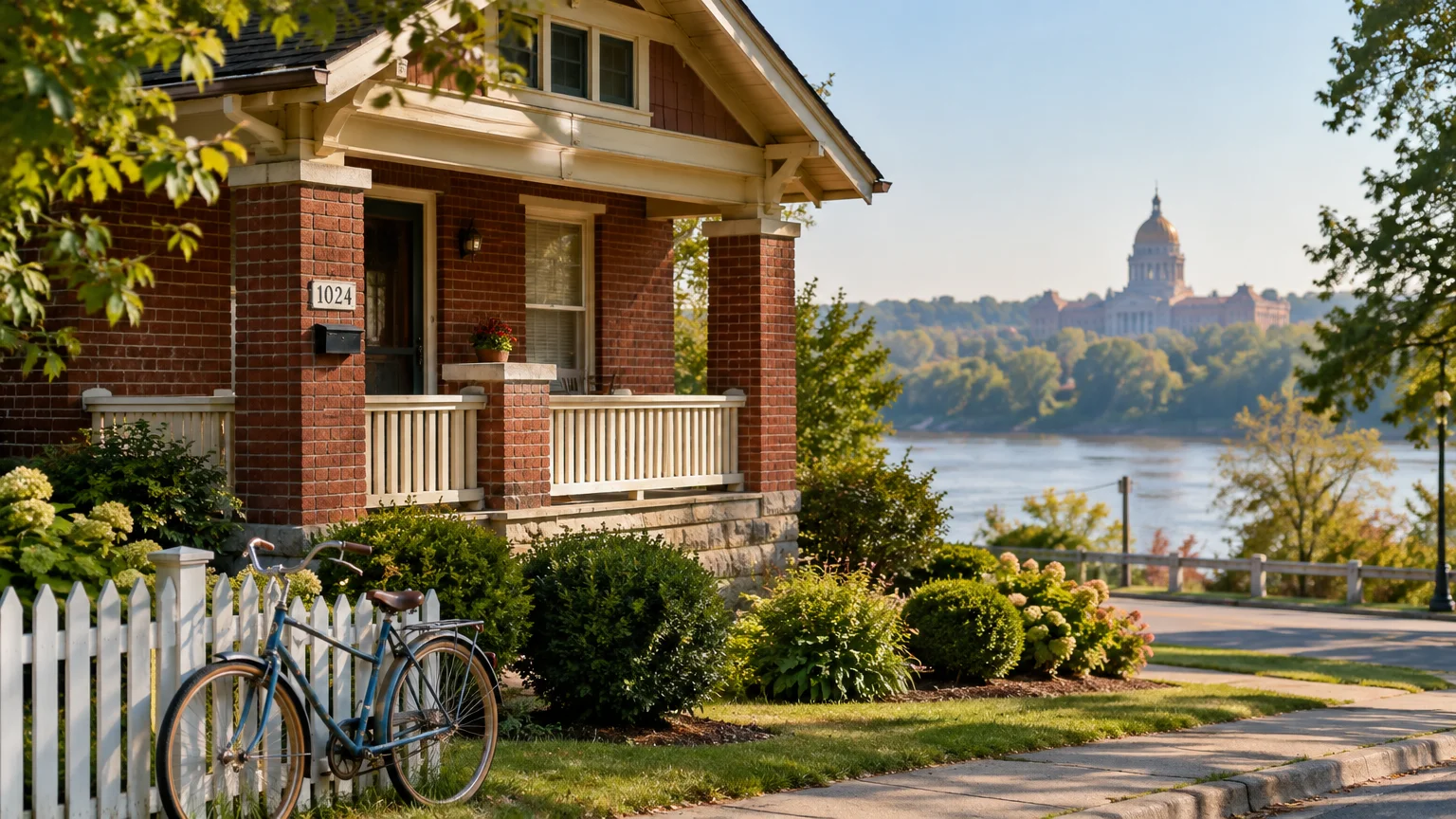
10 Small Towns Where You Can Buy Under $200,000
1. Vincennes, Indiana
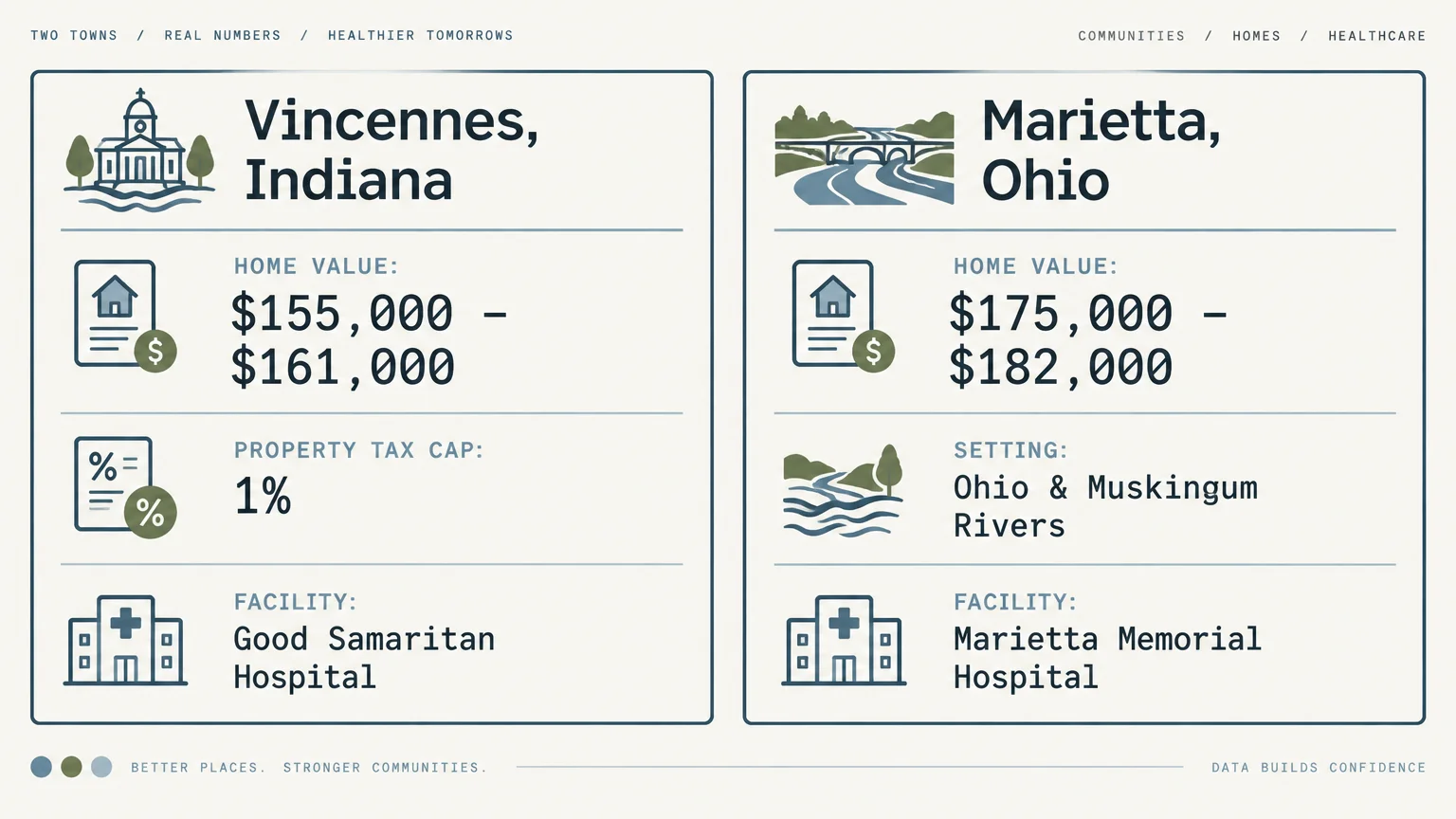
Vincennes holds the distinction of being Indiana’s oldest continuous European settlement, founded in 1732. Located along the Wabash River, this community of 16,700 blends deep history with exceptional affordability.
Typical home values here range between $155,000 and $161,000. You can easily find renovated bungalows and historic homes near quiet, tree-lined streets.
Healthcare needs are handled locally by Good Samaritan Hospital, a comprehensive acute-care facility. The community also features the George Rogers Clark National Historical Park for scenic daily walking.
Indiana caps owner-occupied residential property taxes at 1% of gross assessed value. That constitutional tax cap keeps your annual holding costs predictable and low.
2. Marietta, Ohio
Situated at the scenic confluence of the Ohio and Muskingum rivers, Marietta offers historic riverboat charm. Around 13,300 residents call this vibrant riverfront town home.
Typical home values in Marietta average between $175,000 and $182,000. You will discover well-maintained mid-century properties and Victorian structures near downtown.
The town boasts Marietta Memorial Hospital, ensuring you never have to travel far for specialized medical care. Marietta College provides continuing education classes, public lectures, and athletic games.
The brick-paved downtown features independent bookstores, local diners, and flat walking paths along the river levee. Outdoor enthusiasts enjoy nearby access to Wayne National Forest trails.
3. Altoona, Pennsylvania
Surrounded by the rugged peaks of the Allegheny Mountains, Altoona offers dramatic scenery and an exceptionally low cost of living. Approximately 43,500 people live in this former railroad hub.
Median sales prices consistently sit between $130,000 and $154,000. You can acquire solid brick homes and manageable single-story properties well below the national median.
Altoona provides premier medical infrastructure through UPMC Altoona, a Level II Trauma Center. Access to this regional health system gives retirees outstanding medical security.
Pennsylvania offers one of the most generous tax environments in the country for seniors. The state completely exempts pensions, 401(k) distributions, and Social Security benefits from state income tax.
4. Bluefield, West Virginia
Perched at an elevation of 2,600 feet, Bluefield earned fame as “Nature’s Air-Conditioned City.” Summers remain mild and comfortable, keeping seasonal home cooling expenses low for its 9,600 residents.
Typical home values range from $115,000 to $150,000, making it one of the most affordable markets in Appalachia. Stately older homes with mountain views regularly sell at entry-level price points.
Medical care is available within minutes at WVU Medicine Princeton Community Hospital. The surrounding mountains offer quiet surroundings, clean air, and fishing reservoirs.
West Virginia also delivers low property taxes, with an average effective tax rate near 0.55%. That combination makes Bluefield ideal for stretching a modest fixed income.
5. Joplin, Missouri
Located in southwestern Missouri along historic Route 66, Joplin serves as a regional economic center. With a population near 52,000, the city provides urban conveniences at small-town prices.
Typical home values hover between $181,000 and $192,000. Neighboring suburbs like Webb City and Carl Junction offer quiet neighborhoods with similar affordable pricing.
Joplin is a regional healthcare destination anchored by Freeman Health System and Mercy Hospital Joplin. Retirees enjoy access to top-tier cardiac, orthopedic, and oncology specialists.
Missouri passed legislation exempting 100% of Social Security benefits from state income tax. Combined with modest local utility rates, Joplin preserves your retirement income.
6. Carroll, Iowa
Carroll represents classic Midwestern small-town living, located about 90 miles northwest of Des Moines. This tidy community of 10,100 residents maintains high safety rankings and pristine public parks.
Typical home prices range between $180,000 and $184,000. Housing stock includes sturdy ranch-style homes with generous yards and detached garages.
St. Anthony Regional Hospital anchors the local healthcare system, offering advanced outpatient clinics and emergency services. The town also features the Sauk Rail Trail for walking and cycling.
Iowa exempts retirement income, including pensions, 401(k) withdrawals, and traditional IRAs, from state income taxes for residents aged 55 and older. This policy keeps thousands in your pocket each year.
7. Thomaston, Georgia
If you prefer warmer winters without Florida price tags, Thomaston provides an appealing Southern option. This community of 9,800 residents sits conveniently between Atlanta, Macon, and Columbus.
Median home prices fall between $165,000 and $174,000. You will encounter traditional ranch homes and historic cottages on spacious lots with mature pecan and oak trees.
Upson Regional Medical Center delivers quality healthcare directly within the city limits. Retirees also enjoy nearby Sprewell Bluff Park along the Flint River for mild hiking and fishing.
Georgia provides a retirement income exclusion of up to $65,000 per person for individuals aged 65 and older. That generous exemption shields most retirees from state income taxes completely.
8. Enid, Oklahoma
Enid combines agricultural heritage with a thriving local arts scene in north-central Oklahoma. Home to around 50,000 residents, Enid offers a comprehensive cost of living 15% below national averages.
Typical home values fall between $135,000 and $145,000. The local market features spacious brick properties and manageable mid-century homes on quiet suburban streets.
Healthcare needs are met locally by INTEGRIS Health St. Mary’s Regional Medical Center. The town maintains a historic downtown square, a local symphony orchestra, and active community theaters.
Oklahoma exempts Social Security benefits and offers substantial exclusions on military and civil service pensions. Daily expenses like groceries and automotive services remain remarkably inexpensive.
9. Bedford, Indiana
Known as the “Limestone Capital of the World,” Bedford sits surrounded by rolling hills and dense forests. Approximately 13,700 people reside in this historic community south of Bloomington.
Typical home prices currently range between $185,000 and $196,000. Many residences feature durable local limestone facades that require minimal ongoing exterior maintenance.
IU Health Bedford Hospital provides acute medical care and emergency services close to home. The nearby Hoosier National Forest offers thousands of acres for hiking, camping, and birdwatching.
Indiana’s property tax caps protect homeowners from unexpected real estate tax increases. In addition, Bloomington and Indiana University are only 30 minutes away for cultural outings.
10. Galesburg, Illinois
Located in western Illinois, Galesburg offers rich cultural history, historic architecture, and passenger rail access. Around 29,500 people live in this welcoming college town.
Typical home values sit between $115,000 and $135,000, making it the most affordable housing market on our list. You can easily find spacious single-family homes below $130,000.
OSF St. Mary Medical Center provides regional acute care and comprehensive senior health services. The city is also home to Knox College, bringing concerts, lectures, and theatrical performances to town.
Amtrak provides direct passenger service from downtown Galesburg into Chicago in under three hours. Best of all, Illinois does not tax retirement distributions from pensions, 401(k) accounts, or IRAs.
Cost and Healthcare Comparison for Top Budget Towns
Evaluating your options side-by-side helps clarify which community matches your budget and lifestyle. The table below outlines home price ranges, populations, primary hospitals, and key tax advantages.
| Town & State | Typical Home Price | Population | Primary Healthcare Center | Key State Tax Advantage |
|---|---|---|---|---|
| Vincennes, IN | $155,000–$161,000 | 16,700 | Good Samaritan Hospital | 1% constitutional property tax cap |
| Marietta, OH | $175,000–$182,000 | 13,300 | Marietta Memorial Hospital | Retirement income credit available |
| Altoona, PA | $130,000–$154,000 | 43,500 | UPMC Altoona | 100% tax-free pensions, IRAs, and 401(k)s |
| Bluefield, WV | $115,000–$150,000 | 9,600 | WVU Medicine Princeton | Very low effective property tax rates |
| Joplin, MO | $181,000–$192,000 | 52,000 | Freeman Health / Mercy Hospital | 100% Social Security state tax exemption |
| Carroll, IA | $180,000–$184,000 | 10,100 | St. Anthony Regional Hospital | Complete state tax exemption on retirement income |
| Thomaston, GA | $165,000–$174,000 | 9,800 | Upson Regional Medical Center | $65,000 retirement income deduction (age 65+) |
| Enid, OK | $135,000–$145,000 | 50,000 | INTEGRIS Health St. Mary’s | Complete Social Security tax exemption |
| Bedford, IN | $185,000–$196,000 | 13,700 | IU Health Bedford Hospital | 1% constitutional property tax cap |
| Galesburg, IL | $115,000–$135,000 | 29,500 | OSF St. Mary Medical Center | 100% tax-free retirement distributions |
What Can Go Wrong When Buying in a Low-Cost Town
Relocating across state lines involves challenges that go beyond simple purchase price calculations. Planning ahead helps you avoid costly post-move surprises.
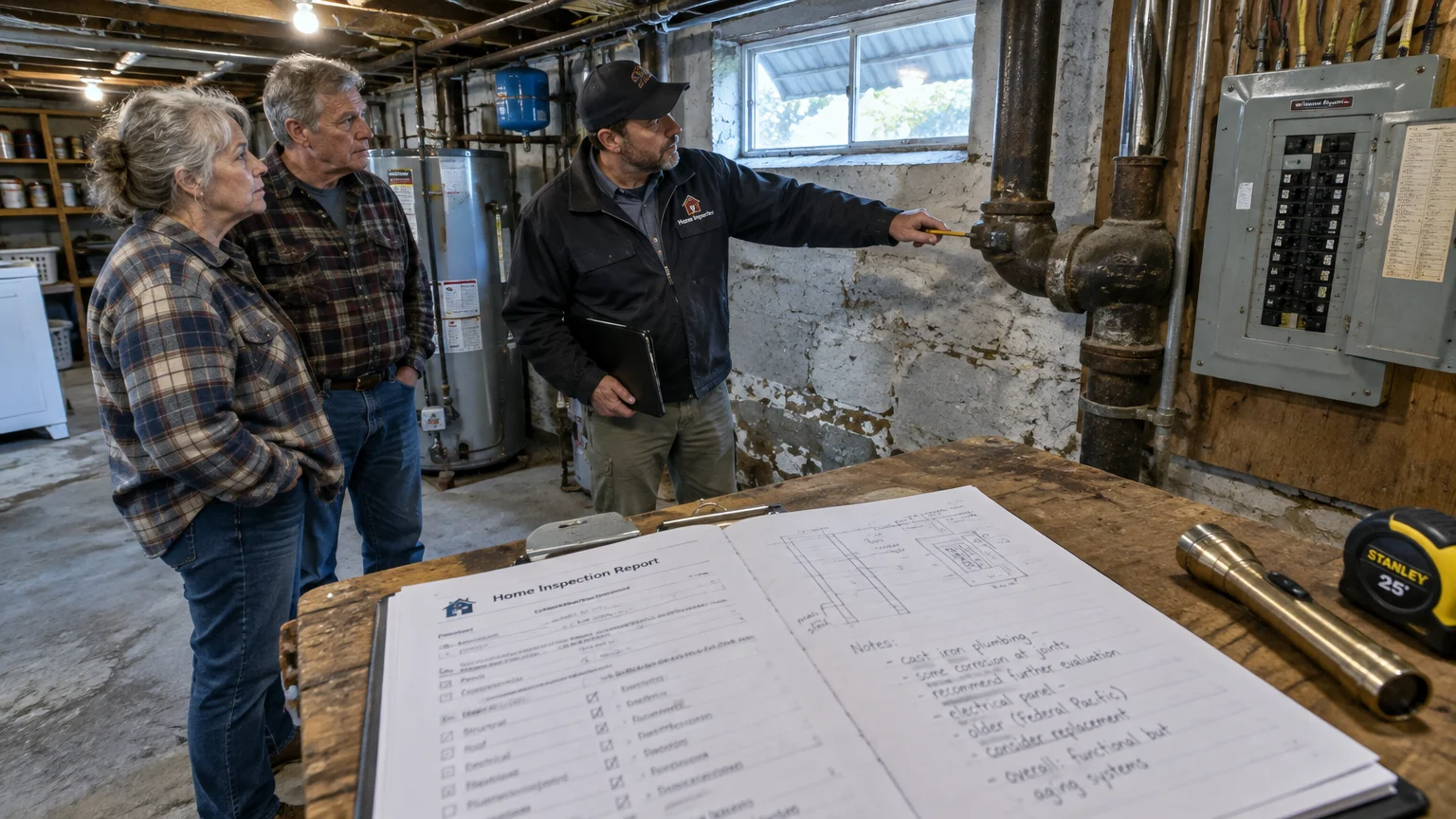
Older homes in budget markets often carry deferred maintenance. Roof replacements, outdated wiring, or aging heating systems can quickly drain your initial moving savings.
Always hire an independent, licensed home inspector before committing to a purchase. You should also review inspection guidance from the Department of Housing and Urban Development to identify potential structural issues.
Access to specialty medical care presents another common challenge. While each town on this list has a local hospital, rare medical conditions may require traveling to major teaching hospitals.
Social isolation can also surprise retirees who move far from lifelong friends and family. Building a fresh social circle takes proactive effort through community centers, places of worship, or volunteer programs.

How to Plan Your Move on a Modest Budget
Transitioning to an affordable small town requires careful logistical and financial planning. Follow these actionable steps to ensure a smooth transition:
- Rent for a trial period: Spend three to six months in your target town to experience the climate across different seasons.
- Verify homeowner insurance rates: Ask local insurance brokers for actual quotes, especially in areas prone to seasonal storms.
- Assess utility costs: Contact local municipal utility providers to review historical heating and water bills for typical single-family homes.
- Consult federal consumer resources: Review relocation and mortgage advice from the Consumer Financial Protection Bureau to understand loan estimates and closing disclosures.
- Check regional senior services: Visit the local area agency on aging through AARP resources to inspect community programs and transport options.
Take your time visiting multiple neighborhoods before making an offer on a house. Walking around local parks and grocery stores reveals the true daily atmosphere of a town.
Examine state income tax laws carefully with publications from the Internal Revenue Service and state revenue departments. Understanding your local tax liabilities ensures your budget remains balanced.
Frequently Asked Questions
Can you really find move-in-ready homes under $200,000 today?
Yes, smaller Midwestern and Southern communities consistently feature structurally sound, move-in-ready houses under $200,000. While these homes may need minor cosmetic updates, they offer safe and functional living spaces.
How do small towns maintain reliable medical services?
Many small towns function as regional commercial hubs, supporting facilities connected to larger university or healthcare networks. Facilities like UPMC Altoona and IU Health Bedford deliver comprehensive acute care.
Are property taxes always low in towns with cheap homes?
Not necessarily. While states like Indiana and West Virginia maintain exceptionally low property tax rates, states like Illinois make up for low income taxes with higher local property taxes.
How much cash should I reserve after buying a sub-$200K home?
You should maintain at least six months of living expenses plus an emergency home repair fund of $10,000 to $15,000. This cushion covers unforeseen mechanical failures without forcing you to borrow.
Final Thoughts on Choosing Your Retirement Town
Moving to a lower-cost community gives you the freedom to step off the financial treadmill. With a home purchased under $200,000, your retirement savings last longer and your stress levels fall.
Evaluate your personal healthcare priorities, tax preferences, and family ties before making a final decision. A well-chosen small town can provide the relaxed, affordable lifestyle you worked hard to achieve.
This article provides general retirement education and information only. Everyone’s financial situation is unique—what works for others may not work for you. For personalized advice, consider consulting a qualified financial professional such as a CFP or CPA.
Last updated: February 2026. Retirement benefits, tax laws, and healthcare costs change frequently—verify current details with official sources.