
You can comfortably retire on $2,000 a month in 2026 by relocating to cities where housing and healthcare costs remain exceptionally affordable. While the average monthly Social Security check is $1,976—barely enough to survive in major coastal metros—your geographic location is the ultimate lever for stretching that fixed income. You do not have to sacrifice safety, community, or quality of life to make the math work. From tax-friendly southern states with robust medical facilities to thriving international expat communities offering steep senior discounts, your choices remain vibrant. Whether you prefer sunny Gulf Coast beaches or the historic charm of the Midwest, these eight destinations deliver an exceptional lifestyle for budget-conscious retirees.
Why Geographic Arbitrage is Your Best Retirement Tool
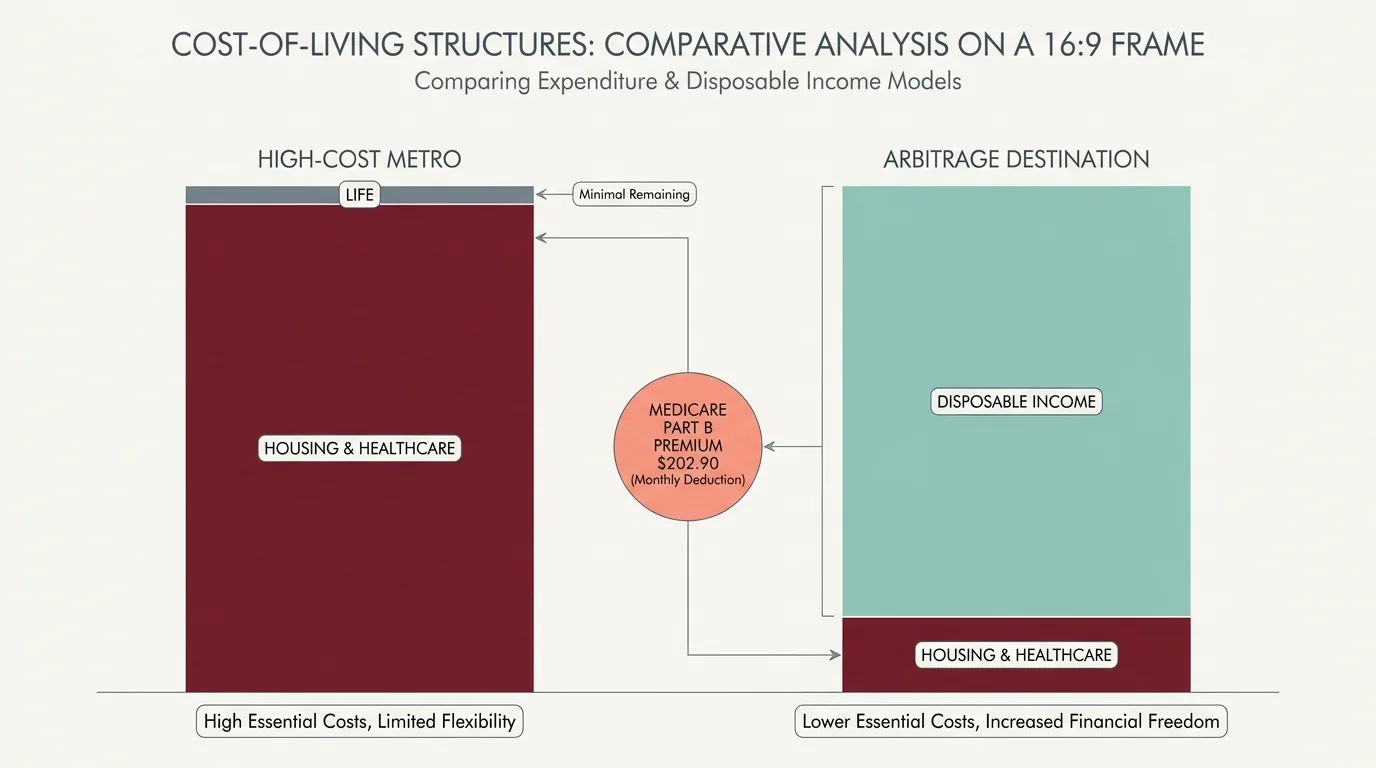
If you rely heavily on Social Security, managing your fixed expenses serves as the most crucial aspect of your financial survival. In 2026, the standard Medicare Part B premium sits at $202.90 per month, which the government deducts straight from your benefits. When you pair that healthcare cost with groceries and standard utilities, a significant chunk of your check vanishes before you even pay rent. Geographic arbitrage—moving from a high-cost area to a lower-cost area while maintaining the same income—allows you to reclaim control over your budget without returning to the workforce.
By actively choosing a location that caters to fixed-income residents, you instantly lower your financial stress. As Investopedia notes, geographic arbitrage empowers you to use the exact same dollars to buy a substantially higher standard of living.
“Retirement is not a time to be broke; it’s a time to be comfortable. Keeping your housing costs low is the single biggest factor in making your money last.” — Dave Ramsey, Personal Finance Expert

1. McAllen, Texas: Sun, Savings, and No State Income Tax
Deep in the Rio Grande Valley, McAllen consistently ranks as one of the most inexpensive metropolitan areas in the United States. Retirees find that average rent prices often hover around $600 to $700 per month for a one-bedroom apartment, leaving ample room in a $2,000 budget for food and entertainment. The overall cost of living sits roughly 20% below the national average.
Because Texas levies no state income tax, you keep every dollar of your retirement distributions and Social Security checks. Furthermore, McAllen boasts exceptional access to medical care with facilities like the McAllen Medical Center and Rio Grande Regional Hospital, ensuring you have the specialized geriatric and cardiac support you need as you age.

2. Cuenca, Ecuador: The Ultimate Expat Haven
If you feel willing to embrace an adventure abroad, Cuenca remains a global standout for American retirees. Nestled in the Andes Mountains, this colonial city features a temperate, year-round spring climate that virtually eliminates the need for expensive heating or air conditioning. The overall cost of living runs approximately 54% to 60% lower than the U.S. average.
Ecuador sweetens the deal by offering a 50% discount on public transportation, cultural events, and utilities for residents over the age of 65. A retired couple can easily cover rent, utilities, high-quality local produce, and private health insurance for around $1,500 a month—making a $2,000 budget feel downright luxurious. To qualify for a retirement visa, you only need to prove a guaranteed monthly income of $1,410, making Social Security more than sufficient.

3. Tallahassee, Florida: Budget-Friendly Sunshine Living
Florida holds a famous reputation for retirement appeal, but coastal cities have become notoriously expensive. Tallahassee offers a highly affordable alternative. As the state capital, it provides robust infrastructure, tree-lined streets, and a cost of living that falls well below the national average. Estimates show that homeowners 65 and older spend around $1,248 a month on housing and living costs, while renters can manage on less than $1,000.
You gain all the benefits of Florida’s zero state income tax and warm climate without the premium price tag attached to cities like Miami or Naples. The city also offers abundant parks, scenic trails, and cultural attractions linked to the local universities.
4. Fort Wayne, Indiana: Midwestern Charm on a Dime
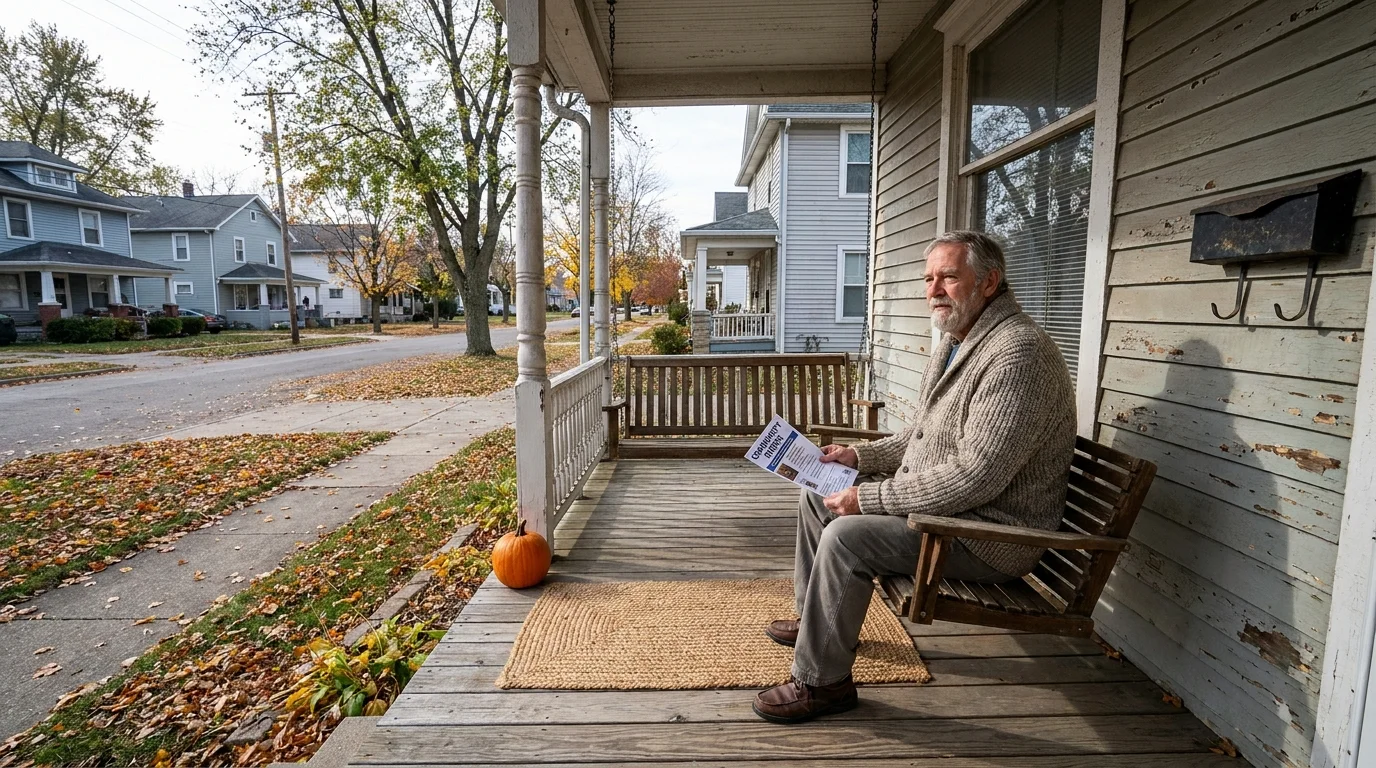
For retirees who prefer four distinct seasons and a strong sense of local community, Fort Wayne delivers massive financial value. Housing remains the city’s strongest asset for budget-conscious seniors; one-bedroom apartments frequently rent for under $800 a month.
The city features a highly walkable downtown core, miles of paved riverfront trails, and extensive park systems. Fort Wayne allows you to experience a rich cultural scene—including local museums, a renowned public library system, and botanical conservatories—without constantly worrying about draining your savings account.

5. Augusta, Georgia: Golf, Culture, and Senior Tax Breaks
Georgia systematically positions itself as one of the most tax-friendly states for older adults, and Augusta leads the charge for affordability. The city offers a cost of living approximately 20% below the national average. Once you reach age 65, Georgia provides a substantial retirement income tax exclusion, shielding a large portion of your pensions and retirement account withdrawals from state taxation. The state completely exempts Social Security benefits.
Beyond the financial perks, Augusta provides top-tier healthcare facilities and a vibrant cultural landscape heavily influenced by its famous golfing heritage. Retirees can even take advantage of free higher education classes at Augusta University, keeping the mind sharp at zero cost.

6. Wichita, Kansas: Heartland Affordability
Wichita proves that the American heartland still offers a comfortable, accessible retirement. The city provides big-city amenities—such as an active arts district, regional airports, and specialized healthcare—at a fraction of coastal prices. You can typically find comfortable one-bedroom apartments for around $560 a month.
Everyday expenses like groceries, transportation, and utilities remain notably low. This pricing structure ensures that a $2,000 monthly income covers your daily needs while leaving a comfortable buffer for unexpected expenses, hobbies, or travel.

7. Pensacola, Florida: Coastal Living Without the Premium Price
If you refuse to give up the dream of retiring near the beach, Pensacola stands out as one of your best options. Located on the Florida Panhandle, this city features gorgeous white-sand beaches and a vibrant, walkable historic downtown district. Unlike the state’s southern coastlines, Pensacola’s housing market remains highly accessible; housing costs sit roughly 29% below the national average.
With nearly 20% of the population over the age of 65, the community heavily tailors its amenities to senior living. You will find abundant social clubs, volunteer opportunities, and specialized medical clinics that accept Medicare.

8. Oklahoma City, Oklahoma: Big City Amenities on a Small Town Budget
Oklahoma City perfectly balances urban convenience with impressive affordability. Housing costs fall substantially below the national average, allowing your fixed income to stretch remarkably far. The city consistently ranks as one of the most stress-free environments for retirees living on a budget.
The local government has invested heavily in public spaces, resulting in beautiful riverfront parks and an easily navigable downtown area. Because healthcare access remains robust and everyday costs like fuel and food stay cheap, a $2,000 monthly budget provides a stable lifestyle without the need to constantly count pennies.
Comparing the Top Affordable Retirement Destinations
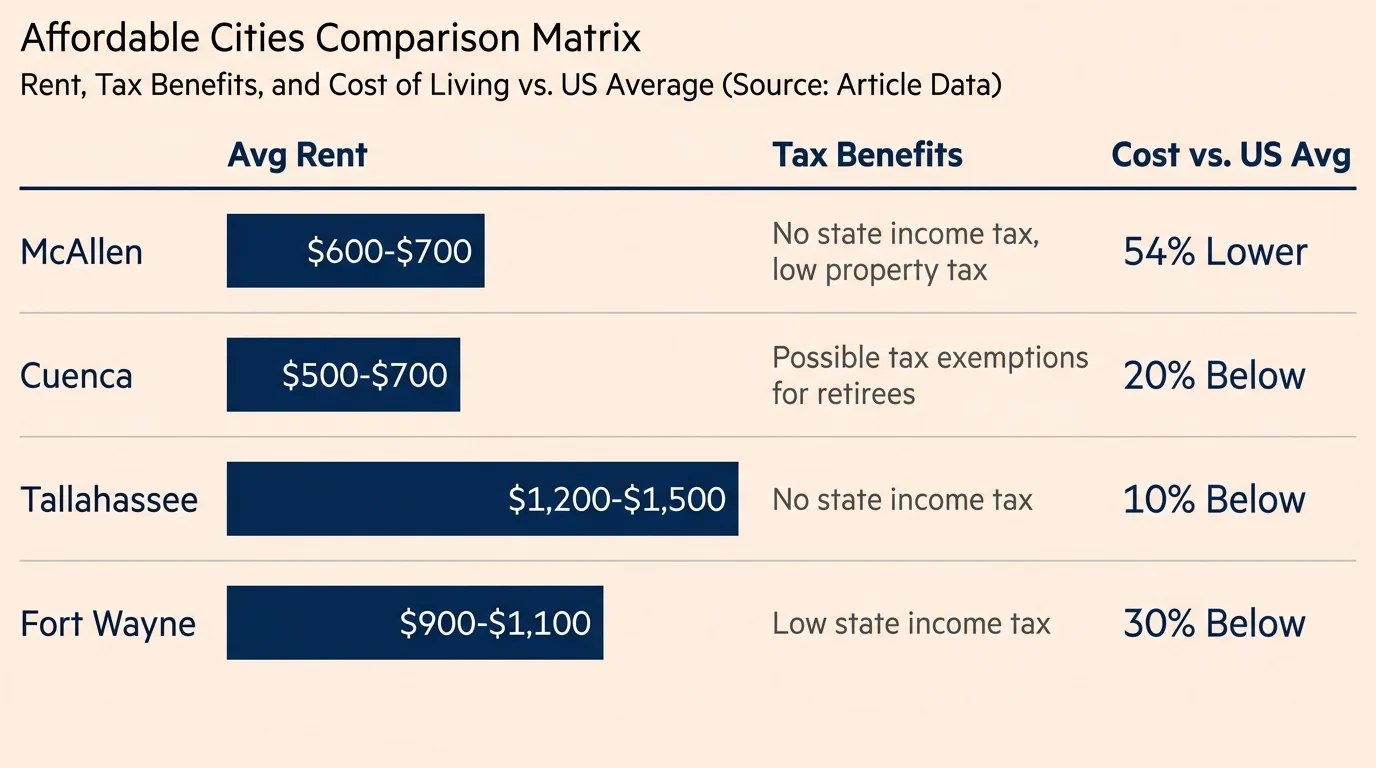
To help you visualize how these cities stack up, use this comparison table to review housing costs and tax advantages:
| Destination | Estimated 1BR Rent | State Income Tax | Key Retirement Draw |
|---|---|---|---|
| McAllen, TX | $600 — $700 | 0% | Extremely low cost of living and warm weather |
| Cuenca, Ecuador | $300 — $500 | N/A (Expat) | 50% senior discounts and year-round spring climate |
| Tallahassee, FL | $900 — $1,000 | 0% | Affordable sunshine with robust capital city infrastructure |
| Fort Wayne, IN | $750 — $850 | 3.05% | Exceptional Midwest affordability and strong community |
| Augusta, GA | $1,000 — $1,300 | 5.39% (High exemptions) | Massive retirement tax exemptions and golf culture |
| Wichita, KS | $550 — $650 | 5.70% | Heartland pricing with big-city medical access |
| Pensacola, FL | $1,100 — $1,300 | 0% | Accessible coastal living and large senior population |
| Oklahoma City, OK | $800 — $950 | 4.75% | Urban amenities at small-town prices |

Avoiding Common Relocation Errors
Relocating to stretch your retirement budget serves as a powerful financial strategy, but jumping in without proper due diligence can lead to costly mistakes. Keep these common errors in mind before you pack your bags:
- Failing to Test the Climate: Spending a long weekend in a warm coastal city feels vastly different from living through a sweltering summer or hurricane season. Rent an apartment for at least one to three months during the area’s worst weather season before buying property.
- Misunderstanding Medicare Networks: If you use a Medicare Advantage plan, your coverage network remains highly localized. Moving across state lines—or even just to a new county—often requires you to select an entirely new policy. Always verify that top-tier doctors in your new city accept your specific plan on Medicare.gov.
- Ignoring State Tax Nuances: A state with no income tax might compensate by charging exorbitant property taxes or high sales taxes. You must look at the total tax burden, including how the state taxes pensions, retirement account withdrawals, and groceries. Review current tax codes via the Internal Revenue Service (IRS) and state revenue websites.

When DIY Isn’t Enough: Hiring Professional Help for Relocation
While you can handle many aspects of a retirement move on your own, certain situations demand professional expertise to protect your fixed income.
- International Relocation: If you choose a destination like Cuenca, Ecuador, hire a local immigration attorney. They navigate the complex income verification requirements for your retirement visa, coordinate background checks, and ensure your documents are properly translated and apostilled.
- Complex Tax Situations: If you plan to sell a long-held primary residence in a high-tax state to move to a tax-free state, consult a Certified Public Accountant (CPA). They help you time the sale to minimize capital gains taxes and ensure you legally sever residency from your former, more expensive state.
- Navigating Medicare Changes: Moving triggers a Special Enrollment Period for Medicare Advantage and Part D plans. Working with an independent, licensed Medicare broker ensures you find a plan with a robust network in your new zip code without accidental coverage gaps.
Frequently Asked Questions
How does the 2026 Medicare Part B premium affect a $2,000 budget?
In 2026, the standard Medicare Part B premium costs $202.90 per month. The government deducts this amount directly from your Social Security benefits before depositing the money into your bank account. When planning your $2,000 monthly budget, you must base your math on your net income after this deduction, leaving you with roughly $1,800 for housing, food, and other living expenses.
Will I lose my Medicare coverage if I retire abroad?
Original Medicare does not cover healthcare services received outside the United States. If you move to an international destination like Ecuador, you will need to purchase private local health insurance. However, many expats continue paying their Part B premiums just in case they decide to return to the U.S. for major medical procedures in the future.
Do I have to pay state income tax on my Social Security benefits?
It depends entirely on where you live. Most states do not tax Social Security benefits, and several of the destinations on this list—including Texas and Florida—have no state income tax at all. Always verify the specific tax laws of a state before establishing permanent residency.
How do I know if a city has good resources for seniors?
Before relocating, check the AARP Livability Index, which scores neighborhoods and cities based on services, housing, transportation, and community engagement specifically for older adults. You should also contact the city’s local Agency on Aging to request information about senior centers, transit discounts, and meal programs.
Relocating in retirement offers an exciting opportunity to reset your financial landscape. By strategically choosing a city where housing costs remain low and taxes favor older adults, you can transform a modest $2,000 monthly income into a comfortable, deeply fulfilling lifestyle. Take your time, visit your top choices, and prioritize the communities that align best with your long-term health and happiness.
This article provides general retirement education and information only. Everyone’s financial situation is unique—what works for others may not work for you. For personalized advice, consider consulting a qualified financial professional such as a CFP or CPA.
Last updated: May 2026. Retirement benefits, tax laws, and healthcare costs change frequently—verify current details with official sources.