
Your golden years are your best years! Make them shine!

  • Home
  • Personal Finance
  • Retirement Life
  • Saving & Spending

7 Part-Time Jobs Retirees Actually Enjoy Doing

May 13, 2026 · Retirement Life

Taking on a part-time job during your retirement years offers a powerful way to boost your monthly income while keeping your mind sharp and socially engaged. Far from the grueling grind of your previous career, today’s flexible economy allows you to choose roles that align directly with your hobbies and personal interests. Recent survey data shows that nearly one in eight seniors plan to rejoin the workforce by 2026, with the vast majority seeking part-time arrangements rather than full-time commitments. Whether you want to cover rising daily living expenses, fund extra travel adventures, or simply avoid the boredom of an entirely open schedule, the right part-time work provides financial breathing room and renewed daily purpose.
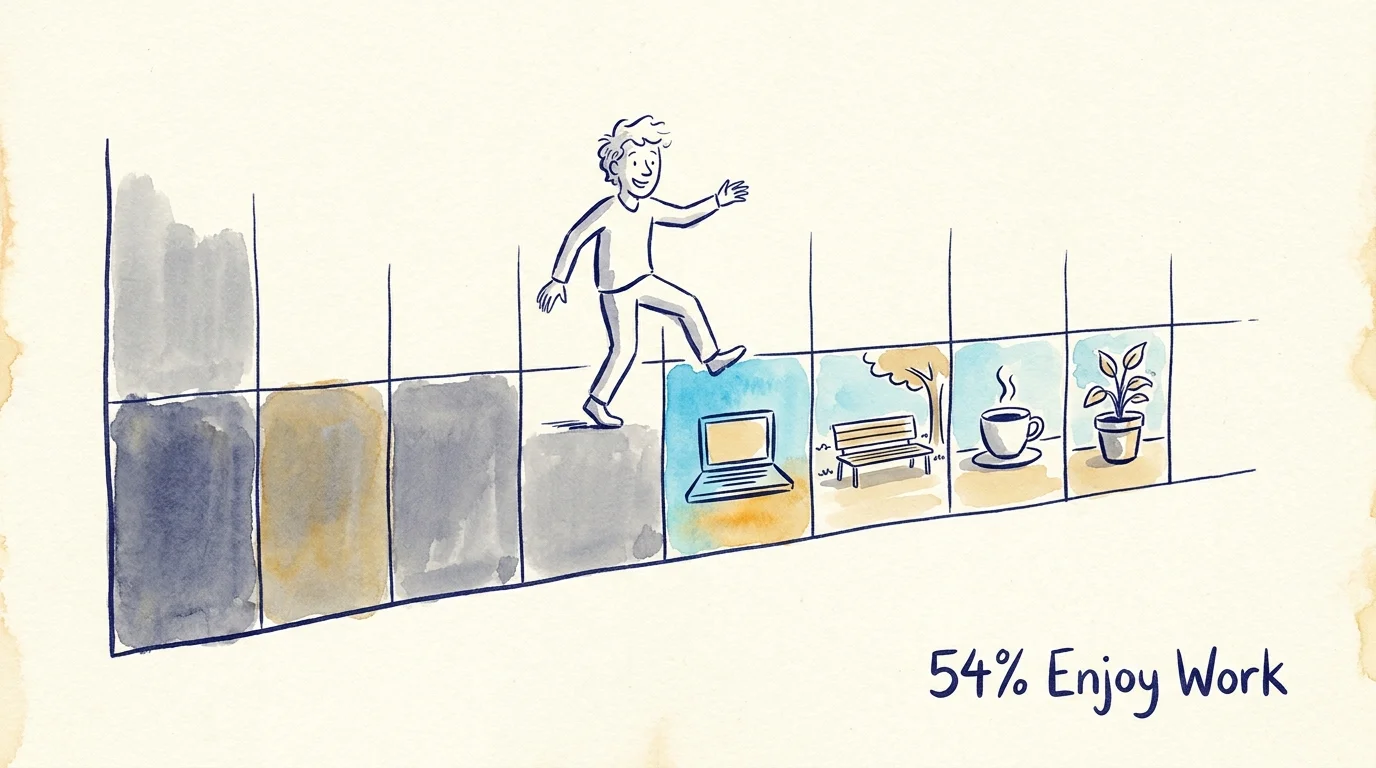
An ink and watercolor drawing showing a person stepping across calendar days that transition from work to leisure activities.
A person walks across a bar graph toward colorful icons representing a fulfilling and active unretirement.

The New Definition of “Unretirement”

The traditional concept of a hard-stop retirement—where you work your final shift at age 65 and never earn another paycheck—is rapidly becoming outdated. Today, many older adults view retirement as a transition phase rather than an abrupt ending. Financial pressures certainly play a role, as elevated living costs drive the need for supplemental income. However, personal fulfillment remains a massive motivator; 54% of seniors who continue working or return to the workforce say they do so simply because they enjoy it.

You no longer have to settle for roles that drain your energy or monopolize your time. The modern gig economy, remote work infrastructure, and a widespread labor shortage in specialized fields have created an environment where older workers can negotiate flexible hours. You hold the power to dictate your schedule, choose your projects, and maintain complete control over your work-life balance.


“The world of retirement, we need a new word. Many, many people are working. Many people are embarking on this idea of a phased retirement. Some people are dipping in and out, taking sabbaticals…” — Jean Chatzky, Financial Editor and Author

An illustration of a human silhouette connected to icons for social, mental, and physical activity, illustrating health benefits.
A glowing silhouette connects social, mental, and physical health icons to highlight the benefits of staying active.

The Hidden Health Benefits of Staying Active

Earning extra cash is great, but the non-financial dividends of part-time work often surprise new retirees. When you leave a full-time career, you also leave behind a built-in social network and a structured daily routine. A part-time job naturally replaces these missing elements.

Working a few days a week forces you to leave the house, interact with different generations, and solve novel problems. This regular social engagement combats the isolation that frequently accompanies early retirement. Furthermore, jobs that require physical movement—like leading walking tours or working outdoors—keep you active without the monotony of a daily gym session. The combination of mental stimulation, social connection, and physical activity helps preserve cognitive function and overall well-being as you age.

A top-down view of a wooden table with objects like a dog leash, binoculars, and a laptop, symbolizing various part-time retirement jobs.
Tutoring papers, binoculars, and a dog leash highlight rewarding part-time career paths for active retirees.

7 Part-Time Jobs Retirees Actually Enjoy Doing

If you are ready to explore the working world on your own terms, here are seven flexible roles that consistently rank high in satisfaction among older adults.

An older man working at a computer in a cozy home office, representing a freelance consultant role.
An experienced professional reviews data on dual monitors while working as a part-time consultant from home.

1. Consultant or Freelance Specialist

Do not let decades of hard-earned industry knowledge go to waste. If you spent your career in marketing, human resources, IT, or management, your expertise is highly valuable to smaller companies that cannot afford full-time executives. Consulting allows you to charge a premium hourly rate while taking on only the projects that interest you.

  • Pros: High earning potential; remote work capability; complete control over your client roster.
  • How to start: Reach out to former colleagues, update your LinkedIn profile to highlight your freelance availability, or join specialized platforms like Upwork and Catalant.
A person in a park ranger hat pointing toward a forest landscape, seen from an over-the-shoulder perspective.
An older park ranger points out a white bird to visitors during a guided nature walk.

2. Park Ranger or Outdoor Attendant

For nature lovers, working at a local, state, or national park feels more like a hobby than a job. Many parks hire seasonal staff to manage visitor centers, lead nature walks, or maintain trails. It is an incredible way to spend your days in beautiful surroundings while sharing your appreciation for the outdoors with visitors.

  • Pros: Excellent physical activity; low stress; visually stunning work environments.
  • How to start: Check state park websites or use resources like CoolWorks, which specializes in connecting seasonal workers with jobs in great places.
A retired woman happily walking two dogs on a sunny neighborhood street.
A smiling retiree enjoys a crisp autumn walk with two happy dogs through a sunlit neighborhood.

3. Pet Sitter or Dog Walker

If you love animals but do not want the full-time financial commitment of owning one, getting paid to spend time with them is the ultimate win-win. Pet sitting and dog walking offer tremendous flexibility. You can choose to walk dogs for an hour every morning or take in pets for weekend boarding while their owners travel.

  • Pros: Guaranteed daily exercise; minimal human interaction if you prefer quiet days; high demand in almost every neighborhood.
  • How to start: Register on app-based platforms like Rover or Wag, or simply print flyers to distribute in your local community.
Close-up of a retiree's hands helping a student with a math problem on a library table.
An experienced retiree helps a student solve complex math equations while enjoying a rewarding part-time tutoring role.

4. Tutor or Adjunct Instructor

Retirees make excellent educators because they possess the patience and real-world perspective that younger teachers sometimes lack. Whether you want to tutor high school students in math, teach English online to international students, or lead a continuing education class at your local community college, sharing your knowledge is profoundly rewarding.

  • Pros: Intellectually stimulating; meaningful impact on others; flexible afternoon or evening hours.
  • How to start: Contact local school districts about substitute teaching, apply at nearby community colleges, or join online tutoring platforms like Wyzant.
A man working behind a store counter, smiling as he helps a customer in a boutique shop environment.
A friendly retiree smiles while handing a customer their purchase in a charming specialty garden shop.

5. Specialty Retail Associate

Working retail can be exhausting if you are doing it at a big-box store just to pay the bills. But working part-time at a shop dedicated to your favorite hobby is entirely different. Golfers often work in pro shops to score free rounds of golf; knitters work at craft stores for the employee discount; wine enthusiasts work in tasting rooms to share their palate with others.

  • Pros: Generous employee discounts; socializing with people who share your passions; relaxed environment.
  • How to start: Visit your favorite local hobby shops, golf courses, or specialty boutiques and ask the manager if they need seasonal or weekend help.
A tour guide gesturing toward a historic building in a sunny city square while leading a group.
An active retiree in a yellow jacket points out historic architecture to a group of tourists.

6. Local Tour Guide

If you live in a city with historical significance, a vibrant food scene, or unique architecture, becoming a tour guide lets you show off your hometown. Extroverted retirees thrive in this role because it involves storytelling, meeting travelers from around the world, and walking several miles a day.

  • Pros: Keeps you physically fit; leverages your local knowledge; offers a fun, theatrical element.
  • How to start: Look for local tourism companies, historical societies, or food-tour operators. Alternatively, you can create your own specialized experiences through platforms like Airbnb Experiences.
A clean desk with a tablet, calculator, and coffee, representing a virtual assistant or bookkeeping job.
An older hand uses a calculator and tablet to manage financial data for a rewarding bookkeeping career.

7. Bookkeeper or Virtual Assistant

Small business owners are notoriously overwhelmed by administrative tasks. If you are highly organized and comfortable with basic software, working as a virtual assistant or part-time bookkeeper offers ultimate at-home flexibility. You can manage schedules, respond to emails, or reconcile accounts from your living room sofa.

  • Pros: Zero commute; low physical strain; easy to scale your hours up or down.
  • How to start: Brush up on modern tools like QuickBooks Online or Google Workspace, and market your services to local small businesses or via virtual assistant agencies.
A clean, professional diagram showing three pitfalls of retirement work: Earnings Limits, Tax Bracket Creep, and Self-Employment Tax.
This financial risks overview highlights potential pitfalls like earnings limits and tax bracket creep for retirees.

Pitfalls to Watch For

While working in retirement offers incredible benefits, earning a paycheck while claiming senior benefits requires careful navigation. A lack of planning can trigger unexpected tax bills or reductions in your government benefits.

A chart showing the $24,480 earnings limit for Social Security, indicating how benefits change based on income.
This chart illustrates how annual earnings over $24,480 can lead to reduced Social Security benefit payments.

The Social Security Earnings Limit

If you claim Social Security before reaching your Full Retirement Age (FRA)—which is 67 for anyone born in 1960 or later—the government limits how much you can earn from working. For 2026, the annual earnings limit is $24,480. If you earn more than that, the Social Security Administration (SSA) will withhold $1 in benefits for every $2 you earn above the threshold.

If you will reach your FRA during 2026, the rules are more lenient. The limit jumps to $65,160 for the months prior to your birth month, and the penalty drops to $1 withheld for every $3 earned. Once you officially hit your Full Retirement Age, the earnings limit disappears entirely, and you can earn millions without facing any benefit deductions.

A diagram showing how different income sources stack up and can potentially push a retiree into a higher tax bracket.
This infographic illustrates how adding a part-time job can push your total retirement income above tax thresholds.

Tax Bracket Creep and Benefit Taxation

Your part-time income might push your total income into a higher tax bracket. More importantly, it can trigger the taxation of your Social Security benefits. If your “combined income” (your Adjusted Gross Income + nontaxable interest + half of your Social Security benefits) exceeds certain thresholds, up to 85% of your Social Security benefits become subject to federal income taxes. You must factor this hidden tax cost into your decision to work.

An infographic showing a 15.3% slice of income being allocated for Self-Employment taxes, split into Social Security and Medicare.
A donut chart illustrates how self-employment taxes take a 15.3% slice from your total earnings.

Self-Employment Taxes

If you take a job as an employee (receiving a W-2), your employer splits payroll taxes with you. However, if you work as a freelancer, consultant, or gig worker (receiving a 1099), the Internal Revenue Service (IRS) considers you self-employed. You will be responsible for the full 15.3% self-employment tax, which covers both the employer and employee portions of Social Security and Medicare taxes. You must also remember to make quarterly estimated tax payments to avoid underpayment penalties.

A retiree and an advisor sitting at a kitchen table, looking over paperwork together in a relaxed setting.
A young professional helps a senior man review documents and a tablet to find rewarding part-time work.

Getting Expert Help

Navigating the intersection of work, taxes, and retirement benefits can get complicated. Consider reaching out for professional guidance in these specific scenarios:

  • Consult a Certified Financial Planner (CFP): If you are trying to decide whether to delay claiming Social Security because your part-time income covers your living expenses. A CFP can run detailed software projections to show you the long-term impact on your portfolio. Find vetted professionals through the CFP Board.
  • Hire a Certified Public Accountant (CPA): If you are starting a freelance or consulting business. A CPA will help you identify legitimate business deductions (like home office expenses and mileage) and set up a system for your quarterly estimated taxes.
  • Contact a State Health Insurance Assistance Program (SHIP): If your part-time job offers health benefits and you need help deciding whether to delay enrolling in Medicare Part B.

Frequently Asked Questions

Will working part-time permanently reduce my Social Security benefits?

No. If the SSA withholds some of your benefits because you exceeded the 2026 earnings limit of $24,480 (prior to your Full Retirement Age), that money is not gone forever. Once you reach Full Retirement Age, the SSA will recalculate your monthly benefit upward to account for the months they withheld payments. However, most retirees prefer not to experience the immediate cash-flow squeeze of withheld checks.

Do I still have to pay Medicare taxes if I work after age 65?

Yes. There is no maximum age or earnings cap for Medicare taxes. You must pay the 1.45% Medicare tax on all your earned income, regardless of how old you are or whether you are already actively enrolled in and receiving Medicare benefits.

How does part-time income affect my standard deduction?

While earning more money increases your taxable income, seniors do receive a break at tax time. For the 2026 tax year, the base standard deduction is $16,100 for single filers and $32,200 for married couples filing jointly. Additionally, taxpayers who are 65 or older receive an extra standard deduction. In 2026, this additional amount is $2,050 for single seniors and $1,650 per qualifying senior for married taxpayers.

Does part-time work impact my Medicare premiums?

It can, though usually only for high earners. Medicare Part B and Part D premiums are tied to your income from two years prior through a surcharge called IRMAA (Income-Related Monthly Adjustment Amount). If a lucrative part-time consulting gig significantly spikes your Adjusted Gross Income, you could face higher Medicare premiums down the road. For the vast majority of part-time jobs, however, the extra income will not cross the high-income IRMAA thresholds.

Closing Thoughts

Returning to work on a part-time basis can dramatically improve the quality of your retirement. It provides the financial margin to say “yes” to travel and family experiences, while offering a structured way to stay connected to your community. By choosing a role that aligns with your passions and keeping a watchful eye on earnings limits and tax implications, you can enjoy the very best parts of working without the stress of a lifelong career.

The information in this guide is meant for educational purposes. Your specific circumstances—including income, savings, health coverage, and goals—may require different approaches. When in doubt, consult a licensed professional.


Last updated: May 2026. Retirement benefits, tax laws, and healthcare costs change frequently—verify current details with official sources.

Share this article

Facebook Twitter Pinterest LinkedIn Email

Leave a Reply Cancel reply

Your email address will not be published. Required fields are marked *

Search

Latest Posts

  • 8 Things Retirees Are Selling Before Moving Into Smaller Homes
  • 7 Retirement Jobs That Let You Travel For Free
  • 7 Retirement Places Where Grandkids Actually Love Visiting
  • 7 Awkward Conversations Retirees Keep Avoiding With Their Adult Children
  • 7 Retirement Towns Near National Parks People Love
  • 7 Retirement Destinations With Surprisingly Cool Summers
  • 7 Unexpected Places Retirees Are Moving For Better Weather
  • A senior woman with silver hair working on a pottery wheel in a sunlit studio, representing an active and creative retirement job. 7 Part-Time Jobs Retirees Actually Enjoy Doing
  • 7 Small Cities Retirees Are Choosing Over Expensive Suburbs
  • 7 States Where Retirees Keep More Of Their Pension Income

Newsletter

Get retirement tips and senior living advice delivered to your inbox.

Related Articles

worst cities

Top 8 Worst Cities For Retirement

What Are The Worst Cities To Live Out Your Retirement? For most of us, the…

Read More →
A retired couple enjoying a sunset view from a balcony, symbolizing financial freedom and a new chapter.

Best States With No State Income Tax for Retirees in 2027

Discover the best states with no state income tax for retirees in 2027, and learn…

Read More →
retirement income

This Is How All 50 States Tax Your Retirement Income

Unless you’re extremely fortunate and you’ll never have to worry about taxes, in which case…

Read More →
Major Purchases On Your Phone

5 Worrying Reasons to NEVER Make Major Purchases on Your Phone

A mature man opts for his laptop over his smartphone to ensure accuracy and security…

Read More →
A senior citizen smiling while working in a community garden alongside other volunteers.

Finding Your Second Act: How to Discover a New Purpose in Retirement

For decades, your life had a rhythm. The alarm clock, the commute, the meetings, the…

Read More →
best New York restaurants for seniors

These Are the 10 Best New York Restaurants for Seniors

You’ll be happy to know that these are the best New York restaurants for seniors!…

Read More →
retirement visa

Which Countries Offer the Best Retirement Visa Options? (These 6 Ones)

A happy senior couple plans their international retirement adventure over coffee and pastries in a…

Read More →

Is the Nipah Virus Coming to the USA? Here’s What Officials Say

The Doomsday Clock has moved closer to midnight than ever before in 2026. The symbolic…

Read More →
affordable check

8 Unique and Affordable Places to Retire

Are you looking for an affordable place to retire?  Retirement is finally here! You don’t…

Read More →
Retired in USA

Your golden years are your best years! Make them shine!

Inedit Agency S.R.L.
Bucharest, Romania

contact@ineditagency.com

Trust & Legal

  • Terms and Conditions
  • Privacy Policy
  • Do not sell my personal information
  • Subscribe
  • Unsubscribe
  • Contact
  • CA Privacy Policy
  • Request to Know
  • Request to Delete

Categories

  • Enjoying Retirement
  • Personal Finance
  • Saving & Spending

© 2026 Retired in USA. All rights reserved.