

Are you giddy about Trump’s tariffs? Well…don’t be.
Whether you’ve heard about it or not, incoming President Donald Trump made his feelings quite clear regarding the upcoming tariffs he plans to impose. As he explained himself, “the word ‘tariff’ is the most beautiful word in the dictionary.
It’s more beautiful than ‘love.’ I love tariffs!… Music to my ears!” Well, what exactly is a tariff? It’s basically a tax. According to Dartmouth economics professor Doug Irwin, “In the entire U.S. history, we are basically talking about import tariffs, taxes on imported goods coming into the United States.”
Well, Irwin also said that governments have all sorts of reasons for introducing tariffs. At times, the purpose is to reduce the trade deficit. Sometimes it’s efficient because it brings back jobs. There are also situations in which tariffs are imposed as a way to punish other countries for their unfair trade practices. In other cases, it is to raise revenue so we can cut income taxes.”
But at its core, a tariff works like this: Let’s say we import something from China. That product costs $50. Before you can buy it, our government adds another $25 to the price. That’s the tariff. The final price of the product will be $75, out of which China gets $50, and the extra $25 winds up to the United States Treasury.
Sounds nice, right? Sure. But here’s the thing…the next question is: who pays these tariffs?
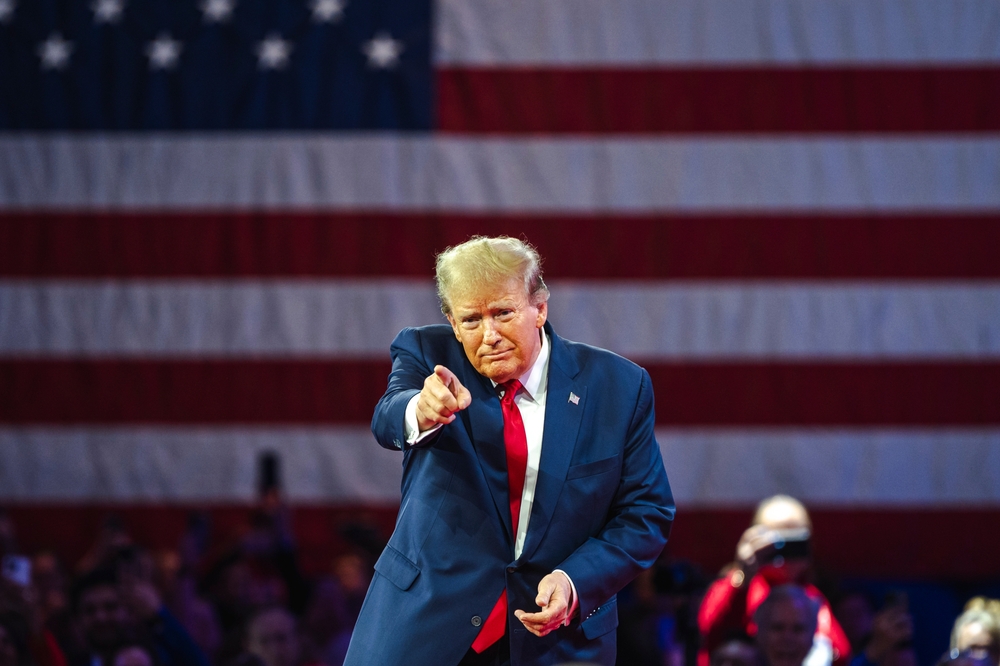
According to the president-elect of the United States, Donald Trump, the other countries will. “Trillions and trillions of dollars pouring into the United States Treasury” is how he described America’s future. “China paid hundreds of billions of dollars while I was president.”
However, that’s not how tariffs work. Economists would argue that’s quite misleading to say that that’s what will happen. Naturally, it is the U.S. consumers that are paying for everything, not China itself. China is not the one to write checks to the U.S. government. In fact, it is more of a transfer of cash from consumers to the federal government, like a tax.
Tariffs have been a very important aspect of international trade since the country was founded. In fact, the first one was imposed by the one and only George Washington. What have we learned from history? Well, these tariffs often have unintended consequences.
We have a tariff on sugar that has almost doubled the price of the product. Yes, it helped out our sugar cane farmers in Louisiana and Florida. At the same time, it has also driven 34% of American chocolate and candy manufacturing jobs out of the country.
Then, there’s another thing: Trump’s 25% tariff on imported steel back in 2018. Do you remember it? Our steelmakers thrived, but companies that make stuff out of steel (such as Ford, GM, and Caterpillar) suffered a great deal.
I mean, you can look at Ford’s then-CEO Jim Hackett, who back in 2018 told Bloomberg: “The metals tariffs took about a billion dollars of profit from us. If it goes longer than that, there will be additional damage.”
Tariffs against one country can always backfire in ways that are hard to imagine. In fact, with these China tariffs coming, we will import more from Vietnam, and way more from Malaysia. If the whole purpose of such tariffs is to bring jobs back home, what will happen is that we will be shifting them from China to Vietnam, in one way or another.
P.S.: It’s also worth mentioning that tariffs don’t just raise prices on imported stuff; they can easily affect the price of domestic substitutes as well. If there’s any tariff on imported steel, and supposedly I am an American steelmaker, I can easily say, “Well, now I can raise my prices too, right?” Well, yes.
Come to think about it, consumers won’t have any choice. They can either buy the really high-priced steel, or they can buy the stuff you sell. Ultimately, there’s also the retaliation problem. Because as soon as we impose the steel tariffs, the European Union and China get very upset with us.
What did they do? Well, they raised tariffs on American farm goods, and all of a sudden, American farmers, who had absolutely nothing to do with steel per se, deal with limited sales overseas.
You would be surprised, but even Ronald Reagan might have told you that. And as a matter of fact, he did. In 1987, he said that “high tariffs might inevitably lead to retaliation by foreign countries and the triggering of fierce trade wars. The result is, well, increasingly more tariffs, higher trade barriers, and less competition overall.”
Well, what kind of tariffs did Trump propose? Throughout his campaign, he promised as president he would dive into a system of universal baseline tariffs. Technically, he also outlined tariffs across the board, every product, in every category, from every country in the world. “We will charge them 10 to 20 percent,” said a very enthusiastic Trump a while ago.
These days, every recent president has favored some kind of tariffs. The Biden administration, for instance, kept some of the tariffs from Trump’s first term and also imposed its own 100% tariff on Chinese electric cars. However, all these tariffs have always, somehow, targeted very particular categories of products.
Let’s take an across-the-board tariff, for instance. That’s not exactly targeting a special commodity or product, and that’s not targeting a special country either. It is more along the lines of “all imports, all sources get hit with this tax,” which is a very different type of tariff.
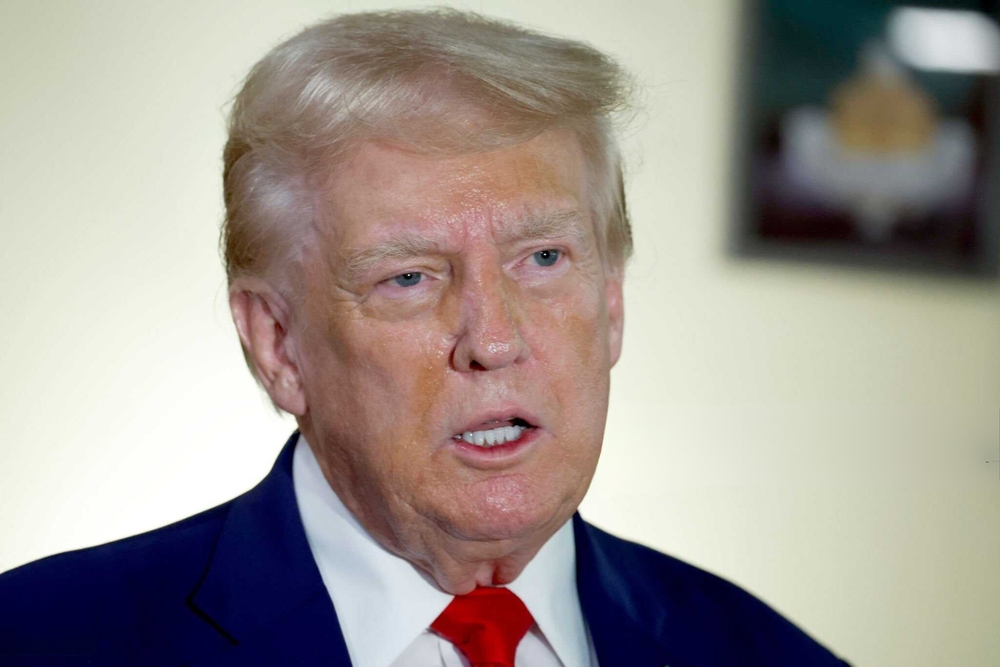
Well, wouldn’t we notice then a series of prices going up on absolutely everything? It would definitely be a difference. Only recently, Trump also came up with the idea of double-digit tariffs on everything imported from Mexico, Canada, and China. They would also raise the price we now pay for things such as fruit, lumber, electronics, oil, medicine, metal, as well as beef.
Studies might have shown that those tariffs could cost 1% of all American jobs (according to the Peterson Institute for International Economics), raising the average car prices by $3,000 (according to Wolfe Research), as well as impacting every American household with minimum $1,000 a year (according to Yale Budget Lab).
However, Trump’s transition leader Howard Lutnick also predicted that his own boss won’t tax all the imported goods for which there aren’t any American-made alternatives. Back in September, Lutnick declared at CNBC that “tariffs are a wonderful tool the president can use. They are a wonderful tool. But he understands, don’t tariff stuff we don’t make. If we don’t make it, and you want to get it, I don’t want to put the price up.”
From a political perspective, here’s the thing: tariffs can be used as a threat as well as a bargaining chip. Sometimes, if you are quite credible, just making the threat of a tariff is more than enough to bring another country to change its policy in a way that you want, without actually imposing the tariff in the end. Isn’t that mischievous? Well, politics!
In the end, when a government wants to pursue a certain goal, whether it’s an economic or geopolitical one, they have the option to use all sorts of tools, from subsidies, tax breaks, penalties, trade agreements, regulations, certifications, and diversification.
Naturally, we have a book recommendation that might interest you on this topic: “Trump Unyielding: The Quest for America’s 47th Presidency” by Mr Newton Isaac.
If you found this article useful, we also recommend checking 5 Worrying Reasons to NEVER Make Major Purchases on Your Phone







Okay, you seem to be missing the point, with all due respect. Tariffs, in and of themselves, are not a “good idea” or “bad idea,” but rather an available form of leverage. They help us level the playing field. Trump supports the idea of applying tariffs when a foreign company/country, let’s say China, follows practices that weaken or even eliminate our domestic production by undercutting our pricing in the domestic market. China only needs to undercut the prices until domestic manufacturing fails/goes bankrupt, after which they can boost prices again to improve their own profitability. If we sell no domestically produced televisions (which we don’t), there is no market to protect, so no good reason to impose tariffs on TVs. Thus the threat of tariffs ultimately becomes simply a bargaining chip.
Tariff’s were imposed to level the playing field, example; US made product cost 100
same product made elsewhere and imported 50
tariff would be 50, making the product cost the same to the consumer thus giving you a choice. also means you will buy the better product, and that will most likely be the US made product ultimately meaning it would not be cost effective to move your factory to these countries that utilize slave labor and have very minimal pollution laws