
Relocating in retirement to cut your state tax bill can save you thousands of dollars each year. However, simple oversights often turn an intended tax shelter into an expensive financial trap.
Many retirees look only at state income tax rates while ignoring costly property taxes, legal residency traps, and local estate levies. You can avoid these expensive pitfalls with the right planning.
Before you pack your bags, examine the total tax picture to ensure your retirement move actually protects your hard-earned wealth.
Mistake 1: Fixating Exclusively on Personal Income Tax Rates
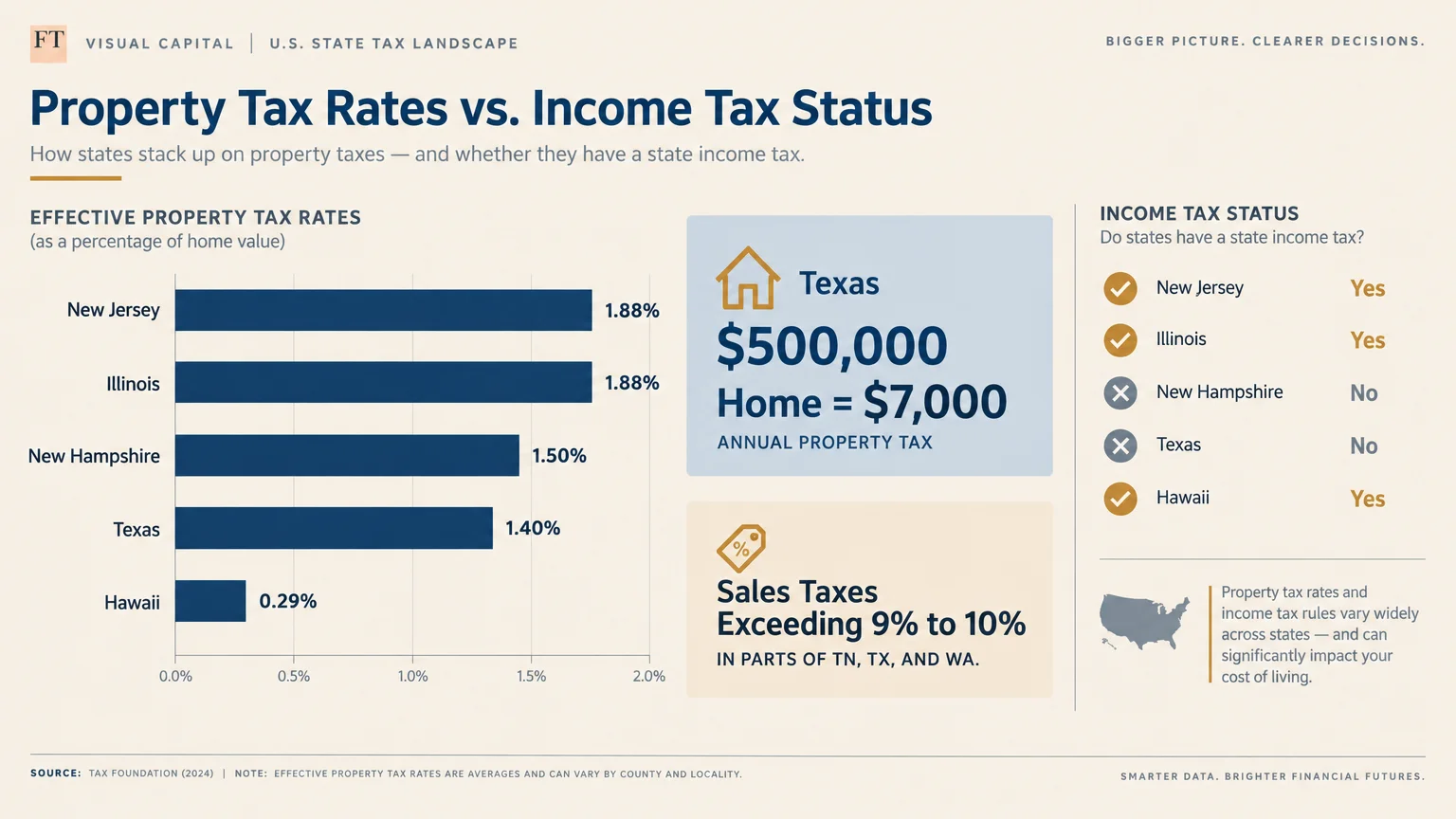
Zero percent state income tax sounds like an unbeatable deal for anyone living on a fixed income. Nine states levy no broad personal income tax: Alaska, Florida, Nevada, New Hampshire, South Dakota, Tennessee, Texas, Washington, and Wyoming.
State governments must fund roads, emergency services, and infrastructure regardless of their tax structure. When a state chooses not to tax personal earnings, it must raise revenue elsewhere.
States without income taxes often rely heavily on high property and sales taxes. If you own an expensive home or spend heavily on goods, you might pay more in total taxes than you did before moving.
According to the Tax Foundation, two states with no income tax have some of the highest effective property tax rates in the nation. New Hampshire ranks fifth highest with a 1.50% effective rate, while Texas ranks seventh highest at 1.40%.
For comparison, New Jersey and Illinois tie for the highest effective property tax rate in the country at 1.88%. Conversely, Hawaii boasts the lowest effective property tax rate at just 0.29%.
Imagine purchasing a $500,000 retirement home in suburban Texas. At a 1.40% effective property tax rate, you will pay roughly $7,000 annually in real estate taxes alone.
Sales taxes also chip away at your disposable retirement income. Combined state and local sales taxes in parts of Tennessee, Texas, and Washington frequently exceed 9% or even 10% on everyday purchases.
Groceries, vehicle registrations, utility taxes, and fuel levies can quickly erode any income tax savings you gained by relocating. You must analyze the total tax burden rather than a single tax line.
“Moving to save on taxes only works if you understand every tax the new state collects.” — Ed Slott, CPA and Retirement Specialist
Before buying real estate in an income-tax-free state, review past property tax assessments for your prospective neighborhood. Contact local county tax assessors to see how often homes undergo reassessment upon purchase.
Mistake 2: Overlooking States That Already Exempt Retirement Income
Many retirees assume they must move to an income-tax-free state to protect their nest egg distributions. This widespread misconception causes retirees to leave familiar communities unnecessarily.
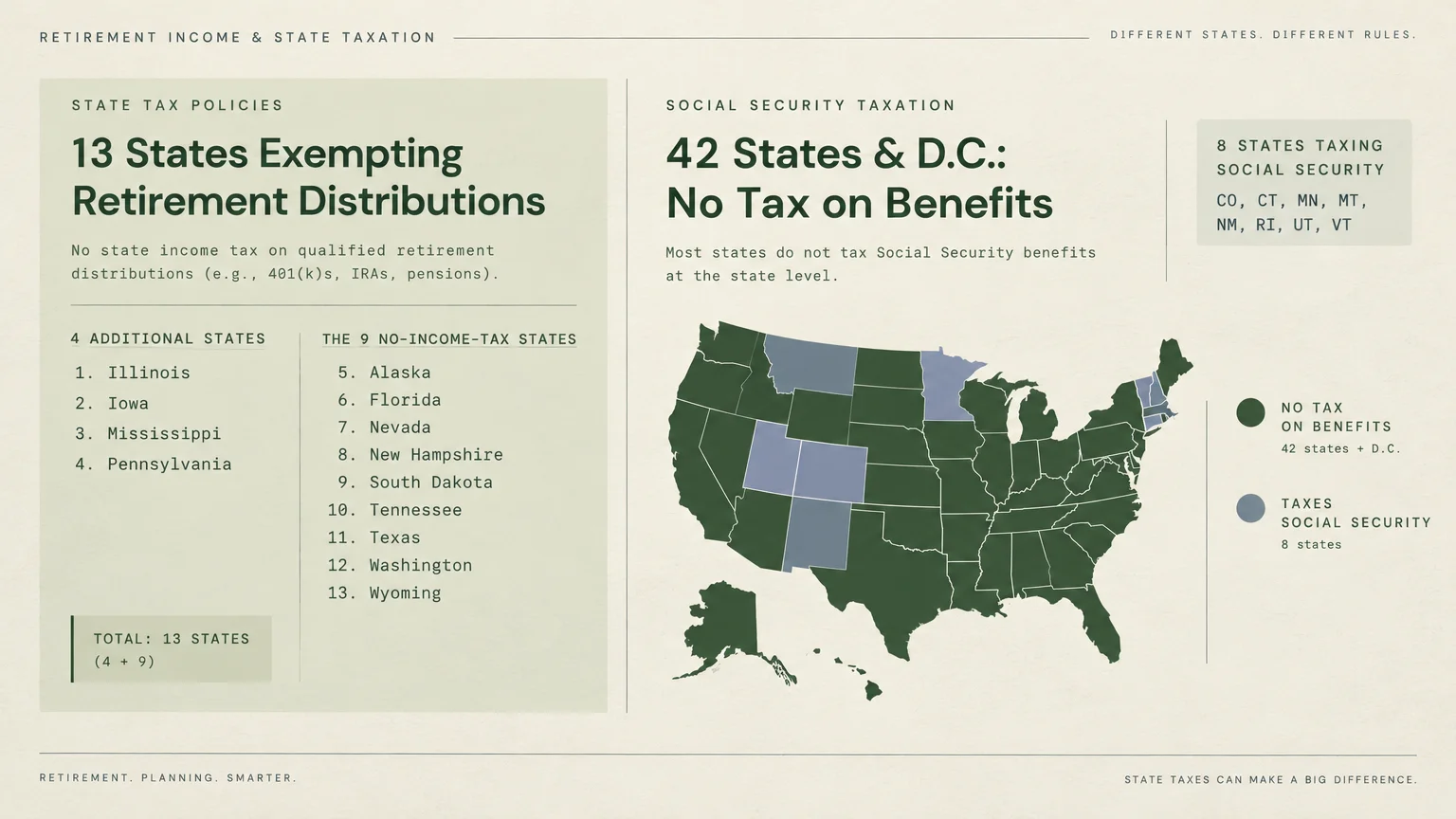
Thirteen states do not tax distributions from 401(k) plans, traditional IRAs, or defined-benefit pensions. This list includes the nine states without an income tax, alongside four states that maintain an income tax but specifically exempt qualified retirement distributions.
Illinois, Iowa, Mississippi, and Pennsylvania do not tax qualified retirement account withdrawals. If your income consists primarily of IRA withdrawals and pension checks, these states function like no-tax states for your day-to-day income.
Social Security benefits enjoy substantial protection across the United States. Forty-two states and Washington, D.C. do not tax Social Security benefits at all.
Only eight states still tax Social Security benefits to any degree: Colorado, Connecticut, Minnesota, Montana, New Mexico, Rhode Island, Utah, and Vermont. West Virginia recently finished phasing out its Social Security tax completely, following earlier phaseouts in Kansas, Missouri, and Nebraska.
If you live in Pennsylvania, you pay zero state tax on your pension, 401(k), IRA distributions, and Social Security benefits. Moving from Pennsylvania to Florida solely to escape income tax produces zero income tax benefit.
You can verify how distributions get treated by reviewing resources from the Internal Revenue Service (IRS) and your state department of revenue. Never base an interstate move on incomplete tax assumptions.
Evaluate your actual sources of retirement cash flow before choosing a new state. Distinguish between ordinary retirement plan distributions, capital gains, corporate dividends, and active business earnings.
A state that taxes wage earnings might treat your specific retirement portfolio with total leniency. Match your unique income profile against state-specific exemption rules to find the real financial impact.
Mistake 3: Botching Legal Domicile and the 183-Day Rule
High-tax states aggressively audit departing residents who relocate to low-tax jurisdictions. States like New York, California, New Jersey, and Connecticut closely monitor taxpayers who claim to have moved away.
Auditors distinguish between your physical residence and your legal domicile. You can maintain multiple residences, but the law dictates that you can only have one legal domicile at any given time.
Your domicile represents your permanent legal home—the place you return to after travel and where your personal life centers. Changing your domicile requires clear, documented intent backed by physical proof.
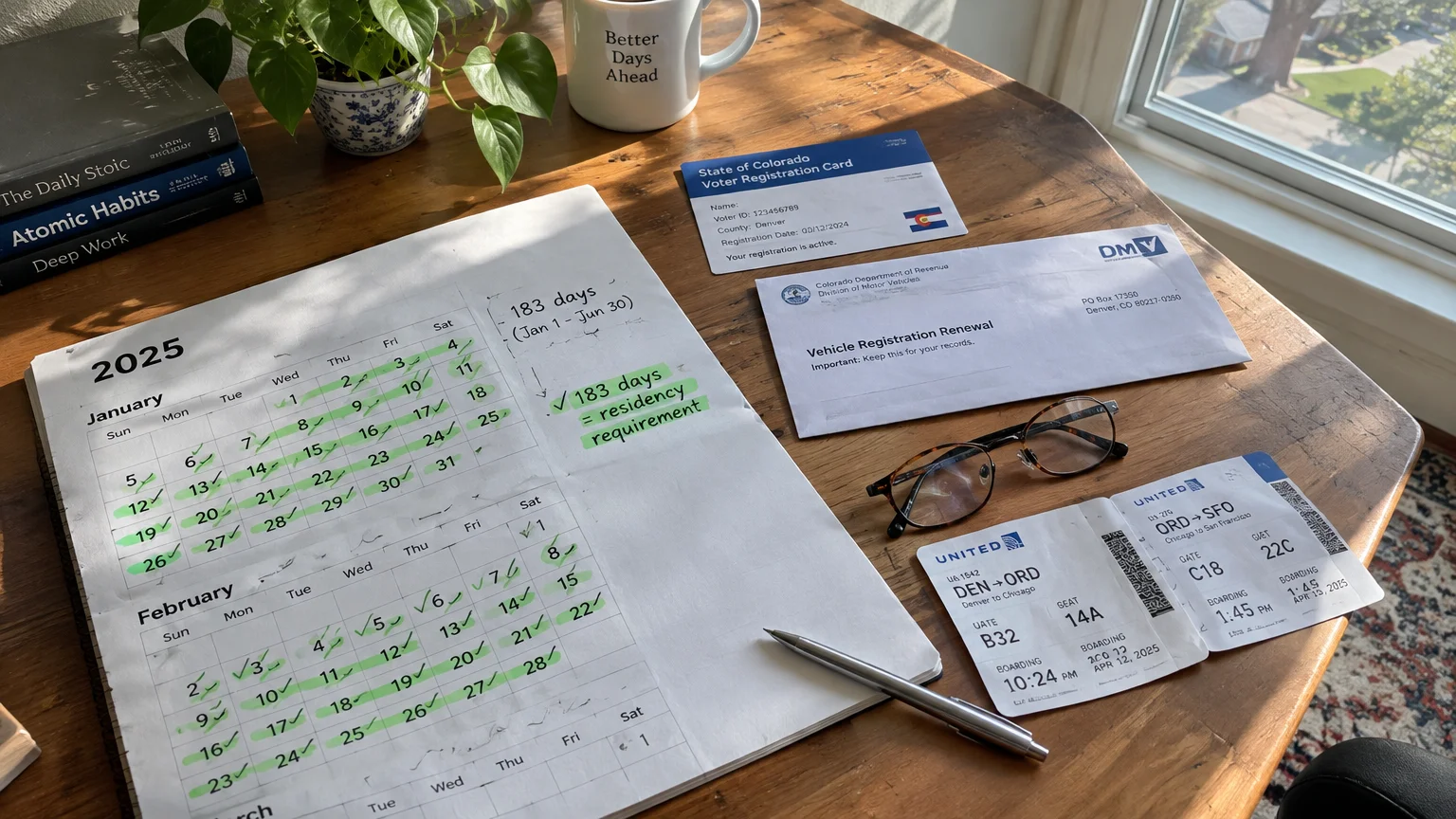
Many retirees fall victim to the statutory residency test, commonly known as the 183-day rule. If you maintain a permanent place of abode in your former state and spend more than 183 days there, you remain a statutory resident.
In most jurisdictions, any fraction of a day spent in the old state counts as a full day. Stopping in your former state for lunch or a quick doctor visit counts toward your 183-day total.
If your former state determines you failed to establish a new domicile, it will tax your worldwide income. You could end up paying back taxes, steep interest penalties, and legal defense fees.
State tax auditors examine detailed evidence to challenge fraudulent or incomplete relocations. They routinely inspect cell phone location records, toll pass statements, credit card receipts, and utility bills.
Auditors also look closely at where you keep your family heirlooms, artwork, and pets. They call these personal possessions the “teddy bear test” because items of deep personal sentiment indicate where your true home lies.
- Register to vote in your new state and cancel your voter registration in the old state immediately.
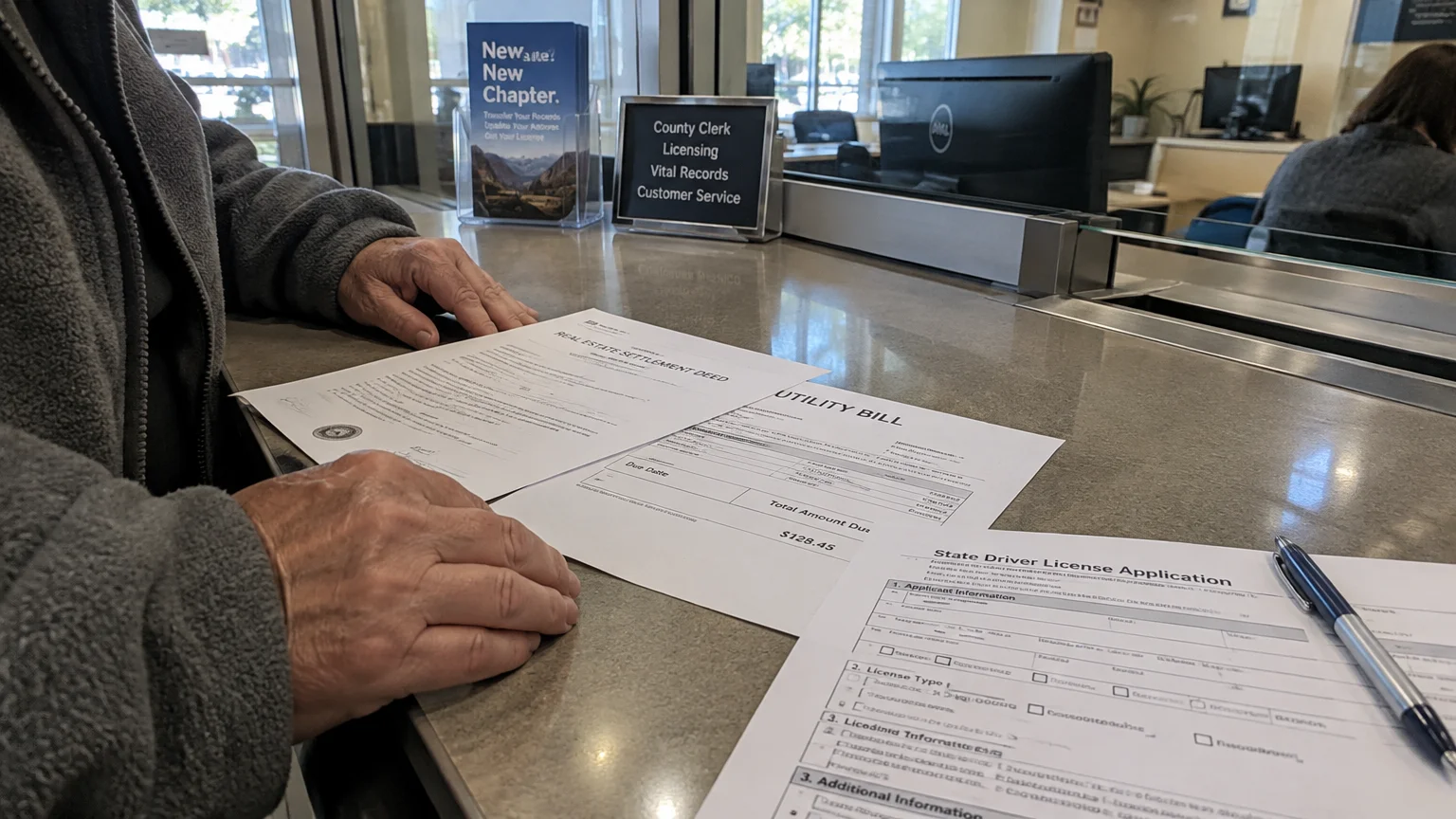
- Obtain a driver’s license and register all personal motor vehicles in your new jurisdiction within 30 days.
- Transfer primary medical, dental, and financial advisory relationships to qualified local professionals.
- Update your legal documents, including wills, advance healthcare directives, and trusts, to reflect your new state.
- File a formal Declaration of Domicile with the local county clerk if your new state provides that option.
Keep a meticulous daily log of your travel locations throughout the first few years after moving. If an auditor challenges your residency, contemporaneous calendar records and travel receipts provide your best legal defense.

Mistake 4: Walking Blindly into State Estate and Inheritance Taxes
Minimizing income taxes during your life means little if a surprise death tax depletes your family legacy. Many retirees forget that states collect substantial revenue from estate and inheritance transfers.
Federal estate tax rules shelter significant wealth. Following recent updates, the federal estate tax exemption threshold stands at $15 million per individual, carrying a top marginal tax rate of 40%.
State-level estate and inheritance taxes kick in at vastly lower wealth thresholds. Seventeen states plus Washington, D.C. impose either an estate tax, an inheritance tax, or both.
Twelve states and Washington, D.C. impose an independent state-level estate tax. Washington state levies no personal income tax, yet it enforces an estate tax with rates up to 20% on estates exceeding $3 million.
Five states levy an inheritance tax: Kentucky, Maryland, Nebraska, New Jersey, and Pennsylvania. An inheritance tax bills the beneficiary who inherits the money rather than the deceased person’s estate.
Maryland holds the unique distinction of levying both a state estate tax and a separate inheritance tax. Retirees settling in Maryland must prepare for dual tax exposure upon death.
Pennsylvania exempts retirement account withdrawals from income tax, making it attractive for retirees during their active years. However, Pennsylvania collects an inheritance tax from lineal descendants, including children and grandchildren.
“You can’t make a major life decision based on taxes alone without considering how you actually live day to day.” — Jean Chatzky, Financial Educator
If you have significant non-retirement assets, real estate holdings, or taxable brokerage portfolios, review state death taxes carefully. Saving 5% on annual income tax yields little if your estate forfeits 15% to state death taxes.
Consult an experienced estate planning attorney in your destination state before finalizing your purchase. Trust structures, lifetime gifting programs, and entity restructuring can help protect your family from local death duties.

Mistake 5: Ignoring Hidden Relocation, Insurance, and Healthcare Costs
Taxes represent only one component of your overall retirement budget. Moving across state lines triggers hidden lifestyle, insurance, and medical expenses that can erase your projected tax savings.
Property insurance costs have skyrocketed in several popular low-tax retirement destinations. Florida, Texas, and coastal areas face steep premiums driven by hurricanes, flooding, and severe weather risks.
According to financial comparisons on Investopedia, annual homeowners insurance in storm-prone regions can easily run four to five times higher than national averages. A $4,000 jump in property insurance quickly wipes out modest income tax savings.
Physical relocation carries immediate transaction friction. Real estate commissions, closing costs, moving vans, and utility setup fees often consume tens of thousands of upfront dollars.
Healthcare access presents another costly hurdle during interstate retirement moves. Medicare rules require careful navigation when you change your primary legal residence.
If you use a Medicare Advantage plan, moving out of your plan service area requires selecting new coverage. Your established doctors and specialists may not participate in network plans in your new location.
Visit Medicare.gov to check local physician networks and available prescription drug formularies in your target zip code. Uncovered out-of-network medical treatments can destabilize your retirement savings overnight.
Loneliness and social isolation create painful emotional and financial consequences for retirees who move solely for money. Leaving behind lifelong friends, children, and grandchildren often leads to remorse.
Many retirees end up returning to their original home states within three to five years. Moving twice within a single decade generates substantial transaction losses that no tax loophole can recover.

Comparing State Tax Realities for Retirees
To see how varied state tax structures can be, review the following comparison table. It highlights how income taxes, retirement exemptions, property tax burdens, and estate taxes intersect across popular retirement destinations.
| State | State Income Tax | Retirement Account Exemption | Effective Property Tax Rate | State Estate / Inheritance Tax |
|---|---|---|---|---|
| Florida | None (0%) | Full Exemption | 0.91% | None |
| Texas | None (0%) | Full Exemption | 1.40% (7th Highest) | None |
| New Hampshire | None (0%) | Full Exemption | 1.50% (5th Highest) | None |
| Washington | None (0%)* | Full Exemption | 0.87% | Estate Tax (Up to 20%) |
| Pennsylvania | 3.07% Flat | Full Exemption | 1.49% | Inheritance Tax |
| Illinois | 4.95% Flat | Full Exemption | 1.88% (Tied 1st) | Estate Tax |
| New Jersey | Graduated (Up to 10.75%) | Partial Exemption | 1.88% (Tied 1st) | Inheritance Tax |
| Hawaii | Graduated (Up to 11.0%) | Pension Only | 0.29% (Lowest) | Estate Tax |
*Note: Washington does not levy a personal income tax, but it does impose a excise tax on certain high-value capital gains.
As the table demonstrates, no state provides a completely tax-free environment. States without income taxes inevitably rely on elevated property taxes or alternative levies to fund public budgets.
Avoiding Common Errors When Changing Residency
Successfully executing a tax-advantaged relocation demands discipline and thorough documentation. Rushing the process leaves you exposed to aggressive residency challenges from your former home state.
Begin by cutting physical ties with your old primary home. Selling your original property outright creates the cleanest separation and provides undeniable proof of intent to move.
If you retain your former residence as a vacation retreat or rental property, establish strict limits on your presence. Spending more than 183 days inside that residence can trigger automatic statutory residency under state tax codes.
Update your address across all official channels immediately after securing your new home. Inform the Social Security Administration (SSA), the IRS, and your financial custodians right away.
Move your domestic routines to your new community. Join local clubs, volunteer with neighborhood charities, open accounts at local banks, and establish care with local healthcare providers.
Avoid returning to your former state for regular dental cleanings, annual physicals, or haircut appointments. Tax auditors routinely cite visits to long-standing personal service providers as evidence that you never truly departed.
Do not maintain safe deposit boxes containing your most valued family belongings in your old home state. Transport your jewelry, family albums, and vital records to a secure local facility near your new residence.
When DIY Isn’t Enough
Relocating across state lines involves intricate legal, financial, and tax considerations. While independent research provides a solid starting point, self-directed planning carries hidden risks for retirees with multifaceted wealth portfolios.
Certain situations demand specialized counsel from credentialed legal and financial professionals. You should seek guidance from a qualified CPA or a professional certified by the Certified Financial Planner Board under the following scenarios:
- Dual-State Home Ownership: You plan to keep your existing home in a high-tax state while establishing a primary residence in a tax-free jurisdiction.
- Substantial Deferred Compensation: You receive ongoing payouts, nonqualified stock options, or partnership distributions earned while working in a high-tax jurisdiction.
- High-Net-Worth Estates: Your combined household estate approaches or exceeds state-level estate tax exemptions in either your current or prospective home state.
- Complex Business Interests: You own pass-through entities, S-corporations, or LLCs operating across multiple state borders.
A professional advisor can model your comprehensive tax liability across multiple jurisdictions. Their analysis ensures your proposed move actually improves your long-term balance sheet after accounting for all variables.
Frequently Asked Questions
Do I have to sell my original house to prove I moved to another state?
No, you do not have to sell your original home, but keeping it makes audits far more challenging. If you retain the property, you must stringently track your physical days to satisfy the 183-day statutory residency test.
Which states do not tax retirement income?
Thirteen states do not tax 401(k), IRA, or pension withdrawals. These include the nine states without an income tax, alongside Illinois, Iowa, Mississippi, and Pennsylvania, which specifically exempt qualified retirement income.
Does Social Security get taxed if I move to a state with income tax?
In most cases, no. Forty-two states and Washington, D.C. do not tax Social Security benefits. Only eight states continue to tax benefits: Colorado, Connecticut, Minnesota, Montana, New Mexico, Rhode Island, Utah, and Vermont.
What is the difference between domicile and residence?
A residence is simply a physical place where you live, and you can maintain several. Domicile refers to your single, permanent legal home where you intend to remain indefinitely and return after traveling.
Can my old state tax me if I move before collecting my pension?
Federal law protects you here. Under the federal Source Tax Act, states cannot tax retirement distributions or pension payouts received by former residents who have established legal domicile elsewhere.
Next Steps for Your Retirement Move
Before packing your moving boxes, draft a comprehensive multi-tax comparison between your current community and your prospective destination. Calculate your combined annual outlay for state income taxes, local property taxes, sales taxes, and homeowners insurance.
Spend extended time renting in your target destination during different seasons before buying real estate. This trial run lets you experience the local climate, healthcare system, and overall culture without making an irreversible financial commitment.
This article provides general retirement education and information only. Everyone’s financial situation is unique—what works for others may not work for you. For personalized advice, consider consulting a qualified financial professional such as a CFP or CPA.
Last updated: October 2026. Retirement benefits, tax laws, and healthcare costs change frequently—verify current details with official sources.