
Moving abroad for retirement offers an exciting lifestyle, lower living costs, and new cultural experiences, but you must know how relocating impacts your monthly benefit checks before packing your bags. The good news is that the United States government allows most citizens to receive social security benefits abroad without interruption. However, foreign tax treaties, country-specific banking restrictions, and mandatory reporting rules can easily catch unprepared expats off guard. Understanding how the Social Security Administration handles social security while living overseas ensures your financial stability stays intact. By taking a few proactive planning steps today, you can confidently collect social security overseas no matter where your global retirement journey takes you.
Can You Really Collect Social Security Benefits Overseas?
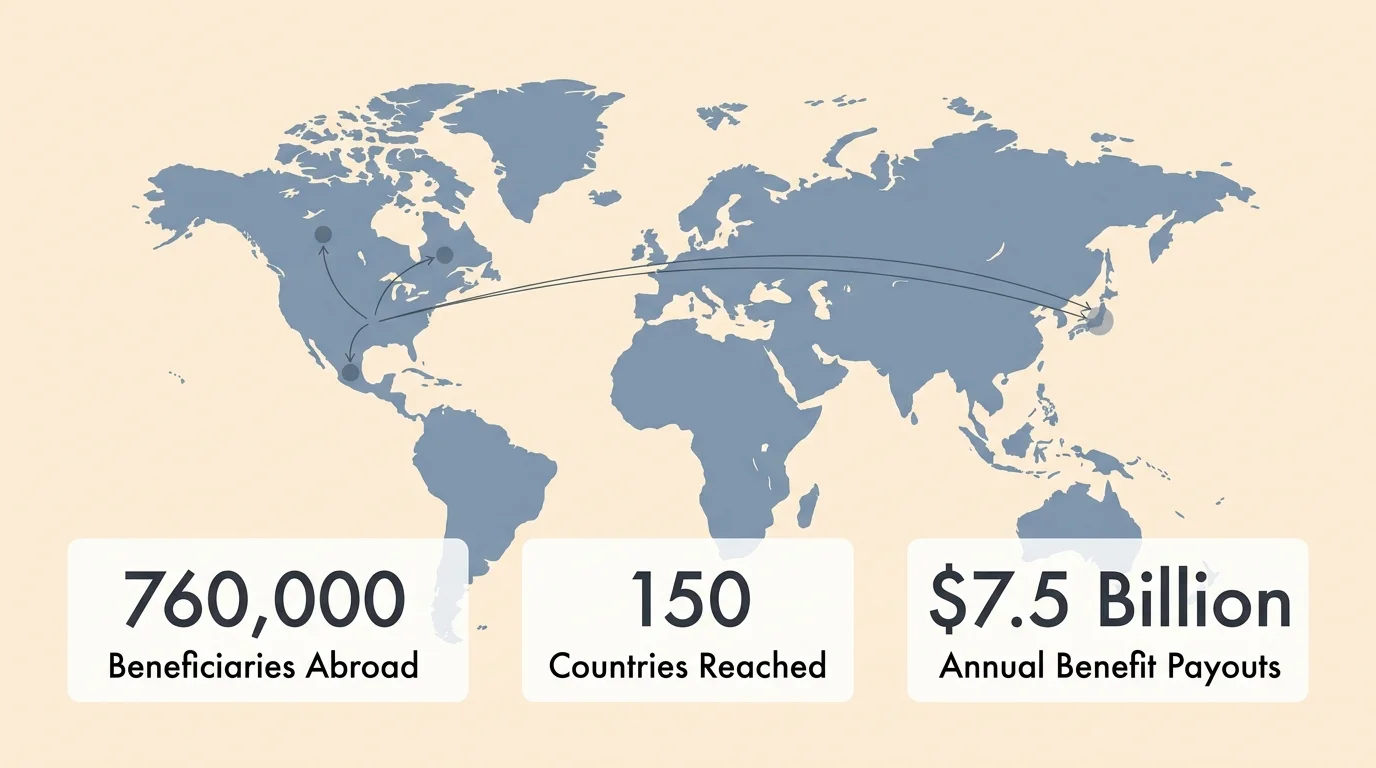
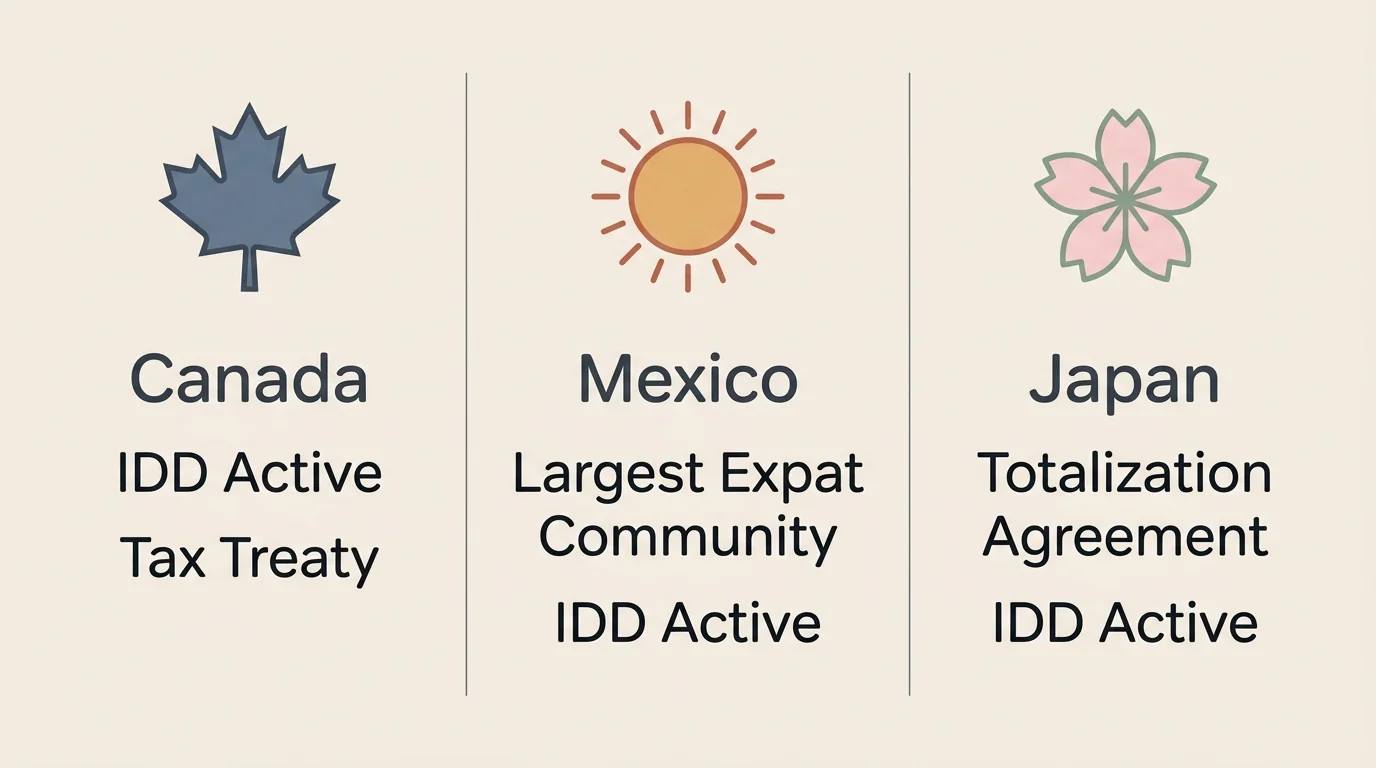
The short answer is yes. If you are a U.S. citizen, you can generally receive your monthly retirement, disability, or survivor benefits while residing in almost any country in the world. According to the Social Security Administration (2026), approximately 760,000 beneficiaries currently collect U.S. Social Security benefits while living across more than 150 countries. These payments deliver over $7.5 billion in annual benefit payouts to retirees, with Canada, Japan, and Mexico hosting the largest numbers of overseas recipients.
Your right to collect benefits stems from the credits you accumulated during your working years in the United States. To qualify for retirement benefits, you must earn 40 work credits, which equates to roughly 10 years of covered employment. In 2026, you earn one credit for every $1,890 in covered wages, up to the maximum of four credits ($7,560) per year. Once you meet this threshold, your entitlement to earned benefits remains intact regardless of your physical location, provided you reside in an approved jurisdiction.
Receiving your money overseas is remarkably straightforward thanks to modern banking systems. The Social Security Administration offers International Direct Deposit (IDD) to accounts in over 100 foreign nations. Through IDD, the U.S. Treasury converts your benefit payment from U.S. dollars into the local currency without deducting foreign transaction or wire transfer fees. Alternatively, you can choose to maintain a bank account in the United States and access your money internationally using ATMs or online fund transfers.
Countries Where Social Security Payments Are Restricted or Blocked
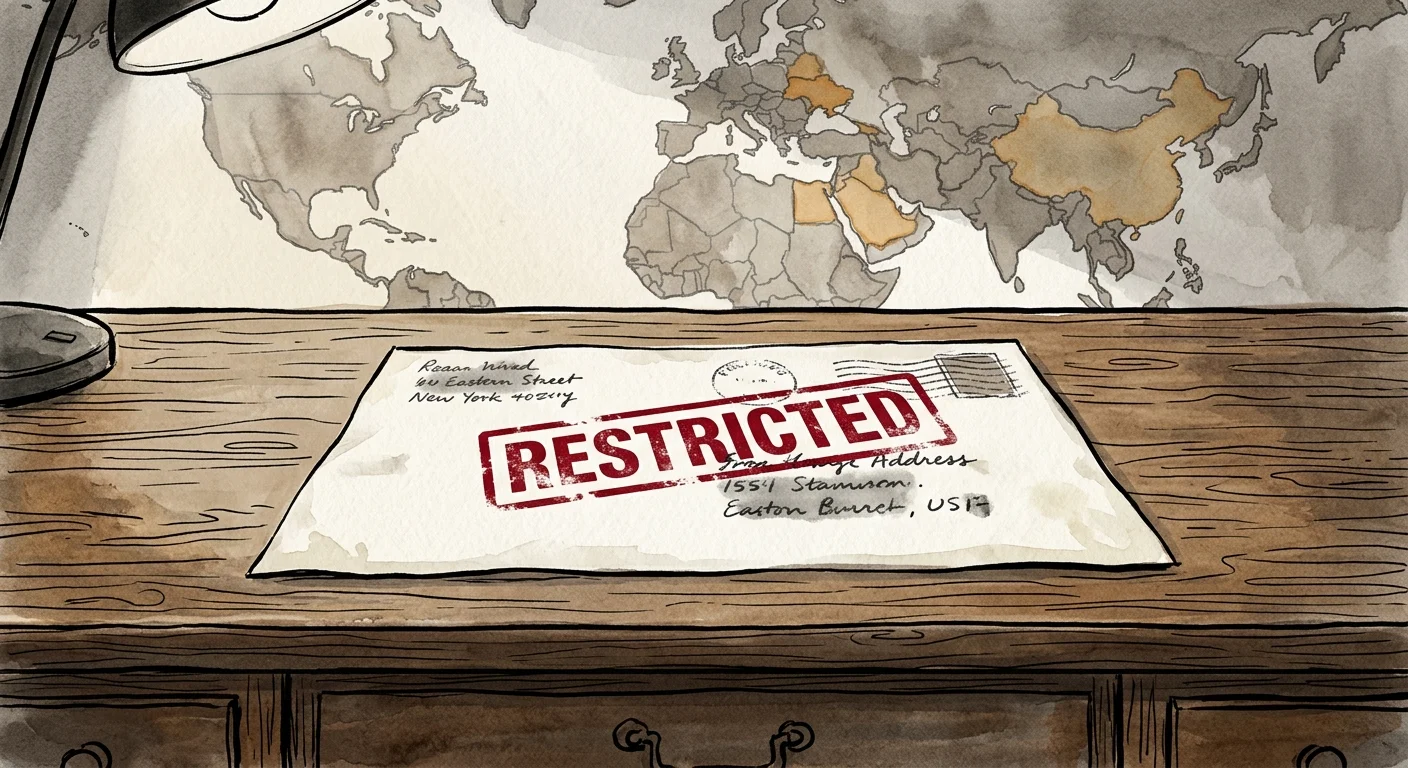
While the vast majority of international destinations accept U.S. benefit payments, federal law prohibits the sending of funds to specific countries. These restrictions fall under two primary regulatory bodies: the U.S. Department of the Treasury and internal Social Security Administration enforcement policies.
Under Treasury Department regulations, Social Security checks cannot be sent to individuals residing in Cuba or North Korea. If you choose to reside in either of these countries, the Social Security Administration stops your monthly payments entirely. However, these withheld funds accumulate; once you leave that country and move to an approved location, the government pays out all withheld funds in a lump sum.
In addition, Social Security policy restricts regular benefit disbursements to several former Soviet nations. These restricted countries include:
- Belarus
- Kazakhstan
- Kyrgyzstan
- Tajikistan
- Turkmenistan
- Uzbekistan
Exceptions exist for beneficiaries living in these former Soviet states if they satisfy strict eligibility conditions. To qualify for an exception, you must establish an appearance schedule with the nearest U.S. Embassy or consulate to verify your identity and ongoing eligibility. If you do not qualify for an exception, your payments freeze until you relocate to a country where unrestricted payment delivery is permitted.
Understanding Bilateral Totalization Agreements
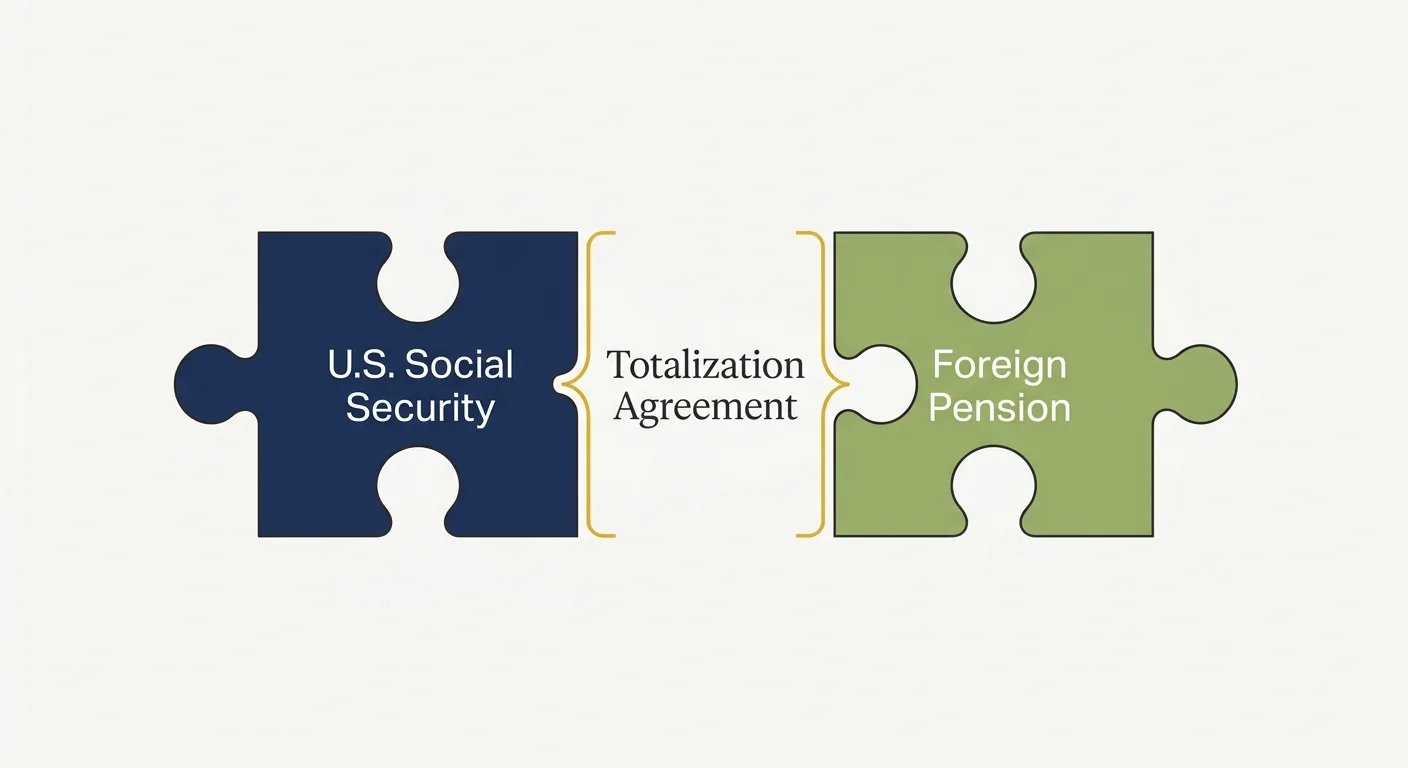
If you split your career between the United States and a foreign country, you might worry about losing benefit value or paying double social security taxes. To protect cross-border workers, the U.S. maintains bilateral “Totalization Agreements” with 30 foreign nations. These treaties serve two critical functions: they eliminate dual social security taxation on the same income and allow workers to combine work credits from both nations to qualify for retirement benefits.
For example, suppose you earned 28 work credits in the U.S. and 15 work credits in Germany. Under standard U.S. social security expat rules, you would not qualify for U.S. benefits because you fall short of the required 40 credits. However, under the U.S.-Germany Totalization Agreement, the Social Security Administration combines your work credits from both countries. This enables you to meet the eligibility threshold and receive a prorated U.S. benefit based on the actual earnings credited in the U.S. system.
Countries that currently maintain Totalization Agreements with the United States include major expat destinations across Europe, North America, and Asia-Pacific:
- Europe: United Kingdom, Germany, France, Italy, Spain, Portugal, Ireland, Netherlands, Switzerland, Belgium, Austria, Norway, Sweden, Finland, Denmark, Greece, Poland, Czech Republic, Hungary, Slovak Republic, Slovenia, Luxembourg, Iceland.
- Americas & Others: Canada, Mexico (pending congressional implementation), Japan, Australia, South Korea, Chile, Uruguay, Brazil.
Utilizing totalization provisions ensures that you do not forfeit years of hard work simply because you divided your career between two different sovereign nations.
U.S. Citizens vs. Non-Citizen Expats: Key Differences
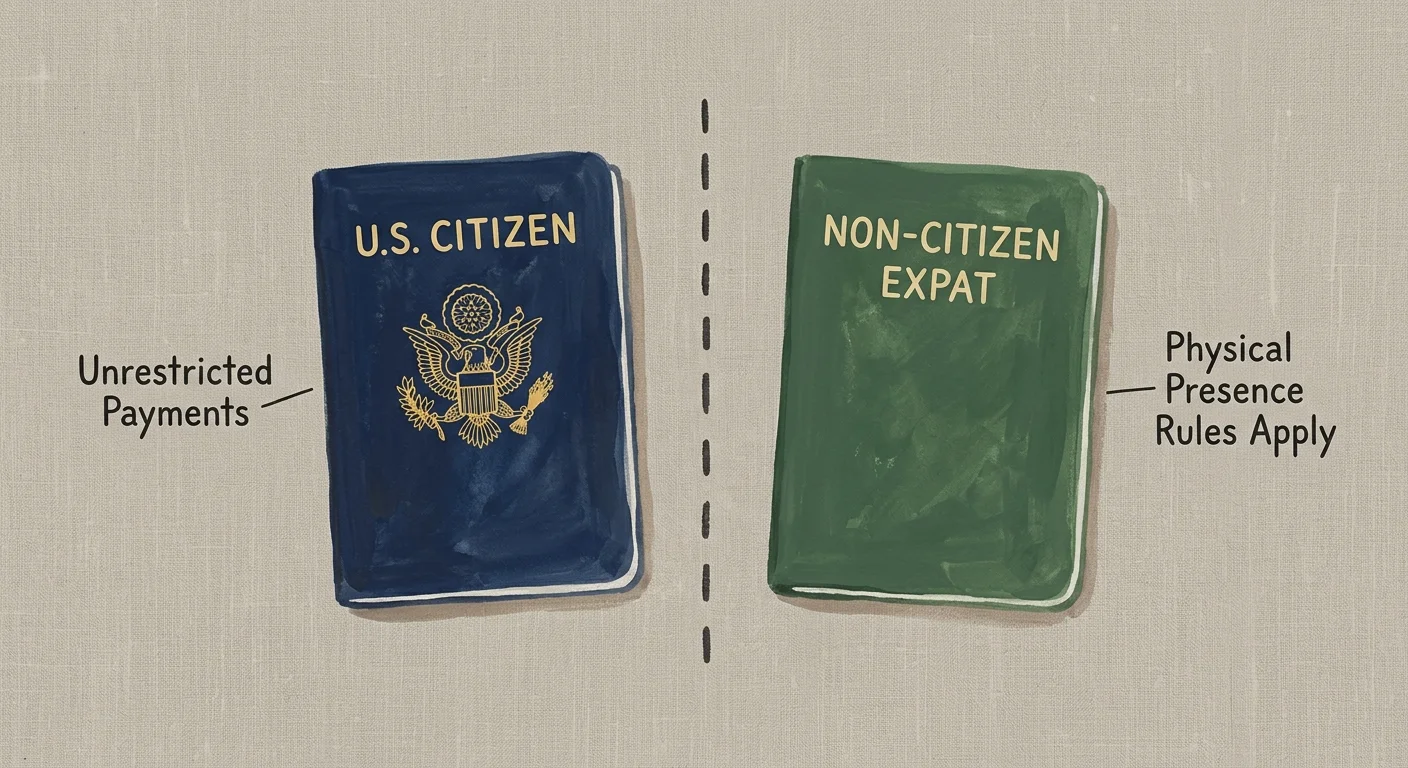
The rules governing social security benefits foreign country payments depend heavily on your citizenship status. U.S. citizens enjoy the greatest flexibility; you can stay abroad indefinitely without losing your eligibility, provided you live in a non-sanctioned nation and maintain required annual compliance reporting.
If you are a non-U.S. citizen—such as a former green card holder or a foreign spouse collecting dependent or survivor benefits—stricter regulations apply. Under standard SSA policy, non-citizen benefits automatically stop after you spend six consecutive calendar months outside the United States. To restart payments, you must physically return to the U.S. and remain in the country for at least 30 full consecutive days.
However, non-citizens can bypass this six-month rule if they meet one of several specific statutory exceptions:
- Citizenship in a Treaty Country: You hold citizenship in a country that maintains a Totalization Agreement with the U.S. or has a special bilateral social security treaty.
- Long-Term U.S. Residency: You lived in the United States for a minimum of 10 cumulative years before moving abroad.
- Military Service: You served honorably in the U.S. Armed Forces.
- Covered Earnings History: You earned at least 40 work credits under the U.S. Social Security system prior to departing.
Non-citizens should always use the SSA’s online “Payments Abroad Screening Tool” prior to moving to determine how long their benefit payments will continue in their destination country.
How Taxes Work on Your Social Security While Living Overseas
One of the most common misconceptions among retirees is that moving abroad automatically frees them from U.S. tax obligations. The United States taxes its citizens on their worldwide income regardless of where they live. Therefore, your Social Security benefits remain subject to U.S. federal income tax rules even when you reside overseas.
According to guidelines from the Internal Revenue Service, up to 85% of your Social Security benefits can be taxable if your combined income exceeds standard threshold amounts ($25,000 for individual filers and $32,000 for married couples filing jointly). Furthermore, you cannot use the Foreign Earned Income Exclusion (FEIE) to offset Social Security benefits, as the exclusion applies strictly to earned wages and self-employment income, not government retirement benefits.
“Retiring abroad can dramatically stretch your retirement savings, but failing to model your cross-border tax obligations and social security administration rules can instantly erode those gains.” — Jean Chatzky, Financial Journalist and Author
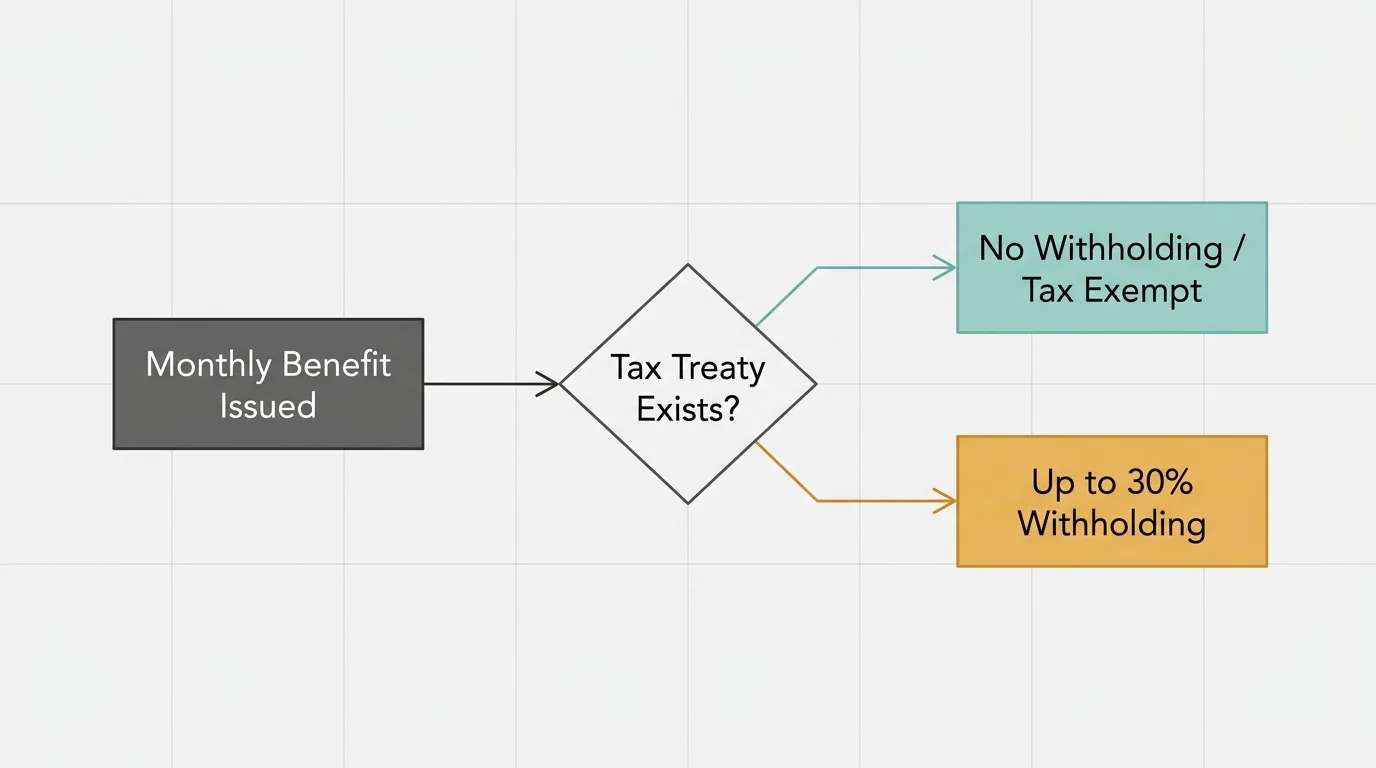
Taxation rules become even more nuanced when you factor in local host country laws. Some foreign countries tax U.S. Social Security benefits as local income, while others exempt them entirely based on bilateral income tax treaties. For instance, under the U.S.-United Kingdom Income Tax Treaty, U.S. Social Security benefits paid to a resident of the UK are taxable only by the UK government. Conversely, in countries without specific treaty provisions, you might face double taxation unless you claim foreign tax credits on your U.S. tax return.
For non-U.S. citizens living overseas, the IRS mandates a default 30% tax withholding rate on 85% of the Social Security benefit amount (yielding an effective tax rate of 25.5%). This withholding occurs automatically before the funds leave the U.S., unless a tax treaty reduces or eliminates the rate.
Supplemental Security Income (SSI) vs. Social Security (SSDI/Retirement) Overseas
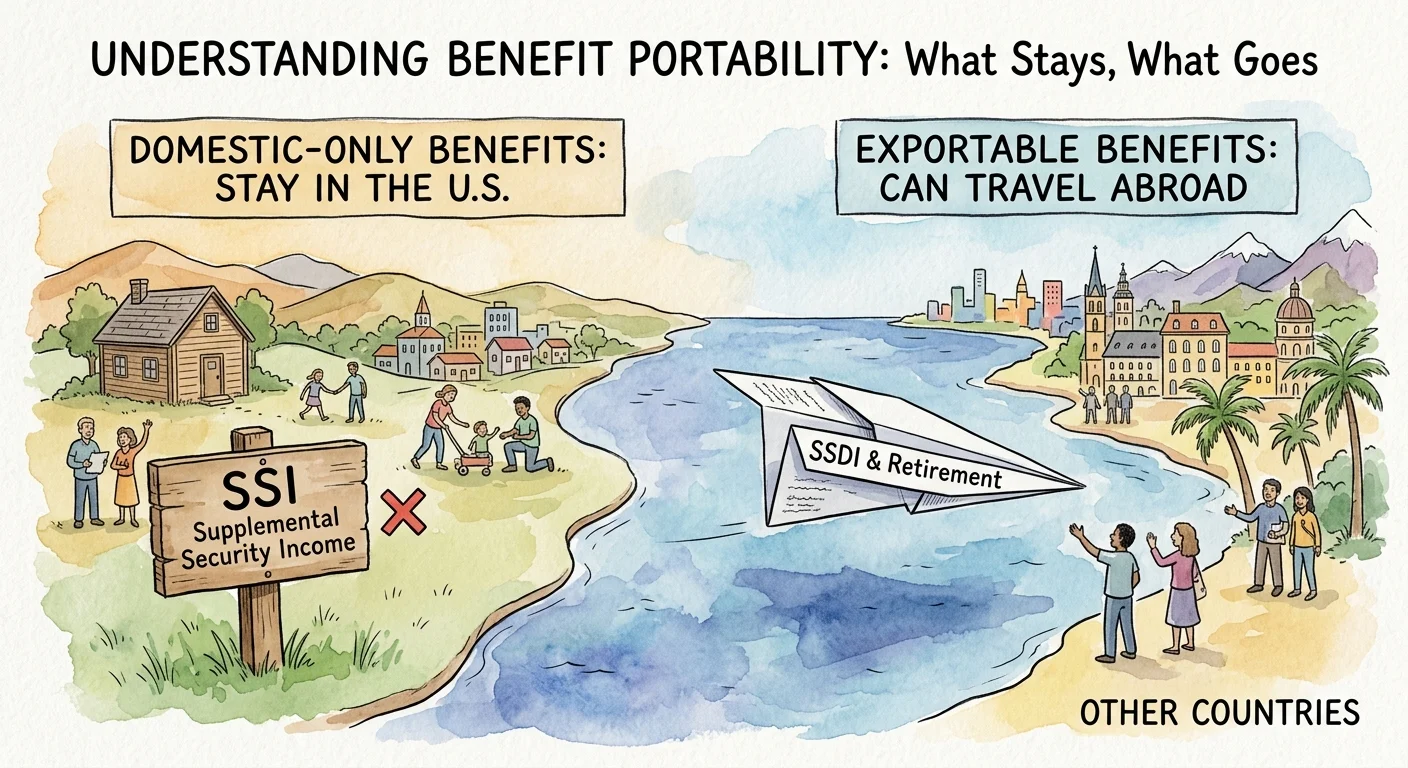
You must understand the distinction between standard Social Security benefits (retirement, SSDI, and survivor benefits) and Supplemental Security Income (SSI). While earned Social Security benefits travel with you globally, Supplemental Security Income does not.
SSI is a needs-based welfare program funded by general tax revenues, not Social Security payroll taxes. Federal law strictly dictates that SSI eligibility ceases once a recipient remains outside the United States for 30 consecutive days or more. Once you pass this 30-day mark, the SSA suspends your SSI payments entirely. Benefits will not resume until you return to the U.S. and reside on American soil for at least 30 consecutive days.
Attempting to collect SSI while living abroad constitutes benefit fraud, which can lead to severe financial penalties and criminal charges. If you rely on SSI funds, moving overseas permanently is generally not financially viable.

Crucial Maintenance: Filing Forms SSA-7161 and SSA-7162
To keep collecting social security overseas without interruption, you must prove to the U.S. government that you are still alive and remain eligible for benefits. The Social Security Administration enforces this rule through the Foreign Enforcement Questionnaire, distributed via paper forms SSA-7161 and SSA-7162.
The SSA mails these questionnaires annually or biennially (every two years), depending on your age, citizenship status, and location. The form asks standard compliance questions regarding whether you have:
- Changed your legal address or citizenship status.
- Remarried or divorced (for those receiving spousal or survivor benefits).
- Engaged in work outside the U.S. that exceeds earnings thresholds.
- Adopted children or taken custody of dependents receiving benefits.
You must fill out, sign, and return the questionnaire to the SSA or your designated foreign Federal Benefits Unit within the specified timeframe (typically 60 days). If you ignore or miss this document, the Social Security Administration will suspend your payments. Benefit suspensions usually take effect with the May check following the distribution year, and restoring suspended payments can take months of bureaucratic paperwork.
Comparison of Popular Expat Destinations for Social Security Recipients
Selecting the right international destination requires evaluating how local regulations align with U.S. social security expat rules. The table below details key parameters across seven top retirement destinations:
| Destination Country | Totalization Agreement? | Direct Deposit Available? | U.S. Tax Treaty Status | Key Requirement / Benefit |
|---|---|---|---|---|
| Canada | Yes | Yes (CAD local currency) | Exempts U.S. tax; primary tax paid to Canada | Seamless direct deposit integration |
| United Kingdom | Yes | Yes (GBP local currency) | Taxed exclusively in the UK for UK residents | HMRC reporting obligations apply |
| Mexico | No (Signed, not active) | Yes (MXN or USD options) | Standard U.S. taxation rules apply | Largest overall U.S. retiree expat population |
| Portugal | Yes | Yes (EUR local currency) | Subject to bilateral income tax treaty | Requires local tax residency registration |
| Costa Rica | No | Yes (CRC or USD options) | No specific tax treaty; U.S. retains primary taxing rights | Requires income proof for pensionado visa |
| Philippines | No | Yes (PHP local currency) | Tax treaty protects against double tax | Local bank clearance processes apply |
| Thailand | No | Yes (THB local currency) | No full tax treaty exemption on SS benefits | Strict annual long-stay visa financial reporting |

Pitfalls to Watch For When Collecting Social Security Overseas
Relocating internationally introduces financial logistics that standard domestic retirees never experience. To safeguard your income, steer clear of these critical mistakes:
1. The Medicare Part B Trap: Medicare generally does not cover medical expenses, emergency hospitalizations, or prescriptions outside the U.S. According to Medicare.gov, standard Part B premiums continue auto-deducting from your Social Security checks if you stay enrolled. Many expats drop Part B to save money; however, if you eventually move back to the U.S., you will face a permanent 10% late enrollment penalty for every 12-month period you were un-enrolled, alongside waiting for the General Enrollment Period to regain coverage.
2. Currency Fluctuation Risks: If you use International Direct Deposit, the Treasury converts your payment into local currency based on prevailing exchange rates. If the U.S. dollar weakens significantly against your local currency, your real purchasing power drops even if your dollar benefit amount remains constant.
3. Using Commercial Mail Forwarding Services: The Social Security Administration monitors mailing addresses closely. Listing a commercial mail forwarding service or commercial post office box as your primary residence to appear as if you reside in the U.S. violates SSA reporting rules and can trigger immediate payment freezes.
4. Foreign Bank Account Reporting (FBAR): If you receive your Social Security benefits into a foreign bank account, remember that holding foreign financial accounts exceeding $10,000 in aggregate value at any time during the calendar year requires filing FinCEN Form 114 (FBAR) with the U.S. Treasury Department.

Getting Expert Help
While standard retirement moves are manageable independently, navigating cross-border laws often warrants specialized professional advice. You should consult a international financial planner or cross-border tax attorney under the following scenarios:
- Complex Citizenship & Residency Structures: You hold dual nationality, hold multiple foreign pension rights, or plan to split your calendar year between three or more countries.
- High-Tax Jurisdiction Moves: You are moving to a European country with heavy wealth taxes or complex local income tax codes (such as Spain, France, or Italy) where foreign benefits face unique treatment.
- Managing Significant Foreign Earnings: You intend to work part-time or run a consulting business overseas while drawing Social Security retirement benefits prior to reaching your Full Retirement Age (FRA).
- Medicare Retention Strategy: You suffer from chronic health conditions and need to construct a hybrid health insurance strategy bridging U.S. Medicare Part B with foreign private health plans.
Working with qualified cross-border professionals prevents costly tax missteps and keeps your retirement income streams legally compliant across both jurisdictions.
Frequently Asked Questions
Can I have my Social Security directly deposited into a foreign bank account?
Yes. The Social Security Administration offers International Direct Deposit (IDD) to financial institutions in over 100 countries. Payments are converted to local currency at competitive exchange rates without fees. If you live in a country without IDD coverage, you can maintain a U.S. bank account and access your money via international ATM withdrawals or wire transfers.
What happens to my Social Security if I renounce my U.S. citizenship?
Renouncing your U.S. citizenship changes your status to a non-citizen expat. You can still collect your earned Social Security benefits if you meet specific exceptions, such as accumulating 40 U.S. work credits or living in a Totalization Agreement nation. However, non-citizens face automatic 30% IRS tax withholding on 85% of their benefits unless an applicable tax treaty lowers the rate, and they are subject to the six-month absence rules.
Does living abroad affect my Social Security Cost-of-Living Adjustment (COLA)?
No. Living overseas does not impact your eligibility for annual Social Security COLAs. When the Social Security Administration enacts a benefit increase for domestic retirees, overseas beneficiaries receive the exact same percentage increase applied directly to their baseline benefit check.
How do I notify the Social Security Administration that I am moving overseas?
You must notify the SSA of your move by submitting Form SSA-21 (Supplement to Statement of Claimant or Beneficiary) or by contacting your nearest local SSA office before departure. Once abroad, you will manage your account through the Federal Benefits Unit (FBU) attached to the nearest U.S. Embassy or Consulate in your host nation.
Taking Action on Your International Retirement Plan
Retiring overseas offers incredible opportunities to expand your horizons and maximize your retirement dollars, but seamless execution requires attention to administrative rules. Before booking your plane tickets, run your destination through the SSA Payments Abroad Screening Tool, establish reliable banking connections, and map out your domestic tax liabilities. Keeping your address updated and completing your annual enforcement questionnaires on time ensures your hard-earned benefit checks continue arriving safely month after month.
Take time today to gather your benefit records, review your Medicare enrollment status, and reach out to international tax specialists if your destination lacks a standard tax treaty with the U.S. With proper preparation, you can enjoy all the rewards of living abroad with total confidence in your financial security.
This is educational content based on general retirement planning principles. Individual results vary based on your situation. Always verify current benefit amounts, tax laws, and eligibility with official sources.
Last updated: February 2026. Retirement benefits, tax laws, and healthcare costs change frequently—verify current details with official sources.