
Trading city concrete for towering peaks sounds like the ultimate retirement dream, yet scenic views alone cannot compensate for missing emergency rooms, sky-high property taxes, or isolated mountain roads during winter storms. A successful move requires balancing stunning natural landscapes with practical daily needs like affordable housing, accessible healthcare, and senior-friendly tax structures. To help you locate a sanctuary that protects both your physical health and your nest egg, we evaluated dozens of alpine and highland destinations across America. These seven exceptional mountain communities provide breathtaking alpine backdrops along with the vital medical networks, tax advantages, and daily conveniences necessary to support a long, secure, and vibrant retirement lifestyle.
What Makes a Mountain Town Truly Retiree-Friendly?
Many famous resort towns feature stunning topographies, but they frequently fail the daily survival test for fixed-income retirees. When evaluated through a practical financial and lifestyle lens, a destination must offer far more than picturesque hiking trails. You need an environment where essential services remain reachable during winter months and where healthcare options extend beyond simple urgent care clinics.
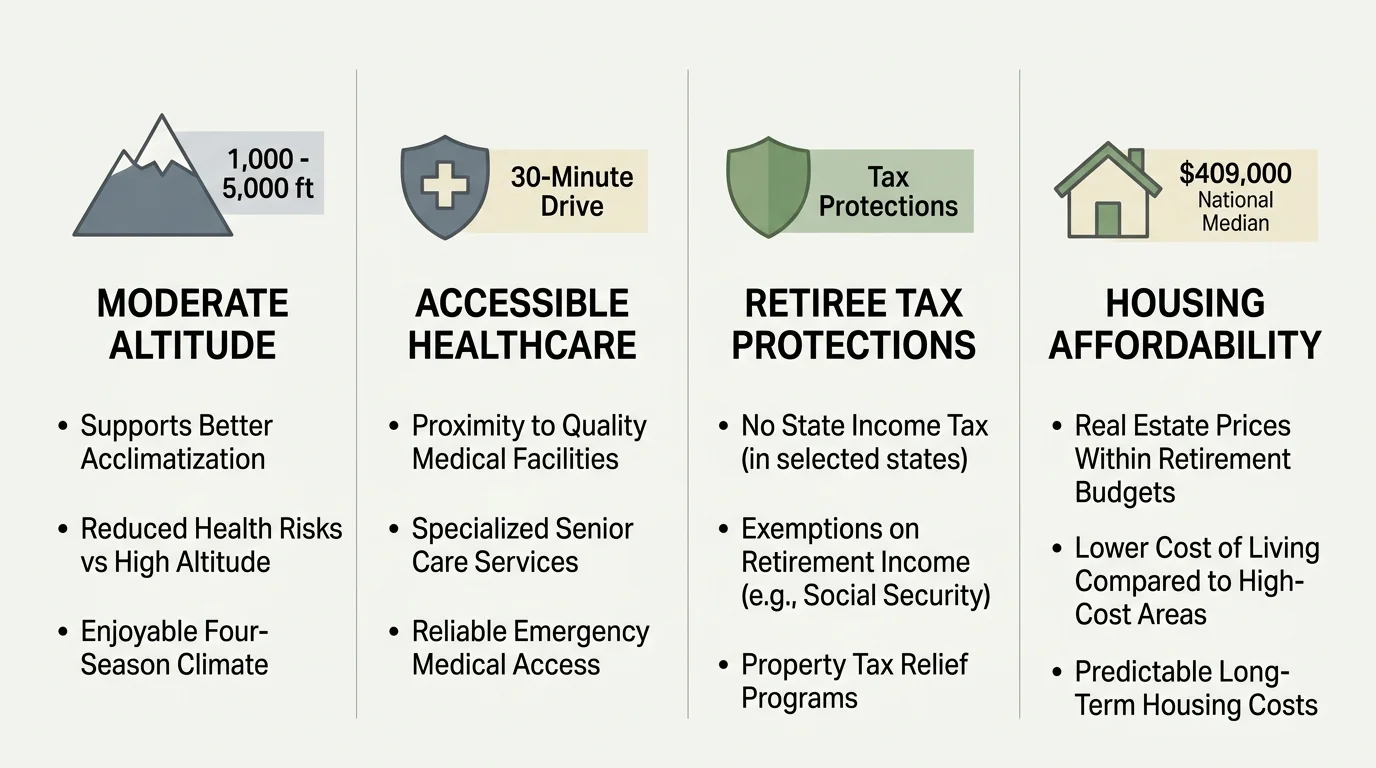
Evaluating potential mountain destinations requires looking closely at four crucial criteria:
- Altitude and Health Ergonomics: Elevations exceeding 6,000 feet can aggravate chronic cardiovascular or respiratory conditions. Towns sitting between 1,000 and 5,000 feet offer dramatic ridge lines without severe atmospheric pressure drops that cause oxygen depletion.
- Healthcare Infrastructure and Emergency Transit: A retiree-friendly mountain town requires a regional medical center with advanced cardiac, orthopedic, and emergency care within a 30-minute drive. Severe winter weather makes long hospital commutes dangerous.
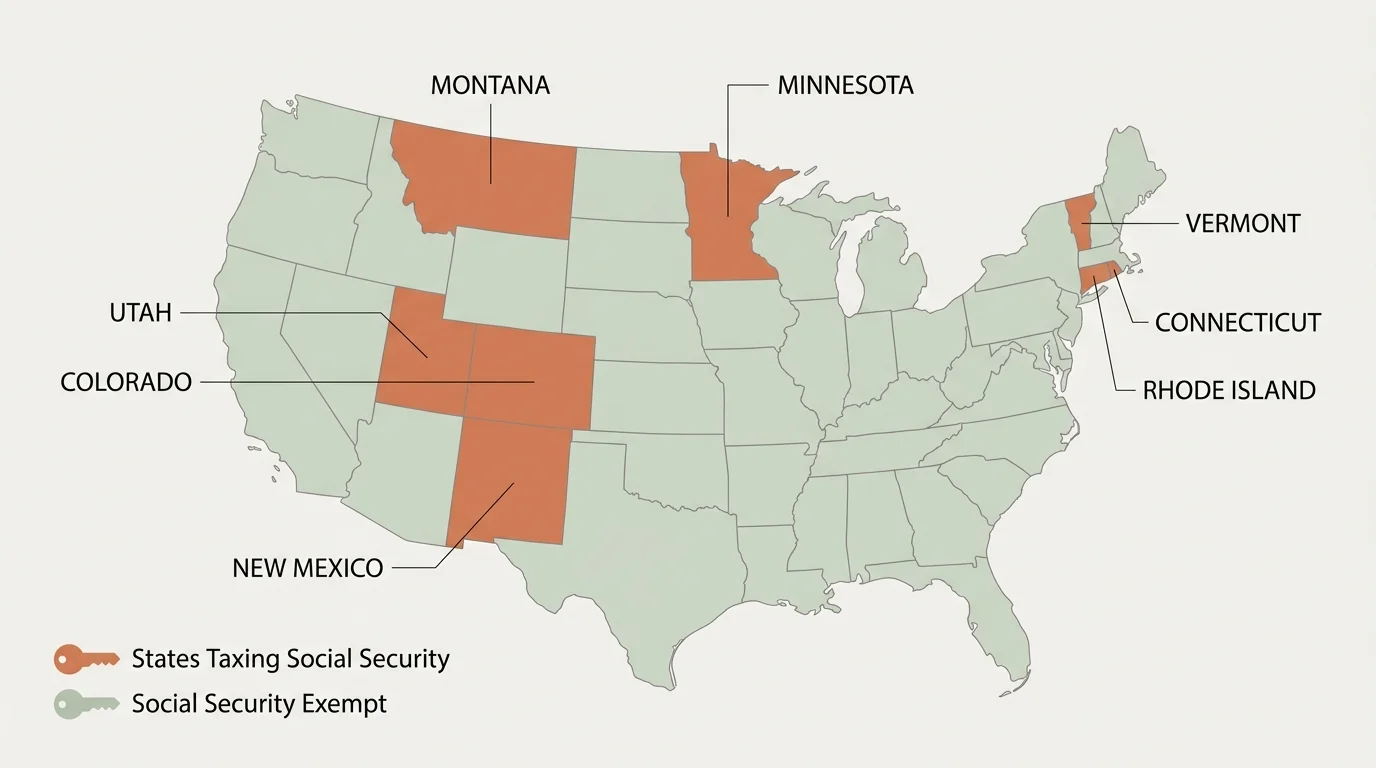
- Tax Friendliness and Fixed-Income Protection: State taxation on retirement income varies wildly across America. According to current tax regulations, only 8 states continue to tax Social Security benefits to any degree: Colorado, Connecticut, Minnesota, Montana, New Mexico, Rhode Island, Utah, and Vermont. Choosing states that exempt Social Security—or charge low flat income taxes—helps stretch your savings. You can review tax guidelines directly through the Internal Revenue Service and state revenue departments.
- Housing Affordability Relative to National Benchmarks: With the U.S. national median single-family home price sitting at approximately $409,000, practical mountain towns must provide residential choices near or below this baseline rather than charging multi-million-dollar resort premiums.

7 Scenic Mountain Towns Built for Practical Senior Living
The following mountain destinations deliver magnificent natural vistas alongside robust medical systems, reasonable cost structures, and vibrant community infrastructures designed for active older adults.
1. Roanoke, Virginia (Blue Ridge Mountains)
Nestled in the heart of the Blue Ridge Mountains, Roanoke combines southern charm with comprehensive suburban infrastructure. Elevation sits at a comfortable 948 feet above sea level, providing mild climate variations without the physical stress of thin high-altitude air. The overall cost of living runs 8% to 10% below the national average, making it one of the most affordable high-quality mountain hubs on the East Coast.
Roanoke City offers median home prices around $275,000—roughly 35% below the national median—while the surrounding metropolitan area averages between $300,000 and $415,000. Virginia fully exempts Social Security benefits from state income taxation, and the state offers substantial age-based deduction allowances for retirees 65 and older. Medical security remains exceptional thanks to Carilion Roanoke Memorial Hospital, a Level 1 Trauma Center employing over 8,000 healthcare professionals. Active seniors enjoy the 400-mile Blue Ridge Parkway network alongside the paved Roanoke River Greenway system.
2. Green Valley, Arizona (Santa Rita Mountain Foothills)
Located 20 miles south of Tucson in the Santa Rita Mountain foothills, Green Valley offers low-desert and high-range mountain views at an elevation of 2,900 feet. Comprising roughly 130 distinct neighborhoods—the majority age-restricted—Green Valley functions as a cohesive, active senior sanctuary surrounded by dramatic peaks like Mount Wrightson.
The housing market presents an extraordinary value proposition: median home prices sit at approximately $282,000. Arizona levies a low flat individual state income tax rate of 2.5% and completely exempts Social Security benefits from state income taxes. Yavapai and Pima county property tax rates remain competitive compared to national averages. Healthcare accessibility is anchored by nearby Santa Cruz Valley Regional Hospital and major health systems in Tucson, such as Banner Health. Retirees enjoy access to a central recreation organization (Green Valley Recreation) that maintains 14 centers with heated pools, fitness facilities, and hobby workshops.
3. Chattanooga, Tennessee (Lookout & Signal Mountains)
Chattanooga rests in a scenic river valley carved directly through the Appalachian foothills, surrounded by Lookout Mountain and Signal Mountain. Sitting at an elevation of just 680 feet, Chattanooga gives you rapid access to high-altitude mountain trails while allowing you to sleep and reside at a sea-level atmospheric density.
Median home values in Chattanooga hover between $315,000 and $330,000, remaining distinctly lower than national medians. Tennessee provides an exceptionally strong tax environment for retirees; the state levies zero personal income tax on wages, pensions, IRA distributions, or Social Security income. Healthcare resources are robust, headlined by Erlanger Health System—a major academic medical center featuring a Level 1 Trauma Center—alongside specialized cardiac and orthopedic networks at CHI Memorial. The downtown area features flat, riverfront walking paths, electric public shuttles, and direct access to high-altitude mountain lookouts within a 15-minute drive.
4. Asheville, North Carolina (Blue Ridge Mountains)
For retirees seeking rich cultural amenities, craft arts, and distinct four-season weather, Asheville remains a premier Blue Ridge mountain destination. Situated at an elevation of 2,134 feet, the city features comfortable summer temperatures alongside mild winter conditions.
While Asheville features higher real estate costs than regional neighbors—with median home prices inside city limits around $493,000 and surrounding Buncombe County averaging $446,000—utility costs run roughly 4% below national averages. North Carolina applies a competitive flat income tax rate of 4.0% and fully exempts Social Security benefits. Regional medical care relies on Mission Health System, an expansive healthcare network renowned for advanced cardiac care and surgical specialties. Seniors benefit from lifelong learning programs at the University of North Carolina at Asheville, alongside endless hiking opportunities along the Craggy Gardens and Pisgah National Forest corridors.
5. Prescott, Arizona (Bradshaw Mountains)
Situated in Northern Arizona at an elevation of 5,368 feet, Prescott delivers a true “mile-high” mountain experience with four distinct seasons and over 277 sunny days each year. Surrounded by the Prescott National Forest and the Bradshaw Mountains, the town avoids the intense summer heat of Phoenix while offering mild winter snowfall that melts quickly under bright sunlight.
While Prescott proper features a median home price between $600,000 and $655,000, nearby Yavapai County communities like Prescott Valley offer median prices around $468,000 to $480,000. Arizona’s 2.5% flat tax and lack of tax on Social Security lower annual tax burdens, while Yavapai County maintains an average effective property tax rate of roughly 0.58%. Local healthcare relies on Yavapai Regional Medical Center (YRMC) and the Bob Stump VA Medical Center, providing extensive geriatric care and emergency services right inside city limits.
6. Rapid City, South Dakota (Black Hills)
Known as the gateway to the Black Hills, Rapid City offers dramatic granite peaks, pine forests, and outdoor recreation at an elevation of 3,202 feet. Thanks to winter chinook winds, local residents enjoy a warm microclimate affectionately nicknamed the “Banana Belt of South Dakota,” making winters far more mild than neighboring Midwestern plains.
Rapid City real estate remains highly accessible, with median single-family home prices hovering around $340,000. South Dakota ranks among the most tax-friendly states in the nation for retirees; it levies no state individual income tax, no pension tax, and no tax on Social Security benefits. Medical security is grounded by Monument Health Regional Hospital, a comprehensive tertiary facility offering specialized cancer, heart, and vascular care to the five-state region. The city offers quick access to Custer State Park, Mount Rushmore, and extensive walking networks along the Rapid Creek greenway.
7. Grand Junction, Colorado (Grand Mesa & High Desert)
While many Front Range Colorado ski hubs charge extreme home prices, Grand Junction sits on Colorado’s Western Slope at an elevation of 4,583 feet. Positioned between the imposing red rock canyons of the Colorado National Monument and the pine forests of Grand Mesa, Grand Junction experiences mild high-desert weather with minimal snowfall in the valley.
Median home prices average between $385,000 and $410,000—substantially lower than Denver or Summit County real estate markets. Colorado imposes a flat individual income tax rate of 4.25%. While Colorado is one of eight states that taxes Social Security for higher earners, the state provides a generous subtraction policy allowing residents 65 and older to fully deduct their Social Security income from state taxes up to full statutory limits. St. Mary’s Medical Center operates as the largest Level 2 Trauma and regional specialty care hub between Denver and Salt Lake City, providing top-tier medical access to Western Slope retirees.
Side-by-Side Mountain Town Comparison
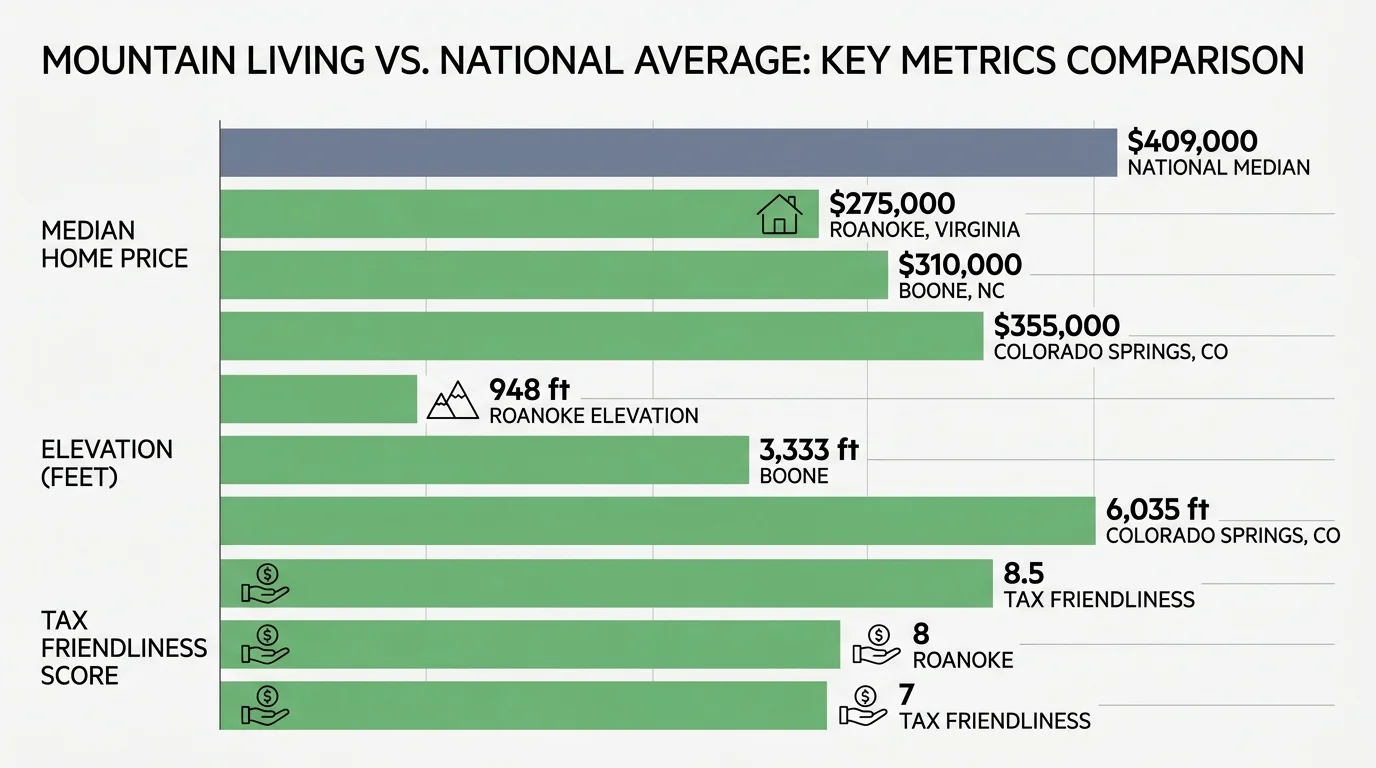
To help you compare these options clearly, the following table summarizes key metrics regarding housing, tax treatment, elevation, and healthcare systems across all seven locations:
| Mountain Town | Elevation | Median Home Price | State Social Security Tax? | Primary Healthcare Hub |
|---|---|---|---|---|
| Roanoke, VA | 948 ft | $275,000 (City) / $350,000 (Metro) | No (Fully Exempt) | Carilion Roanoke Memorial Hospital (Level 1) |
| Green Valley, AZ | 2,900 ft | $282,000 | No (Fully Exempt) | Santa Cruz Valley Regional / Tucson Networks |
| Chattanooga, TN | 680 ft | $320,000 | No State Income Tax | Erlanger Health System (Level 1) |
| Asheville, NC | 2,134 ft | $493,000 (City) / $446,000 (County) | No (Fully Exempt) | Mission Health System |
| Prescott, AZ | 5,368 ft | $625,000 (Prescott) / $470,000 (Valley) | No (Fully Exempt) | Yavapai Regional Medical / Bob Stump VA Center |
| Rapid City, SD | 3,202 ft | $340,000 | No State Income Tax | Monument Health Regional Hospital |
| Grand Junction, CO | 4,583 ft | $395,000 | Exempt for Seniors 65+ | St. Mary’s Medical Center (Level 2) |
Mountain Living Retirement: Pros and Cons
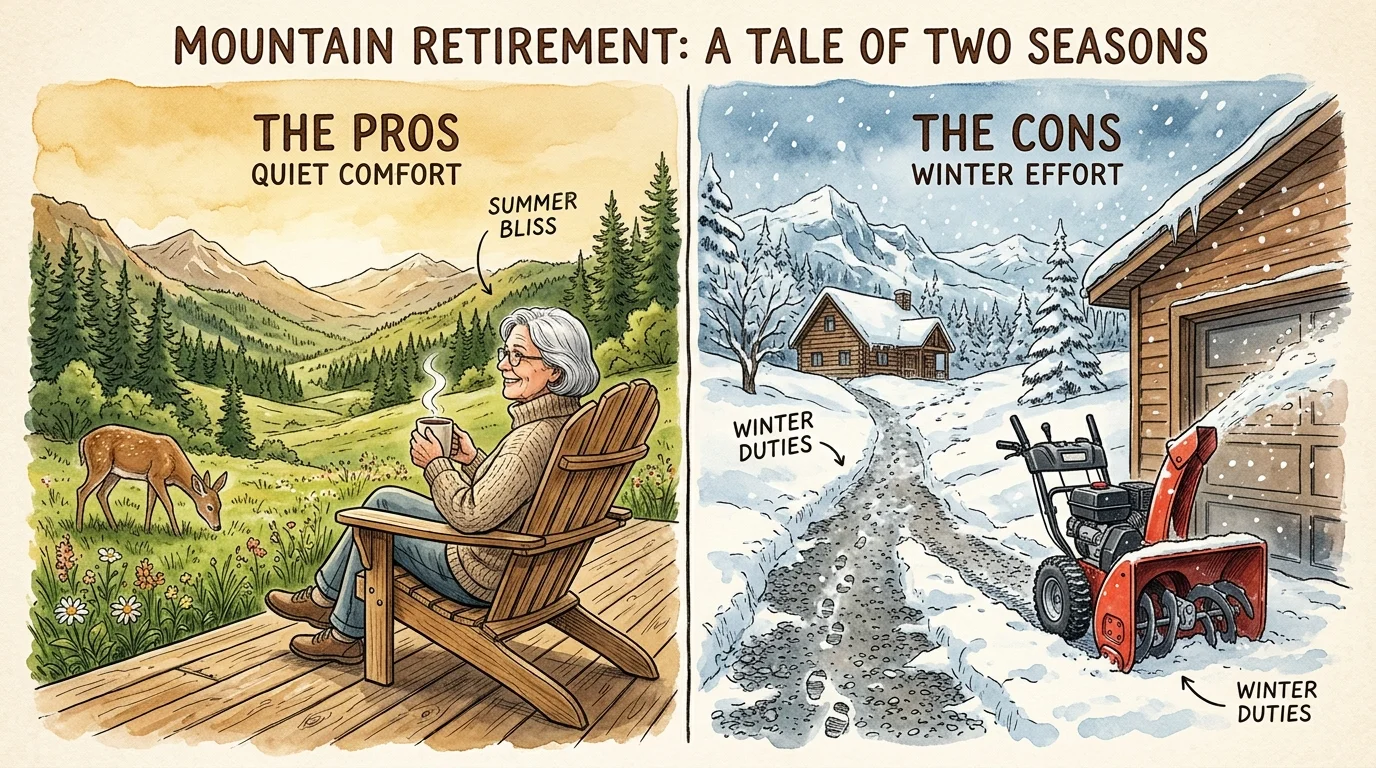
Relocating to an alpine or highland setting brings incredible physical and psychological rewards, but it requires accepting structural trade-offs. Weighing these distinct factors helps prevent buyer’s remorse:
The Advantages (Pros)
- Active, Outdoor-Centric Lifestyle: Mountain environments naturally encourage daily physical exercise through low-impact hiking, mountain biking, fishing, and trail walking.
- Cleaner Air and Lower Summer Heat: Higher elevation locations generally enjoy superior air quality and cool summer evenings, reducing seasonal air conditioning electricity costs.
- Vibrant Local Communities: Mountain towns tend to attract outdoorsy, health-conscious retirees who form active volunteer groups, trail maintenance teams, and civic organizations.
The Realities (Cons)
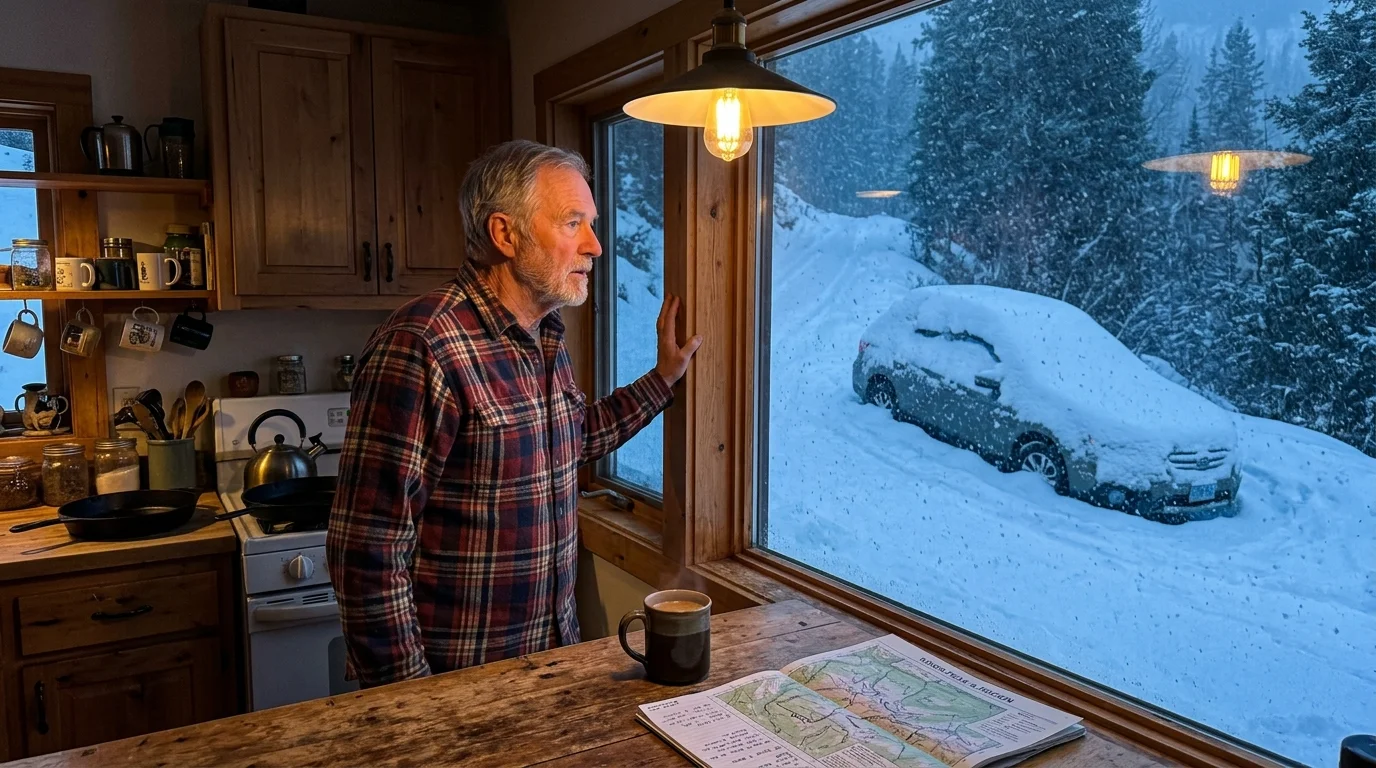
- Terrain and Winter Hazards: Steep driveways, icy sidewalks, and snow removal demand physical effort or ongoing professional maintenance fees. Falling hazards increase in snowy climates.
- Elevated Wildfire and Insurance Expenses: Many mountain communities sit inside Wildland-Urban Interface (WUI) zones. Home insurance premiums can run significantly higher, and acquiring coverage may require specialized state-backed FAIR plans.
- Distance to Major International Airports: Regional mountain health centers handle local emergencies, but flying long distances often requires a two-hour drive to a major international airport hub.
Financial and Tax Realities for Mountain Retirees
Balancing scenic relocation choices against long-term solvency requires disciplined financial analysis. Moving states can change your lifetime tax liabilities dramatically. Before purchasing real estate, analyze state income tax, sales tax, local property taxes, and potential taxes on retirement distributions.
“You can borrow for college, but you can’t borrow for retirement. Protecting your nest egg against high housing overhead and unexpected medical expenses is the primary goal of location planning.” — Jean Chatzky, Financial Journalist and Author
When modeling your retirement budget in a new state, calculate the combined impact of property taxes and state tax treatement of your specific income streams. You can verify your benefit amounts and projected cost-of-living adjustments directly through the Social Security Administration. Additionally, verify how medical coverage transfers between regions; Medicare Advantage plans frequently feature geographic network restrictions, whereas traditional Medicare with a Supplemental policy covers care nationwide. Learn more about regional coverage guidelines at Medicare.gov.
Common Mistakes to Avoid When Moving to the Mountains
Retirees often fall in love with mountain vistas during a summer vacation, only to discover winter realities disrupt their lifestyle. Avoid these common relocatee errors:
- Ignoring Altitude Health Impacts: Moving directly from sea level to communities above 6,000 feet without a trial period can trigger elevated blood pressure, insomnia, or persistent shortness of breath. Test high elevation destinations for several weeks before committing.
- Buying on Steep Slopes Without Multi-Generational Features: Buying a multi-story home built on a steep ridge may seem romantic today, but single-story floor plans with flat driveways prove far more practical as mobility changes over time.
- Underestimating Winter Maintenance Costs: Budgeting for snow removal equipment, driveway salting, heat-tape installation, and seasonal roof raking is essential in snowy mountain zones.
- Failing to Check Emergency Travel Times: Verify the driving distance from your prospective home to the nearest hospital emergency room during peak winter weather conditions—not just clear summer days.

Practical Next Steps: How to Test-Drive Your Mountain Retirement
Never buy real estate in a new mountain town immediately upon arrival. Follow a disciplined evaluation plan to ensure the location meets your practical needs long-term:
- Rent During the Worst Season: Rent an apartment or home for four to six weeks during the town’s most challenging weather month (typically January or February in Northern states, or mid-summer in Southern desert mountains).
- Simulate Daily Healthcare and Shopping Routines: Drive from candidate neighborhoods to local grocery stores, pharmacies, physical therapy clinics, and emergency rooms during busy traffic hours.
- Engage with the Community: Visit senior centers, local recreation complexes, and volunteer groups to assess how easily you can build a new social network.
- Consult a Financial Professional: Speak with a qualified advisor certified through the Certified Financial Planner Board of Standards to model how state-specific property taxes, insurance rates, and income taxes affect your withdrawal strategies. General senior lifestyle support programs can also be cross-referenced via the AARP resource network.
Choosing a mountain town does not require sacrificing your financial safety or medical peace of mind. By prioritizing moderate elevation, robust health networks, and low tax burdens, you can secure a stunning natural setting that supports a confident, healthy, and fulfilling retirement lifestyle.
This is educational content based on general retirement planning principles. Individual results vary based on your situation. Always verify current benefit amounts, tax laws, and eligibility with official sources.
Last updated: February 2026. Retirement benefits, tax laws, and healthcare costs change frequently—verify current details with official sources.