
Taking on part-time employment while receiving Social Security benefits can provide valuable supplemental cash flow, keep your professional skills sharp, and offer daily structure. However, understanding the social security earnings limit is vital to avoiding unexpected benefit reductions. The Social Security Administration applies precise income thresholds to working retirees who claim benefits prior to reaching their full retirement age. Exceeding these limits triggers temporary withholding, but those dollars are not permanently lost. By mastering how work affects Social Security benefits and leveraging first-year monthly rules, you can confidently integrate part-time earnings with your monthly benefit checks while minimizing tax surprises.
Navigating the Social Security Earnings Limit Before Full Retirement Age
If you claim Social Security retirement benefits before reaching your Full Retirement Age (FRA), the Social Security Administration (SSA) places a cap on your earned income. For individuals born in 1960 or later, full retirement age is 67. If you were born in 1959, your full retirement age is 66 years and 10 months. Claiming benefits early allows you to access your monthly checks sooner, but it subjects your earnings to the retirement earnings test.
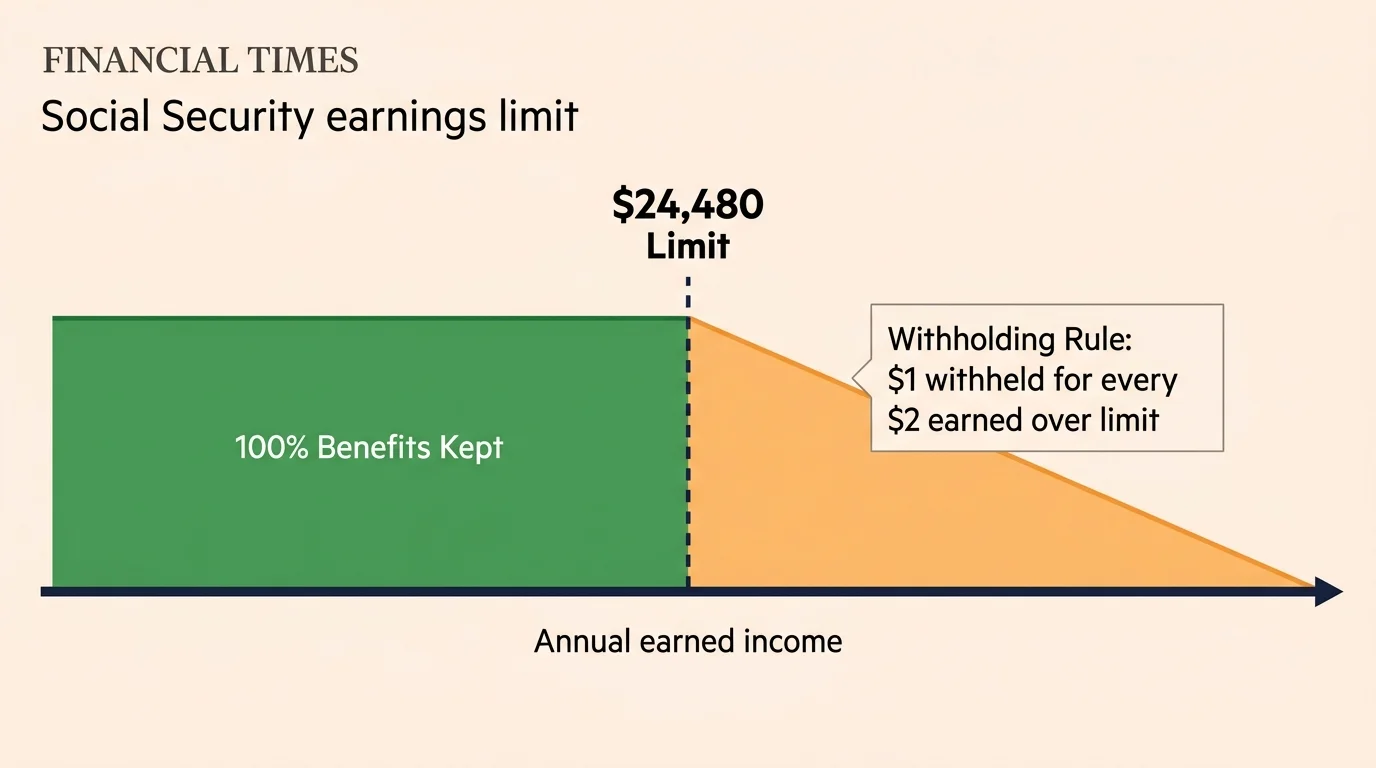
According to the Social Security Administration, the standard annual earnings limit for beneficiaries who remain under their full retirement age for the entire calendar year is $24,480. If your earned income exceeds this threshold, Social Security temporarily withholds $1 in benefits for every $2 you earn above the limit.
To see how this formula works in practice, consider a realistic scenario:
- Your annual part-time earnings: $30,480
- The baseline earnings limit: $24,480
- Your excess earnings: $6,000
- Total benefit withholding ($6,000 divided by 2): $3,000
If your monthly Social Security benefit check is $1,500, the SSA will withhold two full monthly payments ($3,000 total) early in the year to satisfy the earnings test. Once they withhold the required amount, your regular monthly payments resume for the remainder of the calendar year.
Social Security Part-Time Work Rules in the Year You Reach Full Retirement Age
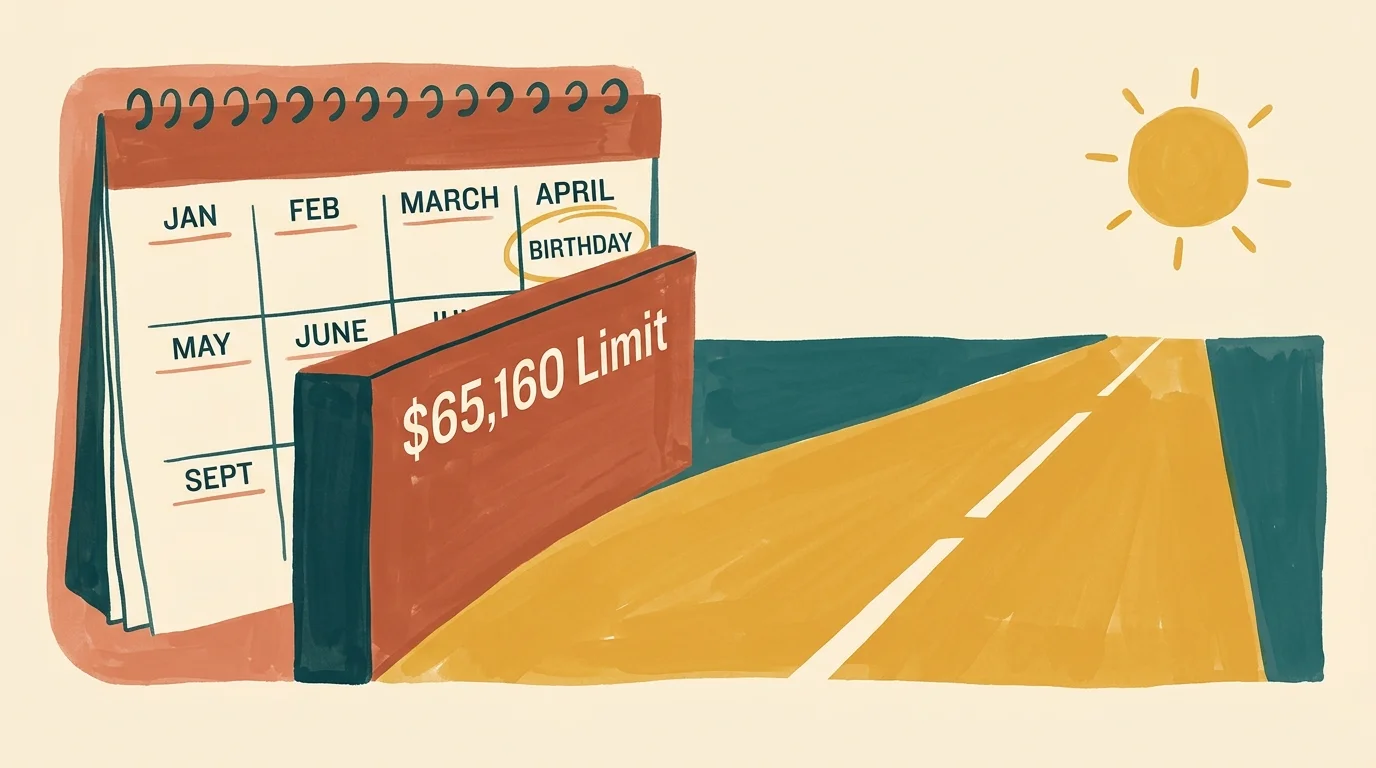
The rules governing working while collecting social security become significantly more generous during the calendar year in which you attain your full retirement age. Social Security applies a higher income cap and a milder withholding rate for the months preceding your birthday month.
For individuals reaching full retirement age, the earnings limit rises to $65,160. Furthermore, the withholding rate decreases: Social Security withholds only $1 in benefits for every $3 you earn over this higher threshold. Most importantly, the SSA only counts the money you earn during the specific months before your birthday month.
Consider an individual who turns 67 in October and earns $71,160 between January and September. The excess earnings amount to $6,000 above the $65,160 limit. Dividing $6,000 by 3 results in a total benefit withholding of just $2,000 for that year.
Starting the exact month you reach your full retirement age, the earnings cap vanishes completely. You can earn an unlimited income through part-time or full-time work without facing any benefit withholding, regardless of how much you bring home.
The First-Year Special Rule: Protecting Mid-Year Retirees
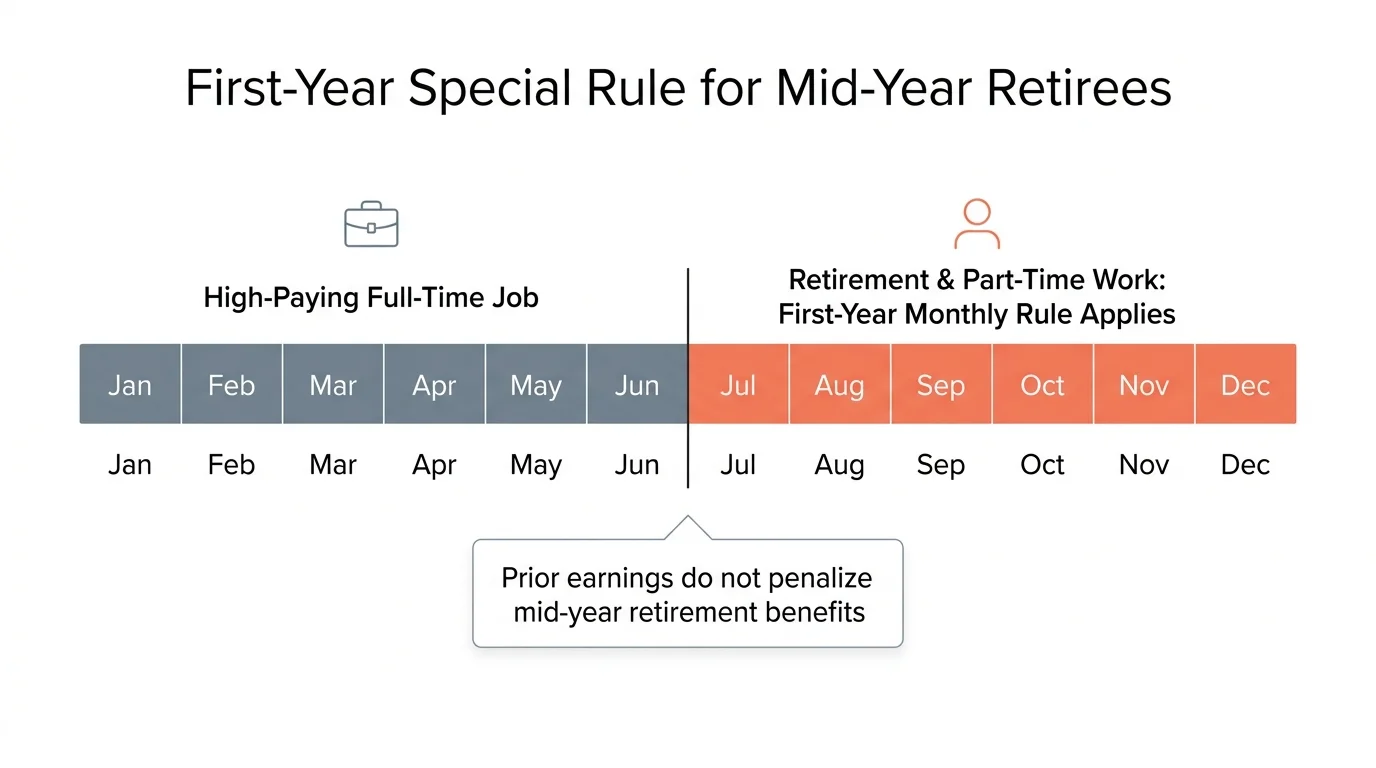
A common concern among new retirees involves transitioning into retirement mid-year. If you work a high-paying full-time job from January through May and retire in June, your year-to-date income might already exceed the annual social security income limit. Under standard annual rules, your prior full-time wages would completely wipe out your Social Security benefits for the remainder of the year.
To prevent this unfair outcome, Social Security applies a first-year Special Monthly Rule. Under this rule, regardless of your total annual earnings prior to claiming, Social Security pays your full monthly benefit for any month you are considered retired.
Social Security considers you retired in any month that your earned income falls at or below the monthly limit:
- Under FRA all year: You earn $2,040 or less per month.
- Year reaching FRA: You earn $5,430 or less per month in the months before reaching FRA.
For example, if you earned $70,000 between January and June, left your career in July, and took a part-time position earning $1,800 per month from August through December, the special monthly rule applies. Because your part-time monthly income stays below the $2,040 threshold, you receive your full Social Security benefit check every month from August through December.
The Myth of Lost Benefits: How Recoupment Works
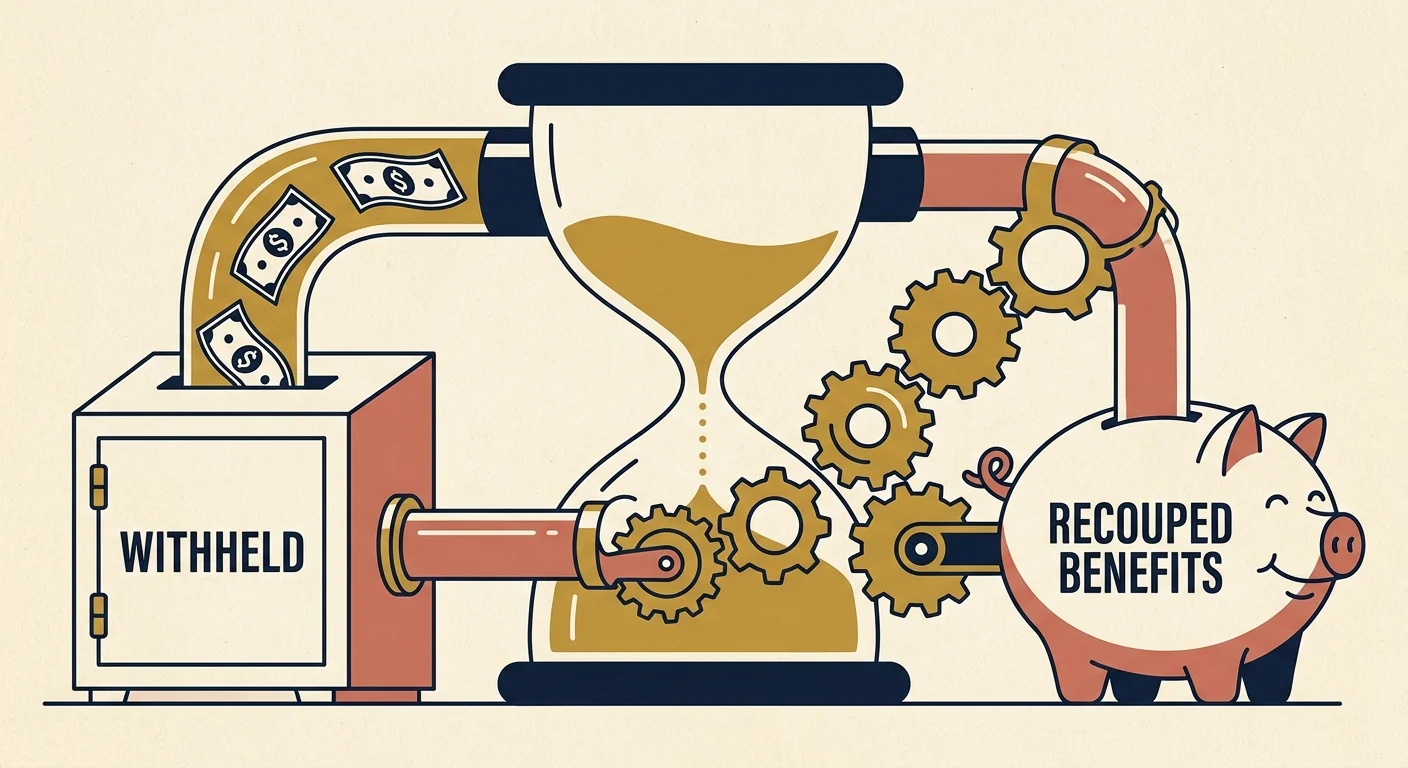
Many working seniors avoid part-time employment because they believe the Social Security earnings test operates as a permanent financial penalty. This is a complete misconception. Benefits withheld under the earnings test are not forfeited forever; instead, Social Security recalculates your monthly benefit upward once you reach full retirement age to restore those funds.
When you reach FRA, the SSA automatically audits your account record. They count the total number of monthly checks withheld due to the earnings limit and recalculate your primary insurance amount. They adjust your ongoing monthly benefit check upward, crediting you for the early-claiming reduction factors you previously lost.
“Money withheld under the Social Security earnings test isn’t a permanent penalty; it’s effectively forced savings that increases your monthly payout once you reach full retirement age.” — Jean Chatzky, Financial Journalist and Author
Additionally, active part-time work can boost your baseline benefit calculation. Social Security calculates your primary benefit using your highest 35 years of inflation-adjusted earnings. If your current part-time earnings exceed any of the lower-earning years in your historical 35-year work record, Social Security replaces those lower figures and raises your baseline payment permanently. You can evaluate your historical earnings record directly through SSA.gov.
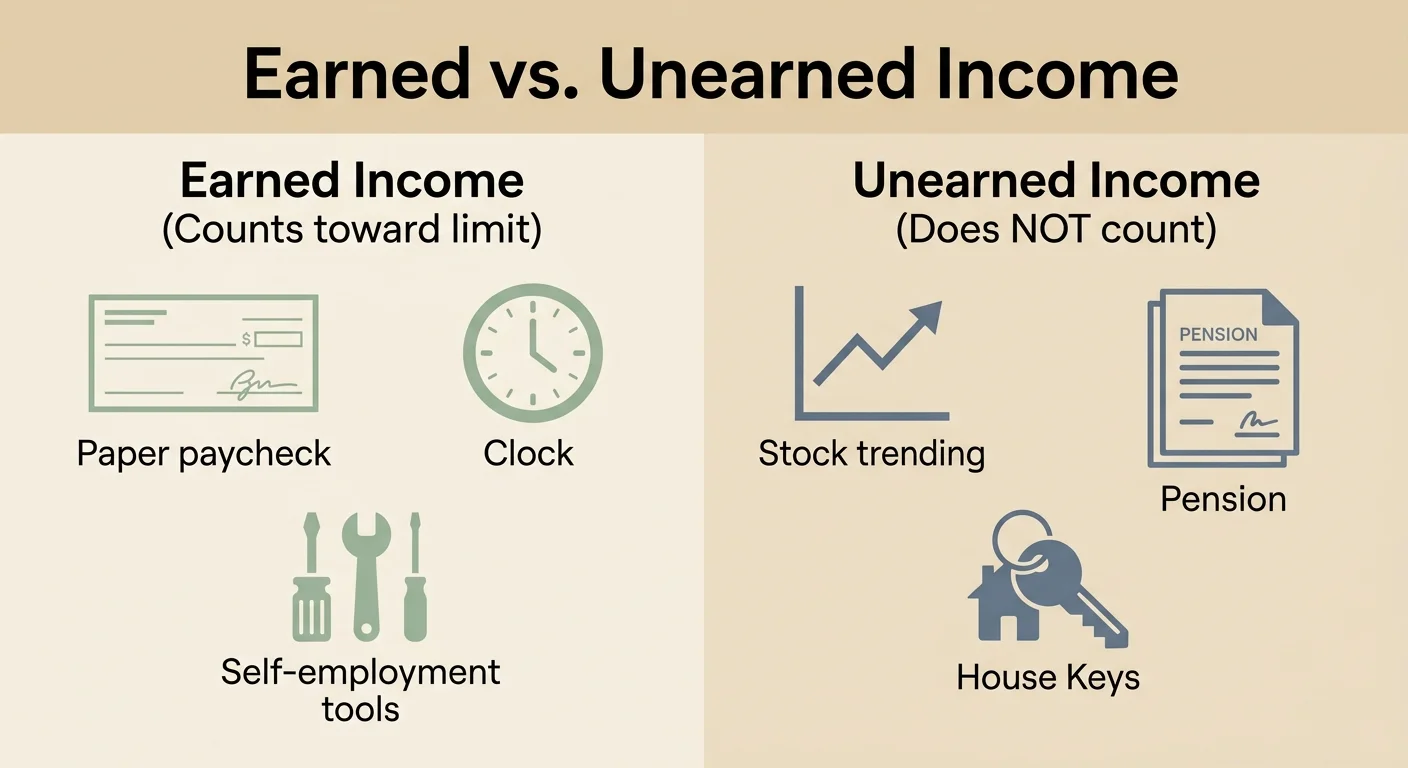
Earned Income vs. Unearned Income: What Counts?
Understanding what qualifies as earned income is critical when managing social security part-time work rules. The Social Security Administration evaluates only active gross wages and net self-employment earnings. They completely ignore passive and investment income when applying the earnings test.
To help you structure your income streams effectively, the following comparison table outlines how different revenue sources affect your Social Security benefit status:
| Income Source | Description & Examples | Counts Toward Earnings Limit? |
|---|---|---|
| W-2 Wages & Salaries | Gross wages, hourly pay, tips, bonuses, and commission pay. | YES |
| Net Self-Employment Income | Net profits from sole proprietorships, 1099 consulting, or partnerships (after business expenses). | YES |
| Pensions & Annuities | Defined-benefit pension payments, military retirement, and private commercial annuities. | NO |
| Investment Returns | Stock dividends, capital gains, interest from bonds or savings accounts. | NO |
| Retirement Account Distributions | Withdrawals from traditional IRAs, 401(k) plans, and Required Minimum Distributions (RMDs). | NO |
| Rental Real Estate Income | Passive rental income received from real estate properties (unless operating as a real estate professional). | NO |
For additional details regarding tax categories and reporting definitions, review guidance provided by the Internal Revenue Service and educational resources on Investopedia.
Tax Implications: How Part-Time Income Affects Benefit Taxation
While passive income does not trigger the Social Security earnings test, active part-time wages can trigger a separate financial trap: federal taxation of your Social Security benefits. When you combine part-time earnings with Social Security, your total taxable income may cross federal thresholds, rendering up to 85% of your benefits taxable.
The IRS uses a specific formula called Combined Income to determine whether your benefits are taxable:
Combined Income = Adjusted Gross Income (AGI) + Nontaxable Interest + 50% of your Social Security Benefits
Federal tax law establishes fixed thresholds for Combined Income that have not been adjusted for inflation in decades:
- Single Filers:
- Combined income between $25,000 and $34,000: Up to 50% of benefits are taxable.
- Combined income over $34,000: Up to 85% of benefits are taxable.
- Married Couples Filing Jointly:
- Combined income between $32,000 and $44,000: Up to 50% of benefits are taxable.
- Combined income over $44,000: Up to 85% of benefits are taxable.
For example, if you and your spouse receive $30,000 in combined annual Social Security benefits, half of that amount ($15,000) counts toward your Combined Income. If you also earn $25,000 from part-time W-2 work, your Combined Income reaches $40,000. This places your household squarely in the 50% taxation bracket, meaning a substantial portion of your monthly benefit checks will be subject to ordinary income tax.

Professional vs. Self-Guided: Determining Your Planning Approach
Deciding how to balance part-time employment with Social Security depends on the complexity of your financial profile. While simple scenarios are easy to handle on your own, complex income streams warrant professional guidance.
Scenario 1: Simple Part-Time W-2 Employment (Self-Guided)
If you work a straightforward part-time W-2 job with predictable hourly pay and your annual earnings remain safely below the $24,480 earnings limit, you can easily self-manage your benefits. You simply monitor your gross pay stubs and report major earnings changes to the SSA online.
Scenario 2: Mid-Year Transition to 1099 Consulting (Professional Guidance Recommended)
If you retire mid-year from executive work and launch a 1099 consulting business, calculating net earnings from self-employment (NESE) can be tricky. A certified public accountant (CPA) helps you calculate allowable business deductions accurately so you do not accidentally breach monthly or annual earnings thresholds.
Scenario 3: Spousal Benefit Optimization (Professional Guidance Recommended)
If you plan to claim early benefits on a spouse’s work record while continuing to work part-time, complex rules govern how withheld benefits impact joint household cash flows. A Fee-Only Certified Financial Planner (CFP) can model different claiming timelines to maximize cumulative household lifetime wealth.
Scenario 4: Managing Income Near Medicare IRMAA Surcharges (Professional Guidance Recommended)
If your part-time wages raise your modified adjusted gross income (MAGI) above Medicare Part B and Part D Income-Related Monthly Adjustment Amount (IRMAA) brackets, your healthcare premiums can jump significantly. Coordinating tax-deferred withdrawals with part-time wages requires comprehensive financial coordination. You can review current Medicare premium thresholds at AARP and Fidelity Retirement.
Common Mistakes to Avoid
Working while collecting social security can enhance your lifestyle, but making administrative errors can cause significant financial disruption. Avoid these common pitfalls:
- Confusing Gross Pay with Net Pay: Social Security evaluates your gross pay before payroll taxes and elective retirement contributions are deducted. Basing your calculations on your take-home pay can cause you to breach the $24,480 cap without realizing it.
- Failing to Notify the SSA of Income Changes: If you anticipate earning more than the annual limit, notify the SSA immediately. Failing to inform them results in overpayments that Social Security will demand back, often by withholding entire monthly checks unexpectedly.
- Ignoring FICA Taxes on Part-Time Wages: Even if you are already collecting Social Security benefits, your part-time wages remain subject to 6.2% Social Security taxes and 1.45% Medicare taxes.
- Overlooking the Impact of Work Credits: Young workers need 40 work credits to qualify for Social Security. In 2026, you earn one credit for every $1,890 in covered earnings (up to a maximum of 4 credits at $7,560). If you claimed benefits early on a spousal record but lack personal credits, part-time work helps you build independent entitlement.
Frequently Asked Questions
Can I work part-time after reaching full retirement age without any penalty?
Yes. Starting the exact month you reach your Full Retirement Age, the Social Security earnings test no longer applies. You can earn an unlimited income from wages or self-employment without any reduction or withholding of your monthly retirement benefits.
What counts as earned income under Social Security part-time work rules?
Social Security only counts gross W-2 wages, bonuses, tips, commissions, and net self-employment earnings. They do not count passive income such as pensions, IRA or 401(k) withdrawals, stock dividends, interest income, or capital gains.
Does working part-time recalculate my Social Security benefit upward?
Yes. Social Security calculates your monthly check using your highest 35 years of indexed earnings. If your current part-time earnings are higher than one of the lowest-earning years in your top 35-year work history, the SSA automatically recalculates your record and raises your baseline monthly payment.
What happens if Social Security overpays my benefits because of part-time work?
If you earn more than the earnings limit and receive full benefit checks, Social Security will issue an overpayment notice once tax records update. You must repay the excess amount either through a direct lump-sum payment or by allowing the SSA to withhold future monthly checks until the balance is paid off.
Final Steps for Working Retirees
Taking on part-time employment during retirement offers tremendous psychological, physical, and financial rewards. By keeping your annual earnings below the $24,480 threshold (if under FRA all year) or taking advantage of the special first-year monthly rule, you can maximize your income without facing unexpected benefit withholdings. Always keep accurate records of your monthly gross earnings and communicate pro-actively with the Social Security Administration when your work schedule changes.
The information in this guide is meant for educational purposes. Your specific circumstances—including income, savings, health coverage, and goals—may require different approaches. When in doubt, consult a licensed professional.
Last updated: February 2026. Retirement benefits, tax laws, and healthcare costs change frequently—verify current details with official sources.