
Several European municipalities will pay you thousands of dollars to relocate and revive their historic neighborhoods. If you want to retire in Europe cheap, these municipal relocation packages make international living remarkably accessible.
Across scenic towns in Italy, Ireland, and Spain, governments provide direct cash grants, home renovation subsidies, and huge tax reductions. These incentives stretch your fixed retirement dollars further than remaining in the United States.
This guide covers the top European cities that pay you to move, detailing specific payout amounts, visa guidelines, and daily living costs.
The Reality of Relocation Incentive Programs in Europe
Aging populations and urbanization have emptied hundreds of scenic European hamlets over recent decades. Younger generations continue moving to bustling metropolitan centers, leaving historic stone houses, civic plazas, and family-run shops vacant.
To reverse demographic decline, local regional councils launched aggressive relocation incentive programs Europe wide. These initiatives use cash grants and subsidized properties to attract financially independent residents who will support local businesses.
Retirees represent the ideal demographic for these municipalities. You bring steady, autonomous purchasing power through pensions and investments without taking jobs from local workers.
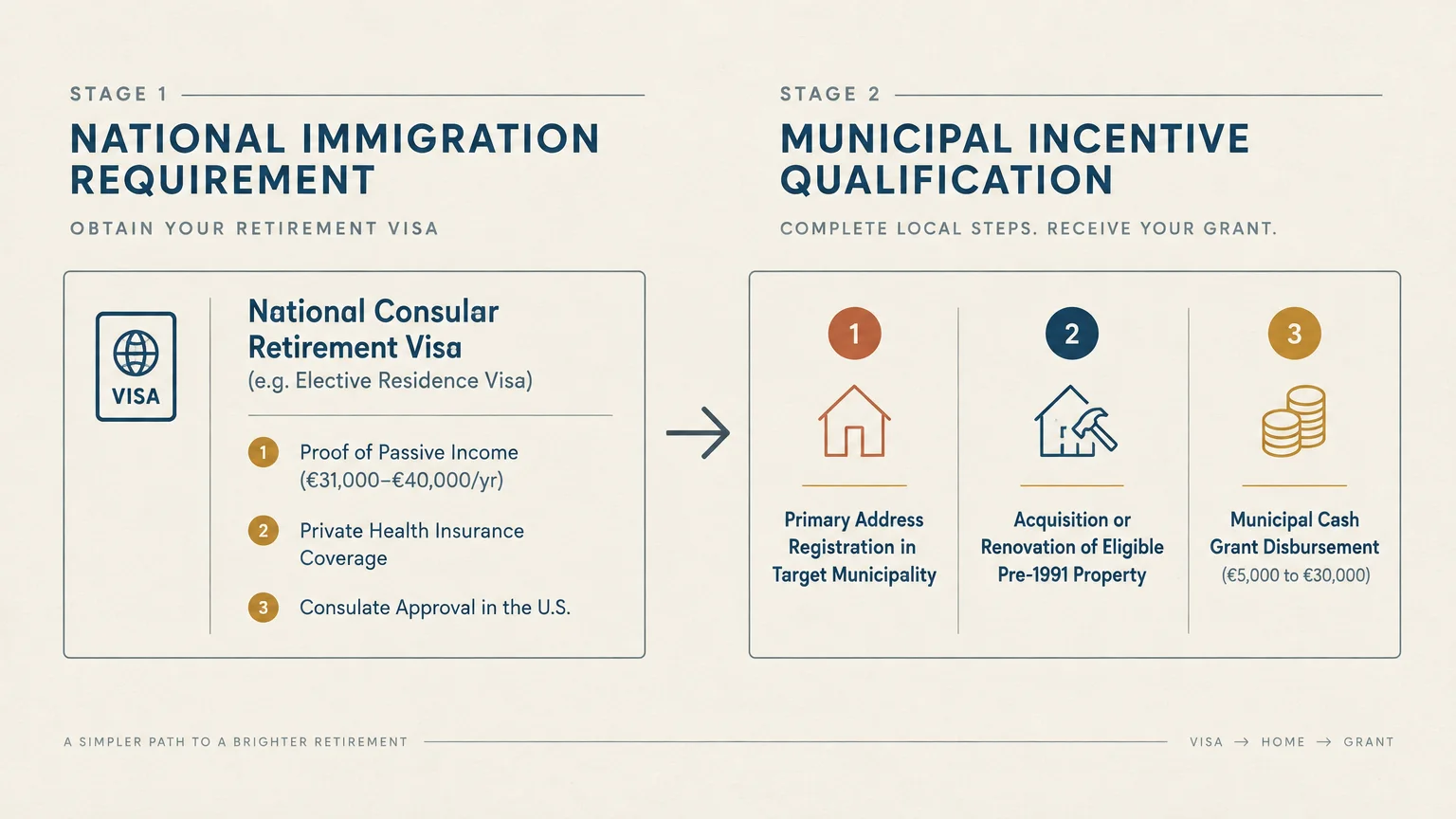
However, you must distinguish between local municipal incentives and national immigration laws. A municipal cash grant does not automatically grant you the legal right to live in the country.
As an American citizen, you must independently qualify for a national long-stay retirement visa through official consulates before collecting local benefits. Once approved, you register your primary address in the target village to claim the offered subsidies.
1. Presicce-Acquarica, Italy: Up to €30,000 for Sun-Drenched Salento Living
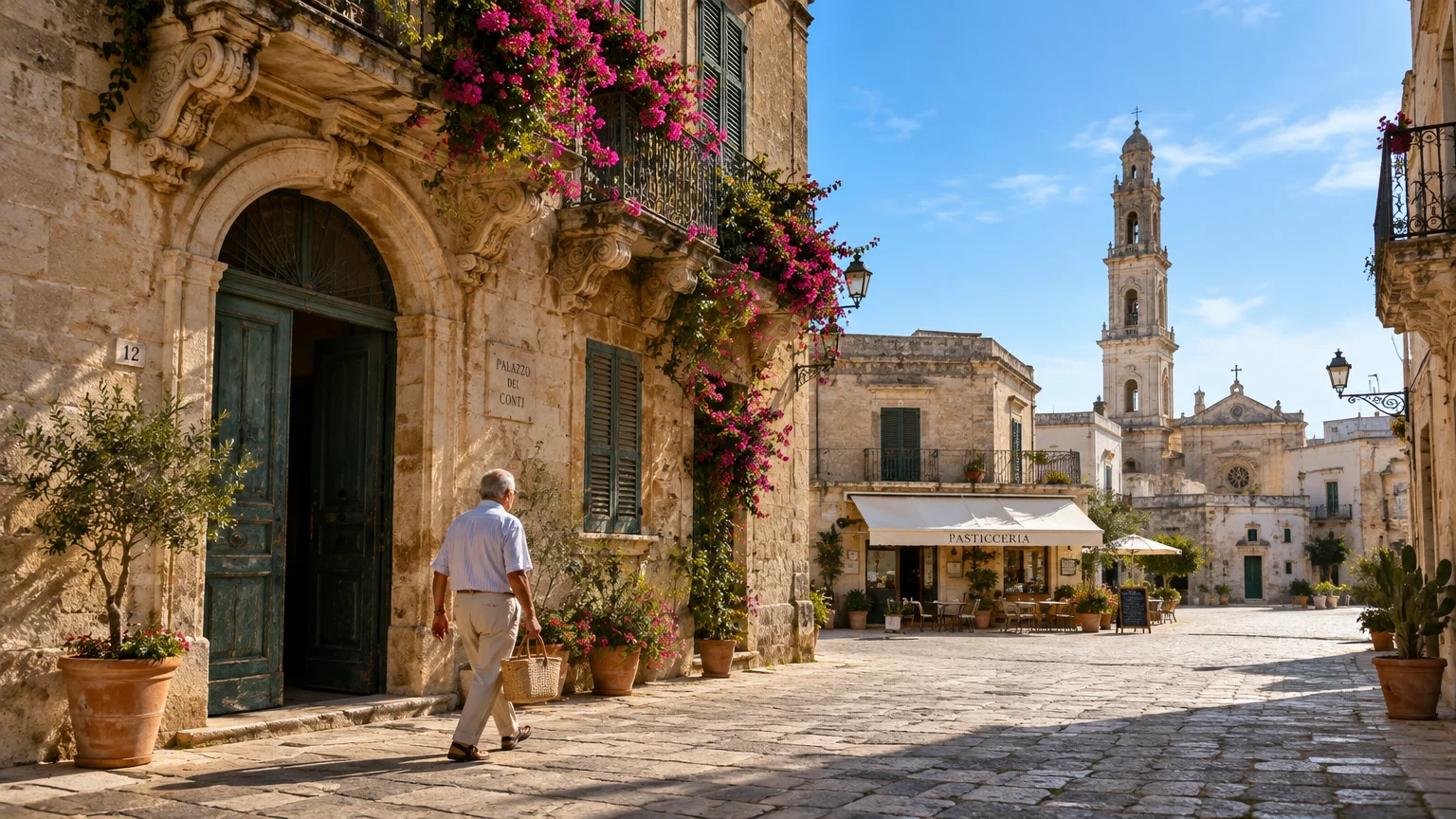
Presicce-Acquarica sits in the southern tip of Puglia, tucked between the Ionian and Adriatic Seas. The town features olive-tree-lined streets, baroque architecture, and pleasant Mediterranean weather year-round.
The municipal council offers an incentive grant of up to €30,000 for newcomers. This program covers up to 50% of the total cost required to buy and renovate a residential property built before 1991.
To qualify, you must purchase a home within the historic center and register the property as your official primary residence. The local government designed this financial aid to preserve antique architectural gems while repopulating town quarters.
For retirees, Presicce-Acquarica provides access to fresh regional produce, walkable neighborhoods, and peaceful coastal beaches just fifteen minutes away. The pace of life remains unhurried, promoting healthy outdoor activity.
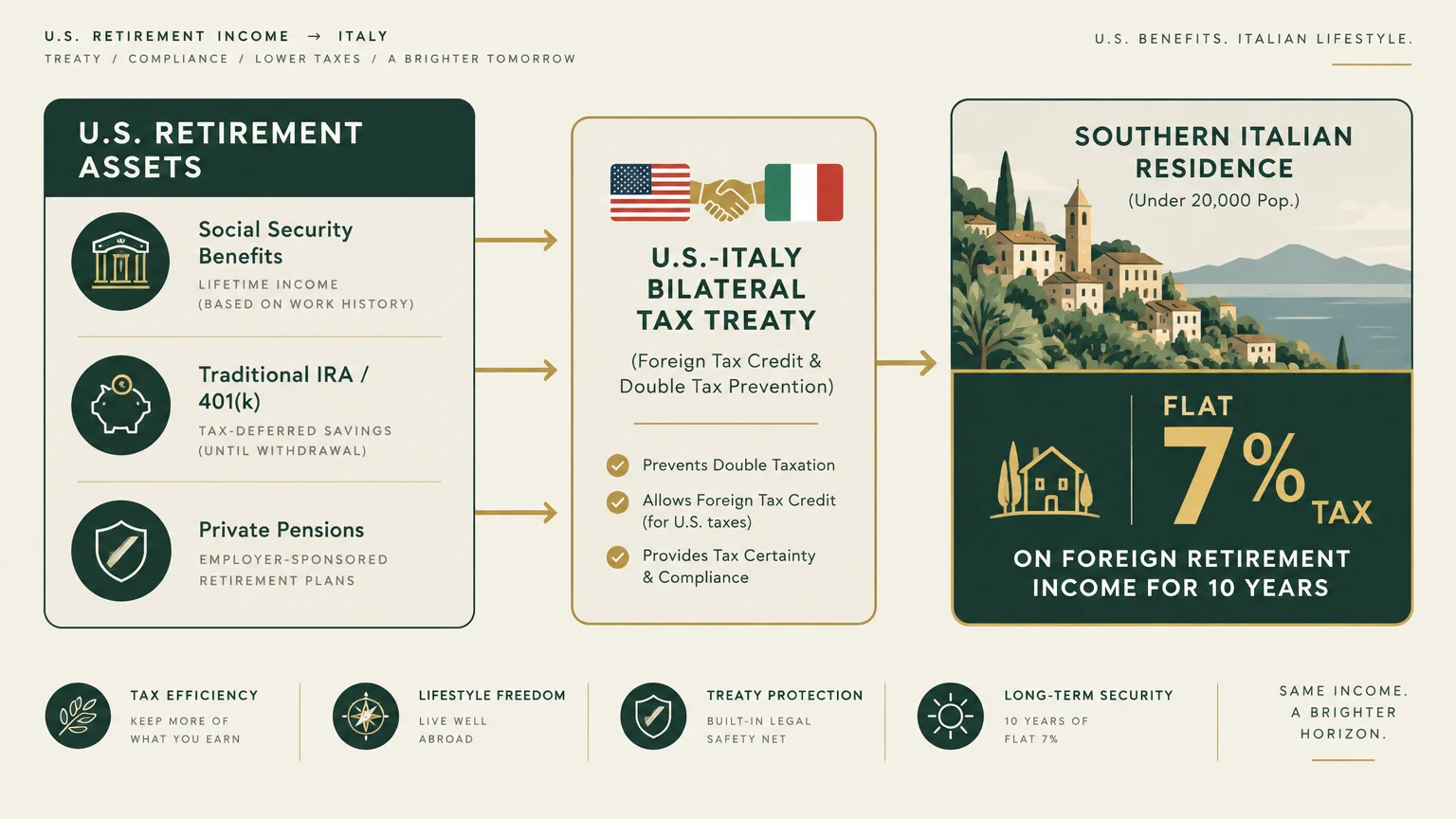
Financially, moving here yields substantial tax advantages. Because Presicce-Acquarica has fewer than 20,000 residents, foreign retirees can apply for Italy’s flat 7% tax regime on all foreign retirement income.
To move here, you must obtain an Italian Elective Residence Visa (ERV). Italian consulates require proof of continuous passive income, generally benchmarked between €31,000 and €32,000 annually for single applicants and €38,000 to €40,000 for couples.
2. Ollolai and Historic Sardinian Villages, Italy: €15,000 Island Subsidies
Sardinia remains globally famous for pristine turquoise waters, rugged mountainous landscapes, and extraordinary longevity. The island contains one of the world’s renowned Blue Zones, where locals routinely live past 100 years.
To combat depopulation, the Autonomous Region of Sardinia launched a €45 million fund that awards non-repayable grants up to €15,000. Historic mountain towns like Ollolai actively use this program to welcome international arrivals.
The regional grant covers up to 50% of the purchase or renovation expenses for a primary home. Eligible properties must reside in Sardinian municipalities with populations under 3,000 residents.
Program guidelines require you to transfer your formal residency to the Sardinian town within 18 months of purchase. Additionally, you must commit to maintaining the property as your primary residence for at least five years.
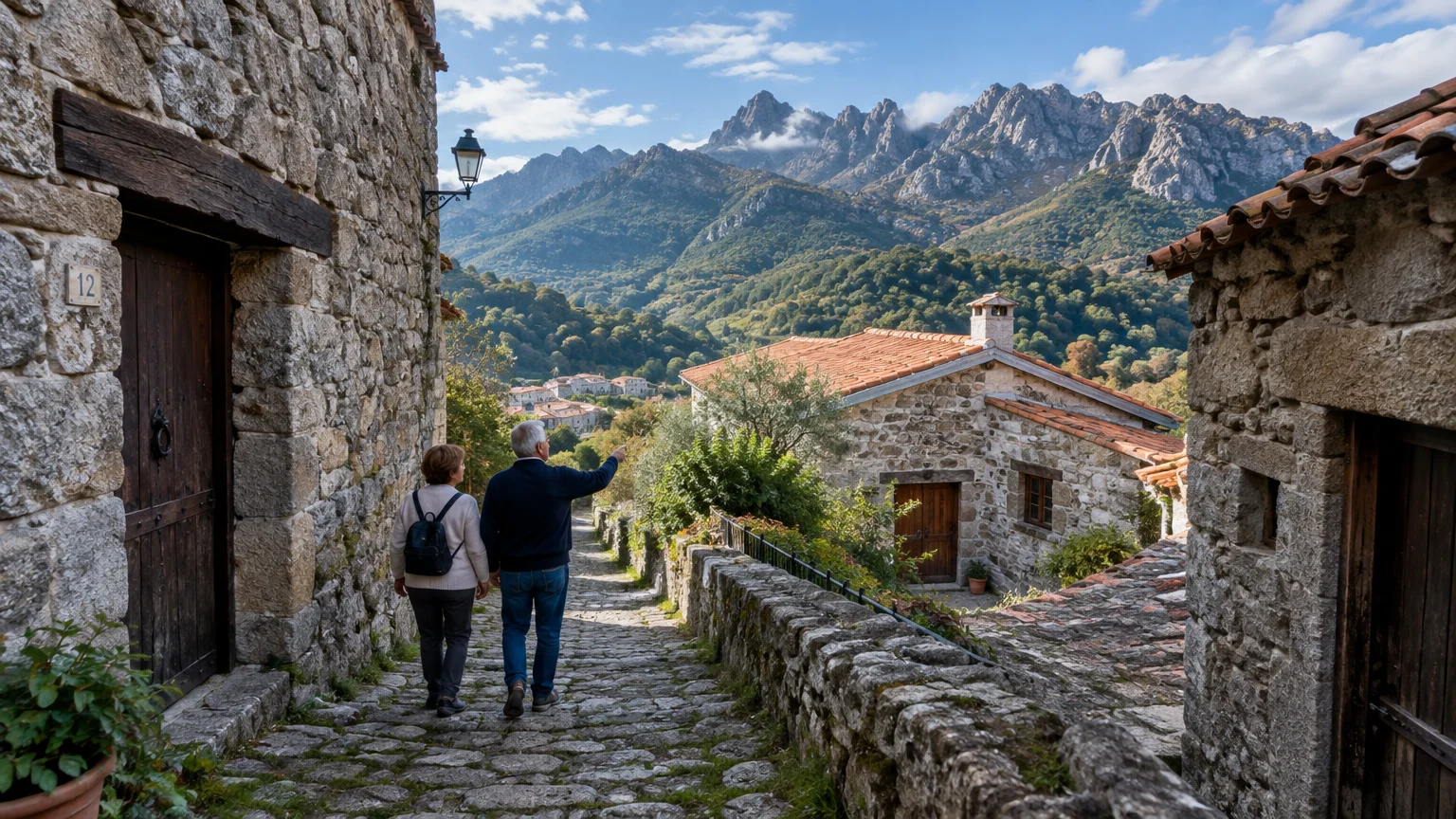
Ollolai offers retirees mountain serenity, clean air, and locally produced sheep cheeses and antioxidant-rich Cannonau wines. The tight-knit community organizes social festivals year-round, ensuring newcomers quickly integrate into village life.
Like Puglia, participating Sardinian villages qualify for Italy’s 7% substitute tax on foreign pensions. Coupling a €15,000 renovation check with a 7% income tax rate protects your retirement portfolio significantly.

3. Arranmore Island, Ireland: Up to €84,000 Refurbishment Grants
If you prefer dramatic ocean cliffs, Gaelic culture, and English-speaking neighbors, Ireland offers exceptional housing refurbishment capital. Under the national “Our Living Islands” initiative, the Irish government subsidizes home restorations across roughly 23 offshore islands.
Arranmore Island, located three miles off County Donegal’s wild coastline, serves as a prime destination for this initiative. The island features craggy coastal trails, traditional music pubs, and high-speed broadband infrastructure.
The program utilizes the Vacant Property Refurbishment Grant (Croí Cónaithe) with a 20% island funding bonus. You can claim up to €60,000 for homes vacant for at least two years, or up to €84,000 for derelict properties.
Eligible properties must have been constructed before 2008. You must use the refurbished house as your principal private residence or enter it into registered long-term community rentals.
Living on Arranmore offers quiet coastal living balanced with modern digital connectivity. Regular car ferries connect you to mainland Donegal in twenty minutes, granting simple access to hospitals and retail centers.
To retire in Ireland as a non-EU citizen, you must apply for an Irish Stamp 0 permission. The Irish Naturalisation and Immigration Service mandates an individual passive income of at least €50,000 per year (€100,000 for couples), plus a liquid capital cushion of roughly €100,000.
4. Mountain Villages of Calabria, Italy: €5,000 Direct Pensioner Grants
Calabria occupies the southern “toe” of the Italian peninsula, defined by sun-drenched coastlines and dramatic mountain ranges. Through the Abita Borghi Montani program, regional authorities set aside targeted funds to revitalize 89 rural mountain municipalities.
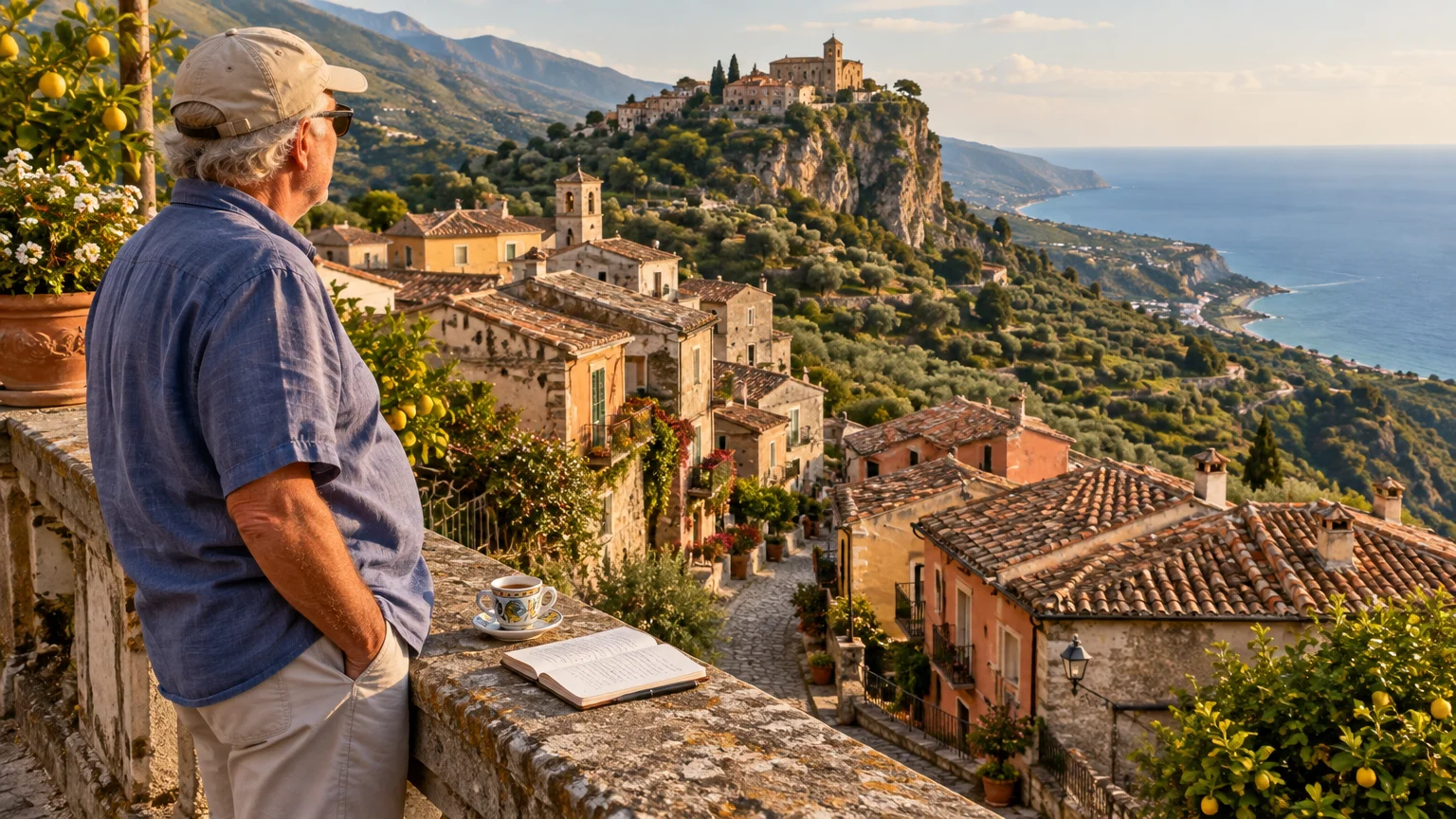
Participating villages include scenic hilltop towns like San Donato di Ninea, Civita, and Bova. These communities feature cobblestone streets, panoramic valley vistas, and deeply entrenched culinary traditions.
The program provides incoming pensioners and remote workers with a one-time relocation stipend of €5,000. In exchange, you must transfer your primary residency to a qualifying town with fewer than 3,000 residents and stay for five years.
For retirees, Calabria delivers one of the lowest living costs anywhere in Western Europe. Real estate purchase prices frequently fall below €50 per square foot, letting you acquire charming stone properties at modest cost.
Calabrian villages participate directly in the Italian 7% foreign pension tax regime. Your Social Security Administration payments and retirement distribution withdrawals receive this preferential tax treatment for ten consecutive tax years.
Calabria’s regional hospitals have expanded partnerships with major northern medical networks to ensure reliable healthcare delivery. For minor ailments, local municipal clinics provide personalized, walkable family medicine.
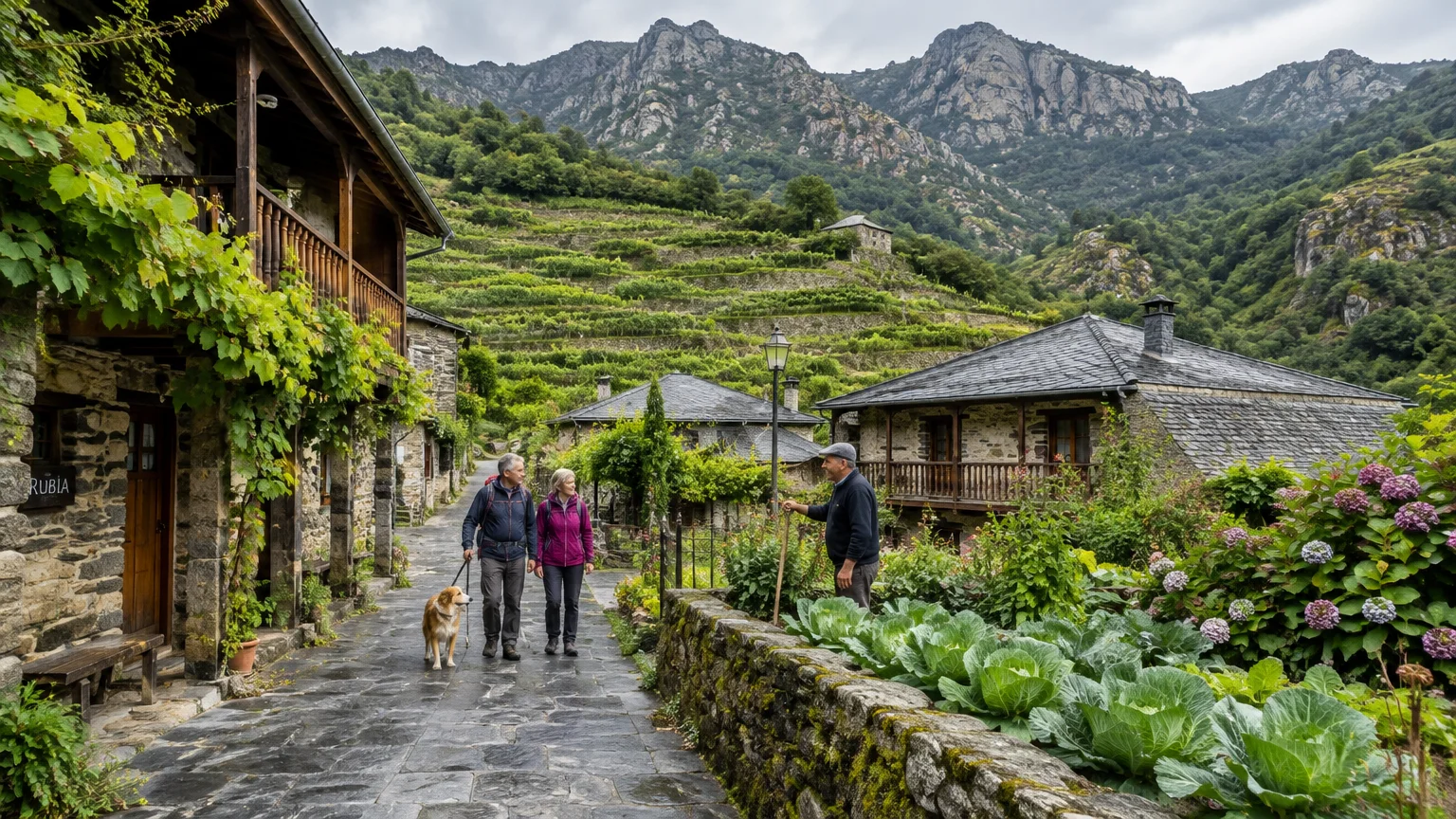
5. Rubia, Spain: Monthly Living Stipends in Scenic Galicia
Nestled in the green northwestern province of Ourense, Rubia offers a tranquil retreat from crowded tourist corridors. The village is surrounded by the dramatic limestone peaks of the Serra da Enciña da Lastra Natural Park.
Rubia launched a municipal cash incentive providing newcomers with €100 to €150 every month to offset basic living expenses. The village created the program to increase school enrollment and maintain vital municipal services.
While originally tailored for young families, the council accepts retirees who buy or rent homes and establish legal residency. The monthly stipend helps offset utility bills, groceries, or local property maintenance.
Galicia features mild, oceanic weather that avoids the blistering summer heat found across southern Spain. Fresh seafood, world-class local wines, and extensive walking paths create an exceptional lifestyle for active retirees.
American retirees moving to Spain generally utilize the Non-Lucrative Visa (NLV). Spanish immigration rules require applicants to demonstrate passive income equal to 400% of the Public Multiple Effects Income Indicator (IPREM).
This benchmark equates to roughly €28,800 annually for a single applicant, with an additional €7,200 required for a spouse. The visa strictly prohibits active local employment, matching standard retirement patterns perfectly.
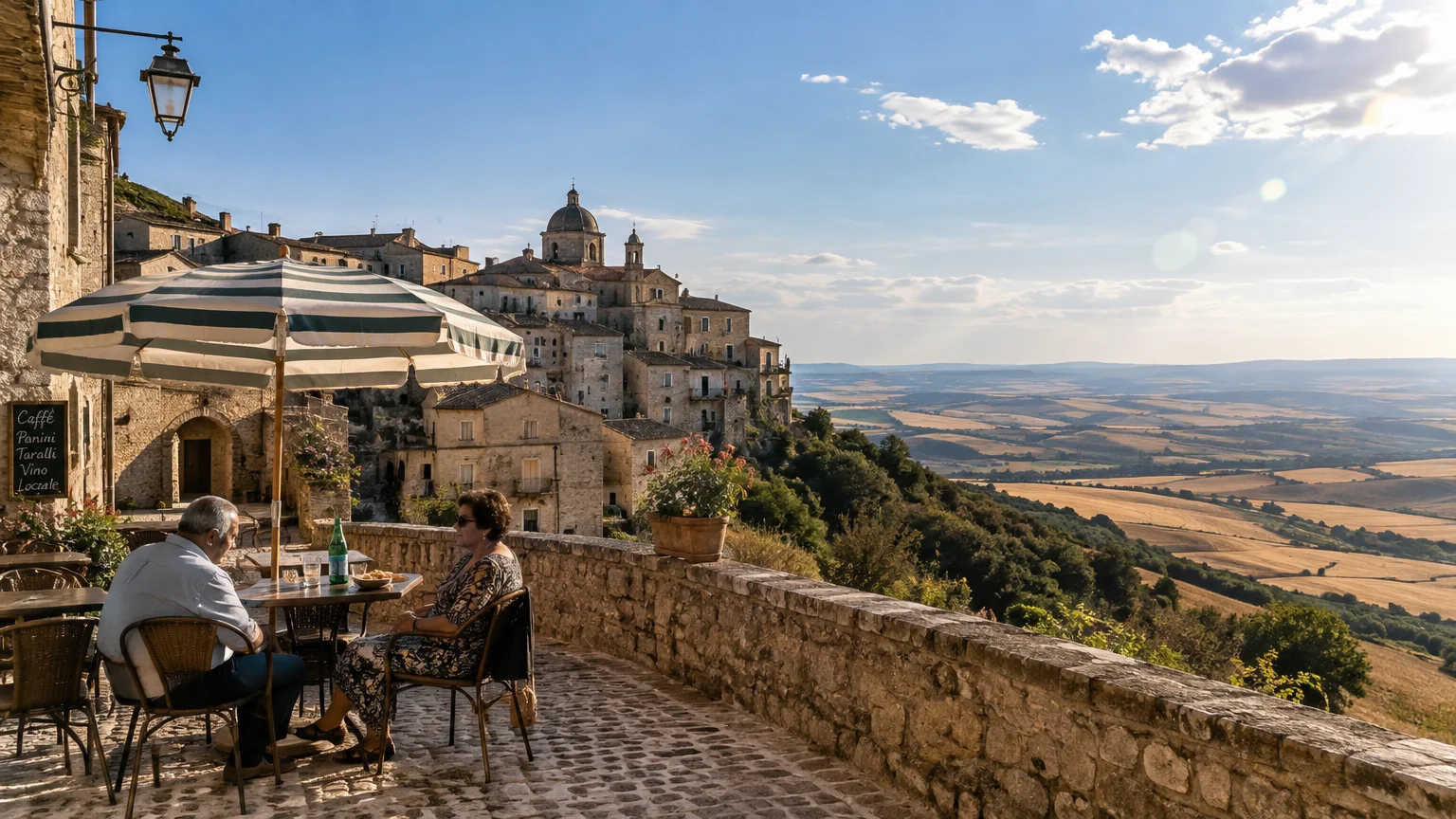
6. Candela, Italy: Up to €2,000 Cash to Embrace Puglia’s Hill Country
Candela sits perched on rolling hills in northern Puglia, earning the historic nickname “Little Naples” for its bustling alleys and white stone houses. The town offers a balanced lifestyle surrounded by vineyards, olive orchards, and wheat fields.
To reverse demographic losses, Candela’s municipal government implemented direct cash grants for new arrivals. The city pays €800 for single residents and €1,200 for married couples who move to the municipality.
If you purchase a home and relocate with extended family members, the cash bonus increases up to €2,000. The town also provides localized tax credits on waste disposal and municipal utilities for qualifying newcomers.
To receive the funds, you must rent or purchase a home in Candela, register official residency, and demonstrate an annual income of at least €12,000. Your regular U.S. pension or Social Security benefits satisfy this financial threshold easily.
Candela remains exceptionally walkable, featuring bakeries, butchers, and pharmacies centered around the Piazza Plebiscito. Larger regional healthcare centers in Foggia reside just thirty miles away along modern highways.
Because Candela’s population sits well below the 20,000-resident threshold, foreign retirees qualify for Italy’s 10-year 7% flat pension tax. This combination provides both upfront cash and structural tax reduction.
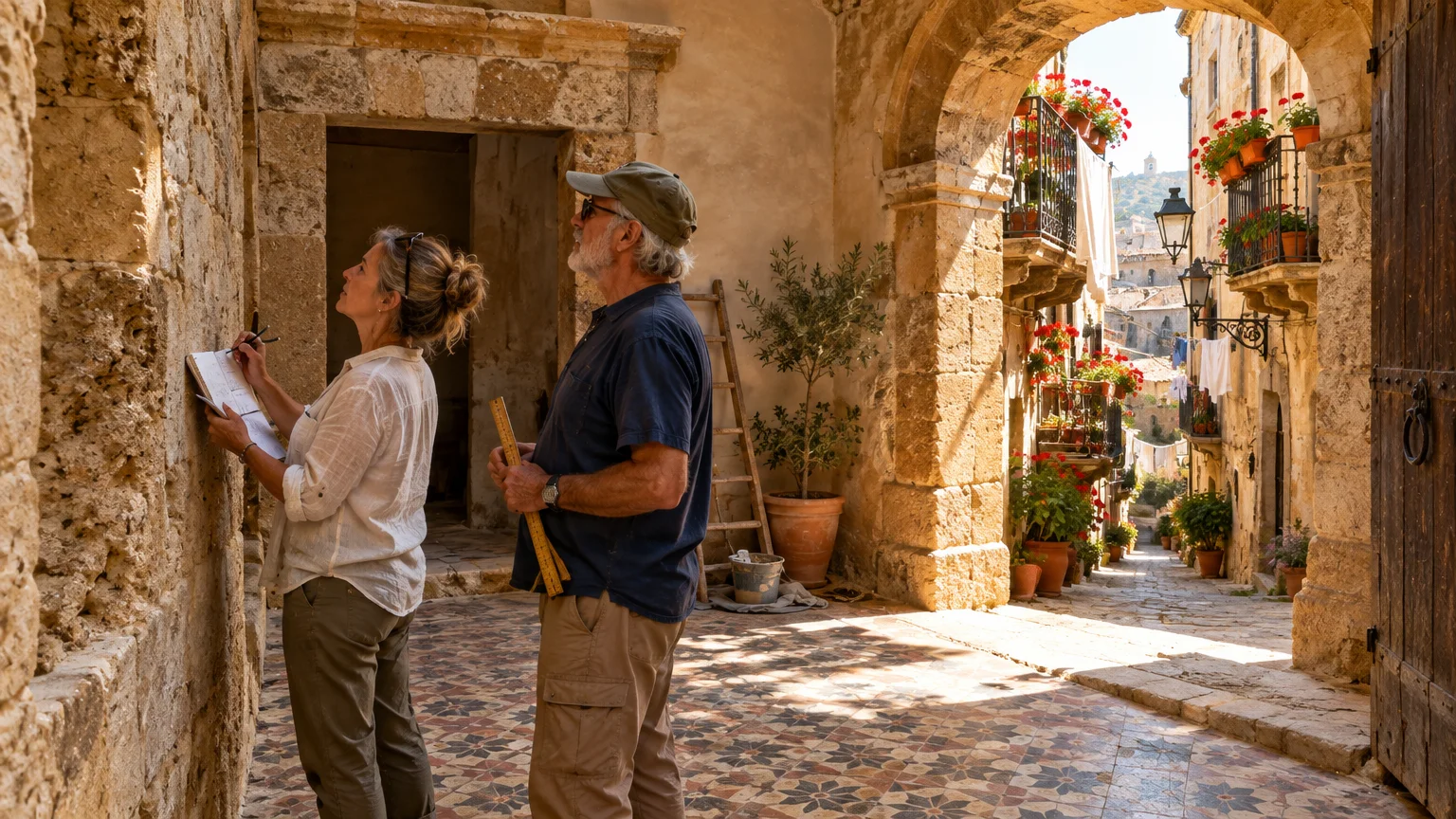
7. Sambuca di Sicilia, Italy: Direct Property Incentives and Low-Tax Living
Sambuca di Sicilia captured global headlines by auctioning abandoned municipal homes for €1, €2, and €3. Situated in southwestern Sicily near ancient Greek ruins and Mediterranean vineyards, Sambuca offers a rich cultural environment.
The municipal council periodically holds auctions for publicly owned historic houses requiring restoration. Winning buyers receive subsidized municipal processing fees and expedited architectural permits to facilitate swift renovations.
Purchasers must deposit a refundable security bond (typically €5,000) and commit to finishing home restorations within three years. Once renovations finish, the town refunds your security deposit in full.
Beyond discounted housing, Sambuca delivers access to Sicily’s extraordinarily cheap living costs. Groceries, dining out, and domestic assistance cost a fraction of typical American metropolitan rates.
Sicily also qualifies for Italy’s Article 24-ter flat tax regime. You can draw down retirement assets while paying a flat 7% substitute tax to the Italian revenue agency.
Consulates processing Italian Elective Residence Visas favor applicants who demonstrate clear property ownership or multi-year leases. Securing a restored village home in Sambuca strengthens your immigration paperwork substantially.
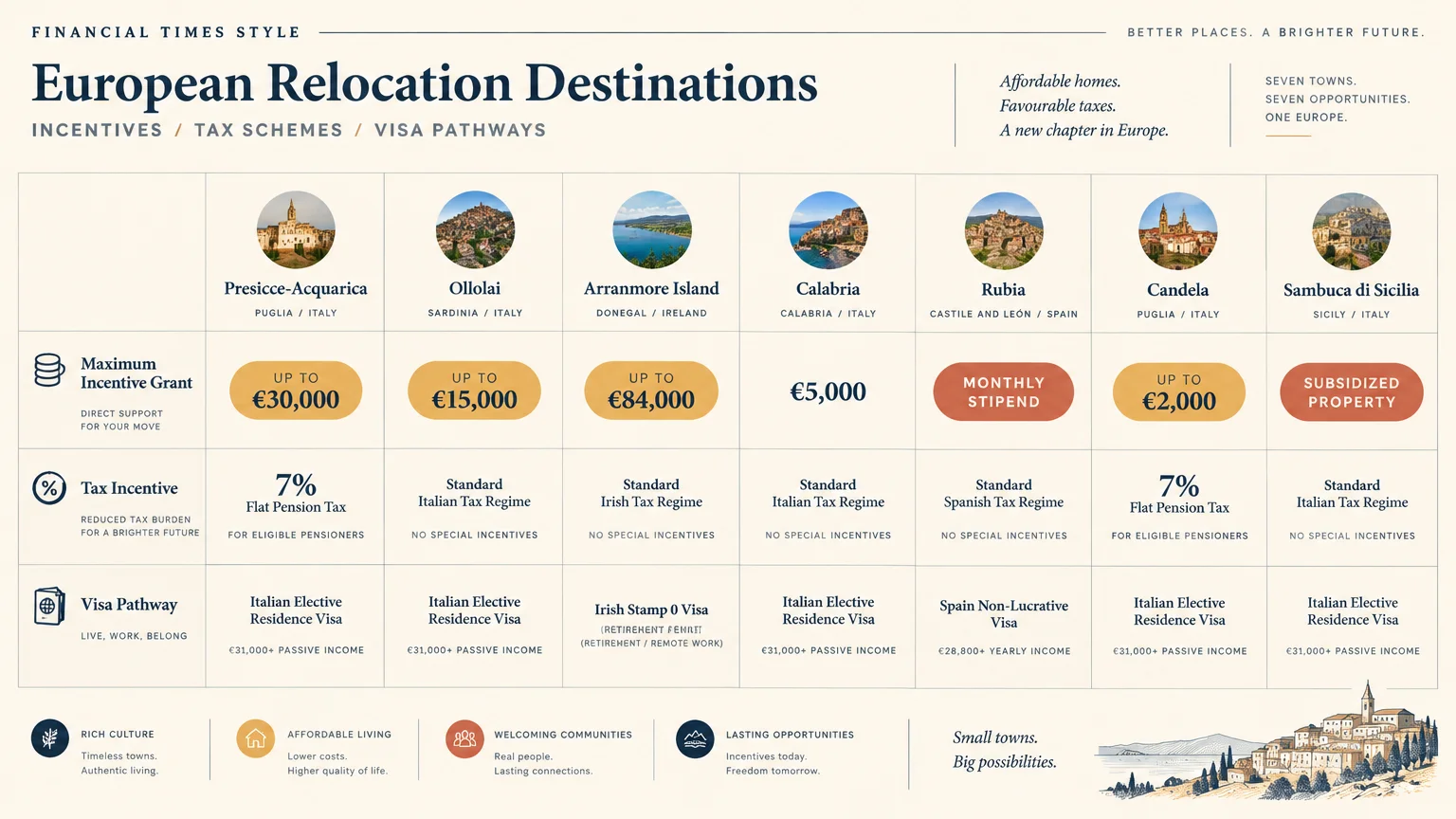
Financial and Visa Breakdown: Relocation Programs at a Glance
Evaluating relocation programs requires comparing cash grants against initial visa barriers and mandatory living commitments. The following table contrasts key program details across top European destinations.
| City & Country | Maximum Payout / Incentive | Key Program Requirements | Immigration Visa Route | Primary Retiree Appeal |
|---|---|---|---|---|
| Presicce-Acquarica (Italy) |
€30,000 grant | Buy & renovate pre-1991 home; covers up to 50% of costs; primary residence. | Elective Residence Visa (€31,000+ passive income) |
Warm beaches, historic architecture, 7% flat pension tax rate. |
| Ollolai & Sardinia (Italy) |
€15,000 grant | Purchase/renovation in towns <3,000 pop; 5-year primary residency. | Elective Residence Visa (€31,000+ passive income) |
Blue Zone longevity lifestyle, hiking, Mediterranean diet. |
| Arranmore Island (Ireland) |
€84,000 grant | Refurbish vacant/derelict pre-2008 home on designated island. | Stamp 0 Permission (€50,000+ income + capital) |
English speaking, high-speed fiber, rugged Atlantic scenery. |
| Calabria Borghi (Italy) |
€5,000 grant | Move to participating town <3,000 pop; commit to 5-year residency. | Elective Residence Visa (€31,000+ passive income) |
Ultra-cheap living costs, mountain vistas, 7% pension tax. |
| Rubia (Spain) |
€100–€150 per month | Establish primary residency and rent or purchase local home. | Non-Lucrative Visa (~€28,800+ passive income) |
Lush natural park setting, cooler summers, relaxed village pace. |
| Candela (Italy) |
Up to €2,000 grant | Rent or buy home, register residency, prove €12,000+ income. | Elective Residence Visa (€31,000+ passive income) |
Move-in ready village, community events, nearby regional hospital. |
| Sambuca di Sicilia (Italy) |
Subsidized €1–€3 homes | Refurbish property within 3 years; refundable €5,000 bond. | Elective Residence Visa (€31,000+ passive income) |
Exceptional wine country, historic charm, low grocery costs. |

Viral Relocation Myths Retirees Must Avoid
Social media frequently circulates sensational stories claiming European villages give away free money without restrictions. You must approach these viral headlines with healthy skepticism before booking flights.
Albinen, Switzerland frequently appears on viral travel lists offering a relocation grant worth 25,000 Swiss Francs. However, program guidelines state applicants must be under 45 years old.
Furthermore, Albinen requires an investment of at least 200,000 Francs in Swiss real estate. Applicants must also hold an elusive Swiss C residency permit, effectively barring incoming American retirees.
Antikythera, a remote Greek island, similarly gained viral fame for advertising €500 monthly stipends and free land. In truth, the local diocese established this assistance strictly for young families with three or more children to reopen the island primary school.
Always review regional administrative bulletins directly rather than relying on viral travel videos. Genuine municipal incentive programs publish explicit legal requirements, application deadlines, and administrative qualifications.
Navigating Taxes and U.S. Retirement Benefits Abroad
Moving across the Atlantic alters how you pay taxes on investment distributions and retirement accounts. American citizens remain subject to worldwide income taxation by the Internal Revenue Service regardless of where they live.
Fortunately, bilateral tax treaties prevent double taxation on your income. The Foreign Tax Credit (IRS Form 1116) allows you to offset U.S. tax liabilities using taxes paid to foreign jurisdictions.
Several European nations offer tax concessions designed to attract foreign pensioners. Italy’s 7% flat tax regime under Article 24-ter allows qualifying retirees to replace progressive income taxes with a flat 7% rate on non-Italian pensions for ten years.
Similarly, Greece offers a flat 7% tax rate on foreign pension income for fifteen consecutive years under Law 4714/2020. This benefit applies nationwide rather than restricting eligibility to small municipalities.
“You can’t control what the tax rates will be tomorrow, but you can take proactive steps to minimize your exposure today.” — Ed Slott, CPA and Retirement Distribution Expert
You can receive monthly Social Security payments deposited directly into foreign bank accounts using international direct deposit. The Social Security Administration processes monthly deposits across most European countries without disruption.
Conversely, Medicare generally does not pay for healthcare services received outside the United States. To satisfy national visa conditions, you must purchase private comprehensive expat health insurance before departing.
Avoiding Common Errors When Relocating to Europe
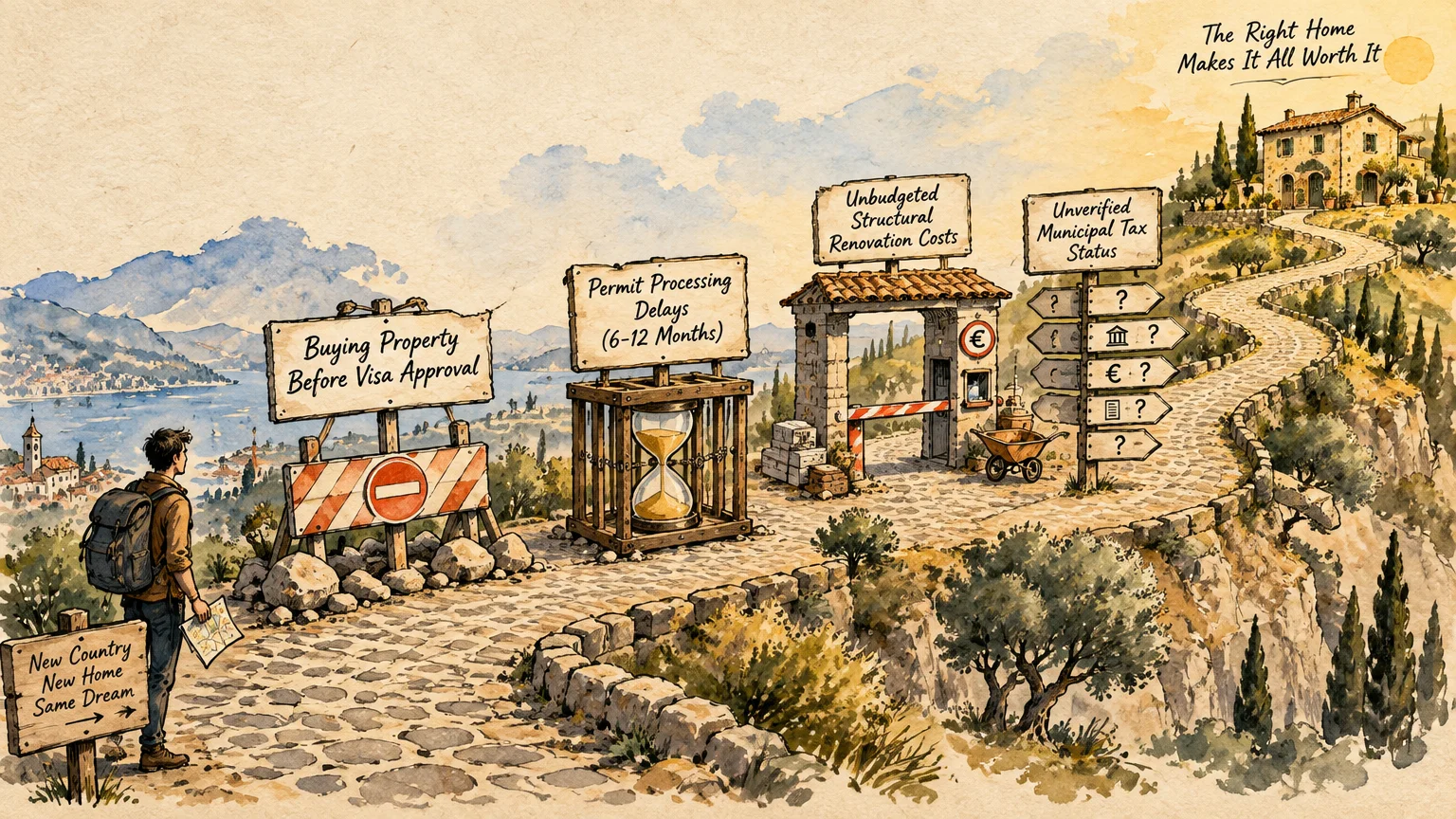
Navigating cross-border real estate and immigration procedures requires avoiding several costly mistakes. The following errors frequently derail prospective expat retirements.
- Buying Property Before Visa Approval: Purchasing a house does not guarantee immigration clearance. Always secure your national long-stay visa before committing capital to irreversible home purchases.
- Underestimating European Renovation Costs: Historic stone buildings feature thick masonry, outdated plumbing, and protected architectural facades. Always secure formal estimates from licensed local contractors before purchasing derelict homes.
- Ignoring Currency Fluctuations: Living abroad ties your daily purchasing power to currency exchange rates. A weakening U.S. dollar increases your cost of living when priced in euros.
- Neglecting Offshore Reporting Requirements: The U.S. Treasury requires you to report foreign financial accounts exceeding $10,000 aggregate value via FinCEN Form 114 (FBAR). Failure to file triggers severe monetary penalties.
Preparing for these administrative requirements ensures a smooth transition to your new community. Thorough planning prevents surprise tax bills and unexpected project delays.

When DIY Isn’t Enough
Relocating your life to Europe involves interlocking tax laws, foreign property contracts, and immigration guidelines. While personal research provides a baseline, professional counsel becomes necessary under several common scenarios.
You should hire an international cross-border tax accountant if you hold significant assets inside tax-deferred accounts. Determining how European tax treaties treat Traditional IRAs, Roth distributions, and Required Minimum Distributions requires specialist expertise.
Engaging a bilingual real estate attorney protects your interests during foreign property acquisitions. European property deeds often contain inherited family claims, unregistered easements, or unpaid municipal liens that require title verification.
Retirees managing chronic health conditions should work with international insurance brokers. You must ensure private coverage fulfills strict visa minimums while covering pre-existing conditions and medical evacuation.
Finally, consider working with an immigration specialist if you plan to claim dual European citizenship through ancestry. Proving citizenship by descent eliminates visa requirements, giving you unrestricted access to European relocation grants.
Frequently Asked Questions
Can I collect European relocation grants using a standard 90-day tourist visa?
No. Municipalities require you to register as a legal, permanent resident to receive relocation funds. Americans must first obtain a national long-stay retirement visa through an official consulate.
Does Medicare cover me if I move to a European city?
No. Traditional Medicare and Medicare Advantage plans do not provide regular medical coverage outside the United States. You must maintain private international medical insurance to fulfill foreign visa requirements.
Can I still receive my U.S. Social Security check while living in Europe?
Yes. The Social Security Administration deposits monthly benefits directly into foreign bank accounts across Western Europe via international direct deposit. Payments convert seamlessly into euros at wholesale exchange rates.
Do I have to pay local property taxes on subsidized European homes?
Yes, property owners remain responsible for local property and municipal service taxes. However, property taxes in rural European municipalities are modest, rarely exceeding several hundred euros per year.
Next Steps for Your European Retirement
Securing a European home with government financial backing turns conventional retirement planning into an exciting adventure. Take your first step by reviewing comprehensive retirement guides from organizations like AARP to assess your lifestyle priorities.
Schedule an extended scouting trip to your favorite target villages to experience daily rhythms, climate, and amenities firsthand. Immersing yourself in local life will confirm whether quiet European village living matches your personal vision.
This article provides general retirement education and information only. Everyone’s financial situation is unique—what works for others may not work for you. For personalized advice, consider consulting a qualified financial professional such as a CFP or CPA.
Last updated: February 2026. Retirement benefits, tax laws, and healthcare costs change frequently—verify current details with official sources.